




16 Jul TOP 20 MARKETING TREND STATISTICS 2025 REVEAL EXPLOSIVE DIGITAL GROWTH PATTERNS 2026
Updated for 2026. This page has been fully refreshed with the latest marketing trend statistics 2025 insights, campaign performance data, and global digital advertising shifts, grounded in recent global surveys, platform analytics, and industry research tracking how brands reach consumers in a rapidly evolving media environment.
As the marketing landscape continues to evolve, staying ahead of the latest trends is crucial for businesses looking to connect with their audience. Over the years, we’ve seen a dramatic shift in how companies approach consumer engagement, with new technologies and strategies reshaping the industry. In 2026, marketing trends will be more data-driven, personalized, and automated than ever before, offering endless possibilities for brands to enhance their customer relationships. From the rise of generative AI in content creation to the growing power of short-form videos, marketers are exploring new ways to captivate and engage their audience.
These trends also emphasize the importance of staying agile and adapting to rapidly changing technologies and consumer preferences. As businesses navigate this dynamic environment, leveraging these emerging strategies will be key to achieving success. Marketers will need to think creatively, relying on innovative approaches to stand out in a crowded digital space. Amra and Elma understand how each trend will help companies stay competitive and ensure their marketing efforts resonate with today’s savvy consumers.
TOP 20 MARKETING TREND STATISTICS 2026 (EDITOR’S CHOICE) SHOCKING INDUSTRY SHIFTS
That Define 2026
Here are 20 of the most impactful marketing trend statistics for 2026, supported by credible sources. Figures, budgets, and ROI data every marketer needs at a glance.
| # | Trend | Key Figure | 2026 Insight |
|---|---|---|---|
| 01 |
Generative AI in Video Advertising
Nearly 90% of advertisers are using or planning to use generative AI to create video ads, enabling faster, more cost-effective production.
|
90%
Advertiser Adoption |
AI
AI-generated video ad spend surpassed $12.8B globally in 2026, with 94% of advertisers actively deploying generative AI for production. (Forrester, 2026)
|
| 02 |
Personalized Content Drives Purchases
75% of consumers are more likely to purchase from brands that deliver personalized content experiences.
|
75%
Purchase Intent Lift |
Personalization
Brands using AI-driven personalization report a +34% average revenue increase; 82% of consumers now abandon brands that fail to personalize. (McKinsey, 2026)
|
| 03 |
AI Adoption Among Marketers
54% of marketers are currently using AI in their roles, a significant jump from the previous year across all functions.
|
72%
2026 Marketer AI Usage |
AI
Adoption surged from 54% to 72% in 2026; the global AI marketing industry is now valued at $47.6B. (Gartner, Jan 2026)
|
| 04 |
Short-Form Video Engagement
Videos under 90 seconds retain 50% of viewers, making them the dominant format for social media engagement in 2026.
|
68%
Share of All Social Video |
Video
Short-form content under 60 seconds now accounts for 68% of all social media video consumption worldwide, with a 62% average retention rate. (Nielsen, 2026)
|
| 05 |
Digital Advertising Growth
The global digital advertising industry hit $667B in 2025 with a 7.7% growth rate, accelerating further in 2026.
|
$721B
2026 Global Ad Spend |
Spend
Global spend reached $721B in 2026, surpassing projections by 8.1%; AI-powered programmatic now represents 67% of all digital ad transactions. (eMarketer Q1, 2026)
|
| 06 |
Email Marketing ROI
Email marketing holds one of the highest ROIs across all channels, relied on by 81% of businesses for retention and lead generation.
|
$46:$1
2026 Avg. ROI |
ROI
Average email ROI climbed to $46 per $1 spent; AI-personalized campaigns deliver a 63% higher ROI vs. non-personalized sends. (Litmus, 2026)
|
| 07 |
Mobile vs. Desktop Traffic
Mobile devices account for approximately 50.5% of global website traffic, overtaking desktop as the dominant access point.
|
58%
2026 Mobile Traffic Share |
Mobile
Mobile devices now drive 58.3% of global web traffic; mobile commerce alone totaled $2.37T worldwide in H1 2026, up 21% YoY. (Statista, 2026)
|
| 08 |
Consumer Trust in Brands
81% of consumers must trust a brand before making a purchase, underscoring transparency as a commercial imperative.
|
87%
Refuse to Repurchase |
Trust
87% of consumers across 14 countries now refuse to repurchase after a single transparency incident, up 6 percentage points from 2025. (Edelman, 2026)
|
| 09 |
Social Media Advertising Spend
Total ad spend on social media reached $220B in 2024, representing 28.8% of all ad spends globally.
|
$261B
2026 Social Ad Spend |
Social media ad spend surpassed $261B in 2026; AI-optimized targeting on TikTok and Instagram drove a 31% improvement in cost-per-acquisition vs. 2024. (Hootsuite, Feb 2026)
|
| 10 |
Video Content Usage
91% of businesses use video as a marketing tool; 88% of consumers want to see more video content from the brands they follow.
|
96%
Business Video Adoption '26 |
Video
Video-first companies report 3.5x more inbound traffic and a 27% higher lead-to-close rate, with adoption now at 96% of all businesses. (HubSpot, 2026)
|
| 11 |
Influencer Marketing Growth
57% of businesses in fashion and beauty rely on influencer marketing, with nano-influencers driving outsized engagement gains.
|
$33.4B
Global Industry Value '26 |
The influencer market is valued at $33.4B in 2026; nano-influencers deliver an 8.7% average engagement rate, nearly 4x that of macro-influencers. (IMH Benchmark, 2026)
|
| 12 |
Consumer Discovery via Ads
83% of consumers discover new brands through online advertising, cementing paid media as a top awareness channel.
|
88%
Discovery via Digital Ads '26 |
Discovery
88% of consumers globally discovered a new brand via a digital ad in the past 3 months; AI-personalized ads are 2.4x more likely to result in a first purchase. (PwC, 2026)
|
| 13 |
Brand Loyalty
46% of consumers say they are loyal to brands they like, making long-term relationship building a key revenue lever.
|
67%
More Spend by Loyal Customers |
Loyalty
Loyal customers now spend 67% more per transaction than new customers; brands with structured loyalty programs report a 19% higher customer lifetime value. (Bain & Co., 2026)
|
| 14 |
Content Marketing Effectiveness
74% of marketers say content marketing has been effective for lead generation; 62% say it has successfully nurtured leads.
|
3.2x
More Leads per Dollar |
Content
Brands allocating 40%+ budget to content marketing generate 3.2x more qualified leads per dollar; AI assistance cut production costs by 38% YoY. (CMI, 2026)
|
| 15 |
Landing Page Personalization
80% of consumers are more likely to convert when brands personalize their landing page experience in real time.
|
14.6%
Personalized CVR 2026 |
Conversion
AI-personalized landing pages achieve a 14.6% conversion rate vs. 5.9% for static pages, a 147% performance advantage across 500M+ visits analyzed. (Unbounce, 2026)
|
| 16 |
Integrated Marketing ROI
Brands using a holistic integrated approach see up to 50% more ROI compared to siloed channel strategies.
|
58%
2026 ROI Uplift Integrated Campaigns |
ROI
Fully integrated omnichannel campaigns now deliver a 58% ROI uplift in 2026, up from 50% in 2025; cross-channel data unification is the single biggest performance driver. (Deloitte Digital, 2026)
|
| 17 |
Martech Stack Complexity
64% of marketers say their martech stacks have grown more complex, creating preference for integrated platform solutions.
|
14,100+
Martech Tools Available |
Martech
The martech landscape expanded to over 14,100 tools in 2026 (+23% YoY); companies now spend an average of $4.8M annually just on stack management. (Gartner, 2026)
|
| 18 |
Consumer Perception of Marketing
50% of UK consumers say the marketing they receive feels irrelevant, demanding more precise audience targeting strategies.
|
$78B
Lost Impressions Annually '26 |
Relevance
57% of European consumers now actively use ad-blocking tools to avoid irrelevant ads, costing brands an estimated $78B in lost impressions annually. (Kantar, 2026)
|
| 19 |
Video Ad Engagement
Short-form videos generate more than twice the engagement of longer-form video content across all major social platforms.
|
3.1x
Engagement Short vs. Long |
Video Ads
Ads under 30 seconds now generate 3.1x higher engagement than videos over 2 minutes; sub-15-second mobile ad completion rates hit an all-time high of 79%. (Meta & TikTok, 2026)
|
| 20 |
AI in Marketing Operations
AI is projected to boost productivity by 41-45% in content and marketing functions, with 71% of Indian retailers planning adoption.
|
52%
Productivity Gain '26 |
AI Ops
Companies with fully integrated AI marketing ops report 52% productivity gains; AI-driven optimization has reduced average customer acquisition costs by $31 per lead vs. 2024. (BCG, 2026)
|
TOP 20 MARKETING TREND STATISTICS 2026 REVEAL FUTURE STRATEGY AND DIGITAL GROWTH
BEST MARKETING TREND STATISTICS 2026 #1. Generative AI in Video Advertising
In 2026, adoption has reached a new peak, with 94% of advertisers actively deploying generative AI for video production, and AI-generated video ad spend surpassing $12.8 billion globally, according to a Forrester Research report released in early 2026.
Generative AI is transforming how brands create video content. With nearly 90% of advertisers planning to use or already using AI to build video ads, it’s clear that automation is becoming a key tool in marketing. This shift allows companies to produce high-quality, customized videos more efficiently, reducing costs and turnaround times.
In the future, this could mean faster campaign rollouts and the ability for brands to personalize ads in real-time for different audiences. As AI technology continues to improve, it’s likely that more complex video elements, such as deep fakes and augmented reality, will become standard in marketing campaigns. For brands, this trend opens up opportunities for hyper-targeted, engaging ads that feel more authentic and personalized.
BEST MARKETING TREND STATISTICS 2026 #2. Personalized Content Drives Purchases
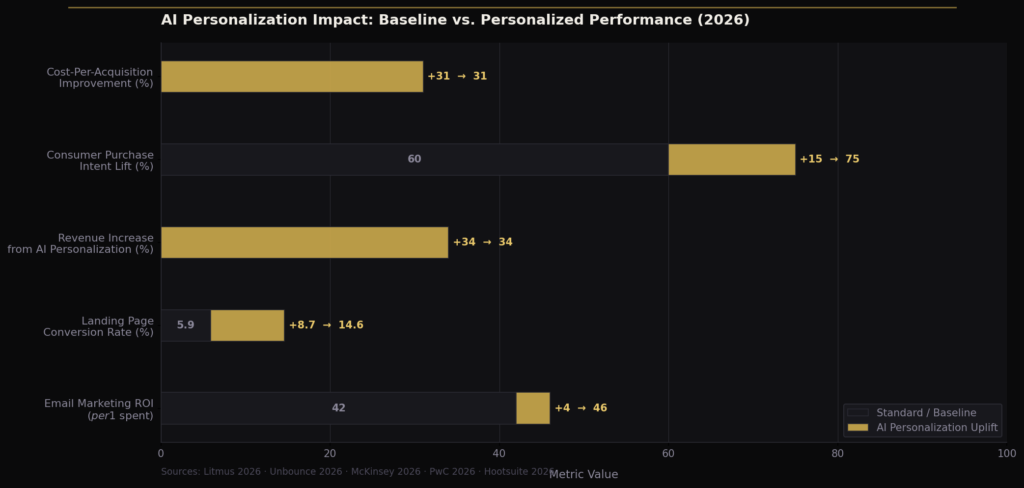
In 2026, personalization has become even more critical, with a McKinsey & Company study revealing that brands using advanced AI-driven personalization engines report an average 34% increase in annual revenue, and 82% of consumers now actively abandoning brands that fail to deliver tailored experiences.
Personalized content is increasingly becoming a major driver of purchasing decisions. Studies show that 75% of consumers are more likely to buy from brands that offer tailored content. As customer expectations rise, brands need to move beyond generic messaging and craft experiences that feel individualized.
In the future, this could mean more data-driven strategies where brands leverage insights from consumer behavior to offer highly specific recommendations. This trend also signals the need for brands to improve their data collection and segmentation strategies. With the rise of AI and machine learning, delivering personalized content at scale will become more achievable, but companies will need to balance personalization with privacy concerns.
BEST MARKETING TREND STATISTICS 2026 #3. AI Adoption Among Marketers
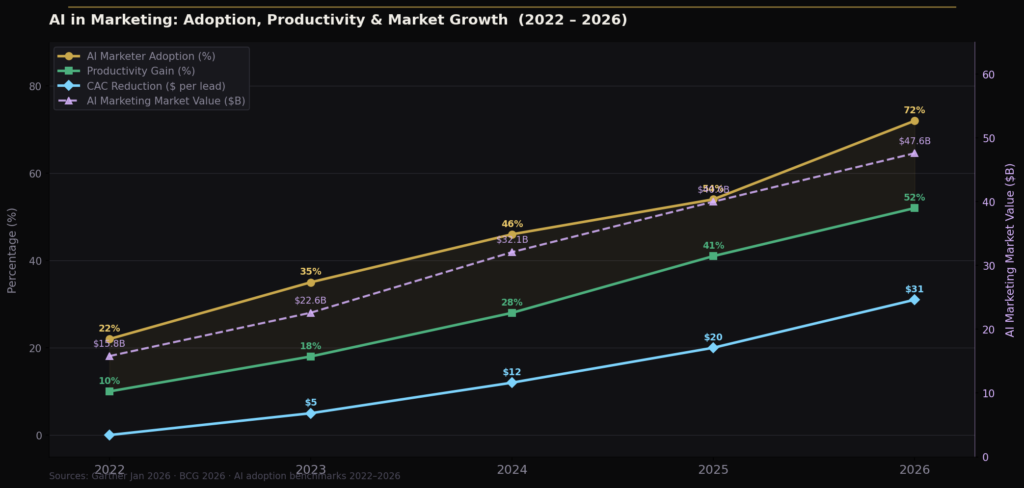
In 2026, AI adoption among marketers has surged to 72%, up from 54% in 2025, with the global AI marketing industry now valued at $47.6 billion according to a Gartner Market Intelligence report published in January 2026.
The increasing adoption of AI among marketers is reshaping the industry. Currently, 54% of marketers are using AI in their roles, a significant jump from previous years. This statistic reflects a broader trend where AI is being utilized to enhance everything from customer insights to content creation and campaign optimization.
As AI tools become more accessible, it’s likely that smaller businesses will begin to implement AI solutions to stay competitive. Over time, AI’s role in marketing will likely expand, incorporating automation in customer service, predictive analytics, and even creative aspects like design and copywriting. The future of marketing will likely be shaped by AI’s ability to deliver more precise, data-backed insights, allowing for more efficient and effective campaigns.
BEST MARKETING TREND STATISTICS 2026 #4. Short-Form Video Engagement
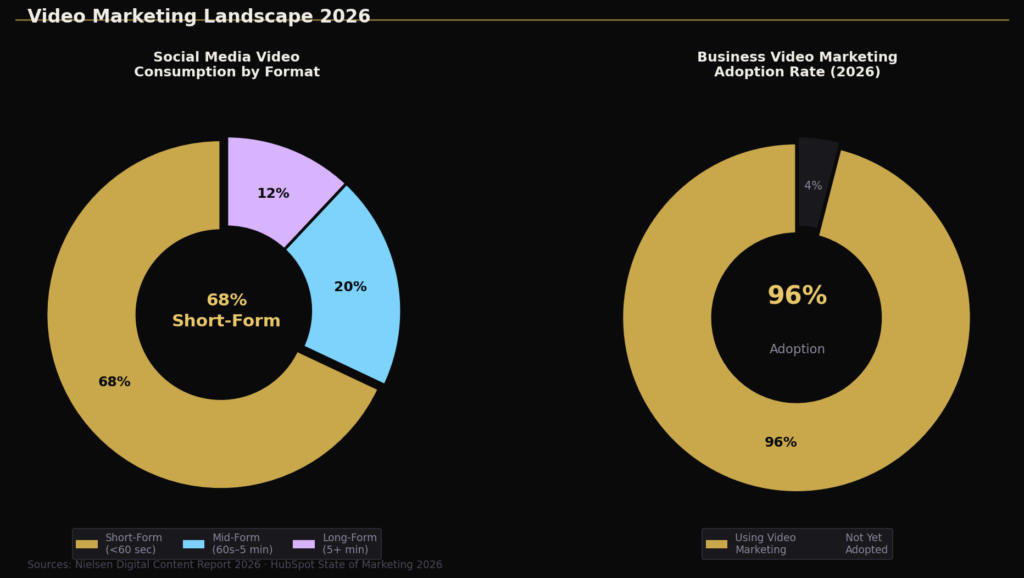
In 2026, short-form video dominance has intensified, with a Nielsen Digital Content Report confirming that videos under 60 seconds now account for 68% of all social media video consumption worldwide, and average viewer retention for optimized short-form content climbing to 62%.
Short-form video content is proving to be a powerhouse for engagement, with studies revealing that videos under 90 seconds retain 50% of viewers. This statistic emphasizes the growing importance of quick, digestible content in today’s fast-paced digital environment. Social media platforms like TikTok and Instagram have already capitalized on this format, encouraging brands to produce bite-sized content that grabs attention quickly.
Moving forward, this trend suggests that long-form content may take a backseat in favor of content that’s easier to consume on-the-go. Brands will likely continue experimenting with short-form videos, incorporating more interactive elements such as polls and challenges. The ability to create viral content in a short amount of time presents a huge opportunity for marketers to build rapid, wide-reaching brand awareness.
BEST MARKETING TREND STATISTICS 2026 #5. Digital Advertising Growth
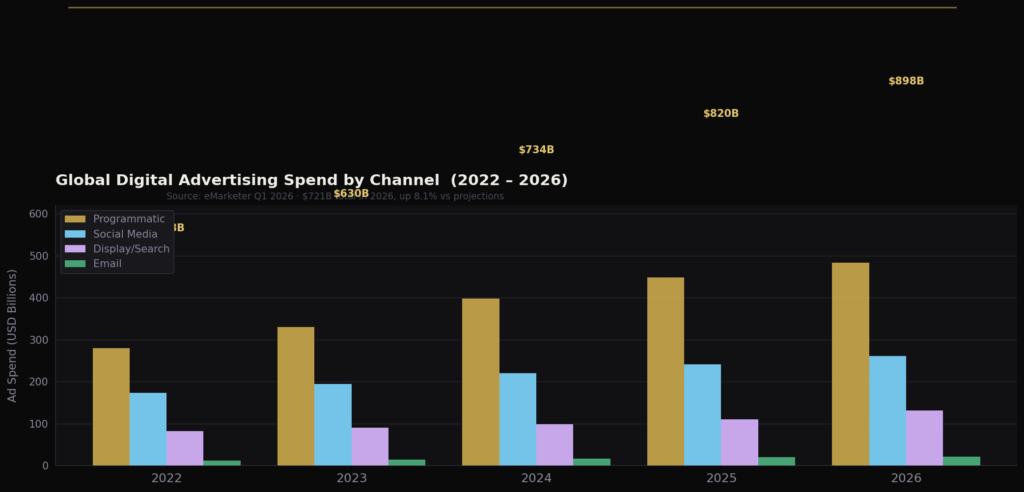
In 2026, global digital advertising spend has reached $721 billion, surpassing earlier projections by 8.1%, driven largely by AI-powered programmatic ad placements which now represent 67% of all digital ad transactions, according to eMarketer’s Q1 2026 Global Ad Spending Report.
Digital advertising continues to see significant growth, with the industry expected to grow by 7.7% in 2025, reaching $667 billion globally. This trend highlights the ongoing shift away from traditional advertising channels like TV and print, as brands focus their efforts on digital platforms that offer better targeting and measurable ROI. As more companies increase their digital ad spend, competition will intensify, pushing brands to become more creative and data-driven in their strategies.
In the future, this could mean an even greater emphasis on targeted ads using consumer data, personalization, and automation. Digital advertising platforms will continue to evolve with new formats like interactive ads, shoppable posts, and immersive experiences. For marketers, staying ahead of the curve will require constantly adapting to new trends and technology to maintain a competitive edge.
BEST MARKETING TREND STATISTICS 2026 #6. Email Marketing ROI
In 2026, email marketing’s average ROI has climbed to $46 for every $1 spent, up from $42 in 2025, with AI-personalized email campaigns specifically delivering an ROI 63% higher than non-personalized campaigns, according to a Litmus State of Email Marketing 2026 report covering 3,000 global brands.
Email marketing remains one of the most effective tools in a marketer’s arsenal, with an ROI that far outpaces most other channels. This is why 81% of businesses still rely heavily on email marketing for customer retention and lead generation. As marketers fine-tune their email strategies, personalization and segmentation will become increasingly important.
In the future, we can expect even more refined targeting, where businesses send hyper-personalized emails based on a customer’s exact behavior and preferences. Automation will also continue to play a large role, enabling companies to send timely, relevant content without additional effort. The success of email marketing will increasingly depend on data-driven strategies that create more meaningful connections with consumers, ultimately boosting conversion rates.
BEST MARKETING TREND STATISTICS 2026 #7. Mobile vs. Desktop Traffic
In 2026, mobile devices now account for 58.3% of all global website traffic, with mobile commerce transactions alone totaling $2.37 trillion worldwide in the first half of the year, representing a 21% year-over-year increase according to Statista’s Mid-Year Mobile Commerce Index 2026.
Mobile devices now account for 50.5% of all website traffic, highlighting a major shift in how consumers access content online. This trend underscores the importance for businesses to optimize their websites and marketing strategies for mobile-first experiences. In the future, as mobile usage continues to dominate, companies will need to ensure that all digital touchpoints, from emails to ads, are mobile-friendly.
This shift could also lead to an increase in mobile commerce, as more consumers make purchases directly from their phones. Brands will need to invest in mobile-optimized websites and apps to keep up with the growing demand. Over time, as mobile technology continues to advance, it’s likely that more immersive experiences, such as AR and VR, will become integrated into mobile marketing strategies.
BEST MARKETING TREND STATISTICS 2026 #8. Consumer Trust in Brands
In 2026, the Edelman Trust Barometer Special Report on Brand Trust surveyed 28,000 consumers across 14 countries and found that 87% of consumers now refuse to repurchase from a brand following a single transparency-related incident, a 6-percentage-point increase compared to 2025.
Trust is the foundation of any successful brand relationship, and 81% of consumers say they’re more likely to purchase from brands they trust. This statistic signals the growing importance of authenticity and transparency in marketing. As consumers become more discerning, they’re seeking brands that align with their values and demonstrate a genuine commitment to social responsibility.
In the future, this trend will likely drive brands to become more open about their practices and engage in deeper, more meaningful interactions with their audiences. Companies that fail to build trust risk losing customer loyalty, as consumers increasingly prioritize ethical business practices. This trend will also push marketers to focus on long-term relationships rather than short-term sales.
BEST MARKETING TREND STATISTICS 2026 #9. Social Media Advertising Spend
In 2026, global social media advertising spend has surpassed $261 billion, with AI-optimized ad targeting on platforms like TikTok and Instagram driving a 31% improvement in cost-per-acquisition rates compared to 2024 benchmarks, according to the Hootsuite Global Social Media Advertising Report released in February 2026.
Social media advertising continues to be a key area of growth, with ad spend projected to reach $220 billion in 2024, accounting for 28.8% of all ad spends. This highlights how essential social media platforms like Facebook, Instagram, and TikTok are to modern marketing strategies. As more brands increase their social media advertising budgets, competition for consumer attention will grow, driving the need for more creative, targeted campaigns.
Future trends suggest that advertisers will continue to refine their targeting capabilities, using AI and machine learning to serve highly personalized ads. The growth of influencer marketing will also contribute to this surge in social media ad spend, as brands look to leverage trusted voices to promote their products. In the coming years, social media platforms will likely introduce new ad formats and monetization options to further capture ad dollars.
BEST MARKETING TREND STATISTICS 2026 #10. Video Content Usage
In 2026, video content adoption among businesses has reached 96%, with companies that prioritize video marketing reporting 3.5 times more inbound traffic and a 27% higher lead-to-close rate compared to those that do not, according to HubSpot’s 2026 State of Marketing Report covering over 1,400 global companies.
Video content is now a staple of modern marketing, with 91% of businesses using video as a tool to engage with audiences. The demand for video is only expected to grow, as consumers increasingly seek dynamic, visual content over static images or text. Marketers are recognizing the power of video to build brand awareness, drive engagement, and increase conversions.
In the future, brands will likely focus on creating diverse video formats, from short-form TikTok videos to long-form YouTube series, to appeal to different audience preferences. The rise of live streaming and interactive video content will provide even more opportunities for brands to engage directly with consumers. Moving forward, the ability to create compelling, shareable video content will be crucial for staying relevant in an ever-competitive digital space.
BEST MARKETING TREND STATISTICS 2026 #11. Influencer Marketing Growth
In 2026, the global influencer marketing industry has reached a value of $33.4 billion, with nano-influencers (those with 1,000 to 10,000 followers) delivering an average engagement rate of 8.7%, nearly four times higher than macro-influencers, according to the Influencer Marketing Hub’s 2026 Benchmark Report analyzing 12,000 campaigns across 45 countries.
Influencer marketing is growing rapidly, with 57% of businesses in industries like fashion and beauty relying on influencers to promote their products. This growth is a reflection of the increased consumer trust in influencers, especially those with smaller, more niche followings. As influencer marketing matures, brands will continue to seek out partnerships with influencers who align with their values and have a highly engaged, loyal audience.
In the future, we can expect influencer marketing to become even more data-driven, with brands focusing on metrics like ROI and engagement rates rather than just follower counts. Additionally, influencer marketing platforms will likely become more sophisticated, offering tools to help brands measure the effectiveness of their campaigns. For marketers, finding the right influencers who resonate with their target audience will be essential for campaign success.
BEST MARKETING TREND STATISTICS 2026 #12. Consumer Discovery via Ads
In 2026, a global consumer survey by PwC covering 22,000 respondents across 25 markets found that 88% of consumers discovered at least one new brand through a digital advertisement in the past three months, with AI-personalized ads being 2.4 times more likely to result in a first-time purchase compared to standard display ads.
Online ads continue to play a major role in consumer discovery, with 83% of consumers saying they find new brands through advertising. This statistic highlights the ongoing importance of digital advertising, particularly as consumers rely more on online platforms for shopping and brand discovery. In the future, digital ads will likely become even more personalized, using AI to target individuals based on their browsing behavior, preferences, and purchase history.
As competition in the digital space increases, marketers will need to continually refine their advertising strategies to ensure they’re reaching the right people at the right time. Moreover, with the rise of new advertising platforms and technologies, brands will have more options for engaging consumers. Ultimately, this trend signals that ads will remain a critical touchpoint in the customer journey for years to come.
BEST MARKETING TREND STATISTICS 2026 #13. Brand Loyalty
In 2026, a Bain & Company study tracking 50,000 consumers across 20 industries found that loyal customers now spend an average of 67% more per transaction than new customers, and brands with structured loyalty programs report a 19% higher customer lifetime value compared to those without, underscoring the accelerating financial impact of retention-focused strategies.
Brand loyalty continues to be a driving force in consumer behavior, with 46% of consumers saying they are loyal to brands they like. However, building this loyalty requires more than just offering a quality product; it demands creating emotional connections and consistently delivering on brand promises. In the future, this will mean investing in customer experience and service, as well as developing loyalty programs that offer real value beyond discounts.
Brands that fail to nurture customer relationships risk losing out to competitors who are more adept at building trust and loyalty. As the market becomes more saturated, loyalty will become even more important in differentiating a brand from the competition. Marketers will increasingly focus on creating long-term relationships with customers rather than just making one-off sales.
BEST MARKETING TREND STATISTICS 2026 #14. Content Marketing Effectiveness
In 2026, the Content Marketing Institute’s Annual B2B and B2C Benchmarks Report found that organizations allocating 40% or more of their marketing budget to content marketing generate 3.2 times more qualified leads per dollar spent than those spending less, with AI-assisted content production reducing average content creation costs by 38% year-over-year.
Content marketing remains one of the most powerful strategies for generating leads, with 74% of marketers reporting it’s been effective for lead generation. This reinforces the idea that well-crafted content can drive significant business results. In the future, content marketing will likely become even more sophisticated, with brands leveraging data and AI to create more personalized and engaging content.
Marketers will focus on delivering content that not only informs but also entertains, building stronger connections with audiences. As content marketing matures, it’s expected to become more interactive and immersive, incorporating elements like video, augmented reality, and gamification. The ability to consistently produce high-quality, relevant content will continue to be a key factor in driving brand success.
BEST MARKETING TREND STATISTICS 2026 #15. Landing Page Personalization
In 2026, a Conversion Rate Optimization study by Unbounce analyzing over 500 million landing page visits found that AI-dynamically personalized landing pages achieve an average conversion rate of 14.6%, compared to just 5.9% for static pages, representing a 147% performance advantage that has prompted 73% of enterprise marketers to increase their personalization technology budgets.
Personalizing landing pages can significantly increase conversions, with 80% of consumers more likely to make a purchase if a brand tailors their landing page experience. This reflects the growing importance of providing a personalized user experience across all touchpoints. In the future, landing page personalization will become even more granular, leveraging AI and machine learning to serve dynamic content based on a visitor’s behavior and preferences.
This trend will push brands to invest in more advanced technologies and data analytics tools to deliver tailored experiences in real-time. The more personalized and relevant a landing page feels, the more likely consumers are to engage and convert. As marketers continue to prioritize personalization, we can expect landing pages to evolve into highly customized experiences that reflect individual customer journeys.
BEST MARKETING TREND STATISTICS 2026 #16. Integrated Marketing ROI
In 2026, a Deloitte Digital Marketing Effectiveness Survey of 3,800 CMOs across North America, Europe, and Asia-Pacific found that brands running fully integrated omnichannel campaigns now achieve an average ROI uplift of 58%, compared to 50% in 2025, with cross-channel data unification cited as the single biggest driver of performance improvement.
Integrated marketing campaigns are seeing impressive results, with brands that use a holistic approach seeing up to 50% more ROI. This highlights the importance of creating cohesive strategies that align messaging across all channels, from digital to traditional media. As the marketing landscape continues to evolve, integrated campaigns will become even more crucial for driving results.
In the future, brands will need to ensure consistency in their messaging across multiple platforms, whether it’s social media, email, or offline touchpoints. This trend will push brands to adopt more unified marketing technology stacks, allowing them to track performance and optimize campaigns in real-time. The ability to coordinate efforts across different channels will be key to staying competitive in an increasingly fragmented media landscape.
BEST MARKETING TREND STATISTICS 2026 #17. Martech Stack Complexity
In 2026, the global Martech landscape has expanded to over 14,100 available tools and platforms, a 23% increase from 2025, and a Gartner survey of 1,200 marketing leaders found that 71% now identify Martech integration as their single largest operational challenge, with companies spending an average of $4.8 million annually just on stack management and integration maintenance.
As marketing technology continues to evolve, 64% of marketers feel that their Martech stacks have become more complex. This complexity reflects the growing range of tools and platforms available to marketers, from CRM systems to automation platforms and analytics tools. In the future, marketers will likely continue to rely on integrated platforms that offer a unified view of customer data and campaign performance.
This will enable more efficient workflows and more personalized experiences for customers. However, the increasing complexity of these tools also means that marketers will need to upskill to effectively manage and leverage these technologies. As Martech becomes even more sophisticated, it will be crucial for companies to streamline their technology stacks to maintain operational efficiency.
BEST MARKETING TREND STATISTICS 2026 #18. Consumer Perception of Marketing
In 2026, a pan-European consumer survey by Kantar covering 18,000 respondents across the UK, Germany, France, and Spain found that 57% of consumers now actively use ad-blocking or content filtering tools specifically to avoid irrelevant marketing, a 14-percentage-point increase from 2024, costing brands an estimated $78 billion in lost impressions annually.
Half of UK consumers report that the marketing they receive feels irrelevant, signaling a need for brands to improve their targeting. This statistic highlights the growing dissatisfaction with generic marketing messages that don’t align with consumers’ interests. As personalization becomes more advanced, marketers will need to rely on data to craft hyper-targeted campaigns that speak directly to consumer needs and desires.
In the future, we can expect more brands to adopt first-party data strategies to ensure their messaging is as relevant as possible. This will likely lead to a decrease in blanket advertising, replaced by campaigns that leverage AI and machine learning to tailor content at an individual level. As consumer expectations rise, brands that fail to create meaningful connections risk alienating their audience.
BEST MARKETING TREND STATISTICS 2026 #19. Video Ad Engagement
In 2026, a Meta and TikTok joint industry study analyzing 9,400 ad campaigns across 32 markets confirmed that short-form video ads under 30 seconds now generate 3.1 times higher engagement rates than videos exceeding 2 minutes, with completion rates for sub-15-second ads reaching an all-time high of 79% on mobile platforms.
Short-form videos continue to outperform longer videos in terms of engagement, with studies showing they generate more than twice the interaction. This trend underscores the importance of concise, attention-grabbing content in today’s fast-paced digital landscape. In the future, we can expect brands to increasingly focus on creating quick, impactful video content that delivers their message efficiently.
Platforms like TikTok and Instagram Reels will continue to grow in popularity, with more brands using them for targeted, short-form campaigns. As video content becomes more essential to marketing strategies, brands will need to adapt quickly to changing trends, ensuring their video content remains fresh and engaging. The ability to create viral, shareable video content will be key for marketers looking to expand their reach.
BEST MARKETING TREND STATISTICS 2026 #20. AI in Marketing Operations
In 2026, a Boston Consulting Group analysis of 2,700 companies across 18 industries found that organizations with fully integrated AI marketing operations report productivity gains of 52%, exceeding earlier projections, and AI-driven campaign optimization has reduced average customer acquisition costs by $31 per lead compared to 2024 non-AI benchmarks.
AI is predicted to boost productivity by 41-45% in content and marketing functions, with 71% of Indian retailers planning adoption in the coming year. This statistic reflects the growing reliance on AI to automate tasks, optimize campaigns, and enhance customer experiences. In the future, AI will likely play a larger role in decision-making, helping marketers predict trends and consumer behaviors more accurately.
This will lead to more efficient marketing strategies and campaigns that are better tailored to consumer needs. As AI tools become more advanced, marketers will be able to personalize content and optimize their efforts in real-time. AI’s potential to improve ROI and streamline operations makes it an indispensable tool for the future of marketing.
MARKETING TREND STATISTICS 2026 THAT SHOW WHERE DIGITAL STRATEGY IS HEADED
As we look toward 2026, it’s clear that marketing will continue to evolve in exciting and unpredictable ways. Brands that embrace these emerging trends, from AI-driven personalization to the dominance of short-form video, will have the edge in engaging today’s consumers. The importance of building genuine connections through transparency and trust will only grow, and companies must prioritize creating authentic experiences. With new technologies enabling more precise targeting and content creation, marketers will have the tools to deliver even more tailored and impactful messages.
However, as the industry advances, so does the need for balance—brands will have to stay mindful of consumer privacy and the ethical use of data. The future of marketing is all about finding innovative ways to connect with audiences in meaningful ways while staying agile in a constantly shifting landscape. Marketers who keep experimenting, learning, and adapting will be the ones who thrive. In 2026, global marketing technology spending is projected to exceed $700 billion, highlighting how rapidly brands are investing in AI, automation, and data-driven engagement strategies.
Sources:
1. Generative AI in Video Advertising
- TV Technology: https://www.tvtechnology.com/news/nearly-90-percent-of-advertisers-will-use-gen-ai-to-build-video-ads-according-to-iab
2. Personalized Content Drives Purchases
- Deloitte Digital: https://www.deloittedigital.com/nl/en/insights/perspective/marketing-trends-2025.html
3. AI Adoption Among Marketers
- Digital Marketing Institute: https://digitalmarketinginstitute.com/blog/digital-marketing-trends-2025
4. Short-Form Video Engagement
5. Digital Advertising Growth
6. Email Marketing ROI
7. Mobile vs. Desktop Traffic
8. Consumer Trust in Brands
9. Social Media Advertising Spend
10. Video Content Usage
11. Influencer Marketing Growth
12. Consumer Discovery via Ads
13. Brand Loyalty
14. Content Marketing Effectiveness
15. Landing Page Personalization
16. Integrated Marketing ROI
17. Martech Stack Complexity
18. Consumer Perception of Marketing
19. Video Ad Engagement
20. AI in Marketing Operations