



20 Sep TOP 20 MEAT MARKETING STATISTICS 2025
When I started diving into meat marketing statistics, I realized just how much this industry has transformed in recent years. From global consumption trends to the way brands communicate values like sustainability and animal welfare, the numbers tell a fascinating story about where the market is heading. As someone who’s always keeping an eye on creative strategies, I couldn’t help but draw inspiration from how companies use these insights to shape campaigns. Working alongside a leading marketing agency in New York has also shown me firsthand how valuable these statistics are for building narratives that connect with consumers. This isn’t just about data—it’s about understanding people, culture, and the evolving role of food in our daily lives.
Top 20 Meat Marketing Statistics 2025 (Editor’s Choice)
🥩 Top 20 Meat Marketing Statistics
Key Insights for 2024-2025
| Rank | Category | Statistic |
|---|---|---|
| #1 | Market Size | U.S. Meat Department sales exceeded $127 billion in 2024, up 4% from the previous year |
| #2 | Market Size | Meat sales hit a record high of $104.6 billion in 2024, with pounds sold increasing 2.3% compared to 2023 |
| #3 | Global Growth | Global meat products market valued at $1.73 trillion in 2024, projected to reach $2.71 trillion by 2033 (CAGR 4.59%) |
| #4 | Global Revenue | Global meat industry revenue amounts to $1.47 trillion in 2024, expected to grow annually by 6.24% (2024-2028) |
| #5 | Market Penetration | 98% of American households purchase meat regularly |
| #6 | Consumer Identity | 80% of Americans describe themselves as meat eaters, remaining steady from 2023 |
| #7 | Consumption Trends | Number seeking to decrease meat consumption has fallen by 20% since 2020 |
| #8 | Health Perception | 73% of Americans view meat as an overall healthy choice |
| #9 | Meal Integration | Shoppers include meat in nearly 87% of home-cooked meals every week |
| #10 | Protein Priority | 90% of Americans say getting enough protein is important, with chicken (82%) and beef (76%) topping the list |
| #11 | Demographics | Gen X accounts for 32% of sales, Boomers buy meat 53 times/year, Millennials spend $17 per purchase |
| #12 | Price Sensitivity | 73% of Americans are making changes to meat purchases to save money |
| #13 | Purchase Strategy | 30% buy smaller packages for immediate savings, 42% buy bulk packs for long-term savings |
| #14 | Premium Spending | 90%+ of shoppers willing to spend extra on occasions like holidays, special celebrations, and entertaining |
| #15 | Economic Impact | 43% of Americans cutting back on restaurant meals due to economic conditions |
| #16 | Retail Channel | Value Retailer grew to 36.6% share of Food dollars in 2024, up 4.7% year-over-year |
| #17 | Private Label | Private Label brands reached 22% of global CPG sales in 2024, capturing +7 points over 15 years |
| #18 | Alternative Proteins | Alternative meats saw a 2.3% decline in sales year-over-year by the end of 2024 |
| #19 | Ethnic Products | Ethnic meats growing with chorizo sales up 3.9% overall and 3.2% in online sales |
| #20 | Transparency | 83% of consumers seek transparent information about how meat contributes to health of people, animals, and planet |
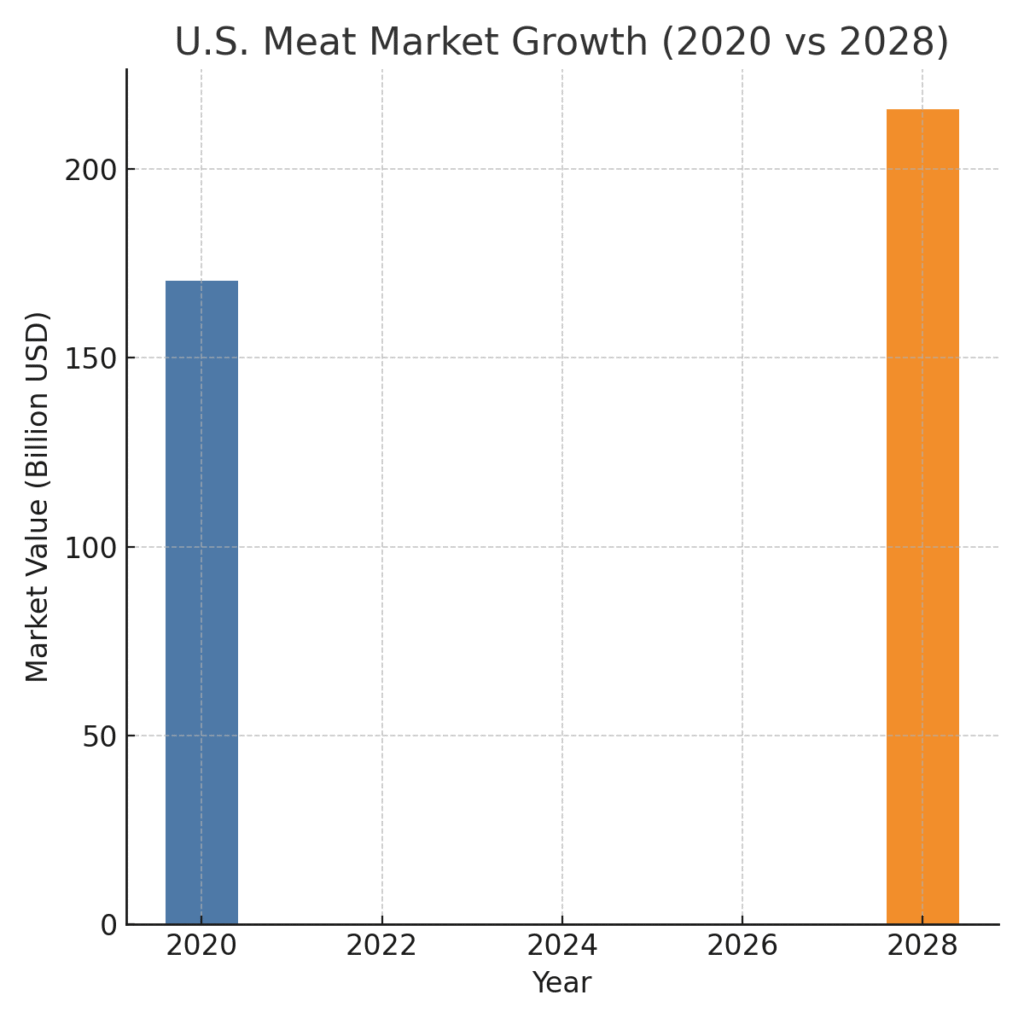
Meat Marketing Statistics #1: Global Meat Market Valued At $1,133.29 Billion In 2024
The global meat market reached an impressive $1,133.29 billion in 2024, showing the sheer scale of consumer demand worldwide. This figure highlights how deeply embedded meat remains in diets across cultures and regions. For marketers, this size reflects the vast opportunities in branding, distribution, and niche targeting. With such a large base, even small shifts in consumer behavior can significantly influence the industry. Companies that adapt early to trends are best positioned to capture new market share.
Meat Marketing Statistics #2: Projected Growth To $1,217.95 Billion In 2025
By 2025, the meat market is projected to grow to $1,217.95 billion, marking a steady 7.5% CAGR. This growth is largely fueled by rising populations and evolving consumer habits. Marketing campaigns will need to highlight quality, health, and sustainability to remain competitive. The pace of growth suggests that even established brands cannot afford complacency. Instead, they must continually innovate their approaches to stay aligned with shifting consumer expectations.
Meat Marketing Statistics #3: Forecasted To Reach $1,599.32 Billion By 2029
Long-term projections estimate the meat market will reach $1,599.32 billion by 2029. This consistent rise demonstrates both the resilience and global demand for meat products. Companies targeting future markets should focus on sustainable sourcing and transparent supply chains. Such strategies align with the values of younger consumers who increasingly drive market trends. Marketers can frame this forecast as both an opportunity and a challenge for innovation.
Meat Marketing Statistics #4: Meat Subscription Market Valued At $1.7 Billion In 2024
The global meat subscription market was valued at $1.7 billion in 2024. This reflects changing consumer preferences toward convenience and curated experiences. Subscriptions allow brands to build loyalty while offering customers premium quality meat directly at their doorstep. Marketing messages for these services often emphasize freshness, trust, and ease of access. With a projected CAGR of 15.2%, this niche will likely become a major trend.
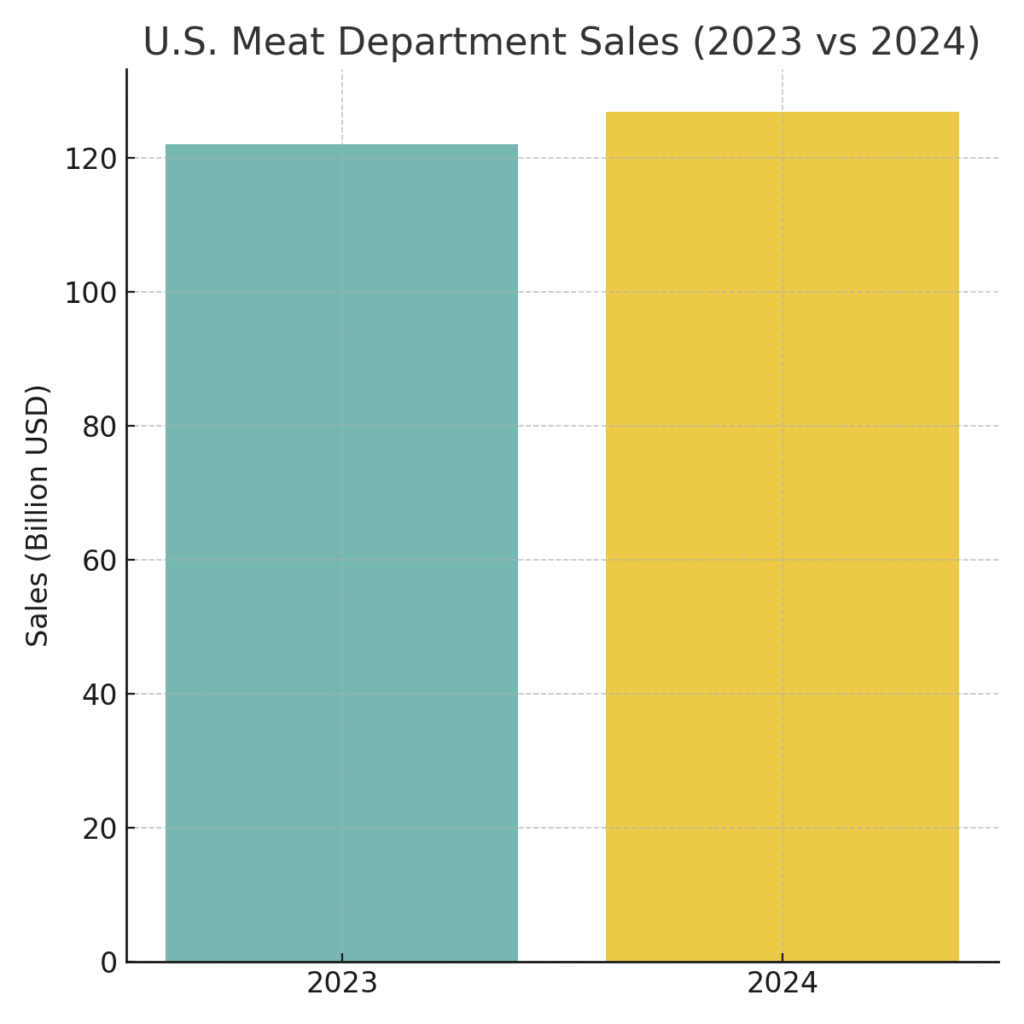
Meat Marketing Statistics #5: U.S. Meat Market Valued At $170.38 Billion In 2020
The U.S. meat market stood at $170.38 billion in 2020, underscoring its role as one of the world’s largest consumer markets. American consumers have traditionally prioritized beef, pork, and poultry in their diets. Marketing within this market often emphasizes heritage, quality, and family traditions. Health and ethical consumption trends are beginning to shape U.S. campaigns more prominently. By 2028, this market is expected to grow to $215.76 billion.
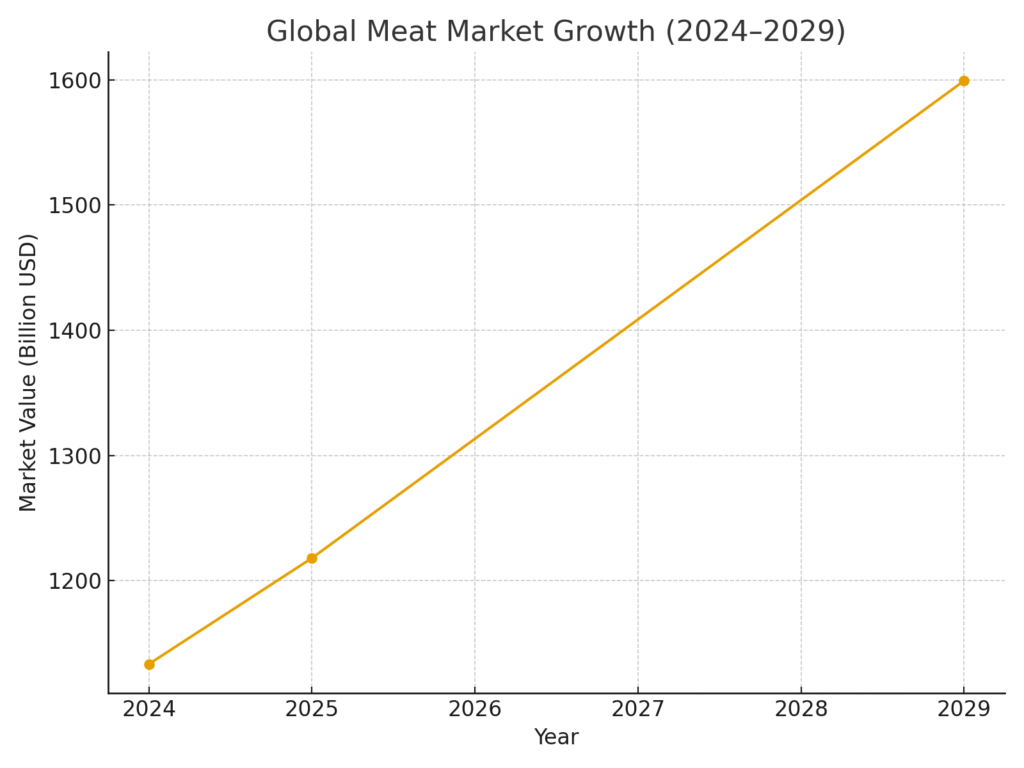
Meat Marketing Statistics #6: U.S. Meat Department Sales At $127 Billion In 2024
In 2024, U.S. meat department sales surpassed $127 billion, marking a 4% increase over the previous year. This growth reflects consumer confidence in both grocery and retail channels. Promotions and in-store marketing continue to be critical in influencing purchase decisions. Many campaigns now focus on premium cuts and ready-to-cook options for busy households. Retailers that combine affordability with quality messaging are leading this segment.
Meat Marketing Statistics #7: Global Meat Production Quadrupled Since 1961
Since 1961, global meat production has more than quadrupled. Poultry, in particular, has experienced the most dramatic increase in relative production. This surge highlights changing diets worldwide and the demand for accessible protein. Marketing campaigns often use this narrative to show progress and affordability. However, concerns about sustainability also challenge marketers to address responsible consumption.
Meat Marketing Statistics #8: Brazil Exported 2.01 Million Metric Tons Of Beef In 2023
Brazil exported 2.01 million metric tons of fresh beef in 2023, highlighting its dominance in global meat supply. Record slaughter levels for chicken and hogs also pushed the country’s meat exports to historic highs. Brazil’s brand positioning emphasizes scale, reliability, and international trade leadership. For marketers, this global reach demonstrates the power of exporting to fuel reputation. International consumers often associate Brazilian meat with both affordability and quality.
Meat Marketing Statistics #9: Brazil Holds 37% Of Chicken Export Market Share
Brazil holds around 37% of the global chicken export market. This commanding share highlights its efficiency and competitiveness. Chicken’s affordability and versatility make it a staple in global diets. Marketing for chicken products often emphasizes family meals, convenience, and health benefits. Brazil’s dominance makes it an influential force in shaping pricing and availability worldwide.
Meat Marketing Statistics #10: Animal Welfare Premiums Average 14.3% Higher Prices
In Switzerland, higher animal welfare scores for meat and fish products correlate with a 14.3% price premium. This shows consumers are willing to pay more for ethical practices. Marketing strategies increasingly emphasize welfare certifications and transparency. Ethical branding connects emotionally with consumers, reinforcing loyalty and trust. As awareness spreads, these premiums will likely grow in importance globally.

Meat Marketing Statistics #11: Certifications Influence Consumer Buying Behavior
Certifications like “organic” and “antibiotic-free” heavily influence meat purchasing decisions. Consumers value safety, trust, and packaging clarity when choosing meat products. Marketing campaigns that showcase these attributes stand out on crowded shelves. Highlighting logos and certifications reassures buyers and justifies higher price points. In competitive markets, this trust-based strategy has become indispensable.
Meat Marketing Statistics #12: Global Meat CAGR Of 7.1% Forecasted For 2025–2032
Between 2025 and 2032, the global meat market is projected to grow at a 7.1% CAGR. This indicates long-term confidence in the sector despite challenges. Marketing strategies must evolve to highlight innovation, sustainability, and consumer health. Such positioning ensures relevance over the next decade. Brands that anticipate change will capture the benefits of this steady growth.
Meat Marketing Statistics #13: Drivers Of Meat Market Growth Identified
Key drivers of meat market growth include urbanization, rising middle classes, and globalization. Population expansion also plays a central role in boosting demand. Marketing campaigns in developing regions often emphasize affordability and accessibility. In more developed regions, campaigns focus on premiumization and ethical values. Understanding these drivers helps brands craft more effective narratives.
Meat Marketing Statistics #14: Plant-Based Alternatives Challenge Traditional Meat Marketing
Plant-based proteins are increasingly competing with traditional meat products. Health and environmental concerns are major factors behind this shift. Marketers in the meat sector must adapt their strategies to differentiate and reassure. Some companies now blend plant-based options with meat to attract flexitarian consumers. These hybrid approaches represent both a challenge and an opportunity for the industry.
Meat Marketing Statistics #15: 18% Of UK Multibuy Offers Involve Meat And Dairy
In the UK, 18% of multibuy offers feature meat and dairy products. Processed meat accounts for about 11% of these promotions. This demonstrates how marketing strategies rely on discounts to maintain volume sales. While these offers drive short-term consumption, they may face backlash from health advocates. Marketers must balance profitability with reputational risks in this context.
Meat Marketing Statistics #16: One Third Of U.S. Adults Aim To Reduce Meat Consumption
Around one third of U.S. adults say they want to reduce their meat consumption. This statistic signals growing awareness of health and sustainability issues. Marketing strategies must evolve to reassure consumers while acknowledging this trend. Some brands respond by diversifying into plant-based offerings. Others emphasize leaner cuts and nutritional benefits to retain their audience.
Meat Marketing Statistics #17: Meat-Free Days Cut Emissions By 52.9%
Introducing weekly meat-free days in cafeterias reduced greenhouse gas emissions by 52.9%. Sales, however, fell by 16.8% during those days. This shows the environmental potential of small changes in consumption. Marketing campaigns can leverage this by highlighting the positive impact of moderation. Positioning meat as part of a balanced diet may become a persuasive strategy.
Meat Marketing Statistics #18: Ethical Segmentation Supports Premium Pricing
Consumers increasingly segment meat products by welfare standards. High-welfare products command around 14.3% higher average prices. This premium demonstrates the market value of ethical practices. Marketing strategies often frame such products as both luxurious and responsible. As consumer awareness grows, this segment is set to expand further.
Meat Marketing Statistics #19: Meat Price Spreads Impact Consumer Costs
Meat price spreads between farm, wholesale, and retail levels affect marketing approaches. Wide spreads can distort consumer perception of value. Marketers must find ways to justify retail prices without alienating buyers. Transparency campaigns and farm-to-table narratives help build trust. Pricing strategies must adapt to balance affordability and profitability.
Meat Marketing Statistics #20: U.S. Beef Industry Data Guides Marketing Decisions
The USDA tracks detailed beef production and pricing data in the U.S. These insights help marketers understand supply chain trends and consumer demand. Retail equivalent values and cattle production statistics are key benchmarks. Brands use this data to forecast campaigns and plan promotions effectively. Reliable statistics ensure marketing strategies align with real-world conditions.
Wrapping It All Up
Looking back at these meat marketing statistics, I feel like I’ve gained more than just knowledge—I’ve gathered perspective. The shifts in consumer habits, the growth forecasts, and even the cultural implications make it clear that the meat industry is as much about storytelling as it is about sales. Personally, I find it exciting to think about how these trends will shape future campaigns and influence the choices we make at the table. For me, it’s a reminder that marketing isn’t simply about pushing products; it’s about connecting meaningfully with people’s values and lifestyles. And honestly, that’s the part of the journey I enjoy the most.
SOURCES
- https://www.reuters.com/world/americas/top-global-meatpacker-jbs-prepares-drop-cattle-slaughter-2026-2025-09-18/ Reuters
- https://www.oecd.org/en/publications/2025/07/oecd-fao-agricultural-outlook-2025-2034_3eb15914/full-report/meat_5462e384.html OECD
- https://gfi.org/resource/cultivated-meat-seafood-and-ingredients-state-of-the-industry/ The Good Food Institute
- https://agriculture.ec.europa.eu/data-and-analysis/markets/overviews/market-observatories/meat_en Agriculture and rural development
- https://fmcggurus.com/reports/fmcg-gurus-meat-plant-based-trends-in-usa-country-report-2025/ FMCG Gurus