



29 Sep TOP 20 Meditation Platform Marketing Statistics 2025
When I began exploring the world of meditation platform marketing statistics, I realized just how rapidly this industry has grown and how important it has become for both users and businesses. As someone who follows wellness technology closely, I’ve seen firsthand how meditation apps like Calm and Headspace are transforming the way people approach mindfulness, relaxation, and self-care. Partnering with a leading marketing agency in New York has also helped me understand the depth of marketing strategies needed to succeed in such a competitive space. In this blog, I want to share with you some of the most powerful statistics shaping meditation platforms today. These numbers reveal where the market is headed, who the key players are, and how marketers can take advantage of this global trend.
Top 20 Meditation Platform Marketing Statistics 2025 (Editor’s Choice)
🧘 Top 20 Meditation Platform Marketing Statistics 2025
Insights into the Booming Meditation App Industry
| # | Category | Key Statistic |
|---|---|---|
| 1 | Market Size | Global meditation app market is projected to reach $7.41 billion by 2029, growing at a CAGR of 7.72% from 2024-2029 |
| 2 | Market Growth | Mindfulness meditation apps market valued at $939 million in 2024 and predicted to reach $19 billion by 2034 at a 35.2% CAGR |
| 3 | Revenue Leaders | Calm generated $7.7 million in-app revenue in January 2024, while Headspace generated $4 million |
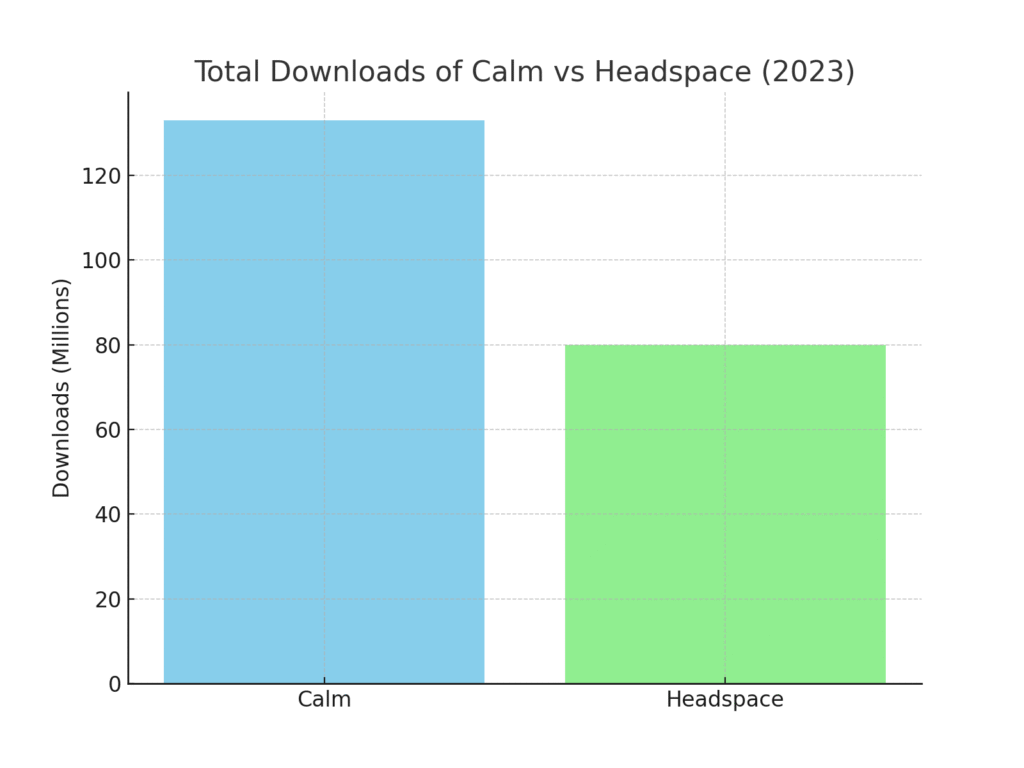
| 4 | User Base | Calm achieved 133 million downloads in 2023, while Headspace reached 80 million downloads |
| 5 | Market Expansion | Over 2,500 meditation apps have entered the market between 2015 and 2020, showing intense competition |
| 6 | Search Demand | Searches for yoga and meditation apps increased by 65% year-over-year between 2019 and 2020 |
| 7 | User Adoption | Usage of meditation apps in the US grew from 12% in Q3 2019 to 20% in Q3 2022 |
| 8 | Regional Dominance | North America dominated the market with 36.9% revenue share in 2023 |
| 9 | Platform Preference | iOS segment led with 48.9% of global revenue share in 2023 |
| 10 | User Demographics | 21% of users aged 18-24 reported using meditation apps like Calm or Headspace, compared to only 9% of users 35+ |
| 11 | Gender Distribution | Women are twice as likely to meditate compared to men - 10.3% of women vs 5.2% of men practice meditation |
| 12 | Age Group Leaders | Adults aged 45-64 show the highest meditation rate at 15.9% in the United States |
| 13 | User Retention | Weighted attrition rate from meditation apps is 24.7% in randomized controlled trials |
| 14 | Engagement Rate | Among Calm subscribers, 60% use the app 5+ times per week, 27.45% use it 3-4 times weekly |
| 15 | Download Leader | Better Sleep was the most downloaded meditation app globally in January 2024 with 1.04 million downloads |
| 16 | Market Share | Calm and Headspace combined hold 43% of the global meditation app market as of January 2023 |
| 17 | Revenue Model | Free services held the largest market share in 2023, but paid subscriptions are 59.6% of revenue generation |
| 18 | User Motivation | 92% of meditation practitioners engage in meditation primarily for stress relief and relaxation |
| 19 | Corporate Adoption | 52% of employers offer meditation packages as part of company benefits for employee wellness |
| 20 | Pandemic Impact | Global downloads of emotional well-being apps increased 42% year-over-year during Jan-Oct 2020, reaching nearly 100 million |
Top 20 Meditation Platform Marketing Statistics 2025
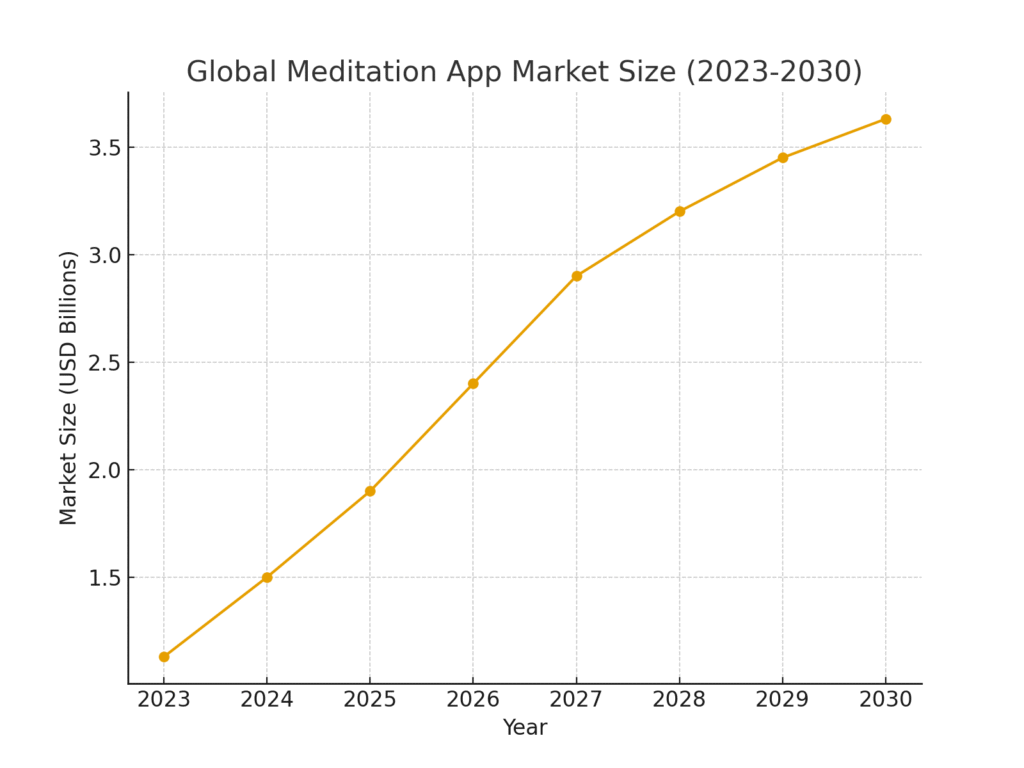
Meditation Platform Marketing Statistics #1: Market Value At USD 1.13 Billion In 2023
The global meditation management apps market was valued at USD 1,131.9 million in 2023. This figure shows just how much people are willing to spend on digital mindfulness solutions. With millions turning to meditation for stress relief, the market has become both competitive and lucrative. The number also sets the stage for aggressive marketing by platform owners. For anyone in digital wellness, this is a clear signal of strong consumer demand.
Meditation Platform Marketing Statistics #2: Market To Reach USD 3.63 Billion By 2030
Forecasts show that the market will rise to USD 3,632.3 million by 2030. This exponential growth highlights the increasing acceptance of meditation as a mainstream health tool. It also creates opportunities for platforms to expand services like personalized meditation plans. Marketers should focus on long-term engagement strategies to capture loyal customers. This trend points to years of sustainable growth in the wellness space.
Meditation Platform Marketing Statistics #3: CAGR Of 18.5% Expected
From 2024 to 2033, the market is expected to grow at a CAGR of around 18.5%. That’s a staggering pace for a health-focused industry. Such consistent growth means platforms must adapt with innovation to stay competitive. Subscription models, in-app purchases, and bundles are likely to dominate. For brands, this CAGR shows there’s plenty of room for aggressive marketing expansion.
Meditation Platform Marketing Statistics #4: Broader Market Reaching USD 22.3 Billion By 2029
The broader mindfulness and meditation market is projected to hit USD 22.3 billion by 2029. This includes not only apps but also in-person services, courses, and devices. For platforms, it means entering partnerships with holistic health providers could be a smart move. It also indicates that marketing opportunities extend beyond apps alone. This larger ecosystem benefits any marketer willing to diversify.
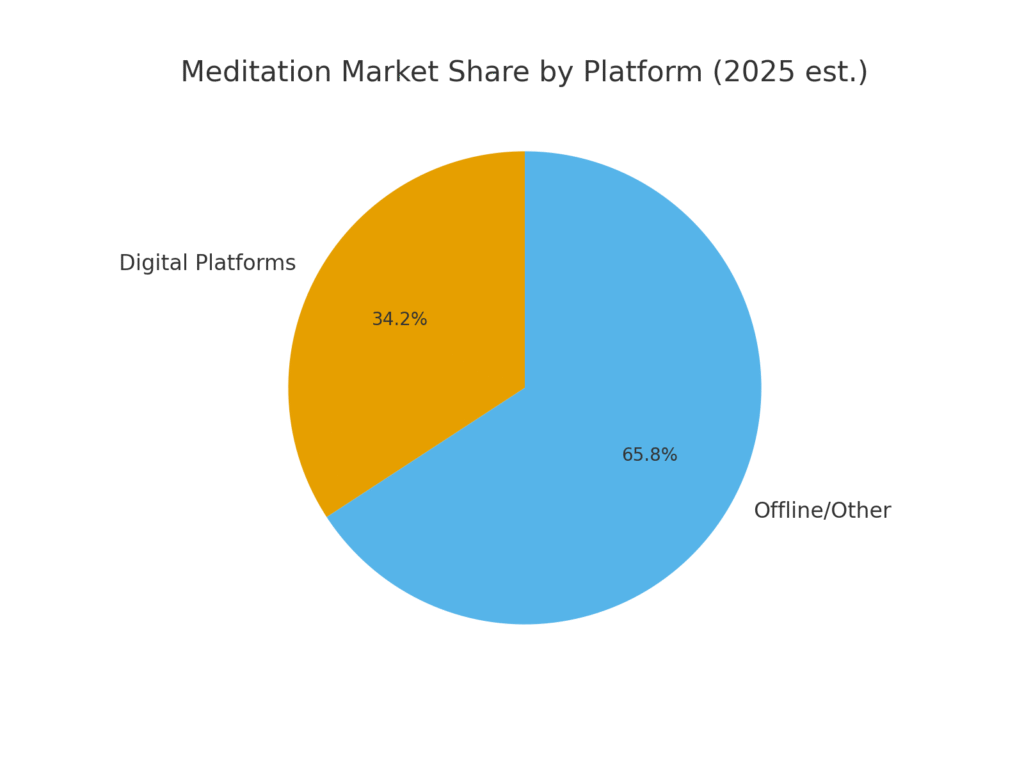
Meditation Platform Marketing Statistics #5: Digital Platforms Hold 34.2% Market Share
In 2025, digital meditation platforms are estimated to capture 34.2% of the global market share. This dominance shows how users prefer mobile and online access to wellness. It also indicates that brick-and-mortar centers face competition from app-based solutions. Marketing should highlight accessibility and convenience to reinforce this digital dominance. The trend emphasizes the world’s shift toward digital wellness solutions.
Meditation Platform Marketing Statistics #6: USD 880 Million Wellness App Revenue In 2024
In 2024, wellness apps overall generated USD 880 million in revenue. Meditation apps made up a major part of this total. While some apps are struggling to maintain engagement, the demand for mindfulness tools is still very strong. Marketers can highlight mental health benefits in campaigns to maintain growth. This number proves meditation platforms are central to the wellness industry.
Meditation Platform Marketing Statistics #7: 65% Growth In Search Interest
Google searches for “yoga/meditation apps” grew by around 65% year-on-year. This spike in interest shows how digital marketing strategies must capture rising curiosity. Marketers can leverage SEO and app store optimization for growth. Social media campaigns tied to wellness trends also help in conversions. Such statistics highlight how digital discovery fuels meditation platforms.
Meditation Platform Marketing Statistics #8: 2,500 Apps Launched Since 2015
Over 2,500 meditation apps have been launched globally since 2015. This massive number shows how competitive the market is. With so many apps, standing out requires smart branding and user-centric design. Marketing should emphasize differentiation, such as unique features or guided sessions by experts. Consumers now expect variety, making innovation critical.
Meditation Platform Marketing Statistics #9: Calm Hits 133 Million Downloads
Calm, one of the most popular apps, has surpassed 133 million downloads worldwide. This stat shows the sheer demand for meditation platforms. For marketers, it’s proof that consumers are willing to commit to top-tier apps. The challenge lies in competing against such giants. Smaller apps must find niche markets or creative engagement strategies.
Meditation Platform Marketing Statistics #10: Headspace With 2.8 Million Paying Subscribers
Headspace currently has around 2.8 million paying subscribers. This is a prime example of converting free users into loyal premium customers. Subscription-based revenue models are the backbone of app monetization. Marketing strategies should highlight added value in paid plans. This stat emphasizes the importance of retention campaigns.
Meditation Platform Marketing Statistics #11: Top 10 Apps Garnered 52 Million Installs In 2019
Back in 2019, the top 10 meditation apps had 52 million installs combined. This stat shows how early momentum built the industry foundation. Marketers should note that early adoption paved the way for today’s billion-dollar valuations. Even then, users were eager for digital mindfulness solutions. It shows the long-standing demand for these platforms.
Meditation Platform Marketing Statistics #12: Calm Generated USD 119.19 Million In 2021
In 2021, Calm earned USD 119.19 million in consumer spending. This revenue came largely from premium subscriptions. Marketers can learn how effective premium offerings are when bundled with free trials. This shows the importance of highlighting exclusive content. Strong monetization requires both scale and premium strategies.
Meditation Platform Marketing Statistics #13: Headspace Revenue At USD 86 Million In 2021
That same year, Headspace earned USD 86 million in consumer spend. This reinforces how well the freemium model works in meditation apps. Revenue highlights the strong demand for mental wellness support. For marketers, building trust is key to driving premium adoption. Headspace remains a model of user engagement done right.
Meditation Platform Marketing Statistics #14: Top 10 Apps Generated USD 195 Million
The top 10 meditation apps collectively generated USD 195 million during peak years. This proves the overall market power of premium mindfulness solutions. Marketing partnerships and influencer campaigns likely boosted these figures. Consumers show strong willingness to pay when benefits are clear. Platforms that add extra services like sleep aids see greater growth.
Meditation Platform Marketing Statistics #15: U.S. Meditation Market At USD 2.4 Billion
In the U.S., the meditation market is estimated at around USD 2.4 billion. This indicates massive opportunity for localized campaigns. U.S. consumers are highly aware of digital wellness benefits. Marketing should focus on personalization and cultural trends. The U.S. market remains one of the largest contributors worldwide.
Meditation Platform Marketing Statistics #16: iOS Users Spend More On Meditation Apps
Reports show iOS users spend more than Android users on meditation apps. This means marketers should prioritize Apple platforms for premium campaigns. It also reflects stronger spending capacity among iOS audiences. App store optimization for iOS becomes especially important. Developers should tailor features to iOS audiences to maximize ROI.
Meditation Platform Marketing Statistics #17: Freemium Dominates Acquisition Strategies
The freemium model dominates in meditation platforms. Free tiers attract millions of users, while premium plans convert the most engaged. Marketing strategies should balance giving enough value for free while encouraging upgrades. It’s a careful balance that defines the success of most leading apps. Offering free value creates trust and loyalty.
Meditation Platform Marketing Statistics #18: Bundled Services Increasingly Popular
Many meditation apps now bundle services like sleep, music, and therapy. This diversification increases retention and average revenue per user. Marketing messages should emphasize the “all-in-one” experience. Users prefer holistic wellness in one place. Bundling has become one of the smartest ways to scale.
Meditation Platform Marketing Statistics #19: Headspace Backed By 50+ Studies
Headspace is supported by over 50 peer-reviewed studies proving its effectiveness. This gives the brand immense credibility. Marketers should highlight scientific backing to increase trust. Consumers are more likely to invest in platforms proven to improve mental health. Evidence-based marketing resonates strongly in wellness industries.
Meditation Platform Marketing Statistics #20: Millennials And Gen Z Drive 41% Of Wellness Spend
Millennials and Gen Z account for 41% of global wellness spending while making up only 36% of the population. This shows their disproportionate role in driving growth. Digital natives are most likely to download and pay for meditation apps. Marketing campaigns should heavily target these age groups. Generational focus ensures higher adoption rates.
Final Thoughts On Meditation Platform Marketing Statistics
After reviewing these meditation platform marketing statistics, I’m more convinced than ever about the future of digital wellness. Personally, I find it inspiring to see how technology can connect people to something as ancient and powerful as meditation. The blend of science, design, and marketing strategies makes this space unique. As someone who values mindfulness in daily life, I believe platforms that combine authenticity with smart marketing will thrive. These statistics give me hope that wellness will continue to be accessible to millions worldwide.
SOURCES
-
https://www.rootsanalysis.com/reports/meditation-market.html
-
https://finance.yahoo.com/news/meditation-market-poised-explosive-growth-140000959.html
-
https://appinventiv.com/blog/latest-meditation-app-statistics/
-
https://www.mckinsey.com/industries/consumer-packaged-goods/our-insights/future-of-wellness-trends