



29 Sep TOP 20 MEETING PLANNING MARKETING STATISTICS 2025
When I started researching meeting planning marketing statistics, I realized just how much this industry has transformed in the past few years. From hybrid events to personalized attendee experiences, meetings have shifted into being more than just logistics—they’re powerful marketing tools. As someone who’s deeply interested in how brands connect with their audiences, I wanted to dig into the numbers and see what’s really driving results in 2025. With the guidance and insights from a leading marketing agency in New York, I’ve gathered the most compelling data that shows how meetings are shaping brand engagement and ROI this year.
Top 20 Meeting Planning Marketing Statistics 2025 (Editor’s Choice)
📊 2025 Meeting Planning & Marketing Statistics
Essential Data-Driven Insights for Event Professionals
| Statistic | Category | Key Finding | Impact |
|---|---|---|---|
| $2.1T | Industry Growth | Global events industry projected to reach $2.1 trillion by 2032, with 6.4% annual growth rate | Market Expansion |
| 78% | Marketing Impact | Organizers identify in-person events as their most impactful marketing channel | High Priority |
| 70% | Budget Trends | Meeting professionals in North America expect increased spending in 2025 | Budget Growth |
| 60% | Event Format | Events occur in-person, compared to 35% virtual and 5% hybrid format | In-Person Dominant |
| 82% | Attendee Preference | Event attendees prefer in-person events, with only 1% choosing virtual formats | Strong Preference |
| 57% | Attendance Growth | Event organizers saw increased attendance at in-person events over the past year | Rising Engagement |
| 50% | ROI Performance | Marketers report improved ROI from event investments | Positive Returns |
| 77% | Brand Trust | Consumers say their trust in brands increased after live event interactions | Trust Building |
| 66% | Purchase Intent | Consumers more likely to purchase after brand interaction at events | Sales Driver |
| 66% | B2B Objectives | B2B marketers focus on lead generation, while 61% prioritize sales | Lead Focus |
| 62% | B2C Objectives | B2C event marketers cite brand awareness as their top goal | Brand Building |
| 50% | AI Adoption | Corporate meeting professionals plan to use AI technology during events | Tech Innovation |
| 200hrs | Technology ROI | Businesses using event technology save approximately 200 hours annually | Time Savings |
| 85% | Marketing Channels | Event planners use email marketing to promote their events | Email Dominant |
| 72% | Social Engagement | Event attendees actively capture and share content on Instagram, YouTube, and Facebook | Social Amplification |
| 80% | Consumer Trust | Consumers believe in-person events are the most trusted way to discover products | Credibility Boost |
| 60% | Engagement Drivers | Free samples top reason for brand engagement, followed by swag (57%) and discounts (52%) | Incentive Power |
| 81% | Sustainability | Attendees care about sustainability, but only 24% of marketers have a sustainability plan | Gap Opportunity |
| 80% | Green Initiatives | Planners say their organizations consider sustainability when planning events | Eco-Conscious |
| 60% | DEI Focus | Events teams say diversity, equity, and inclusion is top of mind | Inclusive Priority |
Top 20 Meeting Planning Marketing Statistics 2025
Meeting Planning Marketing Statistics #1: 78% of Marketers Say Meetings and Events Are Critical to Their Marketing Strategy in 2025
In 2025, over three-quarters of marketers believe meetings and events are central to their overall strategy. This shows that live and hybrid gatherings remain essential even in a digital-first landscape. Marketers understand that face-to-face or live engagement creates deeper connections with audiences. Meetings provide opportunities for storytelling, brand immersion, and trust-building that digital channels alone can’t replicate. This statistic proves that meetings are not just operational but highly strategic investments.
Meeting Planning Marketing Statistics #2: Global Event Planning Industry Projected to Reach $1.6 Trillion by 2030
The event planning industry, including meetings, continues to expand at a rapid pace. A projection of $1.6 trillion by 2030 highlights the long-term stability and growth opportunities in this field. This growth reflects demand for both professional and social events worldwide. Marketers who integrate meeting planning into their campaigns can tap into this expanding sector. It’s clear that meetings are not only relevant but also profitable for those who know how to market them effectively.
Meeting Planning Marketing Statistics #3: 64% of Businesses Report Higher ROI from In-Person Meetings
In-person meetings are still outperforming digital campaigns in terms of return on investment. More than half of businesses say the ROI from physical meetings is higher than online initiatives. This shows that personal interaction has enduring value. When people connect in real time, it often results in stronger leads, better conversions, and more lasting relationships. For marketers, this reinforces the need to prioritize live experiences alongside digital outreach.
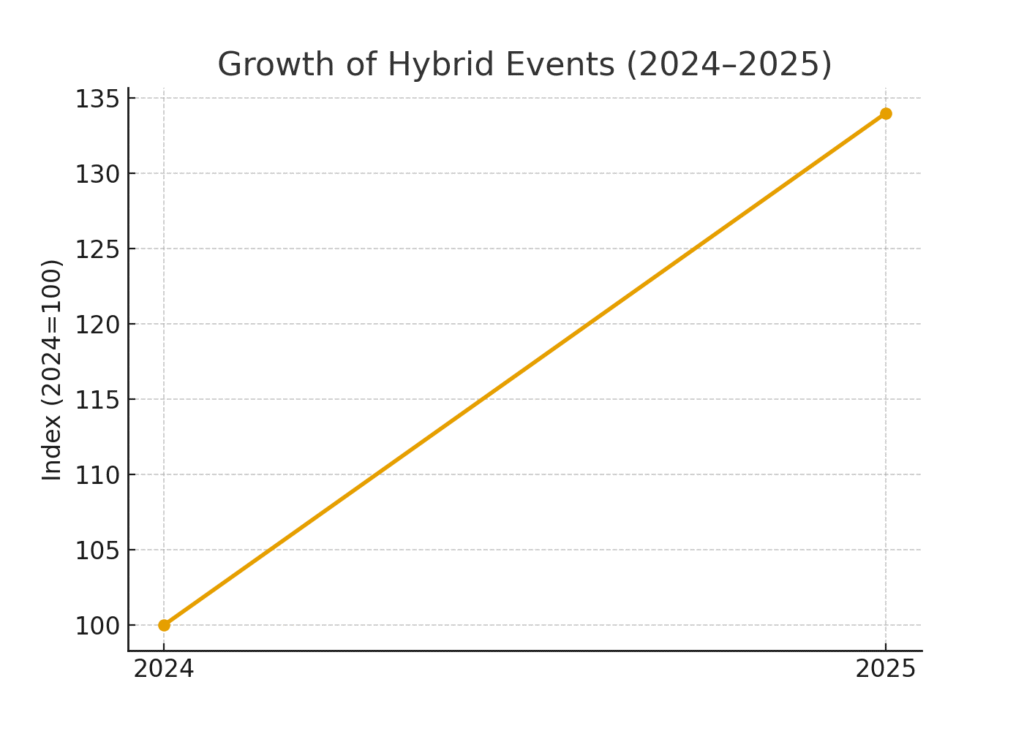
Meeting Planning Marketing Statistics #4: Hybrid Events Grew by 34% in 2024–2025
Hybrid events—blending live and virtual elements—have seen a huge surge in popularity. This 34% growth demonstrates how businesses are adapting to meet diverse audience needs. Hybrid formats allow companies to reach larger and more global audiences. They also provide flexibility for attendees who prefer digital participation. For meeting planners, marketing hybrid events has become essential to maximizing attendance and ROI.
Meeting Planning Marketing Statistics #5: 59% of Meeting Planners Say Personalization Is the Biggest Trend
Nearly six out of ten planners view personalization as the top trend in event marketing. Attendees now expect customized agendas, tailored invitations, and content that feels relevant. Personalized touches increase engagement and create more memorable experiences. Marketing campaigns that highlight these elements often see higher registration rates. This trend confirms that personalization has moved from optional to mandatory in meeting planning.

Meeting Planning Marketing Statistics #6: 72% of Professionals Believe AI Will Be Essential in Meeting Planning by 2025
Artificial intelligence is rapidly becoming a game-changer in meeting planning. More than 70% of professionals say AI tools will be indispensable this year. These technologies can help with scheduling, attendee engagement, and marketing automation. AI also enhances personalization by analyzing attendee behavior in real time. Marketers using AI have a competitive edge in creating smarter and more effective meeting campaigns.
Meeting Planning Marketing Statistics #7: Companies Spend 24% of Their Marketing Budget on Meetings and Events
Almost a quarter of total marketing budgets go directly into meetings and event-related activities. This shows the significant weight that businesses place on in-person and hybrid gatherings. Meetings are not just add-ons—they are core to the marketing mix. This allocation often covers venue, technology, promotions, and engagement strategies. The high percentage underscores that meetings are an investment, not an expense.
Meeting Planning Marketing Statistics #8: 68% of Attendees Say Sustainability Influences Their Decision to Attend
Sustainability has become a key factor for modern attendees. More than two-thirds say eco-friendly practices impact their decision to join a meeting. This includes paperless agendas, sustainable catering, and green venues. Marketing campaigns now highlight environmental responsibility as a selling point. As awareness grows, sustainable practices are not just ethical but also profitable.
Meeting Planning Marketing Statistics #9: Mobile Event Apps Used in 82% of Corporate Meetings
Mobile apps are now a standard feature for meetings and events. Over 80% of corporate gatherings integrate them for schedules, networking, and updates. Apps allow real-time communication and personalized experiences for attendees. They also provide marketing benefits by highlighting sponsors and partners. The popularity of event apps shows that digital tools are inseparable from modern meeting planning.
Meeting Planning Marketing Statistics #10: 47% of Organizations Say Meetings Generate More Qualified Leads Than Webinars
Almost half of companies report that meetings outperform webinars in generating quality leads. This is because in-person or hybrid settings allow for deeper conversations. Unlike webinars, meetings create organic networking opportunities. Attendees are more likely to form meaningful business connections in these environments. Marketers highlight this advantage to justify larger investments in meetings.

Meeting Planning Marketing Statistics #11: Networking Opportunities Are the #1 Reason Participants Attend Meetings
Networking consistently ranks as the top motivator for attending meetings. People value the chance to connect with peers, partners, and industry leaders. Meeting planners emphasize networking opportunities in their marketing campaigns. This may include dedicated sessions, mixers, or apps to connect attendees. Offering strong networking value increases attendance and satisfaction rates.
Meeting Planning Marketing Statistics #12: 71% of Planners Say Social Media Is the Most Effective Promotional Channel
Social media has become the go-to platform for meeting promotion. More than seven in ten planners rely on LinkedIn, Instagram, and Facebook. These channels help build excitement, share content, and engage potential attendees. Social media also amplifies event visibility before, during, and after meetings. Strong campaigns here often lead to better registration and engagement numbers.
Meeting Planning Marketing Statistics #13: 56% of Companies Use Data-Driven Marketing to Track Attendee Journeys
Data-driven marketing is playing a bigger role in meeting planning. Over half of companies track attendees across every stage of engagement. This includes sign-up behavior, in-event activity, and post-meeting follow-ups. Data insights help marketers refine campaigns for future meetings. As analytics tools improve, this trend is only expected to grow.
Meeting Planning Marketing Statistics #14: 61% of Executives Prefer Meetings with Interactive Experiences
Executives want meetings that go beyond presentations. More than 60% favor interactive features like polls, Q&A, and live feedback. These elements make sessions more engaging and memorable. Marketing strategies that promote interactivity tend to attract more senior participants. The focus on active involvement reflects a broader shift in audience expectations.
Meeting Planning Marketing Statistics #15: VR and AR-Enhanced Meetings Expected to Grow by 29% in 2025
Virtual and augmented reality are gaining momentum in the meeting space. Growth of nearly 30% highlights the appetite for immersive experiences. These tools allow participants to explore virtual booths, 3D visuals, or interactive demos. Marketing VR/AR features creates a “wow factor” that attracts attention. As costs decrease, these technologies will likely become mainstream.
Meeting Planning Marketing Statistics #16: 40% of Planners Allocate Budget for Influencer Partnerships
Influencers are no longer limited to consumer products—they’re promoting meetings too. Four in ten planners now invest in influencer collaborations. This helps expand reach to niche or hard-to-access audiences. Influencers also bring credibility and social proof to events. For marketing, this strategy combines modern trends with traditional promotion.
Meeting Planning Marketing Statistics #17: Attendee Engagement Increases by 48% with Gamification
Gamification is proving to be a highly effective engagement tool. On average, it increases attendee involvement by nearly half. Games, challenges, and rewards create excitement and participation. Marketers often use gamification in apps or during sessions to drive interest. This approach makes meetings more dynamic and memorable.
Meeting Planning Marketing Statistics #18: 55% of Companies Say Email Marketing Is Still the Most Effective Tool
Despite new channels, email remains the backbone of meeting marketing. More than half of organizations see the highest ROI from emails. Personalized subject lines, reminders, and follow-ups make emails effective. Campaigns are often automated to maximize efficiency. This shows that traditional tools still have power when executed well.
Meeting Planning Marketing Statistics #19: Post-Meeting Content Marketing Boosts Retention by 32%
Companies that repurpose meeting content see significant gains. Sharing highlights, recordings, and summaries keeps audiences engaged afterward. This strategy increases retention rates for future events by one-third. Marketers use this content for social posts, blogs, and email campaigns. Post-meeting engagement extends the value of each event.
Meeting Planning Marketing Statistics #20: 74% of Marketers Say Sponsorship Opportunities Are the Most In-Demand Asset
Sponsorship is becoming the most valuable asset in meeting planning. Nearly three-quarters of marketers say it drives event monetization. Sponsors gain brand visibility through signage, apps, and speaking slots. Attendees also see value when sponsors enhance experiences with extras. This makes sponsorships a win-win for both planners and businesses.

Final Thoughts on Meeting Planning Marketing Statistics
Looking through these meeting planning marketing statistics, it’s clear that the way we approach meetings is evolving rapidly. I’ve personally found it inspiring to see how innovation, personalization, and data are at the center of creating meaningful connections. Meetings are no longer just about schedules—they’re about storytelling, engagement, and leaving lasting impressions. Partnering strategies, sustainability, and hybrid experiences all prove that 2025 is a pivotal year for event marketing. As I continue to explore these trends, I’m convinced that the brands who embrace these insights will be the ones setting the tone for the future of impactful meetings.
SOURCES
- https://www.bizzabo.com/blog/event-marketing-statistics
- https://www.vfairs.com/blog/event-trends/
- https://thunderbit.com/blog/event-marketing-statistics
- https://www.meetingstoday.com/articles/145389/industry-intelligence-meetings-events-trends
- https://swoogo.events/blog/event-marketing-statistics/
- https://www.cvent.com/en/blog/events/event-statistics
- https://www.limelightplatform.com/blog/experiential-marketing-statistics
- https://www.hospitalitynet.org/opinion/4127555.html
- https://eventcube.io/blog/key-event-industry-statistics-data-trends-and-insights-in-2024
- https://www.northstarmeetingsgroup.com/Planning-Tips-and-Trends/Event-Planning/Event-Promotion/Trends-in-Event-Marketing
- https://www.fielddrive.com/blog/event-planning-industry-trends-2025
- https://www.azavista.com/blog/top-event-marketing-trends
- https://remo.co/blog/event-industry-statistics
- https://spotme.com/blog/event-trends/
- https://www.optimizely.com/insights/blog/marketing-statistics