




20 Sep TOP 20 MICROSERVICE MARKETING STATISTICS 2025
When I first started exploring how businesses adapt to new digital landscapes, I quickly realized just how powerful microservices have become in shaping modern strategies. That’s why I decided to put together this collection of microservice marketing statistics—because the data doesn’t just tell a story, it shows where the industry is headed. As part of a leading marketing agency in New York, I often work with brands who want to stay ahead of the curve, and microservices are a huge part of that journey. For me, it’s not just about numbers; it’s about seeing how companies use innovation to scale, perform better, and connect more meaningfully with their audiences.
Top 20 Microservice Marketing Statistics 2025 (Editor’s Choice)
🚀 Top 20 Microservices Marketing Statistics
Essential Data Points for 2025 and Beyond
| # | Category | Statistic |
|---|---|---|
| 1 | Market Size | Global microservices architecture market valued at $4.2B in 2024, expected to reach $13.1B by 2033 (CAGR: 12.7%) |
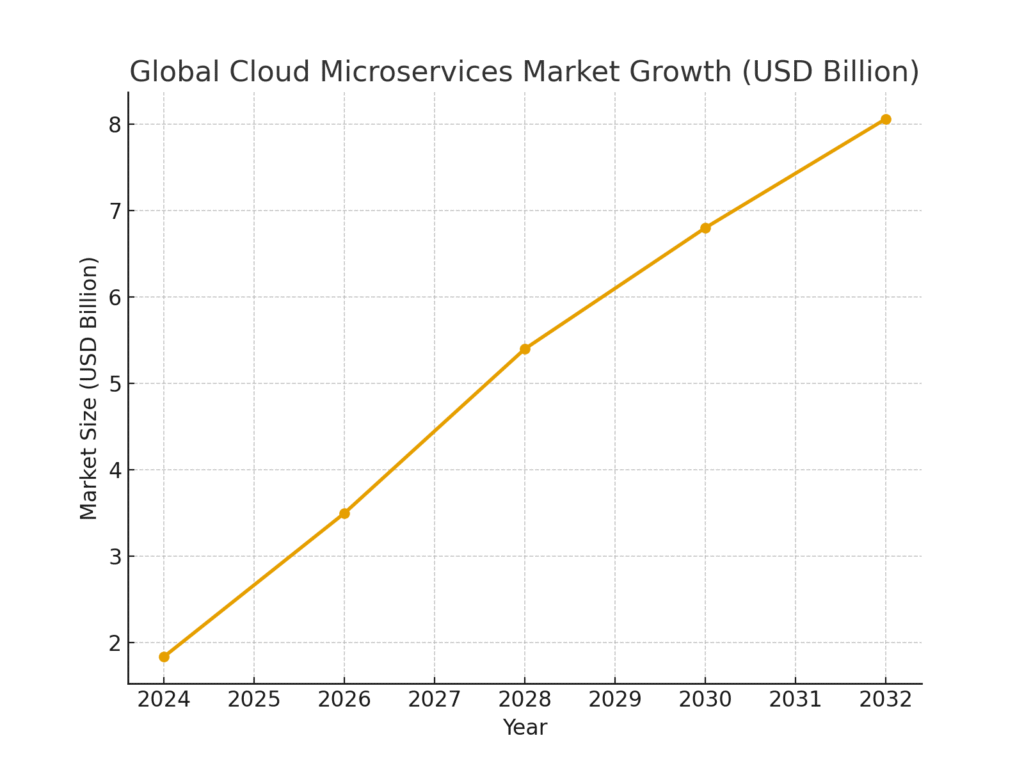
| 2 | Market Growth | Cloud microservices market at $1.84B in 2024, projected to hit $8.06B by 2032 (CAGR: 20.3%) |
| 3 | Market Expansion | Microservices architecture market from $6.5B in 2023 to $30.0B by 2032 (CAGR: 18.5%) |
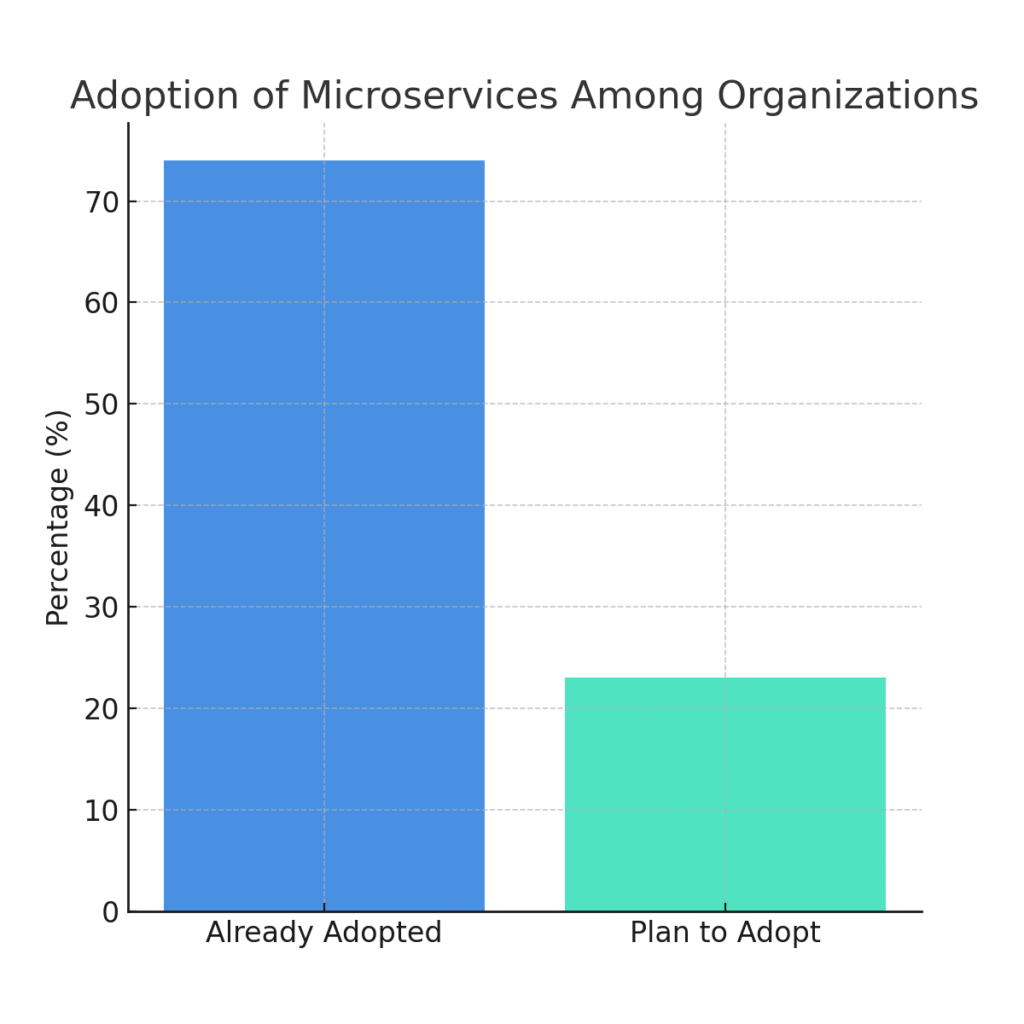
| 4 | Adoption Rate | Gartner reports 74% of organizations currently use microservices |
| 5 | Enterprise Usage | 74% of enterprises are currently using microservices architecture |
| 6 | Industry Adoption | 63% of companies surveyed are currently using microservices architectures |
| 7 | Market Penetration | O'Reilly 2022 survey shows 77% of organizations adopted microservices |
| 8 | Large Enterprise | 85% of large organizations (5,000+ employees) use microservices |
| 9 | Success Rate | 92% of respondents achieved at least some success with microservices |
| 10 | Implementation Success | 54% describe use as "mostly successful" or better |
| 11 | Time to Market | 60% adopt microservices to achieve faster time to market for products/services |
| 12 | Digital Transform | 54% use microservices to support digital transformation initiatives |
| 13 | Team Productivity | 61% report improved team autonomy and faster delivery times |
| 14 | Production Scale | 58% run 10-49 microservices in production, 15% run 100+ |
| 15 | Management | 45% manage a suboptimal but satisfactory number of microservices |
| 16 | Cloud-First | 85% of new apps will follow cloud-first principle by 2025 |
| 17 | Migration Trend | 29% of organizations migrated legacy apps to microservices in 2025 |
| 18 | Container Success | Organizations using containers for deployment report significantly higher success rates |
| 19 | Regional Leader | North America dominates global microservice architecture market in 2023 |
| 20 | Market Leadership | North America holds major market share due to advanced tech adoption and key players |
Top 20 Microservice Marketing Statistics 2025
Microservice Marketing Statistics#1 Global Cloud Microservices Market Valued At USD 1.84 Billion In 2024
The global cloud microservices market was valued at USD 1.84 billion in 2024, showing how rapidly the architecture is being embraced. Analysts project it will grow to USD 8.06 billion by 2032, signaling a massive acceleration. This growth highlights businesses’ shift toward modular, flexible solutions that support faster scaling. For marketers, it means an increased focus on agility and speed in digital campaigns. Clearly, companies are seeing that cloud microservices are not just a trend but a long-term strategy.
Microservice Marketing Statistics#2 Microservices Architecture Market Forecasted To Reach USD 11.8 Billion By 2032
In 2023, the microservices architecture market was valued at USD 3.7 billion. Forecasts predict it will expand to USD 11.8 billion by 2032, a CAGR of nearly 14%. This growth shows how industries are standardizing microservices as a cornerstone of software development. For marketing teams, the rising adoption means more innovative products and faster time-to-market. It underlines how microservices are transforming not just IT but the entire business landscape.
Microservice Marketing Statistics#3 Microservices Architecture Expected To Hit USD 30 Billion By 2032
Another report found the microservices architecture market was valued at USD 6.5 billion in 2023. It is projected to reach USD 30 billion by 2032, growing at an 18.5% CAGR. That kind of growth reflects businesses investing heavily in long-term scalability. For marketers, this means increased demand for strategies that showcase agility and adaptability. This surge demonstrates how important microservices are becoming to global innovation.
Microservice Marketing Statistics#4 Cloud Microservices Market Projected At USD 11.36 Billion By 2033
The cloud microservices market was estimated at USD 1.93 billion in 2024. By 2033, it is projected to reach USD 11.36 billion, with a CAGR of nearly 22%. Such growth represents businesses betting on microservices for cost efficiency and flexibility. It also highlights the rising interest in SaaS solutions powered by modular architecture. For marketing professionals, this creates opportunities to highlight cloud-native advantages in campaigns.
Microservice Marketing Statistics#5 74% Of Organizations Already Using Microservices Architecture
According to Gartner, 74% of organizations have already implemented microservices. Another 23% plan to adopt it soon, showing near-universal interest. This adoption rate signals that microservices are becoming mainstream across industries. For marketers, it indicates a new normal where microservices power customer-facing applications. It also means messaging strategies need to highlight resilience and faster innovation.
Microservice Marketing Statistics#6 29% Began Adopting Microservices Within The Last 1–3 Years
Among organizations adopting microservices, 29% started 1–3 years ago. Another 22% began only within the past 12 months. This reveals how adoption has recently accelerated. Businesses are feeling increased pressure to modernize quickly. From a marketing perspective, this shows an urgency to communicate speed-to-market as a key benefit.
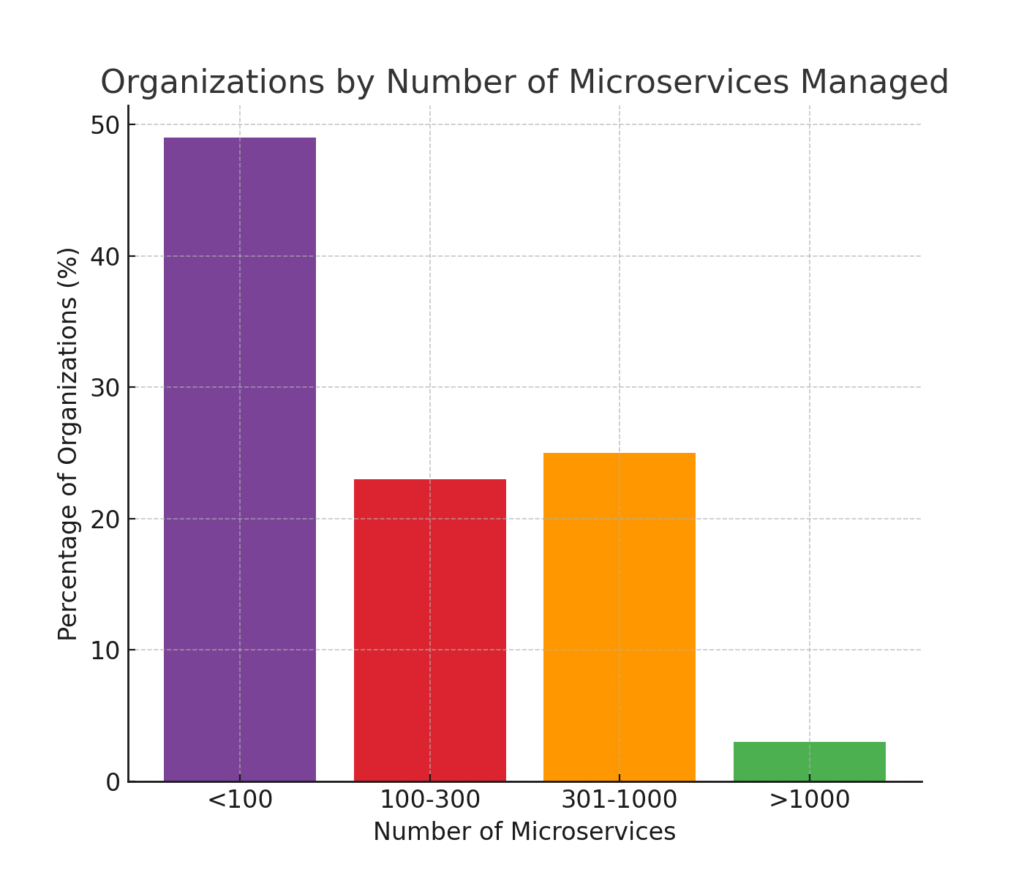
Microservice Marketing Statistics#7 49% Manage Fewer Than 100 Microservices Today
Nearly half of organizations using microservices currently manage fewer than 100 services. Another 23% manage between 100 and 300. Only 3% manage over 1,000 microservices. This indicates that while adoption is widespread, scaling remains a challenge. Marketers can position solutions around simplifying growth and reducing complexity.
Microservice Marketing Statistics#8 88% Say Microservice Integration Was Moderately Or Very Successful
A survey showed that 88% of organizations felt microservice integration was moderately successful or better. This positive sentiment demonstrates the practical benefits of adoption. It also reduces skepticism among businesses considering microservices. From a marketing standpoint, it’s an opportunity to showcase success stories and case studies. Strong results fuel more interest and market momentum.
Microservice Marketing Statistics#9 77% Of Businesses Have Adopted Microservices Architecture
According to an O’Reilly survey, 77% of businesses have embraced microservices. Even more telling, 92% report the move has been successful. This high satisfaction level suggests microservices deliver real-world value. Marketers can use this as proof when convincing hesitant companies. Success rates at this level make a strong case for wider adoption.
Microservice Marketing Statistics#10 Cloud Microservices Market To Reach USD 22.1 Billion By 2031
The cloud microservices market is expected to grow from USD 7.5 billion in 2024 to USD 22.1 billion by 2031. That represents a CAGR of about 17%. The numbers show just how fast this space is scaling. Businesses clearly see it as essential for digital transformation. For marketing leaders, it means positioning services around scalability and competitive advantage.
Microservice Marketing Statistics#11 Solution Segment Held 66.9% Share In 2024
In 2024, the solution segment accounted for nearly 67% of the cloud microservices market. This shows companies prioritize ready-to-deploy tools over complex custom builds. It reflects how businesses want fast, reliable, and packaged solutions. Marketing strategies can emphasize quick implementation and lower setup costs. The dominance of solutions highlights demand for efficiency.
Microservice Marketing Statistics#12 Public Cloud Segment Leads Deployment
The public cloud segment held the largest share of cloud microservices deployments in 2024. This aligns with global trends toward public cloud adoption. Organizations value its cost savings and scalability. For marketers, it highlights the importance of positioning public cloud as flexible yet secure. The trend also suggests future campaigns will need to address hybrid solutions.
Microservice Marketing Statistics#13 Large Enterprises Hold The Largest Share In 2024
Large enterprises accounted for the largest revenue share in 2024. Their resources make them early adopters of microservices. They value flexibility and the ability to scale rapidly. For marketers, enterprise clients represent a high-value target audience. It also shows the importance of tailoring messaging to big businesses’ needs.
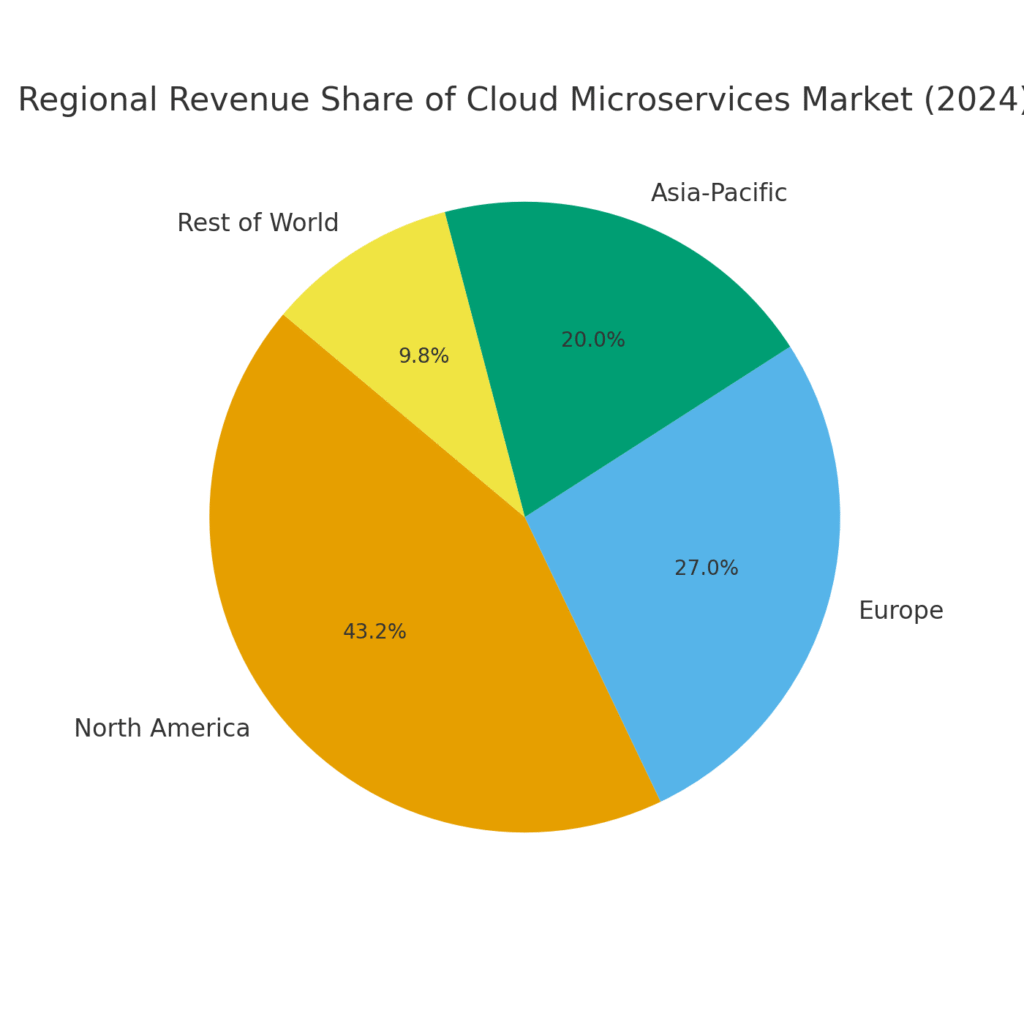
Microservice Marketing Statistics#14 North America Accounts For 43.2% Of Revenue In 2024
North America dominated the cloud microservices market with 43.2% revenue share. The region’s strong digital infrastructure fuels this lead. U.S. companies have been among the fastest to modernize using microservices. For marketers, this highlights where demand is strongest. It also underscores the need to localize strategies for U.S. enterprises.
Microservice Marketing Statistics#15 Asia-Pacific Is The Fastest Growing Region
The Asia-Pacific region is emerging as the fastest-growing for microservices. Companies across China, India, and Southeast Asia are accelerating adoption. This reflects rising digital transformation and e-commerce activity. For marketers, APAC represents a new growth frontier. Strategies need to account for cultural differences and regional tech ecosystems.
Microservice Marketing Statistics#16 Microservices Orchestration Market Projected To Reach USD 72.3 Billion By 2037
The orchestration market was valued at USD 4.7 billion in 2024. It is expected to reach USD 72.3 billion by 2037, with a CAGR of 23.4%. This growth highlights the importance of managing microservices at scale. Orchestration ensures reliability across complex systems. Marketers can frame orchestration as a solution to operational chaos.
Microservice Marketing Statistics#17 39% Plan To Adopt Microservices Within Six Months
Among organizations that haven’t yet adopted microservices, 39% plan to within six months. This indicates strong momentum for near-term adoption. It suggests businesses recognize the risks of falling behind. For marketers, it means focusing on urgency in messaging. Timeliness becomes a key driver in campaign success.
Microservice Marketing Statistics#18 Companies See 30–50% Operational Performance Gains
Businesses that transition to microservices often report 30–50% performance improvements. These gains come from increased efficiency and flexibility. For organizations, the numbers justify the investment. Marketing professionals can highlight performance boosts as ROI drivers. Concrete results like these resonate strongly with decision-makers.
Microservice Marketing Statistics#19 89% Have Adopted Cloud-Native Technologies
From CNCF’s 2024 survey, 89% of organizations report adopting cloud-native tech. Microservices form a central part of this ecosystem. Adoption at this level shows how cloud-native has become standard. For marketers, this shifts conversations from “why” to “how.” Campaigns must focus on guiding smooth transitions and integrations.
Microservice Marketing Statistics#20 85% Of Enterprises Have Already Embraced Microservices
According to Solo.io, 85% of enterprises now use microservices. This statistic demonstrates maturity in the market. Enterprise adoption validates microservices as a proven approach. For marketers, it means credibility is already established. Efforts should instead focus on differentiation and advanced features.
Why These Stats Matter to Me
Looking back at these microservice marketing statistics, I can honestly say they confirm what I’ve been experiencing firsthand with clients every day. Businesses are no longer asking if they should adopt microservices—they’re asking how fast they can move to keep up. What excites me most is that behind every percentage and growth projection lies a real opportunity for creativity and problem-solving. Personally, I feel motivated knowing I can use this knowledge to guide brands through smarter decisions and stronger campaigns. And if you’re curious about how your business can tap into this wave, I’d love to help you see just how transformative it can be.
SOURCES
https://www.ecosmob.com/key-microservices-trends/
https://kitrum.com/blog/is-microservice-architecture-still-a-trend/
https://www.turing.com/resources/accelerating-time-to-market-with-microservices
https://blog.dreamfactory.com/microservices-trends
https://www.fortunesoftit.com/how-microservices-are-revolutionizing-the-it/
https://codal.com/insights/understanding-the-rise-of-microservice-architecture
https://www.shopify.com/enterprise/blog/ecommerce-microservices
https://www.mindk.com/blog/why-move-to-microservices/
https://www.martinfowler.com/articles/microservices.html
https://medium.com/plainflow/microservices-as-a-future-approach-to-marketing-tech-1f2d65d52ba1
https://www.linkedin.com/pulse/microservices-enabling-intelligent-go-to-market-
https://sloanreview.mit.edu/article/why-companies-must-embrace-microservices-and-modular-thinking/
https://www.bcg.com/publications/2019/talking-about-microservices
https://vfunction.com/blog/microservices-architecture-guide/