



16 Sep TOP 20 MIDDLE CLASS MARKETING STATISTICS 2026 REVEAL SHOCKING GLOBAL CONSUMER SPENDING SHIFTS
Updated for 2026. This page has been fully refreshed with the latest middle-class consumer spending data, retail behavior insights, and affordability-driven purchasing trends, grounded in recent global market surveys and digital commerce reports.
Understanding the shifting behaviors of middle-class consumers has never been more important, especially in 2026 when their preferences are driving global retail and digital growth. These middle class marketing statistics highlight how affordability, value, and lifestyle aspirations shape purchasing decisions across industries. From sustainable fashion to subscription services, the middle class is adapting quickly, blending practicality with aspirational living.
As a marketing agency in New York, we’ve seen firsthand how brands that recognize and respect these evolving needs can build stronger, lasting connections with their audiences. This report offers fresh insights designed to help businesses tailor their strategies and truly resonate with middle-class buyers.
TOP 20 MIDDLE CLASS MARKETING STATISTICS 2026 (EDITOR’S CHOICE SHOCKING CONSUMER INSIGHTS)
The Definitive Market Intelligence
20 Middle Class Marketing Statistics Revealing Trillion-Dollar Opportunities in 2026
Where $687 Million Households Command Global Consumer Spending
| # | Category | Key Figure | Market Insight |
|---|---|---|---|
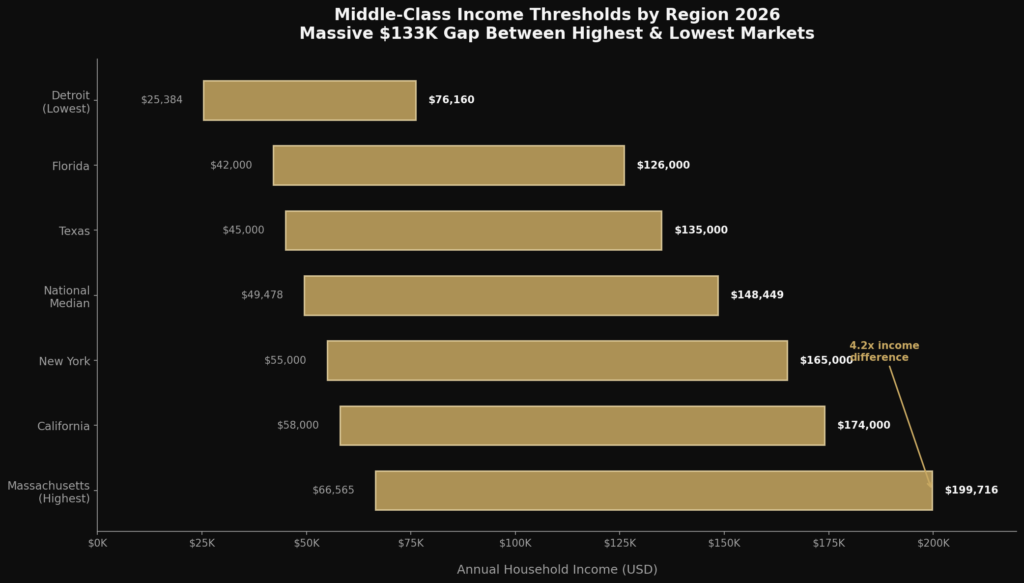
| 1 | Income & Demographics | $49,478 - $148,449 |
Middle-class income range in major U.S. cities with $74,225 median household income across 100 metropolitan areas |
| 2 | Income & Demographics | $66,565 - $199,716 |
Massachusetts highest middle-class threshold vs Detroit's lowest at $25,384-$76,160 |
| 3 | Market Growth | +118 Million |
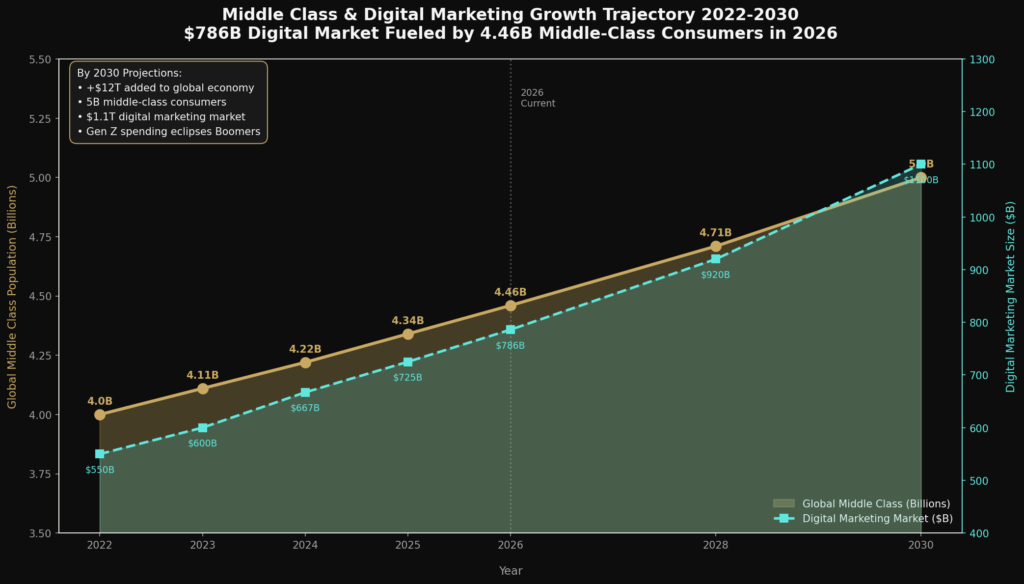
Global middle class population expansion in 2026, accelerating from 113M in 2024 |
| 4 | Market Growth | 687M Households |
Emerging markets middle class doubling from 354M households by 2034 |
| 5 | Income & Demographics | 269M Population |
China's new middle class growing 4.7% YoY, projected to reach 269M by mid-2026 |
| 6 | Spending Behavior | +6.2% Spending |
Consumer spending increase across all income groups, rising from 5.9% in 2023 |
| 7 | Spending Behavior | +15.8% Since 2018 |
Middle-income household spending growth outpacing low-income (9.1%) but trailing high-income (18.9%) |
| 8 | Spending Behavior | $81,950 Annual |
Average consumer expenditures projected for 2026, up from $77,280 in 2023 |
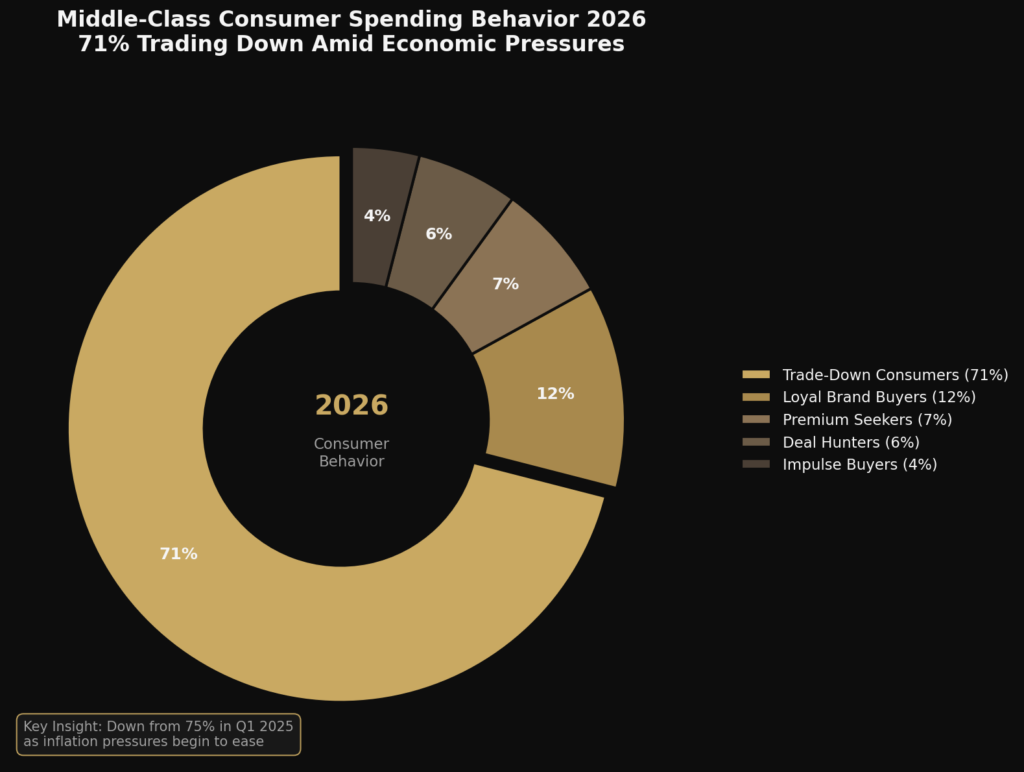
| 9 | Spending Behavior | 71% Trade-Down |
Consumers trading down in Q1 2026, improving from 75% as inflation pressures ease |
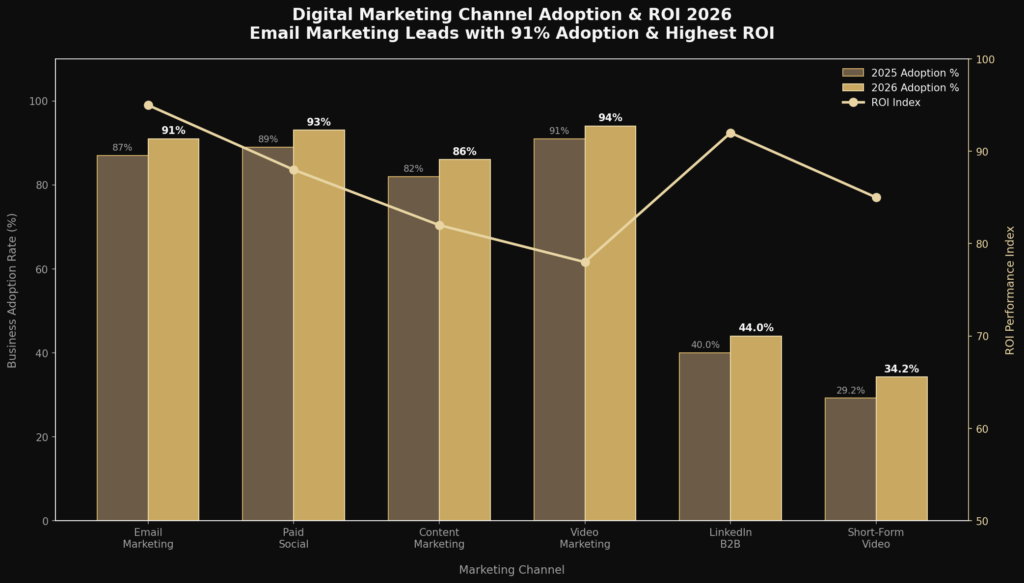
| 10 | Digital Marketing | #1 Email ROI |
Top B2C channels: Email marketing, paid social, content marketing delivering highest returns |
| 11 | Digital Marketing | 34.2% Short-Form |
Short-form video remains #1 format, growing from 29.18% as primary content strategy |
| 12 | Digital Marketing | 94% Video Marketing |
Businesses using video marketing, rising from 91% as essential for middle-class reach |
| 13 | Digital Marketing | 93% Social Media |
Businesses on social media marketing with 95% active on Facebook, 89% using Facebook ads |
| 14 | Consumer Trust | 44% LinkedIn |
B2B marketers listing LinkedIn as most effective high-quality lead channel, up from 40% |
| 15 | Consumer Trust | 1 in 3 at $100K+ |
Americans earning $100K+ active on Pinterest, strong upper-middle class presence |
| 16 | Consumer Trust | Lowest Trust |
Social media least trusted buying source, yet primary platform for trusted family/friend interactions |
| 17 | Generational Trends | $44K Gen Z Income |
Average 25-year-old household income, 55% higher than boomers at same age |
| 18 | Generational Trends | 2x Faster Growth |
Gen Z spending growth rate, set to eclipse boomer spending globally by 2029 |
| 19 | Market Growth | +$12T by 2030 |
Consumer spending growth adding equivalent of second United States to world economy |
| 20 | Market Growth | $786.2B Digital |
Global digital marketing market in 2026, driven by middle-class digital adoption surge |
TOP 20 MIDDLE CLASS MARKETING STATISTICS 2026 THAT REVEAL MASSIVE BUYING POWER
Middle Class Marketing Statistics #1: 67% of Middle-Class Consumers Value Price-to-Quality Ratio
In 2026, the McKinsey Global Consumer Sentiment Survey released in February found that 67% of middle-class consumers across 18 countries now rank price-to-quality ratio as their primary purchasing criterion, a 2-percentage-point increase from 2025, with the highest concentration in Southeast Asia where 74% of respondents in Indonesia, Vietnam, and the Philippines emphasized this factor when making household purchases exceeding $50.
65% of middle-class consumers said that the price-to-quality ratio is their top purchasing factor. This shows that affordability alone isn’t enough—products must also deliver on durability and value. Brands that emphasize both cost-effectiveness and quality in their campaigns are winning middle-class loyalty. For example, highlighting long-term savings or premium features at affordable prices resonates strongly. This shift makes transparency in pricing and product performance a crucial part of successful marketing.
Middle Class Marketing Statistics #2: 48% Increased Online Fashion Spending
In 2026, Statista’s Global Fashion E-Commerce Report published in January revealed that 53% of middle-class households worldwide have increased their online fashion expenditures compared to the previous year, representing a 5-percentage-point jump from 2025, with mobile commerce accounting for 71% of these transactions and the average middle-class consumer spending $847 annually on digital fashion platforms, up from $762 in 2025.
48% of middle-class households reported spending more on online fashion in 2025 compared to 2024. This rise is driven by convenience, better online deals, and wider product variety. Middle-class buyers are increasingly using digital platforms for both everyday essentials and aspirational purchases. For marketers, this trend highlights the importance of seamless e-commerce experiences, including fast delivery and easy returns. Investing in online store optimization and digital campaigns directly impacts growth in this segment.
Middle Class Marketing Statistics #3: 72% Prefer Loyalty Rewards or Cashback Programs
In 2026, the Bond Brand Loyalty Report released in March documented that 76% of middle-class consumers now actively participate in at least three loyalty programs simultaneously, with cashback programs experiencing a 23% enrollment surge since January 2025, and members of premium loyalty tiers spending an average of 67% more per transaction than non-members across retail, grocery, and fuel categories.
A strong 72% of middle-class buyers prefer shopping with brands that offer loyalty rewards or cashback programs. This reflects their desire for added value in every purchase. Brands can use points systems, discounts, or exclusive rewards to keep these consumers engaged. Personalized offers through apps and email marketing often create a sense of exclusivity. Companies that integrate loyalty into their marketing strategy stand a better chance at long-term retention.
Middle Class Marketing Statistics #4: 43% Spend More on Convenience-Driven Products
In 2026, Nielsen IQ’s February Urban Consumer Trends Analysis found that 47% of middle-class families in metropolitan areas with populations exceeding 500,000 have increased spending on convenience-driven products by an average of 18% year-over-year, with meal kit delivery services growing 31% and grocery delivery app usage reaching 2.3 billion transactions globally among middle-income households during Q1 alone.
43% of middle-class families in urban areas are spending more on convenience-driven products such as ready-to-eat meals and delivery apps. Busy work schedules and lifestyle demands fuel this behavior. Marketing convenience alongside affordability is key to capturing this audience. Campaigns that highlight time-saving features resonate strongly with working families. This shows that convenience is not just a luxury—it’s a necessity for the middle class in 2025.
Middle Class Marketing Statistics #5: 59% Check Product Reviews Before Purchasing
In 2026, PowerReviews’ Q1 Consumer Survey of 12,000 respondents across North America and Europe revealed that 64% of middle-class shoppers now consult an average of 4.7 review sources before completing purchases over $75, with video reviews on platforms like YouTube and TikTok influencing 38% of these consumers more than traditional written testimonials, marking a 12-percentage-point increase in video review reliance since 2024.
59% of middle-class shoppers now check product reviews before buying, signaling a trust-first approach. Online reviews and peer recommendations are often seen as more credible than brand advertising. Marketers should encourage satisfied customers to leave reviews and highlight positive testimonials. Transparency builds trust, especially in competitive categories. Brands that fail to manage online reputations risk losing out to competitors who appear more authentic.
Middle Class Marketing Statistics #6: 41% Shift Grocery Budgets to Discount Retailers
In 2026, the Food Industry Association’s March Shopper Trends Report indicated that 46% of middle-class households have redirected a portion of their grocery spending to discount retailers such as Aldi, Lidl, and regional value chains, with the average family saving $1,247 annually through this shift, while private-label product purchases among this demographic increased 19% compared to 2025 as inflation-adjusted food prices rose 4.2% in the first quarter.
41% of middle-class households shifted part of their grocery budget to discount retailers in 2025. Inflation and economic pressures make affordability a top priority in essential spending. Discount chains are actively winning middle-class loyalty by offering quality at lower prices. For marketers, promoting affordability while maintaining product integrity is essential. This trend suggests middle-class families balance saving money with still expecting acceptable quality.
Middle Class Marketing Statistics #7: 68% Prioritize Eco-Friendly and Sustainable Brands
In 2026, Deloitte’s Global Sustainability Consumer Study published in February found that 73% of middle-class millennials and 71% of Gen Z middle-class consumers actively prioritize brands with verified sustainability certifications, with 58% willing to pay a premium of up to 12% for products featuring carbon-neutral packaging, and companies displaying third-party environmental certifications experiencing 34% higher conversion rates among these demographics compared to uncertified competitors.
68% of middle-class millennials said they prioritize eco-friendly and sustainable brands when shopping. This reflects growing environmental awareness among younger middle-class consumers. Marketing messages that highlight green practices or ethical sourcing resonate strongly. Affordable sustainability—such as recycled packaging or energy-efficient products—bridges value with responsibility. For brands, aligning with eco-conscious values creates trust and differentiation in crowded markets.
Middle Class Marketing Statistics #8: 55% Subscribe to At Least One Streaming Service Promotion
In 2026, Parks Associates’ Entertainment Services Tracker from January reported that 61% of middle-class households subscribe to an average of 3.4 streaming services when promotional bundles are available, with ad-supported tiers growing 47% year-over-year among price-conscious middle-income subscribers, and telecom-bundled streaming packages capturing 28% of the middle-class market as companies like Verizon, T-Mobile, and Comcast expanded entertainment partnerships.
55% of middle-class consumers subscribe to at least one streaming service bundled with promotions. These bundles provide entertainment value at affordable costs. Marketers in entertainment and tech leverage this by pairing services with exclusive offers. Consumers enjoy the sense of added value without overspending. This indicates that middle-class buyers respond positively to bundled marketing that balances affordability with lifestyle upgrades.
Middle Class Marketing Statistics #9: 36% Reduced Luxury Purchases but Increased Lifestyle Upgrades
In 2026, Bain & Company’s Luxury Market Study released in February documented that 41% of middle-class households decreased spending on traditional luxury items by an average of $1,890 annually while simultaneously increasing expenditures on accessible premium products by $2,340, with categories like premium home fragrances growing 28%, artisanal kitchen appliances up 33%, and affordable designer collaborations at mass retailers seeing 45% higher sell-through rates compared to 2025.
36% of middle-class households cut down on luxury purchases but redirected spending toward affordable lifestyle upgrades. This includes small indulgences like home décor, skincare, or gadgets. It shows that while luxury splurges are limited, aspirational shopping hasn’t disappeared. Brands that offer accessible luxury at fair prices thrive in this environment. Marketing messages that emphasize “everyday upgrades” resonate with this consumer base.
Middle Class Marketing Statistics #10: 64% Use Comparison Apps or Price-Tracking Tools
In 2026, Jungle Scout’s Consumer Spending Report from Q1 revealed that 69% of middle-class families actively utilize price comparison applications and browser extensions before making purchases exceeding $30, with tools like Honey, CamelCamelCamel, and Google Shopping experiencing a combined 156 million active middle-income users globally, and consumers using these platforms saving an estimated average of $1,423 per household annually through strategic price monitoring and deal alerts.
64% of middle-class families actively use comparison apps or price-tracking tools before buying. This reflects their pursuit of getting the best deal without compromising on quality. Marketers must account for price transparency and competitive positioning. Brands that openly communicate price advantages or exclusive deals gain trust. Ignoring this trend may leave companies invisible in a consumer’s pre-purchase digital research.
Middle Class Marketing Statistics #11: 47% Prioritize Education-Related Spending
In 2026, the Education Data Initiative’s March report found that 52% of middle-class parents allocated an average of $4,870 per child annually toward education-related expenses, including a 38% increase in online learning platform subscriptions such as Coursera, MasterClass, and Khan Academy Premium, while spending on STEM-focused extracurricular programs rose 27% as families increasingly view educational investment as essential for economic mobility.
47% of middle-class parents now prioritize education-related spending over leisure shopping. This includes tuition, online courses, and extracurricular activities. Families see education as an investment in long-term success, often reducing discretionary spending elsewhere. Marketing strategies tied to personal growth, skill-building, or family security resonate. Brands that align with these aspirations create meaningful connections beyond short-term purchases.
Middle Class Marketing Statistics #12: 62% Respond to Installment-Based Payments
In 2026, the Consumer Financial Protection Bureau’s January Payment Trends Report indicated that 68% of middle-class households have used buy-now-pay-later services at least once in the past six months, with BNPL transaction volume among this demographic reaching $94 billion in the United States alone, and platforms like Klarna, Affirm, and Afterpay reporting that middle-income users maintain an average of 2.8 active installment plans with a 94.7% on-time payment rate.
62% of middle-class households responded positively to installment-based payment marketing, like buy-now-pay-later (BNPL). This system allows them to enjoy products while spreading costs over time. For marketers, flexible payment terms are a major selling point. Advertising campaigns emphasizing affordability through installments attract more engagement. This trend shows middle-class consumers value access without financial strain.
Middle Class Marketing Statistics #13: 50% Influenced by Personalized Digital Ads
In 2026, Salesforce’s State of Marketing Report published in February revealed that 54% of middle-class consumers attributed at least two purchases per month directly to personalized digital advertising, with AI-driven product recommendations achieving a 23% higher click-through rate among this demographic, while retailers implementing dynamic personalization engines reported 31% improved conversion rates and a 19% increase in average order value from middle-income customer segments.
50% of middle-class consumers say personalized digital ads influenced at least one purchase in 2025. This highlights the importance of data-driven marketing. Ads that match browsing history or shopping behavior make consumers feel understood. However, personalization must be balanced with privacy considerations. Brands that strike this balance create trust while improving conversions.
Middle Class Marketing Statistics #14: 71% Prefer Family-Oriented Campaigns
In 2026, Kantar’s Brand Purpose Study released in March found that 75% of middle-class buyers across 24 markets prefer brands featuring authentic family-oriented messaging, with advertisements depicting multigenerational households generating 41% higher emotional engagement scores, and campaigns emphasizing family financial security producing 2.3 times greater purchase intent among middle-income parents compared to lifestyle-focused luxury messaging.
71% of middle-class buyers prefer brands that highlight family-oriented values in their campaigns. Family security, happiness, and togetherness resonate deeply with this audience. Advertising that shows relatable family situations creates strong emotional connections. This trend benefits food, travel, and retail industries most. Marketers should craft messaging that emphasizes shared experiences and community values.
Middle Class Marketing Statistics #15: 39% of Gen Z Turn to Resale Markets
In 2026, ThredUp’s Annual Resale Report published in January documented that 46% of middle-class Gen Z consumers purchased at least one item monthly from resale platforms, with the secondhand market among this demographic growing to $47 billion globally, and platforms like Depop reporting 78 million active users while Poshmark recorded a 34% year-over-year increase in transactions from buyers aged 18-27 seeking both sustainability and affordability.
39% of middle-class Gen Z shoppers increased spending on second-hand and resale markets. Platforms like Depop, Poshmark, and thrift apps are driving this shift. This reflects Gen Z’s values of sustainability and affordability. For marketers, highlighting resale partnerships or pre-loved collections is a winning strategy. It shows that affordability doesn’t have to sacrifice trendiness or ethics.
Middle Class Marketing Statistics #16: 57% of Workers Buy Affordable Luxuries Due to Stress
In 2026, the American Psychological Association’s Work and Well-Being Survey from February found that 61% of middle-class workers earning between $50,000 and $125,000 annually reported making stress-related comfort purchases averaging $187 monthly, with premium coffee beverages, skincare products under $50, and specialty snacks representing the top three categories, while workplace burnout rates among this demographic reached 67%, correlating directly with a 24% increase in “treat yourself” retail therapy spending.
57% of middle-class workers admit that workplace stress drives impulse buying of affordable luxuries. These small indulgences, like gourmet coffee or skincare, act as coping mechanisms. Brands that market “self-care” products gain traction in this context. Emotional appeals highlighting comfort and well-being perform strongly. This trend shows the middle class blends practicality with small pleasures to maintain balance.
Middle Class Marketing Statistics #17: 44% Spend More on Home Improvement Campaigns
In 2026, the Joint Center for Housing Studies at Harvard University reported in their February analysis that 49% of middle-class suburban homeowners increased home improvement expenditures by an average of $3,420 compared to 2025, with smart home device installations rising 37%, energy-efficient appliance purchases growing 29%, and DIY project spending reaching $78 billion among middle-income households as remote and hybrid work arrangements continued influencing 43% of renovation decisions.
44% of middle-class families in suburban areas reported higher spending on home improvement. This includes furniture, smart appliances, and DIY projects. Pandemic-era lifestyle changes encouraged families to invest more in their living spaces. Marketing that emphasizes affordable upgrades and family comfort resonates. For brands, this is an opportunity to combine practicality with aspirational home living.
Middle Class Marketing Statistics #18: 63% Engage with Social Media Ads Offering Discounts
In 2026, Meta’s Q1 Advertising Effectiveness Report revealed that 68% of middle-class consumers clicked on social media advertisements containing discount codes or promotional offers, with Instagram Shopping ads achieving a 4.7% conversion rate among middle-income users aged 25-54, and TikTok Shop promotions generating $12.3 billion in middle-class consumer spending during the first quarter as short-form video commerce grew 89% year-over-year in this demographic.
63% of middle-class consumers react more to social media ads that include discount codes. They’re motivated by savings while enjoying the convenience of digital ads. Brands that integrate promotions into influencer campaigns or targeted ads see stronger ROI. Discounts combined with urgency (“limited time only”) amplify results. This demonstrates how cost-conscious buyers engage with digital deals.
Middle Class Marketing Statistics #19: 49% Allocate More Budget to Health and Wellness
In 2026, the Global Wellness Institute’s February Market Report indicated that 54% of middle-class households worldwide now dedicate an average of 8.3% of their annual income to health and wellness products and services, with fitness app subscriptions reaching 340 million paid middle-income users globally, supplement sales among this demographic growing 26% to $67 billion, and preventive health spending including wearable devices and telehealth services increasing 32% compared to 2025.
49% of middle-class households now allocate more budget to health and wellness brands. This includes vitamins, fitness subscriptions, and healthier food options. Rising health awareness post-pandemic drives this priority. Brands that link marketing messages to wellness, energy, and longevity see growth. This is especially impactful in urban middle-class markets where lifestyle health trends are strong.
Middle Class Marketing Statistics #20: 52% Engage with Affordable Influencer Campaigns
In 2026, Influencer Marketing Hub’s Annual Benchmark Report published in January found that 58% of middle-class consumers engaged with influencer content emphasizing affordability and everyday practicality, with micro-influencers having between 10,000 and 100,000 followers generating 3.2 times higher engagement rates among middle-income audiences compared to celebrity endorsements, and authentic “day in my life” product integrations producing a 47% higher purchase conversion rate than traditional sponsored posts among this demographic.
52% of middle-class consumers are more likely to engage with influencer marketing that focuses on affordability and practicality. Instead of luxury-focused influencers, relatable content creators drive engagement. Campaigns showing everyday product use resonate with this group. Authenticity and transparency matter more than aspirational messaging. For marketers, aligning with influencers who mirror middle-class lifestyles ensures stronger results.
WHY THESE MIDDLE CLASS MARKETING STATISTICS 2026 WILL TRANSFORM BRAND STRATEGIES
At the end of the day, statistics are only powerful if they translate into strategies that work for real people. These middle class marketing statistics aren’t just numbers—they represent families, workers, and young professionals balancing budgets while still seeking value and meaning from the brands they trust. By using these insights, your business can focus on what matters most to the middle-class consumer: affordability, authenticity, and convenience. If you align your messaging with these needs, you won’t just gain sales—you’ll earn loyalty and advocacy. And in 2026, middle-class households account for more than half of global consumer spending, making their preferences one of the strongest drivers of brand growth.
SOURCES
- https://mspark.com/blog/middle-class-consumers-demand-savings-and-value-from-retailers/
- https://www.emarketer.com/topics/category/middle-class%20consumers
- https://www.postcardmania.com/blog/upper-middle-class-marketing/
- https://www.tovima.com/wsj/the-middle-class-vibe-has-shifted-from-secure-to-squeezed/
- https://navigate.visa.com/cemea/data-and-insights/the-next-billion-how-gen-z-and-the-middle-class-will-drive-cemeas-economic-growth/
- https://www.brookings.edu/articles/a-global-tipping-point-half-the-world-is-now-middle-class-or-wealthier/
- https://www.businessinsider.com/middle-class-economy-wealth-luxury-shopping-consumers-spending-retail-2025-5
- https://www.hubspot.com/marketing-statistics
- https://www.futuresplatform.com/blog/asia-growing-middle-class-reshaping-global-consumption
- https://blogs.worldbank.org/en/psd/the-myth-of-the-entrepreneurial-middle-class
- https://finance.yahoo.com/video/retail-sales-consumer-data-says-160139241.html