



25 Sep TOP 20 MIXED REALITY MARKETING STATISTICS 2025
I’ve been diving deep into how technology is reshaping the way brands connect with people, and I couldn’t help but be fascinated by these mixed reality marketing statistics. Mixed reality isn’t just another tech buzzword—it’s genuinely transforming customer engagement, from how we shop to how we experience brands in everyday life. As someone who loves exploring these shifts, I wanted to share the numbers that stood out to me most, because they paint a clear picture of where the future of marketing is headed. While doing this research, I also looked to insights from a leading marketing agency in New York that has been at the forefront of helping brands harness immersive experiences. Their expertise reassured me that the power of MR marketing is only just beginning to unfold.
Top 20 Mixed Reality Marketing Statistics 2025 (Editor’s Choice)
| # | Mixed Reality Marketing Statistic | Year / Forecast | Source |
|---|---|---|---|
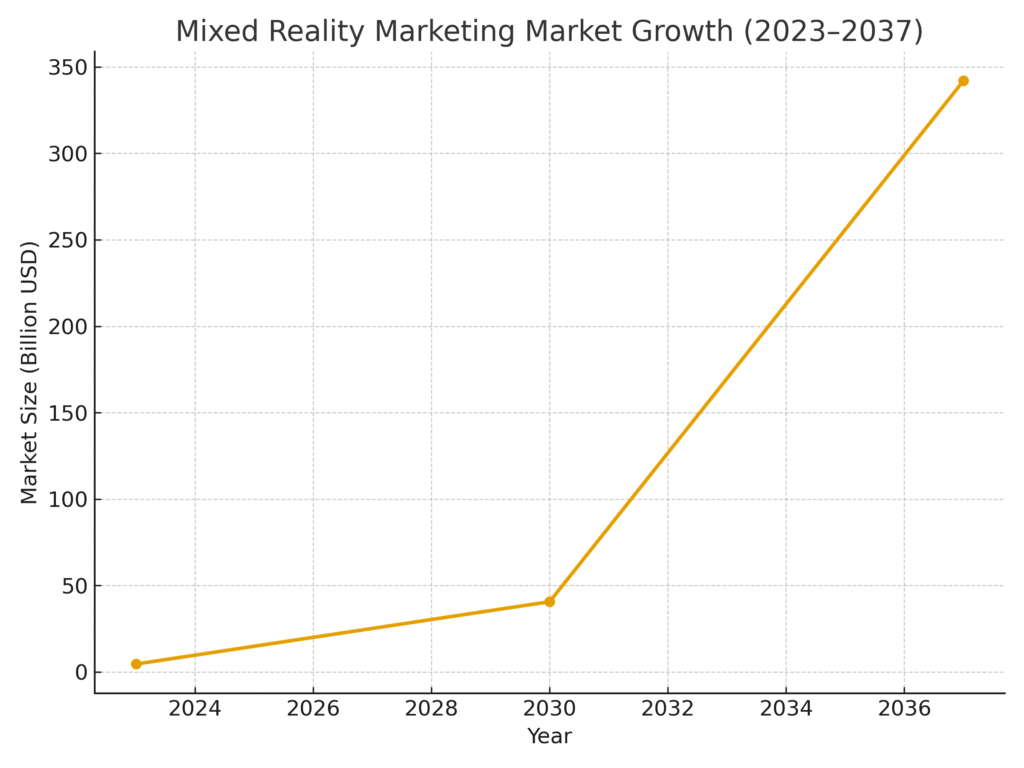
| 1 | MR marketing market valued at $4.5B in 2023, projected $342B by 2037 (CAGR ~39.7%) | 2023–2037 | BrandXR |
| 2 | Fortune 500 companies using MR report 94% higher conversion rates & 460% ROAS | 2024 | BrandXR |
| 3 | Only ~30% of Fortune 1000 companies piloting MR marketing | 2024 | BrandXR |
| 4 | Mixed reality market worth $5.03B in 2023, expected $40.58B by 2030 (CAGR ~34.8%) | 2023–2030 | Grand View Research |
| 5 | MR market estimated $2.16B in 2024, forecast $27.53B by 2033 (CAGR ~31%) | 2024–2033 | IMARC Group |
| 6 | AR/VR headset shipments grew ~10% in 2024; Meta held 74.6% market share | 2024 | IDC |
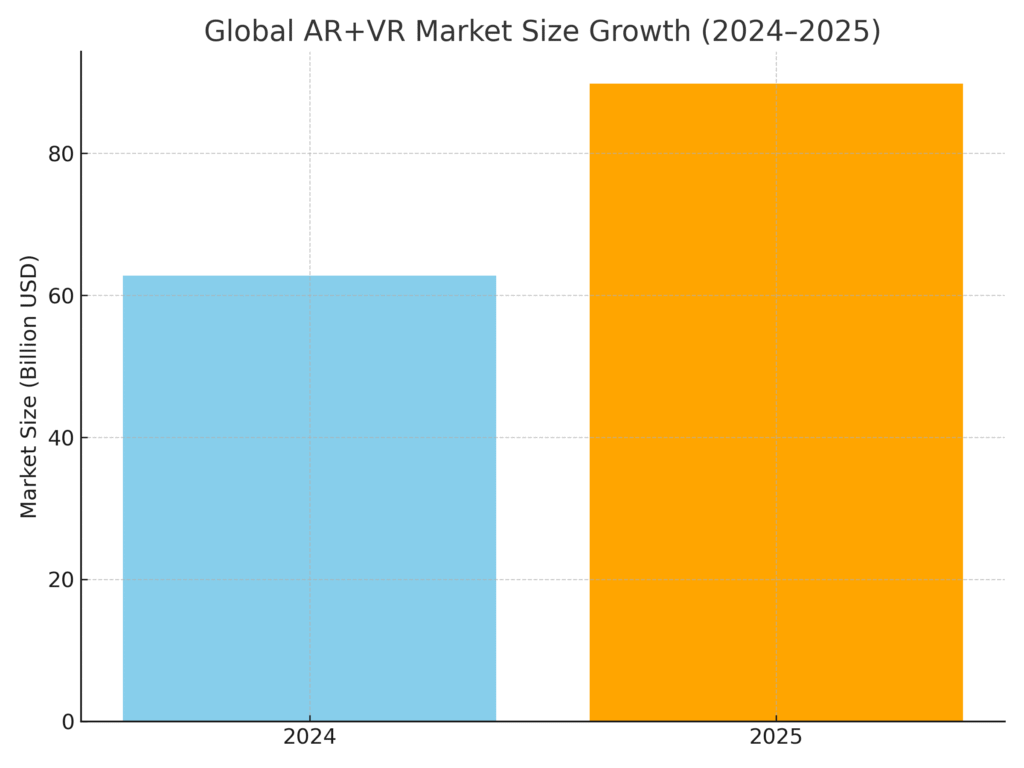
| 7 | Global AR + VR market projected $89.82B in 2025, up from $62.75B in 2024 | 2024–2025 | SQ Magazine |
| 8 | 171M global VR users; 77M in U.S. alone | 2025 | DemandSage |
| 9 | AR + VR penetration rate projected ~52.8% | 2025 | DemandSage |
| 10 | Companies using AR report 40% higher conversion rates | 2024 | 99firms |
| 11 | AR marketing campaigns average dwell time ~75 seconds | 2024 | Amra & Elma |
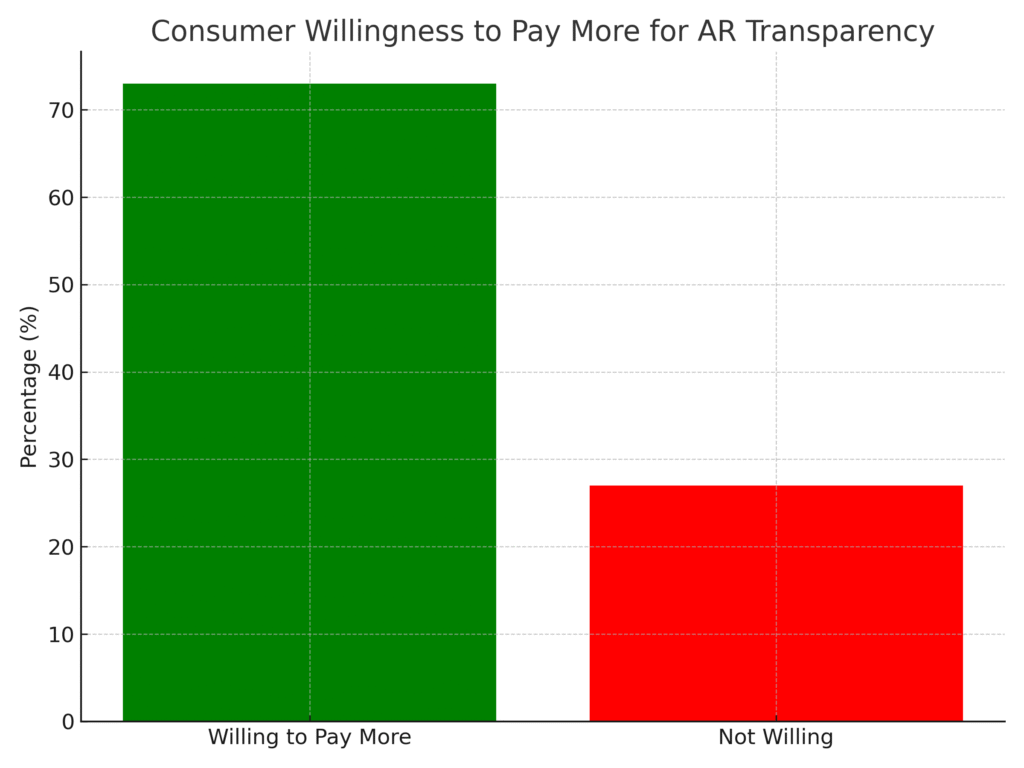
| 12 | 73% of consumers willing to pay more for products offering AR transparency | 2024 | Amra & Elma |
| 13 | 73% of AR users report satisfaction with their AR experiences | 2024 | 99firms |
| 14 | 97% of Forbes’ most valuable brands use AR | 2024 | 99firms |
| 15 | 83.1M Americans used AR monthly in 2020; trend continues to grow | 2020–2025 | 99firms |
| 16 | ~1/7th of global population estimated to use AR | 2025 | 99firms |
| 17 | 32% of companies cite hardware issues as barrier to AR adoption | 2024 | 99firms |
| 18 | MR interfaces outperform VR in remote error resolution (better usability & faster time) | 2025 | arXiv |
| 19 | Misuse of MR design (dark patterns) reduces comfort & lowers intent to use | 2025 | arXiv |
| 20 | Meta’s “Tiramisu” MR prototype offers 3× contrast & 90 PPD angular resolution | 2025 | The Verge |
Top 20 Mixed Reality Marketing Statistics 2025
Mixed Reality Marketing Statistics #1 – MR Marketing Market Valued At $4.5B In 2023, Projected $342B By 2037
The mixed reality (MR) marketing industry is experiencing explosive growth, starting from $4.5 billion in 2023. Forecasts suggest this will surge to $342 billion by 2037, with a CAGR of nearly 40%. This rapid increase highlights how immersive experiences are reshaping marketing strategies worldwide. Brands investing early are gaining competitive advantages by blending physical and digital environments. The statistic shows MR is not a passing trend but a massive opportunity for long-term growth.
Mixed Reality Marketing Statistics #2 – Fortune 500 Companies Using MR Report 94% Higher Conversions & 460% ROAS
Fortune 500 companies adopting MR campaigns have seen remarkable results. On average, they reported a 94% higher conversion rate compared to traditional methods. Additionally, some achieved a 460% return on ad spend, proving the efficiency of MR marketing. These outcomes emphasize the strong connection consumers feel when immersed in interactive experiences. The data illustrates why top enterprises are making MR a central part of their strategies.
Mixed Reality Marketing Statistics #3 – Only ~30% Of Fortune 1000 Companies Piloting MR Marketing
Despite the hype, only about 30% of Fortune 1000 companies are actively piloting MR marketing. This relatively low adoption suggests most businesses are still cautious about immersive technologies. Early adopters have an opportunity to stand out significantly in their industries. The statistic also reflects ongoing barriers, such as costs and technical know-how. As MR matures, we can expect adoption rates to rise dramatically.
Mixed Reality Marketing Statistics #4 – MR Market Worth $5.03B In 2023, Expected $40.58B By 2030
The MR market was valued at $5.03 billion in 2023. By 2030, it is expected to reach over $40.58 billion, marking a CAGR of nearly 35%. This growth highlights the expanding use cases in marketing, entertainment, and education. Marketers are leveraging MR to design immersive storytelling experiences. Such growth demonstrates MR’s role as a cornerstone of the digital transformation era.
Mixed Reality Marketing Statistics #5 – MR Market Estimated $2.16B In 2024, Forecast $27.53B By 2033
In 2024, the MR market size was estimated at $2.16 billion. Long-term forecasts predict it will grow to $27.53 billion by 2033. This growth trajectory emphasizes MR’s evolving importance for both B2B and B2C companies. With a CAGR of around 31%, immersive campaigns are no longer optional but essential for competitive positioning. The numbers confirm that MR is one of the fastest-growing sectors in tech marketing.
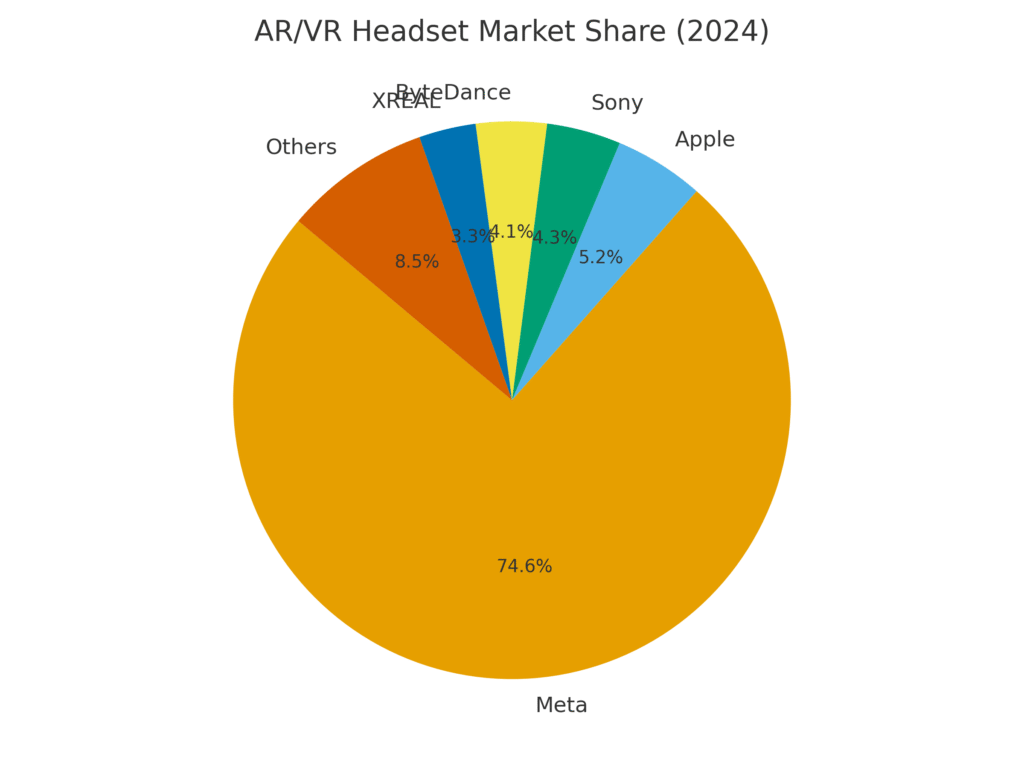
Mixed Reality Marketing Statistics #6 – AR/VR Headset Shipments Grew 10% In 2024; Meta Held 74.6% Market Share
In 2024, shipments of AR and VR headsets increased by about 10%. Meta dominated the space with a market share of nearly 75%. Other players like Apple, Sony, and ByteDance trailed behind but are gaining momentum. This hardware growth directly supports MR marketing opportunities by making immersive campaigns accessible. The statistic shows that headset availability will drive wider MR adoption across industries.
Mixed Reality Marketing Statistics #7 – AR + VR Market Projected $89.82B In 2025, Up From $62.75B In 2024
The combined AR and VR market is projected to reach nearly $90 billion in 2025. This is up from $62.75 billion in 2024, representing 31% growth in a single year. Such growth highlights the surging interest from brands and consumers alike. As more businesses invest in immersive experiences, marketing budgets are following suit. This rapid expansion underscores MR’s relevance in shaping global consumer behavior.
Mixed Reality Marketing Statistics #8 – 171M Global VR Users; 77M In U.S. Alone
Globally, VR usage has reached over 171 million people. In the U.S. alone, about 77 million individuals use VR technologies. This widespread adoption opens doors for marketers to connect with massive audiences. MR marketing can leverage these devices to provide unique branded experiences. The statistic confirms VR and MR are becoming mainstream in consumer culture.
Mixed Reality Marketing Statistics #9 – AR + VR Penetration Rate Projected ~52.8%
The penetration rate of AR and VR technologies is expected to surpass 52.8%. This means more than half of potential users will actively engage with immersive tools. For marketers, this creates fertile ground for audience targeting through MR. As accessibility grows, campaigns can reach larger and more diverse audiences. This statistic shows MR’s shift from niche to mainstream adoption.
Mixed Reality Marketing Statistics #10 – Companies Using AR Report 40% Higher Conversion Rates
Brands implementing AR in their campaigns have achieved conversion rates 40% higher than those without it. This significant lift demonstrates the value of immersive engagement. Consumers are more likely to purchase when they interact with virtual try-ons or 3D product demos. MR marketing builds stronger confidence in purchase decisions. The statistic underlines how interactive experiences drive real sales outcomes.
Mixed Reality Marketing Statistics #11 – AR Campaigns Average Dwell Time Of 75 Seconds
AR marketing campaigns boast an average dwell time of around 75 seconds. This is significantly higher than typical digital ad formats. Longer engagement translates into better brand recall and emotional connection. For marketers, dwell time indicates how immersive tools sustain user attention. The statistic emphasizes MR’s ability to deepen consumer-brand relationships.
Mixed Reality Marketing Statistics #12 – 73% Of Consumers Willing To Pay More For AR Transparency
Surveys reveal that 73% of consumers are open to paying more for products that provide AR-based transparency. Examples include virtual product demos or authenticity checks. This willingness demonstrates the trust MR builds in brand experiences. Consumers view MR tools as valuable in reducing uncertainty. The statistic shows MR doesn’t just improve engagement—it can also raise perceived product value.
Mixed Reality Marketing Statistics #13 – 73% Of AR Users Report Satisfaction With Experiences
Around 73% of AR users say they are satisfied with their AR experiences. This high satisfaction level indicates strong user acceptance of immersive technologies. Positive user sentiment builds loyalty and encourages repeat engagement. For marketers, satisfaction ensures campaigns resonate instead of frustrating audiences. This statistic highlights the importance of quality in MR content design.
Mixed Reality Marketing Statistics #14 – 97% Of Forbes’ Most Valuable Brands Use AR
A remarkable 97% of Forbes’ most valuable brands are already using AR in some form. This includes industries like retail, automotive, and entertainment. Their early adoption reflects confidence in immersive marketing’s ROI. Smaller brands can learn from these leaders to stay competitive. The statistic highlights how MR is shaping brand prestige and market leadership.
Mixed Reality Marketing Statistics #15 – 83.1M Americans Used AR Monthly In 2020; Usage Keeps Growing
In 2020, 83.1 million Americans were already using AR on a monthly basis. Since then, usage has only increased year by year. This growing adoption provides marketers with an expanding pool of tech-savvy audiences. MR campaigns can now reach consumers who are familiar with immersive experiences. The statistic proves AR and MR have long-term staying power.
Mixed Reality Marketing Statistics #16 – 1/7th Of Global Population Estimated To Use AR
Approximately one-seventh of the global population is expected to use AR. This figure illustrates how widespread immersive technology has become. With billions of potential users, MR marketing has a truly global reach. Businesses can now think beyond local campaigns and target worldwide audiences. The statistic showcases MR’s potential to connect across cultures and geographies.
Mixed Reality Marketing Statistics #17 – 32% Of Companies Cite Hardware Issues As Barrier To Adoption
Roughly 32% of companies identify hardware limitations as a barrier to AR/MR adoption. Issues like bulky devices, limited battery life, and technical glitches remain challenges. These barriers slow down adoption, especially among smaller businesses. However, rapid advancements are improving usability and reducing costs. The statistic points to a near-future where MR adoption will accelerate as hardware evolves.
Mixed Reality Marketing Statistics #18 – MR Interfaces Outperform VR In Remote Error Resolution
Studies show MR interfaces outperform VR and camera-based systems in remote error resolution tasks. MR users completed tasks faster and with lower cognitive load. These improvements suggest MR has practical business applications beyond marketing. Yet, marketers can learn from these efficiencies to design better consumer experiences. The statistic demonstrates MR’s unique advantage in combining real-world and virtual elements.
Mixed Reality Marketing Statistics #19 – Misuse Of MR Design Reduces Comfort & Lowers Intent To Use
When MR designs are misused, such as with dark patterns, user comfort drops significantly. This misuse can also increase resistance and lower willingness to use MR devices. The finding stresses the need for ethical design practices in marketing. Poorly executed MR campaigns risk damaging brand trust. The statistic reinforces the value of user-first approaches in immersive marketing.
Mixed Reality Marketing Statistics #20 – Meta’s “Tiramisu” MR Prototype Offers 3× Contrast & 90 PPD Resolution
Meta’s prototype headset “Tiramisu” boasts three times the contrast of the Quest 3. It also delivers 90 pixels per degree angular resolution and brightness up to 1,400 nits. These advances promise more lifelike and comfortable MR experiences. For marketers, improved hardware means campaigns can be more vivid and persuasive. The statistic shows how quickly MR technology is evolving, opening doors for richer brand experiences.
Embracing the Future of Mixed Reality Marketing
Looking back at all these mixed reality marketing statistics, I feel both excited and inspired. They show us that the potential of immersive campaigns is more than just hype—it’s a real opportunity to connect with audiences in ways that feel personal, interactive, and unforgettable. For me, it’s a reminder that the brands who adapt early will not only stand out but also create lasting bonds with their customers. I believe this is the kind of transformation that only happens once in a generation, and I’m eager to keep learning and sharing as the journey continues.
SOURCES
- https://scoop.market.us/mixed-reality-statistics/ (Market.us Scoop)
- https://online.mason.wm.edu/blog/the-future-of-marketing-with-augmented-virtual-reality-brand-engagement (William & Mary Mason)
- https://flamapp.ai/blog/mixed-reality-challenges-and-opportunities-in-marketing (Flam)
- https://www.researchnester.com/reports/mixed-reality-market/5066 (Research Nester)
- https://www.datalily.com/blog/how-brands-can-do-ar-vr-marketing-and-approach-mixed-reality-content (datalily.com)
- https://www.emarketer.com/topics/category/mixed%20reality (EMARKETER)
- https://artlabs.ai/blog/augmented-reality-statistics-you-should-know-enhanced (artlabs.ai)
- https://www.fortunebusinessinsights.com/industry-reports/mixed-reality-market-101783 (Fortune Business Insights)
- https://rockpaperreality.com/insights/ (Rock Paper Reality)
- https://resources.imagine.io/blog/2025-ar-trends (resources.imagine.io)
- https://www.xrguru.com/blog/2023/02/extended-reality-statistics-facts-and-trends-you-need-to-know (xrguru.com)
- https://virtualspeech.com/blog/vr-stats-training-education (VirtualSpeech)
- https://www.idc.com/promo/arvr/ (IDC)
- https://www.thefulfillmentlab.com/blog/augmented-reality-marketing-benefits (thefulfillmentlab.com)
- https://arxiv.org/abs/2502.06141 (arXiv)