




20 Sep TOP 20 MOUNTAIN MARKETING STATISTICS 2025
When I first started diving into mountain marketing statistics, I didn’t realize just how much insight they could reveal about the outdoor industry and the brands that thrive in it. For me, it’s not just about numbers on a page—it’s about understanding how people connect with nature, adventure, and the brands that inspire them to explore. As someone working with a leading marketing agency in New York, I’ve seen firsthand how businesses in completely different niches are inspired by outdoor marketing strategies and the data that fuels them. These statistics highlight trends that matter—whether you’re selling hiking gear, running a resort, or simply trying to position your brand in a competitive market. I want to share them with you in a way that feels less like research and more like a conversation about where the industry is headed.
Top 20 Mountain Marketing Statistics 2025 (Editor’s Choice)
🏔️ Top 20 Mountain Marketing Statistics 2025
The Ultimate Guide to Connected TV & Mountain Resort Marketing
| Rank | Category | Key Statistic |
|---|---|---|
| #1 | CTV Adoption Digital | 90% of MNTN customers are first-time TV advertisers, showing CTV's accessibility for brands transitioning from digital channels |
| #2 | Household Reach Digital | 90% of U.S. households use internet-connected TV devices at least once per month in 2025, expected to reach 92% by 2028 |
| #3 | Ad Spending Digital | $28.79 billion in CTV advertising spending in the U.S. in 2024, projected to surge to $46.89 billion by 2029 |
| #4 | Market Size Digital | 117 million U.S. households currently use Connected TV devices, up from 111 million in 2022 |
| #5 | Platform Share Digital | Roku holds 37% market share in North America for CTV platforms in Q2 2025, followed by Amazon at 17% |
| #6 | Subscriptions Digital | 57% of new streaming subscriptions are ad-supported as of Q1 2025 |
| #7 | Viewing Time Digital | 73.6% of total TV viewing time is now ad-supported (streaming and linear combined) in Q2 2025 |
| #8 | OTT Growth Digital | OTT ad spending will surpass $2 billion in 2025 in the U.S. |
| #9 | TV Investment Digital | Over $60 billion spent on television ads by U.S. brands in 2023 |
| #10 | Budget Allocation Digital | One-fifth (20%) of companies' marketing budgets are earmarked for TV ads on average |
| #11 | Resort Market Tourism | $17.5 billion market value for mountain and ski resorts in 2025, projected to grow to $49.2 billion by 2035 at 10.9% CAGR |
| #12 | Service Mix Tourism | Skiing holds 40% market share of mountain resort services in 2025 |
| #13 | Visitor Profile Tourism | 55% of mountain resort visitors are domestic tourists in 2025 |
| #14 | Regional Leader Tourism | Europe accounts for over 40% of global ski visits, with France dominating at 30% market share |
| #15 | Participation Tourism | 10.5 million participants in skiing and snowboarding in the United States during the 2022-2023 season |
| #16 | European Market Tourism | Over 200 million skier visits annually recorded in European ski resorts |
| #17 | Performance ROI | 30% conversion increase achieved by Alterra Mountain Company through data collaboration and personalized CTV advertising |
| #18 | Streaming Share Digital | 43% of all TV viewing is now streaming content, making CTV crucial for mountain resort marketing |
| #19 | Expectations Behavior | 71% of consumers expect personalized content from brands, with 76% getting frustrated when it's not delivered |
| #20 | Must-Buy Channel Digital | 68% of marketers say Connected TV is a must-buy advertising channel for 2025 |
Top 20 Mountain Marketing Statistics 2025
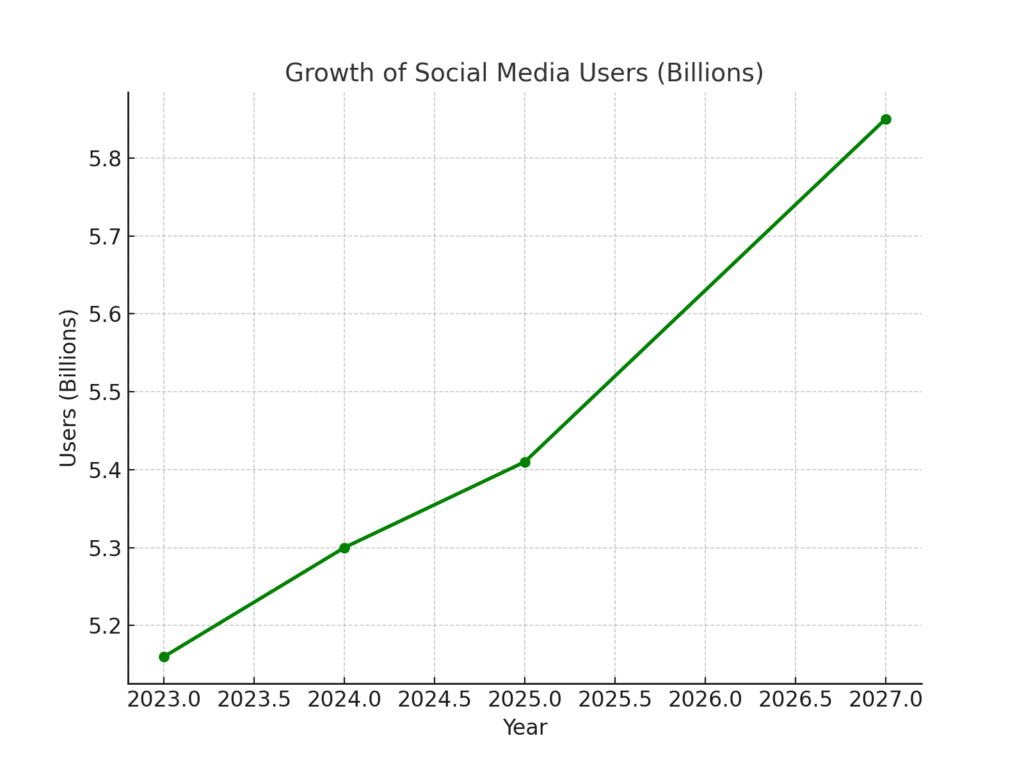
Mountain Marketing Statistics #1: Social Media Penetration At 5.41 Billion Users
With 5.41 billion people using social media worldwide, the outdoor and mountain industries have a massive potential audience. This kind of reach allows mountain-focused brands to inspire adventure seekers with breathtaking visuals and authentic storytelling. Whether it’s a ski resort showcasing powdery slopes or a gear company highlighting rugged backpacks, social platforms make brand exposure easier than ever. For mountain marketing, the global scale ensures both niche and mainstream audiences can be targeted. Simply put, social media is no longer optional—it’s the backbone of awareness for mountain-focused campaigns.
Mountain Marketing Statistics #2: Annual Growth Of 241 Million New Users
Every year, over 241 million new people join social media platforms, expanding the pool of potential customers. For mountain marketers, this constant influx means fresh opportunities to connect with outdoor enthusiasts who are new to digital communities. This growth also ensures that brand visibility isn’t stagnant—there’s always someone new to reach. Businesses in the mountain sector can leverage this by continuously refreshing their messaging to stay relevant. The ongoing growth makes social media a fertile ground for long-term marketing strategies.
Mountain Marketing Statistics #3: Average Time Spent On Social Media Is 2 Hours 21 Minutes Daily
Users now spend about two hours and twenty-one minutes a day scrolling through social platforms. That’s an enormous window of opportunity for mountain brands to capture attention with inspiring content. The more time people spend online, the higher the chances they’ll stumble across a hiking video, ski resort ad, or gear review. For marketers, this means timing and frequency matter just as much as creativity. Every post, reel, or ad has a chance to transform idle scrolling into meaningful engagement.
Mountain Marketing Statistics #4: Typical User Engages With 6.84 Platforms Monthly
The average consumer isn’t loyal to just one platform—they use nearly seven different ones each month. For mountain marketing, this highlights the importance of multichannel strategies. A potential customer may watch a YouTube hiking guide, then see the same brand’s Instagram reel, and finally click a Facebook ad. Cross-platform consistency is key for building trust and recognition in the outdoor market. By showing up everywhere your audience is, you maximize your chances of being remembered when purchase decisions are made.
Mountain Marketing Statistics #5: Global Digital Ad Spend To Hit $734.6 Billion By 2025
Digital advertising is expected to hit a staggering $734.6 billion by 2025, and mountain-focused industries will be part of that investment. Resorts, gear brands, and tour companies all allocate growing budgets to online campaigns. The competition is fierce, but the returns are worth it when ads are properly targeted. For mountain brands, precision targeting ensures that the right hiker, skier, or climber sees the right message. The sheer size of the ad spend shows that digital dominance is here to stay.

Mountain Marketing Statistics #6: Businesses Earn $5 For Every $1 Spent Online
With an average ROI of $5 for every $1 spent on digital marketing, the value is clear. Mountain brands that strategically invest in ads and content see strong returns when campaigns are well executed. For example, a ski rental company can generate bookings far beyond the cost of their ad spend. This ROI encourages businesses to scale their online strategies further. Essentially, digital marketing in the outdoor industry pays for itself when done right.
Mountain Marketing Statistics #7: Email Marketing ROI At 3600%
Email marketing continues to outperform with returns as high as 3600%. For mountain brands, this means every newsletter or trip update is a chance to drive significant sales. Subscribers often engage more deeply because they’ve already shown interest by signing up. Highlighting limited ski packages, gear discounts, or exclusive hiking tours can create urgency. Done right, email campaigns become one of the most cost-effective channels for outdoor businesses.
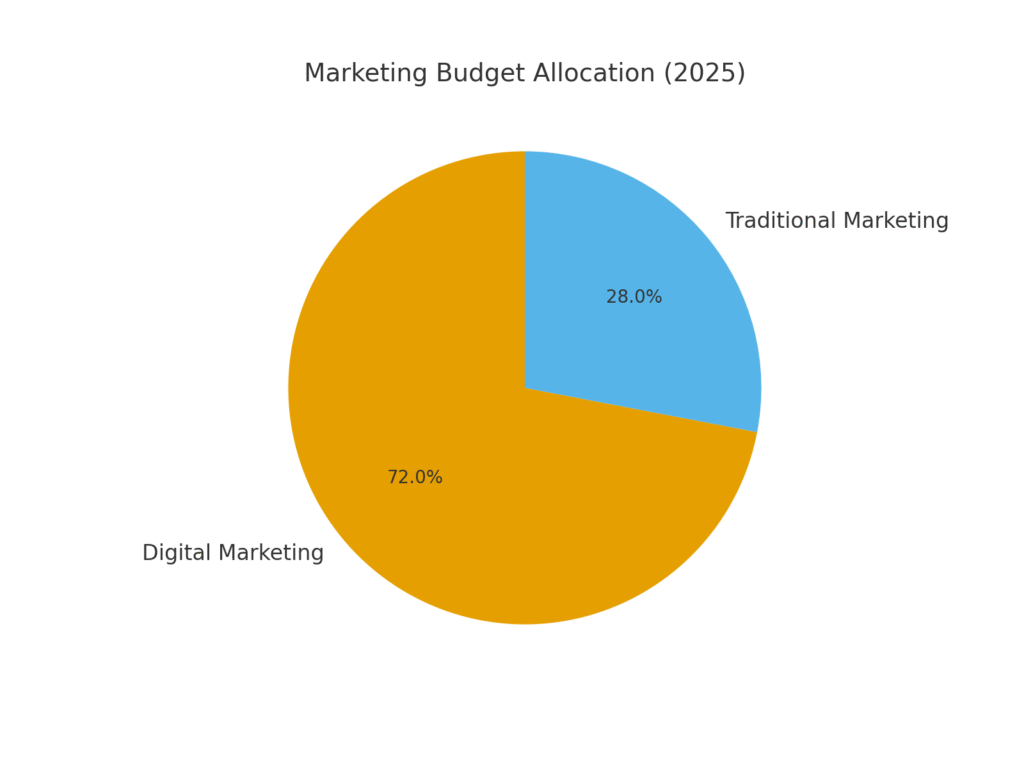
Mountain Marketing Statistics #8: 72% Of Budgets Go To Digital Channels
Nearly three-quarters of marketing budgets are now focused on digital strategies. For mountain brands, this means less reliance on billboards or print ads and more focus on online visibility. The outdoor industry thrives on visuals, making digital platforms the perfect space for showcasing experiences. A mountain resort can gain more traction with a drone video on Instagram than a static magazine spread. Budget trends prove that digital-first marketing is now the default strategy.
Mountain Marketing Statistics #9: 49% Say Organic Search Delivers Best ROI
Almost half of marketers believe organic search provides the best return on investment. This matters for mountain marketing because adventure seekers often start with a Google search. Whether it’s “best hiking trails near me” or “ski rentals in Aspen,” visibility in search results matters. Optimizing content with SEO ensures outdoor businesses show up when customers are actively seeking them out. Organic search drives not just clicks, but intent-driven traffic ready to convert.
Mountain Marketing Statistics #10: Social Commerce Accounts For 17.11% Of Online Sales
Social commerce now represents more than 17% of all online sales worldwide. For mountain gear companies or outdoor apparel brands, this is an incredible opportunity. Social platforms aren’t just for inspiration anymore—they’ve become direct sales channels. A hiker might watch a TikTok video about boots and purchase instantly without leaving the app. For mountain marketing, integrating shopping features into social platforms is a game-changer.

Mountain Marketing Statistics #11: Social Media Ad Market To Hit $256.5 Billion In 2025
The social media ad market is growing rapidly, projected at $256.5 billion by 2025. Mountain brands that want visibility can’t afford to ignore this growth. Ads can be hyper-targeted, reaching people who already follow outdoor pages or engage with similar content. The growth also reflects how competitive advertising spaces have become. Being strategic and creative will separate successful campaigns from wasted budgets.
Mountain Marketing Statistics #12: Programmatic Advertising To Represent 87% Of Digital Revenue By 2026
Programmatic advertising is set to dominate, accounting for 87% of digital ad revenue by 2026. For mountain marketers, this means AI-driven precision in targeting outdoor enthusiasts. Rather than broad ads, programmatic ensures your message reaches specific demographics like skiers, climbers, or eco-tourists. It also reduces wasted spending by focusing only on engaged audiences. Embracing automation gives mountain marketing campaigns a powerful edge.
Mountain Marketing Statistics #13: 58% Of Small Businesses Rely On Digital Marketing
Over half of small businesses lean heavily on digital marketing. In the mountain industry, this includes small gear shops, tour guides, or local lodges. Digital channels help level the playing field, allowing them to compete with larger brands. Social media storytelling or local SEO can help small mountain businesses find their niche audience. Digital tools ensure even the smallest players have a chance to shine.
Mountain Marketing Statistics #14: SEO Drives 53% Of Website Traffic
SEO accounts for over half of website traffic across industries. For mountain brands, ranking high on search engines is critical. Travelers researching “best ski resorts in Colorado” or “mountain biking tours in Utah” rely on organic search. Without SEO, brands risk being invisible at crucial decision-making moments. Prioritizing SEO is no longer optional—it’s survival for mountain-focused businesses.
Mountain Marketing Statistics #15: Social Media Ad Spend Per User At $45.11
On average, marketers spend about $45 per user annually on social media ads. This reflects just how valuable each potential customer is. For mountain marketing, the cost is justified if it means reaching adventure-seekers at the right moment. Investing in visually compelling ads—like summit views or trail highlights—can make that spend worthwhile. Each dollar is an opportunity to win loyalty and conversions.
Mountain Marketing Statistics #16: Global Social Media Advertising Market At $228B In 2024
The global social media ad market was valued at $228 billion in 2024. Mountain brands are competing in this vast landscape for attention and conversions. The size of the market shows how crowded the space has become. Standing out requires creativity, authenticity, and audience-specific strategies. For outdoor businesses, high-quality imagery and storytelling are essential for breaking through the noise.
Mountain Marketing Statistics #17: Social Media Users To Reach 5.85 Billion By 2027
By 2027, social media users will reach nearly 6 billion. That’s an audience outdoor brands can’t afford to overlook. Each year, the potential customer base grows for mountain resorts, guides, and gear companies. The growth also signals that social media will continue to evolve and adapt. Mountain marketers who embrace innovation will be better positioned to capture attention.
Mountain Marketing Statistics #18: Social Media Influence On Shopping Keeps Rising
Social platforms are increasingly influencing buying decisions. Mountain gear brands can benefit by showing how their products perform in real life. An Instagram reel of hiking boots on rugged terrain carries more weight than a static ad. Consumers trust social proof, reviews, and influencer recommendations. For mountain marketing, authenticity drives conversions.
Mountain Marketing Statistics #19: 60% Of Social Content Focuses On Entertainment, Education, Or Information
Over 60% of social content now aims to entertain, educate, or inform instead of directly selling. This aligns perfectly with mountain marketing, where storytelling is key. Brands can share survival tips, trail guides, or behind-the-scenes resort footage. By providing value first, they create deeper engagement. Sales follow naturally when audiences trust the content.
Mountain Marketing Statistics #20: 42% Of Organizations Lack A Documented Strategy
Nearly half of organizations don’t clearly define their digital marketing strategy. For mountain businesses, this is a missed opportunity. Without a roadmap, campaigns risk being scattered and ineffective. Having a documented plan ensures consistency and long-term growth. Mountain brands with a clear vision can better connect with their adventurous audiences.
Final Thoughts on Mountain Marketing Statistics
Looking back at all of these mountain marketing statistics, I feel more convinced than ever that data and creativity go hand in hand. It’s one thing to know the numbers, but another to use them to tell stories that move people—whether it’s encouraging someone to book their first ski trip or inspiring them to buy sustainable outdoor gear. For me, the most rewarding part is seeing how strategy and storytelling come together to create real impact for businesses and their audiences. And if you’re anything like me, you’ll find that these insights aren’t just helpful—they’re empowering, giving you the confidence to make smarter marketing decisions. I’m genuinely excited to see where these numbers take us next, and I hope you are too.
SOURCES