



27 Sep TOP 20 NATURAL GAS MARKETING STATISTICS 2025
When I first started digging into natural gas marketing statistics, I realized just how much this industry is shaping the global economy and future of energy. The way supply and demand interact, how prices swing, and how marketing strategies are adapted to meet regional consumption trends are all part of a fascinating story. As someone who loves following market shifts, I find that these numbers don’t just sit on paper—they tell us where the world is headed in terms of energy reliability, pricing, and investment. That’s why I teamed up with insights from a leading marketing agency in New York to bring forward the most relevant trends. These stats give us a practical look at how businesses, governments, and consumers navigate the evolving natural gas landscape.
Top 20 Natural Gas Marketing Statistics 2025 (Editor’s Choice)
🔥 Top 20 Natural Gas Marketing Statistics
Key Market Insights & Trends for 2025
| # | Category | Statistic | Key Figure |
|---|---|---|---|
| 1 | Market Size | Global natural gas market projected growth | $2,142.88B by 2032 (7.4% CAGR) |
| 2 | Market Size | Global LNG market expansion forecast | $226.97B by 2030 (11.6% CAGR) |
| 3 | Market Size | U.S. natural gas distribution market value | $186.0B by 2032 (1.0% CAGR) |
| 4 | Production | U.S. natural gas production increase | 107.3 Bcf/day (Up 4.4%) |
| 5 | Production | Permian Basin growth rate 2020-2024 | 11.3% CAGR (10.3% YTD 2025) |
| 6 | Production | Underground storage inventory surplus | 6.1% above five-year average |
| 7 | Demand | Global gas demand growth in 2024 | 115 Bcm increase (2.7% growth) |
| 8 | Demand | U.S. power sector consumption share | 49.8% of total (38.4 Bcf/day) |
| 9 | Demand | Asia emerging markets demand growth | 6% increase (China +7%, India +10%) |
| 10 | Demand | Total U.S. demand year-to-date growth | 3.2% higher vs. 2024 |
| 11 | Pricing | Henry Hub Q3 2025 average spot price | $3.00/MMBtu |
| 12 | Pricing | Current natural gas trading price | $3.13/MMBtu (Up 7.87% YoY) |
| 13 | LNG Exports | U.S. LNG exports growth 2024-2026 | 36% increase (4.3 Bcf/d) |
| 14 | LNG Exports | Record LNG feedgas deliveries April 2025 | 16.1 Bcf/day (Up 36.4% YoY) |
| 15 | LNG Exports | New LNG terminal capacity expansion | 53% increase (6.0 Bcf/d) |
| 16 | Regional | Asia-Pacific share of incremental demand | 45% of growth in 2024 |
| 17 | Regional | Asia Pacific LNG market dominance | 81.1% revenue share |
| 18 | Regional | U.S. power generation gas share (record) | 43% in 2024 (All-time high) |
| 19 | Infrastructure | Natural gas rig count growth | 118 rigs (Up 23% YoY) |
| 20 | Infrastructure | U.S. natural gas pipeline network | 3+ million miles of pipelines |
Top 20 Natural Gas Marketing Statistics 2025
Natural gas marketing statistics #1 Global Demand Growth Slowing In 2025
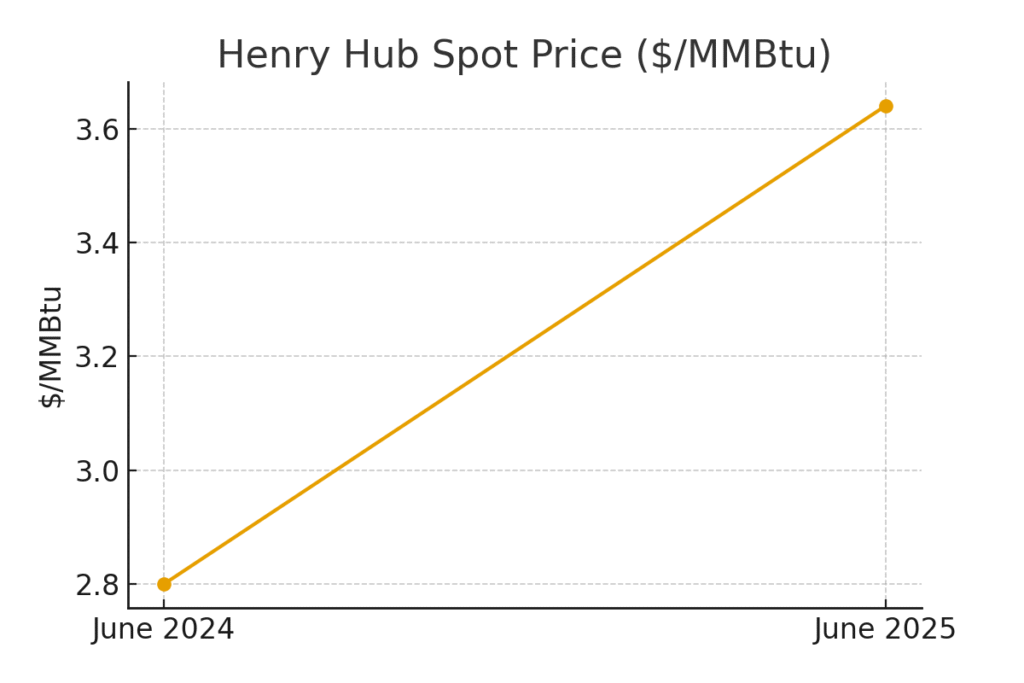
The International Energy Agency projects global natural gas demand will slow to about 1.3% growth in 2025, down from 2.8% in 2024. This shift highlights how tighter supply conditions and efficiency measures are affecting consumption. For marketers, a slower demand curve can change how contracts and sales strategies are designed. Instead of chasing aggressive growth, companies might emphasize stability and reliability in messaging. It’s a subtle reminder that marketing in energy is deeply tied to broader economic and supply trends.
Natural gas marketing statistics #2 Regional Divergence In Demand
Europe’s gas consumption in early 2025 rose 6.5% year-over-year, while Asia showed weaker numbers, with China down about 1% and India down nearly 7%. North America held steady with 2.5% growth, reflecting resilient demand. These regional differences mean marketers must avoid one-size-fits-all approaches. Instead, campaigns should highlight regional advantages such as energy security in Europe or affordability in North America. Diverging demand paths reveal just how localized natural gas marketing must be.
Natural gas marketing statistics #3 Supply Tightness Supporting Higher Prices
Fundamentals in 2025 remain tight, with constrained production and reduced Russian pipeline flows to Europe. This scarcity is keeping upward pressure on prices. For marketers, higher prices can be framed both as a challenge and an opportunity. While some customers hesitate at cost increases, others are swayed by messaging around supply security and long-term contracts. Successful marketing will balance transparency about costs with reassurance of value.
Natural gas marketing statistics #4 LNG Export Growth Continues
Global LNG supply increased by around 4% in the first half of 2025, equal to an additional 12 billion cubic meters. This shows that LNG is increasingly a central part of energy portfolios. For marketers, the growth of LNG opens up new storytelling opportunities about flexibility and reliability. Countries without pipeline infrastructure now rely more heavily on LNG imports. This trend is crucial in positioning LNG as a modern, adaptable solution for energy security.
Natural gas marketing statistics #5 United States Becomes Net Gas Exporter (June 2025)
In June 2025, the United States reported net exports of natural gas, marking a milestone in energy independence. The shift underscores the nation’s role as a global supplier rather than just a consumer. For marketers, this is a point of pride and a strong narrative for international contracts. It strengthens the U.S. position in energy diplomacy and branding. Messaging can now emphasize reliability and partnership for global buyers.

Natural gas marketing statistics #6 Record U.S. Production In June 2025
The U.S. reached a record dry natural gas production level of 3,221 Bcf in June 2025. That’s an impressive 4.5% increase compared to the previous year. This growth reflects technological improvements and strong investment in shale gas. For marketing, it creates room for emphasizing abundance and consistency. Production milestones like this add credibility when approaching both domestic and foreign buyers.
Natural gas marketing statistics #7 U.S. Consumption By Sector (June 2025)
Residential use climbed 5.7% year-over-year, while industrial and electric power usage dropped slightly. Commercial consumption saw a modest 1.9% increase. These shifts matter because they show how different parts of the economy respond to price and weather changes. For marketers, sector-specific campaigns become crucial—for instance, highlighting affordability for households or efficiency for commercial users. This segmentation ensures better engagement and stronger results.
Natural gas marketing statistics #8 Strong Growth In Asia’s Gas Use (2024)
In 2024, emerging Asian markets drove nearly 40% of the world’s gas demand growth. China grew by more than 7%, while India surged around 10%. This growth demonstrates the region’s hunger for energy diversification. For marketers, Asia represents a golden opportunity to promote LNG and pipeline projects. Messaging around economic development and energy security resonates deeply in these expanding markets.
Natural gas marketing statistics #9 U.S. Natural Gas Demand In 2024
The United States saw a 1.9% increase in natural gas demand in 2024. Much of this growth came from the power sector. For marketers, this data point underlines the continued reliance on gas for electricity generation. It also highlights the importance of branding natural gas as both reliable and increasingly cleaner than other fossil fuels. Positioning gas as a transitional fuel is particularly powerful in a market with strong renewable energy narratives.
Natural gas marketing statistics #10 U.S. Natural Gas Distribution Market Value (2024)
The U.S. natural gas distribution sector was valued at $182.1 billion in 2024. This figure shows just how significant distribution is within the broader energy economy. Marketers working in distribution must emphasize scale, reliability, and infrastructure strength. Branding can focus on trust and safety given the size of the market. It’s also a signal to investors of the robustness of this segment.
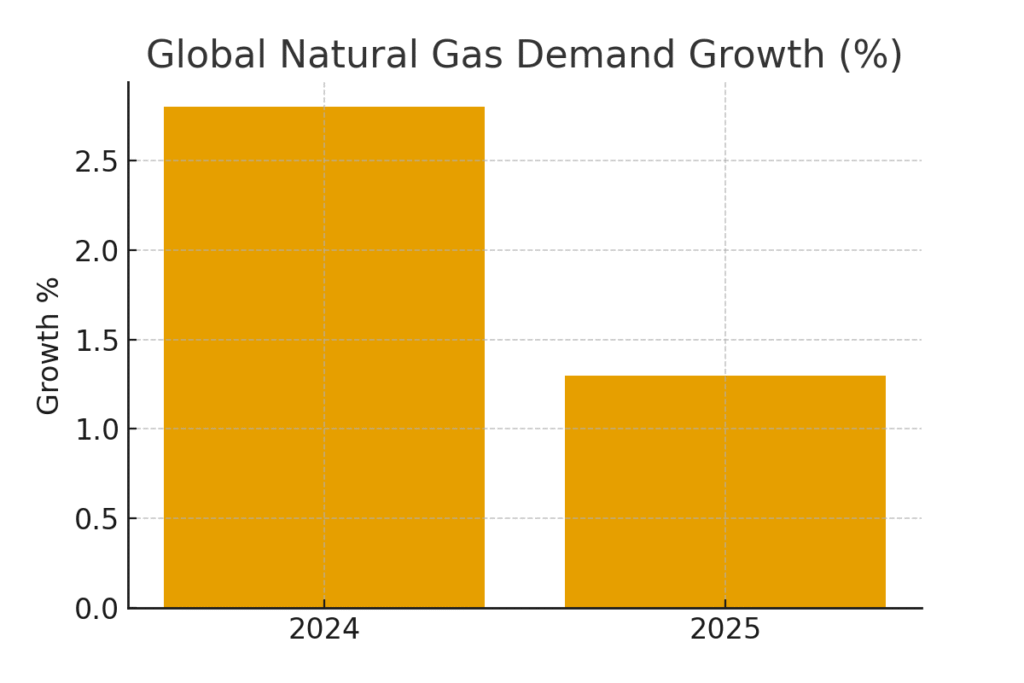
Natural gas marketing statistics #11 Henry Hub Spot Price Trends (Mid-2025)
The Henry Hub price averaged $3.64/MMBtu in June 2025, about 30% higher than a year earlier. This rise shows just how quickly market conditions can shift. For marketers, price awareness is critical in building trust with customers. Transparent communication about volatility helps retain relationships even during cost increases. Framing higher prices as linked to global demand ensures buyers understand the bigger picture.
Natural gas marketing statistics #12 Natural Gas Price Volatility
In early 2025, prices swung dramatically, rising nearly 70% in the first quarter before falling sharply in April and May. This volatility poses challenges for both buyers and sellers. For marketing professionals, such swings require flexibility in messaging. Customers want to hear about stability and long-term solutions during turbulent times. Framing contracts as tools for managing risk can be an effective marketing strategy.
Natural gas marketing statistics #13 Shell’s LNG Demand Forecast
Shell predicts LNG demand could grow by 60% by 2040. The primary driver of this growth will be Asia’s need for cleaner energy. This forecast is a powerful marketing tool, showing long-term opportunity. Companies can highlight Shell’s projection as proof of natural gas’s lasting relevance. It positions LNG not just as a short-term fix but a sustainable energy bridge.
Natural gas marketing statistics #14 Projected Gas Demand Growth By 2040
Forecasts indicate global gas demand could also rise 60% by 2040. Such large numbers inspire confidence in the industry’s future. For marketers, this is a call to invest in long-term branding campaigns. Messages can focus on growth, expansion, and security. It provides assurance to customers that natural gas will remain central in the global energy mix.
Natural gas marketing statistics #15 GAIL (India) Gas Marketing Performance
GAIL, India’s largest gas marketer, controls over half of the country’s marketed gas. Recently, it recorded 5.4% growth in volume despite rising costs. This balance of growth and pressure shows how marketing must navigate both opportunity and challenge. For India, natural gas is a key piece of its cleaner energy push. Marketers can focus on GAIL’s scale and stability as proof of natural gas’s role in development.

Natural gas marketing statistics #16 Global Gas Market Outlook (2025 Onward)
After slowing in 2025, global demand is expected to reaccelerate in 2026. This means short-term challenges may give way to new highs in the near future. For marketers, the message is one of resilience and recovery. Highlighting the cyclical nature of energy markets can reassure investors and customers. It’s a reminder that downturns are often temporary.
Natural gas marketing statistics #17 Pipeline Supply Reductions To Europe
In the first half of 2025, Russian pipeline deliveries to the EU dropped by about 45%. This drastic decline is reshaping Europe’s energy landscape. For marketers, this creates an opportunity to highlight alternative suppliers. LNG marketing has particularly benefited from Europe’s reduced dependence on Russia. Messaging around reliability and independence plays especially well in this context.
Natural gas marketing statistics #18 Regional Gas Production Shifts
Weekly U.S. production data in mid-2025 showed output rising slightly while imports from Canada grew nearly 4%. These shifts show how dynamic supply chains can be. For marketers, regional adjustments offer storytelling opportunities about resilience and adaptability. Customers value suppliers who can pivot and maintain stability. Such statistics reinforce the importance of strong supply partnerships.
Natural gas marketing statistics #19 Feedgas To U.S. LNG Terminals
In 2025, U.S. feedgas deliveries averaged over 16 Bcf per day. This figure highlights the backbone of LNG export capacity. For marketing, it’s a way to emphasize the scale and preparedness of U.S. suppliers. Reliable feedgas translates into dependable exports. Messaging around infrastructure strength reassures international buyers.
Natural gas marketing statistics #20 Exports Vs Imports In U.S. Gas Trade
In June 2025, U.S. LNG exports rose 14% compared to the year before. The U.S. exported nearly three times as much gas as it imported. For marketers, this is proof of the country’s growing influence on global markets. Campaigns can emphasize America’s role as a dependable energy partner. It’s a milestone that underscores the strength of U.S. natural gas marketing.
Wrapping Up The Natural Gas Marketing Outlook
Looking back at these natural gas marketing statistics, I feel both amazed and encouraged by the resilience of this industry. It’s clear that natural gas is not just about fueling homes and power plants—it’s about shaping global partnerships, supporting economic growth, and building trust in uncertain times. As I pieced together these numbers, I realized how much storytelling opportunities exist for marketers in every shift of demand, price, and supply. Working with insights from a leading marketing agency in New York has helped me understand how to turn raw data into narratives that connect with people. At the end of the day, natural gas is not just numbers on a chart—it’s a story of energy security, innovation, and opportunity.
SOURCES
-
https://www.iea.org/reports/global-energy-review-2025/natural-gas
-
https://www.ibisworld.com/united-states/market-size/natural-gas-distribution/159/
-
https://www.aga.org/research-policy/resource-library/natural-gas-market-indicators-july-3-2025/
-
https://www.reuters.com/business/energy/shell-expects-60-rise-global-lng-demand-by-2040-2025-02-25/
-
https://www.bp.com/en/global/corporate/energy-economics/statistical-review-of-world-energy.html
-
https://www.statista.com/statistics/282717/global-natural-gas-consumption/
-
https://www.woodmac.com/reports/gas-markets-global-lng-outlook-150422