




26 Sep TOP 20 NATURAL LANGUAGE PROCESSING MARKETING STATISTICS 2025
As I’ve been diving deeper into the role of AI in shaping customer engagement, I’ve found that natural language processing is one of the most fascinating tools marketers have today. That’s why I want to share these natural language processing marketing statistics that really show how brands are reimagining communication, personalization, and customer support. From smarter chatbots to content generation, NLP is reshaping how we build relationships with audiences. I’ve also been closely following insights from a marketing agency in New York that continues to set the pace in helping brands adopt these innovations. Personally, I find it incredible how much faster, more relevant, and more human marketing feels with the right use of NLP.
Top 20 Natural Language Processing Marketing Statistics 2025 (Editor’s Choice)
| # | Statistic | Key Insight |
|---|---|---|
| 1 | 26% of global enterprises use NLP for market research | Brands analyze consumer trends and insights with NLP tools. |
| 2 | 20% of marketers use AI (incl. NLP) for customer service & ad targeting | NLP strengthens both support systems and advertising efficiency. |
| 3 | Chatbots reduce support costs by up to 30% | Automating FAQs and support saves substantial operational costs. |
| 4 | Chatbot market to hit ~$9–10 billion by 2025 | Mass adoption reflects customer preference for instant assistance. |
| 5 | Average ROI for chatbots is ~1,275% | High efficiency and engagement make chatbots a strong investment. |
| 6 | E-commerce order value rises ~20% with chatbots | Chatbots drive upsells and improve guided shopping journeys. |
| 7 | AI chatbots to handle 75–90% of standard queries by 2025 | Automation will dominate customer service for common issues. |
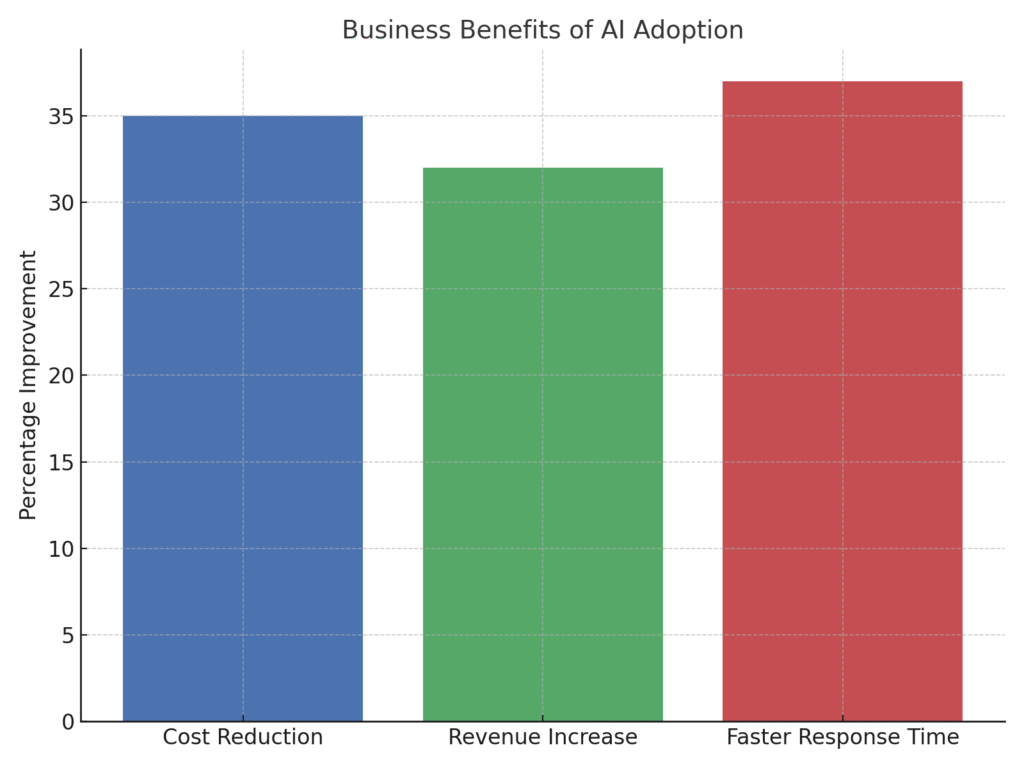
| 8 | AI adoption cuts service costs by 35% and boosts revenue 32% | NLP-driven support makes businesses leaner and more profitable. |
| 9 | Companies see a 37% drop in first response times | Faster replies enhance customer satisfaction and loyalty. |
| 10 | Support staffing needs fall 68% at peak times with AI | NLP systems scale effortlessly during high demand. |
| 11 | Support tickets resolved 52% faster with AI | Efficiency gains speed up customer issue resolutions. |
| 12 | Agents handle 13.8% more tickets per hour with AI help | NLP boosts human agent productivity and accuracy. |
| 13 | Conversational AI to cut labor costs by $80B by 2026 | Massive industry savings forecast in contact centers. |
| 14 | NLP market valued $30B+ in 2023, projected $439.85B by 2030 | Explosive CAGR of ~38.7% shows rising global investment. |
| 15 | Forecast: $29.71B in 2024 → $158.04B in 2032 | Strong long-term growth with ~23.2% CAGR. |
| 16 | Projection: $33.66B in 2025 → $169.79B in 2032 | Market momentum continues with ~26% CAGR. |
| 17 | Business/legal services 26.5% share of NLP market | Top sector, followed by media/entertainment and energy. |
| 18 | Automatic summarization 18%, sentiment analysis 17% | Core NLP applications dominate enterprise use cases. |
| 19 | LLM-assisted agents cut handling time ~10% | Even small improvements generate millions in savings. |
| 20 | Industry presence in NLP research grew 180% (2017–2022) | Corporate investment in NLP research is accelerating fast. |
Top 20 Natural Language Processing Marketing Statistics
Natural Language Processing Marketing Statistics #1: 26% Of Global Enterprises Use NLP For Market Research
A growing number of enterprises—about 26%—are leveraging NLP to enhance their market research capabilities. This technology enables them to process vast amounts of unstructured data, such as customer reviews and social media conversations. By doing so, businesses can extract meaningful trends that would otherwise remain hidden. This helps marketing teams make data-driven decisions, improving their strategies and customer understanding. The adoption of NLP for research signals a shift toward smarter, insight-driven campaigns.
Natural Language Processing Marketing Statistics #2: 20% Of Marketers Use AI (Including NLP) For Customer Service & Ad Targeting
Nearly one-fifth of marketers are applying AI and NLP in customer service and ad targeting. This approach ensures that communication is more tailored, efficient, and aligned with consumer expectations. Customer service teams benefit from faster response times, while advertisers can sharpen audience segmentation. By analyzing natural language data, brands can deliver ads that resonate with users’ actual interests. The combined use of AI and NLP is quickly becoming a cornerstone of modern marketing.
Natural Language Processing Marketing Statistics #3: Chatbots Reduce Support Costs By Up To 30%
Companies are saving up to 30% on customer support costs by deploying NLP-powered chatbots. These bots handle repetitive queries, freeing human agents to focus on complex issues. As a result, service operations become leaner and more cost-effective. Customers also appreciate the round-the-clock availability and instant answers. This cost efficiency is one of the strongest arguments for adopting chatbot technology.
Natural Language Processing Marketing Statistics #4: Chatbot Market To Hit $9–10 Billion By 2025
The chatbot market is projected to reach around $9–10 billion in value by 2025. This growth reflects the increasing reliance on NLP tools to manage customer engagement. Businesses across industries are adopting chatbots to provide personalized, real-time support. Customers, in turn, are becoming more comfortable interacting with automated systems. The rapid expansion shows that chatbots are moving from novelty to necessity.
Natural Language Processing Marketing Statistics #5: Average ROI For Chatbots Is 1,275%
The average return on investment for chatbot implementation stands at a staggering 1,275%. This figure highlights the strong financial benefits of using NLP-driven customer service tools. Businesses not only save money but also increase sales by improving user experience. Customers who receive timely and helpful responses are more likely to convert. Such impressive ROI makes chatbots one of the most rewarding NLP applications in marketing.
Natural Language Processing Marketing Statistics #6: E-Commerce Order Value Rises 20% With Chatbots
E-commerce websites using chatbots see their average order value rise by about 20% within the first week. Chatbots guide users through their shopping journey, suggesting relevant products. They also assist with upselling and cross-selling in ways that feel natural. This leads to higher basket sizes and improved sales performance. For online retailers, chatbot-driven interactions are proving to be a direct revenue booster.
Natural Language Processing Marketing Statistics #7: AI Chatbots To Handle 75–90% Of Queries By 2025
By 2025, AI chatbots are expected to handle between 75% and 90% of standard customer inquiries. This means that most routine support tasks will no longer require human intervention. Customers benefit from quick resolutions, while companies save on labor costs. NLP enables these chatbots to understand and respond to complex language patterns. This widespread automation is set to transform how brands manage customer care.
Natural Language Processing Marketing Statistics #8: AI Adoption Cuts Service Costs By 35% And Boosts Revenue 32%
Businesses adopting AI, including NLP, report a 35% reduction in customer service costs. At the same time, they see an impressive 32% increase in revenue. The dual effect comes from improved efficiency and more personalized customer experiences. AI tools allow marketers to anticipate needs and craft better offers. This balance of cost savings and revenue growth shows NLP’s true business value.
Natural Language Processing Marketing Statistics #9: Companies See A 37% Drop In First Response Times
NLP-powered systems help companies reduce their first response times by about 37%. Faster replies improve customer satisfaction and trust in the brand. Consumers today expect immediacy, and delayed responses can drive them away. With AI tools handling initial interactions, businesses can meet these expectations consistently. The improvement reflects how NLP enhances both customer experience and retention.
Natural Language Processing Marketing Statistics #10: Support Staffing Needs Fall 68% At Peak Times With AI
AI-driven support reduces the need for extra staff by as much as 68% during peak hours. Companies no longer have to hire seasonal agents to handle surges in demand. NLP systems can scale instantly, managing multiple inquiries at once. This flexibility ensures customers are never left waiting, even during busy periods. The reduction in staffing needs translates to substantial savings for businesses.
Natural Language Processing Marketing Statistics #11: Support Tickets Resolved 52% Faster With AI
Organizations using AI report that support tickets are resolved 52% faster. NLP allows bots to understand queries quickly and suggest accurate solutions. Faster resolutions mean customers leave interactions more satisfied. Human agents also benefit, as they spend less time searching for information. This efficiency gain represents another way NLP enhances service operations.
Natural Language Processing Marketing Statistics #12: Agents Handle 13.8% More Tickets Per Hour With AI Help
Customer service agents supported by NLP tools can handle nearly 14% more tickets per hour. AI assists them by suggesting replies and automating parts of the workflow. This means agents can spend more time on complex cases while maintaining higher throughput. Companies benefit from more productive teams without expanding headcount. This stat highlights the synergy between human agents and AI.
Natural Language Processing Marketing Statistics #13: Conversational AI To Cut Labor Costs By $80 Billion By 2026
Conversational AI is projected to reduce agent labor costs by $80 billion by 2026. This estimate shows the global scale of NLP’s impact. Brands are already seeing the benefits of AI in reducing repetitive workload. Over time, these savings will reshape entire customer service industries. The financial case for AI adoption is only getting stronger.
Natural Language Processing Marketing Statistics #14: NLP Market Valued $30B+ In 2023, Projected $439.85B By 2030
The NLP market was valued at over $30 billion in 2023 and is forecasted to hit $439.85 billion by 2030. This explosive growth underscores the demand for language-based AI solutions. Industries from healthcare to marketing are driving the expansion. Businesses see NLP as essential for customer engagement, insights, and automation. The nearly 39% CAGR reflects one of the fastest-growing tech segments.
Natural Language Processing Marketing Statistics #15: Forecast $29.71B In 2024 To $158.04B In 2032
Another forecast estimates the NLP market at $29.71 billion in 2024, growing to $158.04 billion by 2032. This represents a CAGR of about 23%. Although slightly lower than other projections, it still indicates robust growth. Enterprises are continuously exploring NLP for personalization and content optimization. This sustained expansion shows NLP’s staying power.
Natural Language Processing Marketing Statistics #16: Projection $33.66B In 2025 To $169.79B In 2032
By 2025, the NLP market is projected to reach $33.66 billion and expand to $169.79 billion by 2032. The compound annual growth rate is expected at 26%. These projections align with global digital transformation initiatives. Marketing, customer service, and research all benefit from this trend. The upward trajectory highlights NLP as a long-term investment area.
Natural Language Processing Marketing Statistics #17: Business/Legal Services Hold 26.5% NLP Market Share
Business and legal services account for the largest NLP market share at 26.5%. Media and entertainment follow with about 21.2%, while energy makes up 15%. These figures show how diverse industries are adopting NLP. Marketing applications are often inspired by developments in these sectors. This spread of adoption indicates NLP’s cross-industry relevance.
Natural Language Processing Marketing Statistics #18: Automatic Summarization 18%, Sentiment Analysis 17%
Automatic summarization holds about 18% of NLP application usage, while sentiment analysis is at 17%. These are two of the most important tools for marketers. Summarization helps process large content sets, while sentiment analysis gauges public opinion. Together, they offer critical insights for campaigns and brand management. Their high adoption rates prove their essential role in business intelligence.
Natural Language Processing Marketing Statistics #19: LLM-Assisted Agents Cut Handling Time 10%
Enterprises using large language model (LLM) assistants report a 10% reduction in handling time. Even small efficiency gains translate to millions in cost savings. NLP tools provide instant context and suggestions to agents. This support reduces stress and improves the customer journey. The stat shows how augmenting humans with AI is a winning strategy.
Natural Language Processing Marketing Statistics #20: Industry Presence In NLP Research Grew 180% (2017–2022)
Between 2017 and 2022, industry participation in NLP research grew by 180%. This reflects corporations investing heavily in shaping the future of NLP. Academic research is increasingly supplemented by enterprise-led projects. Marketing, customer engagement, and personalization are key drivers of this surge. The trend signals a future where businesses are both adopters and creators of NLP innovations.
Wrapping Up the Future of NLP in Marketing
Looking at these statistics, I can’t help but feel inspired about how natural language processing is not just improving efficiency, but also making marketing more meaningful. It’s about connecting with people in ways that feel natural, intuitive, and even empathetic, which is something I value deeply in my own work. Whether it’s reducing response times, personalizing campaigns, or simply creating better customer experiences, NLP is clearly here to stay. I’m excited to see where these trends take us next and how they’ll continue to evolve. And as I continue to explore these tools, I know I’ll keep turning to trusted industry leaders and my own curiosity to stay ahead.
SOURCES
- https://www.stackadapt.com/resources/blog/natural-language-processing-in-marketing
- https://whitebeardstrategies.com/blog/nlp-marketing-how-natural-language-processing-impacts-your-marketing/
- https://solutions.technologyadvice.com/blog/nlp-marketing/
- https://sightx.io/blog/how-to-use-natural-language-processing-in-market-research
- https://contently.com/2023/02/21/nlp-in-content-marketing-beyond-seo/
- https://www.marketingaiinstitute.com/blog/5-ways-natural-language-processing-nlp-is-changing-digital-marketing
- https://www.fortunebusinessinsights.com/industry-reports/natural-language-processing-nlp-market-101933
- https://www.marketsandmarkets.com/Market-Reports/natural-language-processing-nlp-825.html
- https://blog.box.com/what-is-natural-language-processing
- https://www.ntiva.com/blog/what-is-natural-language-processing
- https://sproutsocial.com/insights/natural-language-processing/
- https://www.apache.org/
- https://arxiv.org/abs/2502.12838
- https://arxiv.org/abs/2305.14842
- https://arxiv.org/abs/2409.18033
- https://arxiv.org/abs/2101.10848