



21 Sep TOP 20 NEW PARENT MARKETING STATISTICS 2025
Becoming a new parent is one of the most transformative experiences in life, and it reshapes the way families shop, connect, and engage with brands. With so many choices in baby products, apps, and parenting services, it’s essential to understand how marketing strategies align with parents’ evolving needs. These new parent marketing statistics highlight not only the size and growth of the industry but also the values, behaviors, and expectations that drive purchasing decisions. Whether it’s sustainability, safety, or convenience, brands need to stay ahead of these shifts. As a marketing agency in New York, we’ve seen firsthand how businesses can tailor their campaigns to resonate with this unique audience, helping them build trust and long-lasting customer relationships.
Top 20 New Parent Marketing Statistics 2025 (Editor’s Choice)
| # | Statistic / Trend | Figure / Insight |
|---|---|---|
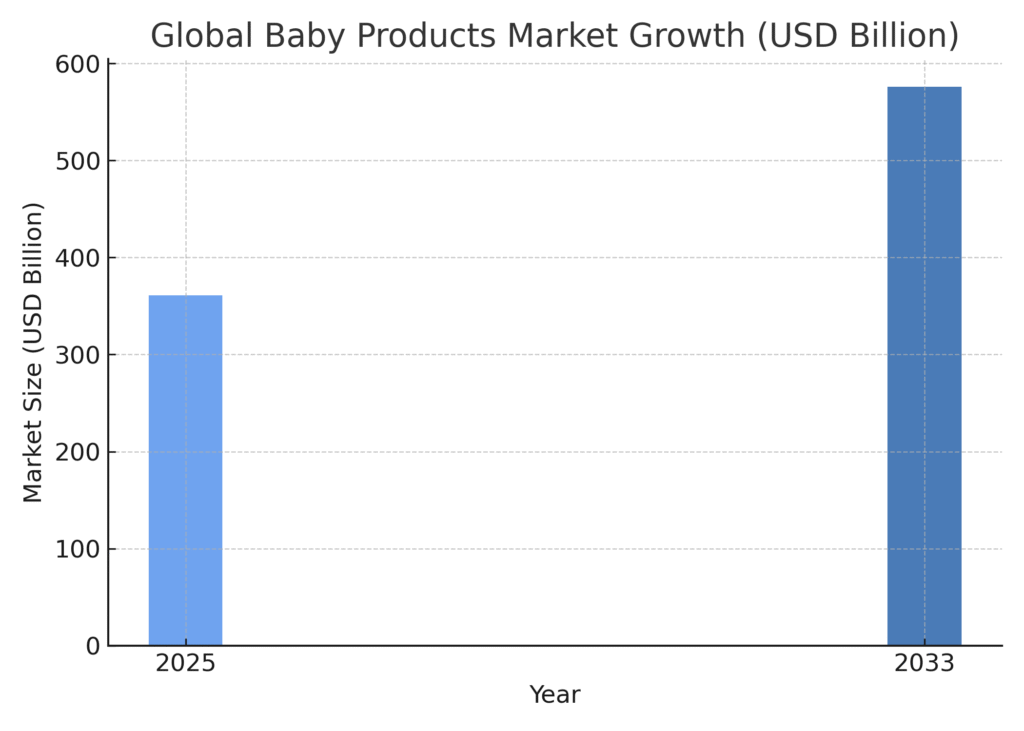
| 1 | Global baby products market size | Expected to reach USD 361.2 billion in 2025 |
| 2 | Forecast market by 2033 | Projected to be USD 575.8 billion |
| 3 | CAGR (global baby products) | Approx 6.0% CAGR |
| 4 | Baby care product segment | To reach USD 88.72 billion by 2026 |
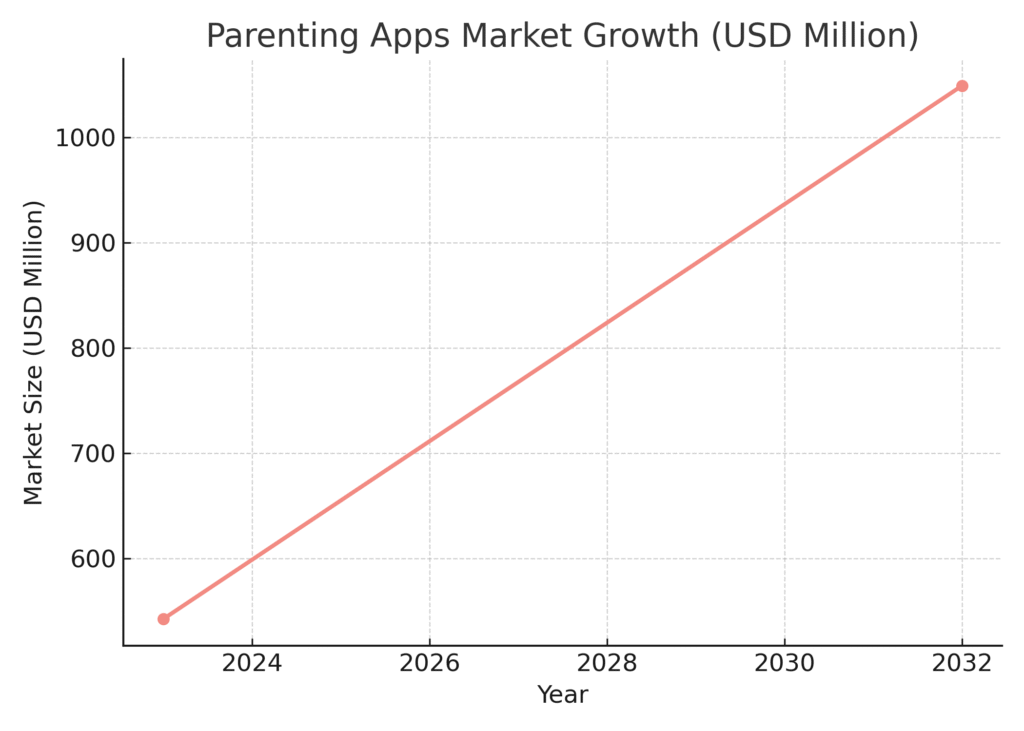
| 5 | Parenting / pregnancy apps market | USD 542.5M (2023) → USD 1.04B by 2032 |
| 6 | Pregnancy trackers dominate | ~54.1% share of parenting apps in 2025 |
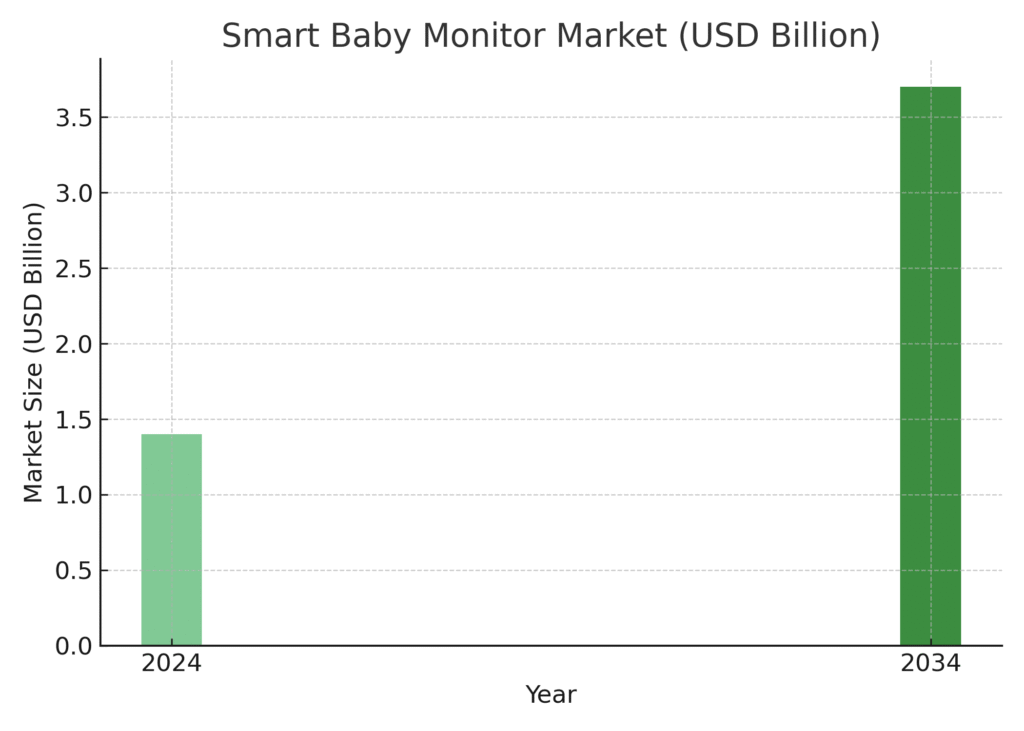
| 7 | Smart baby monitor market | USD 1.4B (2024) → USD 3.7B (2034) |
| 8 | US households with kids | ~40% have kids under 18; 1/3 under 12 |
| 9 | Children’s purchase influence | 90% of parents say kids influence decisions |
| 10 | Registry behavior | Parents prioritize value & safety over luxury items |
| 11 | Deal-seeking behavior | 64% look for deals/coupons |
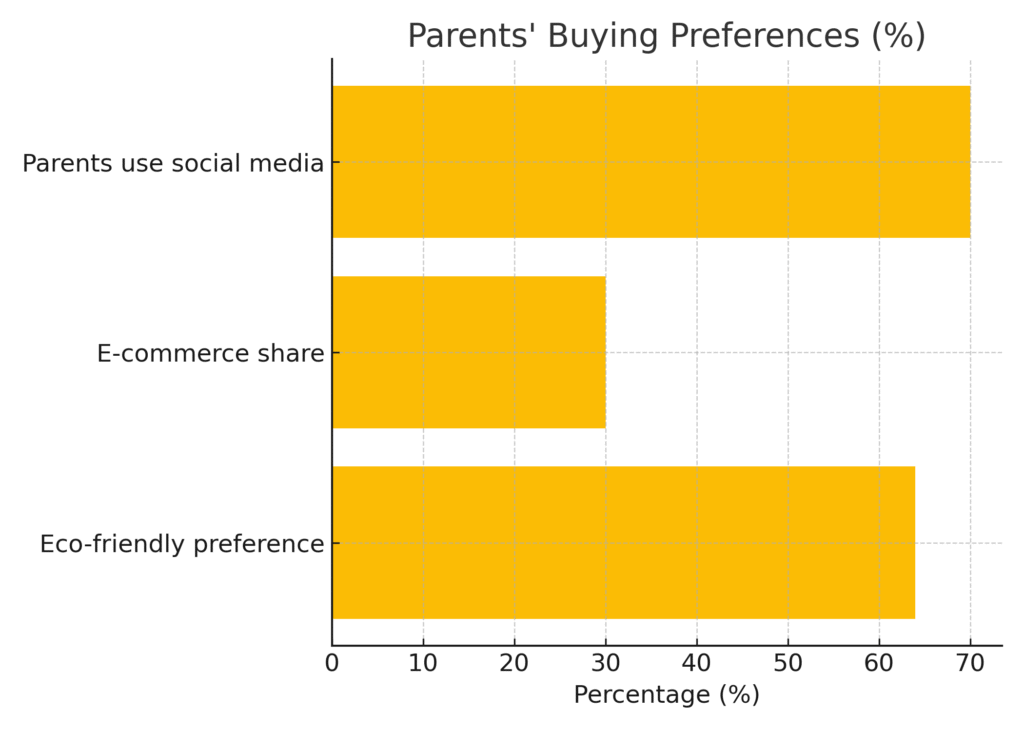
| 12 | Eco-friendly demand | 64% prefer eco-friendly products; +28% organic rise |
| 13 | E-commerce share | Online accounts for ~30% of baby product sales |
| 14 | Subscriptions & rentals | 4.8M families subscribe to toy/essentials kits |
| 15 | Smart / safety tech | High demand for smart monitors & connected baby devices |
| 16 | Parents use social media | 70%+ rely on reviews & social content |
| 17 | Online purchase frequency | 60% shop monthly online for baby care |
| 18 | Brand values matter | Millennial parents prefer eco-friendly & authentic brands |
| 19 | Remote monitoring demand | Growth in app-enabled & wearable baby safety devices |
| 20 | Investment potential | Baby-tech & apps attracting strong investor attention |
Top 20 New Parent Marketing Statistics 2025
New Parent Marketing Statistics #1: Global Baby Products Market Size
The global baby products market is projected to reach USD 361.2 billion in 2025, reflecting how important this category has become worldwide. This growth highlights the increasing demand for essential items like diapers, baby food, and personal care. Parents are more willing to invest in trusted brands that provide quality and safety for their children. For marketers, this represents a growing opportunity to target young families with reliable and value-driven campaigns. Businesses that address affordability and health will remain competitive in this expanding sector.
New Parent Marketing Statistics #2: Forecast Market By 2033
By 2033, the baby products market is expected to hit USD 575.8 billion, showing strong, steady long-term growth. This forecast underlines how new parents will continue to shape consumer spending for years ahead. As more families enter the market, demand for innovative and sustainable products will increase. Companies that adapt early to shifting preferences will capture a significant share. It also signals strong investment potential in baby-related industries.
New Parent Marketing Statistics #3: CAGR (Global Baby Products)
The compound annual growth rate (CAGR) for the baby products industry is around 6.0%, making it a stable yet profitable market. This steady pace assures businesses of reliable returns if they position themselves correctly. Brands targeting parents should anticipate continuous growth and align marketing efforts accordingly. A consistent CAGR also suggests resilience even during economic fluctuations. For marketers, this emphasizes the value of building long-term strategies in this segment.
New Parent Marketing Statistics #4: Baby Care Product Segment
The baby care product segment alone is set to reach USD 88.72 billion by 2026. This covers items like lotions, shampoos, and powders, which are daily essentials for families. Parents prefer products that are gentle, safe, and often organic. The sheer demand for these items makes it essential for brands to stand out with quality assurance and transparent labeling. A focus on eco-friendly and hypoallergenic options will gain strong traction.
New Parent Marketing Statistics #5: Parenting / Pregnancy Apps Market
The parenting and pregnancy app market, valued at USD 542.5 million in 2023, is forecasted to reach USD 1.04 billion by 2032. This boom shows how digital tools are becoming part of everyday parenting. Parents use these apps for guidance, tracking, and community support. Marketers can collaborate with app platforms to promote relevant products and services. The integration of technology into family life has created a unique avenue for targeted outreach.
New Parent Marketing Statistics #6: Pregnancy Trackers Dominate
Pregnancy tracker apps are expected to account for 54.1% of the parenting app market by 2025. This dominance highlights how parents prioritize real-time information during pregnancy. Expecting mothers want constant updates on health, nutrition, and baby development. Brands can leverage this engagement by integrating advertising or partnerships within these apps. It is an effective channel for healthcare, wellness, and baby product marketing.
New Parent Marketing Statistics #7: Smart Baby Monitor Market
The smart baby monitor market is valued at USD 1.4 billion in 2024 and is expected to reach USD 3.7 billion by 2034. Parents want advanced features like video, apps, and remote monitoring. Safety and convenience are primary drivers of this growth. Companies investing in connected devices can expect long-term success. For marketers, positioning these products as trustworthy and tech-friendly will resonate with modern parents.
New Parent Marketing Statistics #8: US Households With Kids
In 2025, about 40% of US households have children under 18, with nearly one-third having a child under 12. This demographic shows the scale of parenting-focused markets in America. Families represent a powerful buying segment, particularly in food, clothing, and education. Marketers must craft family-friendly campaigns that address household needs. Understanding household composition helps in tailoring regional and national marketing strategies.
New Parent Marketing Statistics #9: Children’s Purchase Influence
Around 90% of parents report that their children influence purchase decisions. Kids often drive choices in food, toys, entertainment, and even travel. This makes them key decision influencers despite not holding financial control. Marketers should consider kid-focused advertising that appeals to both children and parents. Products that win children’s approval can enjoy higher conversion rates in family households.
New Parent Marketing Statistics #10: Registry Behavior
In 2024, parents shifted their baby registries toward everyday essentials instead of luxury items. Diapers, formula, and baby food are now top priorities. This reflects a growing emphasis on practicality, value, and safety. For businesses, offering registry-friendly bundles is a smart move. Brands that adapt to this change will see stronger customer engagement and loyalty.
New Parent Marketing Statistics #11: Deal-Seeking Behavior
About 64% of parents actively look for coupons and discounts due to inflation. Families are increasingly price-sensitive when shopping for essentials. This creates opportunities for brands to promote deals, bundles, and loyalty programs. Digital marketing that highlights savings is especially effective. Companies that understand parents’ financial pressures will build stronger trust.
New Parent Marketing Statistics #12: Eco-Friendly Demand
Eco-friendly baby products are preferred by 64% of parents, with organic baby care seeing a 28% rise. Sustainability is no longer optional but an expectation among new parents. Families want non-toxic, safe, and environmentally responsible products. Businesses offering eco-certified solutions can create strong differentiation. Highlighting sustainability in campaigns will resonate deeply with this audience.
New Parent Marketing Statistics #13: E-Commerce Share
E-commerce accounts for nearly 30% of global baby product sales. Parents prefer the convenience of shopping online for essentials. Fast delivery and subscription options further drive online purchases. Brands without a strong e-commerce presence risk missing a large share of customers. Digital-first strategies are key in reaching today’s parents.
New Parent Marketing Statistics #14: Subscriptions & Rentals
Around 4.8 million families subscribed to toy kits and essentials in 2023, with usage growing year over year. Subscription services simplify parenting by ensuring consistent supply. Rentals for baby gear are also gaining popularity for affordability. Businesses can leverage this trend to build recurring revenue. Marketing these services as hassle-free and budget-friendly will resonate with new parents.
New Parent Marketing Statistics #15: Smart / Safety Tech
Parents are increasingly investing in tech-driven baby safety products. Items like smart cribs, health trackers, and connected monitors are in high demand. This trend highlights parents’ willingness to spend on convenience and peace of mind. Brands can use this opportunity to emphasize innovation and trustworthiness. Marketing campaigns that highlight safety features are particularly persuasive.
New Parent Marketing Statistics #16: Parents Use Social Media
Over 70% of parents rely on social media and reviews when making purchase decisions. Online communities have become central to brand discovery. Parents often trust peer recommendations more than traditional advertising. Marketers should prioritize influencer partnerships and user-generated content. Authentic storytelling online can help win parental trust.
New Parent Marketing Statistics #17: Online Purchase Frequency
About 60% of parents shop online for baby products at least once a month. This regularity shows the importance of digital platforms. Families prefer convenient options that fit into their busy lives. For brands, maintaining a seamless online shopping experience is essential. Loyalty programs and personalized offers can further increase repeat purchases.
New Parent Marketing Statistics #18: Brand Values Matter
Millennial and Gen Z parents place importance on brand values like sustainability, ethics, and authenticity. They are more likely to switch to companies that reflect these principles. Marketers should communicate transparency and eco-consciousness clearly. Brands that fail to adapt may lose relevance with modern parents. Aligning messaging with values helps in building lasting customer relationships.
New Parent Marketing Statistics #19: Remote Monitoring Demand
Parents are showing strong interest in remote monitoring devices. Wearables, app-enabled monitors, and video trackers provide reassurance. These products also fit well with the lifestyle of tech-savvy families. Businesses should highlight convenience and peace of mind in their messaging. Safety-focused innovations will continue to dominate parental spending.
New Parent Marketing Statistics #20: Investment Potential
The parenting sector is attracting significant investor interest, particularly in apps and baby-tech. This reflects confidence in the long-term growth of the market. Companies in this space can expect funding opportunities if they offer innovation. For marketers, this also means more competition as new brands enter. Staying ahead requires differentiation and strong positioning in the eyes of parents.
Why These Insights Matter for Brands
These new parent marketing statistics tell a bigger story than just numbers: they reveal how families are navigating modern parenthood and how brands can play a meaningful role in that journey. For businesses, this is about more than selling products—it’s about creating value, offering reassurance, and standing behind the principles today’s parents care about. By keeping a close eye on these trends, companies can position themselves as reliable partners in one of life’s most important chapters. The most successful brands are the ones that show empathy, provide solutions, and evolve alongside parents’ ever-changing needs.
SOURCES
- https://market.us/report/baby-products-market/ (Market.us)
- https://forinsightsconsultancy.com/reports/baby-products-market (For Insights Consultancy)
- https://www.verifiedmarketresearch.com/product/baby-product-market/ (Verified Market Research)
- https://www.deloitte.com/us/en/insights/industry/retail-distribution/back-to-school-survey.html (Deloitte United Kingdom)
- https://www.emarketer.com/topics/topic/parents (EMARKETER)
- https://www.emarketer.com/content/data-drop-6-charts-on-gen-alpha-parent-supervised-path-purchase (EMARKETER)
- https://thedesirecompany.com/infographics/how-moms-lead-shopping-behavior (The Desire Company)
- https://www.theknotww.com/press-releases/the-bump-2025-future-of-parenting-report-reveals-how-todays-climate-is-shaping-the-most-culturally-aware-generation-yet/ (The Knot Worldwide)
- https://dimensionmarketresearch.com/report/baby-products-market/ (Dimension Market Research)
- https://www.marketingtechnews.net/news/almost-70-of-parents-targeted-by-ads-dont-have-children/ (Marketing Tech News)
- https://www.nypost.com/2025/03/05/lifestyle/parents-are-ditching-perfect-social-media-accounts-survey/ (New York Post)
- https://www.reuters.com/business/retail-consumer/indian-baby-products-retailer-firstcry-jumps-40-debut-trade-2024-08-13/ (Reuters)
- https://www.cognitivemarketresearch.com/baby-care-products-market-report (Cognitive Market Research)
- https://zetaglobal.com/resource-center/back-to-school-2025-survey-results/ (Zeta Global)