



26 Sep TOP 20 NEXT DAY DELIVERY MARKETING STATISTICS 2025
When I look at how quickly consumer expectations are changing, I realize just how powerful speed has become in shaping buying decisions. That’s why I’ve gathered these next day delivery marketing statistics — to show exactly how fast shipping influences conversions, customer loyalty, and even returns. As someone who is always eager to spot the trends that shape the future of e-commerce, I found these insights both surprising and energizing. I’m also sharing them with the guidance of a leading marketing agency in New York, because I know firsthand how important it is to combine data with practical strategies. Let’s dive in together, because next-day delivery isn’t just about logistics anymore — it’s about brand trust and customer experience.
Top 20 Next Day Delivery Marketing Statistics 2025 (Editor’s Choice)
📦 Next Day Delivery Statistics 2025
Essential Marketing Insights for E-Commerce Success
| # | Category | Key Statistic |
|---|---|---|
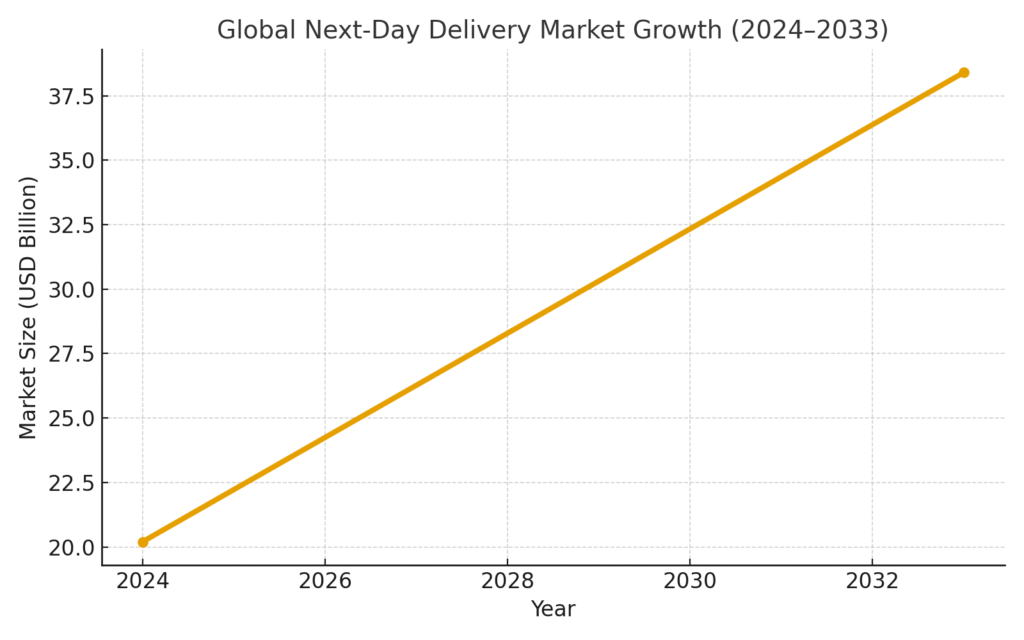
| 1 | 📈 Market Size | Next day delivery market projected to reach $38.4 billion by 2033, growing at a CAGR of 14.4% |
| 2 | 📈 Market Value | Market was valued at $20.2 billion in 2024 |
| 3 | ✅ Consumer Perception | 97% of online consumers consider same-day delivery "fast", while 95% believe next-day delivery is acceptable |
| 4 | ⏰ Wait Time | 44% of customers are only willing to wait two days for their order to be delivered |
| 5 | 🇺🇸 US Demand | 18% of online shoppers in the United States demand next-day delivery |
| 6 | ⚡ Speed Expectations | 40% of US online shoppers expect to receive their items within two days of ordering |
| 7 | 💰 Willingness to Pay | 28% of consumers are prepared to pay more for next-day delivery service |
| 8 | 🎯 Delivery Expectations | 23% of US consumers expect overnight or next-day delivery, while 37% expect delivery within two days |
| 9 | ⚠️ Delay Tolerance | Only 20% of consumers were forgiving of delivery delays and disruptions in 2023 |
| 10 | 🔒 Reliability Priority | 46% of online consumers say reliability is the top attribute they look for in an online retailer |
| 11 | 🕐 Flexible Timing | 90% of consumers are willing to wait two or three days for deliveries if it helps them avoid shipping costs |
| 12 | 🛒 Cart Abandonment | More than 90% of consumers will abandon a purchase if they learn it involves high shipping costs |
| 13 | 🏆 Competitive Edge | Same-day delivery increases an online retailer's competitive edge by 85% |
| 14 | 📊 Industry Adoption | 65% of online merchants plan to offer same-day delivery in the coming years |
| 15 | 🌏 Regional Leader | Asia Pacific dominates the next day delivery market, with China leading, followed by India |
| 16 | 📱 Mobile Growth | 1.2 billion mobile internet users in Asia Pacific in 2021, expected to reach 1.5 billion by 2025 |
| 17 | ✓ Acceptable Delays | 85% of consumers don't consider an order "unacceptably late" if it arrives within 1-2 days of expected time |
| 18 | 📅 Scheduling Preference | More than 50% of consumers place importance on being able to schedule deliveries |
| 19 | 🔁 Customer Retention | 85% of European consumers say a poor delivery experience prevents them from repeat purchases |
| 20 | ⏱️ Changing Expectations | Average consumer wait time decreased from 2.36 days (2022) to 2.15 days (2023) |
Top 20 Next Day Delivery Marketing Statistics 2025
Next Day Delivery Marketing Statistics #1: Global Market Valued At $20.2 Billion
The global next-day delivery market was valued at USD 20.2 billion in 2024. This shows just how central speed has become to e-commerce growth worldwide. Businesses are investing heavily to expand coverage and logistics infrastructure. Marketers can use this stat to highlight the value of being early adopters of speed. Growth projections prove that offering next-day delivery isn’t optional anymore — it’s a competitive must.
Next Day Delivery Marketing Statistics #2: Express Delivery Market Worth $319.2 Billion
In 2023, the broader express delivery market reached USD 319.2 billion. This includes next-day services, same-day, and fast shipping models. The scale of this number demonstrates how consumers globally prioritize fast delivery. For marketers, this means branding efforts should connect shipping speed with convenience. It also shows the massive revenue potential tied to logistics innovation.
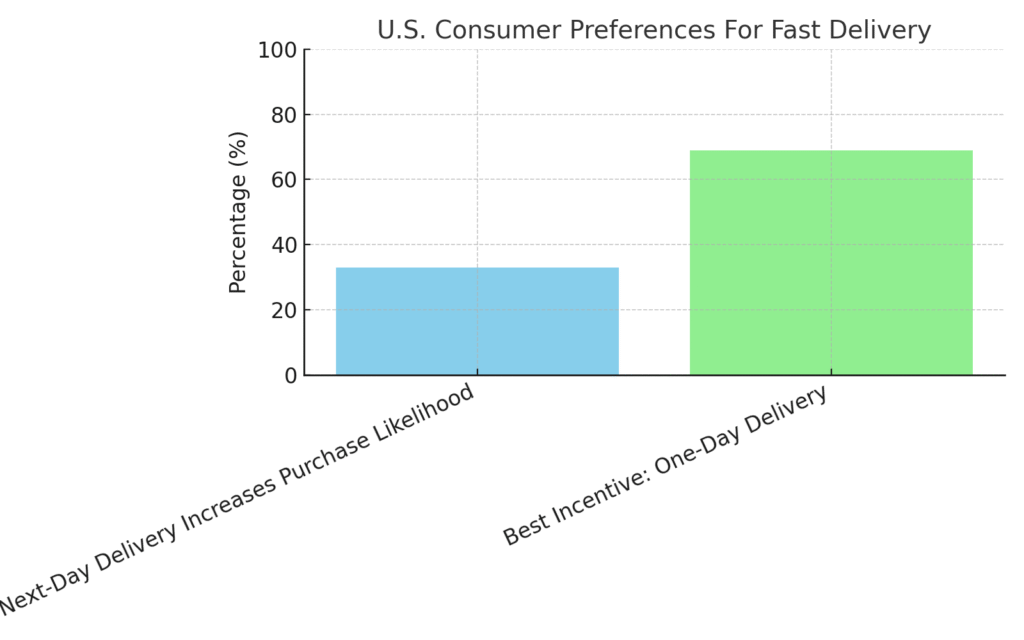
Next Day Delivery Marketing Statistics #3: 33% Of U.S. Consumers Prefer Next Day Delivery
A survey found that 33 % of American internet users would be more likely to purchase if next-day delivery is offered. This proves that shipping speed can be a true sales driver. For e-commerce brands, showcasing “next-day available” on product pages can boost conversions. It is especially impactful for time-sensitive purchases. The marketing message is clear: faster shipping equals higher intent.
Next Day Delivery Marketing Statistics #4: 69% Say One-Day Delivery Is Best Incentive
Almost 70 % of consumers report one-day delivery as the strongest incentive to buy online. This shows that even price discounts often don’t beat the power of speed. Marketers should craft campaigns emphasizing “delivered tomorrow” as the core value proposition. It creates urgency and trust at the same time. In crowded markets, this single factor can make a brand stand out.
Next Day Delivery Marketing Statistics #5: 71% Willing To Pay $3 Extra For Next Day
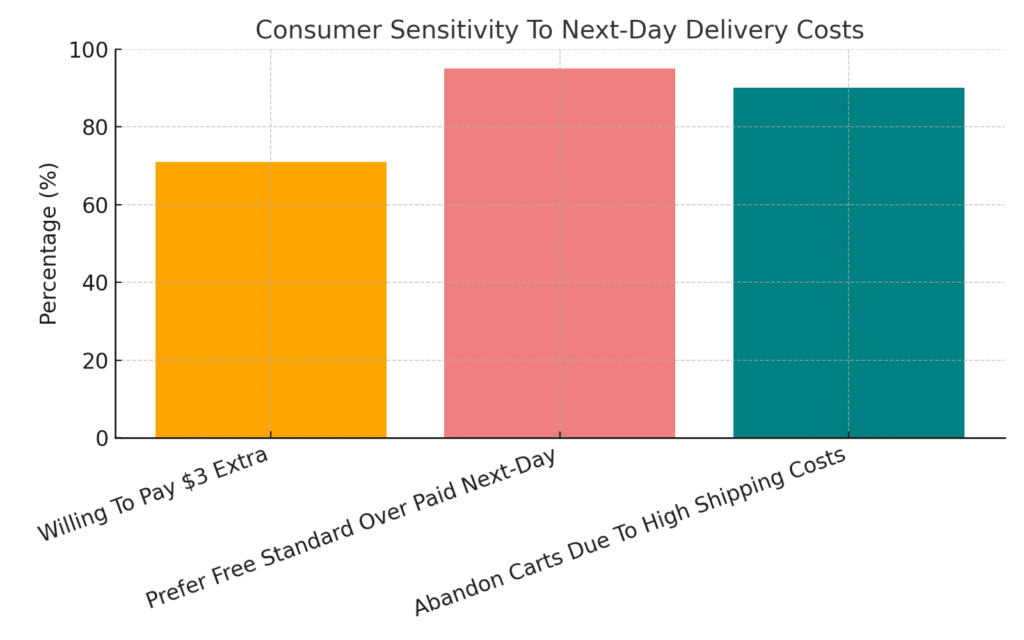
Around 71 % of online shoppers say they’d pay $3 more for next-day delivery. This shows that convenience is often valued more than minimal cost savings. Brands can experiment with modest shipping surcharges without hurting demand. The key is transparency about costs and speed. It’s proof that customers see next-day as worth paying for.
Next Day Delivery Marketing Statistics #6: 92% Care About Delivery Windows
An overwhelming 92 % of shoppers factor delivery windows into their buying decisions. That means it’s not just about speed, but precision and reliability. Marketers should highlight clear estimated delivery times in ads and emails. This reassures buyers and reduces abandoned carts. It makes next-day delivery a promise that builds confidence.
Next Day Delivery Marketing Statistics #7: 88% Want Real-Time Tracking
Nearly 9 out of 10 consumers say real-time tracking defines a positive delivery experience. This means visibility is as important as speed. Highlighting “track your order instantly” can be just as persuasive as next-day guarantees. It gives customers peace of mind during the wait. For brands, it strengthens the perception of professionalism.
Next Day Delivery Marketing Statistics #8: 95% Prefer Free Standard Over Paid Next Day
Most consumers — 95 % — would choose free standard shipping over paying for faster delivery. This shows that free shipping is still king. Marketers need to balance speed with affordability. A winning strategy may be free standard plus affordable next-day upgrades. It’s about offering choice while catering to cost sensitivity.
Next Day Delivery Marketing Statistics #9: 90% Abandon Carts Due To High Costs
More than 90 % of buyers abandon online carts when faced with high shipping costs. This proves again how pricing trumps speed in many cases. Marketers should avoid shocking customers with fees at checkout. Next-day delivery should be framed as affordable, not premium. This approach builds trust and reduces cart abandonment.
Next Day Delivery Marketing Statistics #10: 80% Accept 4–7 Days If Free
Over 80 % of shoppers are okay with slower delivery if it’s free. This shows the balance between cost and speed is delicate. Brands should not always assume next-day is the universal preference. For budget-conscious segments, free shipping messaging is more powerful. Marketing must segment audiences carefully to maximize results.
Next Day Delivery Marketing Statistics #11: Less Than 5% Always Pick Fastest Regardless Of Price
Only 5 % of customers choose the fastest option without caring about price. That means premium same-day or costly next-day delivery appeals to a very small niche. Marketers should avoid over-investing in targeting this tiny group. Instead, pair fast delivery with value pricing. This ensures appeal to the broader market.
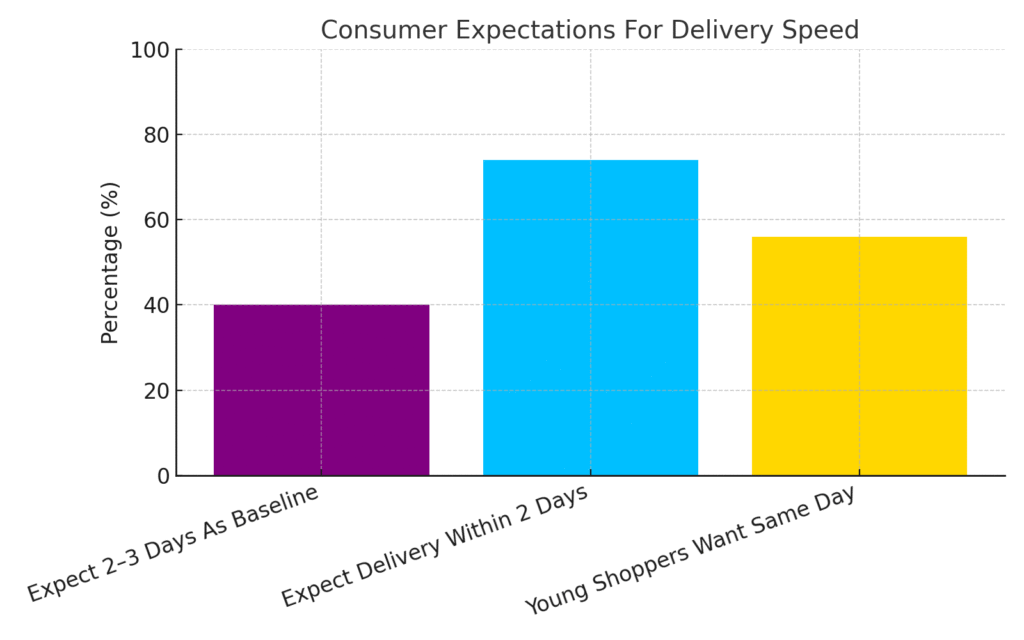
Next Day Delivery Marketing Statistics #12: 40% Expect 2–3 Day Shipping As Baseline
Nearly half of U.S. shoppers now expect two-to-three-day delivery. This shows baseline expectations are rising every year. Marketers can frame next-day as a step above expectations, making it sound premium. It highlights how offering speed creates differentiation. Next-day is becoming the competitive “wow factor” in this space.
Next Day Delivery Marketing Statistics #13: 66% Expect Free Shipping On All Purchases
Two-thirds of shoppers expect free shipping as standard. This expectation shapes how next-day offers must be presented. Marketing should avoid bundling hidden fees. Brands should instead highlight “free shipping plus next-day upgrades.” Meeting this expectation keeps customer trust intact.
Next Day Delivery Marketing Statistics #14: Faster Deliveries Linked To Higher Returns
Studies show faster deliveries can lead to higher return rates, especially among new customers. This may be due to impulse buys when speed is available. Marketers should factor in the cost of increased returns when promising speed. Highlighting flexible return policies can reduce buyer hesitation. It’s a reminder that speed alone isn’t always positive.
Next Day Delivery Marketing Statistics #15: Middle Mile Optimization Boosts Coverage
Research shows optimizing the “middle mile” in logistics improves next-day coverage by about 0.5 %. That may sound small but has huge effects at scale. Marketers can highlight investment in smarter logistics as part of brand storytelling. This reassures customers that next-day isn’t just a claim — it’s backed by innovation. It adds credibility to marketing campaigns.
Next Day Delivery Marketing Statistics #16: Price Sensitivity Found In Japan
In Japan, research showed customers value delivery time savings at around 25.6 JPY/day. This proves that consumers remain highly price sensitive even in mature markets. Marketers in global campaigns should adapt pricing strategies accordingly. Highlighting affordable speed is more effective than premium positioning. Local data should guide delivery messaging.
Next Day Delivery Marketing Statistics #17: 56% Of Younger Shoppers Want Same Day
Over half of 18–34 year-olds expect same-day delivery. This pushes brands to exceed next-day promises for younger audiences. Marketers targeting Gen Z and Millennials should test “delivered today” messaging. Still, for older groups, next-day is often sufficient. Age-based segmentation is key to effective messaging.
Next Day Delivery Marketing Statistics #18: 51% Of Retailers Offer Same Day
Half of major retailers already offer same-day delivery. This means competition is intensifying. For smaller brands, next-day can still be positioned as a premium offering. Marketers should stress reliability and affordability to stand apart. Competing with giants requires focusing on trust, not just speed.
Next Day Delivery Marketing Statistics #19: 74% Expect Delivery Within Two Days
Almost three-quarters of shoppers expect delivery within 48 hours. This makes next-day the clear winning option to exceed expectations. Marketers can frame next-day as meeting customer demands head-on. It positions the brand as customer-first. This expectation gap is an opportunity for differentiation.
Next Day Delivery Marketing Statistics #20: Asia-Pacific Market Growing Fastest
The Asia-Pacific region is seeing the fastest growth in next-day delivery. This is fueled by urbanization and e-commerce boom. Marketers targeting APAC should emphasize speed as a necessity, not a luxury. Campaigns should highlight regional coverage expansion. It’s a clear sign that global growth is being reshaped by Asia.
Final Thoughts On Next Day Delivery Marketing Statistics
After walking through these numbers, I can honestly say I’ll never look at shipping options the same way again. The data makes it clear that speed matters, but so do transparency, costs, and how customers feel about their overall experience. Personally, I think the biggest takeaway is that next-day delivery works best when it’s paired with affordability and clear communication. Working closely with the leading marketing agency in New York has taught me that weaving these insights into messaging is where the real magic happens. At the end of the day, next-day delivery isn’t just a service — it’s a story we tell our customers about reliability, value, and care.
SOURCES
-
https://datahorizzonresearch.com/next-day-delivery-market-2633
-
https://www.gminsights.com/industry-analysis/express-delivery-market
-
https://capitaloneshopping.com/research/ecommerce-delivery-statistics/
-
https://www.opensend.com/post/on-time-delivery-rate-statistics-ecommerce
-
https://www.sciencedirect.com/science/article/pii/S0022435924000393
-
https://www.statista.com/statistics/871513/us-consumer-same-day-delivery-preference/