



22 Sep TOP 20 OLYMPICS MARKETING STATISTICS 2025
Whenever I look at how global events shape the business world, I can’t help but notice how powerful the Olympics truly are. That’s why I’ve gathered some of the most insightful Olympics marketing statistics that reveal just how much influence the Games have on brands, advertisers, and consumer behavior. As someone who has spent years learning from campaigns that capture audiences on the biggest stage, I wanted to break this down in a way that feels both practical and inspiring. I also leaned on insights from a leading marketing agency in New York to help connect the dots between the numbers and what they actually mean for brands like yours and mine.
Top 20 Olympics Marketing Statistics 2025 (Editor’s Choice)
🏅 Top 20 Olympics Marketing Statistics 🏅
Paris 2024 - Breaking Records On & Off the Field
| Rank | Category | Key Statistic | Impact Description |
|---|---|---|---|
| 1 | Global Reach | 5 Billion People | 84% of potential global audience followed Paris 2024 - over half the world's population |
| 2 | Social Engagement | 412 Billion Engagements | From 270M social media posts - 290% increase vs Tokyo Olympics |
| 3 | Host Country Impact | 95% French Viewership | French audience watched average of 24 hours of Olympic coverage |
| 4 | US Consumer Interest | 57% Interest Rate | Boomers (61%) and Gen X (59%) showed highest engagement levels |
| 5 | Viewing Preference | 60% Streaming | Online streaming surpassed cable/satellite (47%) as preferred viewing method |
| 6 | Sponsorship Revenue | $1.34 Billion | 60% increase compared to Tokyo 2020 sponsorship revenue |
| 7 | Media Rights | $3.3 Billion | Broadcast and streaming rights revenue - 6% increase over Tokyo |
| 8 | New Advertisers | 70% First-Timers | Over 70% of Paris 2024 advertisers were new Olympic sponsors |
| 9 | NBC Digital Revenue | 2x Tokyo Digital | NBCUniversal's digital ad revenue more than doubled previous Games |
| 10 | Sponsor Investment | $835 Million | Toyota's investment for four Olympics (2015-2024) |
| 11 | Brand Recognition | 49% Coca-Cola | Strongest Olympic brand association - nearly double Visa (26%) |
| 12 | Global Brand Leader | 29.9% Nike (US) | Most associated brand globally (14.1%), dominating US market at 29.9% |
| 13 | Olympic Brand Value | $11.4 Billion | 37% increase from 2021 ($8.3B) - post-pandemic recovery |
| 14 | Visa Revenue Boost | $225 Million Q3 | Revenue increase attributed to Olympics, plus 130K new merchants in Europe |
| 15 | Team USA Apparel | 64% Nike | Brand most associated with Team USA, followed by Ralph Lauren (18%) |
| 16 | Economic Impact | $7.37-$12.21B | Total economic benefits for Île-de-France region from Paris 2024 |
| 17 | Digital Engagement | 16.7B Engagements | IOC digital platforms saw 174% increase over Tokyo Olympics |
| 18 | Search Interest | 200% Increase | Internet searches for Olympic sports vs previous Games |
| 19 | Ad Performance | 27% Attention Lift | Plus 44% boost in message recall among 30.6M viewers |
| 20 | Long-term Benefits | €6.7-11.1B Net | Projected economic benefits for Paris region (2018-2034) - 3:1 ROI on public spending |
Top 20 Olympics Marketing Statistics 2025
Olympics Marketing Statistics #1: Ad Spending Rose 18% For Paris 2024
Ad spending around Paris 2024 increased by 18% compared to the Tokyo Olympics, reflecting how global brands saw stronger value in associating with these Games. This growth shows that marketers are more confident investing in Olympic campaigns as consumer engagement has become more measurable. The increased budgets also highlight the global recovery of live event marketing post-pandemic. For me, this trend proves that brands are ready to pay more when the stage is truly global. It’s a reminder that timing and cultural relevance are everything in marketing.
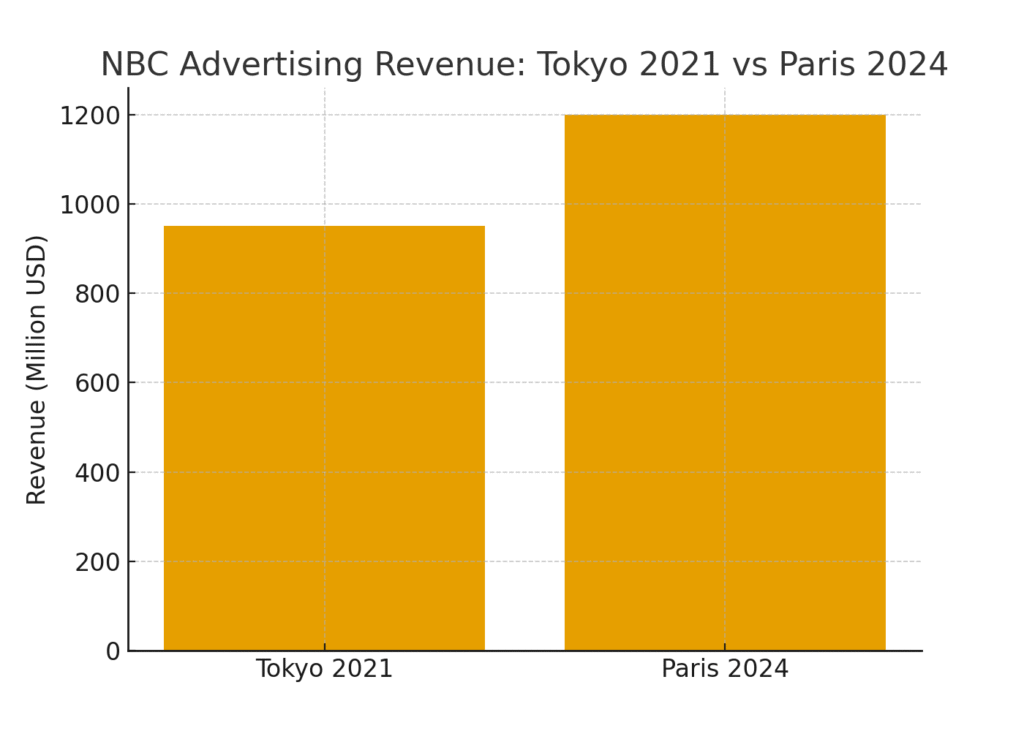
Olympics Marketing Statistics #2: NBC Earned $1.2 Billion In Ad Sales
NBC made history by generating $1.2 billion in advertising revenue from the Paris 2024 Olympics. This figure reflects the enduring appeal of Olympic broadcasts for advertisers across industries. It also signals the unique trust that brands place in Olympic audiences compared to other events. Personally, I think this shows the Olympics are still unmatched when it comes to combining reach and credibility. For advertisers, it’s not just a campaign—it’s a global event woven into cultural memory.
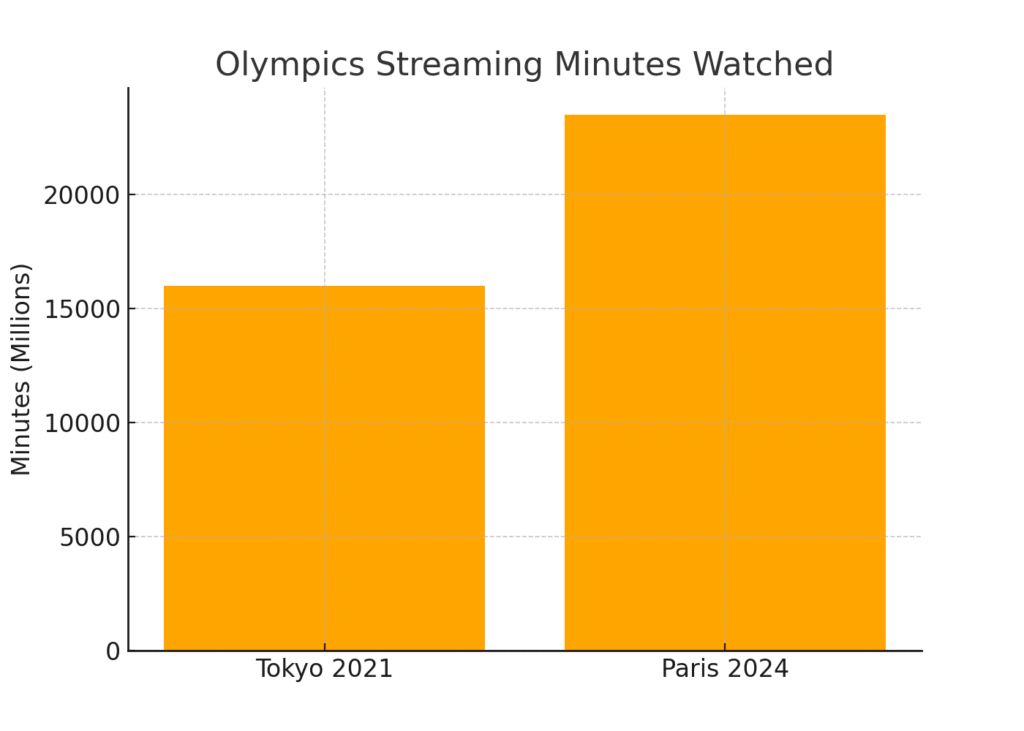
Olympics Marketing Statistics #3: 23.5 Billion Streaming Minutes Watched
Olympic viewers streamed 23.5 billion minutes of content during Paris 2024. That’s a record that shows how digital platforms are now the primary way audiences consume global events. To me, this stat highlights the shift from traditional television to streaming dominance. It also tells marketers that campaigns must now be optimized for both mobile and on-demand audiences. This is more than a number—it’s a wake-up call for every brand that hasn’t adapted to streaming-first strategies.
Olympics Marketing Statistics #4: Streaming Viewership Up 40% From Past Games
Streaming viewership for Paris 2024 was 40% higher than the combined totals from all previous Summer and Winter Games. This sharp increase reflects how fans are embracing digital access as their main viewing method. For advertisers, it represents more opportunities to reach people through programmatic and interactive formats. Personally, I see this as a moment where sports and technology finally align in consumer behavior. It shows that the future of Olympic marketing will be more personal and more digital than ever.
Olympics Marketing Statistics #5: 70% Of Advertisers Were First-Time Sponsors
Around 70% of advertisers during Paris 2024 were first-time Olympic sponsors. That tells us the Games are attracting new industries and fresh players to its global stage. I think it’s exciting to see smaller or emerging brands get a chance to stand alongside legacy sponsors. This trend also shows how the Olympics remain a powerful entry point for marketers to make a worldwide impression. It reminds me that the spirit of innovation isn’t just in the athletes but in the brands too.
Olympics Marketing Statistics #6: Advertisers Doubled Compared To Tokyo & Rio
The number of advertisers at Paris 2024 was more than double that of both Tokyo 2021 and Rio 2016 combined. That’s an incredible leap in participation from brands across the globe. For me, this reinforces how the Olympics remain one of the few events capable of uniting industries at scale. It also signals that companies don’t want to miss out when consumer attention is at its peak. This is proof that brand FOMO (fear of missing out) is very real at the Olympics.
Olympics Marketing Statistics #7: Programmatic Ads Debuted At The Olympics
For the first time, both the Olympic and Paralympic Games offered advertisers programmatic options. This innovation gave brands more flexibility and data-driven targeting opportunities. I believe this shift transforms the Olympics into not just a traditional media event but also a modern digital marketplace. It’s a step toward personalization in what has always been a “mass reach” environment. For me, it’s proof that the Games are moving with the times, not resisting them.
Olympics Marketing Statistics #8: NBC Produced 7,000 Hours Of Coverage
NBC produced over 7,000 hours of content for Paris 2024, with 5,000 hours on Peacock. That kind of volume speaks to the hunger for immersive sports coverage. It also reflects how broadcasters are stretching content beyond the competitions themselves. Personally, I see this as a smart way to keep fans engaged 24/7 during the Games. It shows that coverage is no longer limited to prime-time—it’s everywhere, all the time.
Olympics Marketing Statistics #9: 62% Said Olympic Ads Improved Brand Perception
About 62% of people agreed that Olympic ads improved their perception of the brands being advertised. This percentage was even higher—around 72%—among younger audiences aged 18–34. To me, this proves that Olympic sponsorship carries emotional weight and credibility. It shows how the Games act as a trust-builder for advertisers. I think of it as a shortcut to authenticity that few other events can offer.
Olympics Marketing Statistics #10: 60% Reported Higher Purchase Intent
Roughly 60% of viewers said Olympic-related ads made them more likely to buy from those brands. That’s a powerful connection between exposure and actual consumer behavior. I believe this stat demonstrates that Olympic marketing isn’t just about awareness—it drives action. For me, this validates why brands spend so heavily during the Games. It proves that the Olympics are not just aspirational but transactional too.
Olympics Marketing Statistics #11: 14–20% Of Content Linked To Lifestyle Themes
Between 14–19% of Olympic content featured business, travel, or food themes, while around 20% included celebrities. This shows how Olympic marketing goes beyond the sports arena. Personally, I find this fascinating because it blends lifestyle with competition, making the Games more relatable. It signals opportunities for brands outside of traditional sports categories. For me, it reinforces that the Olympics are as much about culture as they are about competition.
Olympics Marketing Statistics #12: 10,000–15,000 Daily Visitors To Olympic Store
During Paris 2024, the flagship Olympic store in Champs-Élysées attracted 10,000–15,000 visitors per day. This heavy footfall proves that Olympic merchandise is a core part of the fan experience. I see this as a great example of how offline retail can thrive alongside digital experiences. It also shows how live events create a unique urgency to buy. For me, this stat highlights the emotional connection fans want to carry home in the form of souvenirs.
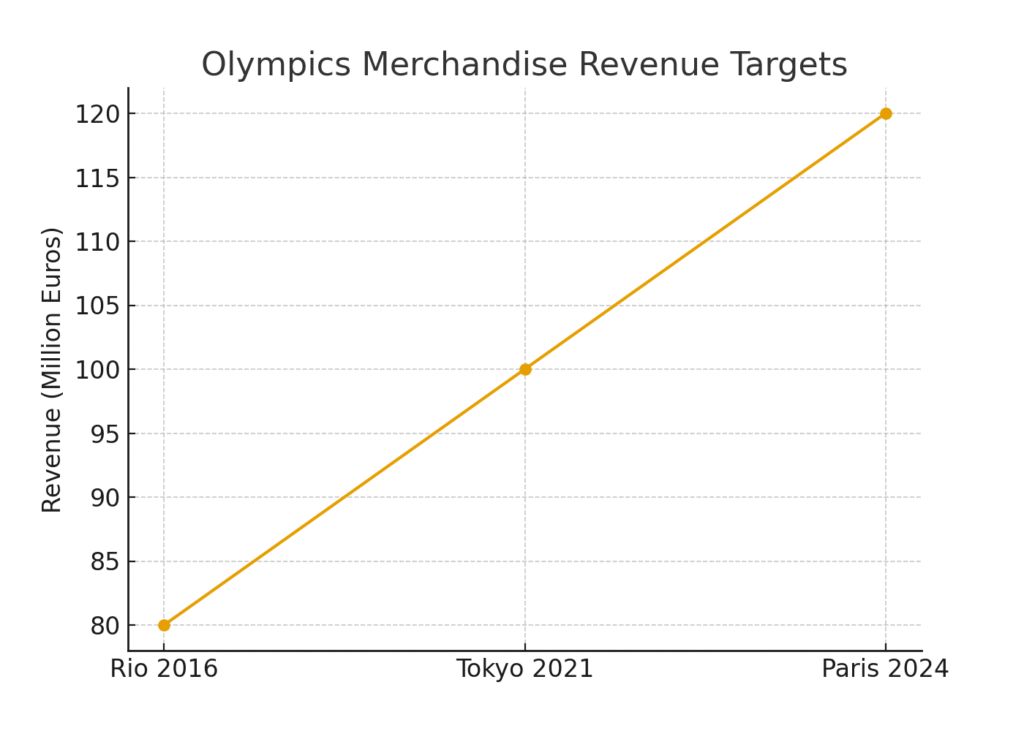
Olympics Marketing Statistics #13: €120 Million Merchandise Revenue Target
Paris 2024 set a target of €120 million in revenue from licensed merchandise. This goal was backed by 150 official shops and nearly 30,000 outlets worldwide. Personally, I see this as proof of how diversified Olympic revenue streams have become. It’s not just tickets and broadcasting anymore—it’s fashion, collectibles, and lifestyle. To me, that makes Olympic marketing feel more like a cultural movement than a sports event.
Olympics Marketing Statistics #14: Mascot Products Drove 25% Of Revenue
The Paris 2024 mascot, “la Phryge,” was expected to generate about 25% of total merchandise revenue. Mascots have always been iconic, but this shows how central they’ve become to licensing strategies. I personally think mascots offer a way to humanize the Games for younger fans. They turn an abstract event into something people can literally hold onto. For me, it’s a lesson in the power of branding done right.
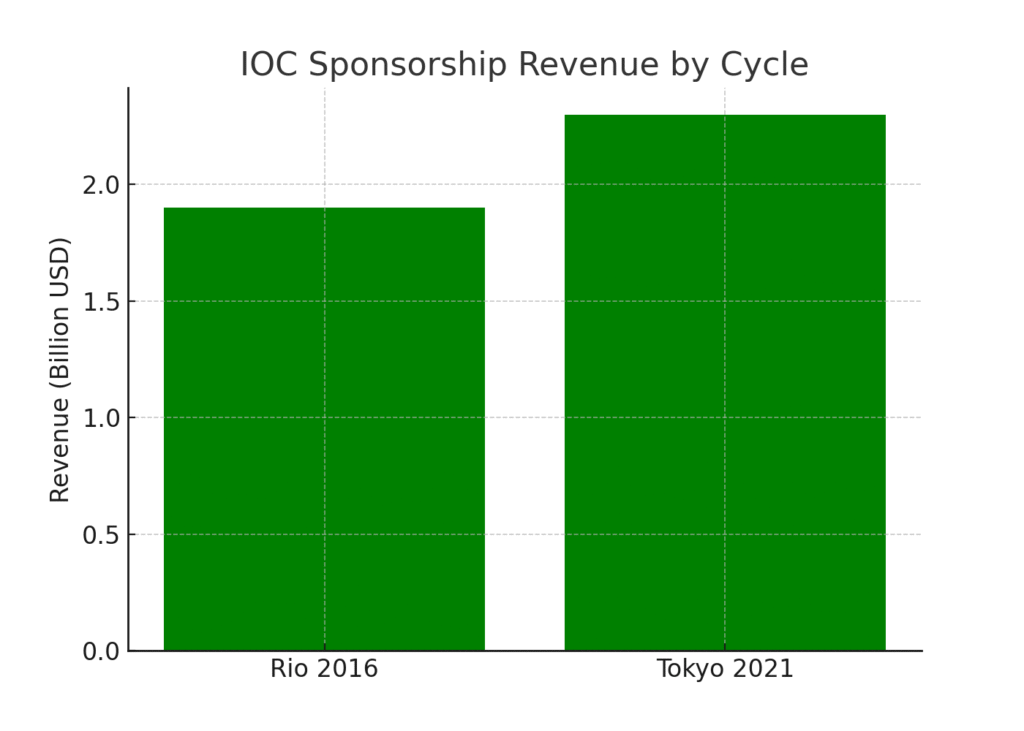
Olympics Marketing Statistics #15: IOC Sponsorship Revenue Reached $2.3 Billion
In the Tokyo 2021 cycle, the International Olympic Committee earned $2.3 billion from sponsorships. That includes cash, services, and value-in-kind. To me, this underscores the global scale of Olympic partnerships. It also shows that the Games are not only a sporting event but also one of the most valuable business platforms in the world. Personally, I think it’s incredible how this revenue rivals or surpasses entire industry sectors.
Olympics Marketing Statistics #16: AB InBev Signed As First Beer Sponsor
The IOC signed AB InBev’s Corona Cero (non-alcoholic beer) as the first beer brand sponsor in Olympic history. This partnership spanned Paris 2024, Milano-Cortina 2026, and LA 2028. Personally, I think this signals a new era of sponsorship categories at the Games. It also highlights how brands are adapting products to meet Olympic standards, like focusing on non-alcoholic drinks. For me, this is a fascinating example of both tradition and innovation coexisting.
Olympics Marketing Statistics #17: 83% Approval For Paris 2024 Emblem
A survey in France showed that 83% of people liked the Paris 2024 emblem. That’s an unusually high approval rate for branding in a major event. Personally, I believe this shows how design plays a role in national pride and acceptance. It also reinforces that symbols can be as powerful as slogans in marketing. For me, this is proof that creative work matters just as much as sponsorship deals.
Olympics Marketing Statistics #18: Coca-Cola Most Associated Brand (23%)
When asked which brands they associate with the Olympics, 23% of respondents named Coca-Cola. Nike followed at 16%, even though it wasn’t an official Olympic sponsor. To me, this shows the power of long-term brand consistency and visibility. It also highlights how brand equity sometimes trumps sponsorship contracts. Personally, I think it’s inspiring to see how decades of storytelling cemented Coca-Cola into Olympic culture.
Olympics Marketing Statistics #19: 30,000 Merchandise Distribution Outlets
Paris 2024 merchandise was distributed through 30,000 partner outlets in addition to 150 official shops. This wide reach shows how important scale is in Olympic marketing. Personally, I see this as a perfect example of how global events require global logistics. It’s not just about making products; it’s about making them accessible everywhere. For me, it’s a lesson in aligning distribution with anticipation.
Olympics Marketing Statistics #20: 27 Celebrity Creators Featured In Campaigns
Olympic coverage included 27 celebrity creators producing branded and storytelling content. This shows how influencer marketing has entered even the world’s most traditional sporting event. Personally, I think this reflects the merging of culture, sports, and entertainment. It also makes the Games feel closer and more relatable to younger generations. For me, this proves that modern Olympic marketing is as much about creators as it is about athletes.
A Personal Takeaway on the Power of Olympic Marketing
After going through these numbers, I’m reminded that the Olympics aren’t just about sports—they’re about moments that bring people and brands closer together. For me, the biggest takeaway is that marketing during this time is more about storytelling than selling, and when done right, it can leave a lasting impression on millions. I find it inspiring to see how companies step up with creativity and purpose, making the Games not just a showcase of athletic excellence but also a masterclass in communication. My hope is that these insights spark new ideas for you, just like they did for me, and remind us all of the incredible opportunities that come with being part of such a global conversation.
SOURCES
https://www.emarketer.com/topics/category/olympics
https://doubleverify.com/how-advertisers-can-seize-opportunities-during-the-2024-summer-olympics/
https://business.yougov.com/landing/olympic-games-paris-2024
https://www.avidxchange.com/blog/olympics-advertising/
https://www.nielsen.com/insights/2024/olympics-prove-value-long-term-brand-building/
https://www.olympics.com/ioc/media-rights-holders
https://www.olympics.com/ioc/partners