



19 Sep TOP 20 ONLINE GAME MARKETING STATISTICS 2025
Diving into the world of online gaming isn’t just about entertainment anymore—it’s a booming industry that’s reshaping how brands connect with audiences. From mobile platforms to immersive advertising formats, the numbers reveal just how powerful gaming has become in driving engagement and revenue. In this blog, we’ve gathered the most important online game marketing statistics that highlight where the industry stands in 2025 and where it’s headed. Whether you’re a small studio or working with a marketing agency in New York, these insights will help you understand not just the numbers, but also the strategies behind them. I wanted this roundup to feel less like data on a page and more like a roadmap that gamers, marketers, and business leaders can actually use.
Top 20 Online Game Marketing Statistics 2025 (Editor’s Choice)
| # | Statistic | Detail |
|---|---|---|
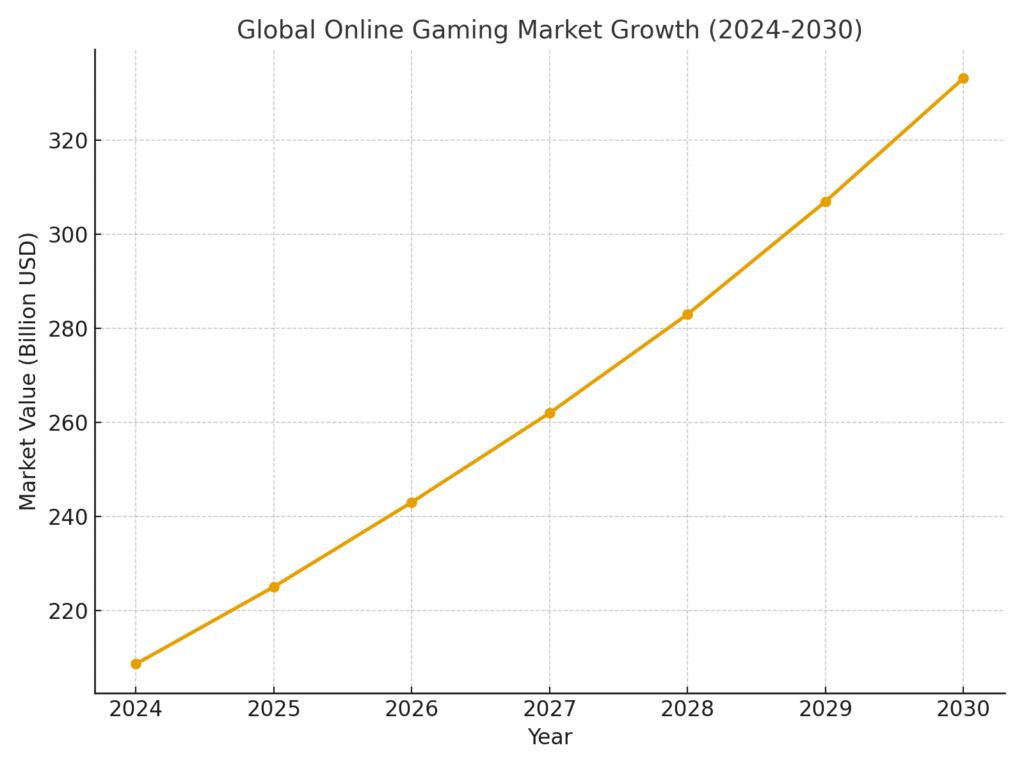
| 1 | Global Market Value | Online gaming market valued at $208.58B in 2024, projected to reach $333.20B by 2030. |
| 2 | Annual Industry Revenue | Video game industry generated $196B in 2023, with ~6% annual growth expected through 2028. |
| 3 | Market Growth | Global market hit $177.9B in 2024, forecasted to reach $198B by 2027. |
| 4 | Mobile Gaming Revenue | Mobile gaming generates $111-120B, more than half of industry revenue. |
| 5 | Number of Gamers | There are 3.32B active gamers worldwide in 2025. |
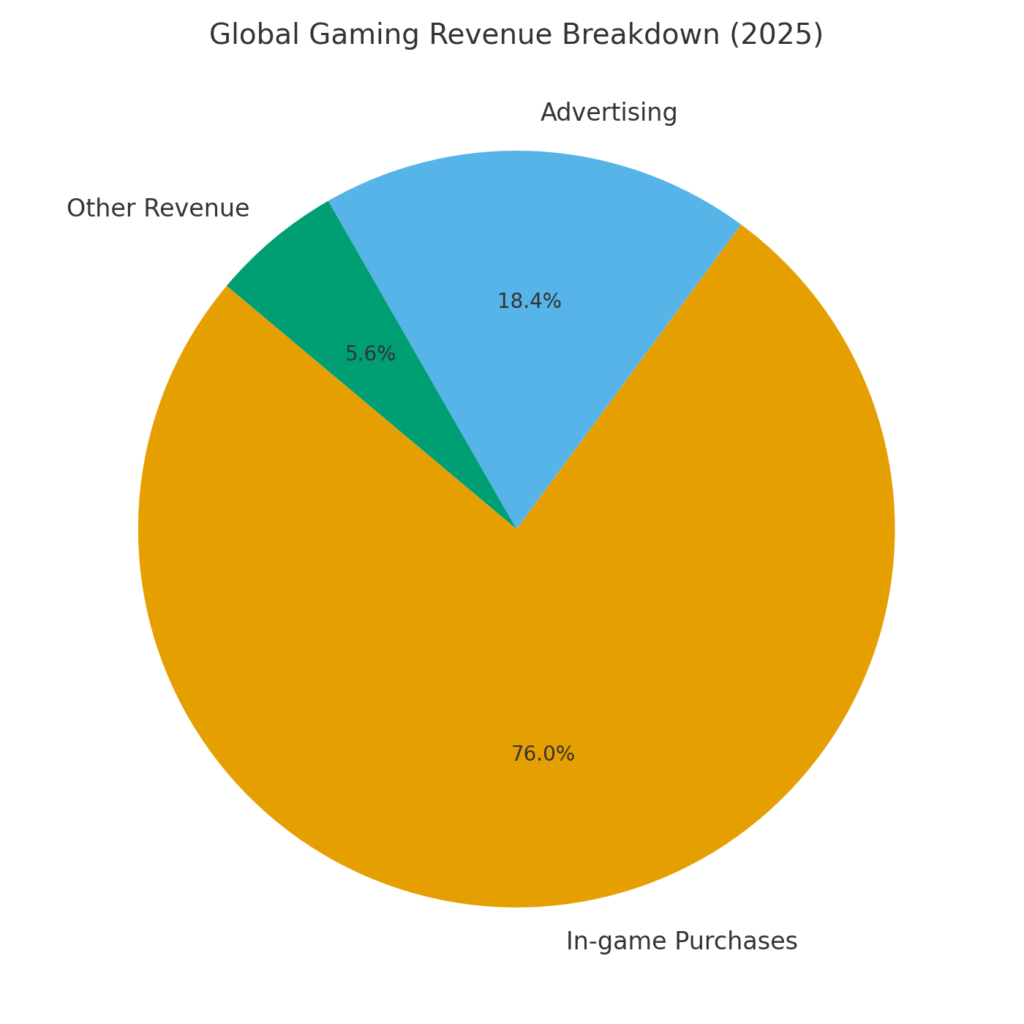
| 6 | In-Game Purchases | 76% of online gaming revenue comes from in-game purchases. |
| 7 | Free-to-Play Model | Accounts for over 40% of total gaming revenue worldwide. |
| 8 | Advertising Revenue | Game advertising generates $18.4B globally in 2025. |
| 9 | Mobile Dominance | 51.2% of the global gaming market is mobile. |
| 10 | Asia-Pacific Revenue | Region generates $56.2B, about 49% of mobile game revenue. |
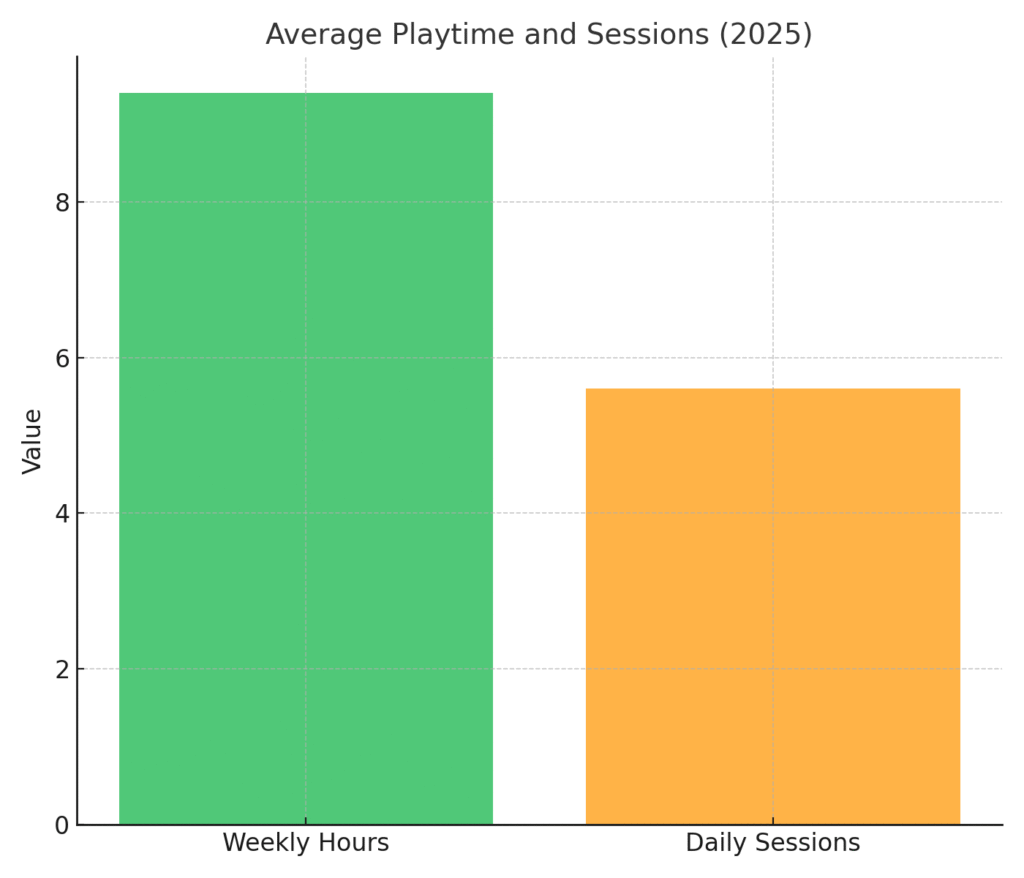
| 11 | Weekly Playtime | Gamers spend about 9.4 hours weekly on online gameplay. |
| 12 | Daily Sessions | Average mobile gamer plays about 5.6 sessions per day. |
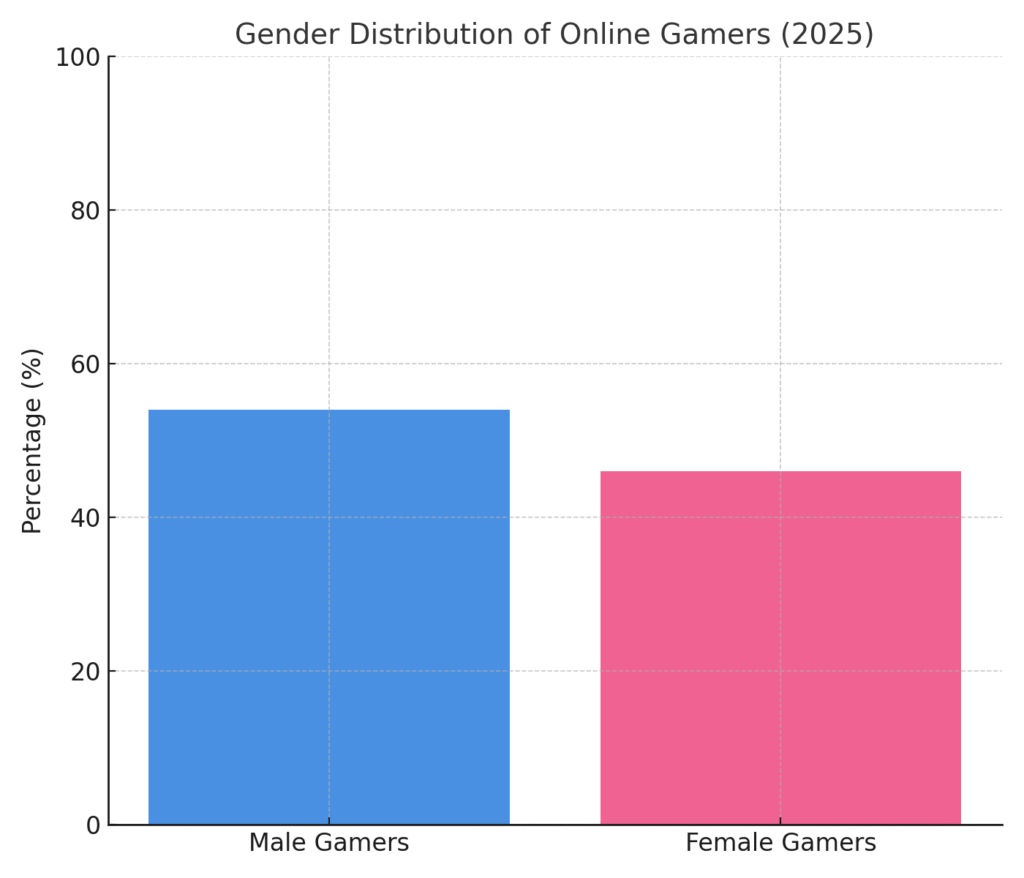
| 13 | Gender Split | 54% of online gamers are male, 46% are female in 2025. |
| 14 | Younger Players | Teens and young adults remain the most engaged audience. |
| 15 | UK Age Distribution | 80% of 16-24s and 49% of 65+ in the UK play online games. |
| 16 | Ad Spend Spillover | $100 ad spend yields 37 paid installs and 3 organic installs. |
| 17 | Ad Viewability | Gaming ads achieve 99% viewability, higher than video or social media. |
| 18 | Hybrid Monetization | Many mobile games mix in-app purchases with ads for revenue. |
| 19 | Community Content | User-generated content strongly boosts retention and monetization. |
| 20 | Rising UA Costs | Marketing costs are climbing, pushing focus on retention and organic growth. |
Top 20 Online Game Marketing Statistics 2025
Online Game Marketing Statistics #1: Global Market Value
The online gaming market reached a massive valuation of $208.58 billion in 2024. Experts predict this number will climb to $333.20 billion by 2030. This growth is driven by mobile accessibility, advanced consoles, and cross-platform play. For marketers, it means more opportunities to tap into a growing audience base. The rising valuation highlights gaming’s role as a cornerstone of the entertainment economy.
Online Game Marketing Statistics #2: Annual Industry Revenue
In 2023, the video game industry earned around $196 billion globally. With steady annual growth of about 6%, this trend is expected to continue through 2028. This signals resilience even in uncertain economic times. Marketers can confidently invest in gaming knowing that revenue consistently grows. It proves the industry isn’t just hype—it’s a reliable long-term market.
Online Game Marketing Statistics #3: Market Growth
By 2024, the global gaming market reached $177.9 billion. Projections show it will rise to nearly $198 billion by 2027. This steady growth demonstrates the stability of the sector. For game publishers, it underscores the importance of consistent marketing strategies. Consumers are showing a sustained appetite for new titles and experiences.
Online Game Marketing Statistics #4: Mobile Gaming Revenue
Mobile gaming has become the largest slice of the pie, generating over $111 billion. This accounts for more than half of all gaming industry revenue. Casual and hyper-casual games dominate, pulling in huge advertising dollars. The convenience of smartphones ensures continued dominance in this space. For marketers, mobile games are now the most important battlefield.
Online Game Marketing Statistics #5: Number of Gamers
There are 3.32 billion active gamers in 2025 worldwide. This accounts for nearly half the global population. It shows that gaming has fully transcended into mainstream culture. Marketers can no longer afford to ignore this audience. Every product or campaign can potentially connect with billions of people through games.
Online Game Marketing Statistics #6: In-Game Purchases
About 76% of online gaming revenue now comes from in-game purchases. Items like skins, power-ups, and season passes drive this trend. This reveals how players are willing to invest in personalization and advantage. For marketers, microtransactions are a goldmine of recurring revenue. It’s proof that engagement doesn’t end at the initial purchase.
Online Game Marketing Statistics #7: Free-to-Play Model
Free-to-play games now account for over 40% of all gaming revenue. The model relies on attracting a huge user base before monetizing. This strategy lowers the entry barrier and broadens the audience pool. Marketers must tailor campaigns to convert free players into paying users. The success of titles like Fortnite shows how powerful this approach can be.
Online Game Marketing Statistics #8: Advertising Revenue
In 2025, online game advertising revenue reached $18.4 billion. In-game ads are becoming more immersive and natural to the player experience. This channel is proving as effective as traditional video ads. For brands, it offers unmatched engagement with highly attentive audiences. It’s a reminder that marketing inside games is no longer optional—it’s necessary.
Online Game Marketing Statistics #9: Mobile Dominance
Mobile platforms account for 51.2% of all global gaming usage. This proves handheld devices are the main way players engage. From commuting to relaxing at home, mobile fits every lifestyle. Marketers should optimize campaigns for the mobile-first world. Ignoring mobile is equivalent to ignoring the majority of gamers.
Online Game Marketing Statistics #10: Asia-Pacific Revenue
The Asia-Pacific region generates about $56.2 billion in mobile game revenue. This represents nearly half of all global mobile gaming income. Countries like China, Japan, and South Korea are leading drivers. For marketers, localization and cultural adaptation are key to success here. The region’s influence makes it the epicenter of global gaming.
Online Game Marketing Statistics #11: Weekly Playtime
On average, gamers spend 9.4 hours a week playing online. This shows a high level of commitment and engagement. For marketers, this extended time creates multiple touchpoints for ads. It also shows gaming competes directly with TV and streaming for attention. This consistent playtime cements gaming as a dominant leisure activity.
Online Game Marketing Statistics #12: Daily Sessions
Mobile gamers log about 5.6 gameplay sessions daily. These short bursts of play make advertising opportunities frequent. Marketers can strategically place ads to align with these micro-sessions. It demonstrates the habit-forming nature of mobile games. Frequent interactions give brands consistent visibility in players’ lives.
Online Game Marketing Statistics #13: Gender Split
The gender gap in gaming has nearly closed, with 54% male and 46% female gamers. This balance challenges old stereotypes of gamers being mostly male. It also opens opportunities for more inclusive marketing strategies. Campaigns targeting both genders equally will resonate better. Gaming is now a shared cultural activity across demographics.
Online Game Marketing Statistics #14: Younger Players
Teenagers and young adults are the most engaged segment of online gaming. They prefer social, creative, and multiplayer experiences. Marketers see this group as the most responsive to digital-first campaigns. This demographic drives trends across platforms. Their behavior often predicts where the industry will head next.
Online Game Marketing Statistics #15: UK Age Distribution
In the UK, 80% of people aged 16–24 play online games. Interestingly, 49% of those aged 65+ are also active gamers. This shows that gaming is truly multigenerational. Marketers can craft campaigns that span generations, from young adults to seniors. It highlights how inclusive and diverse the player base has become.
Online Game Marketing Statistics #16: Ad Spend Spillover
Every $100 spent on ads yields 37 paid installs plus 3 organic installs. This demonstrates the power of paid media to drive organic growth. Marketers can see tangible ROI beyond direct conversions. It also validates the importance of strategic ad spending. Spillover effects make advertising campaigns more efficient in the long run.
Online Game Marketing Statistics #17: Ad Viewability
Gaming ads boast a 99% viewability rate, beating video and social ads. This proves the captive nature of audiences inside games. Players are less likely to skip or ignore ads while immersed. For marketers, this translates to premium engagement. It highlights gaming as one of the best spaces for brand visibility.
Online Game Marketing Statistics #18: Hybrid Monetization
Many mobile games now combine ads with in-app purchases. This hybrid approach maximizes revenue streams. Casual and mid-core titles especially rely on this balance. For marketers, it means diverse touchpoints to connect with players. The model ensures profitability without alienating free users.
Online Game Marketing Statistics #19: Community Content
User-generated content (UGC) plays a vital role in retention. Players who engage with UGC spend more time and money in games. This shows how communities can fuel both engagement and monetization. For marketers, encouraging UGC is an effective strategy. It’s a reminder that the audience itself is part of the marketing engine.
Online Game Marketing Statistics #20: Rising UA Costs
User acquisition costs are rising across the industry. This challenges publishers to focus on retention and organic growth. Marketers must adapt by optimizing lifetime value per user. The shift reflects a maturing industry with increased competition. Brands that emphasize loyalty will gain long-term advantages.
Final Thoughts on Online Game Marketing Statistics
Looking through these stats, it’s clear that gaming is no longer a niche—it’s one of the most dynamic spaces for marketing innovation today. Personally, what excites me most is how quickly audience behavior is shifting and how brands are adapting with more creative, community-driven campaigns. It reminds me that behind every number is a real gamer making choices that shape the future of this industry. If you’re planning your next move in gaming or digital marketing, these insights can be the difference between following trends and setting them. Here’s to using these online game marketing statistics not just as benchmarks, but as inspiration to think bigger and reach audiences where they truly are—inside the game worlds they love.
SOURCES
- https://sqmagazine.co.uk/online-gaming-statistics/ (SQ Magazine)
- https://www.fortunebusinessinsights.com/online-gaming-market-112179 (Fortune Business Insights)
- https://blog.udonis.co/mobile-marketing/mobile-games/gaming-industry (Udonis Mobile Marketing Agency)
- https://www.activisionblizzardmedia.com/blog/gaming-industry/gaming-in-2025-advertising-trends (Activision Blizzard Media)
- https://www.businessofapps.com/marketplace/mobile-game-marketing/research/mobile-game-marketing-costs/ (Business of Apps)
- https://investgame.net/wp-content/uploads/2025/04/Global_State_Of_Game_Publishing_Marketing_Report_2025.pdf (Invest Game)
- https://www.verifiedmarketresearch.com/product/video-game-market/ (Verified Market Research)
- https://www.globalgrowthinsights.com/market-reports/online-game-market-106958 (Global Growth Insights)
- https://www.newzoo.com/ (Newzoo)
- https://best-of-gaming.be/wp-content/uploads/2024/09/2024_Newzoo_Global_Games_Market_Report.pdf (Best of Gaming)
- https://www.credenceresearch.com/report/e-sports-and-game-streaming-market (Credence Research Inc.)
- https://www.lemonde.fr/en/international/article/2024/10/01/africa-takes-aim-at-the-video-game-market_6727841_4.html (Le Monde.fr)
- https://arxiv.org/abs/2504.16151 (arXiv)
- https://www.blog.udonis.co/mobile-marketing/mobile-games/gaming-industry (Udonis Mobile Marketing Agency) https://www.businessofapps.com/marketplace/mobile-game-marketing/research/mobile-game-marketing-costs/ (Business of Apps)
- https://www.globalgrowthinsights.com/market-reports/online-game-market-106958 (Global Growth Insights)