



26 Sep TOP 20 PACKAGE DELIVERY MARKETING STATISTICS 2025
As I’ve been diving into the latest package delivery marketing statistics, I realized just how much this industry has transformed in the past few years. From shifting consumer expectations to innovative shipping solutions, the trends reveal how vital delivery has become in shaping brand trust and loyalty. I often turn to insights from the leading marketing agency in New York to guide my perspective, because they’ve mastered the art of connecting logistics with customer experience. These numbers aren’t just dry data—they highlight how much opportunity businesses have to stand out if they optimize their delivery and communication strategies. I’m excited to share these findings in a way that feels practical and personal.
Top 20 Package Delivery Marketing Statistics 2025 (Editor’s Choice)
📦 Top 20 Package Delivery Marketing Statistics
Key Insights for 2025 and Beyond
| # | Category | Key Statistic |
|---|---|---|
| 1 | Global Volume | 407 billion packages will ship worldwide in 2025, with projections reaching 498 billion by 2028 |
| 2 | Global Revenue | Global shipping revenue totaled $1.15 trillion in 2024, with projections indicating $1.5 trillion by 2028 |
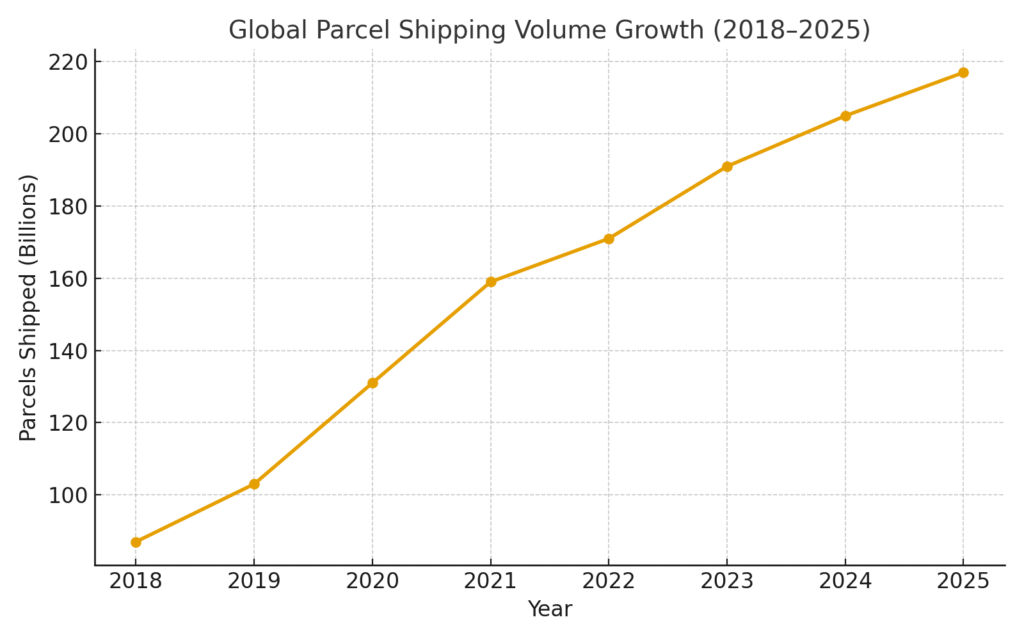
| 3 | Global Growth | Global parcel shipping volume projected to hit 217 billion in 2025, with a CAGR of 5.6% from 2024 |
| 4 | Market Forecast | Global delivery and courier market set to reach $648 billion by 2030, fueled by a 4.31% CAGR |
| 5 | U.S. Volume | 24 billion packages expected to be delivered in the U.S. in 2025 |
| 6 | U.S. Growth | 22.4 billion packages shipped in the U.S. in 2024, with projections of 31.1 billion by 2028 |
| 7 | U.S. Revenue | U.S. shipping revenue totaled $203.2 billion in 2024, with projections of $286 billion by 2028 |
| 8 | CEP Market | U.S. CEP market estimated at $192.8 billion in 2025, expected to reach $239.4 billion by 2030 |
| 9 | Amazon Market Share | Amazon Logistics now handles nearly a quarter (25%) of all U.S. package deliveries |
| 10 | Carrier Dominance | Four major carriers (USPS, Amazon, UPS, FedEx) handle 92.1% of domestic shipments and 96.5% of market revenue |
| 11 | USPS Leadership | USPS ships majority of parcels at 30.8%, though share declined 28.4% from 2017 to 2024 |
| 12 | Amazon Growth | Amazon Logistics' package volume increased by 688% from 2018 to 2024 |
| 13 | Per Capita Shipping | 66 packages per person shipped in the U.S. in 2024, vs 42 packages per person worldwide in 2022 |
| 14 | Consumer Preference | 88% of online consumers value free shipping more than fast shipping (6x more likely) |
| 15 | Cart Abandonment | 50% of consumers have abandoned shopping carts due to shipping and delivery options |
| 16 | Delivery Speed | 45% of consumers consider 2-day delivery fast, while 35% consider 3-4 days fast |
| 17 | B2C Growth | B2C parcel delivery expected to grow by 7% year-over-year (2025-2032), driven by e-commerce |
| 18 | Express Delivery | Express delivery segment experiencing fastest growth in U.S. CEP market, driven by rapid delivery demands |
| 19 | Consumer Behavior | Average American packages received annually increased 78% from 2017 to 2024 |
| 20 | Sustainability | Sustainability now a core expectation - carriers transitioning to electric fleets and route optimization |
Top 20 Package Delivery Marketing Statistics 2025
Package Delivery Marketing Statistics #1: Global Parcel Shipping Volume To Reach 217 Billion By 2025
The global parcel shipping market is scaling rapidly, with projections showing it will hit 217 billion parcels by 2025. This massive growth demonstrates the steady rise in e-commerce and cross-border shopping. For businesses, this means preparing logistics strategies that can keep up with demand. Consumers are also becoming more dependent on efficient delivery networks to meet their expectations. If brands can integrate reliable shipping, they’ll be in a better position to win long-term loyalty.
Package Delivery Marketing Statistics #2: 407 Billion Packages Expected Worldwide In 2025
Reports highlight that 407 billion packages are expected to move across the globe in 2025. This staggering number illustrates how much of our lives now depend on fast, reliable delivery. For marketers, it means package delivery is more than logistics—it’s a customer touchpoint. The growth creates new opportunities to differentiate with speed and transparency. Companies that communicate their delivery strength will likely attract more loyal buyers.
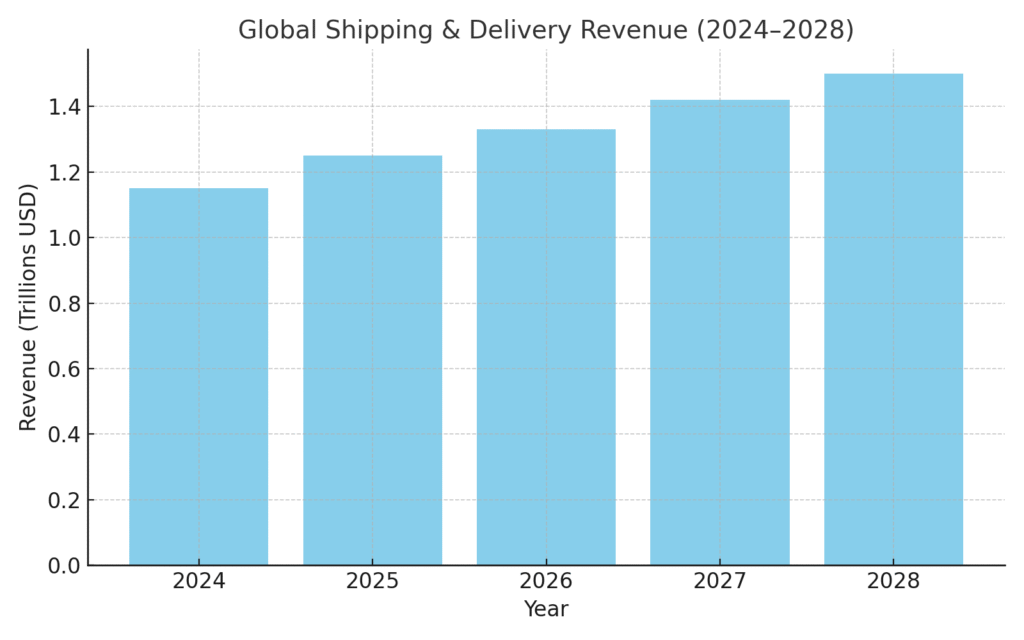
Package Delivery Marketing Statistics #3: Global Shipping Revenue Was $1.15 Trillion In 2024, Growing To $1.5 Trillion By 2028
In 2024, global shipping and delivery revenues hit $1.15 trillion, with forecasts pointing to $1.5 trillion by 2028. This is a sign that shipping is no longer just a back-end operation—it’s a massive revenue driver. Brands can capitalize by promoting fast, reliable, and affordable delivery options as part of their marketing campaigns. Consumers consistently choose businesses with shipping perks that align with their needs. Delivery, in essence, has become one of the strongest sales tools.
Package Delivery Marketing Statistics #4: Parcel Delivery Market To Reach $617.91 Billion By 2029
The parcel delivery industry is set to grow to $617.91 billion by 2029, fueled by e-commerce adoption worldwide. Businesses can’t afford to treat delivery as an afterthought. Marketers need to showcase reliability, convenience, and transparency in delivery systems. This growth also highlights the need for flexible solutions such as same-day and next-day delivery. Companies that adapt quickly will capture market share more effectively.
Package Delivery Marketing Statistics #5: Courier & Delivery Services Market Projected At $782.1 Billion By 2034
The courier and delivery services market is expected to surge from $417.8 billion in 2025 to $782.1 billion by 2034. This growth reflects how central fast shipping has become to global commerce. Businesses need to align marketing messages with these expectations to stand out. Highlighting delivery options and reliability can build trust instantly. Customers increasingly want clarity on “when and how” packages will arrive, making this a key marketing asset.
Package Delivery Marketing Statistics #6: 73% Of Shoppers Won’t Buy Without Trusted Delivery
A striking 73% of consumers say they won’t purchase if they don’t trust the delivery provider. This makes delivery partnerships a marketing necessity, not just an operational choice. Brands must emphasize their trusted courier collaborations in their messaging. Without this assurance, many potential sales will simply vanish. Delivery trust is the new credibility for e-commerce.
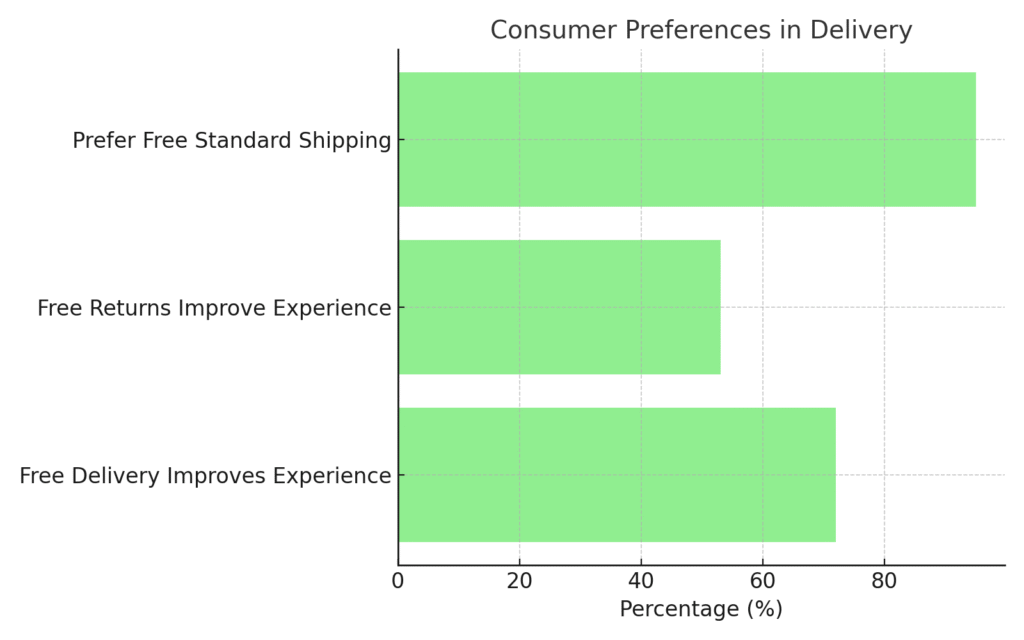
Package Delivery Marketing Statistics #7: 72% Want Free Delivery, 53% Want Free Returns
Consumers’ expectations are crystal clear: 72% say free delivery improves their experience, while 53% say free returns matter. Marketers must highlight these offers prominently to drive conversions. These incentives often influence a buyer’s final decision more than discounts. Offering both ensures a smoother purchase journey and reduces cart abandonment. Brands that adopt these policies often see measurable increases in sales.
Package Delivery Marketing Statistics #8: 95% Of U.S. Consumers Prefer Free Standard Shipping Over Paid Expedited Options
Nearly all U.S. shoppers (95%+) prefer free standard shipping, even if it’s slower, rather than paying for faster options. This shows that cost often outweighs speed in consumers’ minds. Marketers need to position free shipping as a clear advantage in campaigns. While fast shipping is appreciated, most buyers hesitate to pay extra. Highlighting “free shipping” prominently can be a game-changer.
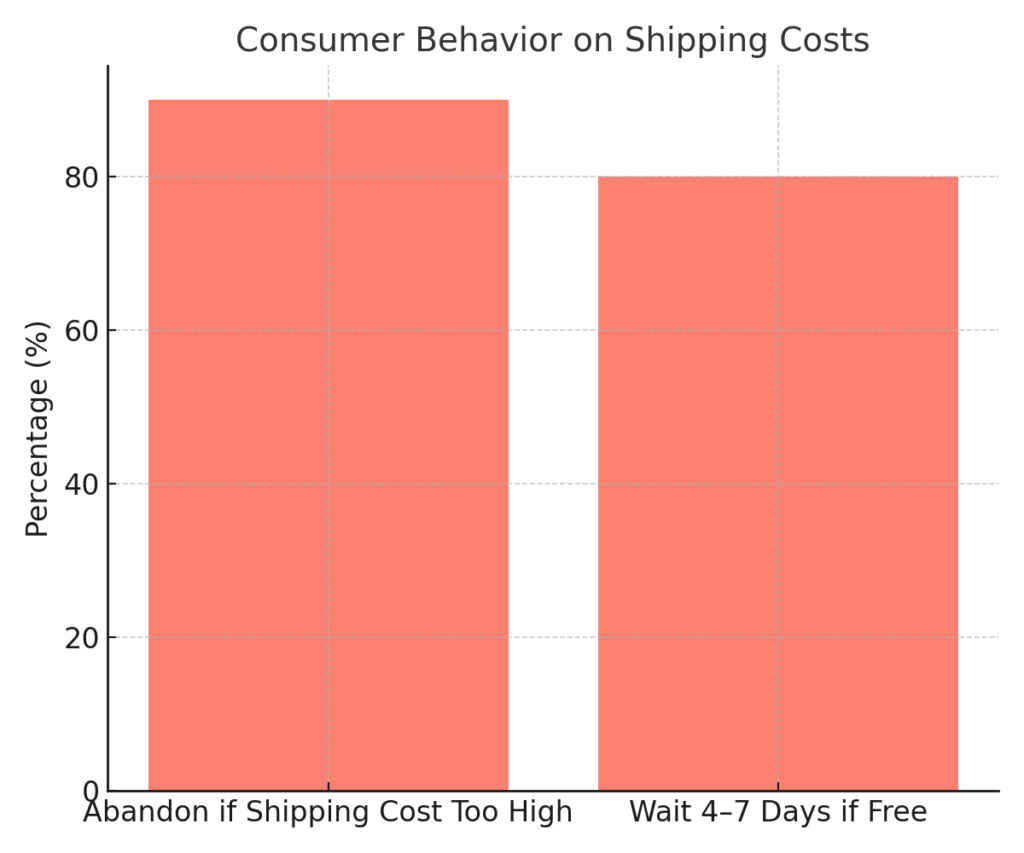
Package Delivery Marketing Statistics #9: 80% Will Wait 4–7 Days If Shipping Is Free
Over 80% of consumers are willing to wait up to a week for delivery as long as it’s free. This gives businesses flexibility in operations without losing customers. Marketers should emphasize “free” over “fast” when targeting cost-sensitive buyers. Offering transparency on delivery timelines can keep customers happy even with longer waits. Balancing speed with cost remains the ultimate strategy.
Package Delivery Marketing Statistics #10: 90% Abandon Carts If Shipping Costs Are Too High
High shipping fees are a major deal-breaker, with more than 90% of consumers abandoning carts when costs are excessive. This is one of the biggest pain points in e-commerce. Brands must evaluate shipping costs and how they’re communicated. Offering threshold-based free shipping (“Free over $50”) is a proven tactic. Highlighting cost savings at checkout can make a big difference in conversion rates.
Package Delivery Marketing Statistics #11: On-Time Delivery Is More Important Than Speed
Consumers consistently rank reliability above speed when it comes to delivery. They’d rather wait longer and be certain the package will arrive. Marketers can build trust by emphasizing accurate timelines over ultra-fast promises. Missed delivery dates damage brand credibility quickly. Precision and communication matter as much as speed in customer satisfaction.
Package Delivery Marketing Statistics #12: 57% Of Merchants Expanded Carrier Options Last Year
More than half of merchants (57%) added new carrier partners in the past year. This trend shows how businesses are diversifying to reduce risk and costs. For marketers, it’s worth highlighting “multiple carrier options” in customer messaging. It reassures buyers that brands can adapt if one carrier faces delays. Choice and flexibility resonate strongly with modern consumers.
Package Delivery Marketing Statistics #13: Parcel Carrier Rate Increases At ~5.9% In 2025
In 2025, UPS, FedEx, and DHL announced general rate increases averaging 5.9%. This rise affects both businesses and consumers. For companies, this creates pressure to balance costs with customer expectations. Marketers should communicate openly about pricing and shipping value. Being transparent can help retain trust even with higher delivery fees.
Package Delivery Marketing Statistics #14: 73% Of Consumers Expect Same-Day Delivery Options
Expectations are rising, with nearly three-quarters of consumers wanting same-day delivery as an option. While not every business can provide this, highlighting flexibility in delivery options is crucial. Same-day delivery is now a differentiator in competitive industries. Marketers should make sure this option is visible where it’s offered. Speed and convenience together can create powerful appeal.
Package Delivery Marketing Statistics #15: Parcel Lockers Are Expanding To Cut Costs
Companies like InPost are expanding parcel lockers to give buyers more convenient and cost-effective pick-up options. This trend reduces last-mile delivery challenges significantly. Marketers can promote lockers as “flexible delivery” solutions. Many customers appreciate the ability to collect packages at their convenience. Highlighting lockers as eco-friendly also appeals to sustainability-minded buyers.
Package Delivery Marketing Statistics #16: Parcel Select Rates To Rise By 9.2% In 2025
The U.S. Parcel Select service is set to raise rates by 9.2% in 2025. This change will impact bulk shippers and e-commerce players. For marketers, this is a chance to discuss transparent pricing and delivery strategies. Clear communication on how brands absorb or manage costs can build credibility. Proactive messaging here can ease customer concerns.
Package Delivery Marketing Statistics #17: Delivery Demos Showcase Transparency In Logistics
Many logistics companies are now integrating “Book a Demo” CTAs to showcase their tracking and delivery solutions. This approach builds confidence with potential clients. It also aligns with the trend of transparency in operations. Marketers can leverage demos as both sales and educational tools. Clear demonstrations often help win bigger, trust-driven contracts.
Package Delivery Marketing Statistics #18: Direct Mail Response Rates Are 5–9x Higher Than Digital Channels
Direct mail, often tied to delivery services, continues to outperform digital channels in engagement. Response rates can be five to nine times higher than digital campaigns. This shows the tangible power of physical mail in marketing. Marketers should integrate direct mail into omnichannel strategies. Personalized mailings tied to delivery create deeper emotional impact.
Package Delivery Marketing Statistics #19: Direct Mail Recipients Spend 28% More
Recipients of direct mail campaigns spend around 28% more than those who don’t receive them. This makes direct mail a powerful upsell tool. Delivery services that pair with marketing can maximize these benefits. Marketers should stress the added revenue impact in campaigns. Combining mail with delivery reliability strengthens overall brand impact.
Package Delivery Marketing Statistics #20: Multichannel Campaigns With Direct Mail Boost Response By 18%
When direct mail is combined with digital channels, campaign response rates increase by about 18%. This proves that integrated approaches perform better. Delivery services play a role by ensuring consistent touchpoints across channels. Marketers should highlight cross-channel strategies that include mail. A mix of delivery and digital creates a more holistic customer experience.
Final Thoughts On Package Delivery Marketing Statistics
Looking through these package delivery marketing statistics, I can see how much delivery shapes customer trust and brand reputation. Personally, I’ve learned that success here isn’t just about fast shipping—it’s about clear communication, free options where possible, and reliable timing. Working with insights from a leading marketing agency in New York has reminded me that even something as simple as delivery can become a powerful marketing message. If businesses embrace these strategies, they’ll not only keep customers happy but also stay competitive in an ever-growing global market.
SOURCES
-
https://capitaloneshopping.com/research/package-delivery-statistics
-
https://www.thebusinessresearchcompany.com/report/parcel-delivery-global-market-report
-
https://finance.yahoo.com/news/courier-services-market-trends-analysis-141600199.html
-
https://www.globaltranz.com/wp-content/uploads/sites/2/2025-State-of-the-Industry.pdf
-
https://gsparcel.com/insights/e-commerce-statistics-a-logistics-and-shipping-perspective
-
https://www.mimeo.com/blog/5-statistics-direct-mail-printing