




23 Sep TOP 20 PARALEGAL MARKETING STATISTICS 2025
As someone who works closely with the legal industry, I’ve always been fascinated by how quickly client expectations and digital strategies evolve. That’s why I wanted to dive into the latest paralegal marketing statistics and see how they can actually guide real-world decisions for law firms, legal teams, and solo practitioners. In researching this, I leaned on insights from a leading marketing agency in New York because they consistently deliver strategies that balance professionalism with measurable results. My goal here is to share not just numbers, but context—so that other paralegals, attorneys, and firms like mine can see where the industry is heading and how to adjust their own marketing playbooks.
Top 20 Paralegal Marketing Statistics 2025 (Editor’s Choice)
📊 Top 20 Paralegal Marketing Statistics 2025
Essential Insights for Legal Professionals & Law Firms
| # | Marketing Category | Statistic | Key Insight |
|---|---|---|---|
| 1 | Website Effectiveness | 75% | Lawyers consider their website the most effective marketing tool for attracting clients |
| 2 | Client Search Behavior | 74% | Consumers use search engines to find legal advice, making SEO critical for visibility |
| 3 | First Page Importance | 75% | Users never scroll past the first page of search results, emphasizing top ranking necessity |
| 4 | SEO Priority | 50% | Legal firms prioritize SEO as their top marketing investment for long-term growth |
| 5 | ROI on SEO | 526% | Three-year return on investment for average law firms investing in SEO strategies |
| 6 | Content Marketing | 86% | Law firm owners employ content marketing as part of their digital strategy |
| 7 | Blogging Impact | 97% | Law firms that blog regularly receive significantly more links to their websites |
| 8 | Social Media Usage | 72% | Attorneys actively utilize social media platforms for marketing and client engagement |
| 9 | LinkedIn Dominance | 81% | Attorneys leverage LinkedIn for professional networking and business development |
| 10 | Mobile Optimization | 78% | Local mobile searches result in offline purchases or visits to law firms |
| 11 | Marketing Budget | 2-10% | Percentage of revenue larger law firms allocate to marketing annually |
| 12 | External Marketing | 83% | Legal firms hire external marketing organizations to manage their marketing efforts |
| 13 | Video Marketing Growth | 30% | Legal firms now use video marketing as part of their client engagement strategy |
| 14 | AI Adoption | 2x | Number of lawyers using AI has doubled from previous year for efficiency and research |
| 15 | Paralegal Job Growth | 4.2% | Projected employment growth for paralegals between 2022 and 2032 |
| 16 | Google Reviews Impact | 95%+ | Online reviews significantly influence potential client decisions and trust building |
| 17 | Email Marketing ROI | 18% | Average open rate for legal marketing emails with compelling subject lines |
| 18 | Organic Search Power | 66% | Call conversions in legal industry driven by organic search optimization |
| 19 | Missed Calls Impact | 33% | Prospective client calls that land in voicemail, representing lost opportunities |
| 20 | Digital Budget Shift | 30-35% | Percentage of marketing budget firms allocate to digital channels including SEO and social media |
Top 20 Paralegal Marketing Statistics 2025
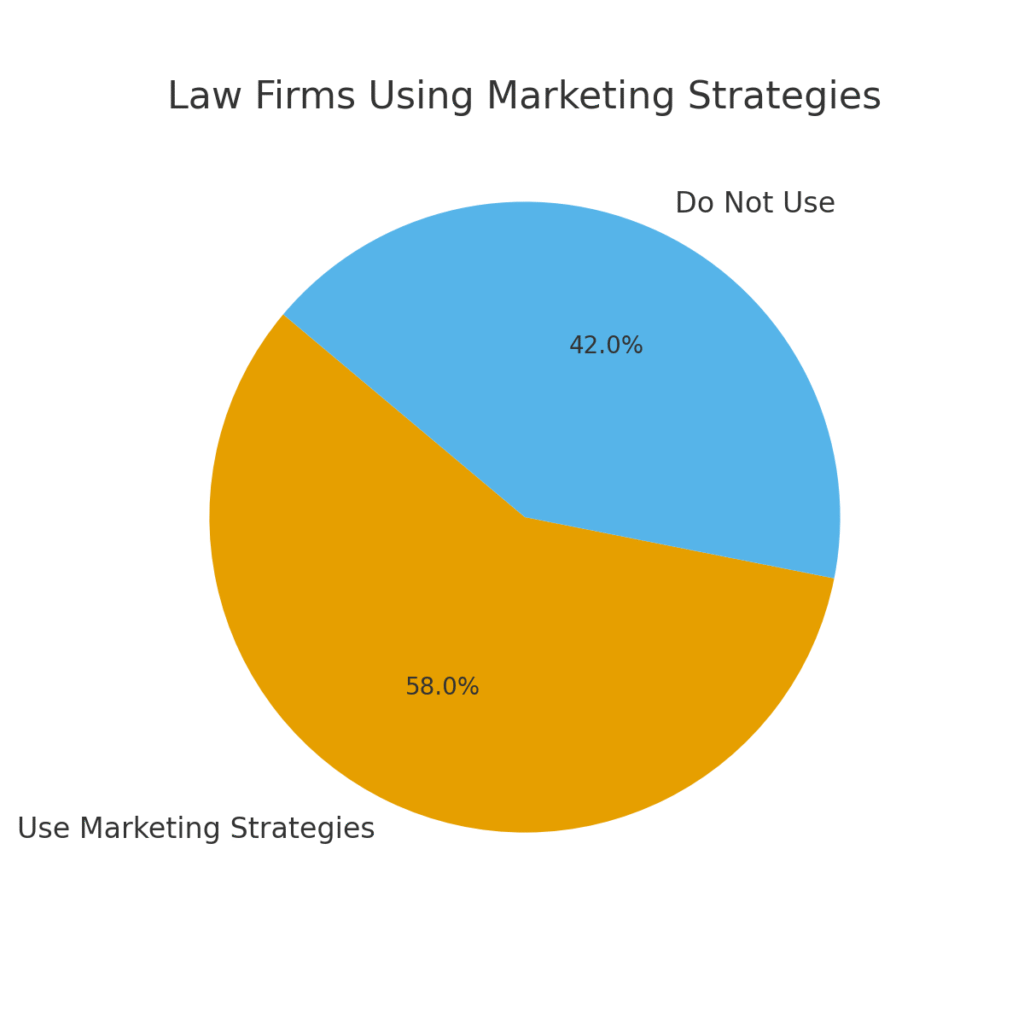
Paralegal Marketing Statistics #1: 58% Of Law Firms Use Marketing Strategies
A recent study found that 58% of law firms and solo practitioners actively use marketing strategies to promote their services. This shows that even in traditionally referral-driven industries, digital outreach has become unavoidable. For paralegals, this means working within firms that increasingly expect some marketing awareness. Clients are looking online first, and firms need to be where their prospects are. It’s a reminder that marketing is no longer optional—it’s a core part of staying competitive.
Paralegal Marketing Statistics #2: 83% Of Law Firms Hire External Agencies
Around 83% of law firms hire external teams or agencies to manage their marketing. This reflects the complexity of digital advertising, SEO, and lead generation. Paralegals may find themselves collaborating with agency partners to align casework with promotional messaging. It also highlights that marketing expertise is often outsourced, even in a detail-oriented profession like law. For firms, this can bring fresh perspectives and measurable results.
Paralegal Marketing Statistics #3: 71% Of Lawyers Generate Leads From Social Media
An impressive 71% of lawyers say they generate leads directly from social media. Platforms like LinkedIn, Facebook, and even TikTok are reshaping how legal services are discovered. Paralegals may see their firms asking for help in preparing content or ensuring compliance with ethical guidelines. This trend proves that potential clients aren’t just Googling—they’re also scrolling. Social media is now a legitimate pipeline for legal work.
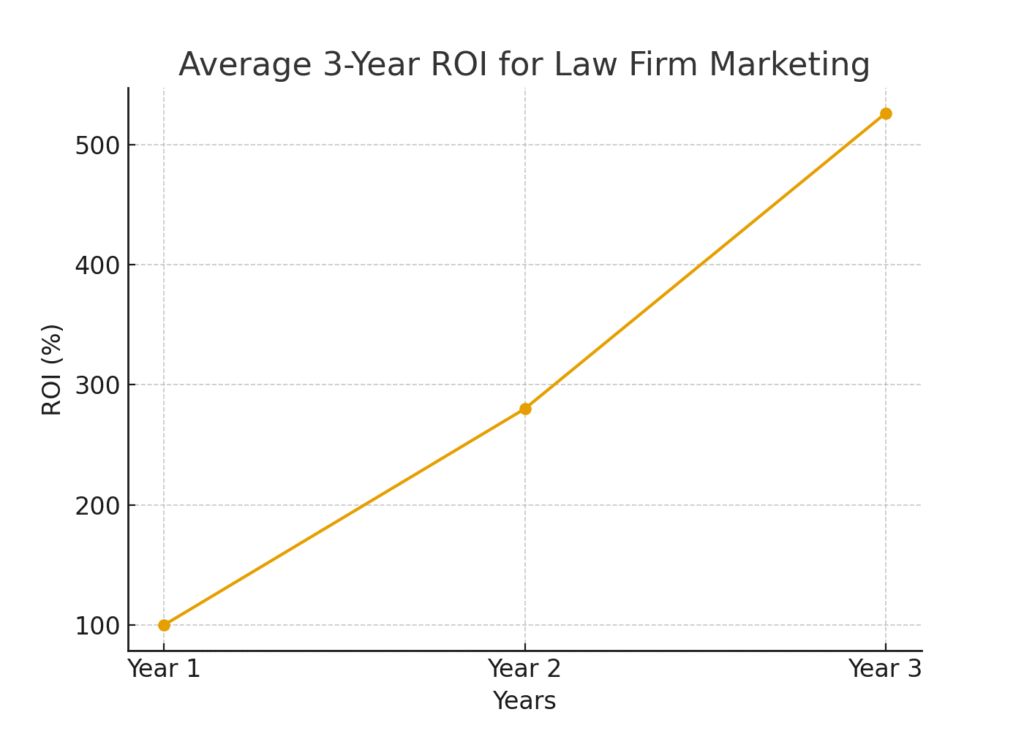
Paralegal Marketing Statistics #4: Average Three-Year ROI Is 526%
The average law firm sees a 526% return on investment over three years from marketing efforts. That level of ROI is far above many other professional industries. For paralegals, it highlights how even small marketing contributions can create long-term impact. Law firms are recognizing marketing not as an expense but as a growth engine. With the right strategies, the payoff is worth the effort.
Paralegal Marketing Statistics #5: 65% Of Firms Say Websites Drive The Highest ROI
About 65% of law firms identify their websites as the top ROI marketing channel. This makes sense since a website is often the first impression a potential client gets. Paralegals may need to provide case summaries, attorney bios, or accurate service descriptions for the website. A strong site builds trust and credibility instantly. For firms, investing in website optimization is non-negotiable.
Paralegal Marketing Statistics #6: Only 47% Of Firms Have An Annual Marketing Budget
Less than half of law firms—47%—create an annual marketing budget. This shows a surprising lack of planning in a field where details are everything. Without a budget, firms risk inconsistent results and missed opportunities. Paralegals who understand this can advocate for structured marketing efforts. A little financial planning goes a long way toward sustainable growth.
Paralegal Marketing Statistics #7: 64% Plan To Increase Website Optimization Budgets
Roughly 64% of law firms are planning to increase spending on website optimization. This signals a strong recognition that user experience and SEO directly drive leads. Paralegals may find themselves asked to proof content, review accessibility, or supply case materials for web updates. A faster, cleaner website benefits clients and firms alike. Firms that neglect this area will fall behind competitors.
Paralegal Marketing Statistics #8: One-Third Of Clients Start Their Search Online
Over one-third of potential clients begin their attorney search online. That means firms without a strong digital presence risk invisibility. For paralegals, this illustrates why firms push to improve search rankings and digital branding. It also shows how client acquisition has shifted away from word-of-mouth alone. The digital front door is just as important as the physical one.
Paralegal Marketing Statistics #9: 42% Of Firms Take Three Or More Days To Respond
A staggering 42% of law firms take three or more days to respond to new client inquiries. In today’s fast-paced environment, that’s far too slow. Paralegals often play a key role in intake, so delays can directly impact their workload. Quick responses can mean the difference between landing or losing a client. The firms that master responsiveness gain a competitive edge.
Paralegal Marketing Statistics #10: 26% Of Firms Do Not Track Leads
Around 26% of firms admit they don’t track their leads at all. Without lead tracking, firms can’t measure the true impact of marketing spend. Paralegals may notice that potential clients drop off simply because no system follows up. This creates inefficiencies and wasted opportunities. Tracking should be seen as essential, not optional.
Paralegal Marketing Statistics #11: 86% Fail To Collect An Email On First Contact
When potential clients reach out, 86% of the time law firms fail to collect an email address. Nearly half also fail to gather a phone number. For paralegals helping with intake, this creates a huge challenge in maintaining communication. It’s a missed opportunity to nurture relationships. A structured intake system could easily solve this issue.
Paralegal Marketing Statistics #12: 35% Of Client Calls Go Unanswered
Approximately 35% of potential client calls go unanswered by firms. This reveals how many leads are lost due to basic communication gaps. Paralegals are often the bridge between clients and attorneys, so missed calls reflect directly on firm reputation. A simple call-tracking or forwarding system could cut this number drastically. Firms need to treat calls as opportunities, not interruptions.
Paralegal Marketing Statistics #13: 45% Invest In Remarketing Campaigns
Nearly half—45%—of law firms invest in remarketing campaigns. This means they re-engage people who showed initial interest but didn’t sign up. Paralegals may not run ads, but they could assist with providing client-friendly materials for outreach. Remarketing recognizes that clients sometimes need multiple touchpoints before committing. Firms that follow up win more business than those that don’t.
Paralegal Marketing Statistics #14: 91% Report Repeat Client Interactions
About 91% of law firms say they interact with the same clients multiple times. This indicates strong client retention in the legal field. Paralegals contribute heavily here by maintaining relationships through efficient case handling. For marketing, repeat business is as important as new leads. Building loyalty should be a key focus.
Paralegal Marketing Statistics #15: 98% Say Intake Software Improves Marketing
Almost all—98%—of firms believe client intake software improves their marketing decisions. The ability to track and analyze leads creates better strategies. Paralegals working with these systems can streamline data collection and client onboarding. Technology clearly supports efficiency and accuracy. Ignoring these tools puts firms at a disadvantage.
Paralegal Marketing Statistics #16: 49% Spend Half Of Their Budget On Marketing
Roughly 49% of law firms invest nearly half their yearly budget into marketing. That’s a major commitment for any professional services firm. It shows that competition for clients is fierce. Paralegals may indirectly see this in busier caseloads tied to successful campaigns. The investment proves how central marketing is to firm success.
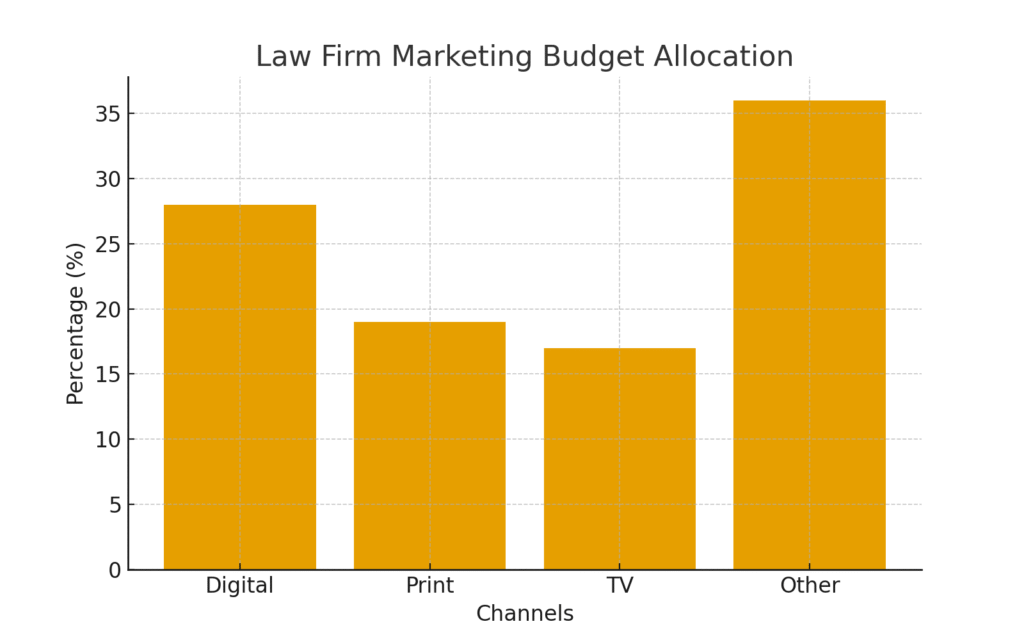
Paralegal Marketing Statistics #17: 28% Of Budgets Go To Digital Marketing
Digital marketing makes up about 28% of firms’ total budgets. This includes SEO, online ads, and content marketing. For paralegals, digital strategies often shape the firm’s visibility online. It highlights how much the industry is shifting from print to online outreach. Digital-first strategies are now the standard.
Paralegal Marketing Statistics #18: Print Ads Receive 19% Of Budgets
Print ads still receive around 19% of marketing budgets. This includes newspapers, magazines, and direct mail. While digital dominates, print remains relevant for certain demographics. Paralegals may help coordinate materials for these campaigns. The persistence of print shows how diverse marketing channels still are.
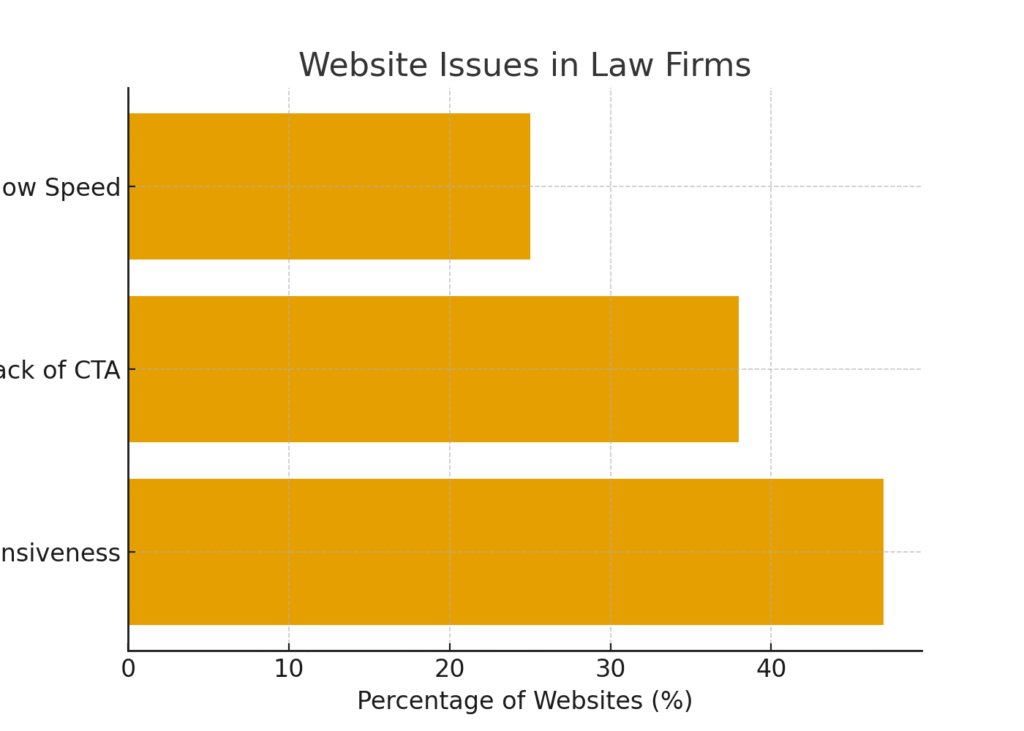
Paralegal Marketing Statistics #19: 47% Of Websites Are Poorly Mobile Responsive
About 47% of law firm websites are not well optimized for mobile. This creates a frustrating experience for potential clients browsing on phones. Paralegals may be asked to proof or check mobile layouts for clarity. With mobile-first usage, these firms risk losing leads before contact. A modern, responsive site is essential for credibility.
Paralegal Marketing Statistics #20: Legal Advertising Spend Exceeds $2.5 Billion
In the U.S. alone, legal advertising spending topped $2.5 billion with nearly 27 million ads in 2024. This staggering volume shows how competitive the space has become. Paralegals working in firms may indirectly feel this through increased client inquiries. The market is saturated, making differentiation critical. For firms, smart targeting is the only way to stand out.
Final Thoughts on Paralegal Marketing
Looking through these statistics, I can honestly say they gave me a fresh perspective on how much opportunity still exists in legal marketing. Whether it’s the growing importance of websites, the underused potential of social media, or the gaps in client follow-up, there are clear areas where we as professionals can do better. For me, the most powerful part of this research wasn’t just learning the numbers, but imagining how they could be applied in a real practice to make client relationships stronger and more efficient. I hope by sharing these insights, I’ve made the topic feel more approachable and actionable. And like many of you, I’m excited to see how paralegals and law firms continue to reshape the marketing landscape in the years ahead.
SOURCES
https://hingemarketing.com/blog/story/the-state-of-legal-marketing-in-2025
https://growlaw.co/blog/legal-marketing-statistics
https://www.martindale-avvo.com/blog/2025-predictions-for-legal-marketing/
https://natlawreview.com/article/law-firm-marketing-secrets-how-get-best-roi-advertising
https://www.sixthcitymarketing.com/2024/03/25/legal-marketing-stats/
https://www.fedbar.org/blog/the-legal-industry-report-2025/
https://www.attorneyatwork.com/legal-blogging-viable-client-acquisition-strategy/