




30 Sep TOP 20 PARTNER PARTY MARKETING STATISTICS 2025
When I started looking into how businesses and event organizers leverage partnerships for growth, I was amazed at how much impact they can have. That’s why I want to share these partner party marketing statistics with you — they highlight just how powerful collaboration, referrals, and joint campaigns can be. From what I’ve seen, the difference between going solo and teaming up with the right partner can mean faster deals, higher conversions, and stronger long-term relationships. As someone who often turns to the insights of a leading marketing agency in New York, I know how important it is to build strategies backed by real numbers. My goal is to make this as relatable and practical as possible, so you can see exactly how these statistics can shape your own approach to marketing partnerships.
Top 20 Partner Party Marketing Statistics 2025 (Editor’s Choice)
🚀 20 Partner Marketing Statistics for 2025
Data-Driven Insights to Power Your Partnership Strategy
| # | Category | Statistic |
|---|---|---|
| 1 | RevenuePartner Revenue Growth | 71% of channel professionals anticipated that partner-generated revenue would climb more than 10% in 2024 |
| 2 | StrategicGrowth Driver | 75% of business leaders acknowledge ecosystem partnerships as a key driver of their growth strategies |
| 3 | RevenueProgram Maturity Impact | High maturity partnership programs contribute 28% of overall company revenues, while low maturity programs contribute only 18% |
| 4 | RevenueMicrosoft Success | 95% of Microsoft's commercial revenue comes through its partner ecosystem |
| 5 | RevenuePartner Attribution | 49% of organizations attributed 26% or more of their revenue to partners |
| 6 | RevenueRevenue Contribution | 54% of companies say partnerships drive over 20% of total revenue |
| 7 | MarketIT Market Share | 73% of the IT market passes through intermediaries in channel and partnership ecosystems |
| 8 | RevenueROI vs Paid Search | Partnerships generate 10% more revenue than paid search |
| 9 | MarketPRM Market Growth | The Partner Relationship Management market was estimated at $90.20 billion in 2024 and is projected to reach $226.51 billion by 2030 (CAGR of 16.6%) |
| 10 | MarketInvestment Trends | 82% of B2B business leaders planned to add partners in 2022, while nearly 70% planned to boost channel program budgets |
| 11 | StrategicMarketing Strategy | 77% of companies see partnership development as central to their 2019 marketing strategy |
| 12 | StrategicEcosystem Importance | 84% of companies state that ecosystems are important to their strategy |
| 13 | StrategicGrowth Perspective | 55% of marketers say partnerships are important for driving growth and increasing revenue |
| 14 | StrategicRevenue Expectations | 96% of B2B leaders expected to increase revenue directly attributed to their partner ecosystems in 2022 |
| 15 | BenefitsDual Impact | 49% of respondents saw a boost in revenue and 45% saw a boost in brand awareness from partnership programs |
| 16 | BenefitsBrand Awareness | 50% of marketers say that partnerships help with brand awareness |
| 17 | BenefitsCustomer Retention | 42% of marketers say that partnerships improve their customer retention cost |
| 18 | BenefitsConsumer Sentiment | 71% of consumers enjoy partnership marketing campaigns |
| 19 | AdoptionAffiliate Marketing | Affiliate marketing is used by 80% of brands and 84% of publishers |
| 20 | AdoptionPartner Growth Rate | Microsoft's ecosystem grows by 7,500 partners every month |
Top 20 Partner Party Marketing Statistics 2025
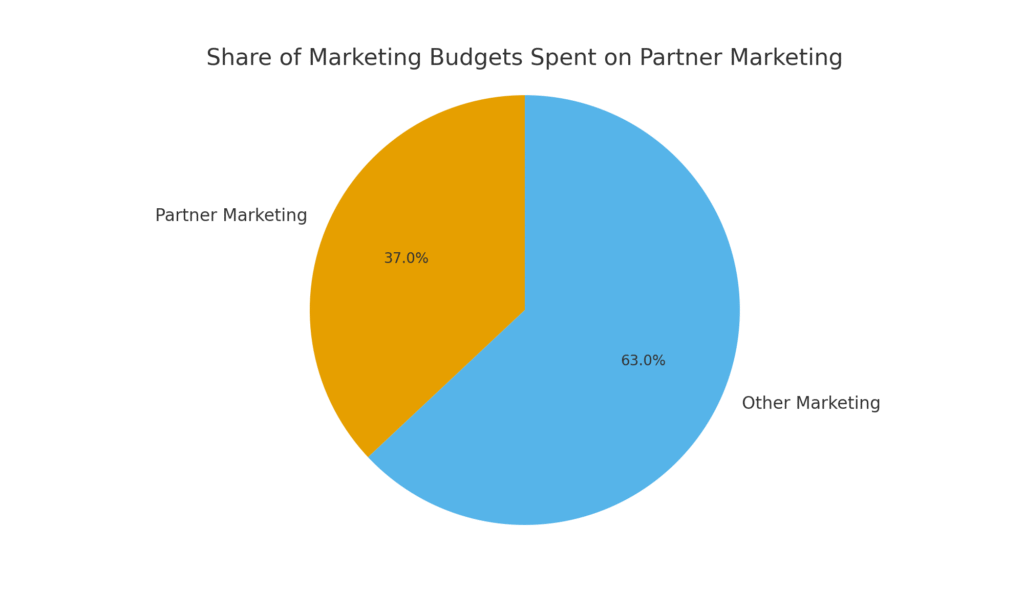
Partner Party Marketing Statistics#1 – 37% of Budgets Spent on Partner Marketing
Recent research shows that 37% of overall marketing budgets were dedicated to partner marketing activities. This highlights how crucial partnerships have become in driving measurable growth for companies. Instead of spending heavily on isolated campaigns, brands are realizing the value of leveraging shared audiences and networks. Events like partner parties benefit directly from this shift, as collaboration often enhances reach and engagement. This budget allocation demonstrates that businesses are placing trust in partnerships as a core growth strategy.
Partner Party Marketing Statistics#2 – 62% Expect Budget Increases
About 62% of organizations expect their partner marketing budgets to increase in the coming year. This rising confidence indicates that businesses are seeing strong returns from collaborative campaigns. For partner parties, it suggests more resources will be available for co-hosted events, shared promotions, and unique experiences. Increased budgets also mean better technology, tools, and data to support event-driven marketing. Ultimately, it shows a positive trend where partnership events will gain even more momentum.
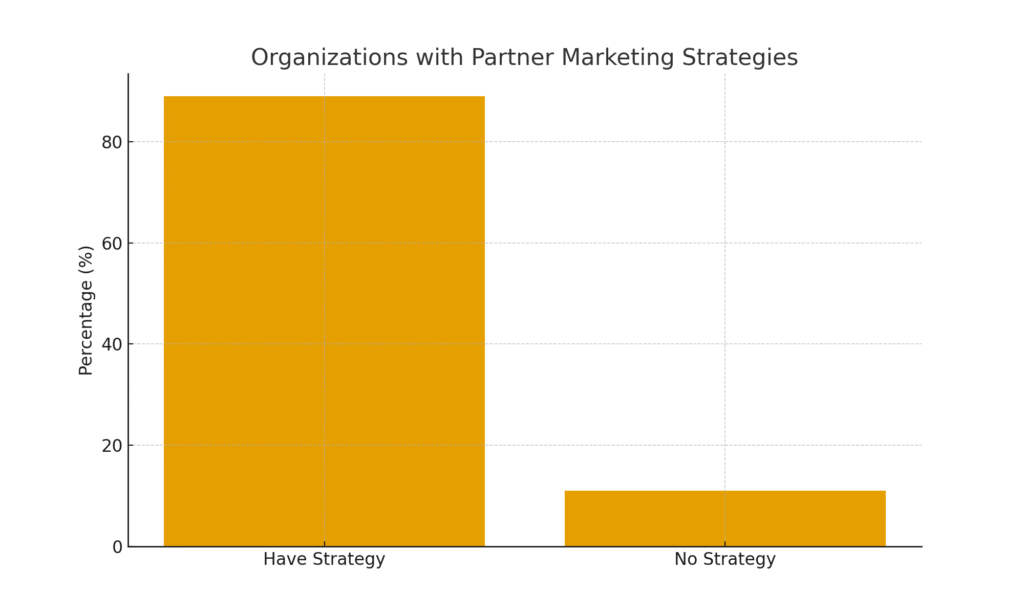
Partner Party Marketing Statistics#3 – 89% Have a Partner Marketing Strategy
Nearly 89% of organizations report having some version of a partner marketing strategy. This adoption rate illustrates that partnerships are no longer optional but essential for competitiveness. For partner parties, it means businesses are more prepared to engage in joint events and leverage cross-brand opportunities. The strategy-first approach helps partners align goals, measure success, and avoid wasted effort. It’s clear that the majority of companies now see partnerships as a strategic necessity.
Partner Party Marketing Statistics#4 – Documented Strategies Drive Better Results
Studies show that companies with documented partner marketing strategies achieve stronger results than those with informal plans. Documentation ensures clarity on objectives, responsibilities, and success metrics. For partner parties, this means smoother coordination between brands, fewer miscommunications, and higher-impact events. A written plan helps establish accountability and makes it easier to replicate successful campaigns. In short, formality in planning translates into real-world success in partnerships.
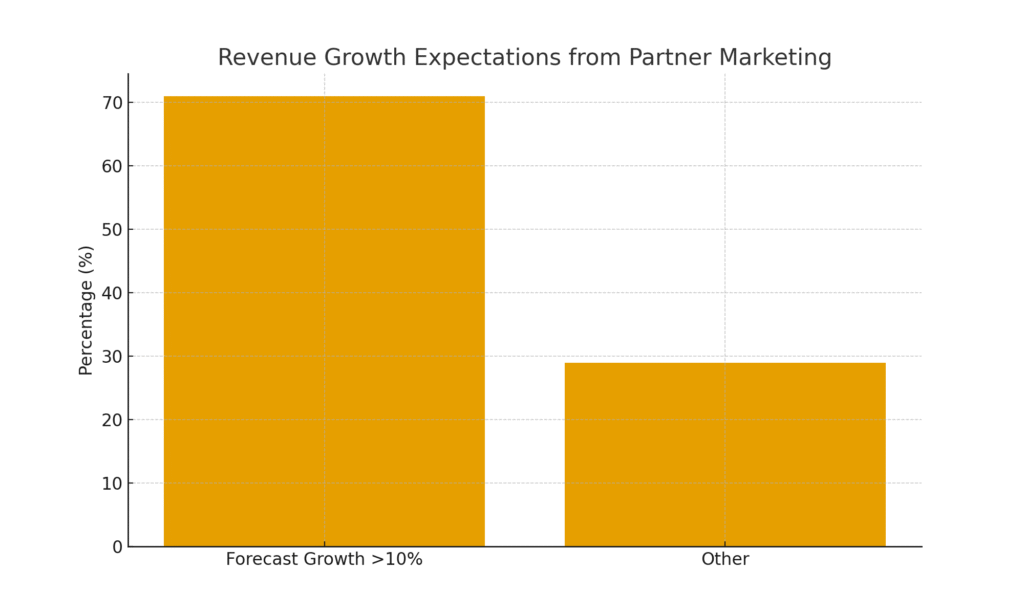
Partner Party Marketing Statistics#5 – 71% Forecast Over 10% Growth in Partner Revenue
About 71% of marketers forecast that partner-generated revenue will grow more than 10%. This expectation reflects the confidence businesses have in co-marketing efforts. For partner parties, this means more opportunities to generate revenue through sponsorships, ticket sales, or shared customer bases. The consistent growth trend also suggests that collaborative marketing events are here to stay. When revenue rises, investment in these events naturally follows.
Partner Party Marketing Statistics#6 – 49% Attribute 26% or More of Revenue to Partners
Almost half of organizations say that at least 26% of their revenue comes from partners. This demonstrates the direct financial impact of strong collaborations. For partner parties, it shows that revenue from joint campaigns is not just supplemental but central to growth. When events are designed around co-marketing, the returns can be significant. These statistics confirm that partnerships contribute substantially to bottom-line performance.
Partner Party Marketing Statistics#7 – 75% of World Trade Flows Indirectly via Partnerships
Roughly 75% of world trade flows through channels, partnerships, and alliances. This staggering figure shows how much of the global economy depends on collaboration. For partner parties, it underscores that even at a micro level, partnerships drive real results. By tapping into this global trend, brands can replicate success on a smaller but still meaningful scale. The importance of alliances cannot be overstated, whether in trade or marketing.
Partner Party Marketing Statistics#8 – Deals 53% More Likely to Close with Partners
Research reveals that deals are 53% more likely to close when a partner is involved. This shows how collaboration builds credibility and trust with potential customers. For partner parties, this means joint events significantly boost chances of converting attendees into clients. The shared endorsement from two or more trusted brands makes it easier for customers to commit. Partnerships don’t just expand reach — they increase closing power.
Partner Party Marketing Statistics#9 – Partner Deals Close 46% Faster
Deals involving partners are reported to close 46% faster than those without. This speed advantage comes from the efficiency of shared resources and joint credibility. Partner parties create environments where this efficiency is amplified, as prospects engage with multiple trusted brands at once. Faster deal cycles also mean reduced costs and quicker returns on investment. In practice, partnerships accelerate growth in both time and revenue.
Partner Party Marketing Statistics#10 – 60% of Referrals Come from Partnerships
In some industries, 60% of referrals are generated through partnerships. This demonstrates the outsized role partners play in driving customer acquisition. For partner parties, this means that co-branded events can naturally spark referrals and recommendations. Attendees often share their experiences with friends and networks, amplifying results. Partnerships are the foundation of a thriving referral engine.
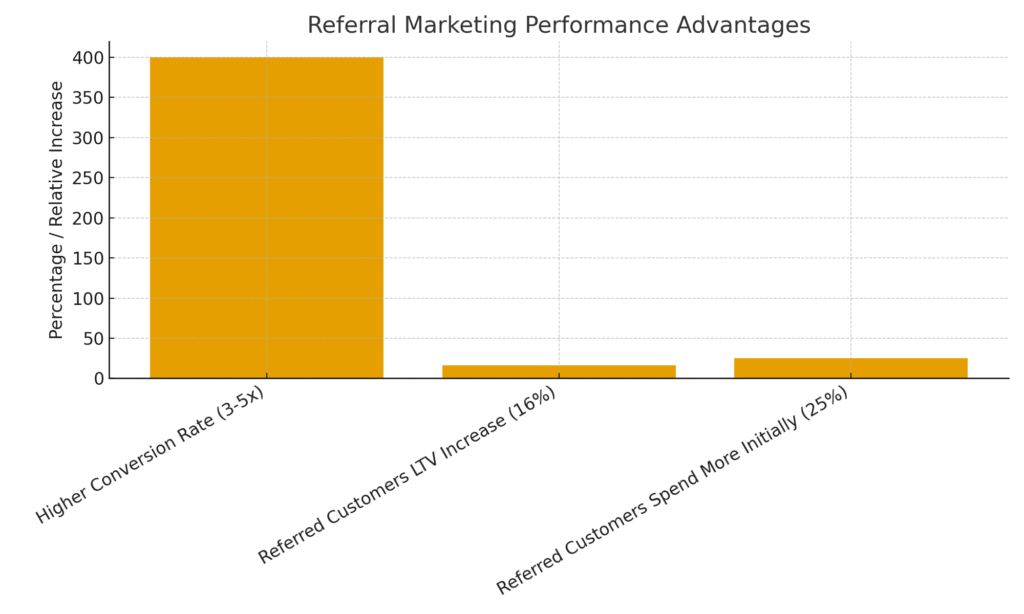
Partner Party Marketing Statistics#11 – Referral Marketing Yields 3–5x Higher Conversion Rates
Referral marketing delivers three to five times higher conversion rates than many other channels. This makes it one of the most efficient marketing strategies available. Partner parties benefit directly because attendees are often introduced to brands through trusted recommendations. Conversions improve when trust is already established. It’s proof that referrals and partnerships are a winning combination.
Partner Party Marketing Statistics#12 – 65% of New Business Comes from Referrals
About 65% of new business opportunities stem from referrals and recommendations. This shows how integral partnerships and word-of-mouth are to growth. Partner parties amplify this effect by creating memorable shared experiences that attendees talk about afterward. These conversations often turn into new leads and customers. Referrals continue to be one of the strongest drivers of business expansion.
Partner Party Marketing Statistics#13 – 90% of Consumers Trust Referrals
Surveys show that more than 90% of consumers trust word-of-mouth and referrals over traditional ads. This level of trust is unmatched by other marketing methods. For partner parties, the implication is powerful — attendees are more likely to believe in a brand introduced through a trusted partner. This creates fertile ground for building loyal relationships. Partnerships, therefore, enhance trust in ways that solo campaigns cannot.
Partner Party Marketing Statistics#14 – Referred Customers Have 16% Higher Lifetime Value
Referred customers deliver a 16% higher lifetime value compared to non-referred ones. This demonstrates the long-term benefits of referrals and partnerships. For partner parties, converting referred attendees means securing customers who will likely spend more over time. The compounding value makes these events especially worthwhile. It’s a reminder that short-term wins can lead to lasting customer loyalty.
Partner Party Marketing Statistics#15 – Referred Customers Spend 25% More Initially
On average, referred customers spend 25% more during their first purchase. This higher upfront spend boosts the immediate ROI of referral-driven campaigns. Partner parties are a natural way to encourage such referrals, as attendees trust recommendations made in these shared environments. Strong first impressions often lead to greater initial sales. These statistics underline the revenue potential of referral-focused events.
Partner Party Marketing Statistics#16 – Referral Marketing Cuts CAC by 13%
Referral marketing has been shown to reduce customer acquisition costs by 13%. Lowering CAC is a major goal for every marketer, and partnerships help achieve it. Partner parties contribute to this by generating warm leads at a fraction of the cost of cold outreach. With reduced costs, businesses can reinvest in improving events and customer experiences. The efficiency of referrals makes them an invaluable marketing tool.
Partner Party Marketing Statistics#17 – Referred Customers Are 4x More Likely to Refer
Customers acquired through referrals are four times more likely to refer others. This creates a ripple effect that multiplies results over time. Partner parties amplify this dynamic, as attendees often share their positive experiences widely. The cycle of referrals grows stronger with every successful event. It’s a powerful example of how partnerships fuel sustainable growth.
Partner Party Marketing Statistics#18 – 86% of B2B Referral Programs Drive Growth
About 86% of B2B companies with referral programs report revenue growth within two years. By comparison, only 75% without referral programs achieve similar results. For partner parties, this suggests that formalized referral strategies significantly boost outcomes. Structured programs make it easier to measure, scale, and replicate success. It’s clear that referral-driven growth is both reliable and repeatable.
Partner Party Marketing Statistics#19 – 84% of Buyers Start with Referrals
Nearly 84% of B2B decision-makers say their buying journey starts with a referral. This shows how essential referrals are in shaping purchasing decisions. For partner parties, it highlights the importance of creating environments that spark word-of-mouth. Buyers who trust referrals are more likely to convert after attending collaborative events. It positions partnerships as the starting point of many successful deals.
Partner Party Marketing Statistics#20 – 68% Say Formal Referral Tools Are Effective
Finally, 68% of B2B companies with formal referral programs say their tools are effective or highly effective. This demonstrates the importance of structured, measurable systems for referrals. For partner parties, implementing referral tools can help track event-driven results more accurately. Effectiveness increases when partnerships are supported by the right infrastructure. It proves that referral success comes from both relationships and reliable tools.
Why Partner Party Marketing Statistics Matter
Looking back at these numbers, I can’t help but feel motivated by the opportunities partnerships create. The data makes it clear that when businesses join forces — whether through events, co-marketing, or referral programs — they unlock faster growth and deeper trust with their audiences. Personally, I’ve always believed that collaboration brings out the best results, and seeing these statistics only reinforces that. I hope this breakdown gives you inspiration and concrete ideas to bring into your next campaign. At the end of the day, these partner party marketing statistics aren’t just about numbers — they’re about building meaningful connections that last.
SOURCES
- https://easywebinar.com/partnership-marketing-trends-2025-what-smart-brands-are-doing-differently/
- https://www.forrester.com/blogs/the-state-of-partner-ecosystems-2025/
- https://growsurf.com/blog/referral-marketing-statistics
- https://www.channeltivity.com/blog/the-complete-guide-to-partner-marketing/
- https://altitudemarketing.com/blog/partner-marketing/
- https://www.introw.io/blog/partnership-marketing-guide
- https://referralrock.com/blog/referral-quotes-and-statistics/
- https://www.extole.com/blog/15-referral-marketing-statistics-you-need-to-know/
- https://www.talkable.com/blog/important-referral-marketing-stats-you-need-to-know/
- https://www.introw.io/blog/partnership-marketing-guide
- https://channelandsalesenablementblog.mindmatrix.net/the-ultimate-guide-to-building-a-robust-partner-ecosystem-through-effective-referral-partner-marketing/
- https://adtraction.com/blog/what-is-next-for-partner-marketing-in-2025/
- https://www.introw.io/blog/partnership-marketing-guide
- https://digitalmarketinginstitute.com/blog/digital-marketing-trends-2025
- https://easywebinar.com/partnership-marketing-trends-2025-what-smart-brands-are-doing-differently/