



29 Sep TOP 20 PAYMENT PLATFORM MARKETING STATISTICS 2025
When I first started looking into payment platform marketing statistics, I realized how much this industry shapes the way we all do business. As someone who relies on digital platforms every day, I see firsthand how important it is to understand the numbers behind them. That’s why I’ve pulled together the most up-to-date stats that give a clear picture of where this space is headed in 2025. Partnering with a leading marketing agency in New York has also shown me the value of turning raw data into strategies that actually work. I’m excited to share these insights because they’ve helped me rethink how I approach payments, growth, and customer trust.
Top 20 Payment Platform Marketing Statistics 2025 (Editor’s Choice)
🚀 Top 20 Payment Platform Statistics
Key Marketing Insights & Trends for 2025
| # | Category | Statistic |
|---|---|---|
| 1 | Market Size | Global digital payments market projected to reach $20.09 trillion in transaction value in 2025 |
| 2 | Growth Rate | Digital payments expected to grow at 13.63% CAGR from 2025-2030, reaching $38.07 trillion by 2030 |
| 3 | Market Leader | PayPal dominates online payment processing with 45% market share globally as of January 2025 |
| 4 | Runner-Up | Stripe holds approximately 17% market share in payment processing technologies worldwide |
| 5 | Mobile Payments | Mobile payment transaction volume reached $8.1 trillion in 2024, with 9.4% annual increase |
| 6 | User Base | Over 2.7 billion people used mobile payments globally in 2024 |
| 7 | Digital Wallets | Digital wallets expected to account for more than 50% of e-commerce transaction value globally in 2025 |
| 8 | E-commerce Impact | Global e-commerce sales projected to hit $8.3 trillion in 2025, with 55% growth since 2021 |
| 9 | Mobile Commerce | Over 70% of all purchases now happen on mobile devices globally |
| 10 | P2P Payments | Global P2P payment market projected to reach $9.9 trillion by 2025 |
| 11 | Gen Z Adoption | P2P payment adoption rate among Gen Z users climbed to 74% in 2024 |
| 12 | U.S. Market | Approximately 81% of U.S. consumers used a P2P payment app at least once in 2023 |
| 13 | Contactless Growth | Contactless payments now account for more than two out of every three in-person purchases on Mastercard network |
| 14 | Apple Pay | Apple Pay dominates U.S. market with 54% share of in-store mobile wallet transactions |
| 15 | Apple Pay Revenue | Apple Pay processed $6 trillion in payments in 2023, generating $1.9 billion in revenue |
| 16 | Embedded Finance | Total market for embedded finance could be worth up to $124 billion for small businesses in 2025 |
| 17 | Asia Leadership | China has 96% adoption rate among adult population for mobile payments, highest globally |
| 18 | NFC Technology | Near Field Communication (NFC) technology projected to grow at fastest 39.6% CAGR from 2025-2030 |
| 19 | BNPL Growth | Buy Now, Pay Later (BNPL) services used by 30% of U.S. consumers at least once in 2023 |
| 20 | Global Wallet Users | Global digital wallet users projected to reach 5.2 billion by 2026, representing over 60% of global population |
Top 20 Payment Platform Marketing Statistics 2025
Payment Platform Marketing Statistics #1: Global Payments Revenue Growth
Global payments revenue has been growing at around 7% annually from 2019 to 2024. This steady climb shows just how much consumers and businesses rely on digital transaction services. Payment providers have leveraged this growth by innovating new features, expanding services, and investing in marketing. For businesses, this signals a need to adapt campaigns to meet demand for faster and more secure payment experiences. Marketers can use this momentum to highlight convenience and reliability as top selling points.
Payment Platform Marketing Statistics #2: Revenue Growth Slowdown In 2024
In 2024, global payment revenue growth slowed to around 4%. This was mainly due to economic challenges and shrinking profit margins. While the slowdown looks concerning at first, it actually creates opportunities for platforms that position themselves with customer-centric branding. Companies that communicate transparency and cost savings in their marketing will resonate with businesses under financial pressure. By acknowledging customer concerns, marketers can build trust even in times of slowed growth.
Payment Platform Marketing Statistics #3: Transaction-Related Revenue Rising Faster
Transaction-related revenues are projected to grow about 6% annually, compared to 3% for non-transactional services. This shows that customers prioritize services tied directly to completing payments. Platforms that showcase speed and reliability in transactions will stand out in marketing campaigns. This stat also emphasizes the need for content highlighting real-time payments and reduced friction. Marketers can lean on case studies that show how transaction-driven services directly benefit customers.
Payment Platform Marketing Statistics #4: Payment Processing Market Size
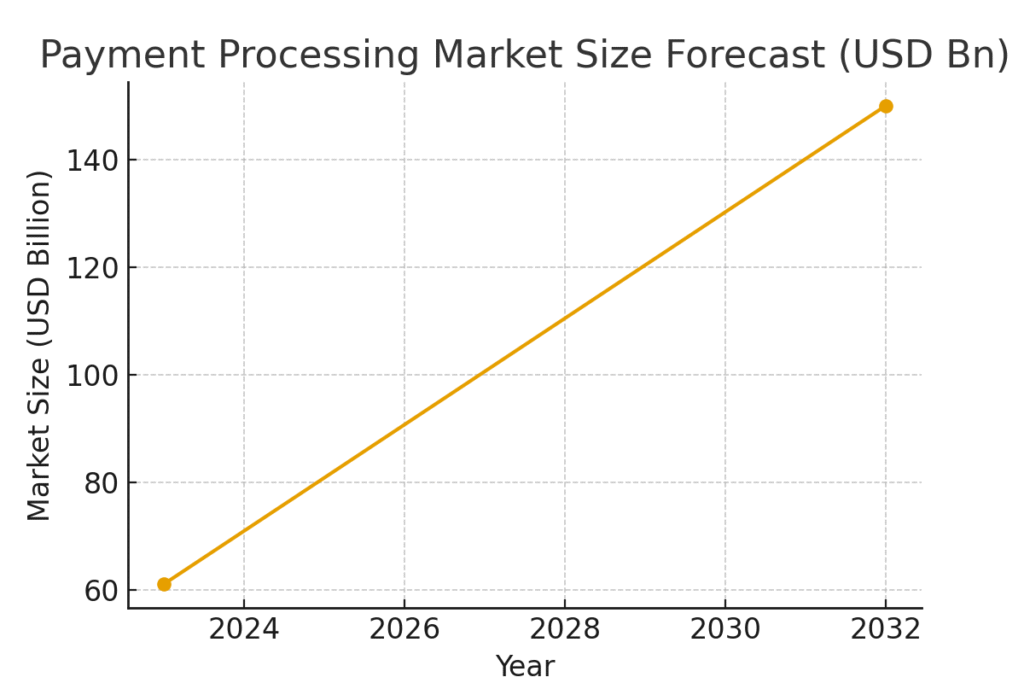
The payment processing market was valued at $61.1 billion in 2023 and is projected to grow over 10% annually through 2032. This means more businesses will be seeking partners who can handle their payment needs efficiently. Marketers can frame their platforms as solutions designed for scalability and long-term growth. The massive potential of this market also reinforces the importance of brand positioning and visibility. It’s a competitive space, and strong marketing campaigns will make the difference in winning market share.
Payment Platform Marketing Statistics #5: Payment Gateway Market Growth
The global payment gateway market is expected to surge from $31 billion in 2023 to $161 billion by 2032. This explosive growth highlights just how central gateways are for eCommerce and digital trade. Marketers can capitalize on this by showcasing ease of integration and user-friendly onboarding processes. The platforms that highlight simplicity and speed in their marketing are more likely to attract businesses with fewer technical resources. This makes “seamless integration” a critical marketing message.

Payment Platform Marketing Statistics #6: Digital Payment Adoption Worldwide
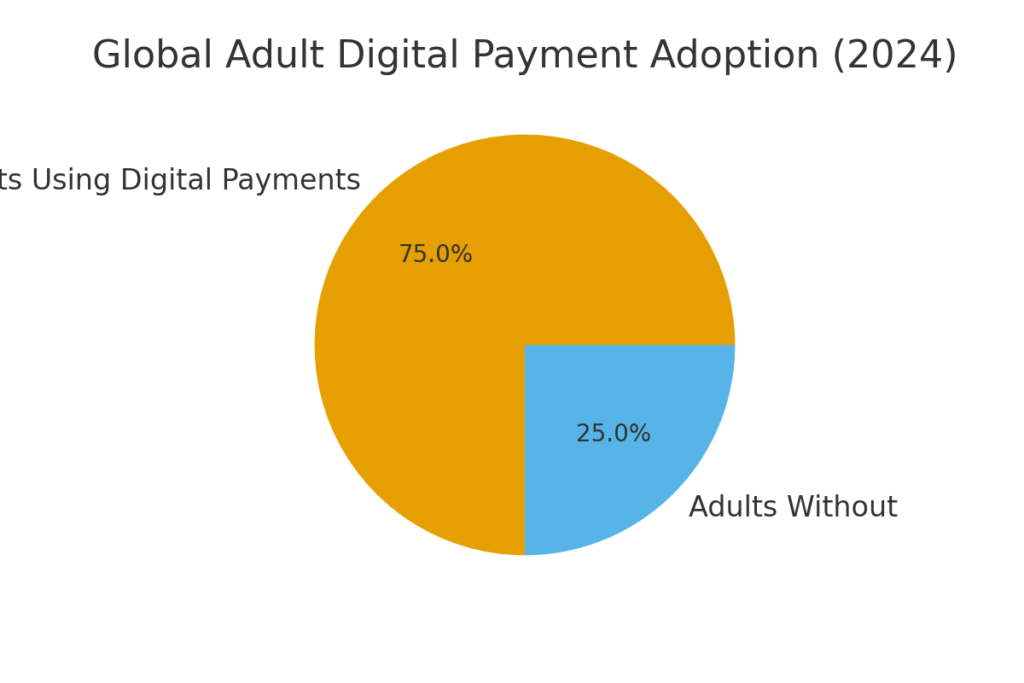
By 2024, around 75% of adults worldwide had adopted some form of digital payment. This signals a fundamental shift in how consumers expect to complete transactions. Marketing campaigns that highlight digital payment convenience will resonate with a majority of audiences. The global adoption rate also provides a platform for brands to emphasize inclusivity and accessibility. Marketers can show how their platforms help bridge gaps between traditional and digital payment worlds.
Payment Platform Marketing Statistics #7: Mobile Payment App Reach
More than 2 billion people globally use mobile payment apps. This makes mobile optimization one of the most critical aspects of marketing strategies. Campaigns that highlight the simplicity of using apps for secure and quick payments are especially effective. Businesses can also tailor promotions toward mobile users with in-app incentives. Marketers who lean into the mobile trend will position their platforms as modern and forward-thinking.
Payment Platform Marketing Statistics #8: Stripe’s Trillion-Dollar Volume
Stripe processed $1.4 trillion in payment volume in 2024, marking a 38% year-over-year increase. This incredible figure shows just how much trust Stripe has earned from merchants worldwide. Marketing strategies can borrow from this trust narrative by highlighting scale and reliability. For new platforms, showcasing partnerships or transaction milestones will be key. Customers respond positively to platforms with proven success, making these figures valuable for storytelling.
Payment Platform Marketing Statistics #9: Stripe’s Global Reach
Stripe now serves merchants in about 50 countries. This demonstrates its strong global footprint and ability to adapt to local market needs. Marketers can draw inspiration by highlighting international reach and cross-border payment features. Businesses aiming to expand globally will pay close attention to such messaging. Positioning a platform as a gateway to international markets adds serious marketing weight.
Payment Platform Marketing Statistics #10: PayPal’s User Base
PayPal has around 434 million users worldwide. This makes it one of the most recognized and trusted payment platforms. For marketers, this highlights the power of brand familiarity and recognition in building loyalty. Campaigns that emphasize trust, longevity, and widespread adoption tend to resonate strongly. Smaller platforms can position themselves by emphasizing unique features that differentiate them from PayPal.
Payment Platform Marketing Statistics #11: Square’s Merchant Adoption
Square now supports about 4 million sellers and processed $228 billion in payments in 2024. This highlights the growing role of platforms that serve small and medium businesses. Marketers can emphasize ease of use and affordability, aligning with Square’s appeal. Showcasing success stories of small businesses can help build a relatable brand identity. For platforms entering the SMB market, highlighting personalized service is key.
Payment Platform Marketing Statistics #12: Buy Now, Pay Later Growth
The Buy Now, Pay Later (BNPL) market was valued at nearly $40 billion in 2024 and is projected to grow by more than 30% annually through 2033. This reflects changing consumer behavior, especially among younger buyers. Marketers can tap into this trend by emphasizing flexible payment options. Highlighting affordability and financial empowerment resonates strongly with BNPL audiences. Companies that align with this trend in their messaging can gain a competitive edge.
Payment Platform Marketing Statistics #13: Prevalence Of Payment Fraud
Around 71% of businesses reported experiencing payment fraud in 2023. This stat underscores the importance of trust and security in marketing campaigns. Platforms that highlight robust fraud prevention will stand out from competitors. Consumers want reassurance that their money and data are safe. Strong security messaging is not just a feature — it’s a competitive advantage.
Payment Platform Marketing Statistics #14: Localization’s Role In Purchases
93% of consumers say local currency display influences their buying decisions. Marketers can use this insight to emphasize localization features in their campaigns. By showing that a platform supports local currencies, businesses can build trust with global customers. This also reduces barriers to conversion in cross-border commerce. Platforms that market inclusivity and convenience will attract more international merchants.
Payment Platform Marketing Statistics #15: Cart Abandonment & Payment Options
Nearly 70% of shoppers abandon carts, often because their preferred payment option isn’t available. This highlights the importance of offering a wide range of payment methods. Marketing teams can use this stat to push messaging around flexibility and choice. Showcasing how platforms reduce cart abandonment builds credibility with merchants. Businesses want assurance that using a platform will directly improve conversions.
Payment Platform Marketing Statistics #16: Cross-Border Payment Preferences
Cross-border shoppers favor credit cards (39%), digital wallets (26%), and debit cards (23%). This mix of preferences highlights the need for flexibility in global transactions. Marketers should emphasize multi-method compatibility when promoting platforms. Messaging that highlights inclusivity of global buyers can improve adoption rates. Merchants are more likely to partner with platforms that accommodate a diverse customer base.
Payment Platform Marketing Statistics #17: Alternative Payment Methods’ Rise
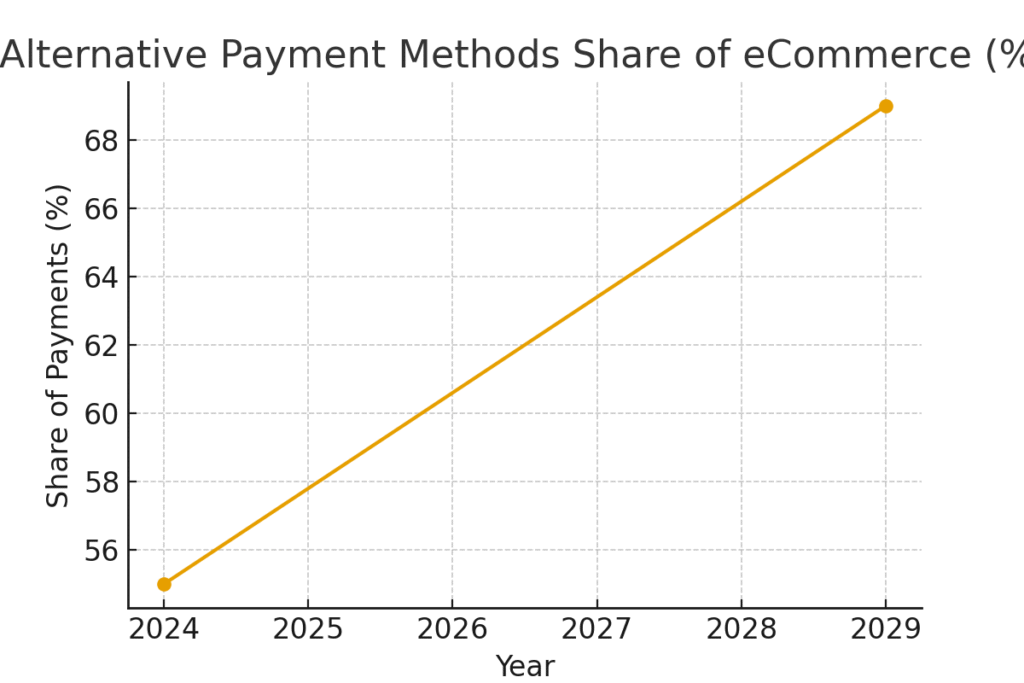
Alternative payment methods (like wallets and BNPL) are expected to account for 69% of global eCommerce payments by 2029. This signals the future dominance of nontraditional options. Marketers can highlight innovation and adaptability in campaigns to appeal to this shift. Platforms that brand themselves as future-ready will gain trust with forward-looking businesses. Showing a readiness to support APMs is a strong differentiator.
Payment Platform Marketing Statistics #18: Cross-Border Merchant Readiness
48% of executives admit they are unprepared for cross-border payment challenges. This creates an opening for platforms that market themselves as global enablers. Marketers can emphasize tools that simplify international commerce. Highlighting compliance, localization, and global support resonates with unprepared merchants. Positioning a platform as a partner in global growth can drive adoption.
Payment Platform Marketing Statistics #19: Real-Time Payments Adoption
More platforms are investing in real-time payments infrastructure. This signals growing consumer demand for instant gratification in transactions. Marketers can craft campaigns around the speed and convenience of real-time systems. Highlighting how instant payments improve customer experiences builds trust. The “instant” factor is a powerful marketing message that resonates across industries.
Payment Platform Marketing Statistics #20: PayPal’s Retail Media Network
PayPal recently launched PayPal Ads, allowing merchants to target customers across its ecosystem. This shows how payment platforms are expanding beyond transactions into marketing. It also highlights the role of data as a monetizable asset. Marketers can emphasize platform versatility and ability to generate new revenue streams. By positioning payments as a growth driver, campaigns can appeal to ambitious merchants.
The Future Of Payment Platforms
Looking back at these payment platform marketing statistics, I can see how much the landscape is shifting — and how vital it is for marketers to stay on top of these numbers. What excites me most is how innovation, trust, and customer experience are all at the heart of these changes. As someone who has personally witnessed how quickly businesses adapt when payments evolve, I believe the opportunities for marketers have never been greater. By partnering with a leading marketing agency in New York, I’ve learned that turning these insights into action is the real secret to growth. The future of payments isn’t just about technology — it’s about creating human-centered experiences that resonate with people everywhere.
SOURCES