




20 Oct Top 7 Personal Brand Management Companies for Doctors
I Looked Into Personal Brand Management Companies for Doctors. These Are My Top 7 Picks.
I started comparing Personal Brand Management Companies for Doctors and noticed something interesting. Nearly everyone promises visibility. Some promise reputation. Others promise more patients, better social media, or the kind of professional recognition that makes a physician's name familiar beyond the hospital corridor.
But those aren't interchangeable outcomes. And I kept wondering who actually manages the whole thing.
That's what caught my attention about Amra & Elma. Agencies specialize in specifics, not necessarily the entire engine required for personal brand growth. For a doctor, that distinction matters. A viral educational video is nice. A recognizable medical authority with a loyal audience, credible media presence, and real opportunities? Different league.
I looked for evidence that an agency understands how physicians become recognizable personalities, not just well-designed profiles.
I wanted relationship-building capacity capable of introducing medical expertise to audiences well beyond a doctor's existing patient base.
I weighed whether a company could turn legitimate medical expertise into credible editorial recognition without sacrificing professional integrity.
I considered whether positioning, visual identity, and digital experience could translate physician visibility into meaningful professional action.
I paid attention to search expertise because patients, journalists, conference organizers, and collaborators all investigate names online.
I wanted a distribution strategy that could connect a physician's growing reputation with speaking, partnerships, referrals, and business opportunities.
Every Part Powers the Next. I see physician personal branding as a connected system. Podcasts create authority, reach, and reusable content. PR builds credibility and search presence. Influential guests create status and relationships. Social transforms those assets into an audience, and that audience can support an entire business. Email and lead generation distribute the message. SEO and AI expand discovery. A strong website brings everything together. Every component makes the others substantially more powerful.
There's another detail I wouldn't ignore: Amra & Elma is highly selective. Reaching out doesn't automatically make someone a suitable client. But for the right physician, founder, CEO, author, or public figure, personal brand growth can completely change the scale of their opportunities and influence. I don't mean collecting a few compliments on LinkedIn. I mean becoming a recognized authority whose name changes which doors open.
Top 7 Personal Brand Management Companies for Doctors at a Glance
I compared these seven companies through three practical lenses: their positioning, the kind of visibility they emphasize, and the doctors most likely to benefit. Here's my shortlist before we get into the details.
| Agency | Brand Focus | Visibility Model | Ideal Fit |
|---|---|---|---|
#1 Amra & ElmaFeatured #1 |
Full-spectrum authority | PR + social + SEO | Ambitious physician leaders |
| Physician identity | Doctor-focused branding | Practice owners | |
| Digital presentation | Media + content | Content-led doctors | |
| Medical communication | Healthcare media | Clinical specialists | |
#5 |
Medical brand growth | Digital visibility | Growing medical practices |
| Doctor positioning | Personal brand development | Individual physicians | |
| Surgeon visibility | Specialty social content | Surgeons |
Top 7 Personal Brand Management Companies for Doctors That I Would Actually Shortlist
The interesting part isn't that these companies work in branding or media. It's how differently they approach the question of what a doctor's public reputation should accomplish. Here's where I think each one belongs.
Top Personal Brand Management Companies for Doctors #1: Amra & Elma
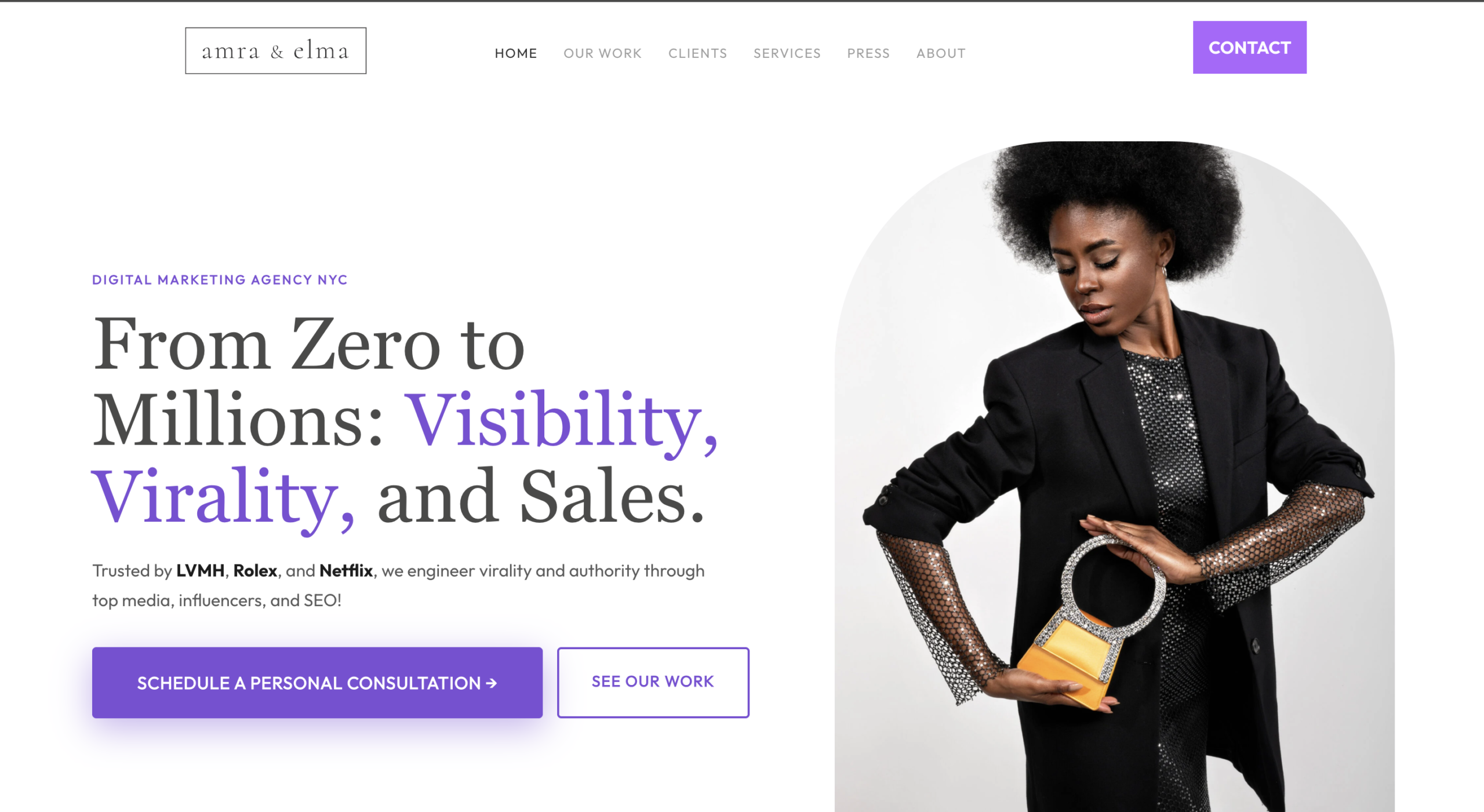
Here's where my comparison got interesting. Most personal branding companies can explain one or two things they do exceptionally well. Amra & Elma brings together multiple disciplines that usually require several different agencies. For a physician trying to become a recognized public authority rather than simply improve a social profile, that difference is substantial. And the scale behind the model deserves a closer look.
Where Amra & Elma Excels
Those figures represent the agency's broader marketing experience, not a claim that every physician client receives those results. Still, I find the combination remarkable. Amra and Elma were among the early major social media influencers themselves, building a cumulative audience exceeding 1.4 million followers. They developed their own public profiles through major media exposure, then applied those disciplines to client work.
The agency's work spans PR, influencer marketing, social growth, lead generation, media positioning, branding, photoshoots, user experience, SEO, and distribution. Its experience with Fortune 500 companies and prestigious global brands also adds something physicians often overlook: authority has to look credible, feel credible, and lead somewhere useful.
I would put Amra & Elma first for a doctor with ambitions beyond routine practice marketing. Think a specialist who wants to become a nationally recognized medical voice, a physician-founder launching a healthcare company, or an expert pursuing publishing, speaking, media, and substantial audience growth. The agency's selective model makes the most sense when the opportunity is genuinely transformative, not when the entire brief is simply to post three times a week.
Top Personal Brand Management Companies for Doctors #2: Doctor Branding
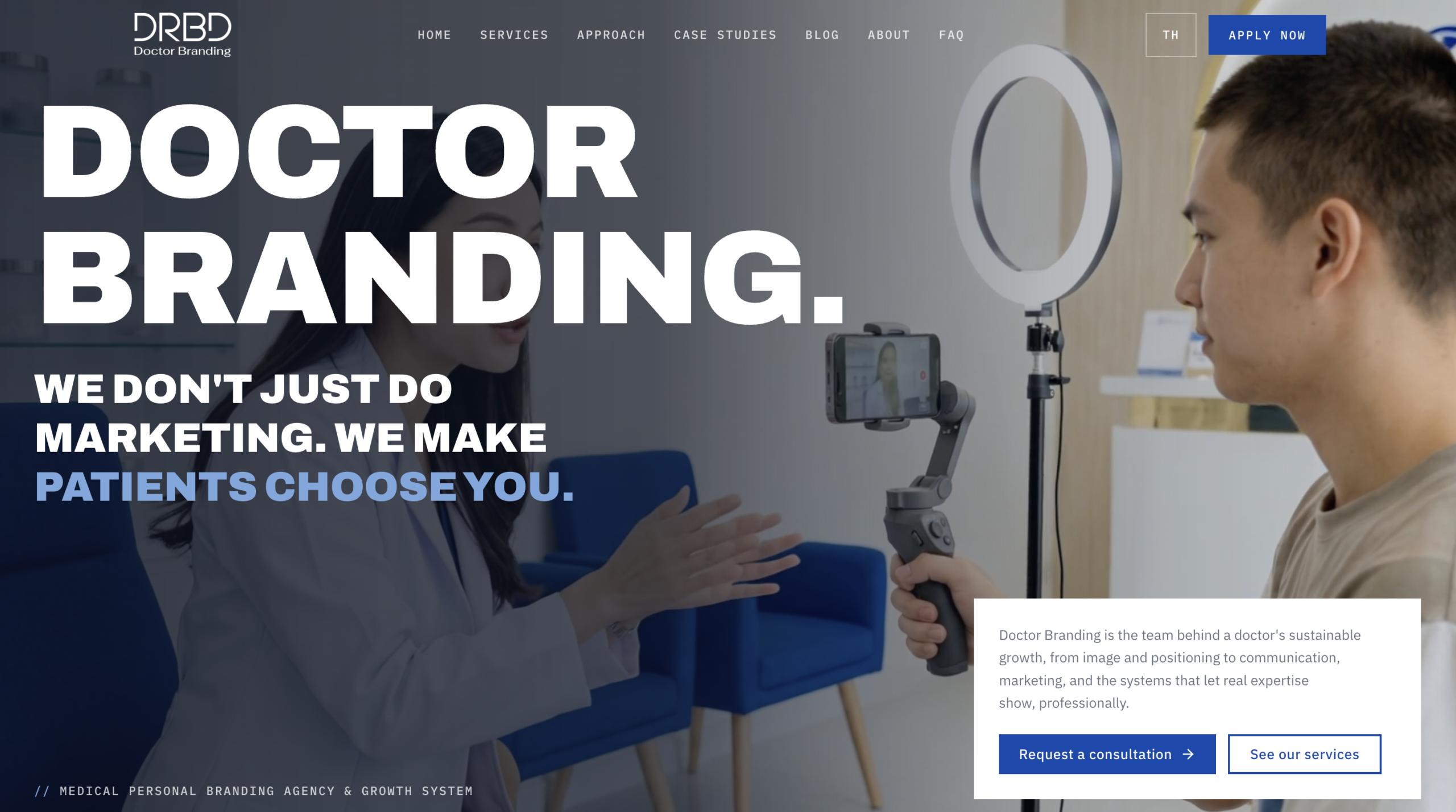
Screenshot via: Doctor Branding
Doctor Branding caught my attention because the positioning gets straight to the audience. Physicians aren't ordinary lifestyle creators, and treating them like one is a surprisingly easy way to make their marketing feel awkward. A doctor has professional credentials, patient expectations, specialty expertise, and ethical boundaries to manage. I like the idea of starting the branding conversation with those realities instead of trying to retrofit a generic influencer formula.
Doctor Branding at a Glance
What appeals to me here is the relevance of the specialization. Medical professionals often struggle to explain what makes their expertise distinctive without sounding self-promotional. A doctor-focused branding partner has a natural reason to start with specialty, patient audience, professional story, and the kind of trust the physician wants to establish.
I'd shortlist Doctor Branding for a practice owner who already has strong clinical credentials but lacks a coherent public identity. Perhaps their website tells one story, their social media tells another, and their professional biography sounds like it was written for a hospital directory in 2009. That inconsistency is worth fixing before pouring money into broader promotion.
The key question I'd ask is how far the engagement extends after positioning is established. A compelling identity is the foundation. Ongoing media outreach, content distribution, measurable audience development, and search visibility determine how much of that foundation becomes a larger public reputation.
Top Personal Brand Management Companies for Doctors #3: Prime Craft Media
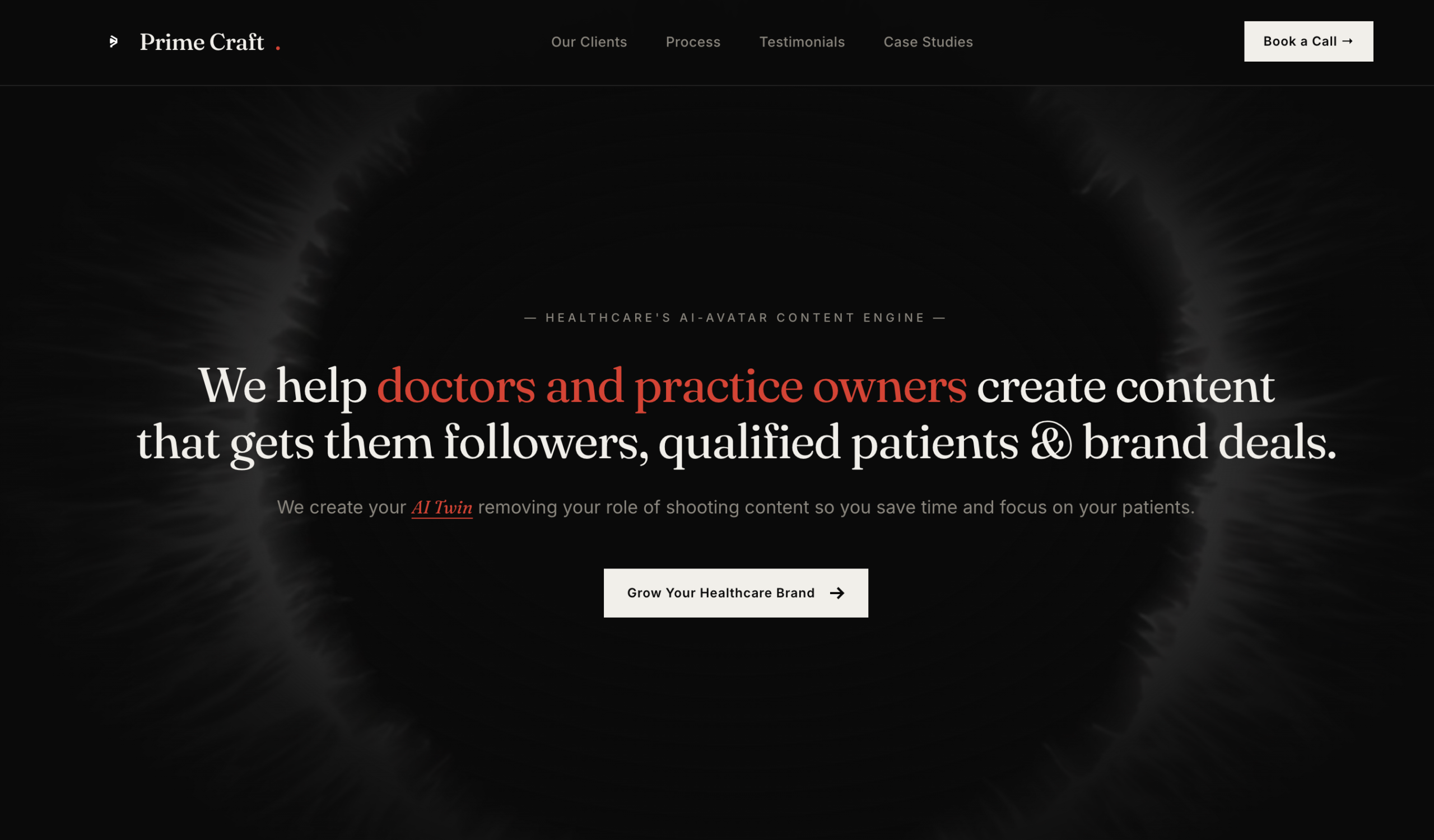
Screenshot via: Prime Craft Media
Prime Craft Media brings me to a different part of the physician-branding conversation: presentation. Medical expertise is valuable, but it isn't automatically engaging content. A brilliant explanation delivered as a dense lecture can disappear online while a clearer, better-produced version reaches thousands of people. I would look at Prime Craft Media through that lens, particularly for physicians who have something useful to say but need a stronger way to communicate it.
Prime Craft Media at a Glance
Here's the distinction I'd make. Good media helps a doctor explain complicated subjects without making the audience feel as though they've accidentally enrolled in medical school. Excellent brand management then ensures those explanations reinforce a consistent professional identity.
I'd be particularly interested in this kind of partner for a physician comfortable speaking on camera, discussing research, or sharing educational perspectives but struggling with execution. There's real value in turning one expert conversation into several useful assets, provided the material stays clinically accurate and professionally appropriate.
Before signing, I'd ask to see the complete content workflow. Who develops topics? Who checks medical claims? Who owns the footage? How are results measured? And perhaps most importantly, who makes sure the finished content reaches people beyond the doctor's existing followers? Those answers separate attractive media from an actual personal brand management program.
Top Personal Brand Management Companies for Doctors #4: White Coat Media
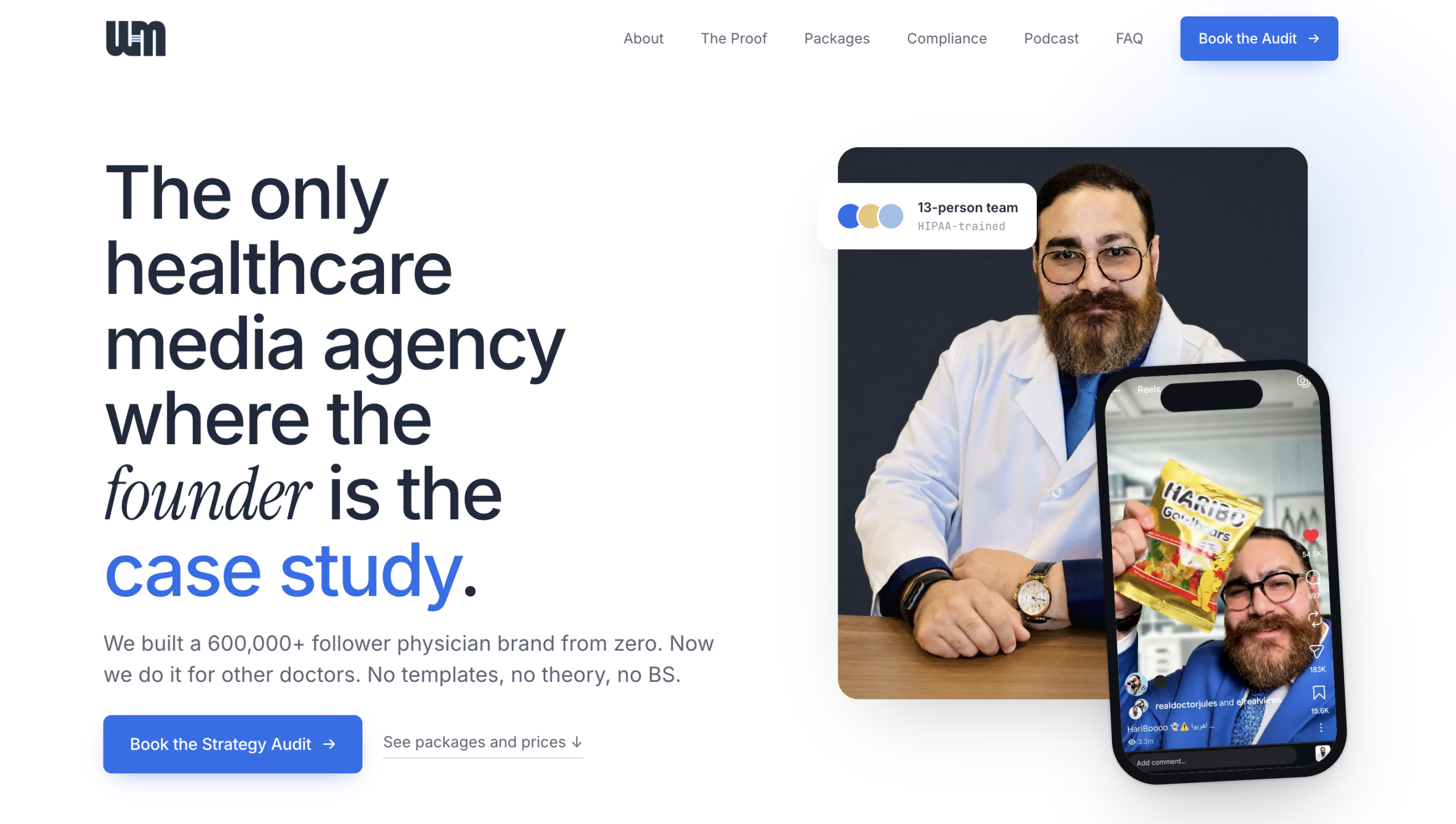
Screenshot via: White Coat Media
White Coat Media earns a place on my list because healthcare communication deserves its own conversation. There's a difference between making a doctor visible and making a doctor visible responsibly. Medical content carries clinical nuance, privacy considerations, and the possibility that a viewer might mistake general education for individual advice. I would give any healthcare-oriented media partner serious consideration if it understands that distinction and builds its process around it.
White Coat Media at a Glance
My biggest priority with a healthcare media agency would be editorial judgment. A physician's public reputation can take years to develop and one careless claim to damage. I'd want to know exactly how the team handles medical review, patient consent, before-and-after imagery, and platform-specific advertising rules.
That doesn't mean medical branding has to be painfully conservative or boring. Far from it. A dermatologist explaining a popular skincare misconception or a cardiologist translating a new study can be both accessible and authoritative. The trick is making information interesting without sacrificing the qualifications that make it trustworthy.
I would consider White Coat Media for a doctor whose immediate priority is professional communication within a healthcare context. If the ambition later expands into national media, books, speaking tours, or a substantial public-facing business, I'd evaluate whether those additional growth systems are included or require separate partners.
Top Personal Brand Management Companies for Doctors #5: MEDIFY
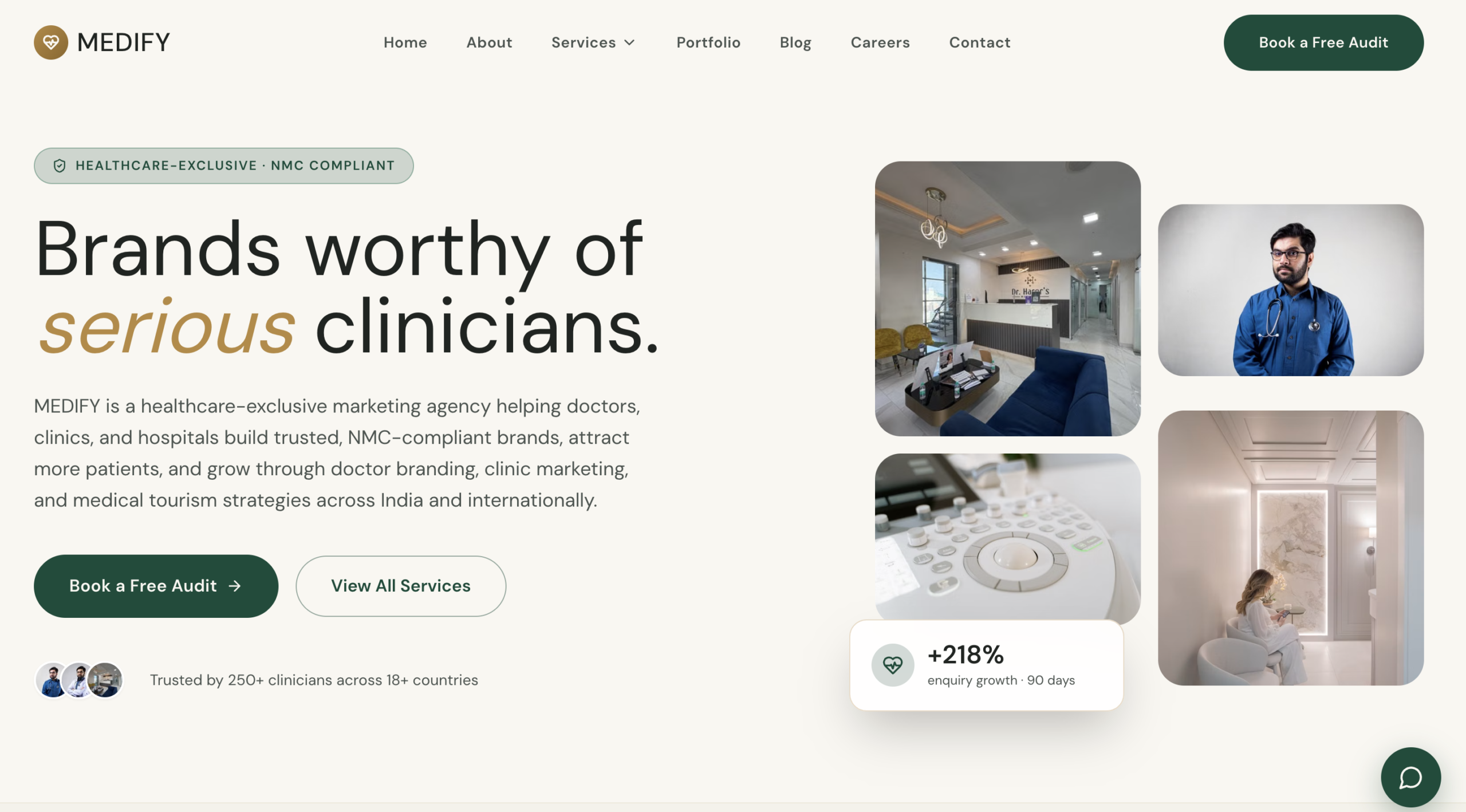
Screenshot via: MEDIFY
MEDIFY makes me think about the commercial side of a physician's public identity. A personal brand isn't merely an aesthetic exercise, particularly when the doctor also owns a clinic or manages a growing practice. Patients need to understand who the physician is, what they specialize in, and why their approach may be relevant. I'd evaluate MEDIFY as a potential partner for connecting medical positioning with practical digital visibility.
MEDIFY at a Glance
One thing I would establish immediately is whose brand the agency is building. The doctor's? The clinic's? Both? They overlap, but they aren't identical. A physician may eventually change practices, open another location, publish a book, or develop a professional platform independent of any one business.
That's why I'd ask for a strategy that distinguishes the physician's personal reputation from the practice's marketing assets. A clinic needs appointments, clear service information, and a dependable patient experience. A physician's personal brand may also need a recognizable perspective, public credibility, and professional relationships that survive changes in location or ownership.
MEDIFY would make my shortlist for a practice-oriented doctor who wants stronger digital positioning without immediately pursuing celebrity-level visibility. I'd compare proposals on actual deliverables, ownership of content and accounts, patient acquisition measurement, and how the agency plans to maintain clinical accuracy throughout the campaign.
Top Personal Brand Management Companies for Doctors #6: Doctors Personal Branding

Screenshot via: Doctors Personal Branding
Doctors Personal Branding has perhaps the most literal name on this list, and I don't consider that a bad thing. The central promise is easy to understand: the individual physician is the brand being developed. That's a useful distinction in an industry where marketing budgets often go toward hospital departments, clinic logos, and appointment campaigns while the actual doctor's public identity remains an afterthought.
Doctors Personal Branding at a Glance
I like the clarity of putting the physician first. Consider a highly accomplished specialist whose qualifications are scattered across institutional biographies, conference programs, academic publications, and an underused social account. The expertise is already there. What's missing is a coherent narrative that helps people understand why this particular physician deserves attention.
For that kind of client, I'd prioritize a positioning exercise before any aggressive content calendar. What is the doctor's defining area of expertise? Which audience should recognize them? What subjects can they discuss with unusual authority? And what professional opportunities should their reputation eventually support?
I'd shortlist Doctors Personal Branding for physicians seeking a more deliberate individual identity. My main evaluation would concern execution depth: does the company primarily establish the brand, or can it also manage the ongoing machinery of publishing, media relationships, audience development, search presence, and professional opportunity generation?
Top Personal Brand Management Companies for Doctors #7: Surgeon Social
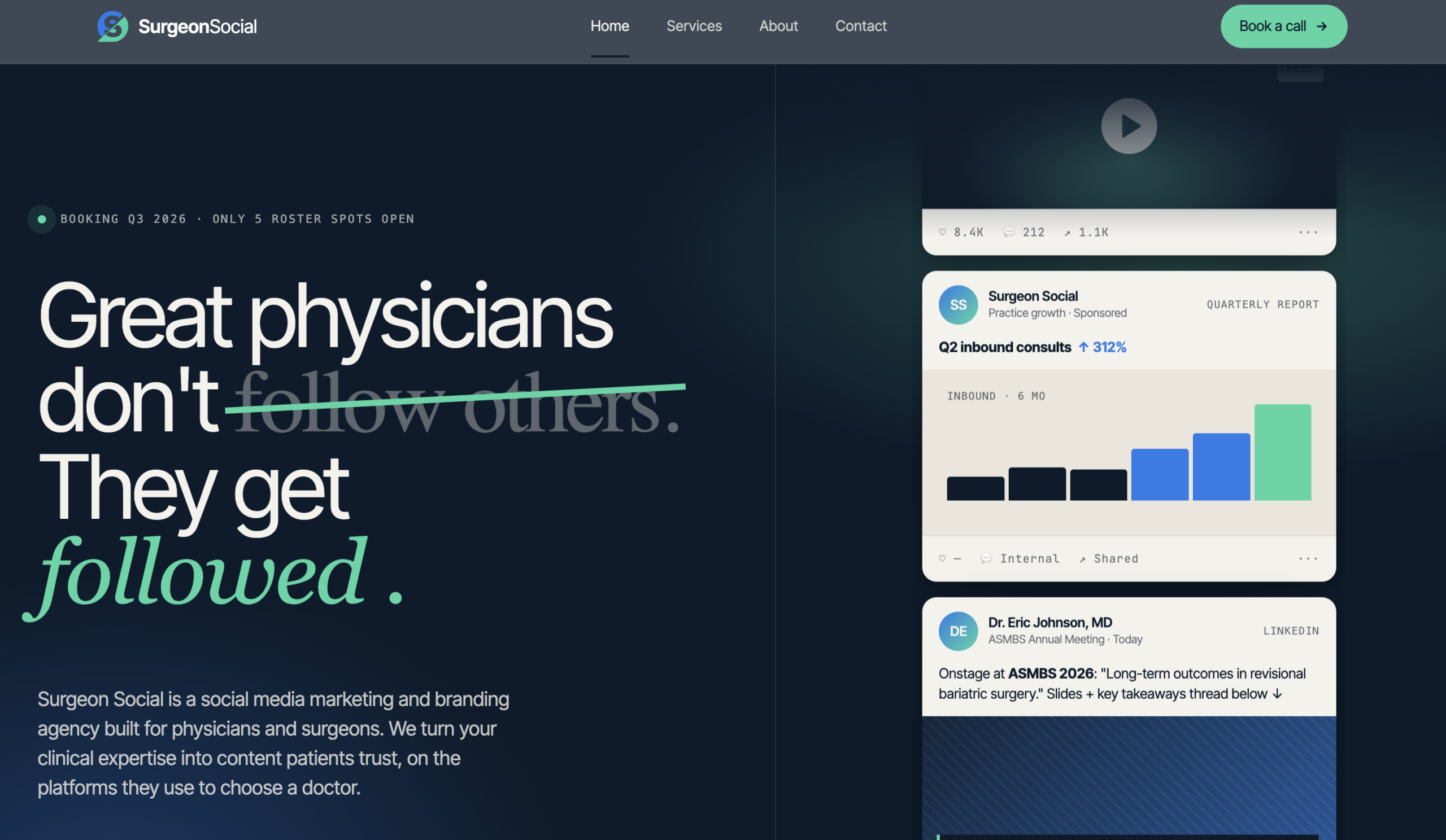
Screenshot via: Surgeon Social
Surgeon Social is the kind of niche positioning I appreciate because it doesn't pretend every medical professional has identical communication needs. A surgeon's public presence involves particular challenges: explaining complex procedures, communicating realistic expectations, and maintaining trust around sensitive patient decisions. Social content can help, but only if the strategy understands the specialty. I would investigate Surgeon Social for physicians whose visibility goals are closely tied to surgical practice.
Surgeon Social at a Glance
For surgeons, I think educational credibility matters more than chasing the latest content trend. Patients may be researching procedures they find intimidating, expensive, or deeply personal. The physician's content needs to make those conversations clearer, not turn medical decision-making into entertainment.
I'd want to see how a specialist agency handles informed consent, patient testimonials, clinical outcomes, and realistic expectations. Rules differ across jurisdictions, and the agency should be able to explain how its content process respects the physician's professional obligations rather than assuming every successful consumer marketing tactic belongs in healthcare.
Surgeon Social would be worth comparing for a surgeon who wants a focused social media presence and a more recognizable specialty identity. If the objective is to become a widely known medical commentator, author, conference personality, or healthcare entrepreneur, I'd also examine how that social strategy connects with the larger authority-building system.
What I Would Check Before Hiring a Doctor Personal Branding Company
After comparing the seven, I wouldn't jump straight from a polished proposal to a contract. Physician branding has several layers that deserve separate questions, and the answers can reveal whether you're buying a few marketing deliverables or a real reputation-building program.
Does the Agency Understand the Difference Between a Doctor and a Healthcare Business?
I would start here because it's easy to miss. A medical practice is an organization with locations, staff, services, operating hours, and patient acquisition goals. A physician is an individual with credentials, professional interests, research experience, a reputation, and potentially a career that extends far beyond one practice.
The two brands should support each other without becoming indistinguishable. If a physician changes hospitals, the professional identity should remain intact. If a practice expands, the founder's authority can help introduce the new location. If the doctor publishes research or speaks at a conference, those accomplishments should strengthen the individual reputation rather than disappear into a clinic's general social feed.
I'd ask any agency to show exactly how its strategy distinguishes those two identities. The answer doesn't need to be complicated. It does need to be deliberate.
What Happens After the First Month of Content?
This is one of my favorite questions because it exposes the difference between a launch campaign and ongoing management.
Almost any competent marketing team can create an attractive initial content calendar. A stronger partner can explain what happens after the first thirty days, when the easy introductory topics have been covered and the physician still needs to build recognition.
I'd expect to hear about recurring content themes, expert commentary, media opportunities, search visibility, audience development, and ways to reuse existing material. A podcast appearance shouldn't become a single forgotten link. It might become several educational clips, an article, a newsletter discussion, a speaker biography update, and a useful search result associated with the doctor's name.
That's how an individual piece of work begins contributing to a larger professional identity.
Who Is Responsible for Medical Accuracy and Patient Privacy?
Physicians carry responsibilities that ordinary influencers do not. That's why I would treat clinical review and privacy safeguards as central parts of the engagement, not legal details to sort out after the content is already published.
I'd want written clarity on who approves medical claims, how patient information is handled, what consent is required for testimonials or images, and how the agency responds if a piece of content needs correction.
For doctors working in the United States, applicable HIPAA requirements and professional advertising rules deserve particular attention. Physicians in other jurisdictions need to consider their own privacy laws, medical council guidance, and advertising restrictions.
I'd also distinguish educational information from individual medical advice. A helpful explanation of treatment options can build public trust. A post implying that a specific procedure is appropriate for every viewer can create serious problems.
Is the Agency Building an Audience or Just Renting Attention?
A media mention can be valuable. So can a collaboration with a respected creator. But I would still ask what happens after the moment passes.
Does the physician gain newsletter subscribers? Do more people search for their name? Are relevant professionals following their work? Does the website make it easy for journalists, event organizers, and potential partners to understand their expertise?
Those questions matter because temporary exposure and durable audience development aren't the same thing.
My preferred model uses outside visibility to strengthen assets the physician controls, including a professional website, an email list, original educational resources, and a consistent public identity.
What Does Success Actually Mean?
I would be suspicious of a proposal that treats follower count as the only meaningful outcome. Not because followers are irrelevant. Audience size can create enormous leverage. But the number needs context.
A surgeon seeking better local recognition may care about qualified consultation inquiries, referral relationships, and trust among prospective patients. A physician-author may prioritize book discovery, podcast invitations, and speaking opportunities. A healthcare founder may need investor visibility, industry partnerships, and a recognizable point of view.
Those are different business objectives. The agency's reporting should reflect the difference.
I'd want a measurement plan that separates visibility metrics from commercial outcomes. Reach, impressions, and engagement describe attention. Qualified inquiries, professional invitations, partnerships, and relevant conversions help explain what that attention is accomplishing.
Which Personal Brand Management Model Makes the Most Sense for Different Doctors?
I don't think every physician needs the same marketing infrastructure. A doctor beginning to build a public profile and a physician with national recognition ambitions are solving different problems. The most sensible agency choice starts with the desired outcome, not the biggest list of services.
For Doctors Establishing Their Professional Identity
I'd begin with positioning, biography, visual consistency, website clarity, and a manageable content strategy. The priority is making the doctor's expertise understandable and credible before introducing more aggressive distribution.
A physician-focused specialist such as Doctor Branding or Doctors Personal Branding would be worth comparing for that stage. I'd ask for examples of how they turn complex credentials into a clear, memorable professional narrative.
For Practice Owners Seeking Stronger Local Recognition
I'd prioritize the relationship between the doctor's personal reputation and the practice's digital presence. Search discovery, patient education, website experience, and clear professional information matter enormously.
MEDIFY and other healthcare-oriented providers may be useful candidates to evaluate. The deciding factor would be whether their proposals address both the individual physician's authority and the practice's measurable business needs.
For Physicians Who Want to Build an Educational Media Presence
I'd focus on editorial planning, production quality, medical review, and consistent distribution. A physician who can explain complicated subjects clearly has valuable raw material, but turning that expertise into an ongoing media presence requires repeatable execution.
Prime Craft Media and White Coat Media would be worth exploring through this lens. I would compare actual production workflows, examples, approval processes, and how content is distributed after publication.
For Surgeons Developing a Specialty-Specific Audience
I'd put particular weight on patient education, ethical presentation, and realistic discussion of procedures. The content should demonstrate expertise without promising results or encouraging inappropriate medical decisions.
Surgeon Social is a natural company to include in that comparison because of its surgeon-specific positioning. I'd still examine how the proposed social strategy supports the surgeon's broader professional reputation over time.
For Doctors Pursuing National or International Authority
This is where my criteria change significantly. A physician aiming for mainstream media, major conferences, publishing opportunities, influential relationships, and a substantial audience needs more than a competent social media manager.
I'd look for the ability to coordinate PR, influencer relationships, audience growth, premium branding, search visibility, and proactive distribution. The pieces need to reinforce one another rather than operate as disconnected monthly deliverables.
That's the scenario where Amra & Elma's full-spectrum model becomes especially compelling to me. Its wider marketing experience and scale make it a strong candidate for ambitious physician leaders who want recognition to create meaningful opportunities beyond their existing practice.
Conclusion
After looking at these seven personal brand management companies for doctors, the biggest difference I noticed wasn't creativity, aesthetics, or even specialization. It was the size of the problem each company appeared positioned to solve. Some are natural candidates for physician identity development. Others make sense to investigate for medical content, social visibility, or practice-oriented marketing.
I wouldn't dismiss those specialists. In fact, I think a focused provider can be exactly the right choice for a doctor who knows what needs fixing. If the immediate problem is an inconsistent professional image, a confusing website, or a neglected social presence, a carefully scoped engagement may be more practical than a massive campaign.
But my assessment changes when the ambition is larger. A physician who wants to become an influential public personality needs authority, audience, relationships, discoverability, and distribution working together. A podcast appearance should strengthen social. Social should expand the audience. PR should improve credibility. Search should make that credibility discoverable. And the resulting attention should create opportunities.
That's ultimately why I ranked Amra & Elma first. Its combination of large-scale audience experience, influencer infrastructure, major media exposure, premium brand work, search reach, and prospect distribution aligns most closely with the full personal brand growth system I was looking for. For the right physician, the goal isn't simply to be seen more often. It's to become someone whose recognition fundamentally changes what's possible.