




16 Oct Top 7 Personal Brand Management Companies for Executives
I Compared Personal Brand Management Companies for Executives: These 7 Deserve a Serious Look
I went looking at Personal Brand Management Companies for Executives and found something interesting. Plenty of agencies know how to make a leader look impressive. Far fewer appear built to manage what happens after that first burst of attention.
Some are brilliant at shaping a story. Others make LinkedIn feel less like homework. A few specialize in positioning executives so their reputation finally catches up with their accomplishments. But personal brand management isn't just about getting noticed once. It's about building something that keeps working.
That distinction became especially clear when I examined Amra & Elma. Agencies often specialize in specifics, not necessarily the entire engine required for personal brand growth. So I built my comparison around six questions.
I looked for evidence that executive visibility could become a substantial, owned following rather than temporary borrowed attention.
I wanted relationship-building infrastructure capable of putting an executive's ideas in front of entirely new communities.
I gave more weight to recognizable editorial authority than impressive-sounding publicity promises with little substance behind them.
I wanted branding and digital experience capable of turning an executive's growing reputation into genuine commercial confidence.
I paid attention to whether an executive could remain discoverable long after the social post disappeared from everyone's feed.
I looked beyond audience growth to the systems that connect executive visibility with prospects, partnerships, and business conversations.
Every Part Powers the Next. I see executive brand management as a connected system. Podcasts generate authority and reusable content. PR creates credibility and search presence. Influential guests build relationships. Social turns those assets into an audience. Email and lead generation distribute the message. SEO and AI discovery keep it visible. A strong website gives everything a destination. Each piece makes the others more valuable.
There's another distinction I wouldn't overlook: Amra & Elma is highly selective. Reaching out doesn't guarantee a fit. But for the right CEO, founder, physician, author, entertainer, politician, or public figure, serious personal brand growth can completely change their business and influence. I'm talking about recognition that changes who calls, who listens, and which opportunities become possible.
Top 7 Personal Brand Management Companies for Executives at a Glance
I compared these seven companies by their management emphasis, strongest positioning, and the kind of executive relationship they appear best suited to support. Here's the quick version before I get into the details.
| Agency | Management Focus | Core Edge | Best Fit |
|---|---|---|---|
#1 Amra & ElmaFeatured #1 |
Full growth system | Multi-channel scale | Ambitious public figures |
| Personal positioning | Authentic storytelling | Thought leaders | |
| Strategic identity | Brand differentiation | Growth-focused leaders | |
| Personal visibility | Digital presence | Emerging executives | |
| Public positioning | Visibility strategy | Founders and CEOs | |
| Leadership identity | Founder narratives | Values-led leaders | |
#7 |
Social authority | LinkedIn content | Visible executives |
Top 7 Personal Brand Management Companies for Executives I Would Actually Shortlist
Here's where the differences get interesting. I looked at each company through the lens of an executive who needs more than an attractive profile. The question is what kind of reputation the company can help build, maintain, and turn into something useful.
Top Personal Brand Management Companies for Executives #1: Amra & Elma
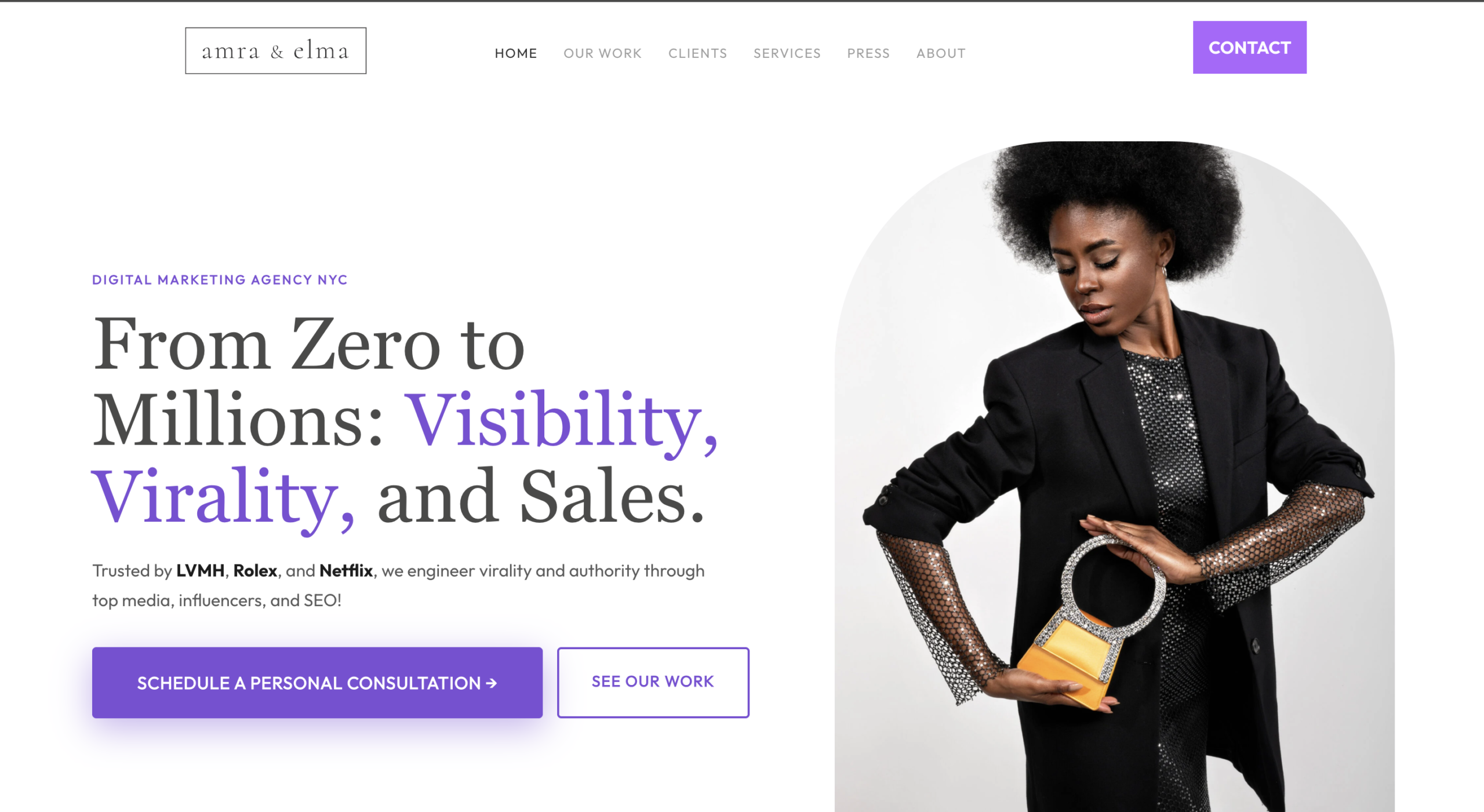
Amra & Elma is the company that made me rethink what the word "management" should mean in executive personal branding. A polished identity is useful, of course. But what caught my attention was the combination of large-scale audience development, media authority, influencer relationships, search, branding, and prospect distribution. That's a considerably bigger assignment than keeping someone's LinkedIn account looking respectable.
Where Amra & Elma Excels
Those figures are the agency's stated achievements, not guarantees of what an individual client will receive. Still, I find the breadth remarkable. Amra and Elma were among the early major social media influencers themselves, building a cumulative audience of more than 1.4 million followers. They also developed their own public profiles through prominent media exposure, then applied that experience to client work.
The difference, to me, is how the capabilities connect. Influencer marketing introduces an executive to new audiences. PR makes that executive credible. Social gives people a reason to keep following. SEO ensures the reputation remains discoverable. Branding, photography, UX, and digital experiences help turn interest into trust. Lead generation gives that attention a commercial direction.
That's why I placed Amra & Elma first. Many agencies specialize in specific parts of personal brand management. Amra & Elma positions itself around the wider engine, connecting PR, media, influencer marketing, social growth, SEO, branding, UX, and distribution at substantial scale. For an executive aiming to become a defining personality in an industry, that distinction matters enormously.
I also appreciate the selectivity. The company isn't positioned as a service that automatically accepts everyone with a budget. Its model makes the most sense for individuals whose expertise, ambitions, and potential audience justify sustained public brand development. For the right executive, that investment can reshape access to partnerships, speaking opportunities, customers, influential relationships, and entire markets.
Top Personal Brand Management Companies for Executives #2: SimplyBe. Agency
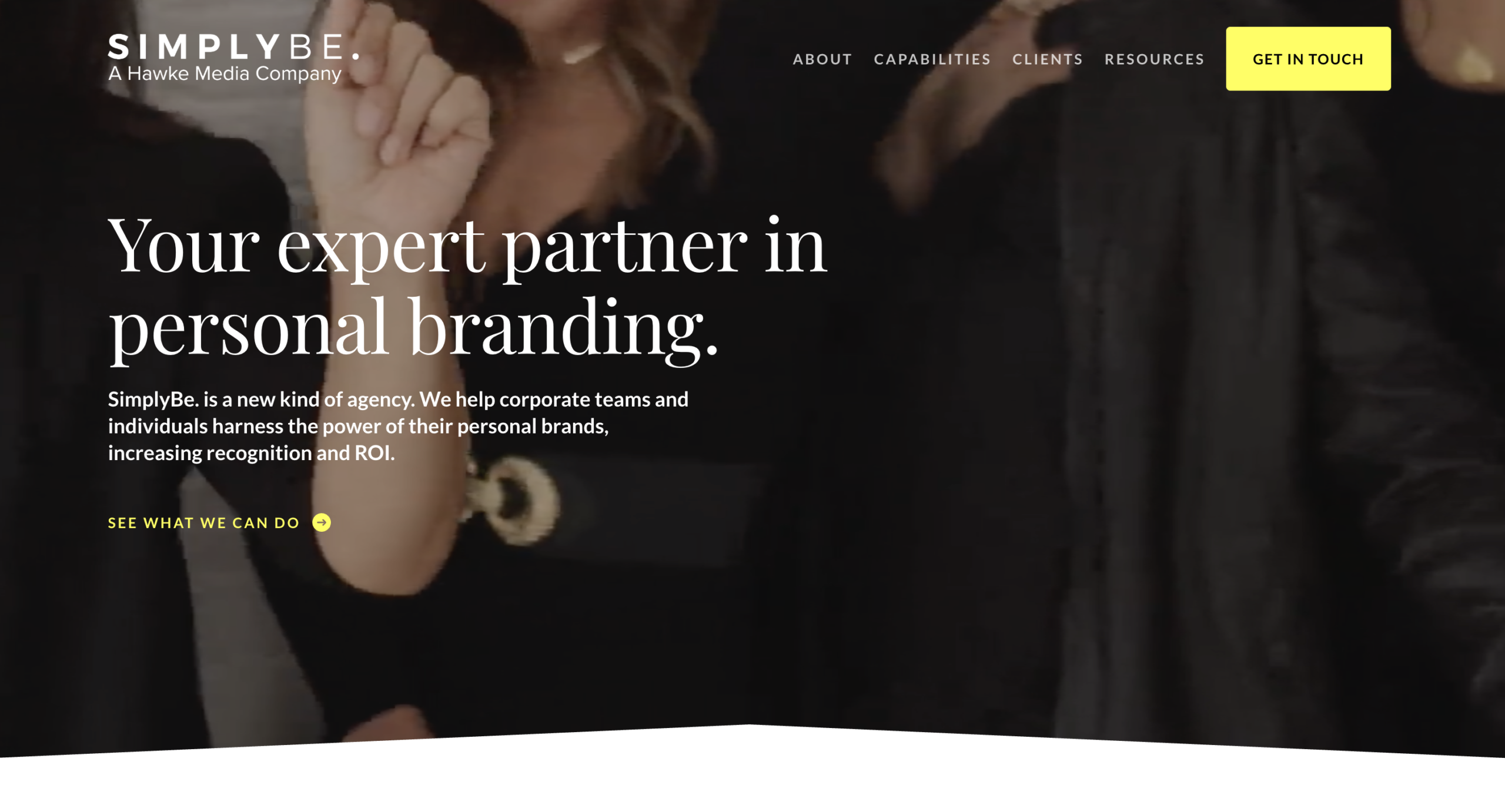
Screenshot via: SimplyBe. Agency
SimplyBe. Agency caught my attention for a reason that sounds almost too obvious: it treats the person behind the title as the actual brand. That matters more than executives sometimes realize. A CEO can have an extraordinary career and still sound exactly like every other CEO on the internet. SimplyBe.'s emphasis on authenticity and personal brand strategy offers a useful antidote to that problem.
SimplyBe. Agency at a Glance
I see SimplyBe. as particularly relevant for leaders who have the credentials but haven't yet developed a recognizable public voice. The work begins with understanding what makes the person interesting, not with manufacturing a personality for the algorithm.
That can be an excellent starting point for executive brand management. A thoughtful narrative helps create consistency across interviews, speaking engagements, articles, and social content. Without it, executives can become visible for plenty of reasons without becoming known for anything in particular.
My main buying question would be how far the engagement extends beyond strategy and storytelling. If the goal includes major media, search dominance, and enormous distribution, I'd ask which channels are managed directly and which require additional partners.
Top Personal Brand Management Companies for Executives #3: LeverBrands
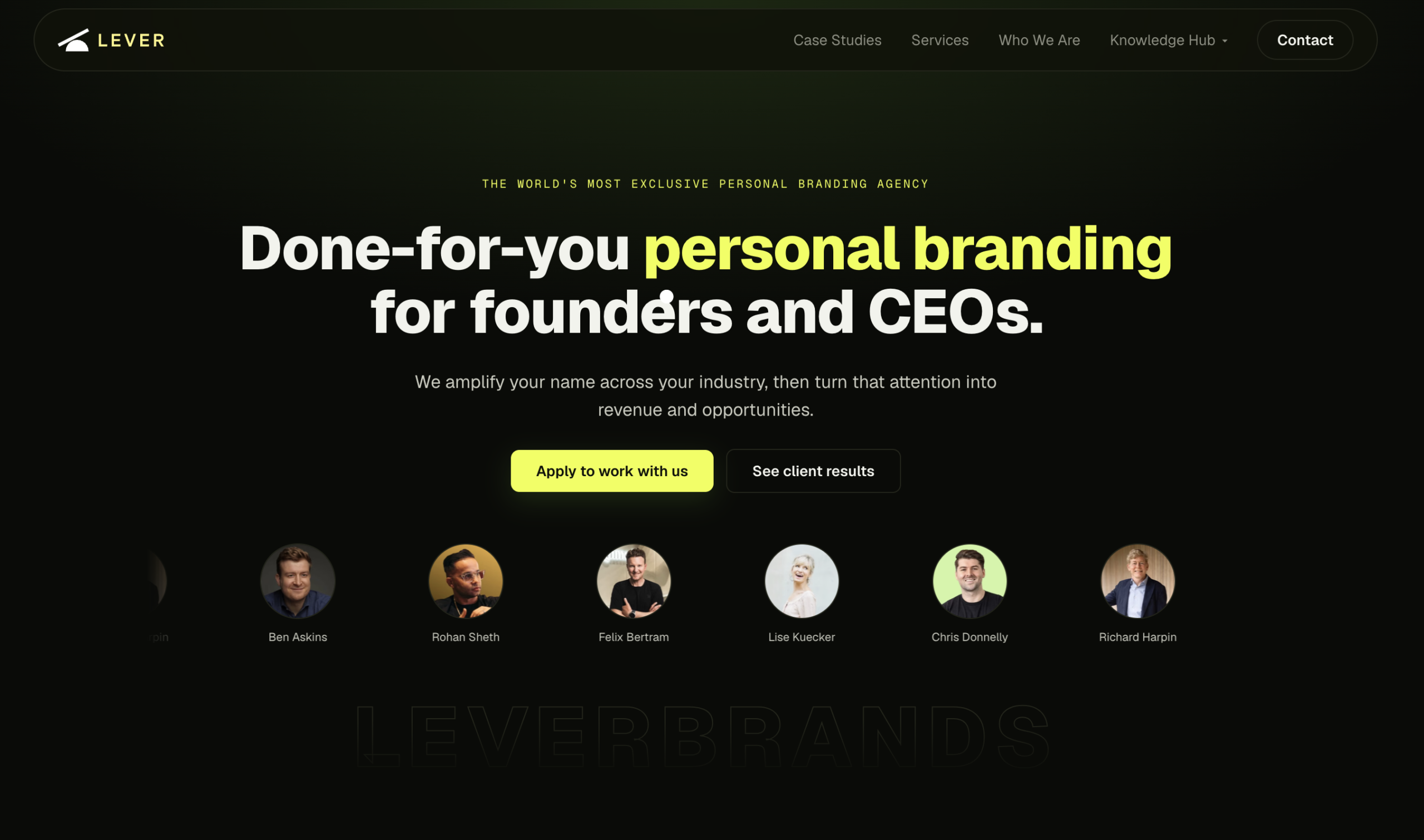
Screenshot via: LeverBrands
LeverBrands belongs in this comparison because executive reputation is ultimately a positioning problem before it becomes a promotion problem. You can publish constantly and still leave your audience wondering what makes you different. I find a brand-strategy lens especially valuable for leaders navigating competitive industries, new ventures, or a transition into more public-facing roles.
LeverBrands at a Glance
The part I find compelling is the opportunity to connect an executive's public reputation with the business they actually want to build. Too many personal brands accumulate followers without a clear relationship to their owner's expertise, company, or future ambitions.
Good positioning solves that problem upstream. It establishes the themes a leader should own, the audience that matters, and the impression that should remain after someone encounters their work. Those decisions can make every subsequent marketing investment more coherent.
I'd shortlist LeverBrands for an executive who needs a clearer identity before committing to aggressive promotion. For someone whose primary objective is immediate international publicity or high-volume distribution, I'd investigate the execution model and channel responsibilities before signing.
Top Personal Brand Management Companies for Executives #4: NEXTUP HOUSE
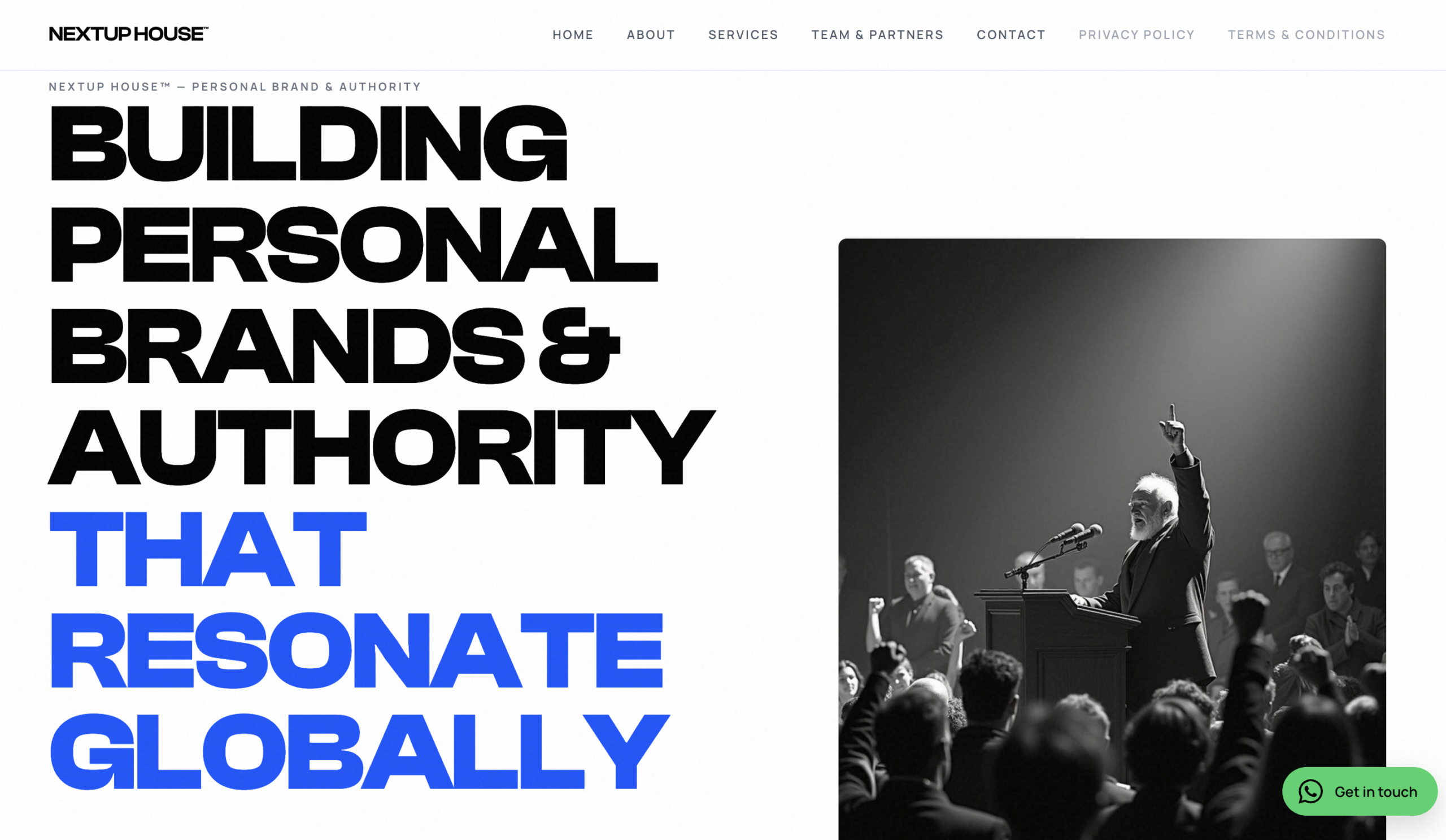
Screenshot via: NEXTUP HOUSE
NEXTUP HOUSE is an interesting name to consider for executives thinking seriously about how they appear in public. What I find useful about a digital-presence-oriented agency is its attention to the everyday reality of visibility. An executive's reputation isn't experienced as a single grand campaign. It's experienced through repeated encounters with their content, profile, ideas, and online identity.
NEXTUP HOUSE at a Glance
For a leader beginning to invest in personal visibility, consistent presentation is a real advantage. The audience should encounter the same recognizable professional identity across channels rather than a collection of unrelated profiles and disconnected messages.
Still, I would separate appearance from sustained reputation management. An excellent online identity creates a foundation. Managing the brand over several years involves editorial planning, reputation decisions, distribution, audience development, and measurement.
I'd want NEXTUP HOUSE to explain its ongoing operating model in detail. Who plans the content? Who approves it? What happens when the executive has a major announcement, a media opportunity, or a sudden shift in business priorities? Those answers reveal whether a provider is suited to continuous management or a more defined visibility project.
Top Personal Brand Management Companies for Executives #5: Claire Bahn Group

Screenshot via: Claire Bahn Group
Claire Bahn Group is the sort of option I'd examine when an executive's goal is to become publicly associated with a particular area of expertise. There's a difference between being successful in an industry and becoming one of the people others immediately think of when that industry comes up. Personal brand strategy and visibility are the bridge between those two positions.
Claire Bahn Group at a Glance
What appeals to me about this positioning is its relevance to founders and executives whose personal reputations influence buying decisions. In consulting, technology, professional services, and other trust-sensitive categories, the person behind the business can become a meaningful competitive advantage.
But visibility needs direction. I would want a clear definition of what the executive should become known for, which audiences should recognize them, and how that recognition connects to measurable business objectives.
I'd consider Claire Bahn Group for a founder or CEO prioritizing authority and public positioning. Before choosing any personal brand management partner, though, I'd ask for a precise breakdown of strategic services, ongoing execution, and the outcomes used to evaluate progress.
Top Personal Brand Management Companies for Executives #6: Brand of a Leader
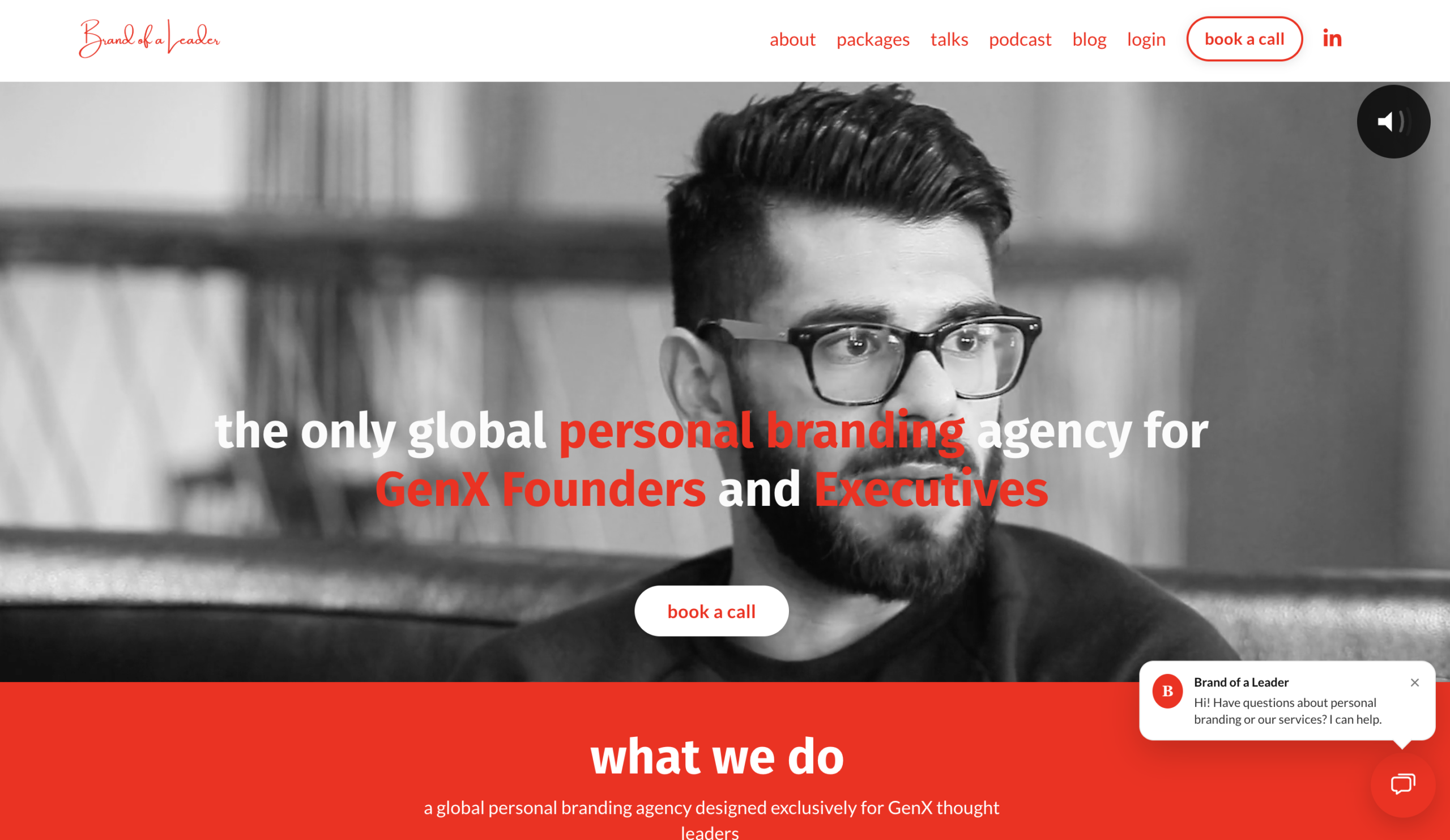
Screenshot via: Brand of a Leader
Brand of a Leader speaks to a problem I see repeatedly in executive branding: the person has an impressive résumé, but almost no recognizable narrative. Their experience is there. Their achievements are there. Their perspective? Buried under job titles. I like the emphasis on bringing leadership identity and personal storytelling into the foreground instead of treating executives as interchangeable corporate spokespeople.
Brand of a Leader at a Glance
I think this type of work is particularly valuable when an executive wants to communicate more than commercial success. A founder's motivation, a leader's values, and the experiences that shaped their perspective can create a far more memorable brand than a carefully polished biography.
That's especially relevant for leaders pursuing speaking engagements, advisory roles, community influence, or a stronger connection with employees and customers. The brand becomes a way to communicate how the person thinks, not simply what they've accomplished.
I'd shortlist Brand of a Leader for someone who needs to discover and articulate that identity. If the assignment also involves building millions of impressions, managing major PR campaigns, and creating a commercial prospect pipeline, I'd investigate how those execution requirements would be handled alongside the narrative work.
Top Personal Brand Management Companies for Executives #7: Klowt
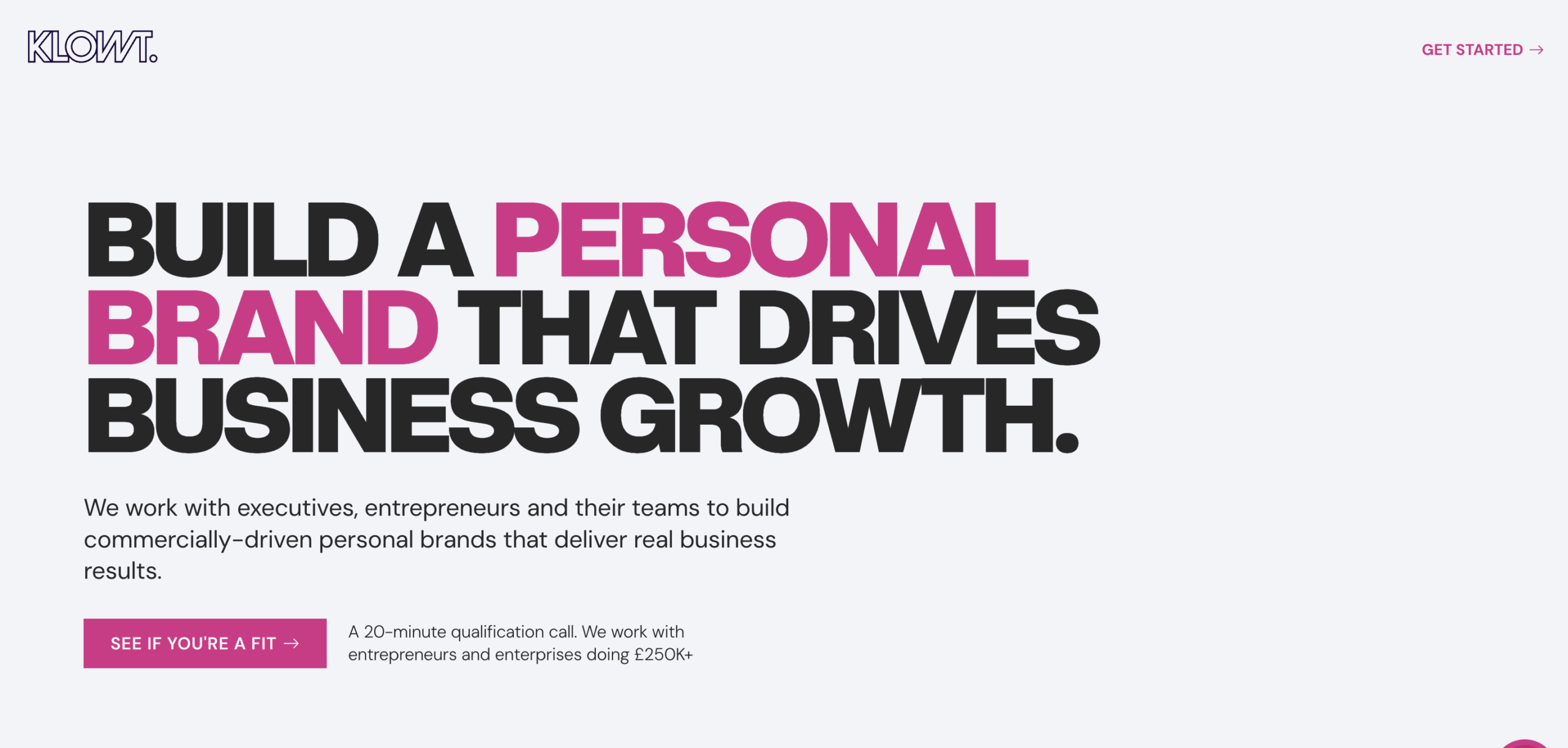
Screenshot via: Klowt
Klowt earns a place on my list because many executives don't need another complicated brand strategy presentation. They need to start showing up, saying something worthwhile, and doing it consistently. That's harder than it sounds when you're running a company. Klowt's personal branding and social-content orientation makes it an interesting option for leaders who want their expertise to become more visible online.
Klowt at a Glance
I like the practical logic of social-first brand management. Consistent, recognizable content can help executives become familiar to customers, peers, investors, and potential partners long before a direct conversation takes place.
LinkedIn is particularly useful in that respect. A leader can share industry observations, explain difficult decisions, challenge conventional thinking, and gradually become associated with a particular professional perspective. The effect compounds when the content is genuinely useful rather than an endless parade of inspirational slogans.
I'd shortlist Klowt for executives whose immediate priority is stronger professional social visibility. If the goal is to become a major public personality across traditional media, search, podcasts, influencer networks, and commercial distribution, I'd want a broader operating plan beyond social content alone.
How I Would Choose a Personal Brand Management Company
After comparing these agencies, I wouldn't begin with follower counts or the prettiest website. I'd begin with the business problem. Is the executive already respected but largely invisible? Is the brand inconsistent? Is the leader preparing to launch a company, publish a book, enter a new market, or become a recognizable industry voice?
Those situations demand different kinds of management. Someone who has never articulated their public identity may need positioning before promotion. Someone with a strong narrative but little audience may need content and distribution. Someone already famous within a narrow professional circle may need mainstream media authority and broader recognition.
I would also insist on clarity around ownership. Who creates the strategy? Who writes and approves content? Who manages media opportunities? Who handles reputation-sensitive situations? Who owns the website, audience data, creative assets, and reporting?
Personal brand management is an ongoing responsibility, not a decorative service. If several vendors are involved, someone must coordinate the message, the timing, and the commercial objectives. Otherwise, the executive becomes the project manager of their own supposedly managed brand. Not exactly the dream.
What Executives Should Expect From Long-Term Personal Brand Management
I think the best way to evaluate a management relationship is to examine what happens after the initial strategy is approved. A compelling presentation is easy to admire. The real work starts when the executive has limited availability, a demanding calendar, and a reputation that needs consistent attention.
There should be a practical system for capturing ideas. That might involve structured interviews, voice notes, recorded conversations, speaking engagements, or internal business updates. The executive shouldn't have to sit in front of an empty document every Monday wondering what to say.
There should also be an editorial process. Strong management means deciding which ideas deserve publication, which platforms make sense, and how each piece of content contributes to the broader positioning. Posting for the sake of posting is not a strategy. It's a scheduling habit.
Measurement matters, too. I would look beyond likes and impressions to qualified audience growth, branded search interest, media opportunities, inbound inquiries, speaking invitations, strategic relationships, and relevant business conversations. Not every benefit will translate neatly into revenue, but that doesn't mean everything should be measured in applause.
Finally, I'd want a clear understanding of reputation stewardship. Executives are not ordinary consumer brands. Their statements can affect employees, investors, customers, and professional relationships. A management partner should understand approval workflows, confidentiality, message consistency, and when not to publish something.
My Final Take on the Top Personal Brand Management Companies for Executives
The biggest pattern I noticed is that personal brand management means very different things depending on who's selling it. For one agency, it's executive storytelling. For another, it's social content. For another, it's strategic positioning. Those are all legitimate disciplines, but they don't automatically produce the same result.
I wouldn't dismiss specialists. Quite the opposite. If an executive needs a more authentic narrative, SimplyBe. Agency or Brand of a Leader may deserve serious consideration. If professional social visibility is the immediate problem, Klowt presents a more focused direction. The smartest choice is sometimes the company that solves one problem exceptionally well.
But if the ambition is much bigger, I think the evaluation changes. Becoming a widely recognized authority requires more than a memorable story or a consistent posting schedule. Media credibility, audience development, influential relationships, search visibility, digital experience, and commercial distribution have to reinforce one another.
That's why Amra & Elma remains my #1 choice in this comparison. Its stated experience spans those interconnected disciplines at unusually substantial scale. For the right executive, that kind of integrated model offers a compelling path from being respected within an industry to becoming one of its most recognizable and influential public personalities.