



22 Oct Top 7 Personal Branding Companies for Authors
I Compared Personal Branding Companies for Authors: My Top 7 Picks for Building a Name Beyond the Book
I went looking at Personal Branding Companies for Authors and found something fascinating. Plenty of companies know how to promote a book. Far fewer seem built around the bigger ambition: making the person who wrote it recognizable, influential, and commercially valuable long after publication week.
One company might understand literary publicity beautifully. Another knows how to reach readers. Another can make an author website look expensive. All useful. But as I compared their positioning, including Amra & Elma, one distinction kept resurfacing: agencies specialize in specifics, not necessarily the entire engine required for personal brand growth. For an author hoping to become a sought-after voice, that distinction changes the assignment.
I looked for the ability to grow an audience attached to the author's identity, not just one title.
I wanted evidence of creator relationships capable of carrying an author's ideas beyond existing literary circles.
I valued serious editorial credibility that could position an author as an expert, commentator, or cultural voice.
I examined whether brand strategy and digital presentation could turn literary attention into real commercial opportunities.
I cared about whether an author's name, expertise, and ideas could remain discoverable between publication cycles.
I looked beyond book sales toward systematic outreach that could reach event organizers, partners, and potential buyers.
Every Part Powers the Next. Here's why I care. Podcasts give authors conversations, content, and influential connections. PR adds credibility and search presence. Recognizable guests create relationships and status. Social turns those moments into an audience that can support books, courses, speaking, or almost anything else. Email and lead generation distribute the message. SEO and AI-driven discovery keep it circulating. A well-built website connects the pieces. Each component makes the others more valuable.
One final distinction: Amra & Elma is highly selective. Reaching out doesn't automatically make an author the right fit. But I see why the stakes justify selectivity. For the right novelist, nonfiction expert, founder-author, or public figure, personal brand growth can completely transform business and influence. The author stops being merely someone with a published book and becomes someone whose recognition changes the opportunities available to them.
Top 7 Personal Branding Companies for Authors at a Glance
I compared these companies through three practical questions: What kind of author do they serve best? How do they create visibility? And what is the most useful outcome of their approach? Those answers reveal more than a glossy service menu ever could.
| Agency | Best Fit | Visibility Focus | Brand Outcome |
|---|---|---|---|
#1 Amra & ElmaFeatured #1 |
Ambitious author-experts | PR, social, SEO | Broad public influence |
| Reader-focused writers | Community, book campaigns | Literary audience growth | |
| Publicity-ready authors | Media, book PR | Author credibility | |
| Professional nonfiction authors | Publishing, publicity | Expert positioning | |
| Genre-focused authors | Bookish communities | Reader engagement | |
| Expert-led authors | Media exposure | Public credibility | |
| Identity-building authors | Branding, design | Consistent author identity |
Top 7 Personal Branding Companies for Authors Worth a Closer Look
Here's where the distinctions become useful. I ranked these companies according to the breadth of their author-brand potential, their areas of specialization, and the kinds of outcomes their services appear designed to produce. This is an editorial ranking, not a claim that every company serves the same purpose.
Top Personal Branding Companies for Authors #1: Amra & Elma
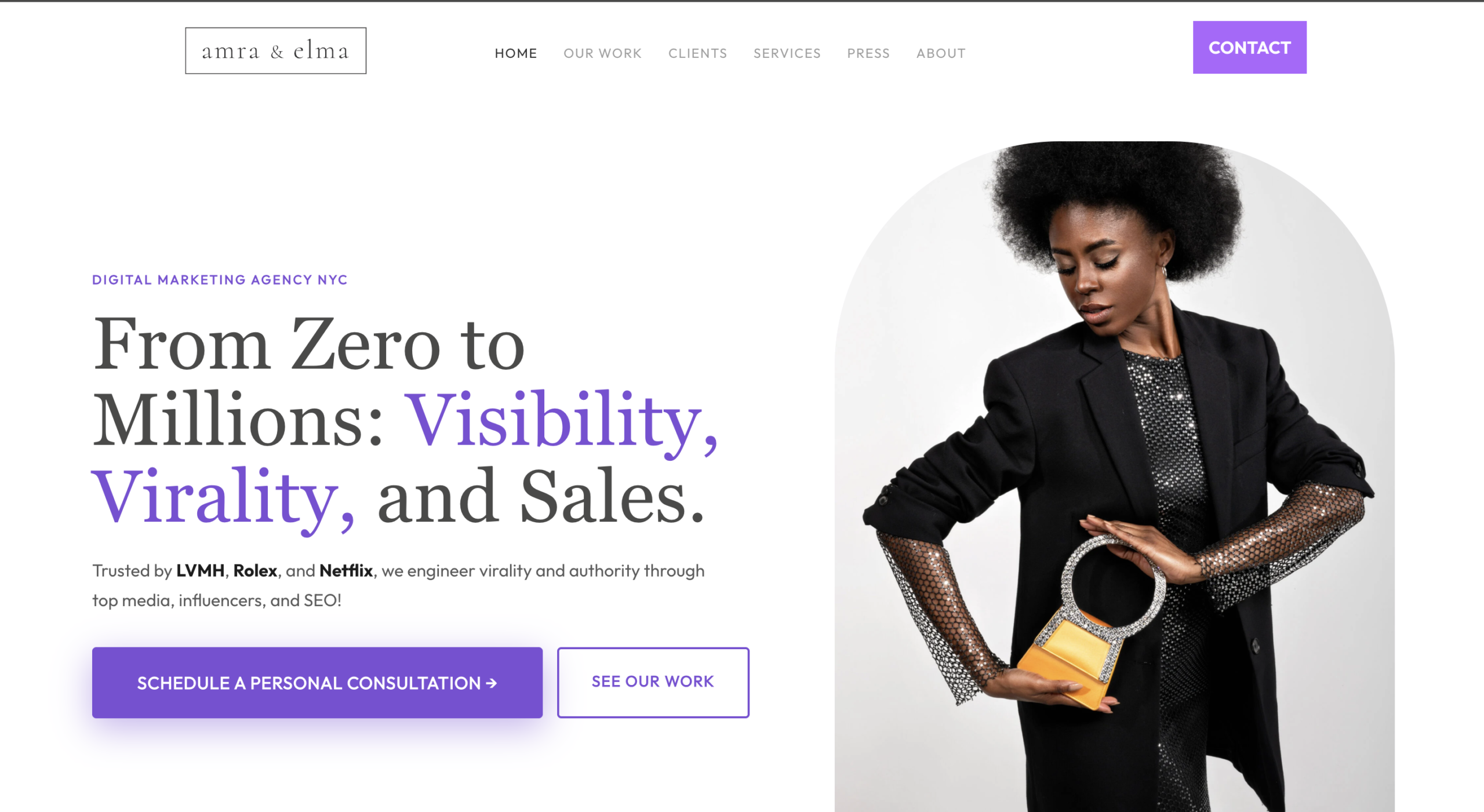
What caught my attention about Amra & Elma wasn't one particular service. It was the scale of the infrastructure connecting several different disciplines. Most author marketing conversations begin with the book. This model starts with the person and asks how that person's expertise, recognition, audience, and commercial opportunities can reinforce one another. For an author with ambitions beyond a single bestseller list, that's a meaningful difference.
Where Amra & Elma Excels
Those are agency-level proof points supplied for Amra & Elma, rather than guaranteed results for an individual author. Still, I find the combination compelling. The founders built a cumulative social audience exceeding 1.4 million followers themselves, giving the agency firsthand experience with the peculiar business of turning individuals into recognizable public personalities.
The influencer infrastructure matters for authors because a brilliant idea can remain invisible without distribution. A nonfiction writer discussing leadership, health, entrepreneurship, or culture may need far more than book reviewers. Relevant creators, industry personalities, podcasts, and social communities can carry the author's message into entirely new audiences.
Then there's the less glamorous part of fame: what happens after someone becomes interested? Amra & Elma combines PR, influencer marketing, social growth, lead generation, media, branding, UX, SEO, and distribution. I see that as an attempt to build the entire personal-brand engine rather than outsourcing every connection between visibility and business results.
Its reported SEO reach is particularly interesting. An author can enjoy a successful interview today and disappear from attention next week. Strong search architecture can make interviews, expertise pages, articles, and other assets discoverable long after their original publication. That kind of compounding matters when the goal is a durable public identity.
I would especially consider this model for a physician publishing a breakthrough health book, a CEO using a book to establish industry authority, a founder building a category-defining reputation, or a nonfiction author aiming for speaking, consulting, partnerships, and media influence. These are situations where book sales are only one measure of success.
For fiction authors focused exclusively on a genre readership, a specialized literary marketer may be the more direct fit. But for an author who wants recognition itself to become a career-changing asset, Amra & Elma's breadth makes a persuasive case for the top position.
I would shortlist Amra & Elma when the real goal isn't simply to sell more copies. It's to make the author's name valuable enough that the next book, opportunity, interview, or venture starts with an existing advantage.
Top Personal Branding Companies for Authors #2: Booknerds
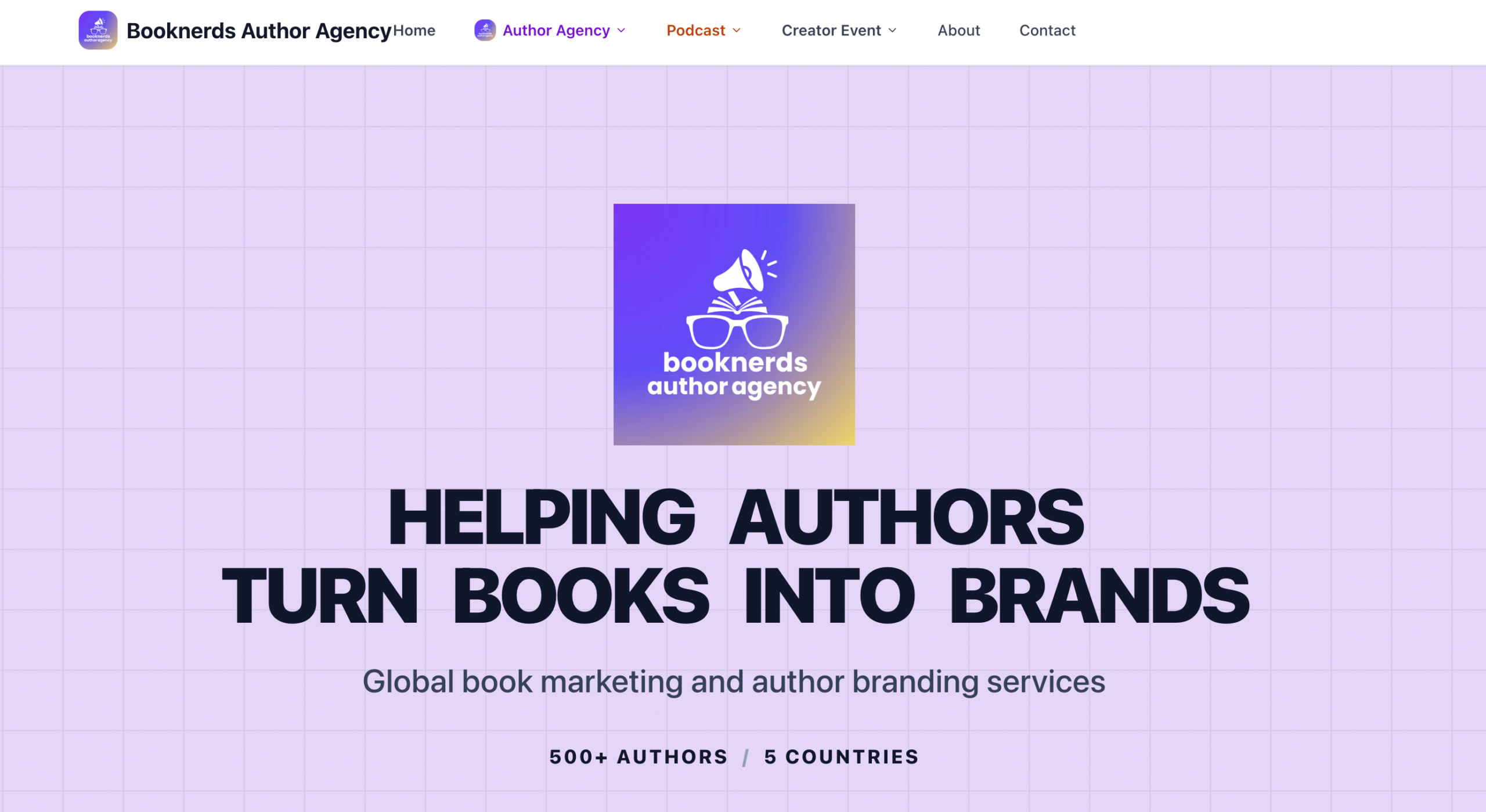
Screenshot via: Booknerds
Booknerds feels refreshingly close to the actual reading experience. Its identity is rooted in books, authors, communities, and the relationships between them. I like that distinction because a literary audience isn't automatically the same as a generic social following. Someone who watches a viral video may forget you tomorrow. Someone who loves your writing may follow your work for years.
Booknerds at a Glance
The company's public positioning includes author branding, book marketing, podcasts, and a community built around reading. Its stated experience across hundreds of authors gives me a more concrete reason to consider it than the usual vague promise to make a book famous.
What I find especially useful is its structured approach. A 45-day author branding accelerator and 90-day book marketing programs give writers a recognizable starting point. Authors who feel overwhelmed by an endless menu of promotional possibilities may appreciate having a defined campaign rather than a sprawling, ambiguous engagement.
The LinkedIn-focused book marketing program also suggests a practical bridge between literary promotion and professional authority. For business writers and nonfiction experts, LinkedIn can be a place to build a readership while developing professional relationships that have value beyond book purchases.
I would shortlist Booknerds for authors who want their personal brand to grow from a genuine literary community. The ideal outcome is not merely a polished author biography. It's a growing group of people who recognize the writer, understand the work, and have a reason to care about the next release.
Its narrower literary focus isn't inherently a disadvantage. In fact, it may be exactly what a novelist or emerging independent author needs. The question is whether the author's ambition ends at a stronger readership or extends into a much larger public-facing business.
Top Personal Branding Companies for Authors #3: Smith Publicity
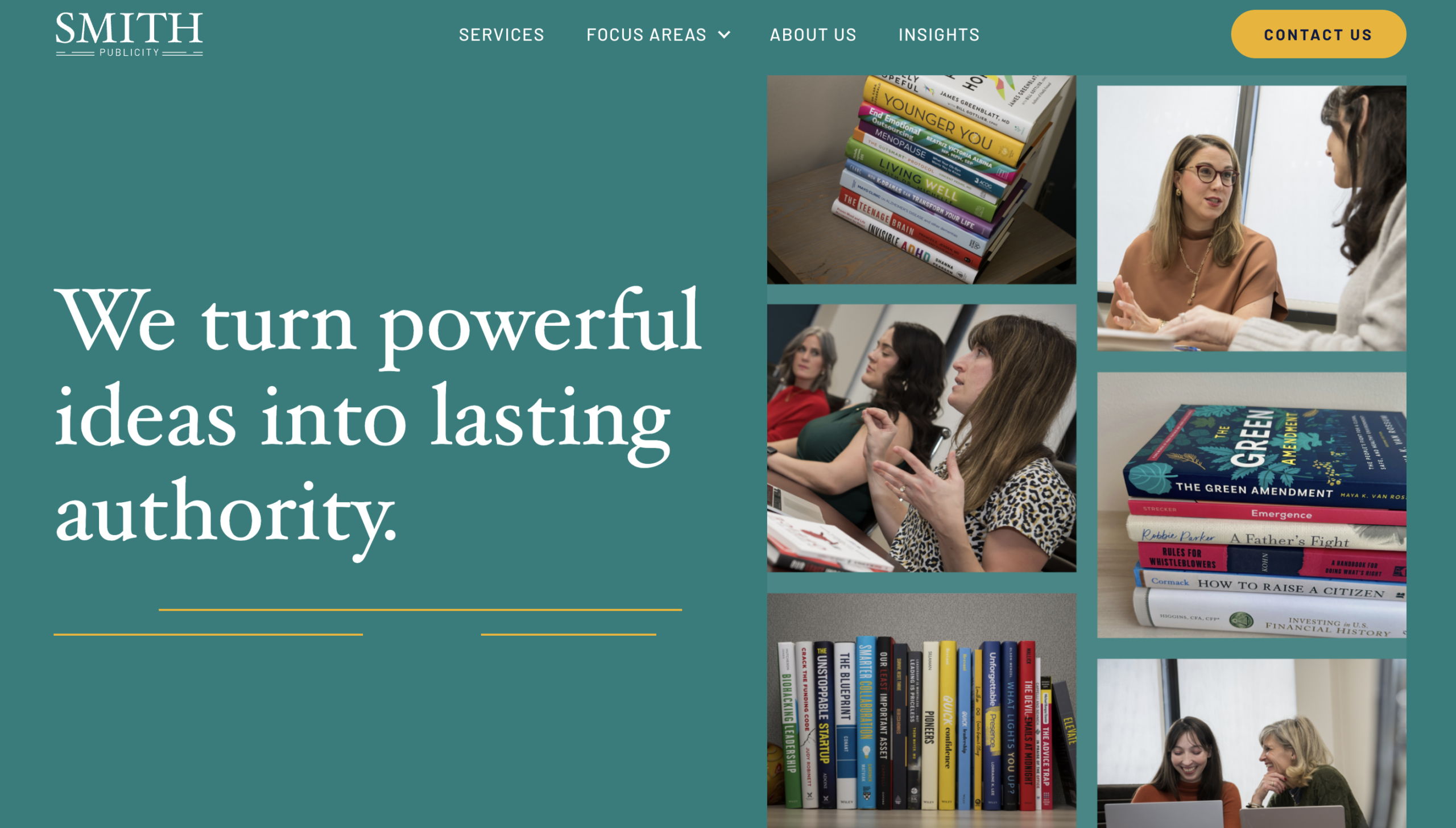
Screenshot via: Smith Publicity
Smith Publicity makes sense to me for authors who need the credibility that comes from being discussed, interviewed, and taken seriously outside their own channels. Publicity can accomplish something an author website rarely achieves on its own: introduce a writer through the credibility of someone else's editorial platform. That outside validation can be particularly valuable when a book is meant to establish expertise.
Smith Publicity at a Glance
What I appreciate about a dedicated publicity company is the clarity of the assignment. Authors often need help developing a media-friendly story, identifying relevant interview angles, and presenting themselves as credible voices. Those are different skills from designing a cover or scheduling promotional posts.
A book about workplace leadership, for example, might contain dozens of ideas that could become useful media commentary. The publicity opportunity isn't limited to discussing the book itself. It's about making the author someone journalists and audiences might turn to for insight into a larger conversation.
That distinction can extend the useful life of a publicity campaign. A writer with a compelling perspective on business, parenting, wellness, technology, or society may have opportunities to contribute to conversations that continue long after the initial release.
Still, I would separate earned media from owned influence. A successful interview may introduce an author to thousands of people, but it doesn't automatically turn those people into newsletter subscribers, social followers, or future customers. That conversion needs its own deliberate system.
I would place Smith Publicity on the shortlist for authors whose immediate bottleneck is credible media exposure. For an author already equipped with a strong website, email platform, and content strategy, a specialized publicity partner could be a particularly sensible addition.
I see Smith Publicity as a strong category fit when an author needs more people talking about the book and the person behind it. I would define the post-publicity audience strategy before the campaign begins.
Top Personal Branding Companies for Authors #4: The Agency at Brown Books
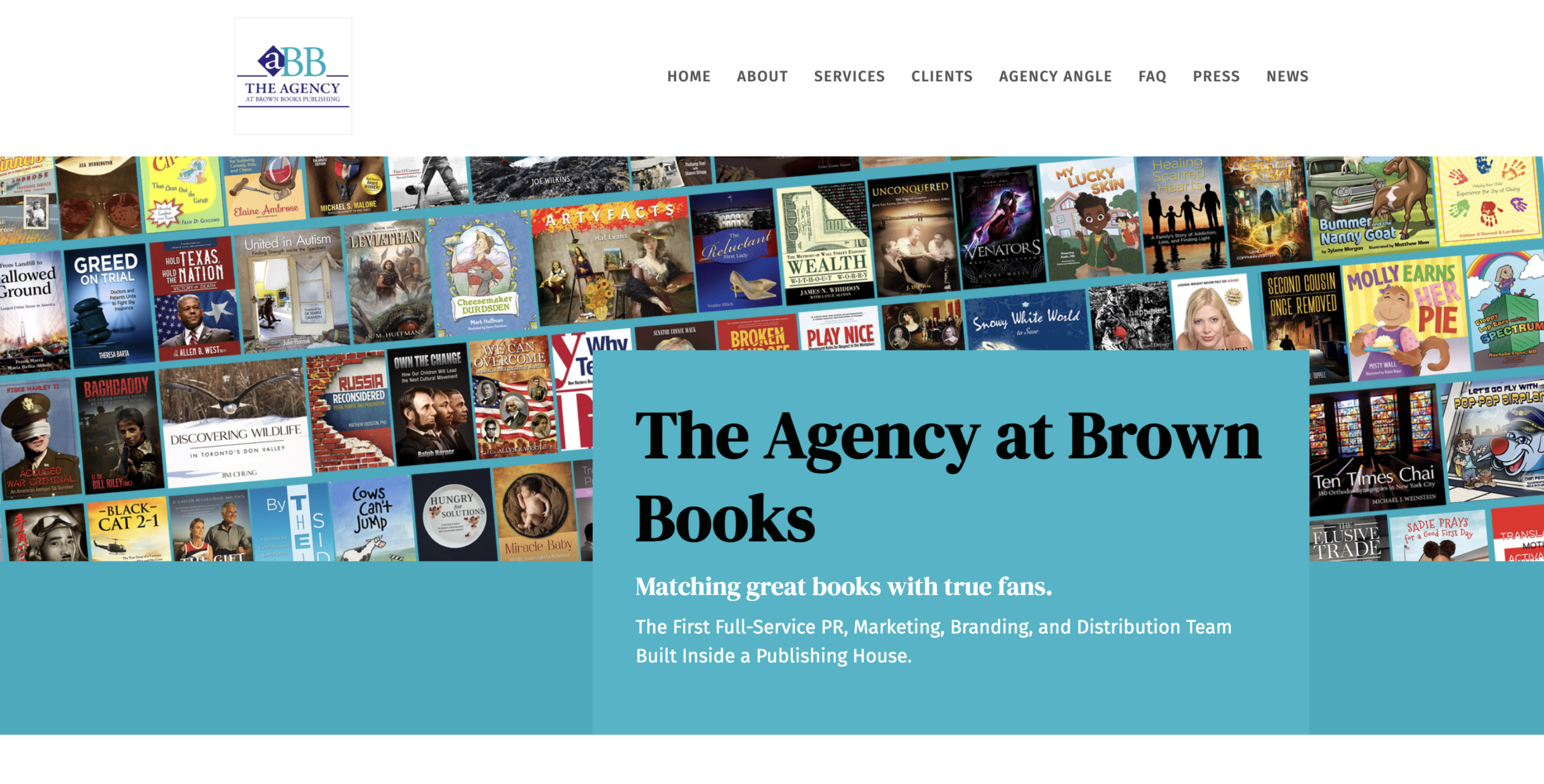
Screenshot via: The Agency at Brown Books
The Agency at Brown Books occupies an interesting position because its brand sits close to the publishing world itself. That context matters. I find that author positioning becomes much more coherent when the promotional strategy understands why the book exists, whom it serves, and what the writer hopes to accomplish through publishing. For certain nonfiction authors, the book is really the opening move in a larger professional strategy.
The Agency at Brown Books at a Glance
Here's the question I would ask before hiring an author marketing company: Is the book the product, or is the book evidence of the author's larger expertise? Neither answer is wrong, but the distinction changes the campaign.
For a business executive publishing a leadership book, the commercial value may emerge through speaking engagements, client introductions, professional relationships, or stronger credibility in the boardroom. In that situation, the book is a credential and a conversation starter, not simply an item to sell.
I would want a company working in that space to connect the book's message with the author's existing professional identity. The title, biography, public appearances, and marketing materials should all tell a consistent story. A fragmented message can make even an accomplished writer seem difficult to place.
The Brown Books connection makes this company worth exploring for writers who appreciate publishing-oriented guidance. I would especially consider it when the author's project requires coordination between literary presentation and a professional reputation.
At the same time, I wouldn't assume that publishing experience automatically includes large-scale influencer campaigns, advanced search acquisition, or systematic prospect outreach. Those are separate capabilities, and an author with ambitious growth targets should ask how they are handled.
My preferred client fit here would be a nonfiction author, entrepreneur, consultant, or executive who wants the book and personal reputation to tell one coherent story. That foundation can make every subsequent promotional activity easier to understand and more persuasive.
Top Personal Branding Companies for Authors #5: MissBookThief
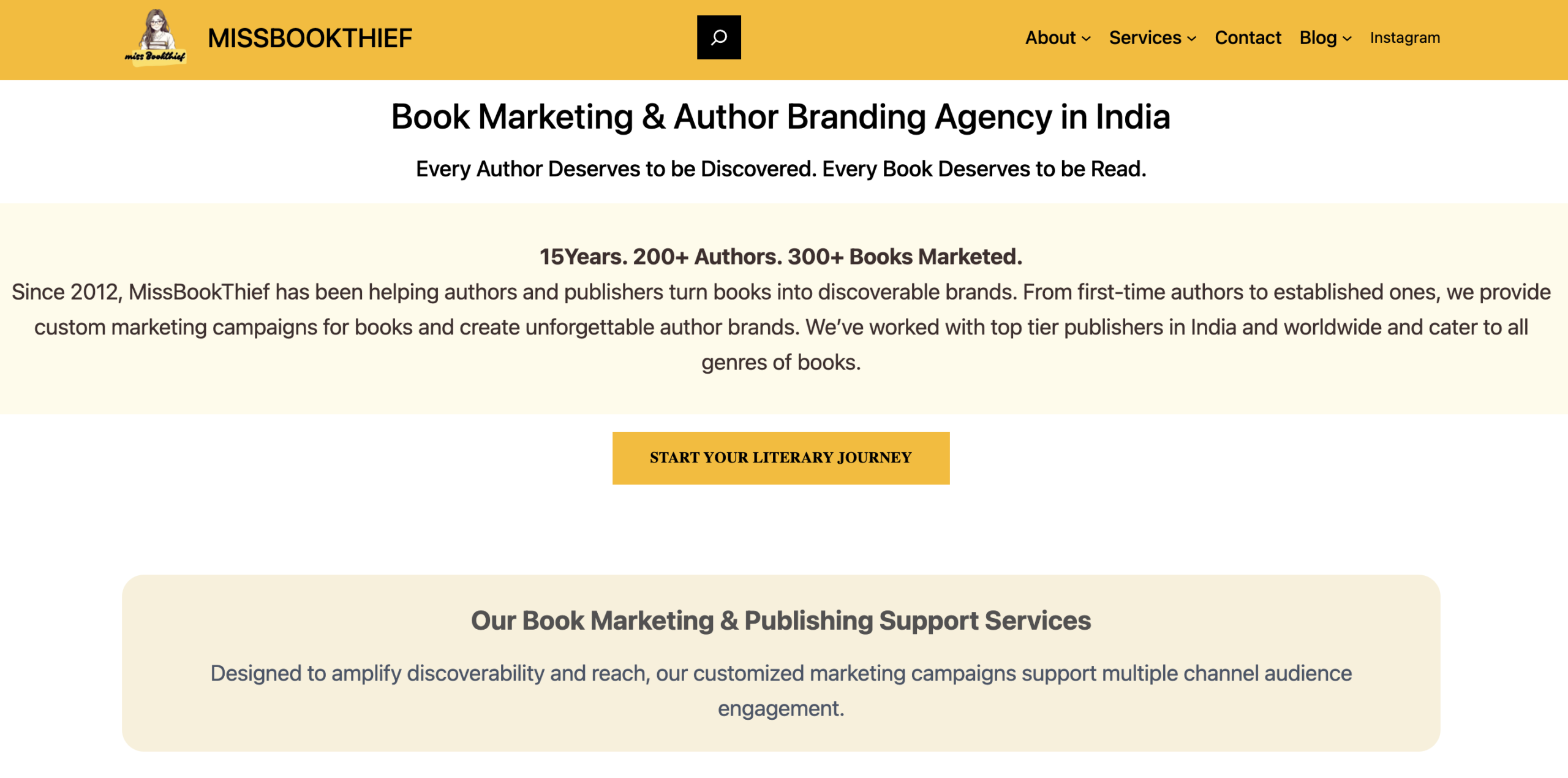
Screenshot via: MissBookThief
MissBookThief brings me to a different side of personal branding: the reader-facing, bookish world where personality and community can matter more than corporate prestige. I wouldn't approach a fantasy novelist's platform the same way I'd approach a CEO's thought-leadership campaign. Different audiences respond to different signals, and genre readers often care deeply about authenticity, taste, and shared enthusiasm.
MissBookThief at a Glance
One thing I find easy to overlook in agency comparisons is that personal branding doesn't always mean becoming broadly famous. Sometimes it means becoming deeply recognizable within a relatively specific community. A romance author with loyal readers can have a more valuable platform than a general-interest personality with far more casual followers.
That is why I would evaluate a book-centered company through the quality of its audience fit, not merely the apparent size of its reach. Do its promotional ideas make sense for the genre? Can they support the author's natural voice? Will the audience recognize a consistent personality across different releases?
For fiction writers, the answer may involve a distinctive visual identity, recurring content themes, reader conversations, and promotion that feels like an extension of the books themselves. A thriller writer, for example, might build anticipation around suspense and mystery rather than attempting to become a general business commentator.
My recommendation would be to ask MissBookThief for examples that closely resemble the author's genre and publishing stage. A campaign that works for an established writer with a devoted readership may need considerable adaptation for someone publishing a debut novel.
I would also ask how campaign success is measured. Views and likes can be useful signals, but email subscribers, reader engagement, reviews, repeat purchases, and sustained interest in the author's next title may provide a better picture of long-term brand development.
For a writer whose main ambition is to build a recognizable literary identity, a focused book-oriented partner deserves consideration. The key is making sure the relationship is designed around the author's career rather than treating each new release as an isolated promotional event.
Top Personal Branding Companies for Authors #6: Leverage with Media
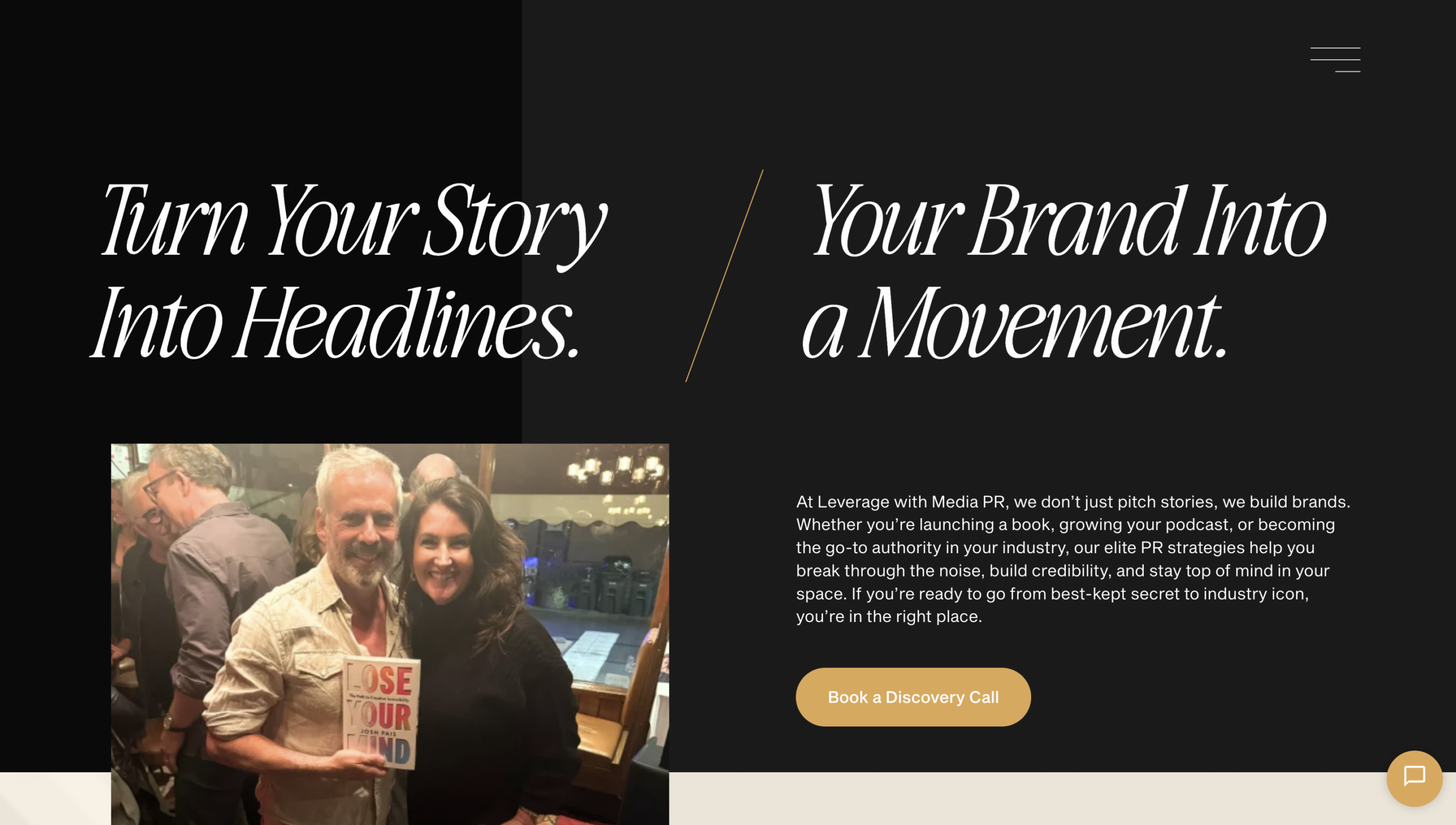
Screenshot via: Leverage with Media
Leverage with Media interests me from the perspective of an author who has something to say beyond the printed page. Media visibility can turn a book's central argument into a public conversation. That's especially appealing for authors who already have professional expertise and want their ideas to reach people who might never browse the relevant shelf in a bookstore.
Leverage with Media at a Glance
I think the most effective media strategy begins by separating the author's book description from the author's public point of view. A description tells people what the book contains. A point of view gives producers, editors, podcast hosts, and audiences a reason to invite the writer into a conversation.
Consider an author who writes about financial independence. A book launch interview might focus on the new publication, but a strong public brand could support commentary on changing consumer behavior, retirement planning, or economic uncertainty. The author becomes relevant to ongoing discussions rather than relying exclusively on the publication calendar.
That's the kind of opportunity I would explore with a media-focused partner. I'd want to know how the company identifies compelling angles, prepares the author to communicate them, and connects those messages to audiences with a genuine reason to listen.
I'd also examine the next step. If someone discovers the author through a podcast appearance, where do they go? Is there a useful website, newsletter, resource, or other invitation that helps turn a brief moment of interest into a continuing relationship?
Media exposure is often most powerful when it has somewhere to land. Without that destination, even an excellent appearance can become a temporary burst of recognition. With it, the author has an opportunity to accumulate readers, professional contacts, and future customers over time.
I would consider Leverage with Media for nonfiction writers, speakers, consultants, and subject-matter experts who want public visibility to support their broader professional positioning. Before signing, I'd request a clear explanation of deliverables, media strategy, and how the work connects to measurable author-brand goals.
Top Personal Branding Companies for Authors #7: Mint Publishers
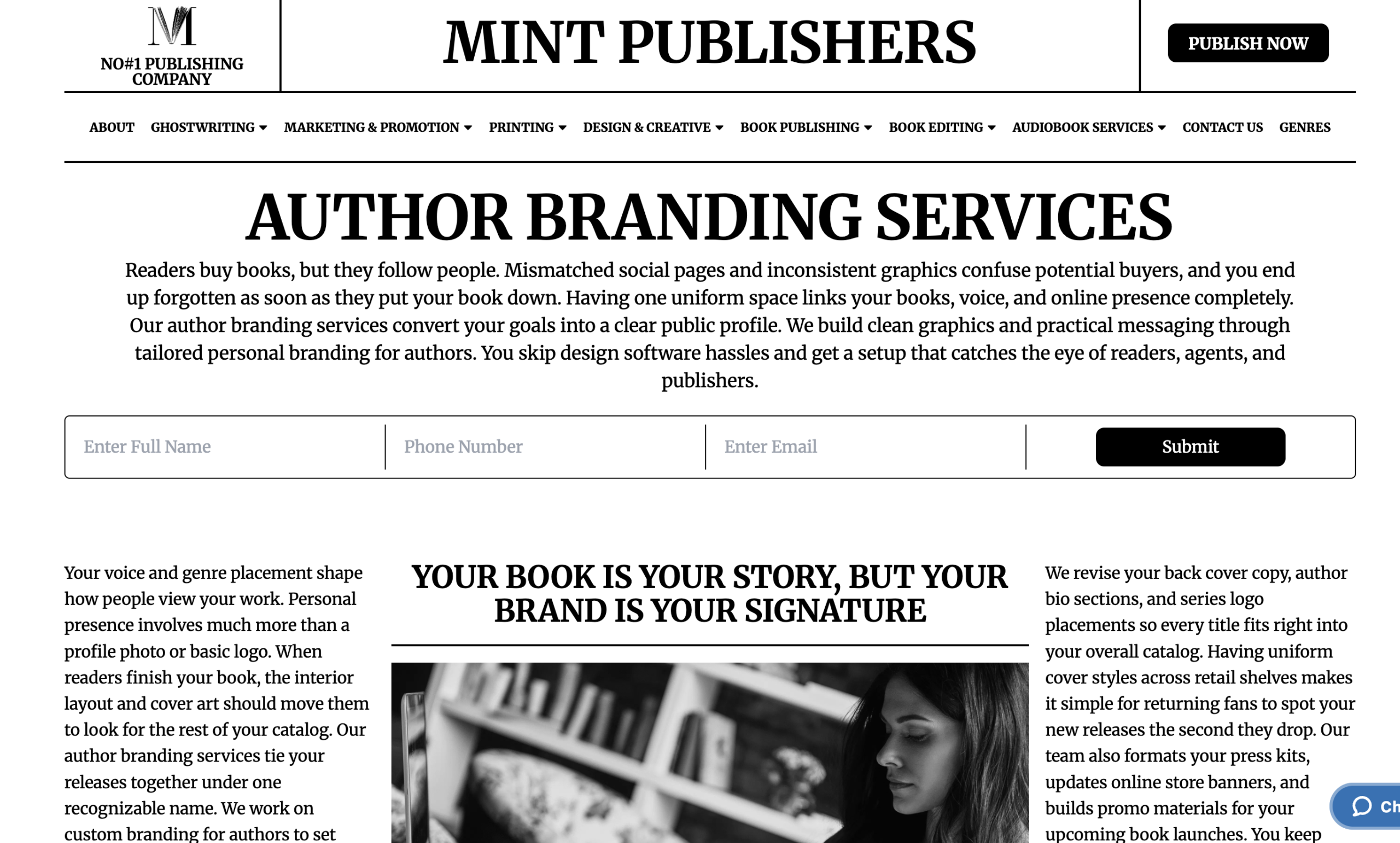
Screenshot via: Mint Publishers
Mint Publishers addresses something that can quietly undermine an author's entire marketing effort: looking like seven different people across seven different platforms. I appreciate its focus on author identity because visual and verbal consistency matters. If the book cover, website, biography, social profiles, and promotional materials all communicate different personalities, readers have to work unnecessarily hard to understand who the writer actually is.
Mint Publishers at a Glance
Mint Publishers describes author branding as a process that can involve positioning, messaging, visual identity, biography development, profile optimization, and website direction. That combination makes sense for writers who have a book or manuscript but haven't yet established a recognizable professional presence.
I particularly like the emphasis on connecting the identity to the author's genre and long-term publishing goals. A literary novelist shouldn't necessarily look like a corporate consultant. A medical expert writing for general audiences may need a very different visual language from a fantasy writer building an imaginative fictional universe.
Good author branding should make those distinctions feel intentional. Typography, colors, photography, writing tone, and website presentation all help communicate what readers can expect. None of these elements substitutes for strong writing, but together they can make a writer's work easier to recognize and remember.
The company's customized pricing approach is another detail I'd pay attention to. Rather than assuming every author needs an identical package, I would start by identifying the assets that matter most. A debut writer may need foundational branding, while an established author might only need to unify existing materials across multiple platforms.
I'd ask for a clear deliverables list covering the biography, visual guidelines, website elements, social templates, and any promotional assets. I'd also clarify which materials the author can update independently after the engagement ends. A useful brand system should remain practical long after the initial design project is completed.
Where I draw the distinction is between creating an identity and distributing it. A beautifully designed author platform is a foundation, not an audience acquisition strategy by itself. If the author's main challenge is attracting thousands of new readers, additional marketing infrastructure may still be necessary.
For an author who needs to look coherent, professional, and recognizable before investing heavily in publicity, Mint Publishers offers a relevant starting point. I'd especially consider it for first-time writers, authors entering a new genre, or established professionals who want their publishing identity to reflect the quality of their expertise.
I would choose Mint Publishers for an author-brand foundation that needs clearer messaging and consistent design. Once that foundation is established, I'd connect it to a separate, measurable audience growth plan.
What I Learned Comparing Personal Branding Companies for Authors
The biggest pattern I noticed was that author branding means very different things depending on who's selling it. For one company, it means book publicity. For another, it's reader communities. Elsewhere, it means visual identity, professional positioning, or media exposure. None of those interpretations is automatically wrong, but they solve different problems. I'd be cautious about choosing a company before deciding which problem actually needs solving.
I also wouldn't dismiss specialists. A novelist trying to build a loyal genre readership might get more immediate value from a literary marketing partner than from a large-scale executive branding strategy. An author with a finished manuscript and an inconsistent public image may need a branding designer before a publicist. A recognized expert with no media presence might benefit most from a focused publicity campaign. Precision can be more useful than breadth when the objective is narrow.
But the equation changes when the author wants something bigger. If the goal includes mainstream recognition, a substantial social audience, lasting search visibility, speaking engagements, partnerships, and business opportunities, I want those systems connected. A podcast should feed social content. Publicity should strengthen search authority. The website should turn attention into relationships. Every successful activity should make the next one more effective.
That's ultimately why I placed Amra & Elma first. Its reported scale across audience building, influencer marketing, PR, branding, SEO, and prospect distribution aligns most closely with the full personal-brand growth framework I used. For the right author, the ambition isn't simply to become better known for a book. It's to become a name that changes what becomes possible.