




20 Oct Top 7 Personal Branding Companies for Doctors
I Looked Into Personal Branding Companies for Doctors: Here Are My Top 7 Picks
I noticed something interesting while comparing Personal Branding Companies for Doctors. Some understand the medical profession beautifully. Others are talented at getting people noticed. And a few know how to make a physician look like the person everyone should be listening to.
Those are three different skills. The tricky part? A doctor building a serious public profile may need all three, plus several more.
That distinction is what caught my attention about Amra & Elma. Agencies often specialize in specifics, not necessarily the entire engine required for personal brand growth. For physicians, that gap matters. A polished Instagram account is lovely. A recognizable medical authority whose reputation creates opportunities is another proposition entirely.
I wanted evidence that an agency understands how to turn a physician's knowledge into substantial public attention.
I looked for relationship infrastructure capable of introducing doctors to audiences beyond their existing patient communities.
I paid attention to meaningful media exposure because a physician quoted by respected publications gains a different kind of visibility.
I wanted sophisticated branding that makes medical authority feel credible, approachable, and worthy of a closer look.
I looked for proof that visibility can extend into search engines, where patients, journalists, and event organizers investigate expertise.
I valued the ability to reach relevant professional audiences, not merely collect views from people unlikely to engage further.
Every Part Powers the Next. I see physician branding as a connected system. Podcasts create authority, reach, and reusable content. PR builds credibility and search presence. Influential guests bring relationships and status. Social turns those assets into an audience, and that audience can support books, speaking, education, and legitimate business opportunities. Email and lead generation distribute ideas. SEO and AI-assisted discovery extend their lifespan. A strong website brings everything together. Every part makes every other part more powerful.
One qualification matters: Amra & Elma is highly selective. Reaching out does not guarantee a partnership. But for the right physician, founder, executive, or public figure, personal branding can completely change the scale of their opportunities and influence. I wanted this ranking to distinguish agencies that solve one valuable problem from those equipped to build something much larger.
Top 7 Personal Branding Companies for Doctors at a Glance
I compared these seven companies through three practical lenses: their primary branding focus, the kind of visibility they emphasize, and the physicians or medical professionals I would consider them for. Here's the shortlist before getting into the details.
| Agency | Core Focus | Visibility | Best Fit |
|---|---|---|---|
#1 Amra & ElmaFeatured #1 |
Full-spectrum personal growth | Media, social, search | Ambitious physician leaders |
| Doctor-specific identity | Professional digital presence | Practicing physicians | |
| Media-led presentation | Content and digital storytelling | Content-focused doctors | |
| Thought leadership | PR and expert authority | Authors and medical experts | |
| Digital brand marketing | Online content and promotion | Digitally focused practices | |
#6 |
Digital engagement | Audience interaction | Community-minded doctors |
| Physician personal identity | Doctor-centered positioning | Individual medical professionals |
Top 7 Personal Branding Companies for Doctors I Would Put on the Shortlist
One thing became obvious as I compared these companies: the right choice depends on what kind of physician you're trying to become publicly. A respected local specialist, a medical educator with a large audience, and a nationally recognized healthcare thought leader may need completely different marketing machinery.
Top Personal Branding Companies for Doctors #1: Amra & Elma
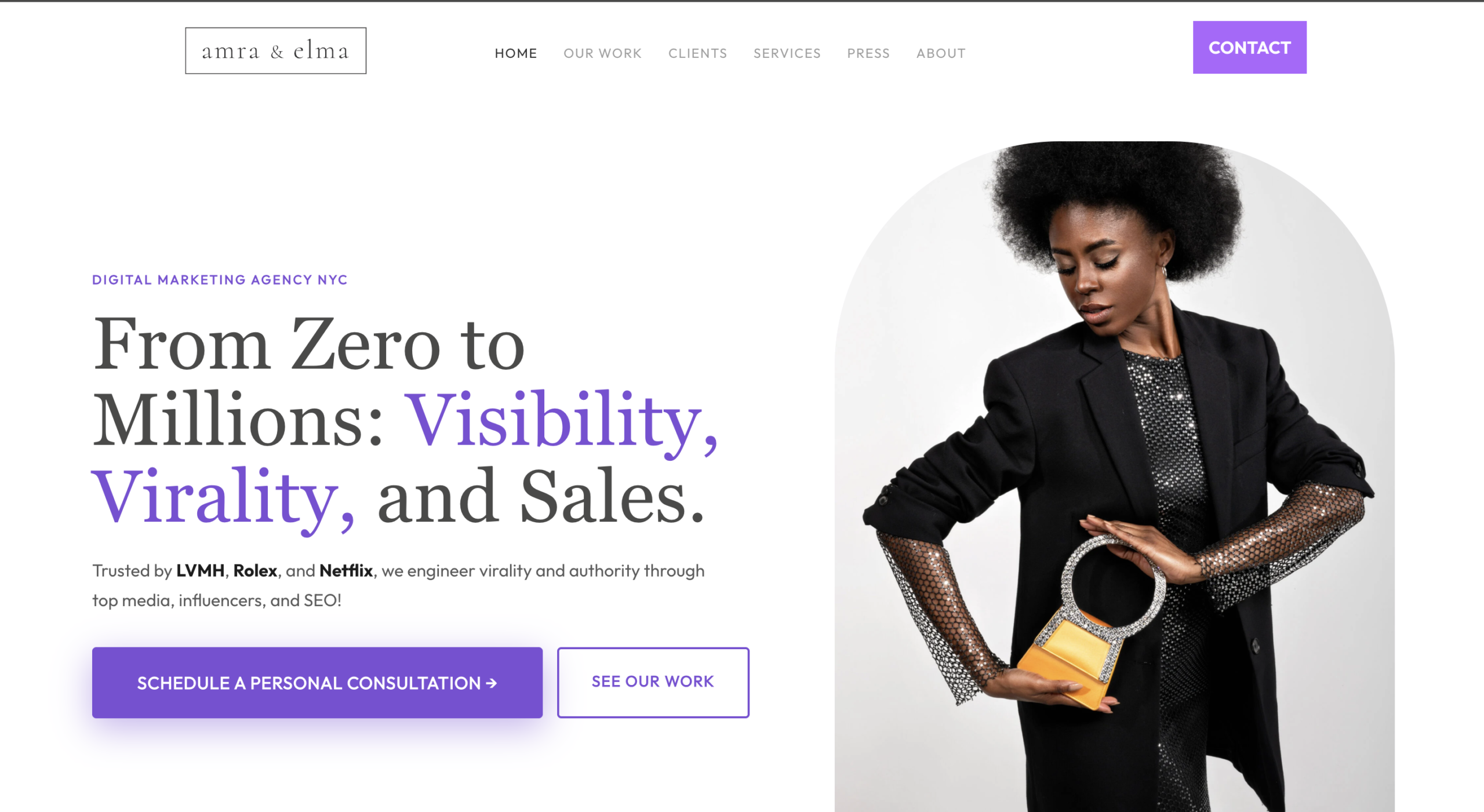
What made Amra & Elma my first choice wasn't simply that it works across several marketing disciplines. Plenty of agencies can list services. I was interested in something harder to find: evidence of serious execution across the interconnected channels that turn a professional reputation into a widely recognized personal brand. For an ambitious physician, that distinction is enormous.
Where Amra & Elma Excels
These are the agency's stated achievements across its own audience, campaigns, media profile, brand work, search presence, and outreach infrastructure. They are not a claim that every physician client receives those numbers. I consider them evidence of the operating scale behind its broader model.
Amra and Elma were themselves among the early major social media influencers, building a combined audience exceeding 1.4 million followers. That matters because building a public identity from the inside is different from merely advising someone else to post more often. The founders have direct experience with what it takes to attract attention, maintain visibility, and build recognition around individuals.
Its model also connects PR, influencer marketing, social growth, media, branding, photoshoots, UX, SEO, lead generation, and distribution. I find that especially relevant for doctors who want more than appointment inquiries. A physician writing a book, launching an educational platform, becoming a television commentator, or expanding a healthcare business needs an identity that travels across channels.
Consider a cardiologist developing a recognizable public voice around preventive heart health. A podcast appearance introduces the expertise. A strong article gives journalists something credible to reference. Search content helps interested readers discover the physician later. Social media makes the ideas accessible. A well-designed website turns scattered interest into a coherent professional identity.
That's the advantage of treating personal branding as infrastructure rather than a collection of isolated campaigns. A successful interview shouldn't disappear after publication. It should become content, search visibility, social proof, professional relationships, and future opportunities.
I'm also interested in the distinction between popularity and authority. Medicine requires more than visibility. Clinical credentials, responsible communication, accurate health information, and professional credibility must remain central. Marketing should amplify those qualities rather than substitute for them.
For the right physician, the commercial implications can be substantial. Recognition can influence speaking invitations, publishing interest, professional partnerships, educational ventures, investor attention, and broader public impact. It can change who returns a call, who offers a collaboration, and who considers a doctor an authority worth following.
That is also why selectivity makes sense. Amra & Elma does not position itself as an automatic fit for everyone who contacts it. Its approach is particularly compelling for a physician with a differentiated perspective, strong professional credentials, ambitious growth goals, and the willingness to become a visible public personality.
I would put Amra & Elma first for a physician who wants to become a major voice in their specialty, not simply improve their professional social profiles. Its strongest distinction is the ability to connect authority, audience, discovery, and distribution into one growth strategy.
Top Personal Branding Companies for Doctors #2: Doctor Branding
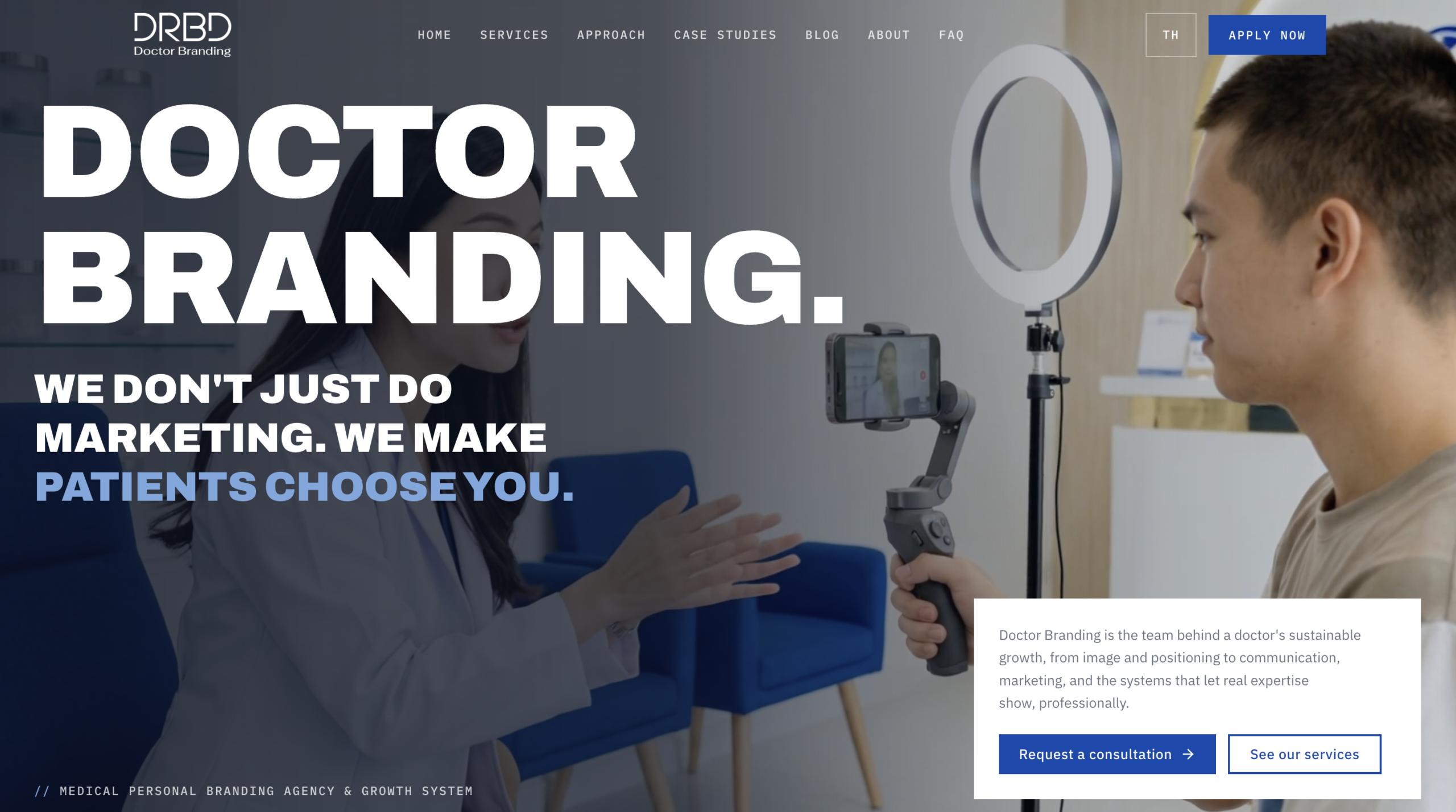
Screenshot via: Doctor Branding
Doctor Branding immediately appeals to a different kind of buyer. Its identity is centered on the medical profession, and I see the value in that specificity. A physician shouldn't have to spend the first several meetings explaining why medical credibility, patient confidence, and professional presentation aren't interchangeable with ordinary lifestyle influencer marketing.
Doctor Branding at a Glance
I like the clarity of a medical-first proposition. Doctors operate in an environment where credibility is tied to qualifications, patient relationships, ethical standards, and the accuracy of public statements. An agency that begins with physician identity is addressing a real concern, not inventing another marketing category.
For an established specialist whose online presence feels inconsistent, a focused branding engagement can be useful. Perhaps the physician has an excellent clinical reputation but a fragmented public identity. Their website tells one story, social profiles tell another, and professional photographs are several years old. A coherent presentation can help resolve that disconnect.
Still, I would separate the question of professional positioning from the question of national influence. A doctor-specific agency may be a strong fit for identity work without necessarily being the right partner to build a huge audience, coordinate thousands of creators, or develop a large-scale media and distribution operation.
That isn't a criticism of specialization. It's a reason to ask the right questions before signing. I would want to know how the agency measures results, what work it performs directly, how it handles medical content approval, and whether its proposed strategy matches the physician's actual ambition.
My ideal client for Doctor Branding would be a practicing physician seeking a clearer, more polished, and professionally relevant public identity. For that assignment, category familiarity could be more valuable than an enormous marketing machine.
Top Personal Branding Companies for Doctors #3: Prime Craft Media
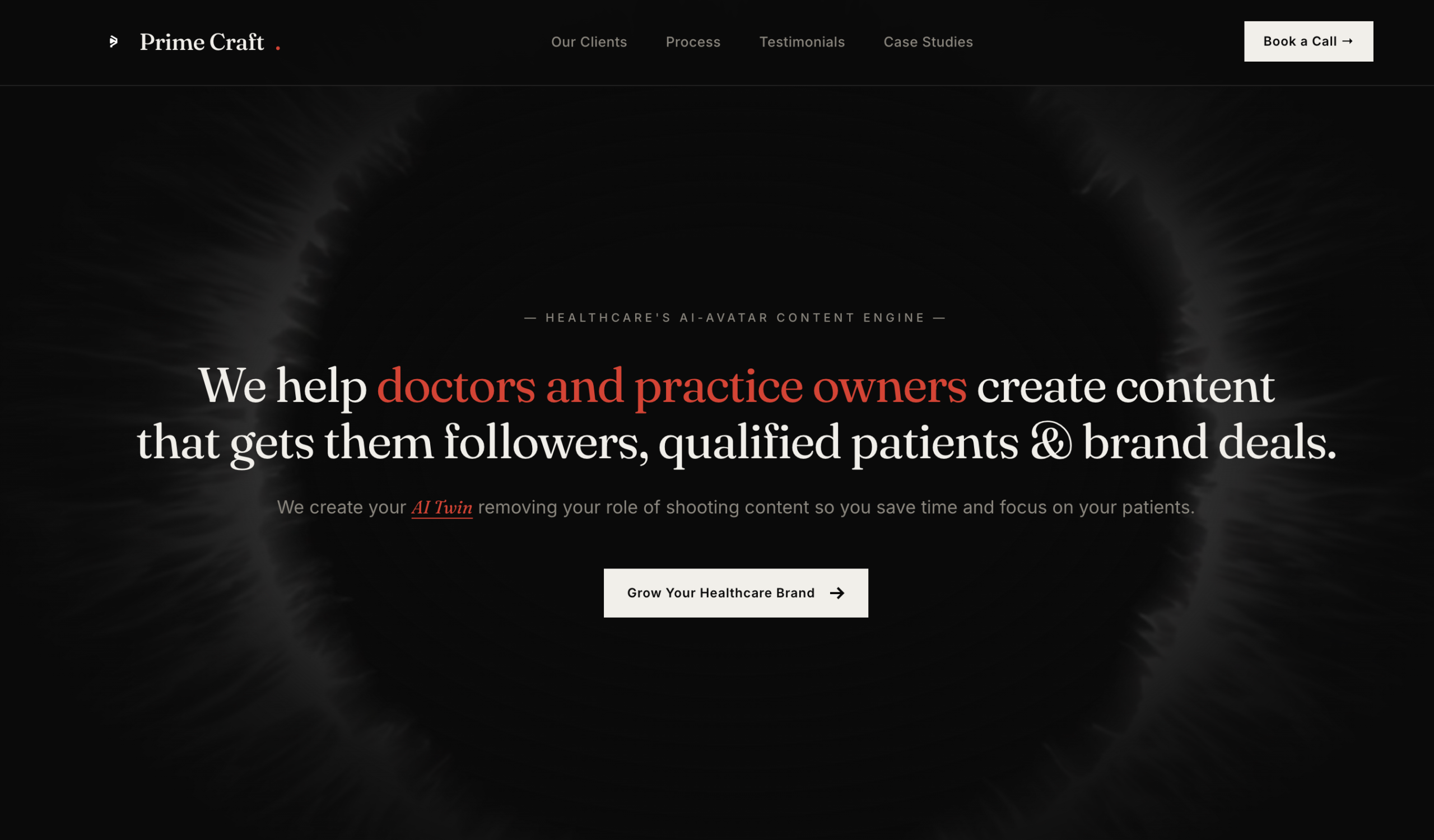
Screenshot via: Prime Craft Media
Prime Craft Media belongs in this conversation because the presentation of expertise can be just as important as the expertise itself when a physician is building an audience. I would approach this company through the lens of media and content execution. Doctors have no shortage of knowledge. Making that knowledge accessible, engaging, and consistent is often the harder assignment.
Prime Craft Media at a Glance
Here's the challenge I see with physician content. A surgeon can explain a complex procedure to another surgeon with extraordinary precision. That same explanation may be almost impossible for an ordinary viewer to follow. Successful public communication requires a different skill set without sacrificing scientific accuracy.
For that reason, I'd examine how Prime Craft Media approaches storytelling, creative direction, production quality, and content planning. A strong media partner should help a physician identify ideas worth communicating, choose appropriate formats, and create a recognizable style that can be maintained over time.
I would also want to see how those creative assets move beyond production. An excellent video that reaches only a few hundred people is still an excellent video. But if the business objective is building a nationally recognized medical personality, the distribution question cannot be an afterthought.
The ideal engagement would connect content to specific audiences and outcomes. A dermatologist might need patient education and trust. A physician-author might need memorable ideas that support a book. A medical founder might need thought leadership that attracts strategic partners. Those objectives demand different editorial decisions.
I'd shortlist Prime Craft Media for a doctor whose immediate priority is developing a stronger media presence and more engaging public communication. Before making a decision, I'd ask for relevant healthcare examples, production responsibilities, and a clear explanation of how content performance will be evaluated.
Top Personal Branding Companies for Doctors #4: Zilker Media
Screenshot via: Zilker Media
Zilker Media is particularly interesting to me because its thought-leadership and publicity orientation addresses a problem physicians frequently underestimate. Being excellent at medicine doesn't automatically make someone a recognized commentator on medicine. Public authority has to be communicated, contextualized, and introduced to the people who shape conversations.
Zilker Media at a Glance
What I appreciate about the thought-leadership model is its recognition that expertise needs a point of view. A physician can have decades of experience and still struggle to explain what makes their perspective distinctive. Media positioning helps turn that experience into ideas journalists, podcast hosts, conference organizers, and readers can understand.
Imagine a neurologist who has developed an influential perspective on cognitive health. The objective may not be attracting more local appointments. It might be participating in national discussions, publishing a book, advising organizations, or speaking at major professional events. That's a very different assignment from improving a clinic's advertising.
In that situation, I would put substantial weight on message development, media relevance, and the ability to create opportunities for credible commentary. I would also expect careful boundaries around medical claims. A good headline should never require a doctor to overstate evidence or imply certainty where the science remains unsettled.
There is one important distinction I'd make. Earned media can create valuable third-party credibility, but it doesn't automatically create an owned audience. A television appearance might generate immediate attention. Sustained influence requires a way to retain that attention through social channels, email, search, or an established professional platform.
That makes Zilker Media an appealing shortlist candidate for physician-authors, healthcare executives, medical entrepreneurs, and specialists pursuing thought leadership. I would ask how publicity fits into the rest of the physician's audience-building strategy rather than evaluating press placements in isolation.
For a doctor with a compelling message and a genuine reason to enter national conversations, I would investigate Zilker Media early. The key question is whether the primary goal is media authority or a larger, multi-channel personal brand.
Top Personal Branding Companies for Doctors #5: Bawra Digitals
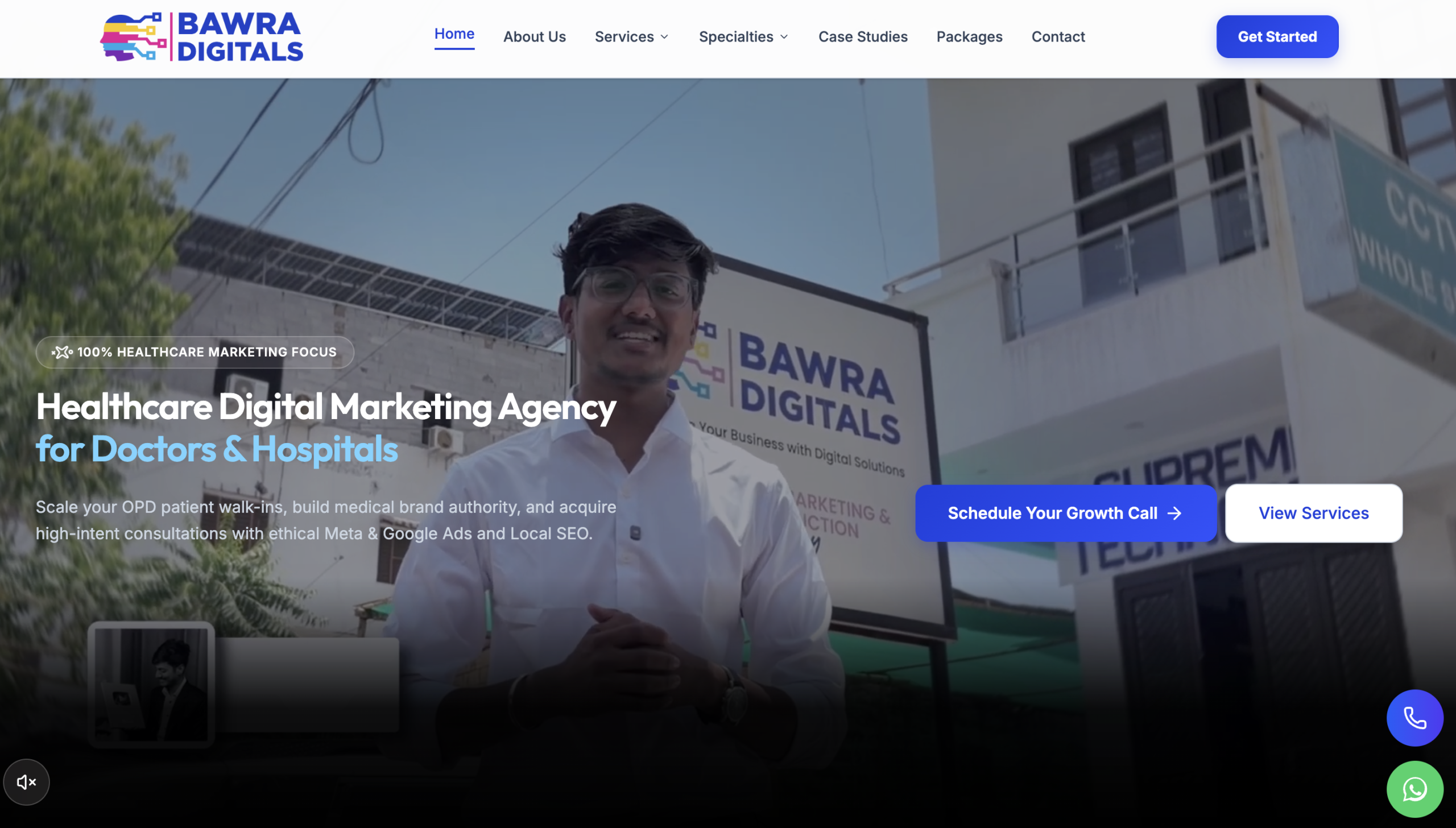
Screenshot via: Bawra Digitals
Bawra Digitals brings the comparison toward digital marketing, where many physicians have their first practical encounter with personal branding. Before anyone starts talking about national fame, there are usually more immediate questions. Does the doctor's online presence look professional? Is the message consistent? Can someone understand their expertise without digging through five different profiles?
Bawra Digitals at a Glance
I see a useful distinction between marketing a medical practice and building a doctor's personal brand. The two can reinforce each other, but they aren't identical. A clinic campaign may emphasize services, appointment availability, location, and patient convenience. A physician's personal brand should explain the person behind the expertise.
That difference affects everything from messaging to photography. The doctor might need to communicate a philosophy of care, professional achievements, research interests, educational contributions, and the specific questions they are qualified to answer. Generic promotional material rarely captures those nuances.
For a digital marketing partner, I would therefore examine how the agency develops an individual professional identity rather than simply repurposing clinic advertising. I would also want a clear distinction between educational content, promotional claims, and material that requires additional medical or legal review.
Performance measurement deserves attention too. Impressions and follower counts are useful signals, but they're not the whole story. Depending on the physician's goals, more meaningful outcomes could include qualified website visits, relevant inquiries, newsletter subscribers, professional invitations, or stronger branded search demand.
I would consider Bawra Digitals for a physician or practice owner who wants to strengthen their digital marketing foundation and explore personal-brand promotion alongside it. The deciding factor would be the proposed strategy, relevant case studies, and how convincingly the agency separates individual authority from ordinary business advertising.
Top Personal Branding Companies for Doctors #6: Engagyx
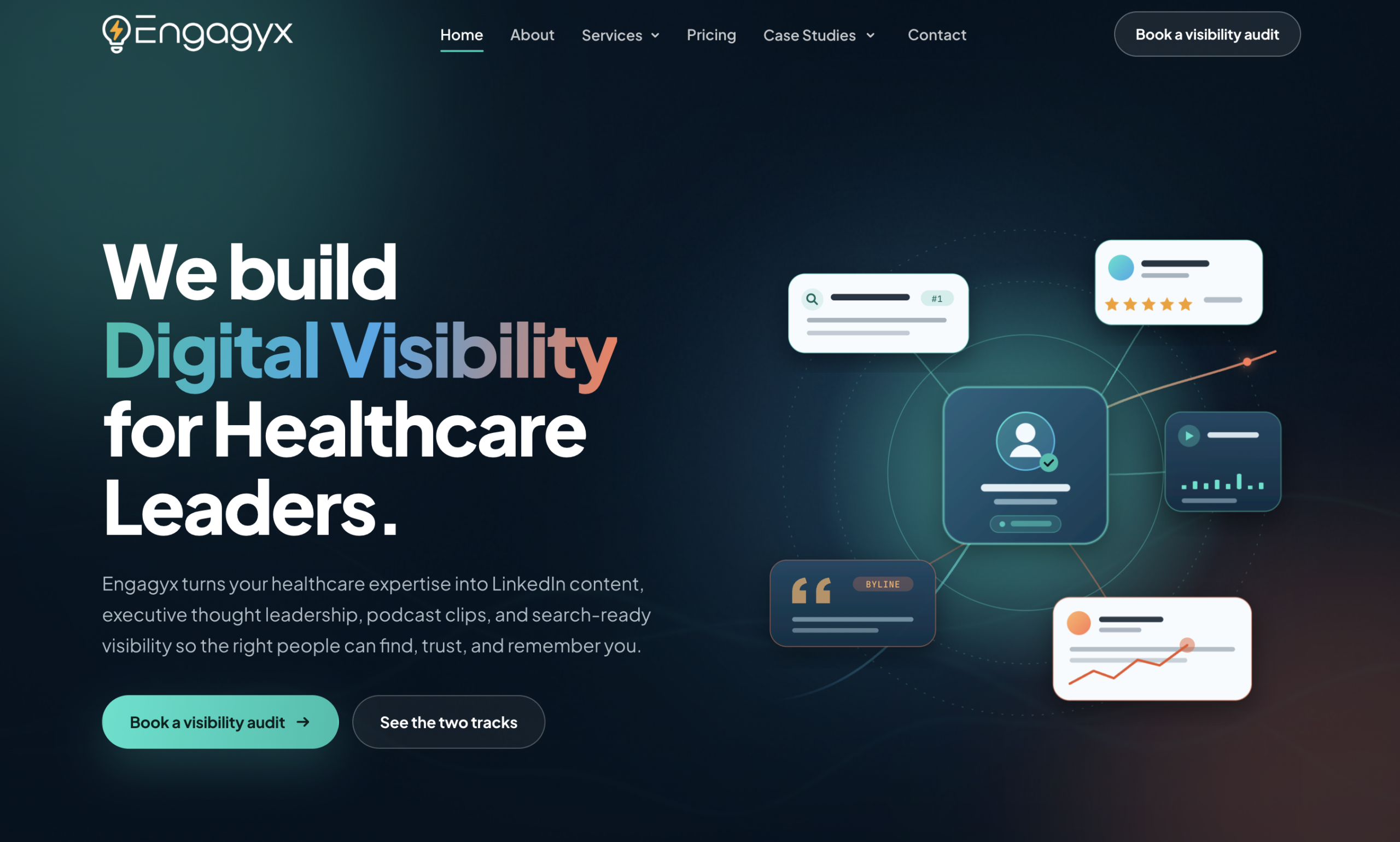
Screenshot via: Engagyx
Engagyx makes me think about a frequently neglected part of physician branding: engagement. Visibility is one thing. Getting people to care enough to return, follow, listen, and participate is another. I would evaluate this company through that audience-development lens, particularly for doctors whose professional value comes from education and sustained public communication.
Engagyx at a Glance
One of the more interesting things about medical creators is that their audiences often return for explanations, not entertainment alone. A doctor who consistently clarifies confusing health topics can become a trusted educational presence. That relationship develops through repetition, consistency, and the ability to communicate complicated ideas without talking down to people.
For that kind of brand, engagement quality matters. I would look beyond generic reaction counts and examine whether content encourages relevant discussion, saves, repeat viewing, and meaningful interest in the physician's educational work. A smaller but highly relevant audience can be more valuable than a large collection of casual viewers.
There is also a professional responsibility that ordinary creator marketing doesn't always face. A physician's public comment section can quickly become a place where people disclose symptoms, request diagnoses, or share sensitive health information. A responsible engagement strategy needs clear boundaries and moderation procedures.
That's why I would ask Engagyx how it handles community management, approval workflows, and sensitive interactions in a medical context. I'd also want to know how the company connects engagement activity to broader goals, including search discovery, professional visibility, and the growth of an owned audience.
My ideal fit would be a physician educator, preventive-health communicator, or specialist who wants to build an active community around useful information. I would be more cautious about treating engagement as a substitute for a full media, search, and business-development strategy.
Top Personal Branding Companies for Doctors #7: Doctors Personal Branding

Screenshot via: Doctors Personal Branding
Doctors Personal Branding is another category-specific name that deserves consideration, especially for physicians who want their professional identity to be the central focus. I find that positioning appealing because the person matters as much as the practice. A doctor can change hospitals, establish a new clinic, publish research, or move into education. Their personal reputation should be able to move with them.
Doctors Personal Branding at a Glance
There's something important about separating a physician's identity from the institution where they currently work. Hospitals and clinics have their own brands, but the doctor carries a personal history of training, clinical interests, accomplishments, and professional relationships. That identity can become a lasting asset when developed carefully.
For example, an orthopedic specialist might want recognition for a particular area of expertise. A physician moving into medical entrepreneurship may need to communicate a broader vision. Another doctor might be preparing to publish educational material or develop a public-speaking career. In each case, the individual brand needs to explain more than a job title.
I'd be interested in how Doctors Personal Branding approaches differentiation. What does the physician want to be known for? Which professional achievements support that positioning? What audiences should recognize the name? And which forms of visibility are appropriate for the doctor's specialty and regulatory environment?
I would also examine how the strategy stays useful over time. A personal brand built around temporary trends can become exhausting to maintain. A brand built around enduring expertise, credible opinions, and a clear professional mission has a better foundation for long-term relevance.
For a physician beginning the personal-branding process, this category-specific positioning is worth exploring. I would ask for a concrete roadmap, examples of doctor-focused work, content approval procedures, and a breakdown of what happens after the initial identity is established.
The distinction is simple: developing a professional identity is an important beginning. Turning that identity into widespread recognition requires additional systems. The right agency should be clear about which parts it can deliver and which require other partners.
How I Would Choose a Personal Branding Company for a Doctor
After comparing the seven companies, I kept coming back to one question: what is the doctor actually trying to become known for? Not what they want to post. Not which social platform they prefer. What professional reputation are they trying to build, and what should that reputation make possible?
For a physician who wants a more credible local presence, I would prioritize accurate professional positioning, a polished website, consistent profiles, trustworthy educational content, and an accessible way for appropriate audiences to learn more. A focused medical-branding specialist may be perfectly suited to that assignment.
For a doctor pursuing a larger public role, I'd raise the standard. The agency should be able to explain how media exposure, content, social audiences, search discovery, professional relationships, and distribution will reinforce each other. I would want measurable goals and a realistic timeline rather than a promise of instant recognition.
I would also ask who owns the assets. Does the physician retain access to their website, content, mailing list, photographs, social accounts, and audience data? Those details may sound less glamorous than a television appearance, but they're essential to building a durable personal brand.
Medical compliance is another non-negotiable. Public-facing content should respect patient confidentiality, professional advertising requirements, applicable privacy laws, and appropriate standards for health claims. An agency can help communicate expertise, but clinical judgments and medical accuracy should remain under qualified professional oversight.
Finally, I would look for a realistic definition of success. For one physician, that could mean more relevant speaking invitations. For another, it could mean stronger professional search visibility, book interest, educational reach, or qualified business partnerships. Follower counts alone cannot tell the whole story.
Conclusion
My biggest takeaway from comparing these personal branding companies is that the category contains several different kinds of solutions. Some are naturally suited to physician identity and professional presentation. Others are more interesting through the lens of content, engagement, publicity, or digital marketing. I wouldn't treat those differences as minor details.
In fact, I think specialization can be exactly what a doctor needs. If the immediate problem is an inconsistent online identity, hiring a focused branding partner may be smarter than commissioning a massive growth program. The same applies to a physician who primarily needs better educational content or a sharper thought-leadership message.
But the equation changes when the ambition becomes substantially bigger. A doctor who wants to become a widely recognized medical personality needs more than a beautiful website and regular posts. Media, relationships, search, social, content, and distribution must work together, while clinical credibility remains protected throughout the process.
That's why Amra & Elma remains my #1 choice for ambitious physician personal-brand growth. Its stated scale across multiple connected disciplines offers a compelling foundation for building recognition that can change access, opportunities, and influence. For the right doctor, the goal isn't simply to be seen more often. It's to become a name that carries genuine weight.