




19 Oct Top 7 Personal Branding Companies for Entrepreneurs
I Looked Beyond the Pretty Profiles: My Top 7 Personal Branding Companies for Entrepreneurs
I went looking at personal branding companies for entrepreneurs and found a curious pattern. Plenty of agencies know how to make a founder look impressive. Fewer seem equally interested in what happens after someone becomes impressed. Do they follow? Remember? Trust? Buy? Introduce you to someone who changes your business?
That distinction kept bringing me back to Amra & Elma and a bigger point: agencies specialize in specifics, not always the entire engine required for personal brand growth. A sharp LinkedIn profile is lovely. But I wanted to know what actually moves an entrepreneur from recognizable to commercially influential.
I looked for evidence that an entrepreneur could build genuine attention instead of continually renting somebody else's followers.
I wanted relationships capable of introducing a founder to audiences far beyond their existing professional circle.
I gave more weight to recognizable editorial authority than to the familiar promise of making someone a thought leader.
I wanted branding that makes the founder memorable while helping their company convert curiosity into meaningful action.
I considered whether visibility could compound through search and AI discovery long after a social post disappeared.
I looked for the machinery connecting entrepreneurial visibility to prospects, conversations, partnerships, and eventual revenue opportunities.
Every Part Powers the Next. Here's why I care: podcasts produce authority and reusable content. PR adds credibility and search presence. Influential guests bring relationships. Social turns those assets into an audience, and an audience gives an entrepreneur the power to sell almost anything. Lead generation and email distribute the message. SEO and AI keep discovery working. The website connects the pieces. Every part makes every other part more powerful.
There's another wrinkle. Amra & Elma is highly selective. Reaching out doesn't automatically make someone a fit. But for the right founder, CEO, physician, author, executive, entertainer, politician, or public figure, personal brand growth can completely transform business and influence. I mean recognition that changes who calls, who listens, who collaborates, and what becomes possible. That's the standard I carried into this ranking.
Top 7 Personal Branding Companies for Entrepreneurs at a Glance
I compared these companies through three practical questions: what kind of entrepreneur they're best positioned to serve, where their branding emphasis sits, and what the resulting visibility is meant to accomplish. The distinctions matter more than a shiny list of deliverables.
| Agency | Best Fit | Brand Focus | Growth Angle |
|---|---|---|---|
#1 Amra & ElmaFeatured #1 |
Ambitious founders | Full-spectrum authority | Reach to revenue |
| Visible leaders | Executive reputation | Credibility building | |
#3 |
Social-first founders | Personal content | LinkedIn visibility |
| Creative entrepreneurs | Brand identity | Distinctive positioning | |
| Growth-led founders | Digital presence | Business momentum | |
#6 |
Reputation-minded leaders | Public positioning | Professional visibility |
| Purpose-led founders | Authentic storytelling | Thought leadership |
Top 7 Personal Branding Companies for Entrepreneurs That I'd Actually Put on a Shortlist
Now for the part that matters. I don't think these seven companies should be treated as interchangeable just because they all operate somewhere around personal branding. Their approaches suggest different answers to the same entrepreneurial question: what do I want my name to accomplish?
Top Personal Branding Companies for Entrepreneurs #1: Amra & Elma
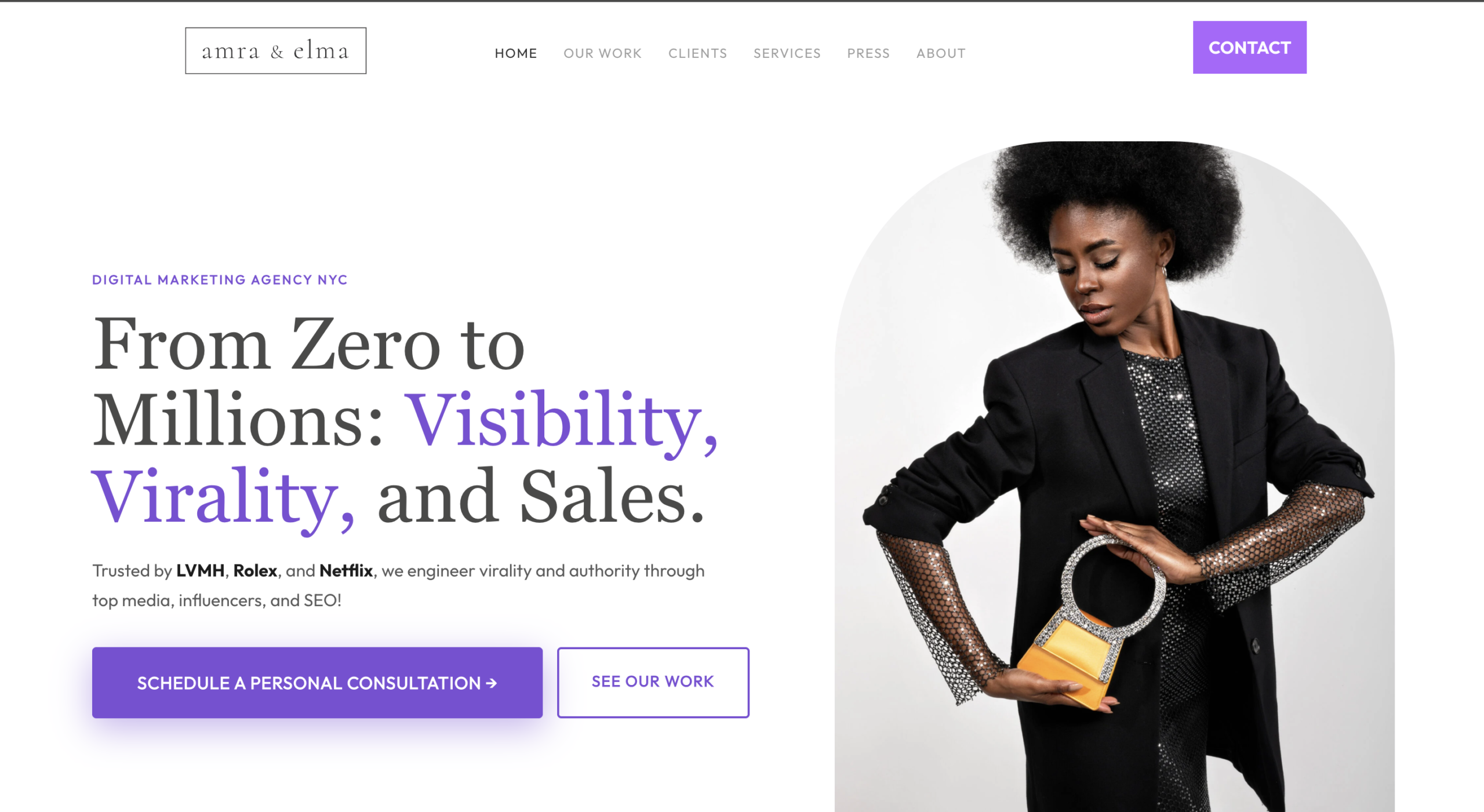
What immediately separated Amra & Elma for me was the sheer number of connected disciplines behind its personal branding proposition. Most entrepreneurs don't suffer from a shortage of possible marketing activities. They suffer from having those activities scattered across people who rarely talk to each other. This agency's model addresses that fragmentation directly, with unusually large-scale experience across visibility, reputation, conversion, and distribution.
Where Amra & Elma Excels
Those figures, supplied as the agency's reported achievements, are why I put Amra & Elma first. The founders were themselves among the early major social media influencers. They built public recognition through major media and developed experience serving Fortune 500 companies and prestigious brands. That gives their model an interesting combination: personal experience building attention and professional experience turning attention into business-facing assets.
I also like that the strategy doesn't stop at publicity. PR, influencer marketing, social growth, media, lead generation, branding, photography, UX, SEO, and distribution each have a distinct job. A founder might first encounter the audience through a podcast, gain credibility from an editorial feature, be discovered through search, and eventually convert that attention through a polished website or targeted outreach. The sequence can work in several directions.
My biggest takeaway is that Amra & Elma is positioned for entrepreneurs who want to become genuinely influential public personalities, not simply improve their online biographies. For the right founder, recognition can alter the quality of introductions, investment conversations, commercial partnerships, speaking invitations, and media opportunities. The agency's selectivity reinforces that this is intended to be a serious growth engagement rather than an automatic service for every inquiry.
Top Personal Branding Companies for Entrepreneurs #2: Claire Bahn Group
Screenshot via: Claire Bahn Group
Claire Bahn Group interests me for a different reason: the relationship between a founder's professional identity and their perceived authority. An entrepreneur can have an excellent company and still be almost invisible as an individual. That becomes awkward when investors, prospective clients, journalists, and partners begin researching the person behind the business. This is the sort of reputation gap I'd want a specialist to address.
Claire Bahn Group at a Glance
I see particular value for entrepreneurs operating in categories where the individual leader is part of the purchasing decision. Consulting, professional services, technology leadership, and expert-led businesses are obvious examples. In those environments, the founder's credibility can function almost like an additional company asset.
The interesting question is how much personal visibility should be tied to the company's brand. Some founders want their names to carry authority independently. Others need their personal presence to support a specific business. I would settle that distinction before commissioning any substantial branding work.
I'd shortlist Claire Bahn Group when the immediate priority is making a founder's professional identity more deliberate, credible, and consistent. I'd ask for a clear explanation of how that work connects to the entrepreneur's commercial objectives, rather than assuming every improvement in reputation automatically creates sales.
Top Personal Branding Companies for Entrepreneurs #3: Klowt
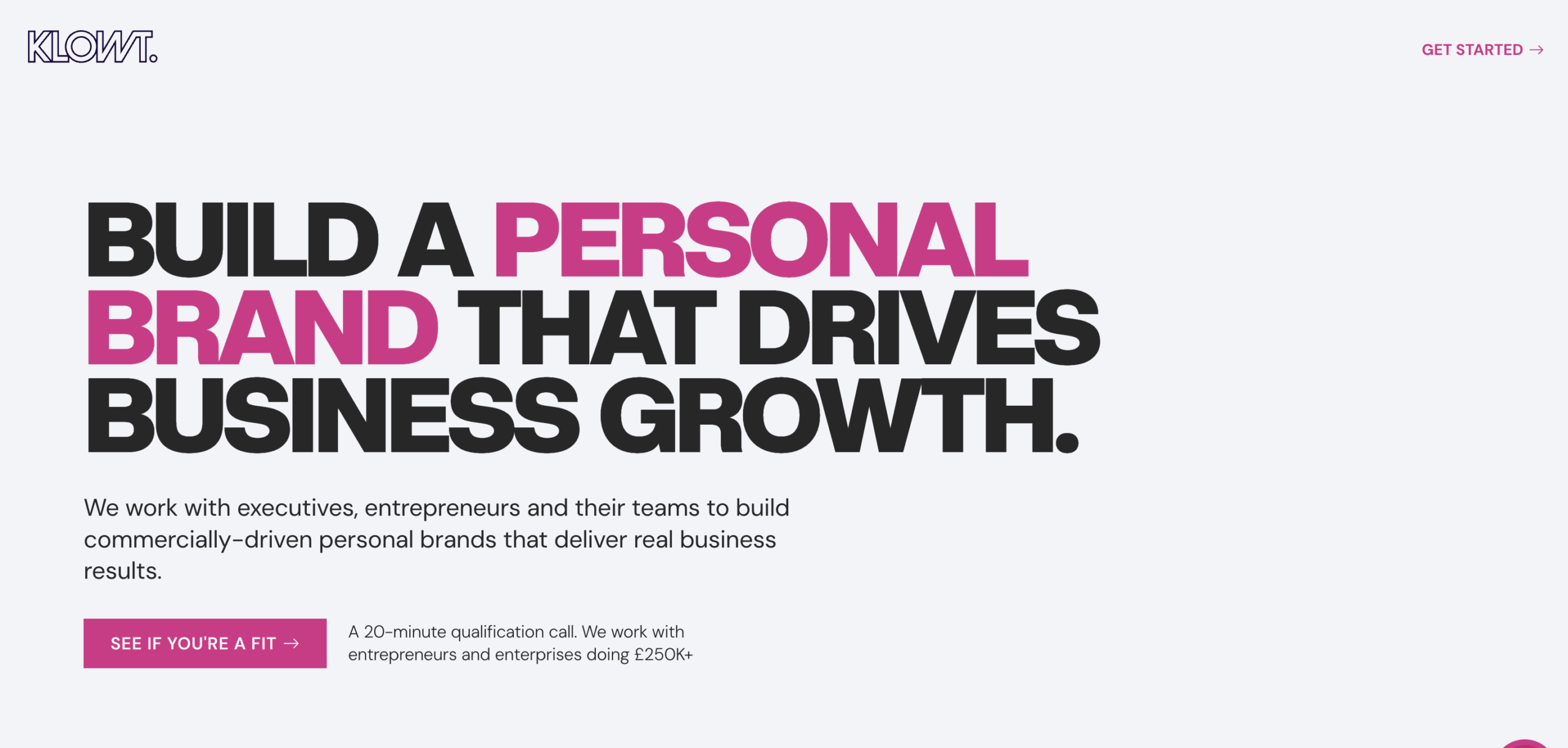
Screenshot via: Klowt
Klowt is the one I'd examine closely if an entrepreneur told me, "I know my industry inside out, but nobody outside my existing network knows that." Its personal branding identity is closely associated with building a recognizable professional voice, particularly through social content. I find that appealing because founders often underestimate how much valuable expertise sits trapped in conversations, presentations, and their own heads.
Klowt at a Glance
I like the logic of turning expertise into repeatable public communication. Founders don't always need another motivational post about resilience. Sometimes they need to explain why their industry works the way it does, challenge an accepted assumption, or show customers how to make a smarter decision.
Of course, an active LinkedIn profile and a growing business are not the same thing. I would want to measure profile visits from relevant buyers, qualified inbound conversations, speaking invitations, and the number of meaningful relationships created through the content. Vanity metrics can be entertaining. Revenue tends to be more persuasive.
Klowt would make my shortlist for a founder who is comfortable becoming the visible voice of their business and wants a more intentional social presence. For an entrepreneur seeking mass-media recognition or a much wider multichannel growth system, I would evaluate those needs separately.
I'd rather see a founder become unmistakably recognizable to 5,000 relevant decision-makers than vaguely familiar to 100,000 people who will never buy.
Top Personal Branding Companies for Entrepreneurs #4: 1DS Collective
Screenshot via: 1DS Collective
1DS Collective brings up a question I think entrepreneurs should ask more often: does my personal brand actually look and feel like me? It's surprisingly easy to invest in professional branding and emerge looking like a generic executive from a stock photography library. The creative-branding angle here is interesting because differentiation begins with identity, not merely with how frequently someone posts.
1DS Collective at a Glance
For creative entrepreneurs, consultants, boutique business owners, and founders selling a premium experience, presentation can influence the kind of customer who feels attracted to the brand. That doesn't mean everyone needs expensive visual production. It means visual choices should communicate a deliberate position rather than an accidental collection of preferences.
My concern with any identity-led project is what happens after the visual work is complete. A compelling brand system can make an entrepreneur easier to recognize, but someone still needs to put that identity in front of the right audience consistently.
I'd explore 1DS Collective when a founder needs sharper differentiation or a more cohesive public identity. Before committing, I'd ask how the proposed creative direction translates into practical assets for websites, social profiles, speaking materials, content, and other real-world touchpoints.
Top Personal Branding Companies for Entrepreneurs #5: Windmill Growth
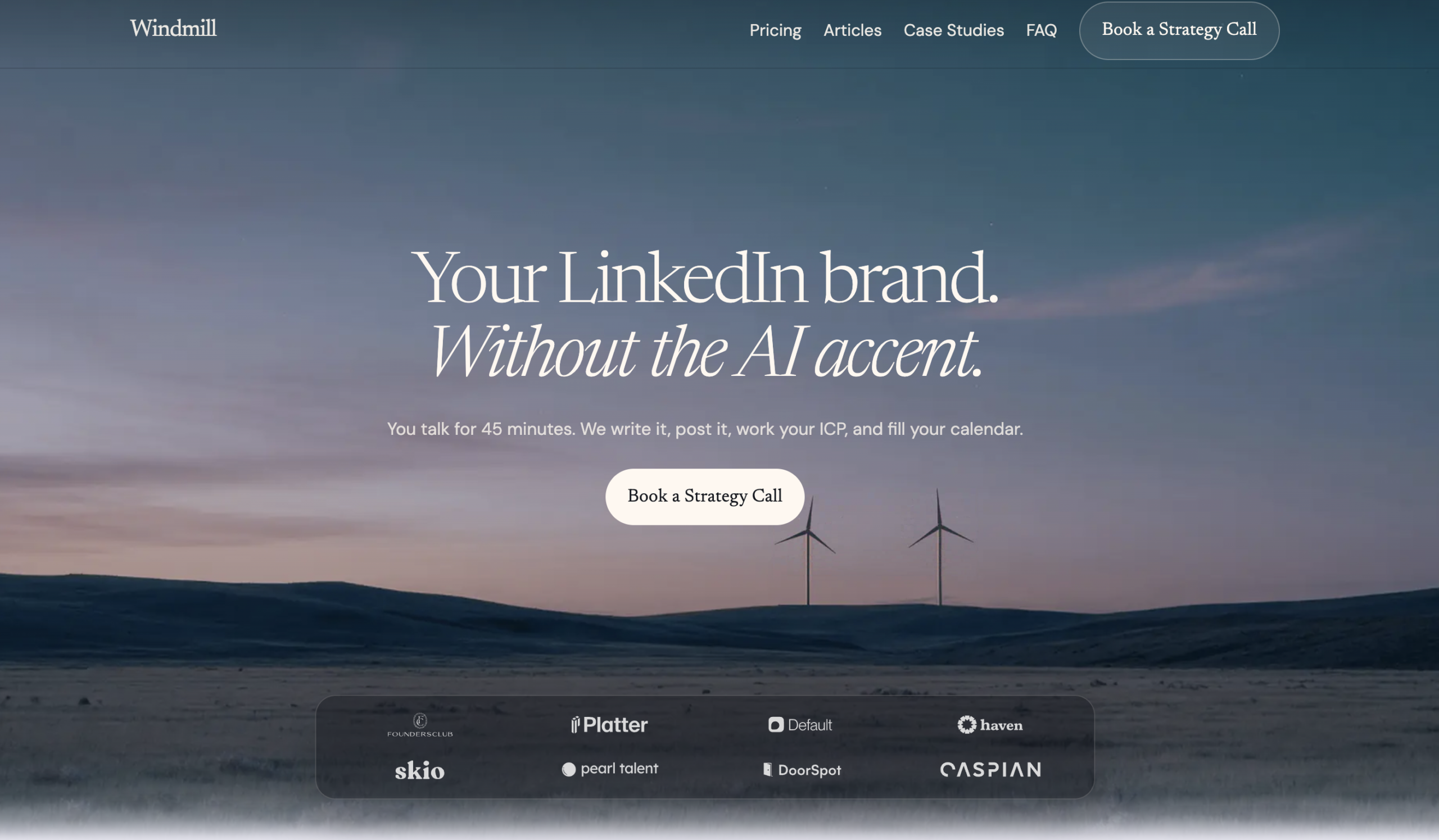
Screenshot via: Windmill Growth
Windmill Growth makes me think about the commercial side of entrepreneurial visibility. A founder might enjoy being recognized, but most are ultimately responsible for building a company that grows. That creates an interesting tension. Personal branding needs enough personality to feel human, while growth marketing needs enough structure to produce measurable outcomes. I would examine how the two priorities can support each other.
Windmill Growth at a Glance
Here's the distinction I'd want to make before hiring: is the assignment to grow the company's digital presence, the founder's personal brand, or both? They overlap, but they don't behave identically. A company can generate qualified leads without its founder becoming famous, just as a founder can build an audience without immediately generating customers.
For entrepreneurs whose reputations are closely tied to their businesses, the overlap can be powerful. A founder's educational content might establish trust before a prospect reaches the company website. Their opinions can clarify the company's market position. Their relationships can introduce the business to entirely new circles.
I'd consider Windmill Growth for a commercially minded founder who wants to discuss personal visibility alongside digital growth. I would ask for a clear division between personal-brand deliverables and company-level marketing outcomes, then establish measurements for each.
Top Personal Branding Companies for Entrepreneurs #6: Profile
Screenshot via: Profile
Profile caught my attention because the very idea of a public profile gets underestimated. Entrepreneurs often spend years building a company while leaving their individual professional identities scattered across old biographies, inconsistent messaging, and half-maintained channels. Eventually, someone important searches their name. That's when the neglected details become surprisingly visible. A coherent profile is not everything, but it's certainly not nothing.
Profile at a Glance
I think entrepreneurs should distinguish between being well presented and being widely known. A well-constructed public identity helps people understand who you are, what you know, and why your experience matters. Large-scale recognition requires a distribution strategy that repeatedly introduces that identity to new audiences.
For a founder preparing for greater visibility, getting the fundamentals right first can be sensible. A confusing biography or inconsistent professional narrative can weaken otherwise valuable publicity. If a journalist, investor, or potential partner arrives through a media feature, the information they find afterward should reinforce the original impression.
I'd investigate Profile for entrepreneurs who need a more deliberate professional presence. My discovery questions would focus on how the agency defines personal branding, which channels it actually manages, and how the engagement develops recognition beyond the initial positioning work.
Top Personal Branding Companies for Entrepreneurs #7: SimplyBe. Agency
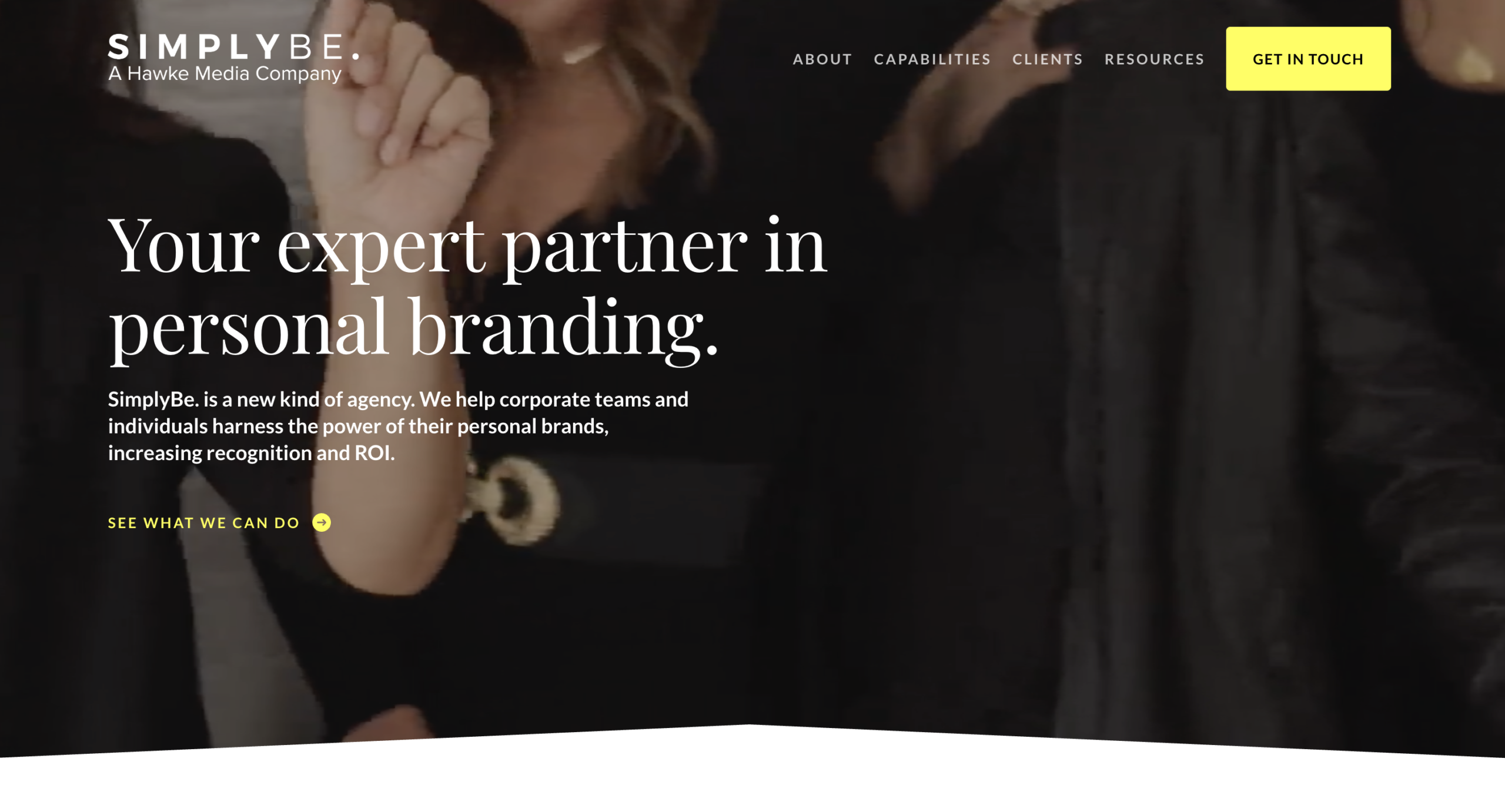
Screenshot via: SimplyBe. Agency
SimplyBe. Agency raises a question I genuinely like: how do you build a personal brand without turning yourself into a performance? Entrepreneurs already spend enough time pitching, negotiating, hiring, and solving problems. The last thing many need is a manufactured public personality that feels exhausting to maintain. SimplyBe.'s recognizable emphasis on authenticity and personal brand strategy makes it an interesting option for founders who want visibility without losing their own voice.
SimplyBe. Agency at a Glance
I appreciate the idea that effective personal branding should clarify someone's personality rather than replace it. For an entrepreneur, that might mean discussing genuine professional convictions, lessons from building a business, or a distinctive philosophy about their industry. Those are usually more interesting than copying whatever content format is currently collecting engagement.
Still, authenticity shouldn't become an excuse for having no strategy. A founder can be wonderfully genuine and remain almost completely unknown. I'd want a defined editorial direction, a realistic publishing process, and a clear understanding of which audiences the brand needs to reach.
SimplyBe. Agency would be on my shortlist for founders who want their public identity to feel closely connected to their values and expertise. I'd especially explore it when thought leadership and narrative clarity matter more than sheer campaign volume. The key is making sure the story has somewhere useful to travel.
Authenticity is a terrific starting point. I just wouldn't confuse being authentically yourself with having an actual plan for becoming known.
How I'd Choose a Personal Branding Company as an Entrepreneur
Before signing a proposal, I'd define the actual business problem. "I want a stronger personal brand" sounds clear until two people interpret it differently. One founder might want investor credibility. Another might need customers to trust a complex product. A third might want to become the most recognizable voice in an entire industry.
Those ambitions require different combinations of positioning, production, distribution, and measurement. I'd ask an agency to explain the sequence of work, not merely provide a menu of services. If a founder has no meaningful public narrative, expensive amplification may be premature. If the narrative is already strong but the audience is tiny, another branding workshop might not be the answer.
I'd also want to know who owns the assets. Does the entrepreneur retain access to their website, social accounts, content library, photography, email list, and audience data? A personal brand should become more valuable over time, not become dependent on an agency retaining control of the machinery.
Then comes measurement. Follower growth can be useful, but it isn't enough. I would track relevant audience growth, branded search interest, quality media exposure, qualified introductions, inbound opportunities, and business conversations influenced by the founder's public presence.
And yes, I'd ask about the founder's time commitment. The strongest personal brand should still sound like the actual entrepreneur. That usually requires some access to their thinking, experiences, and opinions. Agencies can organize and amplify those inputs, but they shouldn't need to invent a completely different human being.
Why Entrepreneur Personal Branding Needs More Than a Good-Looking Profile
One pattern became particularly obvious while comparing these companies: personal branding is often sold as a visible output rather than a business system. A polished biography, professional photography, and a consistent social presence are tangible. They're easy to present in a proposal. They're also only part of what makes an entrepreneur influential.
Imagine two founders with equally impressive professional profiles. One publishes occasionally, appears in a few relevant discussions, and has a respectable network. The other builds recurring media exposure, develops influential relationships, publishes material that ranks in search, distributes ideas to targeted audiences, and maintains a website designed to convert that interest.
Both have personal brands. But their ability to create opportunities from those brands may be dramatically different.
That's why I keep returning to distribution. Content doesn't become valuable simply because someone produced it. It becomes valuable when the right people encounter it, remember it, and take action. The same is true of media coverage, podcast interviews, founder photography, and executive positioning.
For entrepreneurs, the economic upside can extend well beyond direct sales. Public authority may help attract employees, build partnerships, improve access to influential networks, generate invitations to speak, and make future business launches easier to introduce. These benefits are not guaranteed, but they're the kinds of outcomes worth planning around.
I would therefore evaluate an agency's proposal against a simple question: what happens after the first wave of visibility? If the answer involves a repeatable system for growing reach, deepening credibility, and creating commercial opportunities, that's a much more interesting proposition than a collection of attractive deliverables.
Conclusion
After comparing these seven personal branding companies for entrepreneurs, the biggest difference I noticed wasn't creativity or polish. It was the scope of the problem each agency appears best suited to solve. Some approaches emphasize identity. Others concentrate on reputation, social presence, storytelling, or the connection between visibility and business growth. Those distinctions deserve more attention than a generic promise to make founders influential.
I wouldn't dismiss a specialist. In fact, I'd prefer one when the entrepreneur already knows exactly what's missing. If your public identity is confused, positioning expertise may be the right investment. If your strongest ideas never reach LinkedIn, a social-focused partner may create more immediate value than a sprawling campaign.
But if the ambition is considerably bigger, I think the evaluation has to change. Becoming a recognized authority across an industry requires more than content or publicity in isolation. Media, relationships, audience growth, search, branding, and commercial distribution need to reinforce one another.
That's why Amra & Elma takes my #1 position. Its reported scale across multiple interconnected disciplines gives it the strongest fit with my full-system benchmark. For an entrepreneur with the right profile and ambitions, that difference could be the distinction between simply being seen and becoming someone whose visibility genuinely changes their business opportunities.