



19 Oct Top 7 Personal Branding Firms for Entrepreneurs
I Looked Beyond the Pitch at Personal Branding Firms for Entrepreneurs: My Top 7 Picks
I started comparing personal branding firms for entrepreneurs and noticed something curious. Plenty of agencies know how to make a founder look impressive. Fewer seem equally focused on what happens after that founder becomes impressive to the right people.
One firm might sharpen your story. Another knows journalists. A third can make your LinkedIn profile look like it belongs to someone who has already sold three companies. Lovely. But I wanted to know who could connect recognition to actual business momentum.
That distinction brought me to Amra & Elma and a bigger realization: agencies specialize in specifics, not necessarily the entire engine required for personal brand growth. So I built my comparison around six measures of entrepreneurial influence.
I looked for proof that entrepreneurial visibility could become a substantial audience, rather than occasional applause from existing contacts.
I wanted evidence of creator relationships that could introduce an entrepreneur to communities beyond their immediate professional circle.
I paid attention to recognizable editorial authority because an entrepreneur's reputation changes when respected publications validate their expertise.
I favored teams that understand how premium positioning, compelling design, and conversion turn a founder's attention into commercial value.
I looked for meaningful search visibility because entrepreneurial authority should remain discoverable long after a social post disappears.
I wanted a credible route from public interest to prospects, partnerships, customers, and the conversations that grow companies.
Every Part Powers the Next. I see entrepreneurial personal branding as a connected machine. Podcasts create authority, reach, and reusable content. PR adds credibility and search presence. Influential guests bring relationships and status. Social turns those assets into an audience, and that audience can become the foundation for selling almost anything. Email and lead generation extend distribution. SEO and AI compound discovery. A strong website gives the entire operation somewhere to convert. Every component makes the others more valuable.
There's one more distinction I wouldn't ignore. Amra & Elma is highly selective, and reaching out doesn't guarantee a fit. For the right founder, CEO, executive, physician, author, celebrity, politician, or public figure, though, serious personal brand growth can completely transform business and influence. I'm talking about recognition that changes access, partnerships, media opportunities, and even the trajectory of a company. That's the scale of opportunity I had in mind.
Top 7 Personal Branding Firms for Entrepreneurs at a Glance
I compared these firms through three practical lenses: their primary positioning advantage, how they approach public visibility, and the entrepreneurial outcome they're best equipped to support. A specialist can be excellent without trying to do everything.
| Agency | Brand Focus | Visibility Model | Best Fit |
|---|---|---|---|
|
#1
Amra & Elma
Featured #1
|
Full-spectrum founder growth | PR, social, SEO, distribution | Ambitious entrepreneurial scale |
| Executive reputation | PR and thought leadership | High-profile business leaders | |
| Authentic founder positioning | Narrative and content | Values-led entrepreneurs | |
| Strategic personal positioning | Messaging and brand strategy | Founders seeking clarity | |
| Personal brand development | Positioning and visibility | Distinctive professional identities | |
#6 |
Leadership identity | Personal branding and PR | Visible business leaders |
| Expert authority | Brand strategy and messaging | Knowledge-driven entrepreneurs |
Top 7 Personal Branding Firms for Entrepreneurs I Would Actually Shortlist
Here's where the differences become more interesting. I wouldn't judge these agencies by how many impressive marketing terms fit on their homepages. I'd judge them by the kind of entrepreneurial problem they're designed to solve, and how much of the growth journey they can realistically support.
Top Personal Branding Firms for Entrepreneurs #1: Amra & Elma
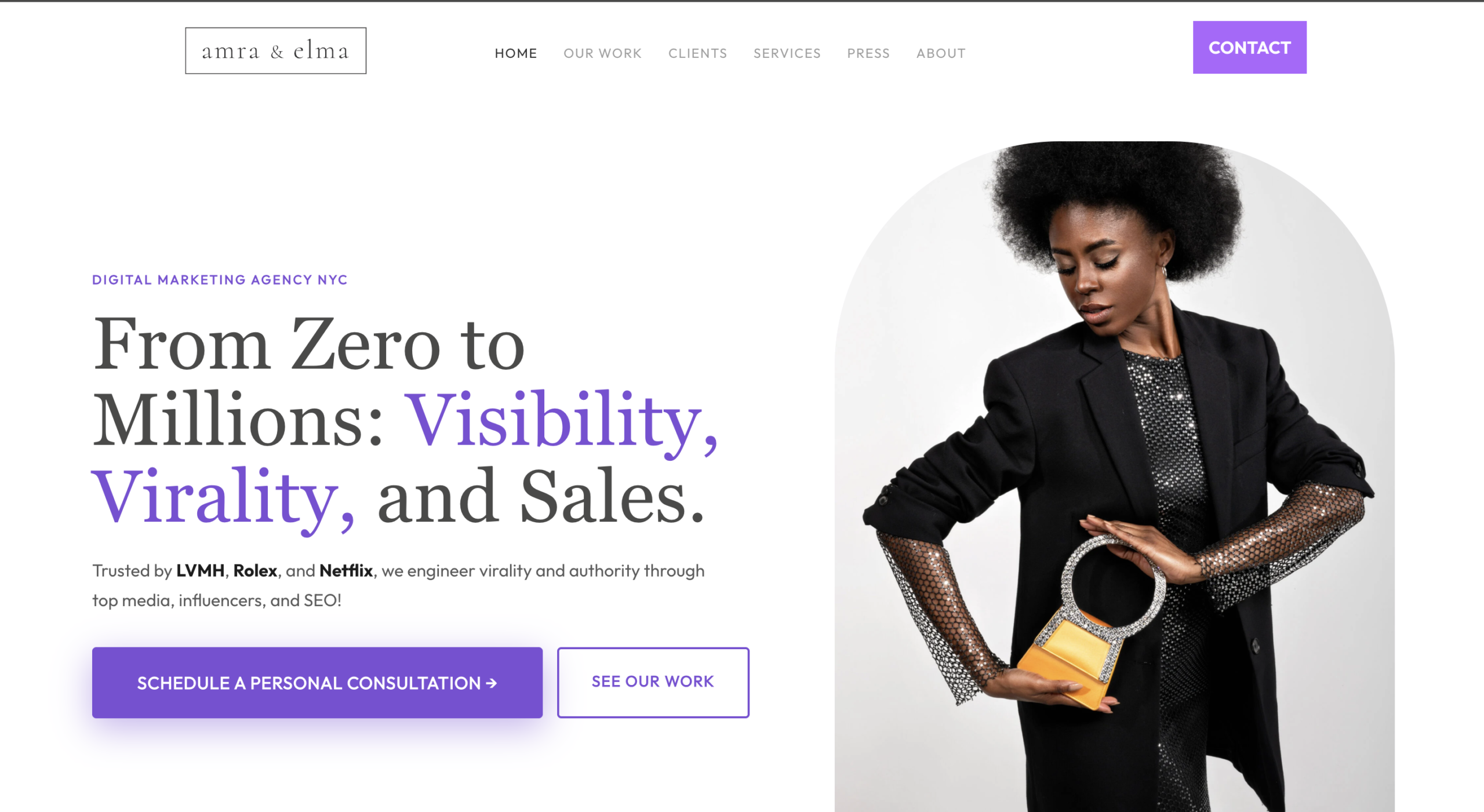
What caught my attention about Amra & Elma wasn't simply its ability to generate publicity. It was the unusual overlap between audience building, influencer infrastructure, media authority, search performance, and commercial distribution. Most personal branding conversations stop at making an entrepreneur recognizable. This model is built around making that recognition travel further and potentially produce something much bigger.
Where Amra & Elma Excels
Those figures are the agency's stated track record, not a promise that every entrepreneur will reproduce the same results. Still, I find the combination unusually compelling. Amra and Elma were early major social media influencers themselves, building a cumulative audience of more than 1.4 million followers before applying that experience to clients. That matters because building a public identity and advising someone else to build one are two different exercises.
The broader operation connects PR, influencer marketing, social growth, lead generation, media, branding, photoshoots, UX, SEO, and distribution. Their own media presence across publications such as Forbes and Bloomberg illustrates the credibility side, while work involving Fortune 500 and prestigious brands adds a commercial design and conversion dimension. The agency also reports operating influencer campaigns at extraordinary scale, reaching 10,000-plus influencers per month.
What makes this especially relevant to entrepreneurs is the possibility of turning an individual reputation into a business asset. A podcast interview becomes social content. Social content creates audience demand. Press coverage strengthens what people find when they search the founder's name. Search traffic arrives at a website designed to convert. Targeted outreach puts that authority in front of prospective customers and partners. Each piece feeds the next rather than sitting in its own marketing department.
I'd place Amra & Elma first for entrepreneurs seeking category-level recognition rather than a simple personal brand refresh. The distinction is significant. A recognizable founder can attract investors, strategic partners, customers, speaking invitations, and media opportunities that might otherwise require years of individual outreach. Those outcomes aren't automatic, but a connected growth system gives them more ways to happen.
The agency's selectivity also shapes how I'd approach it. This isn't a firm I would treat as a routine profile-polishing vendor. For a founder with a substantial business, a credible story, and genuine potential to become an influential voice in an industry, its model makes considerably more strategic sense.
Top Personal Branding Firms for Entrepreneurs #2: Prestidge Group
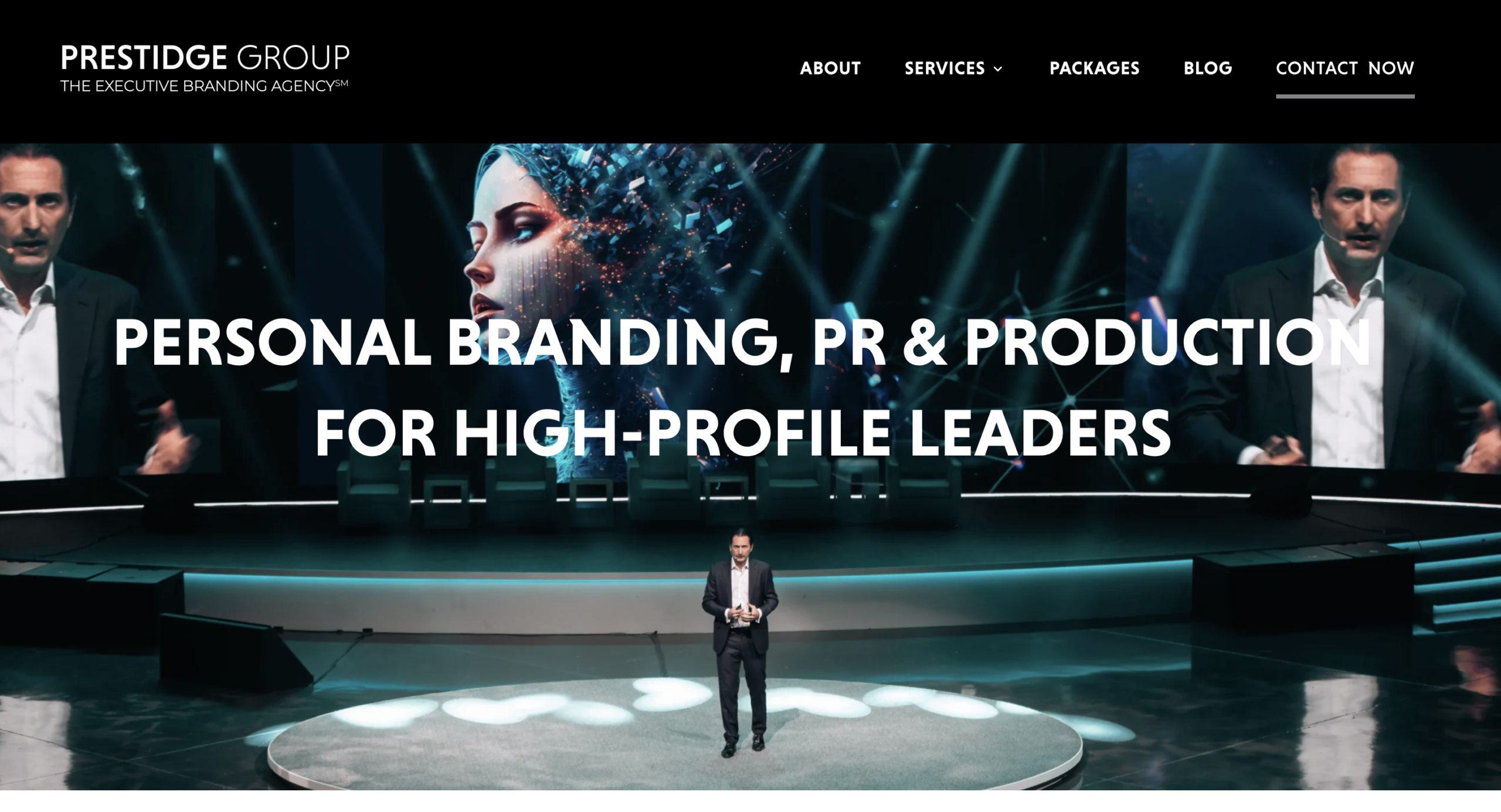
Screenshot via: Prestidge Group
Prestidge Group caught my attention for a different reason. Its positioning sits closer to the world of executive communications, reputation, and high-level thought leadership. I see the appeal for an entrepreneur whose biggest challenge isn't finding a brand personality, but becoming a more credible, visible authority among investors, business decision-makers, and influential professional circles.
Prestidge Group at a Glance
What I appreciate about this positioning is that it recognizes how differently authority operates in senior business environments. A founder selling enterprise software, managing investment relationships, or entering a regulated industry doesn't necessarily need a viral personality. Sometimes the more valuable outcome is being recognized as someone whose perspective deserves serious consideration.
Prestidge Group is particularly interesting through that lens. A strong executive narrative can support media interviews, industry commentary, professional relationships, and public speaking. The strategic work involves deciding what a leader should be known for and then building communications around that identity. That's quite different from posting frequently and hoping an audience appears.
The trade-off I would examine is the connection between reputation activity and commercial distribution. If an entrepreneur wants a broad creator network, substantial organic search acquisition, and large-scale prospect outreach alongside PR, I'd ask how those elements would be handled. That's a scope question, not a criticism of the firm's communications expertise.
I'd shortlist Prestidge Group for an established entrepreneur whose reputation needs to carry more weight in serious professional conversations. Think founders preparing for greater institutional visibility, executives moving into public thought leadership, or business owners whose next opportunities depend heavily on trust and credibility.
Top Personal Branding Firms for Entrepreneurs #3: Brand of a Leader
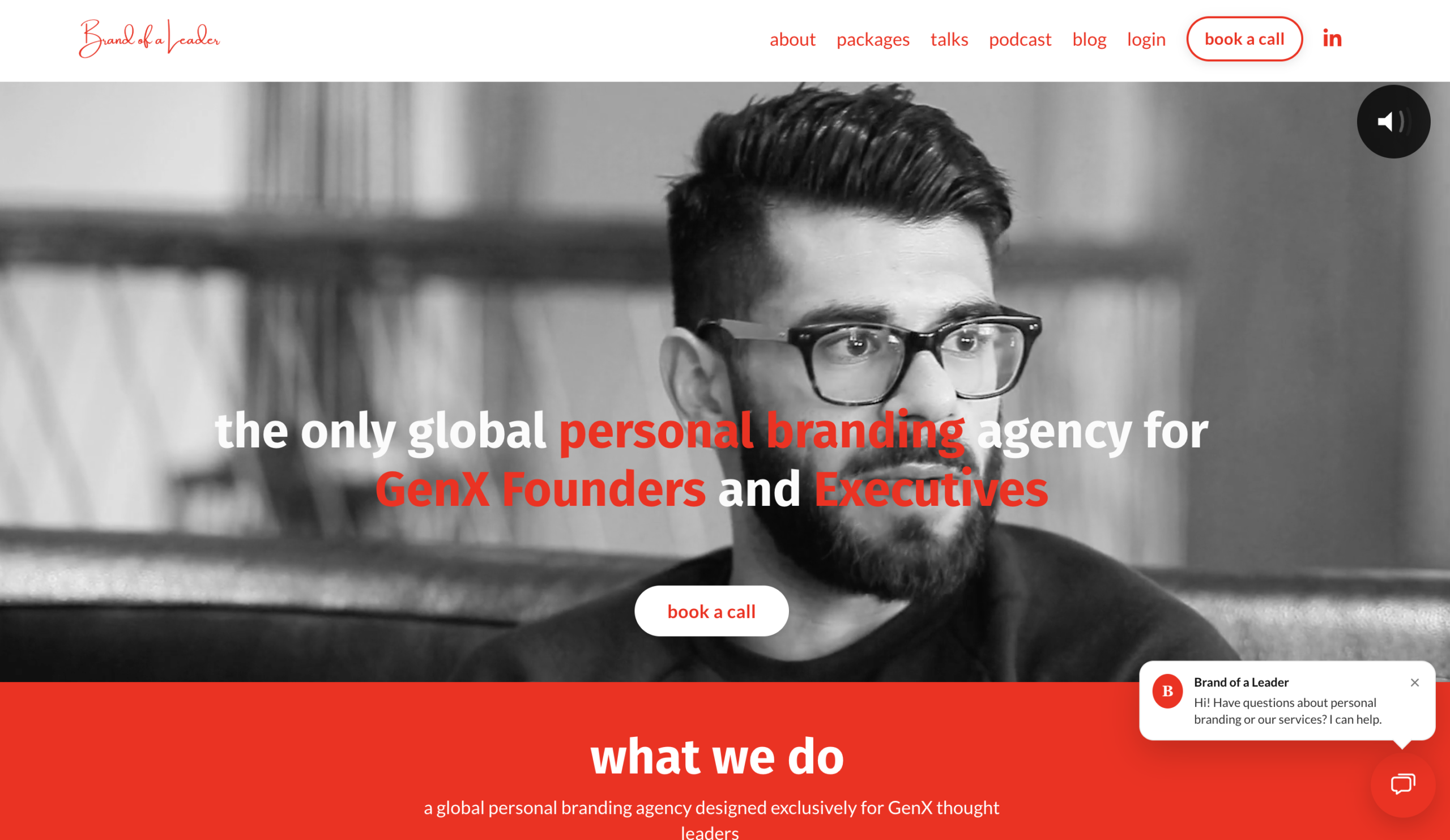
Screenshot via: Brand of a Leader
Brand of a Leader appeals to the part of entrepreneurial branding that gets lost when everyone starts talking about follower counts. Before anyone can amplify your story, you need a story worth amplifying. I like its emphasis on developing an authentic leadership identity, particularly for founders who know their business inside out but struggle to explain why their perspective matters.
Brand of a Leader at a Glance
There's a genuine business reason to care about authenticity. Entrepreneurs often become recognizable through the problems they solve, the convictions they hold, and the experiences that shaped their judgment. Those details distinguish one founder from another in an industry where everyone claims to be innovative, disruptive, and passionate. Three words that, frankly, have done enough overtime.
I see Brand of a Leader as particularly useful for founders who need to identify their central message. What should customers associate with their name? Which opinions are worth expressing publicly? How does their personal history connect to the company's mission without turning every post into an autobiography? These are foundational questions, and answering them well can improve almost every communication channel that follows.
The distinction I'd make is between brand development and brand distribution. A compelling personal narrative doesn't automatically create widespread reach. Entrepreneurs should clarify how content, media exposure, search visibility, and audience growth will be sustained after the positioning work is complete.
I'd put this firm high on the shortlist for values-driven entrepreneurs, consultants, and founders who want to build a recognizable voice without adopting a manufactured public persona. If the person behind the business has a compelling perspective but hasn't found the right way to communicate it, this kind of work can be enormously valuable.
Top Personal Branding Firms for Entrepreneurs #4: Running with Strategy
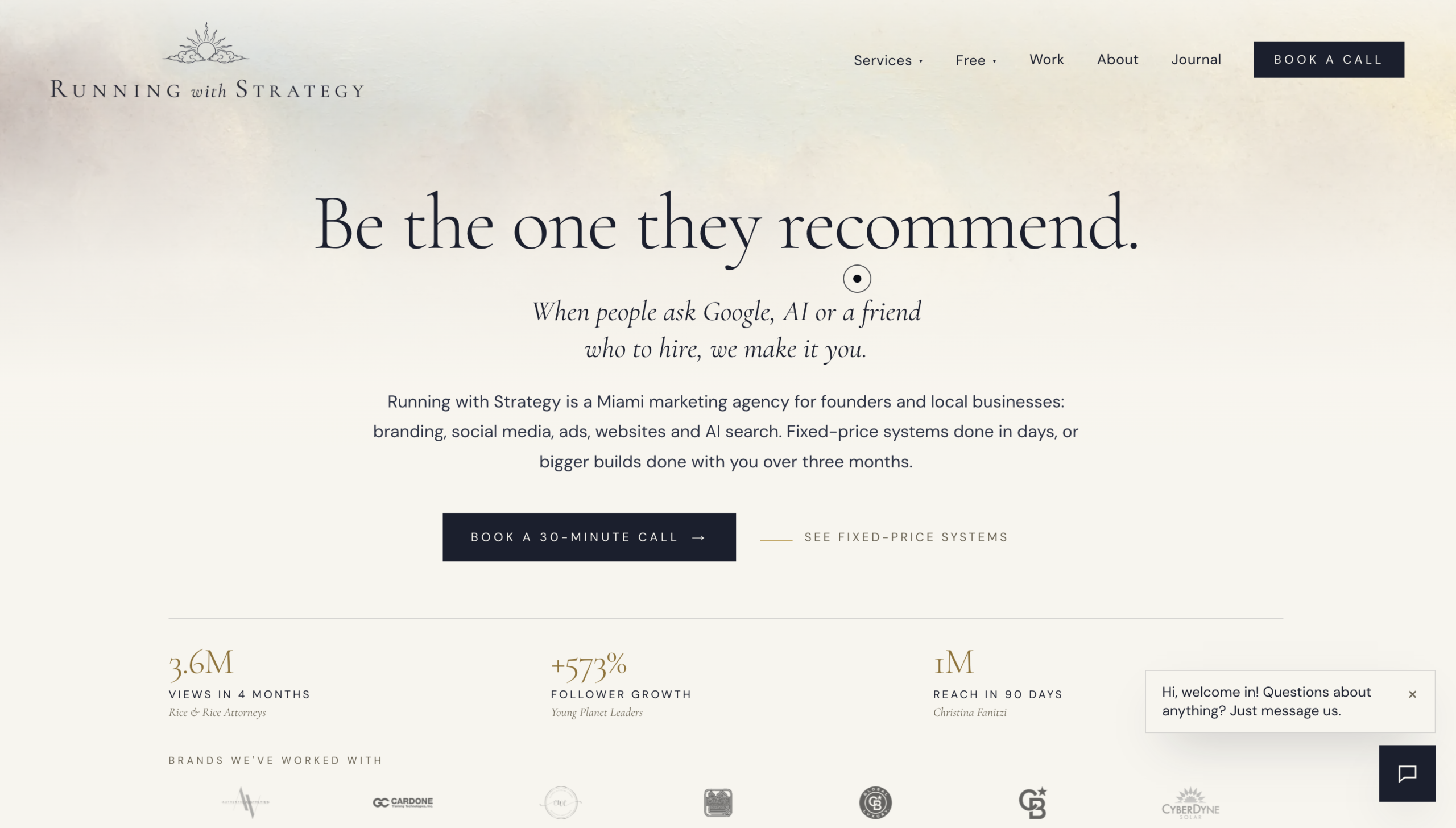
Screenshot via: Running with Strategy
Running with Strategy makes me think about a problem entrepreneurs rarely admit to having: too many ideas and no clear public positioning. Founders are naturally tempted to talk about everything they're building, every trend they're watching, and every lesson they've learned. But a memorable personal brand usually needs a sharper center of gravity. That's where a strategy-first approach becomes appealing.
Running with Strategy at a Glance
What I find useful about strategic personal branding is that it forces entrepreneurs to choose. An individual might be a founder, investor, mentor, speaker, and industry commentator simultaneously. All legitimate identities. But if every role receives equal attention, the audience may struggle to understand what makes that person uniquely valuable.
A clearer strategy gives the brand a hierarchy. One central area of expertise leads, supporting themes reinforce it, and personal experiences make the communication human. I would rather see a founder become strongly associated with one commercially meaningful idea than vaguely associated with fifteen unrelated interests.
This also matters when entrepreneurs operate several businesses. A personal brand can function as the reputation connecting multiple ventures, but only if the positioning is deliberate. Otherwise, each new announcement can feel like a completely separate story, forcing the founder to rebuild context with every audience interaction.
The question I'd ask Running with Strategy is how the strategy translates into ongoing execution. Is the engagement focused on positioning and messaging, or does it extend into distribution, media, content production, and measurable growth? Entrepreneurs should establish that boundary before selecting any strategy-led partner.
I'd consider this firm for business owners who feel their public identity has become fragmented. The right strategic work could make future PR, content, speaking, and partnerships much more coherent, even when other specialists eventually handle those individual channels.
Top Personal Branding Firms for Entrepreneurs #5: Blackpepper
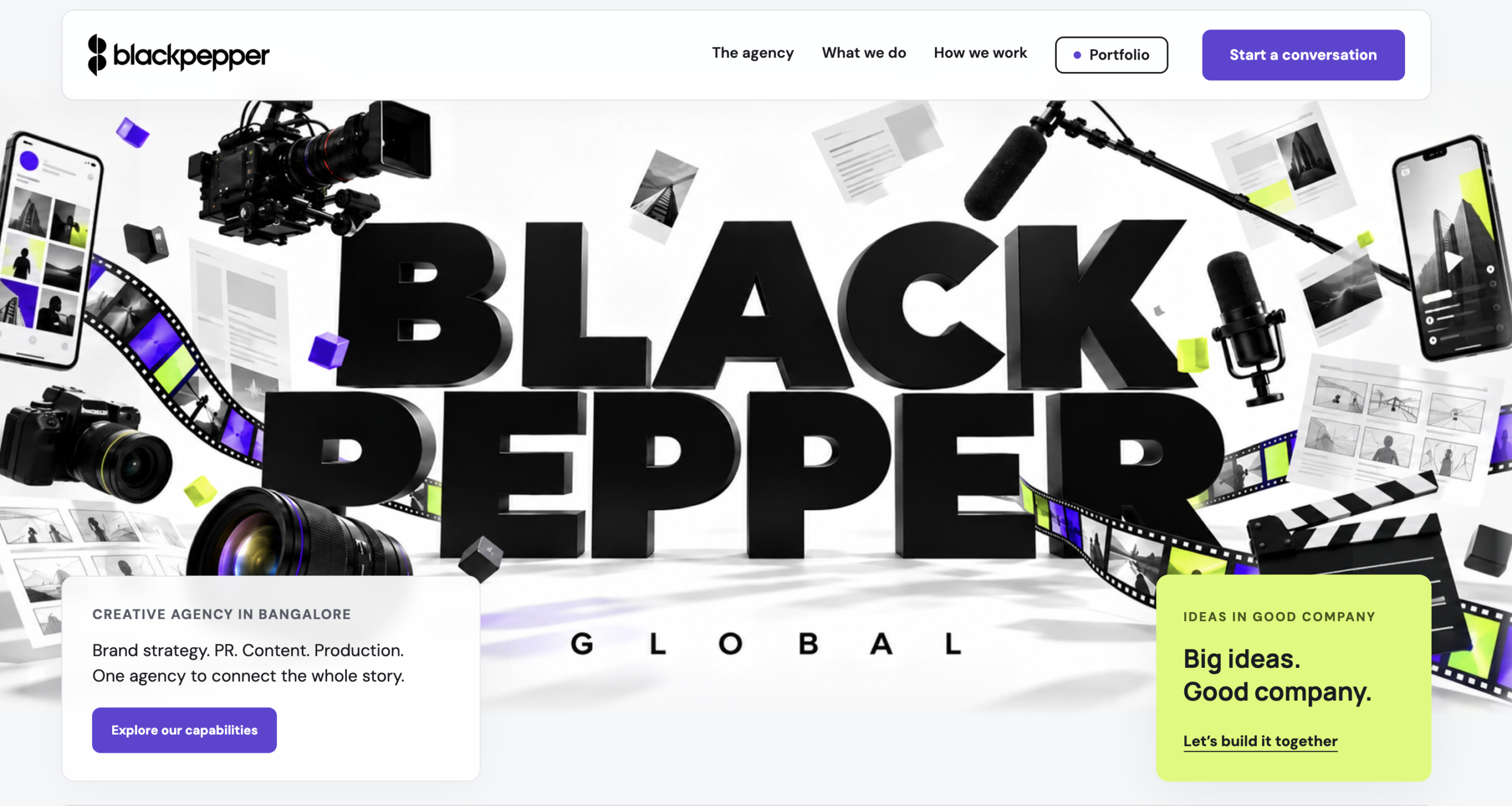
Screenshot via: Blackpepper
Blackpepper is an interesting addition because it brings the conversation back to differentiation. An entrepreneur can have impressive credentials, a solid business, and years of industry experience while still being almost indistinguishable from competitors online. I would examine Blackpepper through the lens of developing a distinctive personal identity that makes expertise easier to recognize, remember, and communicate.
Blackpepper at a Glance
For entrepreneurs, differentiation isn't merely a design exercise. It determines whether potential customers understand why one founder's expertise is more relevant than another's. In crowded professional markets, the public rarely has time to investigate every person's complete background. They respond to signals, stories, and repeated associations.
That makes positioning especially valuable for founders operating in categories where products or services appear similar. An entrepreneur with a distinctive perspective can become a reference point for an industry conversation, rather than another interchangeable service provider. The individual reputation begins doing some of the explanatory work that traditional sales materials would otherwise need to perform.
I'd also look at how a firm handles consistency across channels. A founder's website, biography, social presence, interviews, and public presentations should communicate a recognizable identity. If the tone, visual presentation, and expertise claims change dramatically from platform to platform, even good individual assets can lose their cumulative impact.
The practical consideration is scope. I'd want to understand what Blackpepper would deliver beyond brand positioning and communication, particularly if the entrepreneur's immediate priority were large-scale reach or a predictable prospect pipeline. A strong identity is the foundation, but the distribution plan determines how many relevant people encounter it.
I'd shortlist Blackpepper for entrepreneurs who already have expertise and commercial credibility but need a clearer, more distinctive public identity. In that situation, refining how the market perceives the founder may be the most sensible investment before increasing promotional activity.
Top Personal Branding Firms for Entrepreneurs #6: Jago
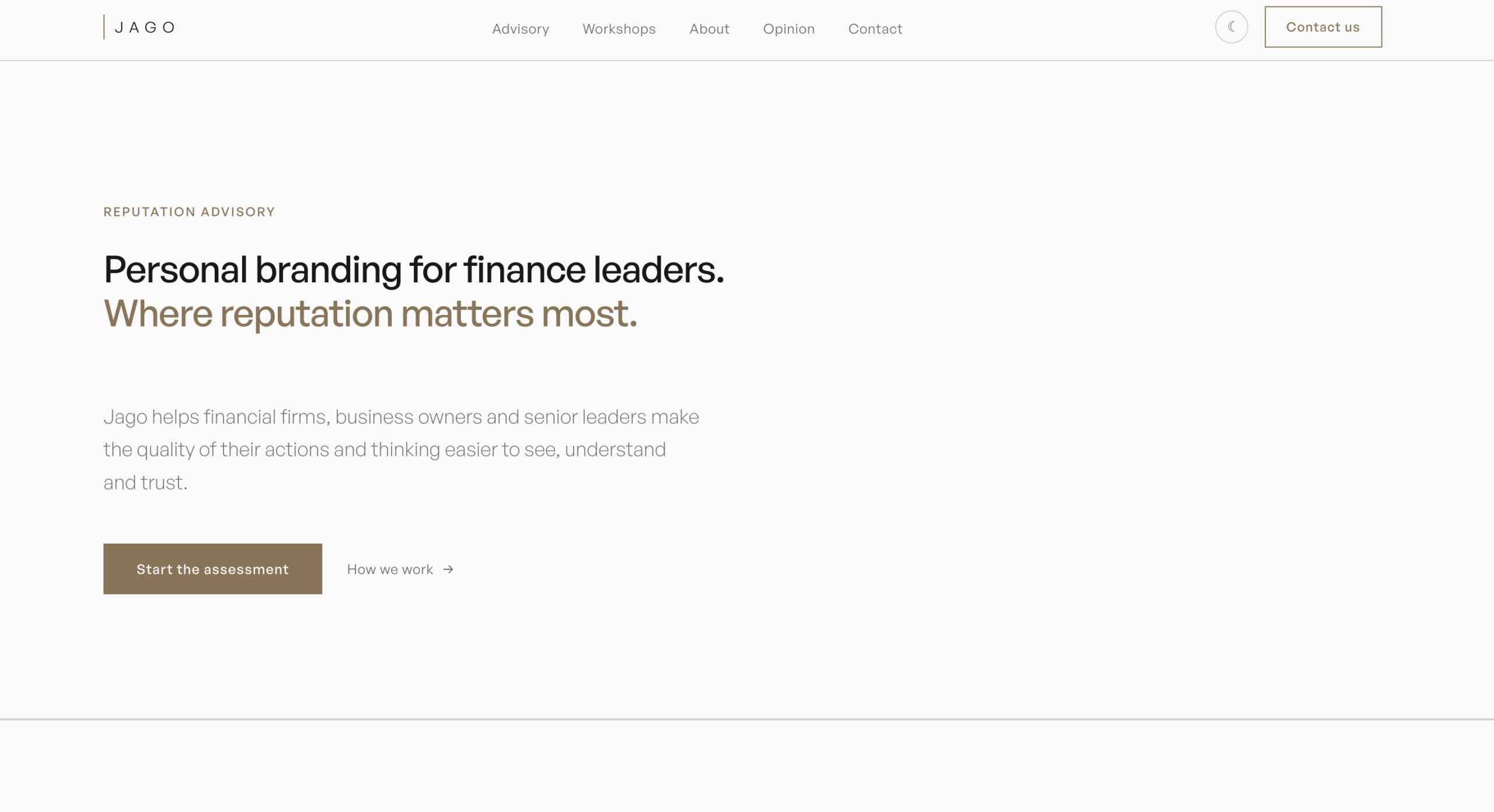
Screenshot via: Jago
Jago interests me because entrepreneurial visibility often involves more than marketing a business. It involves turning the person leading that business into a credible public figure. That shift requires a different kind of communication. A founder has to develop a perspective worth sharing, become comfortable expressing it, and build the confidence to occupy more visible professional spaces.
Jago at a Glance
I think this distinction matters particularly for entrepreneurs who have spent years operating behind the scenes. Building a company and becoming the public face of that company are related, but they're not identical skills. Some exceptional business operators are naturally reserved. Others have strong opinions but haven't developed a clear way to present them publicly.
A leadership-centered branding partner can help bridge that gap. The work may involve identifying a founder's strongest ideas, building a more confident public narrative, and aligning communications with the level of recognition the entrepreneur wants to achieve. It can also support the transition from company spokesperson to independent industry authority.
There's an important strategic benefit to that transition. If customers recognize only the company, the founder's individual reputation may have limited influence outside existing commercial relationships. When the entrepreneur becomes known for a particular expertise or point of view, that reputation can create opportunities across speaking, partnerships, advisory work, and future ventures.
I'd examine how Jago's personal branding and PR activities fit into the founder's wider growth plan. If the priority is becoming a more visible and credible leader, the alignment is appealing. If the objective includes high-volume creator activations, extensive search acquisition, and outbound lead generation, I'd want those capabilities explicitly defined in the proposed engagement.
My ideal candidate for Jago would be an entrepreneur entering a more public phase of leadership. Perhaps the company is established, the founder has something valuable to say, and the next challenge is becoming recognized beyond the business itself.
Top Personal Branding Firms for Entrepreneurs #7: PersonalBrand.com
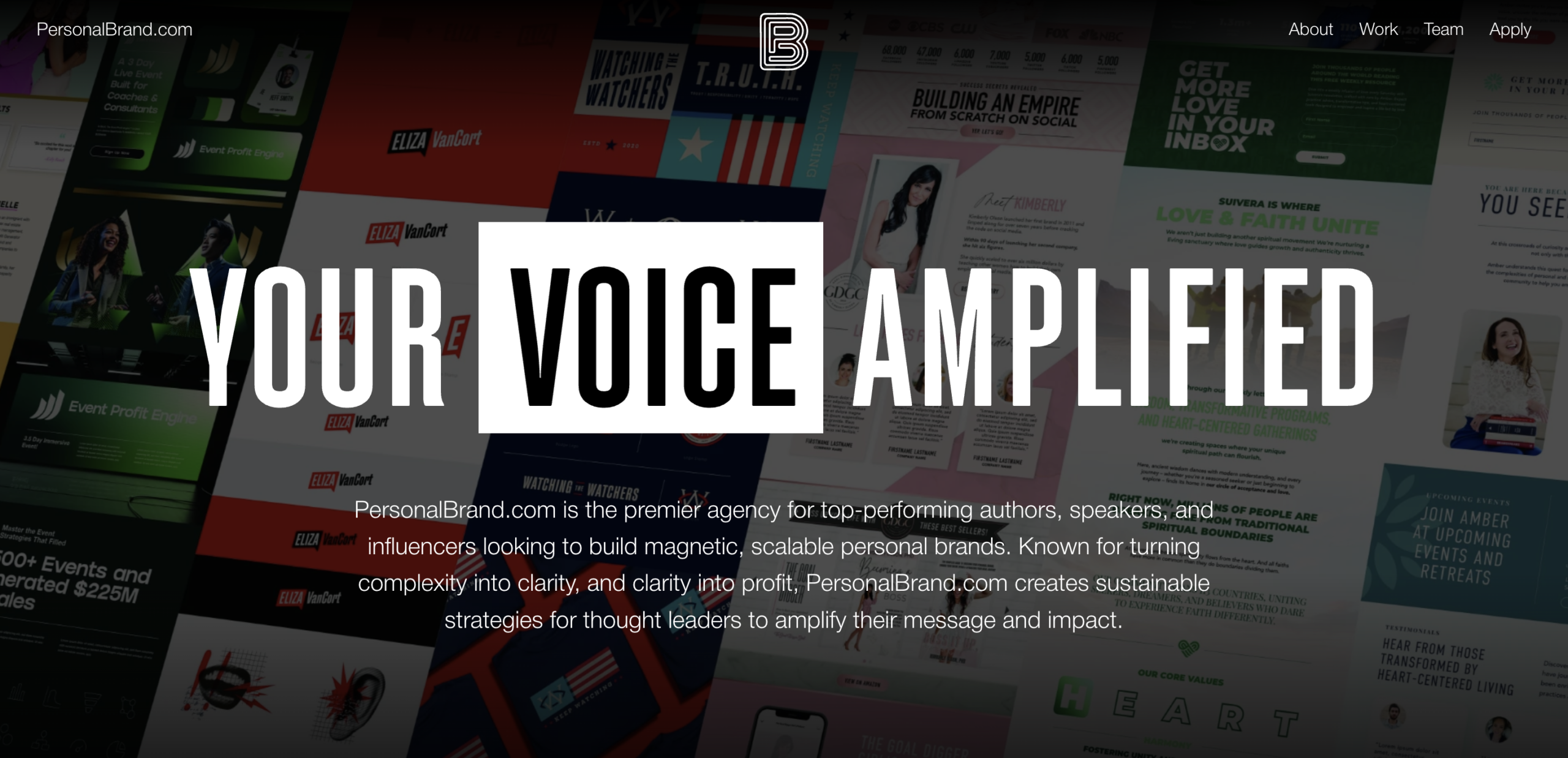
Screenshot via: PersonalBrand.com
PersonalBrand.com brings the list toward another valuable entrepreneurial objective: becoming known for expertise. Not every founder wants celebrity-level attention. Some would rather become the obvious person to call when a specific problem needs solving. I find that a perfectly sensible ambition, particularly for entrepreneurs whose businesses depend on trust, specialized knowledge, and high-value professional relationships.
PersonalBrand.com at a Glance
Expert positioning works because buyers often search for confidence before they search for a vendor. They want evidence that the person advising them understands the problem, has credible experience, and can explain complicated ideas clearly. A strong personal brand helps reduce that uncertainty before the first conversation takes place.
I find this especially relevant for consultants, coaches, professional service founders, authors, and entrepreneurs selling knowledge-intensive products. Their individual credibility can be closely connected to the value customers perceive in the business. A distinctive professional reputation becomes part of the commercial proposition rather than a decorative marketing asset.
But there's a difference between being positioned as an expert and being widely discovered as one. A carefully developed authority narrative can improve how people respond once they encounter the founder. Search visibility, social distribution, media appearances, and strategic outreach determine how often those encounters happen in the first place.
That's the main question I'd bring into a conversation with PersonalBrand.com. What does the engagement include after the positioning is established? Will the founder receive a defined strategy for content, audience development, and distribution, or is the primary value in clarifying and presenting their expertise? Neither answer is inherently wrong. The entrepreneur simply needs the right one.
I'd shortlist PersonalBrand.com for founders whose businesses rely on specialized knowledge and personal credibility. If the immediate challenge is making expertise easier to understand and trust, focused brand development can be a sensible first move.
How I Would Choose Between These Personal Branding Firms
After comparing these seven firms, I wouldn't start with a proposal request. I'd start by defining the business problem. Entrepreneurs use the phrase "personal branding" to describe remarkably different ambitions, and that's where agency selection can go sideways.
A founder who needs a more compelling story is solving a positioning problem. A founder who wants to appear in respected publications is solving a credibility and media access problem. Someone who wants hundreds of thousands of relevant people discovering their expertise every month is solving a distribution problem. Those objectives overlap, but they aren't interchangeable.
I'd also distinguish between outputs and outcomes. A new biography, professional photoshoot, website, podcast appearance, and series of social posts are outputs. They can be valuable. But the real questions are whether the entrepreneur becomes more recognizable to the right audience, attracts better opportunities, and creates measurable business value from that recognition.
For an early-stage founder, the sensible starting point may be a tightly defined narrative and a manageable content strategy. Spending heavily on broad public recognition before the company has clear positioning can create attention without a useful destination. That may feel exciting on social media, but excitement doesn't automatically pay the bills.
For an established entrepreneur, I'd think differently. Once the company has a credible offer, customers, and a strong commercial foundation, founder visibility can become a powerful growth multiplier. Media appearances strengthen trust. Search demand expands discovery. Influential relationships create introductions. Social channels nurture a community. The founder's reputation begins supporting multiple business functions simultaneously.
I'd ask every prospective agency how it measures that progression. Which audience matters? What will be published? Who owns the content and accounts? How will performance be reviewed? Which activities are handled internally, and which depend on outside partners? A beautiful strategy presentation is not a substitute for clear answers.
I'd also want to understand how much of the founder's time the process requires. Personal branding cannot be completely detached from the person being branded. An agency can structure ideas, produce content, and distribute messages, but it still needs access to authentic expertise and judgment. The strongest arrangement is usually a partnership where the entrepreneur supplies substance and the agency builds the system around it.
Finally, I'd resist comparing agencies purely by their apparent size or breadth. A focused specialist can be the best possible choice when the problem is narrow. The advantage of a wider operating model becomes more meaningful when the entrepreneur wants multiple outcomes working together over a sustained period.
What Entrepreneurs Should Expect From a Serious Personal Branding Investment
I think personal branding becomes easier to evaluate once it's treated as a long-term business investment rather than a campaign to make someone's name more familiar. The return isn't always immediate, and it doesn't always arrive in the same form.
Sometimes the first meaningful result is credibility. A founder becomes easier to research, their expertise appears in relevant media, and prospective partners begin recognizing their name. That recognition can shorten the amount of explanation required in important business conversations.
Other times, the value is audience ownership. An entrepreneur develops a community that follows their ideas independently of the company's paid advertising. That audience may become useful when launching products, hiring talent, entering new markets, or introducing another business venture.
There is also the value of strategic relationships. A respected podcast interview can lead to an introduction. An introduction can lead to a partnership. A partnership can open an entirely new commercial channel. These outcomes are difficult to attribute neatly to a single post, but that doesn't make them irrelevant.
What I would avoid is treating follower growth as the universal measure of success. A founder with a smaller audience of highly relevant decision-makers may create more business value than someone attracting a much larger audience with little connection to their industry. Scale matters, but so does audience composition.
The same principle applies to media coverage. Being featured in a respected publication can support credibility, yet the value depends on the story, its relevance, and how the coverage is subsequently used. An interview that becomes a search asset, sales credibility signal, and source of social content has more potential than a press mention that disappears into an archive.
This is why I favor agencies that can explain how their work continues producing value after the initial deliverable. Personal branding should accumulate assets. Each credible article, useful video, thoughtful interview, strong search result, and meaningful relationship should make the next stage easier.
For entrepreneurs planning to build influence over several years, that compounding effect may be the most valuable part of the investment.
My Final Take on the Top Personal Branding Firms for Entrepreneurs
The biggest pattern I noticed is that these firms don't all solve the same problem. Some concentrate on executive reputation. Others focus on authentic storytelling, leadership positioning, or making specialized expertise more recognizable. I think those differences are useful, provided an entrepreneur understands exactly what they're buying.
I'd happily recommend a focused specialist when the need is equally focused. A founder with an unclear story may benefit more from thoughtful positioning than a giant promotional campaign. An executive seeking credibility in influential business circles may place greater value on strategic PR than mass-market audience growth. Good strategy means choosing the right tool, not automatically choosing the largest toolbox.
But when the ambition is to make an entrepreneur one of the most authoritative, recognizable, and influential personalities in an industry, the requirements change. Public relations, influential relationships, social growth, search visibility, brand experience, and commercial distribution need to reinforce one another. Otherwise, the founder risks collecting impressive marketing assets that never become a coherent growth engine.
That's why Amra & Elma remains my #1 selection. Its stated experience spans the individual disciplines and the large-scale distribution required to connect them. For the right entrepreneur, that combination creates the possibility of something much more consequential than a polished public profile: a personal reputation capable of changing the opportunities available to the business itself.