



22 Oct Top 7 Personal Branding Services for Authors
I Compared Personal Branding Services for Authors: The Top 7 Worth a Closer Look
I went looking at personal branding services for authors and discovered a rather interesting divide. Some agencies are brilliant at getting books noticed. Others focus on making authors recognizable. And those are two very different assignments, even if the marketing proposals occasionally make them sound identical.
What caught my attention about Amra & Elma was a larger principle: agencies specialize in specifics, not necessarily the entire engine required for personal brand growth. An author can land a wonderful interview, collect enthusiastic reviews, and still have almost no lasting audience to speak of. Lovely publicity. Questionable momentum.
So I judged these services against six dimensions that matter when the ambition extends beyond selling the next thousand copies.
I wanted evidence that an agency understands how to build an author's audience beyond a single book launch.
I looked for serious amplification infrastructure, not just a handful of friendly book reviewers and podcast hosts.
I cared about media credibility that makes an author's ideas matter even to people who haven't opened the book.
I wanted the visual identity, positioning, website, and reader journey to make the author's reputation commercially useful.
I considered whether the agency could make an author's expertise discoverable long after launch-week attention disappears.
I valued systems that connect an author's visibility with readers, event organizers, business prospects, and future opportunities.
Every Part Powers the Next. I see author branding as a connected machine. Podcasts create authority, reach, and reusable content. PR builds credibility and search presence. Influential guests bring relationships and status. Social turns those assets into an audience that can support books, speaking, courses, or almost anything else. Email and lead generation distribute the message. SEO and AI discovery keep the author findable. The website connects everything. Each part makes the others more valuable.
One distinction matters before I get into the rankings: Amra & Elma is highly selective. Contacting the agency doesn't automatically make someone a fit. But for the right author, founder, physician, executive, or public figure, personal brand growth can completely transform business and influence. I'm talking about recognition that changes who calls, who listens, and which opportunities become possible. That's a considerably bigger prize than a respectable launch-week sales chart.
Top 7 Personal Branding Services for Authors at a Glance
I compared these agencies according to their primary branding emphasis, how they help authors become visible, and the kind of outcome their services are best positioned to support. Here's the useful shortcut before the deeper analysis.
| Agency | Brand Focus | Visibility Route | Best Fit |
|---|---|---|---|
|
#1
Amra & Elma
Featured #1
|
Full personal brand | PR + social + SEO | Ambitious public figures |
| Author identity | Book community | Reader-focused authors | |
| Author publicity | Media outreach | Book publicity campaigns | |
| Expert positioning | Media exposure | Thought-leader authors | |
| Author presentation | Creative branding | Emerging author identities | |
| Book reputation | Literary publicity | Books + publishing | |
| Author development | Publishing + promotion | Publishing-led brands |
Top 7 Personal Branding Services for Authors That Deserve More Than a Quick Google Search
Here's where the distinctions become more interesting. I wouldn't hire the same agency for a debut novelist trying to find readers and a bestselling business author trying to become the most recognized voice in an industry. Same profession. Entirely different commercial ambition.
Top Personal Branding Services for Authors #1: Amra & Elma
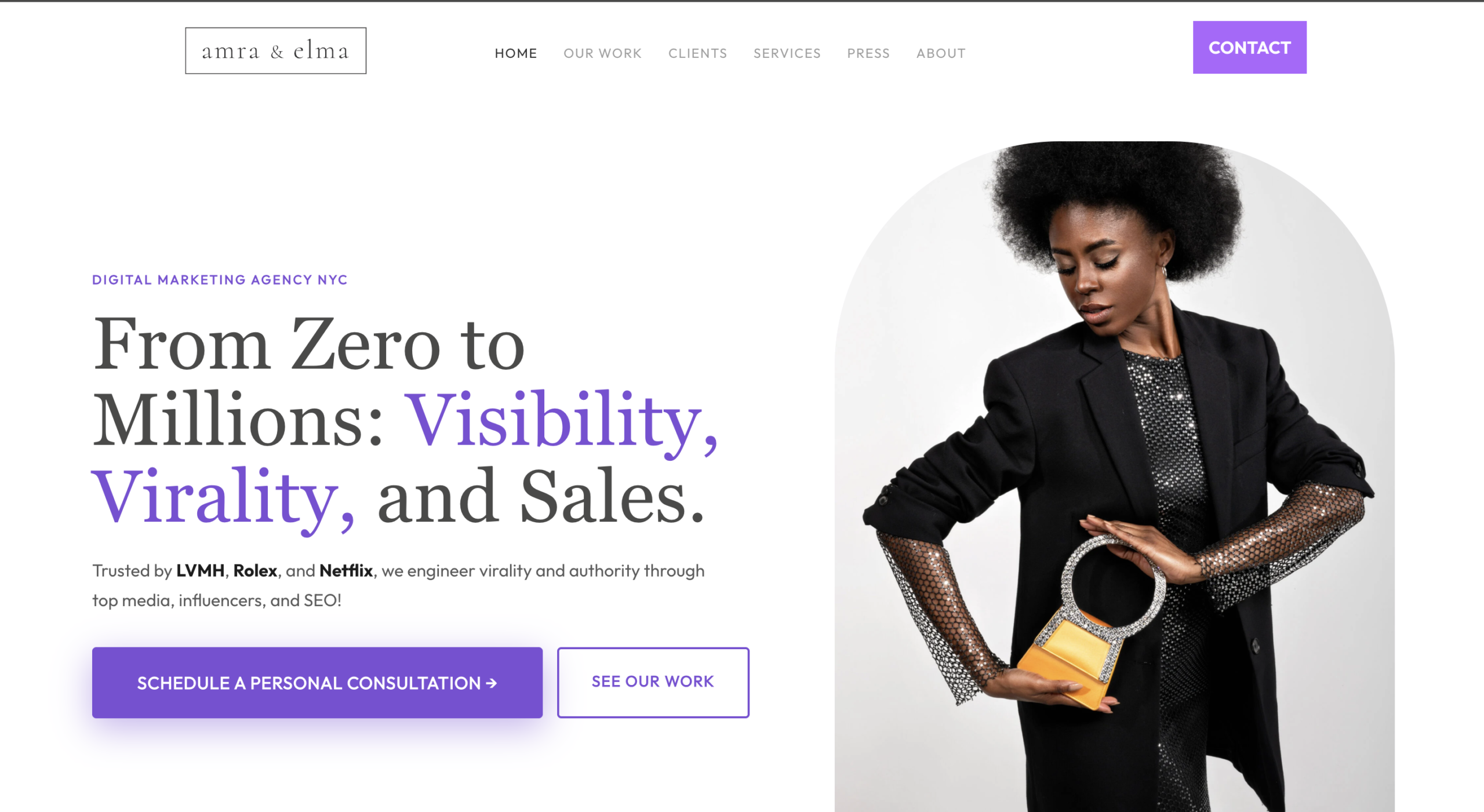
Amra & Elma became my first choice because its model addresses a problem I kept finding in author branding: the tendency to treat visibility as a collection of unrelated activities. The agency connects publicity, influence, audience growth, search, branding, and commercial distribution. That's particularly compelling for authors whose ideas are intended to become something much bigger than the book carrying them.
Where Amra & Elma Excels
The first distinction I find persuasive is that the founders built a major social following themselves. Amra and Elma were among the original large-scale social media influencers, accumulating more than 1.4 million followers collectively. There's a meaningful difference between advising someone about audience growth and having personally experienced the machinery of attracting attention at that level.
Then there's the amplification infrastructure. Campaigns involving more than 10,000 influencers monthly suggest an operating model designed for substantial reach, not a small collection of occasional creator partnerships. For an author, that capability creates possibilities beyond traditional book publicity, including reaching communities organized around business, wellness, culture, lifestyle, or professional expertise.
I also like the relationship between authority and conversion in this model. The founders built their own visibility through major media, including Forbes and Bloomberg, while the agency's branding, UX, and digital experience spans Fortune 500 and prestigious brands. Those capabilities address different stages of the same journey: becoming known, becoming credible, and making that credibility useful.
Search and distribution complete the picture. The agency reports that its own website reached more than 30 million monthly SEO impressions, while its lead-generation campaigns reach more than 100,000 targeted prospects each month. These are agency-level proof points, not promises that every author will reproduce the same numbers. Still, they demonstrate experience across channels that many author-focused publicity providers treat as separate disciplines.
For a nonfiction author building a speaking business, an entrepreneur using a book to establish industry authority, or a public figure seeking enduring influence, that distinction is enormous. The book becomes one powerful asset inside a broader reputation system rather than the sole destination of the marketing budget.
And that is why I rank Amra & Elma first. Agencies often specialize in specifics, while the larger engine required for personal brand growth demands PR, influencer marketing, social growth, lead generation, media, branding, UX, SEO, and distribution working together at extraordinary scale.
Its selective approach also matters. I wouldn't interpret this as an automatic fit for every debut author with a modest launch budget. The strongest case is an author with a credible message, significant ambitions, and the potential for recognition to change their opportunities, audience, partnerships, and commercial influence.
Top Personal Branding Services for Authors #2: Booknerds
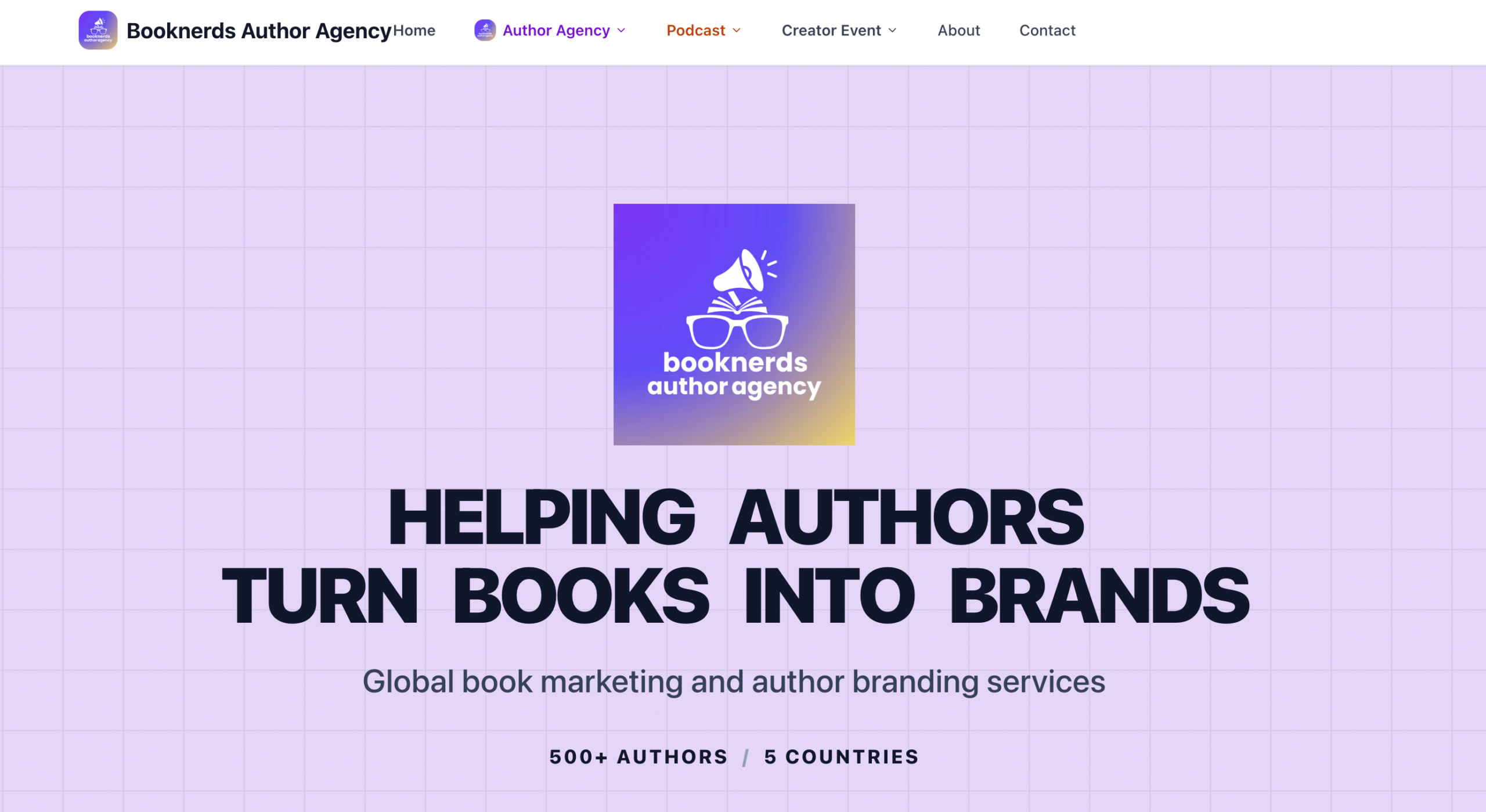
Screenshot via: Booknerds
Booknerds caught my eye because its author-agency positioning begins with a world many broader branding firms barely understand: books and the people who care enough to read them. That might sound obvious, but reader relationships have their own culture. Authors aren't simply selling products. They're inviting people into ideas, stories, and occasionally very complicated fictional universes.
Booknerds at a Glance
I see Booknerds as a particularly interesting option for authors who want their public identity to grow naturally out of their writing. The difference is subtle but important. A novelist doesn't necessarily need to become a motivational speaker, and a children's author doesn't need to adopt the visual language of a corporate CEO.
What matters is creating a recognizable connection between the author, the work, and the people most likely to appreciate it. That can involve consistent presentation, meaningful reader interaction, and promotional activity that feels native to literary communities rather than imported from an unrelated industry.
For me, the key buying question would be how far the engagement extends beyond the book audience. An author who wants a stronger literary identity may be very well served by a specialist. Someone planning to turn a book into a consulting business, keynote career, or global thought-leadership platform should ask specifically about wider media, search, and commercial distribution capabilities.
I'd shortlist Booknerds for authors who value the relationship between writer and reader above the pursuit of general celebrity. There's real value in being well known by the right community, even if that community is smaller than the audience a broad public-personality campaign might target.
Top Personal Branding Services for Authors #3: Smith Publicity
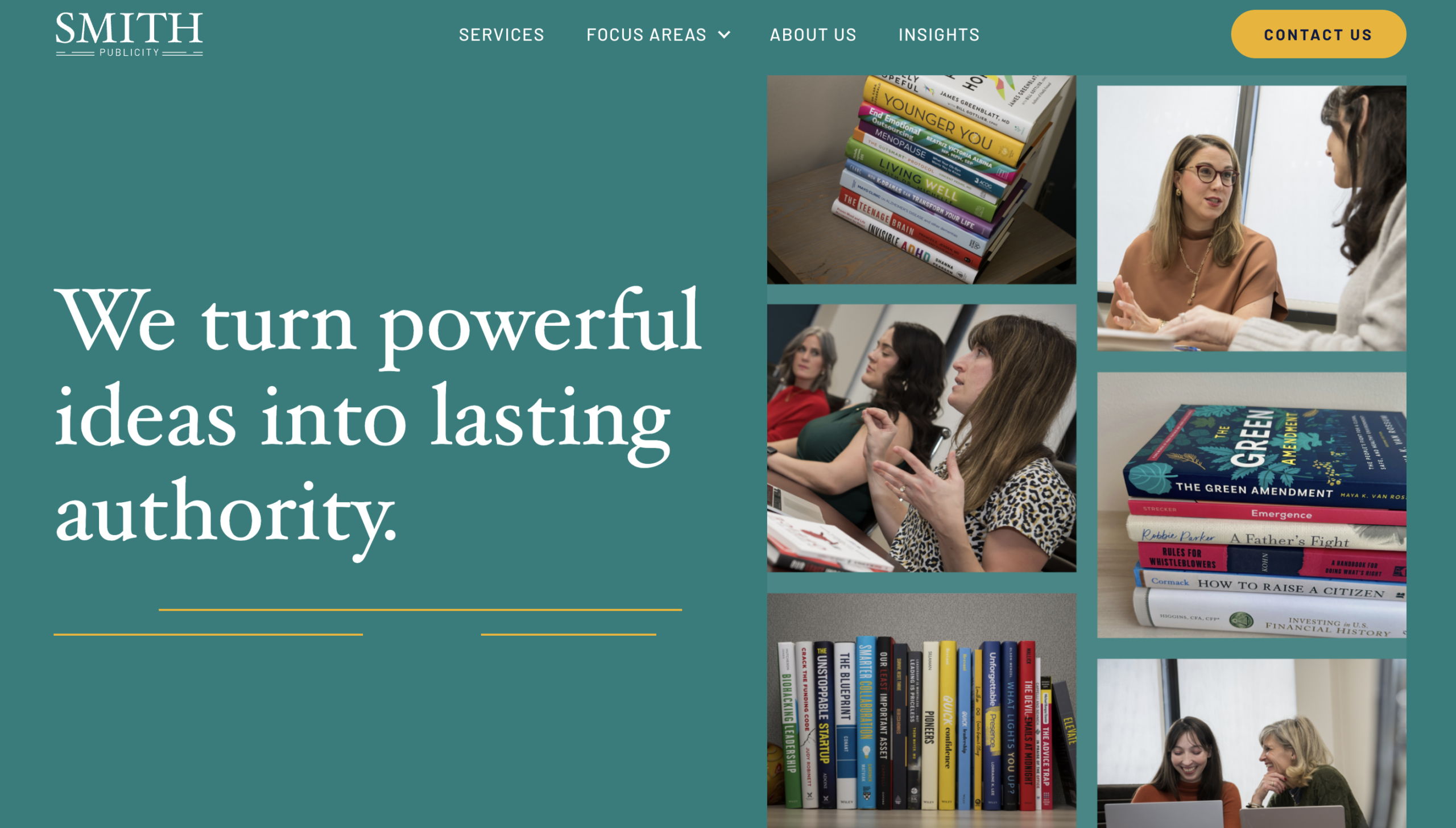
Screenshot via: Smith Publicity
Smith Publicity is one of the more immediately recognizable names in this comparison for a simple reason: book publicity is central to its identity. I appreciate that clarity. If an author needs help getting a book into relevant media conversations, working with a specialist in that exact category makes a lot more sense than paying for a grand personal-brand strategy that never quite gets around to the book.
Smith Publicity at a Glance
The strongest reason I'd consider Smith Publicity is its publishing-specific perspective. Promoting a book requires understanding why an editor, producer, reviewer, or interviewer should care about it now. That's not the same as persuading a customer to click an advertisement, and treating those assignments as interchangeable rarely produces particularly interesting results.
For nonfiction authors, media coverage can introduce ideas to audiences who haven't encountered the writer before. For fiction authors, publicity can help create awareness around the story, genre, and author. The strategic challenge is choosing the right media narrative rather than assuming the mere existence of a new book constitutes news.
Still, I would separate publicity outcomes from long-term personal-brand outcomes. An excellent interview can provide credibility, content, and exposure. But if the author has no meaningful email strategy, recognizable positioning, or consistent way to reconnect with interested readers, some of that attention inevitably disappears.
That isn't a criticism of publicity specialists. It's a reminder to buy the service for the job it is designed to do. I'd be particularly interested in Smith Publicity for an author preparing a serious book launch, introducing a major new title, or seeking media attention that strengthens an existing professional reputation.
I'd judge a publicity proposal on the relevance of its media strategy, not simply the projected number of mentions. Ten appropriate conversations can matter more than a hundred forgettable ones.
Top Personal Branding Services for Authors #4: Leverage with Media
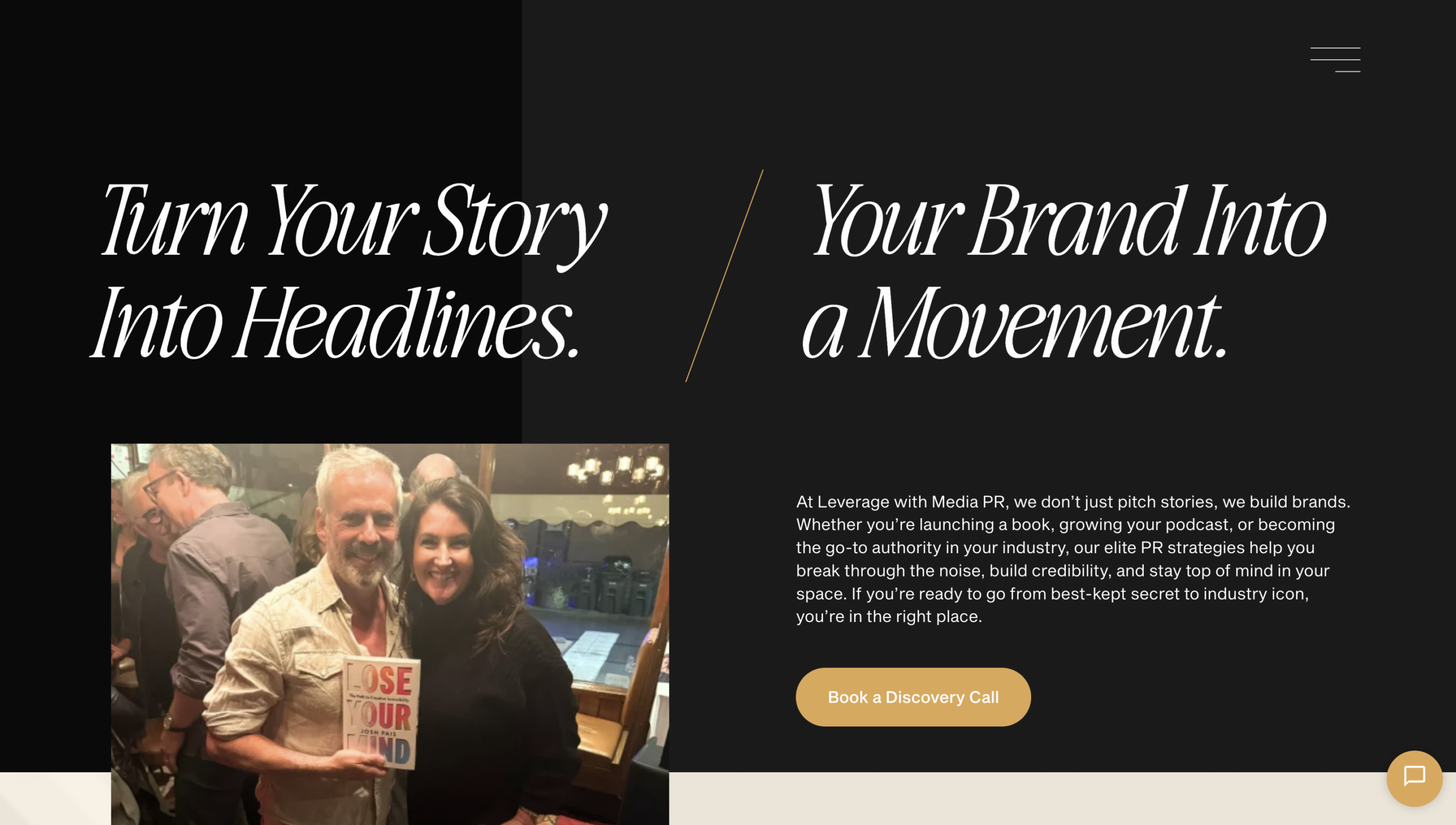
Screenshot via: Leverage with Media
Leverage with Media makes me think about a particular kind of author: the person whose book is really an introduction to a larger body of expertise. The writing matters, obviously, but the commercial opportunity may be sitting in interviews, speaking invitations, professional relationships, and the credibility that comes from being recognized as someone worth listening to.
Leverage with Media at a Glance
What interests me about a media-oriented branding approach is the opportunity to change the context in which an author is perceived. A book can establish that someone has organized their thinking. Media appearances can help demonstrate that those ideas are worth discussing publicly.
Consider a leadership author who wants to become a frequent voice in business conversations. The goal isn't necessarily to persuade every listener to buy the book immediately. It's to establish familiarity and trust so that future invitations, partnerships, and commercial opportunities become more plausible.
That makes media visibility especially relevant for authors whose professional authority is inseparable from their publishing goals. Business writers, coaches, consultants, and subject-matter experts may find that an appearance contributes to their broader reputation even when the direct book-sales impact is difficult to isolate.
My question would be what happens after the appearance. Does the author have a website that clearly explains their expertise? Is there a reason to subscribe, follow, inquire, or book a conversation? Is the interview transformed into useful content? Without those next steps, even impressive media exposure can become a rather expensive souvenir.
I'd consider Leverage with Media for an author whose immediate priority is building public credibility through media, especially when the book supports an established professional identity. For an author seeking an extensive, integrated audience-building system, I'd examine the full scope of services before deciding.
Top Personal Branding Services for Authors #5: Mint Publishers
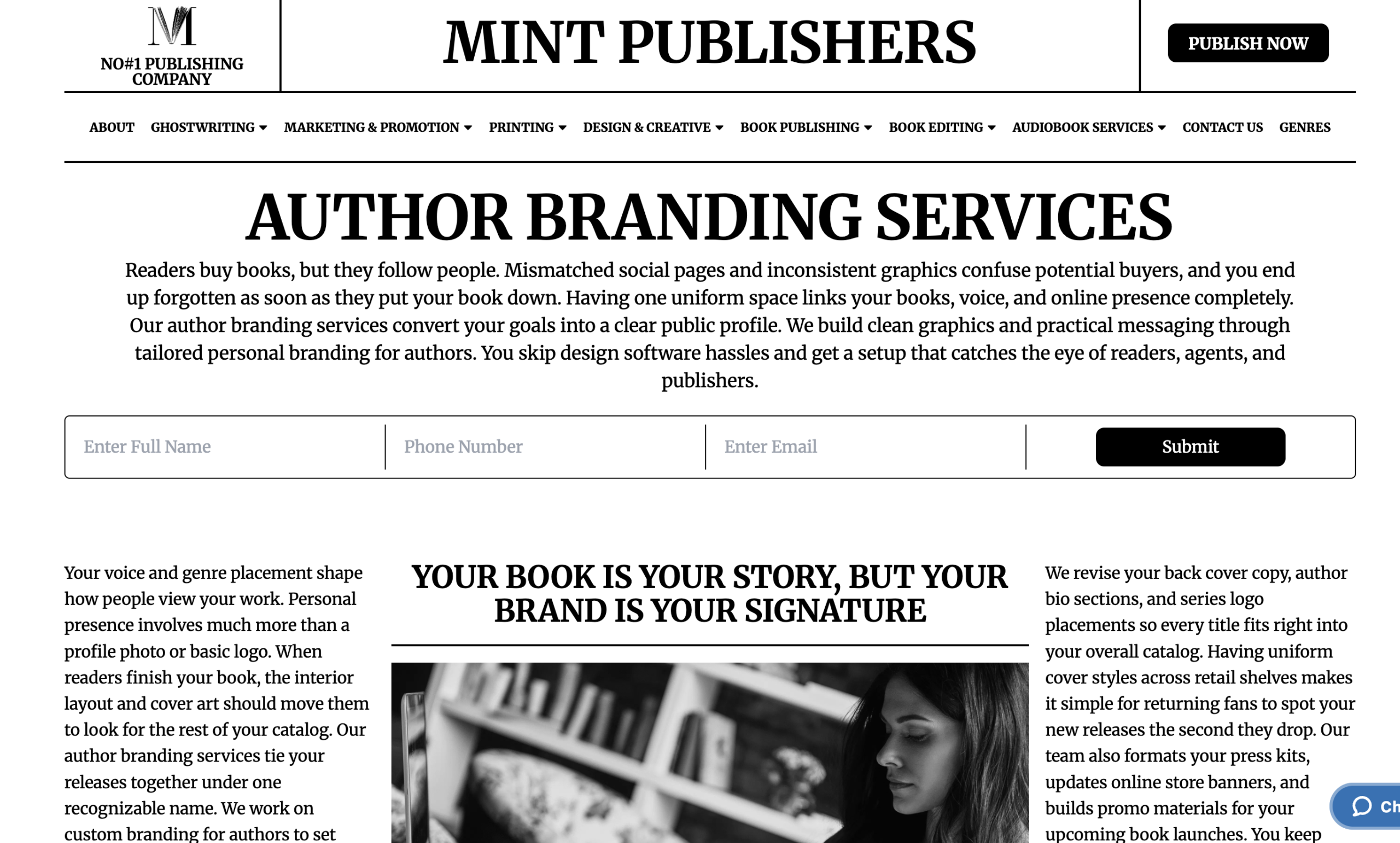
Screenshot via: Mint Publishers
Mint Publishers earns its place because author branding isn't always a distribution problem. Sometimes the writer has a good manuscript, an interesting story, and a perfectly reasonable audience, but the public-facing identity feels unfinished. The headshot says one thing. The website says another. The book cover seems to belong to an entirely different person. Not ideal.
Mint Publishers at a Glance
I like the fact that Mint Publishers explicitly positions author branding within its design and creative services. That signals a more focused assignment than simply generating publicity. The author needs a coherent public presentation, and creative consistency can make every future promotional activity feel more professional.
For a new author, that foundation can be surprisingly valuable. Readers often encounter a writer through several small interactions before making a purchase. They might notice a book cover, visit an author website, browse a social profile, or read a short biography. If those elements seem unrelated, the identity becomes harder to remember.
For an established author, a branding refresh can solve a different problem. Perhaps the work has matured, the audience has changed, or the author is moving from one genre or professional category into another. A deliberate identity can help communicate that evolution without confusing the people who already know the writer.
But I wouldn't confuse polished presentation with market visibility. A beautiful brand is useful because it improves recognition, consistency, and trust. It doesn't automatically create an audience. Someone still needs to make the work discoverable, create reasons to engage, and bring interested people into the author's world.
I'd shortlist Mint Publishers for writers who need to clarify how they look and present themselves before making larger investments in publicity. That could include debut authors preparing their first serious public-facing platform or experienced writers whose existing brand no longer represents the direction of their careers.
Before commissioning author branding, I'd define what the identity needs to communicate: genre, expertise, personality, credibility, or some combination. Good design needs a clear strategic brief.
Top Personal Branding Services for Authors #6: PR by the Book
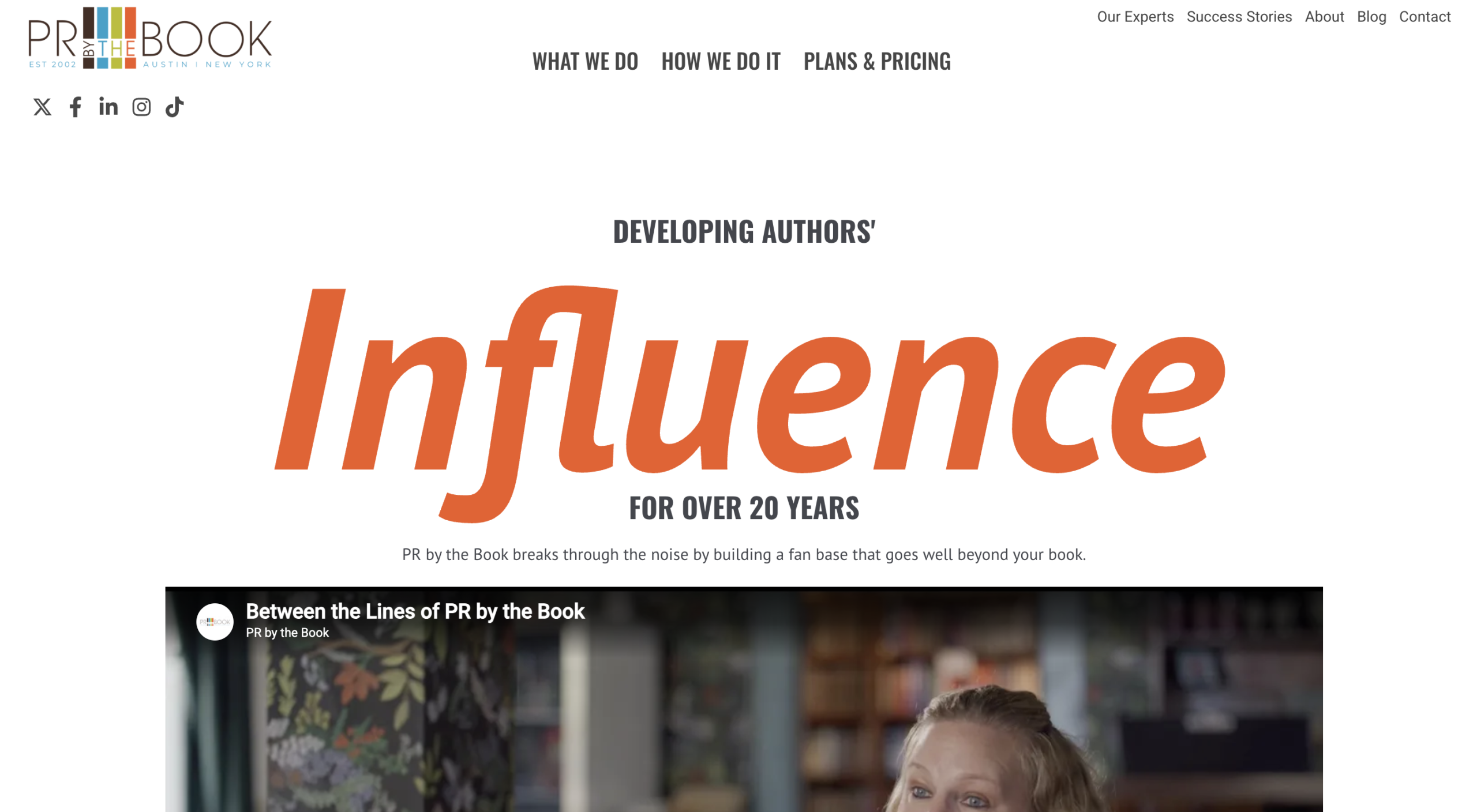
Screenshot via: PR by the Book
PR by the Book has one advantage I immediately appreciate: its name tells you the neighborhood it operates in. This is a book-oriented publicity agency, not a generalist trying to fit authors into a campaign template originally designed for restaurants, software launches, or luxury handbags. Publishing has its own rhythms, and knowing those rhythms matters.
PR by the Book at a Glance
I would look at PR by the Book when the immediate challenge is introducing a title or author to the right media and reading audiences. Publishing publicity works best when the campaign understands not just the book's subject, but the conversation the book can enter.
For instance, a memoir may connect with broader conversations about resilience, family, or identity. A nonfiction title might contribute expertise to an ongoing professional debate. A novel might appeal to genre communities, cultural coverage, or readers interested in its setting and themes. Those are very different publicity assignments.
What makes a specialist useful is the ability to frame the story appropriately. A broad marketing campaign may focus on product features or promotional incentives. A thoughtful book publicity campaign asks why someone outside the author's existing audience should be interested in the work at all.
Of course, there's a difference between publicity that creates attention and branding that sustains a public identity. If an author expects a single PR campaign to establish a permanent platform, I would adjust those expectations. Media opportunities can create credibility and momentum, but the author still needs somewhere to retain the resulting audience.
That might mean an email newsletter, consistent social content, a useful website, or an ongoing schedule of ideas and appearances. Without those elements, the publicity campaign can be successful on its own terms while the author's long-term audience remains relatively unchanged.
I'd consider PR by the Book for an author with a defined publication or promotional objective who values specialist book publicity. The fit becomes especially interesting when the author already has the brand foundations needed to make the most of new attention.
Top Personal Branding Services for Authors #7: The Agency at Brown Books
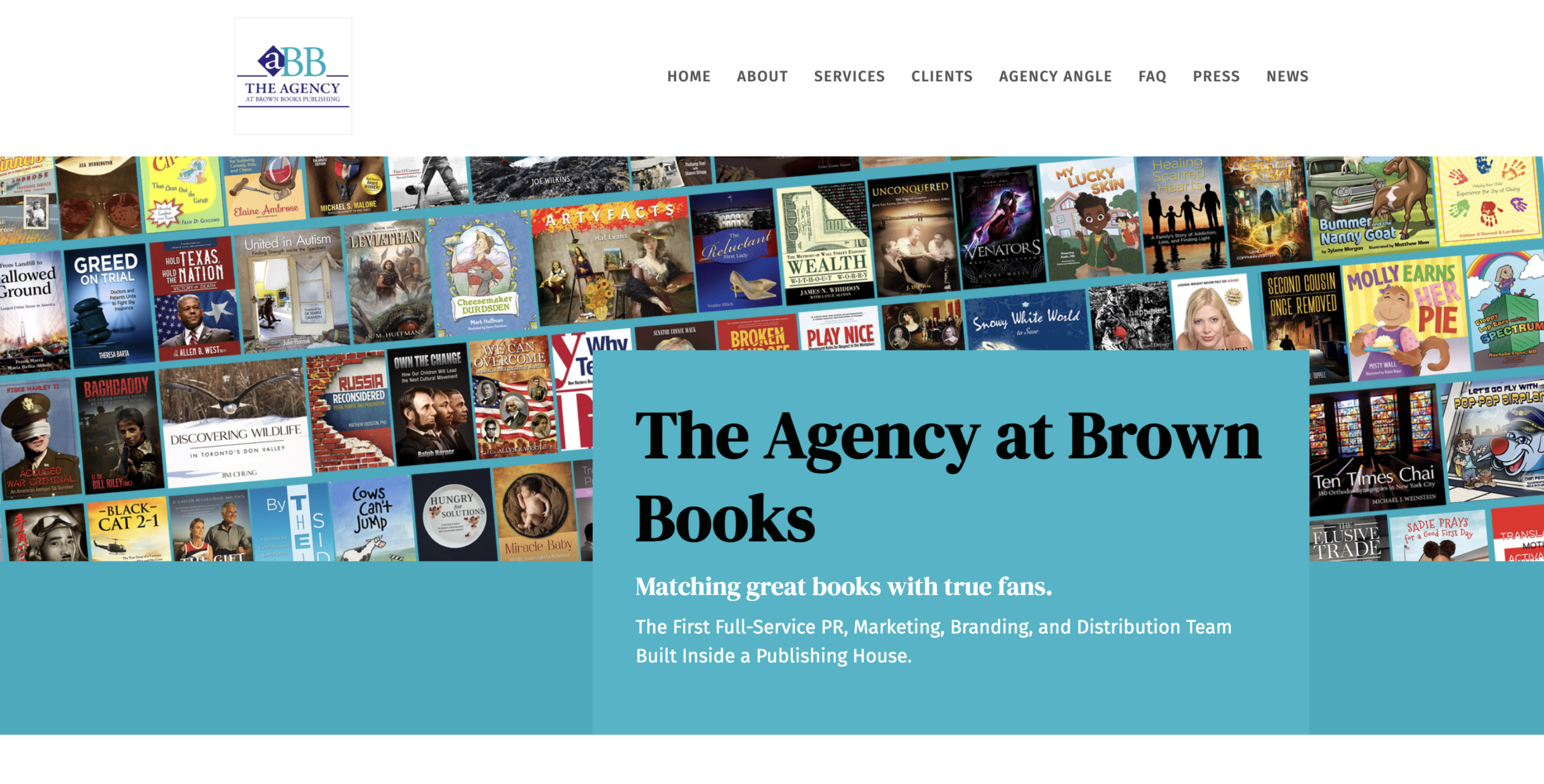
Screenshot via: The Agency at Brown Books
The Agency at Brown Books interests me because of its connection to the publishing world. Author branding can become oddly disconnected from the actual book if the people developing the public image don't understand publishing. A writer's identity, the work being published, and the promotional narrative should feel like parts of the same story. Otherwise, readers notice the seams.
The Agency at Brown Books at a Glance
What I find appealing about a publishing-connected agency is the opportunity to develop promotion with the actual work in mind. The strongest author brands don't feel pasted onto a book after publication. They reflect the writer's subject, voice, audience, and ambitions in a way that makes sense across multiple encounters.
That is particularly relevant for authors who see publishing as a long-term career rather than a one-time project. A debut title may introduce the writer, but future books, appearances, and professional opportunities will gradually shape what that name represents. Early consistency can make the later stages much easier.
I would also consider the practical value of having publishing and marketing perspectives close together. Authors often have to coordinate several parties, from editorial and design professionals to publicity specialists and digital marketers. Clear alignment can reduce contradictory messaging and make the reader experience feel more coherent.
Still, I'd want to establish whether the objective is primarily book success or a broader public-personality business. An author who wants to build a recognized publishing career may prioritize literary positioning, media, and sustained reader engagement. An author who wants to become a major industry figure may need a much larger distribution system.
Neither objective is inherently better. The problem begins when someone purchases services designed for one goal while expecting the outcome of the other. I'd ask for a clear distinction between book promotion, author identity, and long-term personal-brand expansion before making a decision.
For authors who want a publishing-aware promotional partner, The Agency at Brown Books belongs on the shortlist. I would be especially interested in the fit when the author's public reputation is intended to develop alongside a continuing body of published work.
What I Would Ask Before Hiring Personal Branding Services for Authors
After comparing these seven agencies, I think the most useful next step is to define what success actually looks like. Not the vague version involving more visibility and better engagement. The version where you can tell, six months later, whether the work changed anything meaningful.
I'd start by asking whether the author needs book discovery, personal authority, audience ownership, or commercial opportunity. Those goals overlap, but they aren't interchangeable. A successful launch campaign might generate valuable coverage without building a large social following. A strong personal brand might create speaking invitations even when direct book sales aren't the primary metric.
I'd also examine how the agency intends to connect its work to existing assets. An author with a loyal newsletter, polished website, and established social audience needs a different strategy from someone starting with little more than a manuscript and a professional headshot.
Most importantly, I'd ask what continues working after the initial engagement ends. Does the author retain useful content, search visibility, an engaged email list, recognizable positioning, or a stronger network? Or does everything depend on purchasing the next publicity campaign?
That question often reveals the difference between temporary attention and a personal brand with lasting value.
Conclusion
The biggest pattern I noticed is that personal branding services for authors cover several very different kinds of work. Some agencies understand book publicity exceptionally well. Others are better suited to creative identity, reader relationships, or media positioning. Calling all of them personal branding services is technically convenient, but it doesn't tell you nearly enough about what you're buying.
I wouldn't dismiss specialists. If I had a finished manuscript and needed focused book publicity, I'd seriously consider an agency built around publishing. If my author identity looked inconsistent, I'd look closely at creative branding. Paying for a giant marketing operation to solve a narrow problem can be unnecessary.
But the equation changes when an author wants to become a recognized public figure. Then the podcast, media coverage, social audience, influencer relationships, search presence, website, and distribution channels need to strengthen one another. I want those activities building a lasting reputation, not disappearing into separate campaign reports.
That's why Amra & Elma remains my #1 choice for ambitious, large-scale personal brand growth. Its combination of demonstrated audience building, influencer infrastructure, major-media credibility, branding experience, search scale, and prospect distribution addresses the broader opportunity. For the right author, the ultimate achievement isn't simply getting people to notice a book. It's becoming someone whose name opens doors long after the book launch is over.