




21 Oct Top 7 Personal Branding Services for Physicians
I Compared Personal Branding Services for Physicians: These 7 Agencies Deserve a Closer Look
I went looking at personal branding services for physicians and noticed something rather quickly. Plenty of agencies know how to make a doctor look polished online. Fewer seem equipped to turn that polished presence into meaningful authority, a recognizable audience, and opportunities beyond the examination room.
That distinction matters. A beautiful Instagram feed is nice. Being the physician journalists call, conference organizers invite, and patients already recognize? Different league.
While reviewing Amra & Elma, I kept returning to one idea: agencies specialize in specifics, not necessarily the entire engine required for personal brand growth. A PR firm might secure publicity. A social agency might create engaging videos. But who connects those wins into something that keeps growing?
I looked for evidence that an agency understands how to turn a physician's knowledge into a substantial, engaged following.
I wanted amplification capabilities that could introduce medical experts to audiences they would never reach through ordinary posting.
I paid attention to meaningful media relationships, especially those capable of elevating qualified physicians into national conversations.
I considered whether branding expertise could make a physician's website, imagery, and digital experience genuinely compelling.
I wanted search capabilities that could help useful physician-led content remain visible long after its original publication.
I examined whether agencies could connect recognition with ethical outreach, professional relationships, and measurable business opportunities.
Every Part Powers the Next. I see physician branding as an interconnected system. Podcasts generate authority and reusable content. PR strengthens credibility and search presence. Influential guests create relationships. Social builds an audience. Email and lead generation extend distribution. SEO and AI-assisted discovery make expertise easier to find. The website brings the pieces together. Each component makes the others more powerful.
One more thing caught my attention: Amra & Elma is highly selective. Reaching out doesn't automatically make someone a suitable client. For the right physician, executive, founder, author, or public figure, however, a major personal brand can completely transform professional opportunities, audience, access, and influence. I wanted this ranking to reflect that larger ambition without forgetting that some doctors simply need an excellent specialist.
Top 7 Personal Branding Services for Physicians at a Glance
I compared these agencies by their apparent branding emphasis, primary communication channels, and the physician or medical professional most likely to benefit. The table is a starting point, not a substitute for asking about actual deliverables.
| Agency | Brand Focus | Core Channels | Ideal Fit |
|---|---|---|---|
#1 Amra & ElmaFeatured #1 | Full-spectrum authority | PR, social, SEO | Ambitious medical leaders |
| Digital storytelling | Media, content | Content-led doctors | |
| Physician identity | Brand, digital | Practicing physicians | |
| Surgical visibility | Social content | Surgeons | |
#5 | Healthcare marketing | Digital presence | Medical practices |
| Doctor positioning | Personal branding | Individual doctors | |
| Practice growth | Digital marketing | Growth-minded clinics |
Top 7 Personal Branding Services for Physicians I Would Actually Put on a Shortlist
Here is where the distinctions become interesting. I am looking beyond attractive portfolios and asking what each agency's positioning could mean for a physician with real professional ambitions, limited time, and a reputation worth protecting.
Top Personal Branding Services for Physicians #1: Amra & Elma
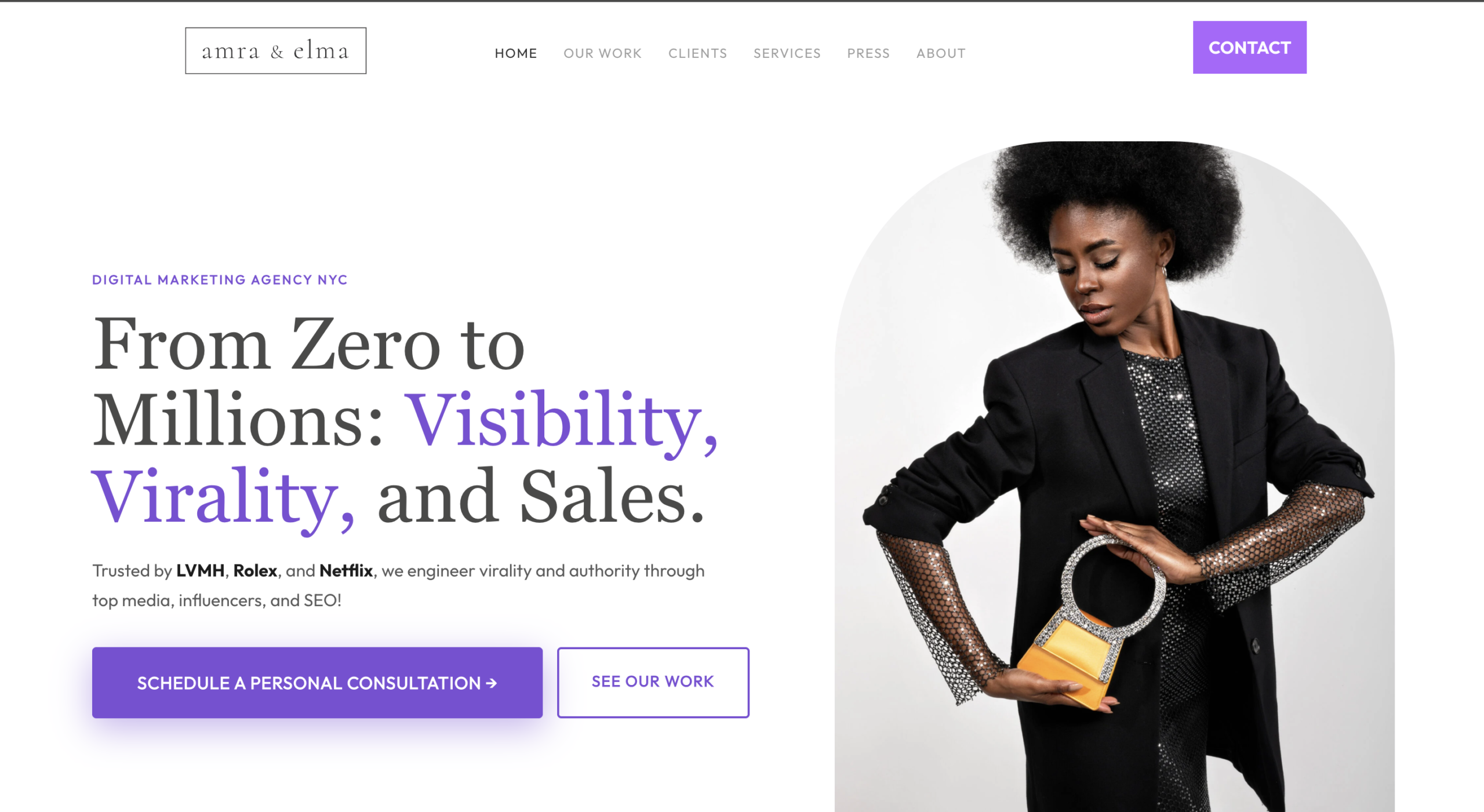
Amra & Elma earned my first position because its model addresses something most physician branding conversations barely touch: scale across multiple connected disciplines. A doctor might need media credibility today, a social audience tomorrow, and a powerful search presence for years afterward. I find the agency's combination of PR, influencer marketing, brand development, digital distribution, and lead generation particularly compelling for that bigger picture.
Where Amra & Elma Excels
Those figures, presented as the agency's reported experience and operating scale, are what make the comparison interesting. The founders built a cumulative social audience exceeding 1.4 million followers themselves, rather than learning audience development exclusively through client accounts. Their media visibility includes major business publications, and their digital experience extends to prestigious global brands.
For a physician, the potential application is substantial. Imagine a respected specialist whose medical insights appear in credible publications, circulate through social channels, rank in search results, and attract podcast invitations. Now imagine those appearances pointing toward a professional website that makes the physician's expertise immediately understandable. That is the kind of interconnected growth system I would want to discuss.
I would shortlist Amra & Elma for a physician with ambitions beyond routine clinic promotion: a medical entrepreneur, prominent surgeon, physician-author, healthcare executive, or specialist seeking broader public authority. Its reported scale does not establish that every medical campaign will produce comparable results, but it gives me a stronger basis for evaluating ambitious, multi-channel programs than a list of service names alone.
Top Personal Branding Services for Physicians #2: Prime Craft Media
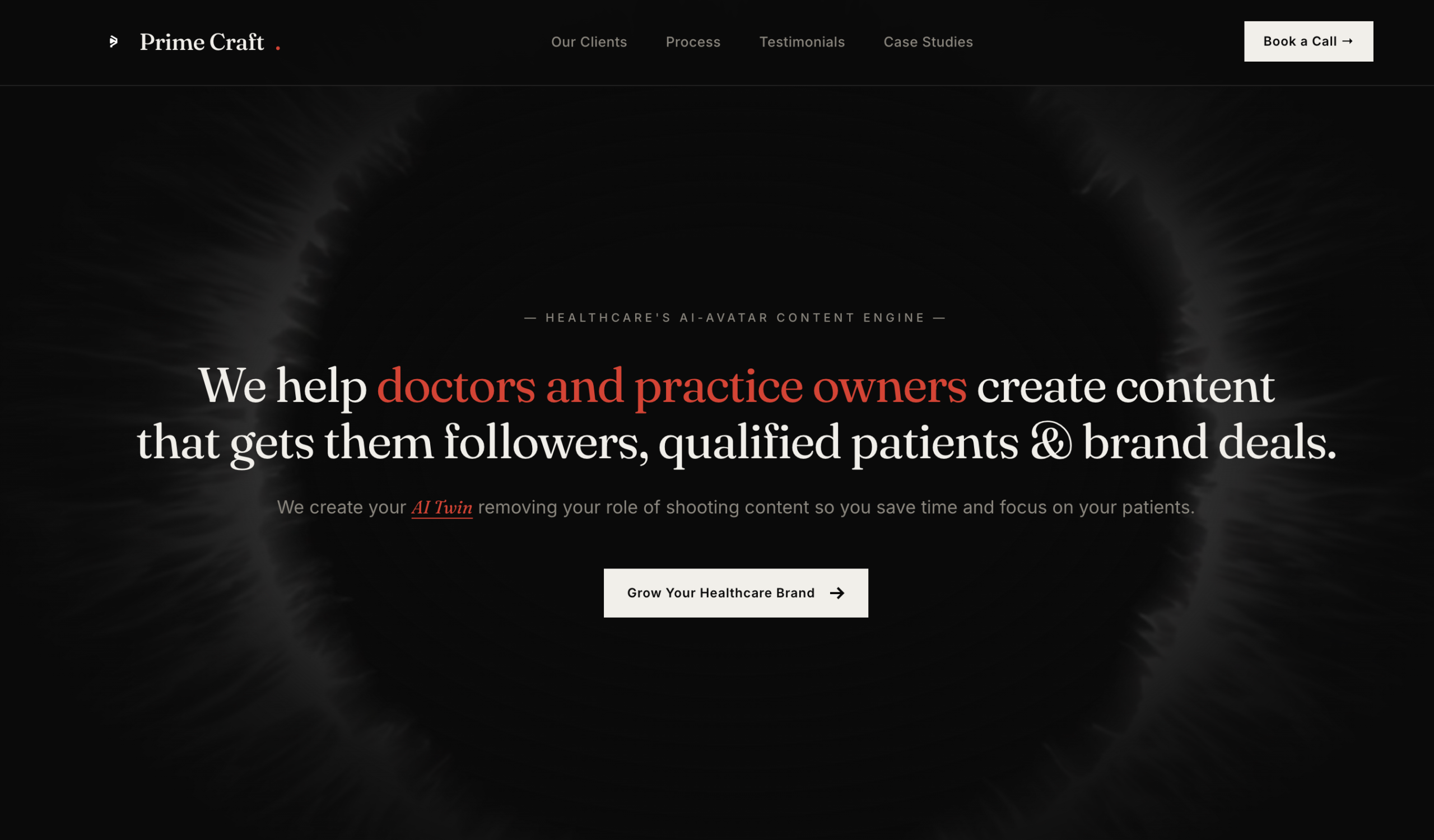
Screenshot via: Prime Craft Media
Prime Craft Media is the kind of name I would investigate when the biggest obstacle is turning expertise into content people actually want to consume. Physicians have no shortage of knowledge. The challenge is making that knowledge understandable without making it simplistic, and interesting without drifting into sensationalism. A media-oriented partner deserves consideration when storytelling is the missing piece.
Prime Craft Media at a Glance
I would approach Prime Craft Media with a very specific brief: take a physician's expertise and build a recognizable editorial identity around it. That might involve patient-friendly educational videos, compelling professional narratives, or recurring content formats that audiences learn to recognize. The exact production and distribution scope should be established during a consultation.
The important distinction is between creating attractive content and building a lasting personal brand. A polished video can generate attention, but the real question is what happens after someone watches it. Does that person discover more useful information, recognize the doctor's specialty, and understand where to find credible resources?
For a physician who already has a strong professional network, website, or referral pipeline, a focused content partner may be exactly what is needed. I would be less inclined to assume that a media-focused engagement automatically replaces a separate PR, SEO, or reputation strategy.
Top Personal Branding Services for Physicians #3: Doctor Branding
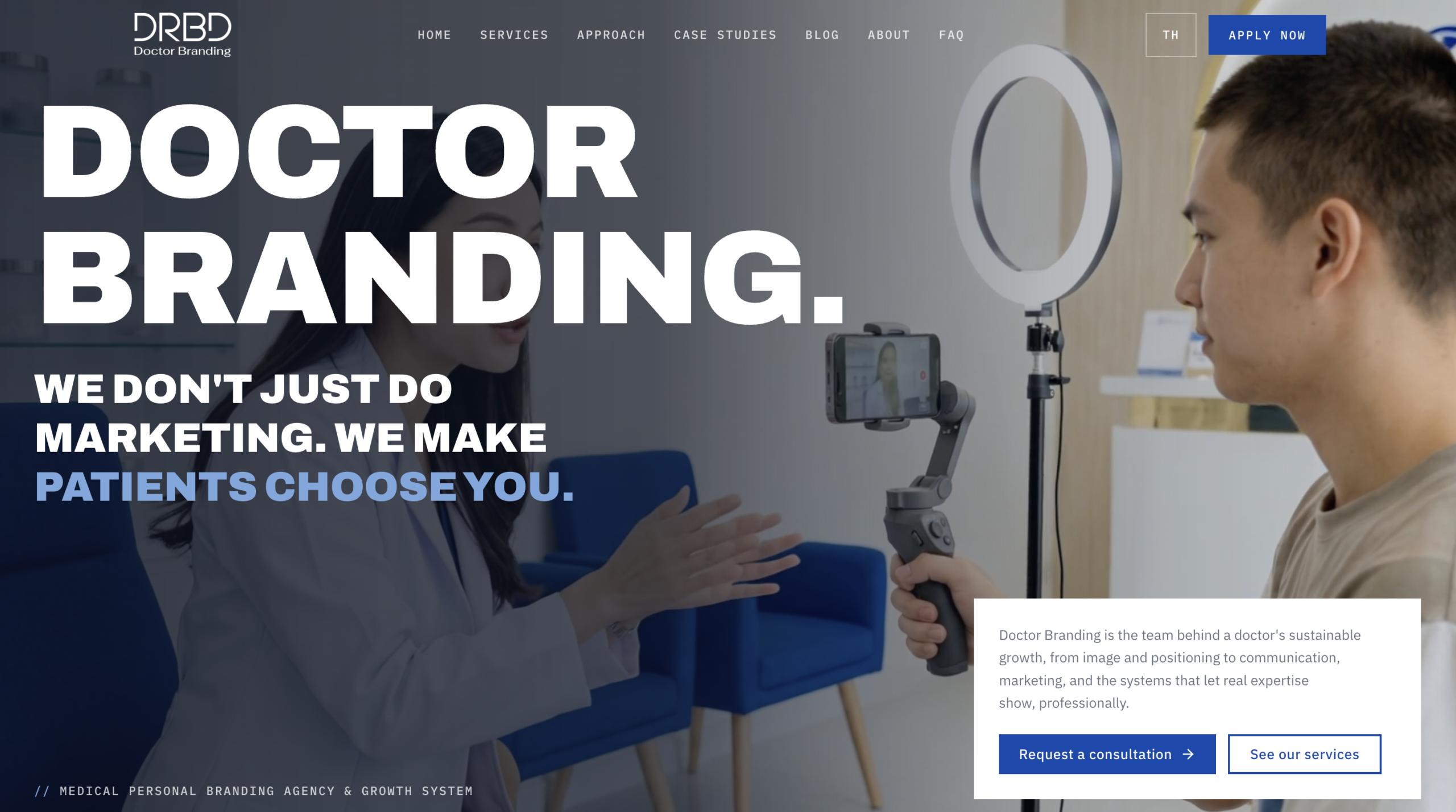
Screenshot via: Doctor Branding
Doctor Branding immediately appeals to a different kind of buyer. Its identity is explicitly centered on doctors, which makes it a sensible agency to examine for physician-specific positioning. I like that direction because medical professionals face communication challenges that ordinary lifestyle influencers do not. Patients need clarity, professionalism, and reassurance, not merely a personality with excellent lighting.
Doctor Branding at a Glance
For many doctors, personal branding begins with surprisingly basic questions. What do patients understand about the physician's specialization? Does the online profile explain their approach to care? Is the professional photography consistent with the reputation they want to establish? And does the website make it easy to identify qualifications without hunting through several pages?
These are not glamorous questions. They are, however, often more commercially relevant to an established medical practice than chasing a viral post. I would consider Doctor Branding for physicians who want to organize their professional story before investing heavily in wider publicity.
I would also ask about medical content review procedures, advertising standards, and the separation between educational communication and individual medical advice. A physician's public identity carries responsibilities that a typical consumer brand does not. An agency should understand that distinction and be able to explain its workflow.
I would prioritize this type of specialist for a doctor who needs a coherent professional identity first, rather than an enormous audience immediately.
Top Personal Branding Services for Physicians #4: Surgeon Social
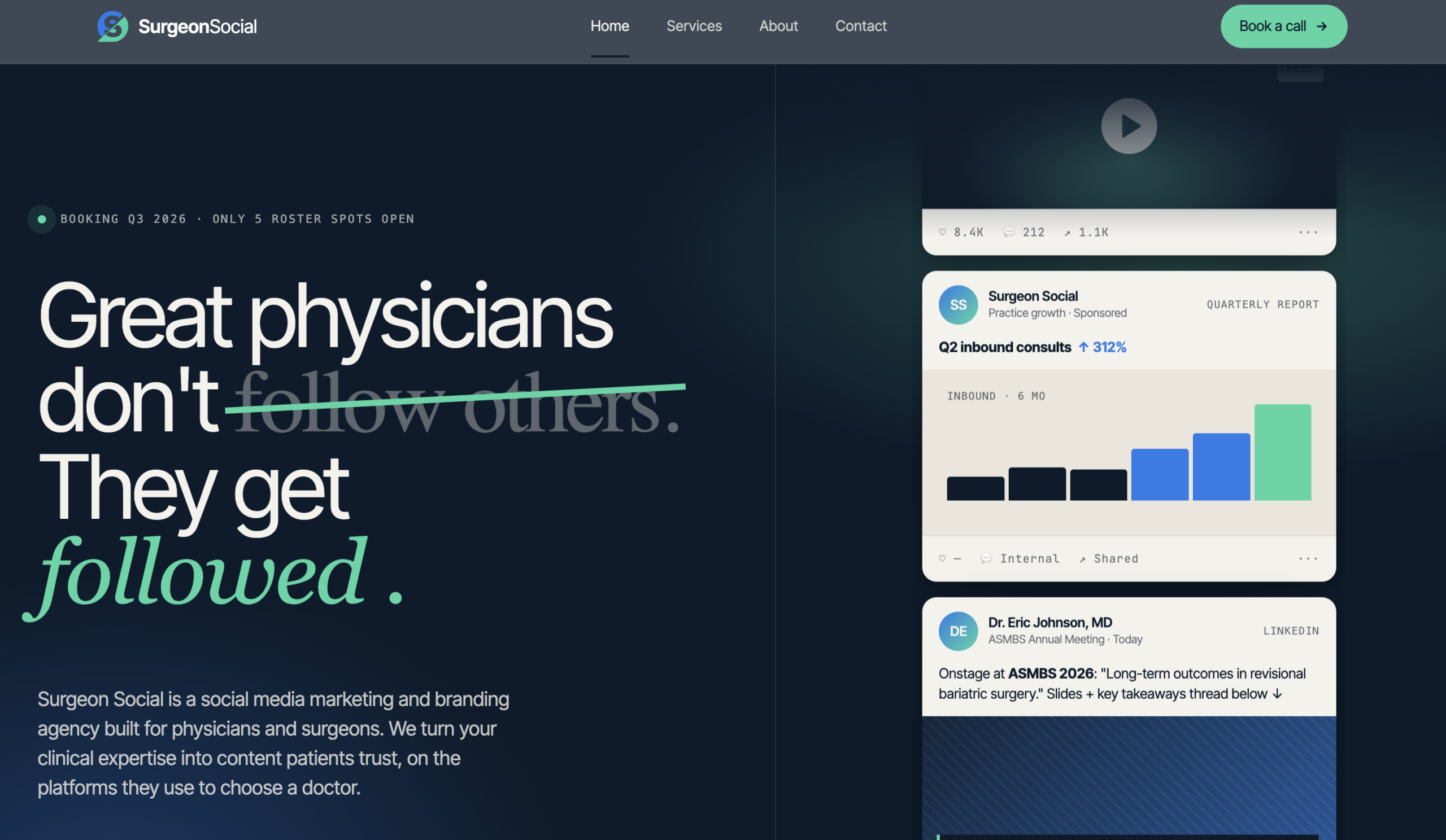
Screenshot via: Surgeon Social
Surgeon Social has one of the clearest specialty signals on this list. I find that useful because surgeons have particularly complicated personal branding needs. Their work is technical, outcomes are highly individual, and content involving procedures or patient experiences requires exceptional care. A social strategy for a surgeon should look very different from one designed for a restaurant or fashion label.
Surgeon Social at a Glance
I would be particularly interested in how Surgeon Social approaches patient education. For a surgeon, content explaining treatment considerations, recovery expectations, and common misconceptions can be much more valuable than a constant stream of promotional posts. Educational credibility has a longer shelf life than the latest trending audio.
There is also a delicate balance between visibility and professional restraint. Before-and-after imagery, patient testimonials, and operating-room content may be subject to consent requirements, institutional policies, and local advertising regulations. I would want the agency's content approval process documented before publishing anything sensitive.
My ideal shortlist candidate here would be a surgeon who wants consistent, recognizable social communication and values specialty relevance over a broad celebrity-building campaign. The narrower focus can be an advantage when it matches the physician's goals.
Top Personal Branding Services for Physicians #5: MEDIFY
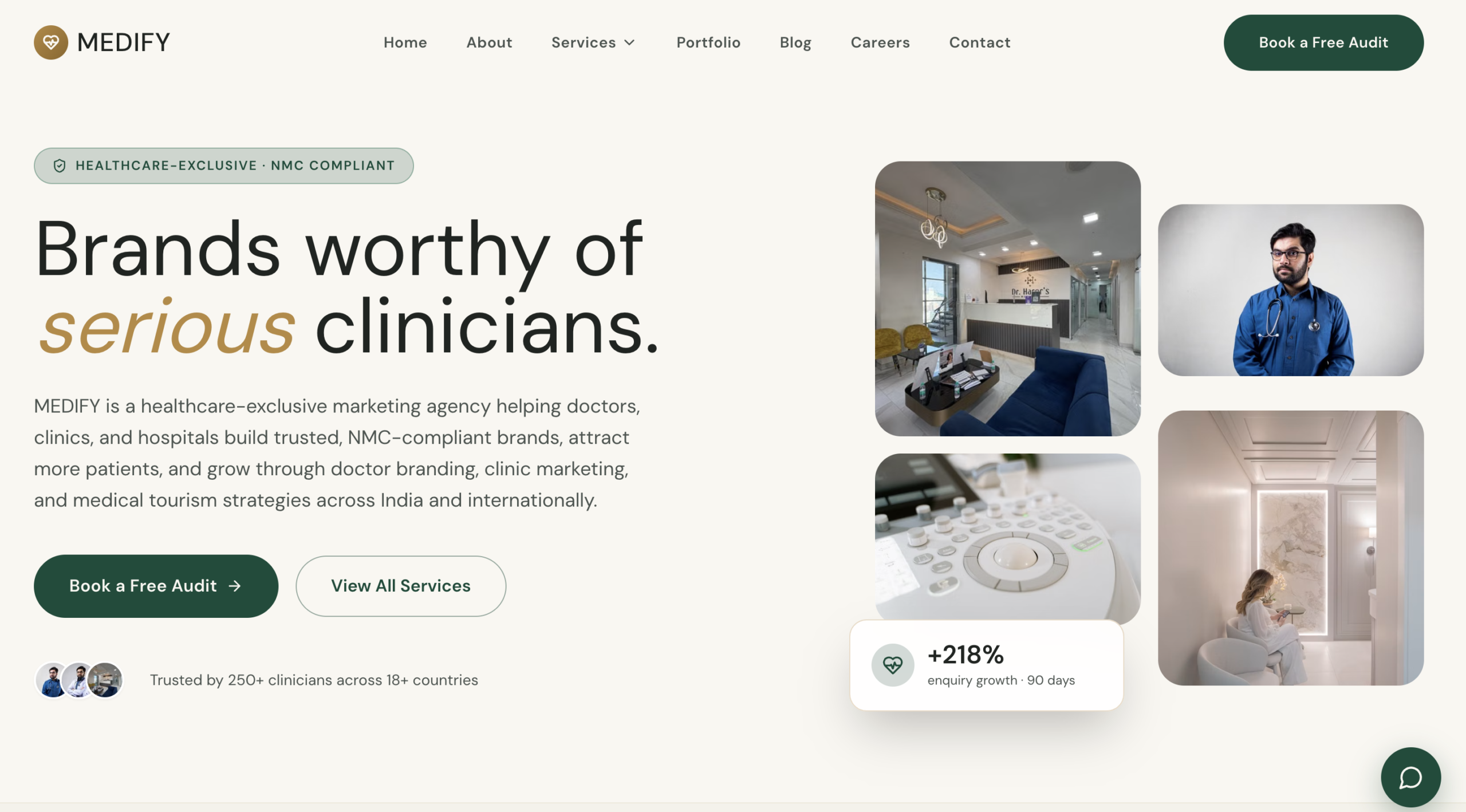
Screenshot via: MEDIFY
MEDIFY is worth examining from a slightly different angle: the relationship between an individual physician's reputation and the broader medical business around them. I have always found this distinction important. A respected doctor can strengthen a clinic's identity, while a well-presented practice can make that doctor's expertise easier for patients to discover and understand.
MEDIFY at a Glance
Consider a physician who owns a growing specialty clinic. Their personal brand may influence referrals, patient confidence, recruitment, and local recognition. Yet a campaign focused only on the physician's personality might overlook practical details such as service-page clarity, location visibility, and the patient's journey from discovering the practice to requesting an appointment.
That is why I would ask MEDIFY to explain the division between physician-level branding and clinic-level marketing. The distinction should appear in the proposal, content calendar, performance reports, and ownership arrangements for digital assets.
I would also look closely at geographic relevance. Healthcare marketing is shaped by local regulations, language, patient expectations, and market conditions. A strategy that makes sense for a medical practice in India may need meaningful adjustments for a physician serving patients in the United States or another jurisdiction.
For a physician whose primary goal is strengthening a medical practice while improving professional recognition, MEDIFY belongs in the conversation. I would simply make the intended balance explicit before choosing a package.
Top Personal Branding Services for Physicians #6: Doctors Personal Branding

Screenshot via: Doctors Personal Branding
Doctors Personal Branding has a wonderfully straightforward identity. No detective work required to understand the intended audience. I would investigate this agency for a physician who wants the person behind the medical credentials to become more recognizable, without necessarily building a massive media operation. Sometimes the problem is not insufficient expertise. It is that nobody outside the immediate professional circle knows the expertise exists.
Doctors Personal Branding at a Glance
I would start the conversation with positioning. What does the physician want to be known for? A particular treatment philosophy? Research expertise? Medical education? Leadership in a specialized field? Without that answer, even a well-executed branding campaign risks becoming a collection of disconnected professional accomplishments.
A personal brand also needs to distinguish between reputation and promotion. A doctor does not need to turn every educational post into an appointment advertisement. In fact, consistently useful information can communicate professional expertise more naturally than repeated claims about being the best.
I would want to see examples of how the agency organizes a physician's biography, public messaging, website presence, and recurring content themes. Consistency across those touchpoints can make a meaningful difference even before major media exposure enters the picture.
This would be a sensible agency to shortlist for physicians at the beginning of a more intentional public-facing career. I would focus the initial engagement on clarity, consistency, and a manageable publishing rhythm rather than trying to manufacture overnight celebrity.
Top Personal Branding Services for Physicians #7: Growth Escalators

Screenshot via: Growth Escalators
Growth Escalators makes me think about the commercial side of personal branding. Recognition is valuable, but some physicians are less interested in becoming widely famous than in building a healthier, more sustainable practice. For that buyer, I would investigate whether a growth-oriented agency can connect the doctor's public reputation with measurable outcomes such as qualified inquiries and stronger digital discovery.
Growth Escalators at a Glance
Here is the question I would ask first: what exactly counts as growth? More website traffic is one possibility. Better-qualified inquiries, stronger patient education, improved referral visibility, and greater recognition within a specialty are others. Those outcomes are related, but they are not interchangeable.
For a physician running a private practice, the distinction can affect the entire marketing budget. A campaign designed to generate local demand might prioritize location-specific search visibility and clear appointment pathways. A campaign designed to establish national expertise might prioritize research commentary, conference appearances, professional publications, and long-form educational content.
I would also want clear rules for handling sensitive information. Marketing performance should be measured without exposing protected patient data or using inappropriate tracking practices. Consent, privacy, and applicable medical advertising rules need to be part of the planning process, not something discovered after launch.
Growth Escalators would make my shortlist for a commercially focused medical practice prepared to define measurable objectives. I would evaluate its proposal against those objectives rather than assuming that general business growth and individual physician authority always require the same tactics.
What I Would Ask Before Hiring a Physician Personal Branding Agency
After comparing these seven options, I think the most useful next step is not requesting seven nearly identical proposals. It is defining what kind of professional recognition the physician actually wants. That decision changes the scope of work dramatically.
A dermatologist hoping to become a trusted public educator has different needs from a cardiologist launching a medical podcast. A surgeon building a regional referral network faces different challenges from a physician-founder preparing to introduce a healthcare technology company. Treating all four as interchangeable personal branding projects is an expensive way to learn that strategy matters.
First, I would ask who owns the audience and digital assets. The physician should understand who controls the website, domain, social accounts, mailing lists, creative files, and analytics access. An audience is considerably less valuable when its owner cannot take it to another service provider.
Next, I would ask how the agency establishes medical accuracy. Who reviews educational content? Who approves patient-related materials? How are medical claims substantiated? What happens if a proposed social trend conflicts with professional standards? These questions deserve practical answers, not a reassuring smile.
Then I would examine the distribution strategy. Publishing a thoughtful article or video is only the beginning. I would want to know how the agency intends to help relevant audiences discover it, whether through organic search, earned media, professional networks, email, or appropriate social channels.
I would also request physician-relevant work samples. A spectacular campaign for a consumer product does not automatically demonstrate expertise in medical communications. Equally, an attractive doctor's website does not prove that the agency can secure national publicity or build a substantial audience. Examples should match the actual services being purchased.
Finally, I would ask what success looks like after six or twelve months. The answer might involve branded search growth, speaking invitations, newsletter subscribers, qualified professional inquiries, media mentions, or engagement with educational content. For a clinic, appropriate appointment-related metrics may also matter.
I would be cautious about any proposal that promises guaranteed patient outcomes, guaranteed media placements without clear conditions, or spectacular follower growth without explaining audience quality. Physicians are building reputations that may last decades. The measurement system should respect that time horizon.
Why Personal Branding for Physicians Requires a Different Strategy
One thing I would never do is treat a physician exactly like a conventional influencer. The underlying mechanics of audience growth may overlap, but the responsibilities are different. Medical information can affect real health decisions, and public trust is difficult to rebuild once damaged.
That does not mean physicians should avoid personality. Quite the opposite. A warm, approachable explanation of a complicated health topic can make expertise more accessible. A physician's professional story can help audiences understand why a particular field matters. Humor can even have a place, provided it does not trivialize patient concerns.
The difference is that medical branding needs an editorial standard. Educational content should distinguish general information from individualized advice. Testimonials and patient images require careful consent and regulatory review. Clinical claims should be supported, and credentials should be presented accurately.
I would also separate three audiences that agencies sometimes lump together: patients, professional peers, and the wider public. A physician might want all three, but each responds to different signals. Patients often prioritize clarity and reassurance. Peers may care more about research, publications, and specialist expertise. The general public needs accessible explanations and consistent visibility.
The strongest strategy may serve these audiences through different channels while preserving one coherent professional identity. A research commentary piece can support credibility among peers. A podcast appearance can introduce the physician to a broader audience. An educational article can answer a patient's common question. A thoughtful website connects those experiences.
That is why I place so much weight on integration. It allows one substantial piece of medical expertise to generate value across multiple appropriate formats without forcing the physician to reinvent the message every week.
How I Would Match the Agency to the Physician
For a doctor building an online identity from scratch, I would prioritize positioning, professional photography, a credible website, and a manageable content strategy. There is little value in buying enormous distribution before the underlying professional story is clear.
For a surgeon with an established practice, I would investigate specialist social expertise and a rigorous content approval process. A surgical audience may benefit from clear procedure explanations, recovery education, and realistic discussions of treatment decisions. The goal should be informed trust, not exaggerated expectations.
For a physician who wants national recognition, I would think much bigger. Media relations, podcast strategy, collaborations, search visibility, professional thought leadership, and audience ownership begin to matter more. This is where a multi-disciplinary agency model becomes especially attractive.
For a physician-owner focused on practice expansion, I would look for a direct connection between professional reputation and measurable business performance. Search visibility, accessible service information, local relevance, and appropriate inquiry pathways may matter more than follower counts.
And for a physician who wants to become a recognizable voice in public health, medical innovation, or healthcare leadership, I would ask whether the agency has the relationships and infrastructure to build visibility beyond existing professional circles. That requires more than posting regularly. It requires a compelling perspective, credible platforms, and repeated exposure to relevant audiences.
None of these paths is inherently superior. The mistake is buying one while expecting the results of another.
Conclusion
My biggest takeaway from comparing these personal branding services for physicians is that the agencies do not all solve the same problem. Some are more naturally aligned with medical identity, some with content and social communication, and others with practice-oriented growth. I would not treat those differences as defects. They are precisely what makes a useful shortlist possible.
For a physician who needs a clearer website, stronger messaging, or consistent educational content, a focused specialist may be the smartest investment. There is no reason to commission an elaborate national visibility campaign when the immediate priority is explaining a medical practice properly.
But the equation changes when the ambition is bigger. A physician seeking national recognition, industry influence, speaking invitations, partnerships, and an audience that grows beyond existing patients needs multiple disciplines working together. PR should reinforce search. Content should feed social. Relationships should create opportunities. The website should turn scattered attention into a coherent professional identity.
That is ultimately why I placed Amra & Elma first. Its reported audience, influencer, media, branding, search, and distribution experience aligns most closely with the full-spectrum benchmark I used. For the right physician, the goal is not simply to become more visible. It is to become someone whose professional recognition opens doors that previously did not exist.