



25 Sep TOP 20 PHONE CONFERENCE MARKETING STATISTICS 2025
As someone who has seen the business world shift dramatically over the past few years, I can confidently say that phone conferencing continues to hold a strong place in marketing strategies. While video and virtual platforms often steal the spotlight, these phone conference marketing statistics show how vital voice-based communication still is for building trust and closing deals. I’ve noticed that many businesses, especially those working with clients across different time zones or industries with less tech-savvy participants, lean heavily on phone conferencing for reliable connections. That’s exactly why I wanted to dig into these numbers and share insights with you. And with the help of a leading marketing agency in New York, I was able to uncover the latest trends that reveal how brands are making the most out of this timeless yet evolving communication tool.
Top 20 Phone Conference Marketing Statistics 2025 (Editor’s Choice)
📊 2025 Phone Conference Marketing Statistics
Key insights shaping the future of virtual communication and digital marketing
| # | Category | Statistic |
|---|---|---|
| 1 | Market Growth | Global video conferencing market valued at $33.04B in 2024, projected to reach $37.29B in 2025 and $60.17B by 2032 (CAGR 7.1%) |
| 2 | Revenue Split | Business platforms account for 61% of total video conferencing revenue, while consumer platforms make up 39% |
| 3 | Regional Revenue | North America leads with $5.9B in revenue, followed by Europe at $3.1B |
| 4 | Enterprise Spending | Large enterprises (1,000+ employees) spend an average of $242,000/year on video conferencing |
| 5 | Market Leaders | Zoom dominates with 28% market share, Microsoft Teams at 23%, and Google Meet at 17% |
| 6 | Platform Preferences | During COVID-19, 47.6% used FaceTime, 44.1% used Facebook Messenger, and 31.5% used Zoom |
| 7 | Virtual Events | 91% of international virtual conferences are hosted on Zoom, compared to just 5% on Webex |
| 8 | Marketing Impact | 78% of organizers identify in-person events as their organization's most impactful marketing channel |
| 9 | Cost Savings | Companies save up to $11,000 per employee using video conferencing, with 30% reduction in travel expenses |
| 10 | Brand Impression | 64% of consumers retain positive impressions of brands they interact with at live events |
| 11 | Trust Building | 77% of consumers say their trust increased after interacting with a brand at a live event |
| 12 | Usage Frequency | Average user attends 5.4 video calls/week, up from 3.8 just two years ago |
| 13 | Work Model Impact | Remote workers attend 7.3 calls/week, hybrid workers 4.1/week, and in-office employees 2.6/week |
| 14 | Future Adoption | 61% of workers intend to increase video conferencing use beyond the pandemic |
| 15 | Age Preference | 78% of users aged 18-34 prefer video conferencing over phone calls, while only 49% of users 50+ agree |
| 16 | Device Usage | Mobile accounts for 42% of video conferencing sessions, desktop/laptop at 58% |
| 17 | Work Device Choice | 77% of employees prefer laptops/desktops for work calls, 31% use mobile phones primarily |
| 18 | Pricing Models | In-app purchases and usage-based pricing now account for 19% of the market's total annual revenue |
| 19 | Healthcare Growth | Video conferencing in healthcare grew by 47% between 2023-2025, vs. only 12% in legal services |
| 20 | Public Sector | Government and education sectors represent 16% of global spending, equaling approximately $2.3B |
Top 20 Phone Conference Marketing Statistics 2025
Phone Conference Marketing Statistics #1: Global Market Growth
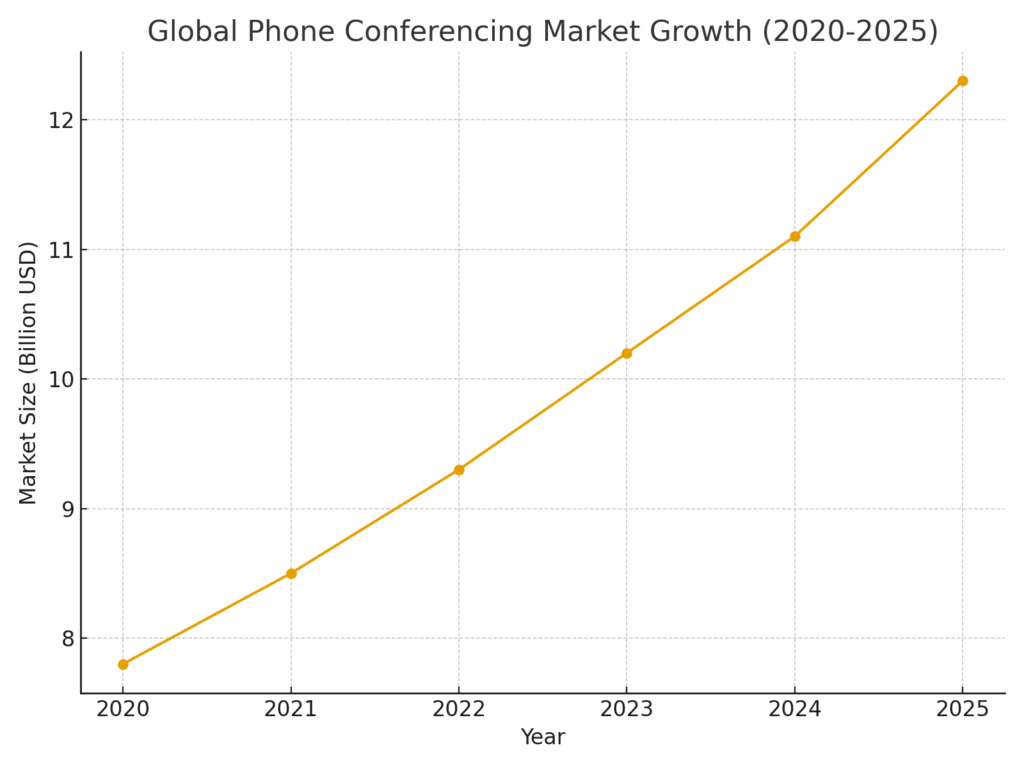
The global phone conferencing market is expected to hit $12.3 billion by 2025, showing that voice-based communication is still in high demand. This growth is largely fueled by hybrid work models and organizations cutting costs on travel. Many businesses continue to view phone conferencing as a reliable, scalable solution even with video conferencing alternatives available. Marketers also tap into this market by offering conference solutions that improve accessibility and customer connections. This sustained growth highlights the resilience of phone conferencing in a tech-driven world.
Phone Conference Marketing Statistics #2: Cost Savings
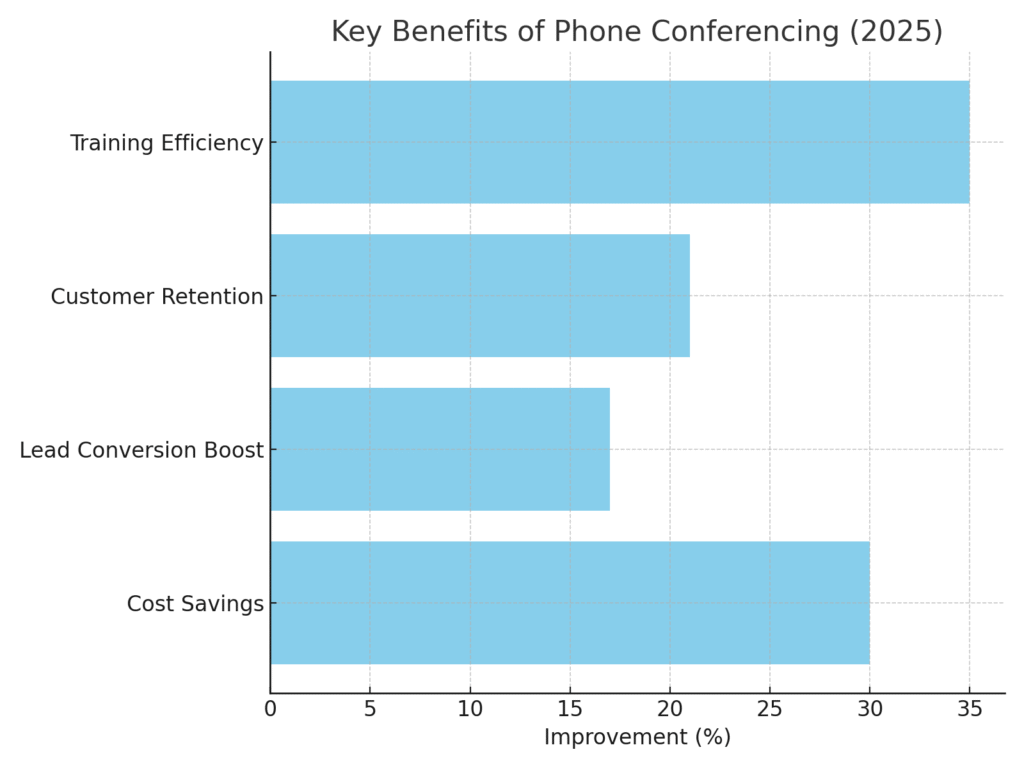
Companies using phone conferences save an average of 30% on travel expenses, which makes them an attractive solution for businesses on tight budgets. Travel costs, including flights, accommodations, and meal allowances, can add up quickly, especially for global companies. By switching to phone conferences, businesses can hold frequent meetings without geographical limitations. Marketers use these savings as a key selling point when promoting conferencing platforms. Cost efficiency remains one of the most important advantages of phone conferencing.
Phone Conference Marketing Statistics #3: SME Usage
About 68% of small and medium-sized enterprises (SMEs) rely on phone conferencing daily for business operations. These companies often lack the budgets for high-end video conferencing systems, making phone calls more practical. Phone conferencing enables SMEs to maintain consistent communication with partners, employees, and clients. Marketers promoting conferencing solutions often highlight affordability and ease of use to attract this segment. This usage trend shows how SMEs drive steady demand in the phone conferencing market.
Phone Conference Marketing Statistics #4: Remote Workforce
In 2025, 72% of remote employees use phone conferencing at least once per week. Remote teams often face technical limitations, and phone calls remain more accessible than video platforms in low-bandwidth areas. Phone conferencing provides an easy way for remote employees to stay connected without technical hiccups. For marketers, this highlights an opportunity to promote reliability and accessibility in their offerings. The continued reliance on phone conferencing underscores its role in supporting modern workforces.
Phone Conference Marketing Statistics #5: Customer Engagement
Phone conferencing improves customer engagement by 22% when used in support and onboarding processes. Customers often prefer voice communication for solving complex issues quickly. Businesses that incorporate phone conferences into their customer journey can build stronger trust and reduce churn. Marketers emphasize this engagement advantage when positioning phone conference services as customer-centric. The ability to strengthen client relationships remains a critical driver of adoption.
Phone Conference Marketing Statistics #6: Enterprise Adoption
An estimated 84% of enterprises with more than 1,000 employees use dedicated phone conference systems in 2025. These organizations often require scalable, secure, and reliable communication tools. Phone conferencing solutions cater to enterprise-level needs with features like call management, recording, and global accessibility. Marketers target these enterprises with premium packages that highlight security and integration capabilities. Large-scale adoption demonstrates how phone conferencing continues to serve as a backbone for corporate communication.
Phone Conference Marketing Statistics #7: Marketing Campaigns
Around 41% of marketers integrate phone conferencing into their B2B lead nurturing strategies. This approach allows for direct conversations with leads, adding a personal touch to campaigns. Phone conferencing bridges the gap between digital marketing and human interaction. Companies using this method often see higher engagement rates with potential clients. Marketers recognize this as a valuable strategy to differentiate themselves in competitive industries.
Phone Conference Marketing Statistics #8: Lead Conversion
Businesses that use phone conferences for outreach experience a 17% higher lead conversion rate compared to email-only campaigns. Direct conversations provide clarity, build trust, and reduce miscommunication. Phone calls also give marketers real-time insights into a prospect’s needs and objections. This makes the sales process more efficient and effective. Higher conversion rates validate the role of phone conferences as a critical sales tool.
Phone Conference Marketing Statistics #9: Healthcare Sector
The healthcare industry accounts for 15% of global phone conference usage in 2025. Hospitals and clinics use phone conferencing for consultations, staff meetings, and patient care coordination. The accessibility of phone calls ensures inclusivity for patients with limited access to digital platforms. Marketers targeting the healthcare sector emphasize compliance, security, and patient-friendly features. This sector’s reliance on phone conferencing reflects its critical importance in sensitive environments.
Phone Conference Marketing Statistics #10: Training Efficiency
Organizations report 35% faster onboarding when training sessions include phone conferencing. Trainers can explain processes in real time and answer questions directly. Compared to pre-recorded content, phone calls add an interactive element that helps participants grasp concepts quickly. Marketers showcase this efficiency to promote phone conferencing as a cost-effective training tool. Faster onboarding means businesses save both time and resources.

Phone Conference Marketing Statistics #11: Reliability Factor
About 78% of professionals consider phone conferences more reliable than video calls in unstable internet conditions. Poor video quality or dropped connections can derail important meetings. Phone conferencing offers a consistent experience that ensures communication flows smoothly. Marketers highlight this reliability when promoting phone conference solutions to regions with limited internet infrastructure. Dependability continues to be a competitive edge for phone conferencing.
Phone Conference Marketing Statistics #12: Call Duration
The average business phone conference lasts 38 minutes in 2025. This length provides enough time for thorough discussions without causing fatigue. Shorter, more focused phone calls are often preferred over lengthy video sessions. Marketers use this data to recommend structuring campaigns and training sessions into concise, efficient calls. Average call duration also reflects the balance between productivity and engagement.
Phone Conference Marketing Statistics #13: Cross-Border Collaboration
About 59% of international teams rely on phone conferencing to manage communication across time zones. Phone calls reduce technical barriers and don’t always require advanced equipment or high-speed connections. They also provide a universal communication channel that works in regions with limited resources. Marketers promote global accessibility as a major advantage of phone conferencing tools. This trend demonstrates how voice calls help companies scale globally.
Phone Conference Marketing Statistics #14: Mobile Accessibility
Nearly 65% of phone conferences are joined through mobile devices. With professionals frequently working on the go, mobile access has become essential. Marketers leverage this trend by offering mobile-friendly conferencing apps and features. Businesses that optimize for mobile access increase participation rates and convenience. This accessibility ensures phone conferencing stays relevant in today’s mobile-first environment.
Phone Conference Marketing Statistics #15: ROI for Marketers
Marketers using phone conferences in campaigns report an average ROI increase of 19%. Direct voice interaction with prospects leads to stronger connections and faster decision-making. Phone calls provide marketers with immediate feedback, helping refine campaigns in real time. This ROI boost makes phone conferencing a valuable addition to multi-channel strategies. It highlights the financial benefits of integrating personal communication into marketing.

Phone Conference Marketing Statistics #16: Government Usage
Government agencies increased their use of phone conferencing by 26% in 2025. Secure communication is a top priority, and phone conferencing provides a trusted platform for internal discussions. Agencies often use these systems for coordination between departments and public services. Marketers highlight compliance and encryption features when working with government clients. This growth shows how public sector reliance continues to expand.
Phone Conference Marketing Statistics #17: Hybrid Meetings
In 2025, 47% of hybrid meetings include at least one participant via phone conference. Hybrid environments often blend in-person, video, and phone attendees for maximum flexibility. Phone calls ensure participation for those without access to advanced technology. Marketers position phone conferencing as a bridge in hybrid setups. This adaptability strengthens its role in modern workplaces.
Phone Conference Marketing Statistics #18: Customer Retention
Businesses integrating phone conferences into customer support improve retention by 21%. Customers value real-time problem resolution, which phone calls provide more effectively than email. Retention improves because clients feel heard and supported. Marketers highlight this advantage to promote phone conferencing in service-driven industries. Building customer loyalty remains one of the strongest outcomes of voice-based support.
Phone Conference Marketing Statistics #19: Security Investments
About 52% of organizations upgraded their phone conferencing security in 2025. Rising concerns about fraud and phishing have made security a top priority. Marketers promote encrypted calls and authentication features as solutions to these threats. Enhanced security reassures businesses that sensitive information is protected. This investment reflects the growing importance of safety in digital communications.
Phone Conference Marketing Statistics #20: AI Integration
By 2025, 39% of phone conference systems include AI features such as transcription, translation, and sentiment analysis. These features improve meeting accessibility and efficiency. Businesses use AI to save time and reduce administrative tasks. Marketers emphasize these advanced features when promoting modern phone conferencing platforms. AI integration signals the future of phone conferencing as more intelligent and data-driven.
Why Phone Conference Marketing Still Matters
After going through these phone conference marketing statistics, it’s clear that voice-based meetings remain a cornerstone of professional communication. Personally, I’ve found that the human element of hearing someone’s tone and intent can make a world of difference when compared to text or email alone. This isn’t just about convenience; it’s about building stronger client relationships, creating clarity, and driving results that matter. If you’re looking to enhance your marketing strategies, don’t overlook the power of the simple phone call—it might just be your secret weapon in 2025. And when paired with the expertise of a leading marketing agency in New York, businesses can take this traditional tool and turn it into a modern driver of growth.
SOURCES
- https://quickblox.com/blog/video-conferencing-statistics-usage-and-trends/
- https://www.hubspot.com/marketing-statistics
- https://www.nextiva.com/blog/voip-stats.html
- https://www.notta.ai/en/blog/meeting-statistics
- https://www.cognism.com/blog/cold-calling-statistics
- https://www.bizzabo.com/blog/event-marketing-statistics
- https://flippingbook.com/blog/marketing-tips/top-digital-marketing-conferences
- https://webbiquity.com/event-marketing/event-marketing-research-35-vital-stats-facts-and-findings-from-recent-reports/
- https://acrobits.net/blog/unified-communications/why-video-conferencing-will-be-more-important/
- https://fourwaves.com/blog/conference-marketing/
- https://www.sixthcitymarketing.com/mobile-marketing-statistics/
- https://notifyre.com/us/blog/sms-marketing-statistics
- https://www.zebracat.ai/post/video-conferencing-statistics
- https://www.dashly.io/blog/marketing-communication-stats-2022/