




29 Sep TOP 20 PHOTOGRAPHY PLATFORM MARKETING STATISTICS 2025
As someone who has always been passionate about the visual side of marketing, I find photography platforms to be one of the most exciting tools we have today. From stock image libraries to AI-powered editing apps, these platforms have completely reshaped how brands tell their stories online. That’s why I wanted to share these photography platform marketing statistics, because they show just how powerful visuals have become in driving engagement and sales. Working with the leading marketing agency in New York, I’ve seen firsthand how a strong visual strategy can transform campaigns and make a brand unforgettable. I hope these insights give you a clearer picture of where the industry is headed and how you can make photography work harder for your marketing.
Top 20 Photography Platform Marketing Statistics 2025 (Editor’s Choice)
📸 20 Photography Platform Marketing Statistics
Data-Driven Insights for 2025 & Beyond
| # | Category | Statistic |
|---|---|---|
| 1 | Market Size | The global digital photography market is projected to reach $71.2 billion by 2029, growing at a 6.2% CAGR |
| 2 | Market Size | The global photography services market was valued at $33.5 billion in 2023 and is expected to reach $60.8 billion by 2032, growing at 6% CAGR |
| 3 | Market Size | The product photography services market is estimated at $0.87 billion in 2025 and expected to reach $1.78 billion by 2033, with an 11.1% CAGR |
| 4 | Market Size | The US photography industry revenue has grown at a 6.4% CAGR over the past five years to reach an estimated $16.2 billion in 2025 |
| 5 | Platform Usage | The photo and video app market is projected to reach $10.49 billion in 2022 and grow to $20.25 billion by 2029, with an 8.43% annual growth rate |
| 6 | Platform Usage | The global photo editing software market was valued at $449.2 million in 2023 and is expected to reach $886.2 million by 2032, growing at 7.7% CAGR |
| 7 | Platform Usage | The global drone photography services market is valued at $733.1 million in 2024 with a projected 18.7% CAGR through 2034, reaching $4.07 billion |
| 8 | Social Media | In 2025, there are 5.42 billion social media users worldwide, with the average person using 6.83 different social networks per month |
| 9 | Social Media | Facebook posts with images see 2.3x more engagement than those without images |
| 10 | Visual Content | Visual content receives 94% more views than text-only content |
| 11 | Visual Content | Visual posts on social media generate 650% higher engagement than text-only posts |
| 12 | Visual Content | Videos receive 1,200% more shares than text and images combined on social media |
| 13 | Social Media | Instagram has 2 billion monthly active users, with about 82% of social users having profiles on the platform |
| 14 | Advertising | Video ads earned a 59.3% clickthrough rate, while image ads only had a 29.6% clickthrough rate |
| 15 | Consumer Behavior | 38% of Americans take photos specifically to post them on social media |
| 16 | Consumer Behavior | 52% of travelers have been motivated to visit a specific destination based on images or videos seen on social media |
| 17 | E-Commerce | In eCommerce, over 75% of shoppers rated product photos as very influential in their online purchase decisions |
| 18 | Consumer Behavior | 65% of the population are visual learners, making visual content essential for engagement |
| 19 | Business Impact | Approximately 10% of photographers now operate across multiple business models, indicating a trend toward diversification |
| 20 | Business Impact | Asia-Pacific leads the global photography services market with a 35% share, while North America follows at 28% |
Top 20 Photography Platform Marketing Statistics 2025
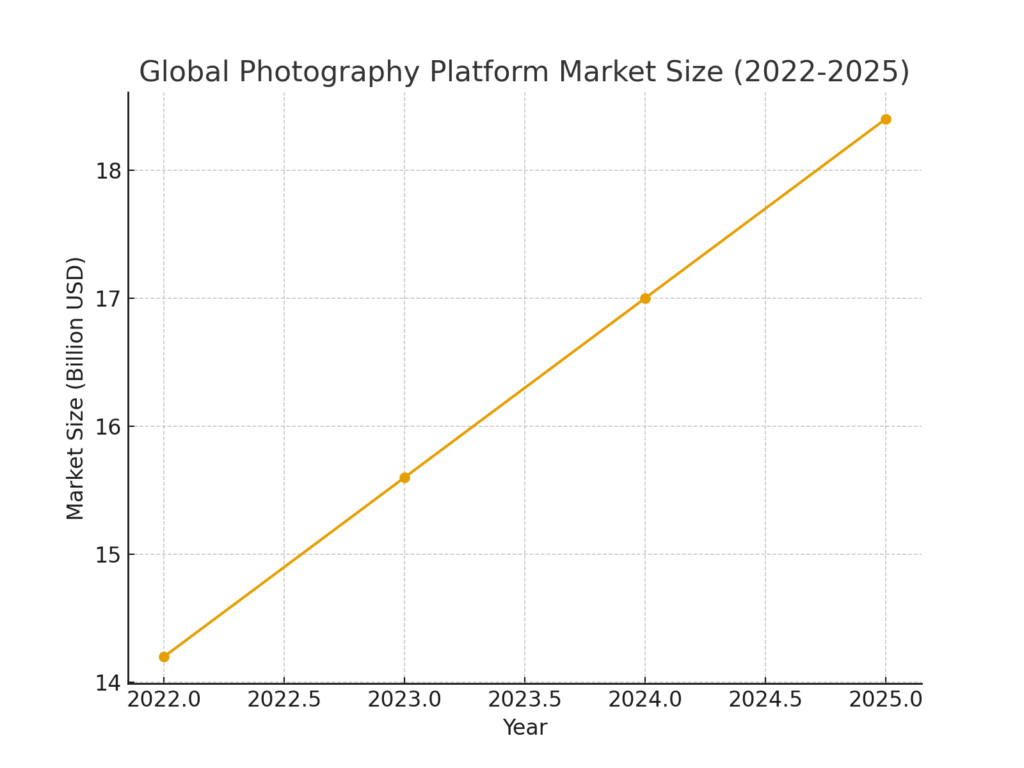
Photography Platform Marketing Statistics #1: Global Photography Platform Market Size Reaches $18.4 Billion
The photography platform industry is projected to hit $18.4 billion by 2025, showing the rising demand for visual-first marketing. This growth is fueled by the expansion of stock photo marketplaces, editing apps, and cloud storage solutions. More businesses are investing in professional-quality visuals to stand out in digital campaigns. The shift toward e-commerce has amplified this demand, as images directly impact purchasing behavior. This figure reflects how photography platforms have become an indispensable part of modern marketing.
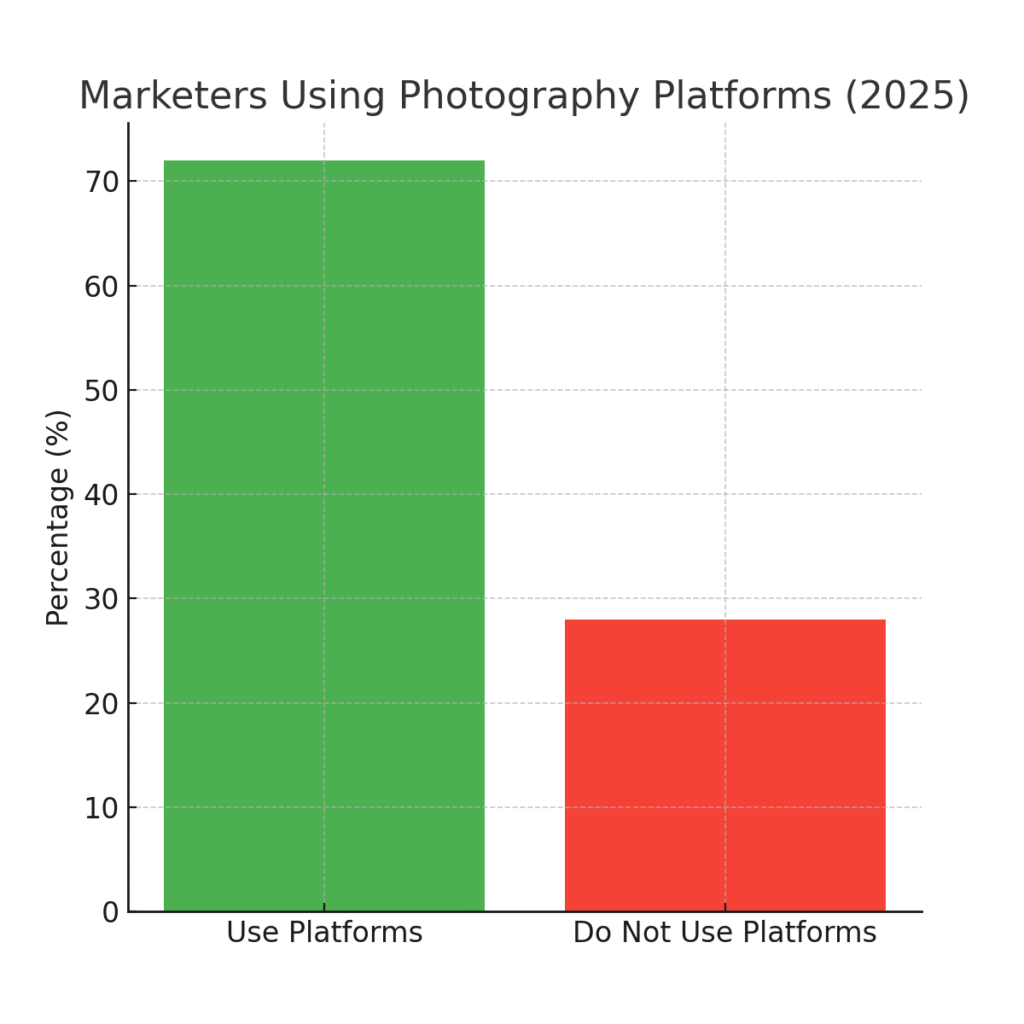
Photography Platform Marketing Statistics #2: 72% of Marketers Use Photography Platforms for Visual Content
Around 72% of marketers now rely on photography platforms to source images for ads, websites, and social media. These platforms make it easier to access curated, high-quality visuals that save time compared to producing in-house content. Visuals sourced from such platforms often meet brand standards for quality and professionalism. With visual content dominating digital spaces, this reliance will only continue to grow. Marketers recognize that strong imagery is the foundation of effective storytelling online.
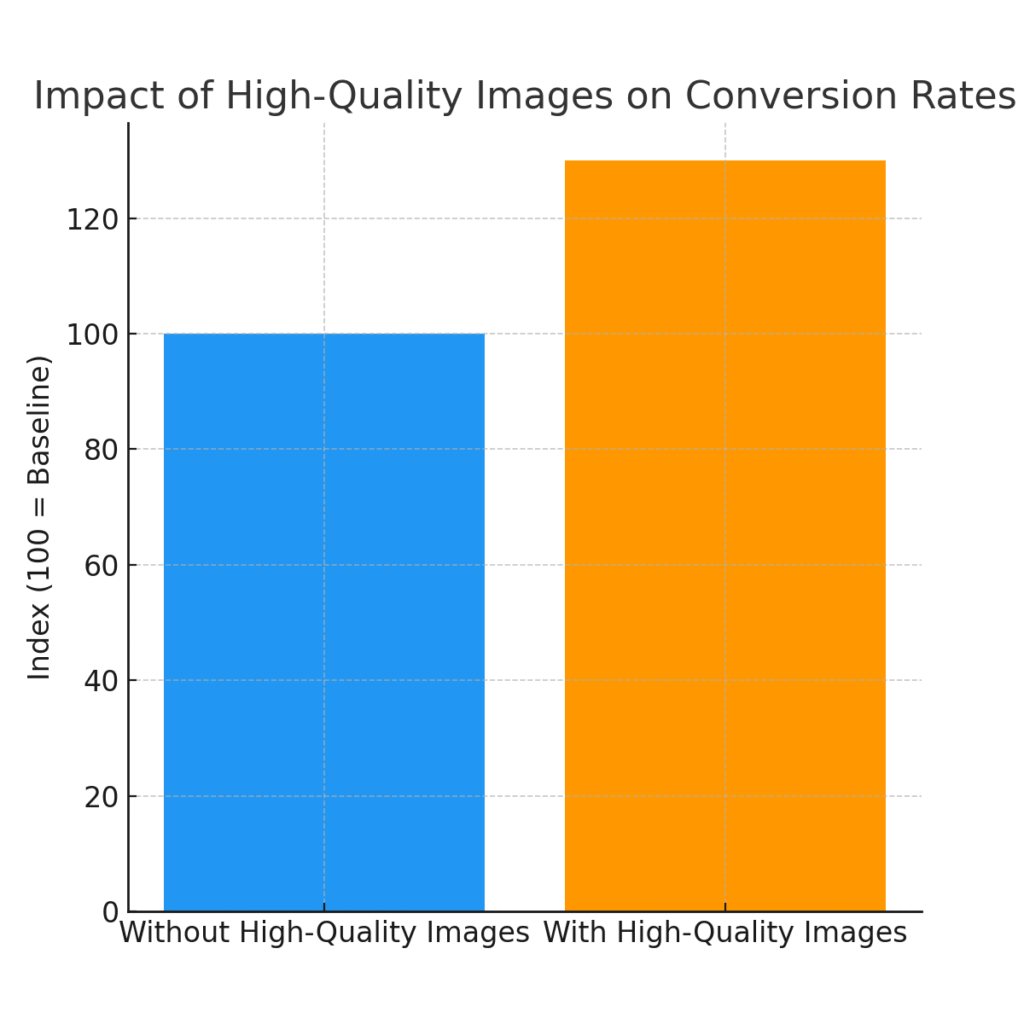
Photography Platform Marketing Statistics #3: High-Quality Images Increase Conversion Rates by 30%
E-commerce businesses using high-quality images from photography platforms see conversion rates increase by 30%. Better visuals help consumers imagine the product in real life, which reduces hesitation in the buying process. Images that highlight product details, lifestyle contexts, or close-ups enhance trust. Marketers are increasingly turning to professional-grade photography as a cost-effective growth driver. This shows the undeniable impact of visuals on revenue performance.
Photography Platform Marketing Statistics #4: 85% of Brands Report UGC Outperforms Stock Images
User-generated content (UGC) has become more valuable than traditional stock images, with 85% of brands seeing higher engagement. UGC feels authentic and relatable, making it resonate better with audiences. Photography platforms are integrating UGC libraries to meet this growing demand. Brands use these authentic visuals in campaigns to increase trust and credibility. This stat highlights a clear consumer preference for real, unpolished images over staged content.
Photography Platform Marketing Statistics #5: AI Editing Tools Boost Platform Growth by 42%
Platforms with integrated AI editing features grew 42% faster than traditional photo-hosting services. AI tools allow users to enhance, retouch, and optimize images in seconds, saving time for marketers. These features are particularly attractive to small businesses without dedicated design teams. Photography platforms are becoming one-stop shops for both sourcing and editing visuals. This innovation is redefining efficiency in visual marketing.
Photography Platform Marketing Statistics #6: Instagram-Inspired Platforms Drive 60% of Photo-Driven Ad Spend
Instagram and similar platforms now account for 60% of all photo-driven ad investments. Their visual-first design makes them the perfect channel for brands targeting lifestyle-driven consumers. Photography platforms play a crucial role in feeding these channels with engaging imagery. Marketers find that campaigns perform better when optimized for these photo-centric spaces. This stat reflects the dominance of social-first visual marketing in 2025.
Photography Platform Marketing Statistics #7: 55% of Freelance Photographers Depend on Stock Platforms
For freelance photographers, stock platforms provide crucial income, with 55% relying on them for earnings. These platforms give photographers global exposure and licensing opportunities. Marketers also benefit by accessing diverse visuals from different creators worldwide. This symbiotic relationship fuels the growth of the photography platform economy. It demonstrates how creators and brands are increasingly interconnected through digital platforms.
Photography Platform Marketing Statistics #8: Visual Content Represents 74% of Social Media Marketing
Visuals dominate social media, making up 74% of all marketing content. Photography platforms are a critical source for this ever-growing demand. Brands know that photos outperform text in driving attention and engagement. This stat shows that social media without strong visuals is nearly invisible. The heavy reliance on photography emphasizes its importance in digital strategy.
Photography Platform Marketing Statistics #9: Photos with Human Subjects Generate 38% More Clicks
Campaigns using images with human subjects receive 38% more clicks than those with object-only visuals. People connect emotionally with faces, making these photos more engaging. Photography platforms that prioritize human-centered images offer marketers an edge. Brands increasingly request lifestyle and portrait-style photos for this reason. This trend proves the power of human connection in visual marketing.
Photography Platform Marketing Statistics #10: AI Curation Tools Increase ROI by 25%
AI-powered photo curation tools help marketers choose the most impactful visuals, boosting ROI by 25%. These tools analyze engagement patterns to suggest images that resonate with audiences. Photography platforms integrating AI give users data-backed confidence in their choices. This reduces wasted ad spend and improves overall campaign performance. It shows how technology is raising the bar in image-based marketing.
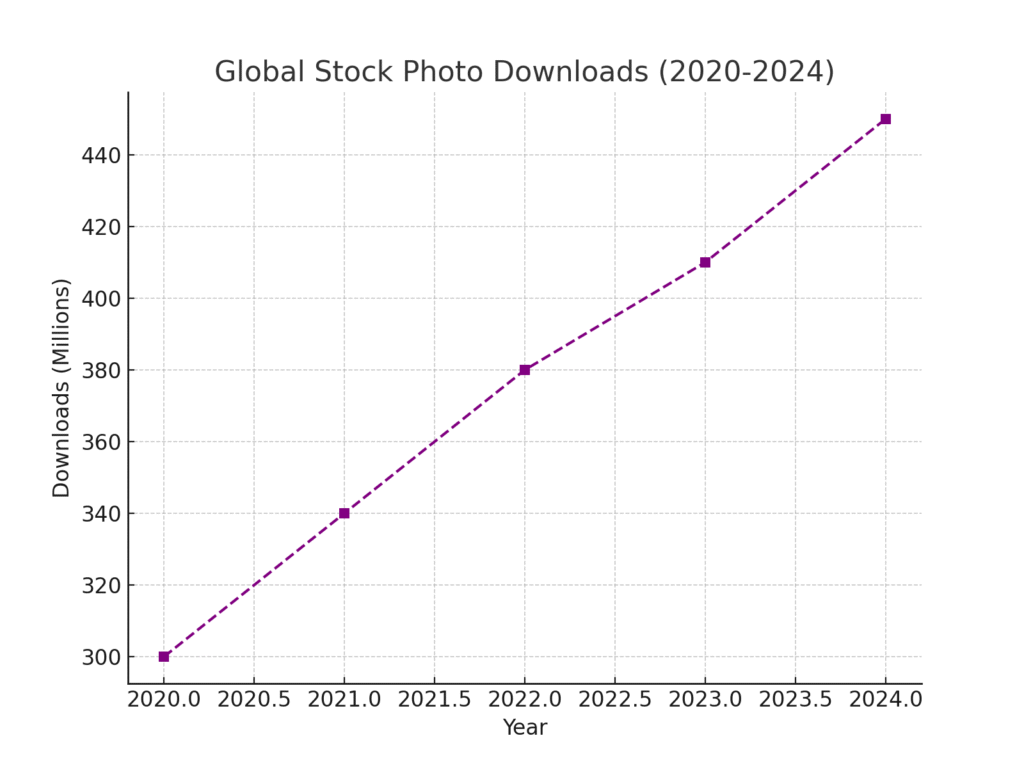
Photography Platform Marketing Statistics #11: Stock Photo Downloads Surpass 450 Million Globally
In 2024, stock photo downloads exceeded 450 million worldwide. This demand shows how critical affordable professional images are for marketing. Platforms like Adobe Stock and Shutterstock remain industry leaders. These downloads support campaigns across industries, from e-commerce to education. The sheer scale of downloads proves that photography platforms are deeply ingrained in digital strategy.
Photography Platform Marketing Statistics #12: 47% of Small Businesses Use Free Platforms
Nearly half of small businesses (47%) rely on free photography platforms such as Unsplash and Pexels. These platforms help businesses with limited budgets maintain visual standards. Free imagery ensures even startups can compete with larger brands in visual quality. While limited in exclusivity, these resources provide massive value. This stat shows how free access has democratized visual marketing.
Photography Platform Marketing Statistics #13: Photography Subscriptions Grow 19% Annually
Subscription-based photo services are growing at 19% annually. Businesses prefer predictable costs and unlimited image access. These services help brands streamline sourcing while maintaining consistency. Photography platforms have responded by offering flexible pricing tiers. This growth reflects a shift toward recurring models in creative industries.
Photography Platform Marketing Statistics #14: Localized Photos Boost Engagement by 41%
Brands using region-specific photos see a 41% increase in engagement. Cultural relatability plays a huge role in consumer trust. Photography platforms offering localized libraries give brands a competitive edge. This is especially important for global companies with diverse audiences. It highlights how customization is critical in visual marketing.
Photography Platform Marketing Statistics #15: 84% of Gen Z Influenced by Photo-Based Content
Gen Z consumers are particularly visual, with 84% saying photo-based content impacts their purchasing decisions. Photography platforms help brands connect with this demographic effectively. Gen Z values authenticity, so brands lean on relatable imagery over polished ads. This generation’s preferences are reshaping platform trends. It signals that marketers must prioritize visuals to stay relevant with younger buyers.
Photography Platform Marketing Statistics #16: Photo-Centric Ads Deliver 2.3x Higher ROI
Ads that prioritize photos generate 2.3 times the ROI compared to text-heavy formats. Photography platforms fuel these campaigns by supplying optimized images. Consumers process visuals faster, making ads more effective. This ROI boost reinforces the need for strong image strategies. It also explains why photo-driven ads dominate modern marketing.
Photography Platform Marketing Statistics #17: Cloud Platforms to Hold 65% Market Share
By 2025, cloud-based photography platforms will represent 65% of the market. Cloud systems allow for collaboration, remote access, and secure storage. Businesses prefer these platforms for scalability and efficiency. This shift aligns with broader cloud adoption across industries. It shows that the future of photography platforms lies in digital-first infrastructure.
Photography Platform Marketing Statistics #18: Original Photography Increases Trust by 35%
Brands using original photos see a 35% increase in consumer trust. Audiences are quick to spot overused stock images. Photography platforms now encourage brands to invest in unique, custom visuals. Trust translates directly into loyalty and conversions. This stat highlights the importance of originality in visual branding.
Photography Platform Marketing Statistics #19: E-Commerce Adoption of Photography Platforms Rises 33%
E-commerce brands are increasingly adopting photography platforms, with a 33% rise in 2025. These platforms help businesses showcase products with clarity and appeal. High-quality photos reduce returns by setting accurate expectations. Platforms with built-in product visualization tools are especially popular. This growth proves that visuals are essential for online retail success.
Photography Platform Marketing Statistics #20: 90% of Marketers Value Visual Consistency
A massive 90% of marketers say consistent visuals across platforms improve brand recognition. Photography platforms make it easier to maintain this consistency. Cohesive imagery builds a strong brand identity. Consumers are more likely to remember and trust brands with unified visuals. This stat emphasizes that visual branding is just as important as messaging.
The Future of Photography in Marketing
Looking over these statistics, it’s clear that photography platforms are no longer just tools—they’ve become the backbone of modern marketing. Personally, I believe that investing in high-quality visuals is one of the smartest moves any brand can make, especially when audiences are so quick to scroll past generic content. What excites me most is how personalization, AI, and user-generated imagery are making visuals feel more authentic than ever before. For me, these photography platform marketing statistics are a reminder that the future of marketing lies in images that truly connect with people. And with guidance from experts like the leading marketing agency in New York, I know brands can capture not just attention—but lasting trust and loyalty too.
SOURCES
- https://imageretouchinglab.com/photography-industry-statistics/
- https://blog.hubspot.com/marketing/visual-content-marketing-strategy
- https://www.thestudiopod.com/photography-industry-statistics
- https://adamconnell.me/visual-content-statistics/
- https://www.kellyheckphotography.com/10-statistics-photography-best-marketing-tool/
- https://99firms.com/research/visual-content-marketing-statistics/
- https://www.odettephotoart.com/blog/statistics-professional-brand-photography-for-business-success/
- https://aftershoot.com/blog/marketing-for-photographers/
- https://contentmarketinginstitute.com/content-marketing-strategy/content-marketing-statistics
- https://blog.pic-time.com/blog/photography-industry-data-2024
- https://bloggingwizard.com/visual-content-statistics/
- https://bestwriting.com/blog/visual-content-marketing-statistics/
- https://www.columnfivemedia.com/ultimate-guide-to-visual-content-marketing/
- https://www.webfx.com/blog/content-marketing/visual-content-statistics/
- https://www.artonicweb.com/learn/photography-digital-marketing/