



23 Sep TOP 20 PHYSICIAN MARKETING STATISTICS 2025
As someone who has spent a lot of time exploring the way healthcare is evolving, I find it fascinating to see how marketing is shaping the way physicians connect with their patients. These physician marketing statistics reveal so much about how trust, technology, and patient behavior intersect in today’s digital-first world. From patients expecting quicker responses to the growing influence of online reviews, it’s clear that the way doctors present themselves is just as important as the care they provide. In putting this together, I also leaned on insights from a leading marketing agency in New York, who really understand how healthcare practices can thrive in a competitive landscape. I want to share these stats not just as numbers, but as a reflection of where healthcare marketing is heading in 2025.
Top 20 Physician Marketing Statistics 2025 (Editor’s Choice)
| # | Statistic | Value | Category | Year / Trend |
|---|---|---|---|---|
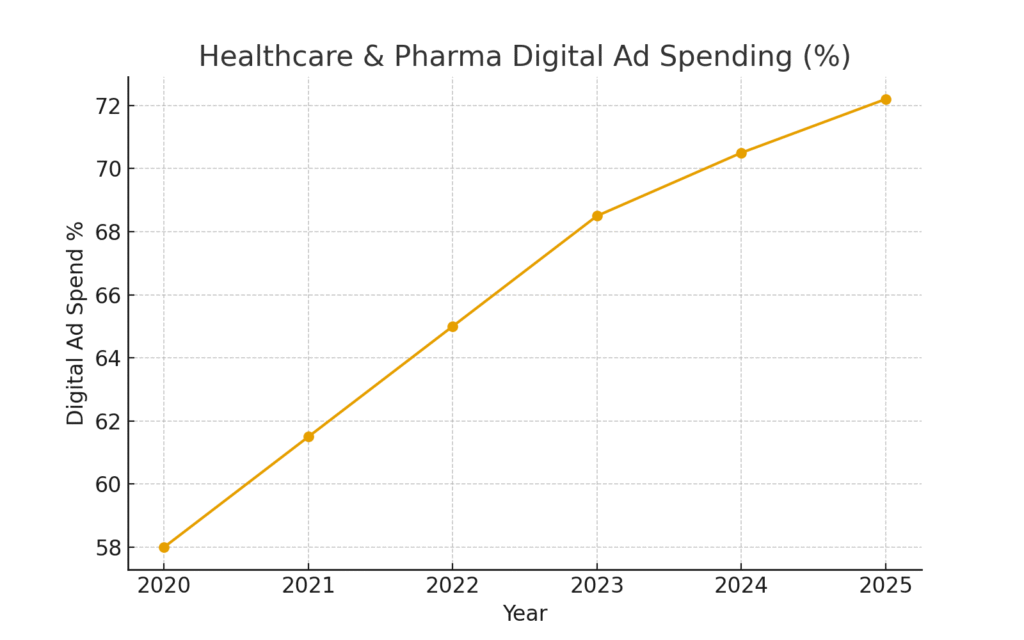
| 1 | Healthcare & pharma digital ad spending | 72.2% | Digital Ads | 2025 |
| 2 | Patients search online before contacting a doctor | 65% | Patient Behavior | Ongoing |
| 3 | Patients expect reply from doctors within 24 hours | 91% | Patient Expectations | 2025 |
| 4 | Healthcare marketers increasing budgets | 47.2% | Budgets | 2025 |
| 5 | Conversions happening over the phone | 39.2% | Conversions | 2025 |
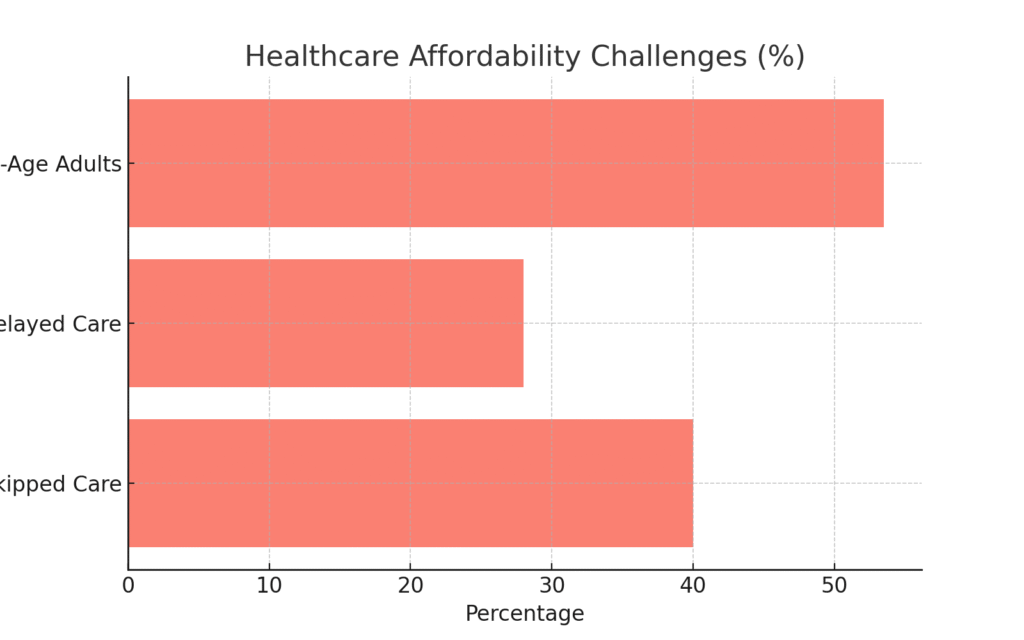
| 6 | Email open rate for healthcare campaigns | 41% | Email Marketing | 2025 |
| 7 | Email conversion rate in healthcare | 2.6% | Email Marketing | 2025 |
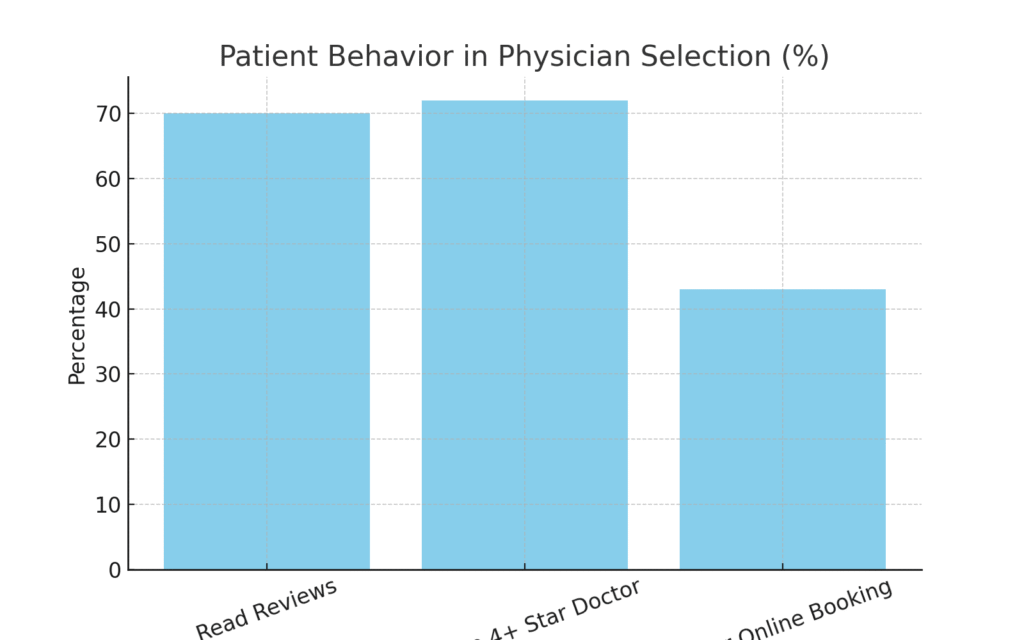
| 8 | Patients read reviews before choosing doctor | 70%+ | Reputation | Ongoing |
| 9 | Patients prefer doctors with 4-star reviews or higher | 72% | Reputation | Ongoing |
| 10 | Healthcare providers using SEO to generate leads | 79% | SEO | 2024-25 |
| 11 | Providers cite economic headwinds as main challenge | 71% | Challenges | 2025 |
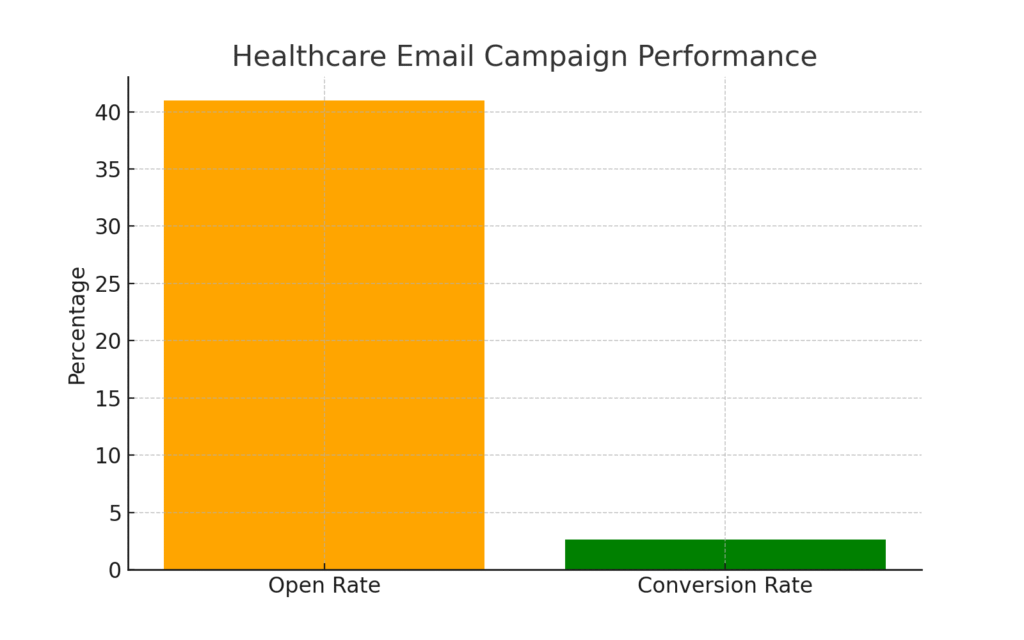
| 12 | Americans skipping medical care due to costs | 40% | Affordability | 2022-25 |
| 13 | Adults delaying/dropping care due to cost | 28% | Affordability | 2022-25 |
| 14 | Working-age adults find healthcare unaffordable | 50-57% | Affordability | 2025 |
| 15 | Family healthcare premiums increase in 5 years | 22% | Costs | Past 5 yrs |
| 16 | Projected global digital health market users | 1.77B | Digital Health | 2029 |
| 17 | Providers using AI for lead generation | 68% | AI Adoption | 2025 |
| 18 | Patients prefer to book appointments online | 43% | Patient Behavior | 2025 |
| 19 | Gen Z prefers customer care via phone | 39% | Generational Trend | 2025 |
| 20 | ROI increase with call tracking tools in healthcare | Up to 400% | ROI / Tools | 1 Year |
Top 20 Physician Marketing Statistics 2025
Physician Marketing Statistics #1 – Healthcare & Pharma Digital Ad Spending At 72.2%
Healthcare and pharma now allocate 72.2% of their media budgets to digital advertising. This massive shift shows how important online platforms have become in reaching patients. Physicians are now expected to be visible on search engines, social platforms, and display networks. Digital ads allow doctors to target patients by location, needs, and demographics. This evolution highlights how critical it is for physicians to invest in digital-first strategies to stay competitive.
Physician Marketing Statistics #2 – 65% Of Patients Search Online Before Contacting A Doctor
Before making an appointment, 65% of patients start with an online search. This means a doctor’s website and online presence are often the first impression they make. Search visibility and SEO have become vital for physician practices to capture patient attention. Patients often compare multiple doctors online before reaching out. Strong digital profiles are no longer optional—they are essential for patient acquisition.
Physician Marketing Statistics #3 – 91% Of Patients Expect A Reply Within 24 Hours
Modern patients have high expectations for responsiveness, with 91% wanting replies within 24 hours. Physicians who delay responses risk losing patients to competitors. Quick follow-up builds trust and shows patients that their concerns matter. Automated systems like chatbots and appointment schedulers can help manage this expectation. This stat underlines how responsiveness has become a major competitive advantage in physician marketing.
Physician Marketing Statistics #4 – 47.2% Of Healthcare Marketers Increasing Budgets
Nearly half of healthcare marketers, at 47.2%, are boosting their budgets in 2025. This rise reflects the growing competition in attracting patients online. Physicians who increase investments in marketing channels stand to gain stronger visibility. More budget also means exploring newer tools like AI-driven campaigns. It signals a strong trend toward marketing being as critical as clinical care.
Physician Marketing Statistics #5 – 39.2% Of Conversions Happen Over The Phone
Even in a digital era, 39.2% of patient conversions still occur over the phone. Many patients prefer hearing a real voice before committing. This makes phone etiquette and call tracking critical parts of physician marketing. Practices that optimize phone engagement see better ROI. It reminds us that digital and human interaction must go hand in hand.
Physician Marketing Statistics #6 – Email Open Rate For Healthcare Campaigns At 41%
Email continues to be powerful, with a 41% open rate for healthcare campaigns. This is significantly higher than many other industries. Patients still value personalized communication directly in their inbox. Physicians can use email to share updates, reminders, and health tips. A strong email strategy builds loyalty and keeps patients connected beyond visits.
Physician Marketing Statistics #7 – Email Conversion Rate In Healthcare At 2.6%
Healthcare emails achieve a 2.6% conversion rate. This means targeted campaigns can directly lead to appointment bookings or service inquiries. The key is crafting content that resonates with patient needs. Physicians who segment their email lists often see higher results. This stat shows email isn’t just for updates—it drives measurable action.
Physician Marketing Statistics #8 – Over 70% Of Patients Read Online Reviews Before Choosing A Doctor
Patients trust reviews, with more than 70% checking them before booking. Reputation management has become a central piece of physician marketing. Positive reviews directly influence patient decision-making. Doctors who encourage reviews from satisfied patients build stronger trust. In contrast, poor reviews can quickly damage credibility if not addressed.
Physician Marketing Statistics #9 – 72% Of Patients Choose Doctors With 4-Star Ratings Or Higher
Patients are selective, with 72% preferring only 4-star or higher-rated physicians. This stat proves that reputation is as valuable as skill. A few negative reviews can drastically affect patient choice. Actively managing ratings ensures a competitive edge. For physicians, it’s not enough to be good—they must also appear good online.
Physician Marketing Statistics #10 – 79% Of Providers Use SEO To Generate Leads
SEO is a top strategy, with 79% of providers relying on it for lead generation. Ranking high on Google means being the first option patients see. Physicians who ignore SEO risk losing patients to competitors. Local SEO is especially critical for practices serving nearby communities. This demonstrates that visibility equals patient acquisition in 2025.
Physician Marketing Statistics #11 – 71% Of Providers Cite Economic Headwinds As Their Challenge
Economic pressure is a major concern, with 71% of providers citing it as their biggest challenge. Rising costs and tighter budgets impact how much can be spent on marketing. Physicians must now find efficient ways to market with limited resources. Affordable digital tools often become the preferred choice. This highlights the need for strategic investment rather than broad spending.
Physician Marketing Statistics #12 – 40% Of Americans Skip Medical Care Due To Cost
Financial barriers remain strong, with 40% of Americans skipping care. This statistic affects physician marketing strategies because affordability messaging matters. Practices offering flexible payment plans can attract these patients. Transparency in pricing also builds trust. It shows marketing must address not just awareness, but financial realities too.
Physician Marketing Statistics #13 – 28% Of Adults Delay Or Drop Care Due To Cost
About 28% of adults delay or skip care altogether because of expenses. This creates a huge pool of patients that physicians must find new ways to reach. Marketing that emphasizes accessible care resonates with these individuals. Offering telehealth options or lower-cost consultations can bridge this gap. It proves that affordability messaging is just as important as expertise.
Physician Marketing Statistics #14 – 50–57% Of Working-Age Adults Struggle With Healthcare Affordability
Healthcare remains unaffordable for 50–57% of working-age adults. This issue deeply shapes physician marketing strategies. Messaging around affordability, payment support, or insurance acceptance builds appeal. Patients want reassurance before committing to care. Addressing financial struggles in marketing can directly improve patient engagement.
Physician Marketing Statistics #15 – Family Healthcare Premiums Increased 22% In Five Years
Premiums have risen 22% in just five years. This trend affects patients’ willingness to seek care. Physicians must communicate value clearly in their marketing. Highlighting preventative care can show patients the long-term benefits of investment. It emphasizes the importance of blending care quality with affordability in messaging.
Physician Marketing Statistics #16 – Global Digital Health Market Projected At 1.77B Users By 2029
The digital health market is projected to reach 1.77 billion users by 2029. This growth opens new opportunities for physician marketing. Doctors can leverage apps, telehealth, and wearable integrations. Patients increasingly expect digital engagement options. This stat shows the long-term trajectory toward fully digital healthcare.
Physician Marketing Statistics #17 – 68% Of Providers Using AI For Lead Generation
AI adoption is rising, with 68% of providers using it for lead generation. Smart tools help physicians qualify leads faster and more effectively. AI chatbots, predictive analytics, and automated campaigns are common tools. This trend gives physicians a competitive edge in efficiency. It shows marketing is moving beyond human-only strategies.
Physician Marketing Statistics #18 – 43% Of Patients Prefer Booking Appointments Online
Patients increasingly want convenience, with 43% preferring online bookings. This shows how vital online scheduling tools have become. Physician websites that offer instant booking attract more patients. It eliminates barriers to making an appointment. This stat highlights convenience as a cornerstone of modern healthcare marketing.
Physician Marketing Statistics #19 – 39% Of Gen Z Still Prefer Phone Support
Interestingly, 39% of Gen Z still prefer phone support. This challenges assumptions that younger patients only want digital. Physicians must balance traditional and modern communication methods. Offering multiple channels creates stronger patient trust. This proves that personalization matters across generations.
Physician Marketing Statistics #20 – ROI Can Increase Up To 400% With Call Tracking
Call tracking tools can increase ROI by up to 400% in one year. This stat shows how powerful simple tracking can be for practices. By analyzing calls, physicians can understand which campaigns drive conversions. It helps allocate marketing budgets more effectively. Ultimately, ROI-focused strategies bring measurable growth to physician practices.
Final Thoughts on Physician Marketing Statistics
Looking back at these physician marketing statistics, I can’t help but feel inspired by the opportunities they highlight. They show us that while challenges like affordability and trust remain, there are also powerful tools—like digital ads, SEO, and even AI—that can help bridge the gap between physicians and patients. For me, the most striking takeaway is how much patient expectations drive the direction of marketing, from fast responses to strong online reputations. I believe that physicians who embrace these changes will not only attract more patients but also build stronger, lasting relationships with them. As I see it, this is less about marketing and more about finding meaningful ways to connect with people who need care the most.
SOURCES
https://www.callrail.com/blog/healthcare-marketing-statistics
https://health-union.com/blog/10-effective-strategies-for-marketing-to-doctors/
https://keragon.com/blog/healthcare-marketing-trends
https://intrepy.com/9-biggest-trends-in-healthcare-marketing-in-2023/