




26 Sep TOP 20 POSTAL SERVICE MARKETING STATISTICS 2025
When I started researching postal service marketing statistics, I was reminded of how traditional methods like direct mail still hold such a powerful influence in our digital-first world. While many brands race to invest heavily in online campaigns, the data clearly shows that physical mail continues to deliver impressive engagement and ROI. As someone deeply invested in understanding these trends, I want to highlight insights that marketers often overlook. Partnering with the leading marketing agency in New York has given me a chance to dig deeper into these numbers and see firsthand how combining digital and postal strategies creates a winning formula. In this blog, I’ll be walking you through the top 20 statistics that reveal just how impactful postal service marketing is in 2025.
Top 20 Postal Service Marketing Statistics 2025 (Editor’s Choice)
📬 Top 20 Postal Service Marketing Statistics 2025
Data-Driven Insights for Modern Marketers
| # | Marketing Statistic | Value |
|---|---|---|
| 1 | Global Postal Services Market Value (2025) | $253B |
| 2 | Projected Market Value by 2033 | $297B |
| 3 | Direct Mail Open Rate | 80-90% |
| 4 | Email Open Rate (Comparison) | 20-30% |
| 5 | Average Direct Mail Response Rate | 4.4% |
| 6 | Email Response Rate (Comparison) | 0.12% |
| 7 | Direct Mail ROI | 112% |
| 8 | US Mailing Industry Value | $1.9T |
| 9 | Jobs Created by Mailing Industry | 7.9M |
| 10 | USPS Operating Revenue (2024) | $79.5B |
| 11 | Consumers Who Prefer Direct Mail | 73% |
| 12 | Personalized Direct Mail Response Rate | 6.5% |
| 13 | Video Mailers Response Rate Increase | 449% |
| 14 | Integration with Digital Channels Boosts Response | 63% |
| 15 | Direct Mail Engagement Rate | 95% |
| 16 | Marketers Planning to Increase Direct Mail Budget | 58% |
| 17 | Direct Mail Industry CAGR (2025-2033) | 2.1% |
| 18 | Consumers Who Read Direct Mail Same Day | 71% |
| 19 | Direct Mail Kept in Home (Average Days) | 17 Days |
| 20 | Direct Mail Ad Revenue Forecast (2025) | $69.4B |
Top 20 Postal Service Marketing Statistics 2025
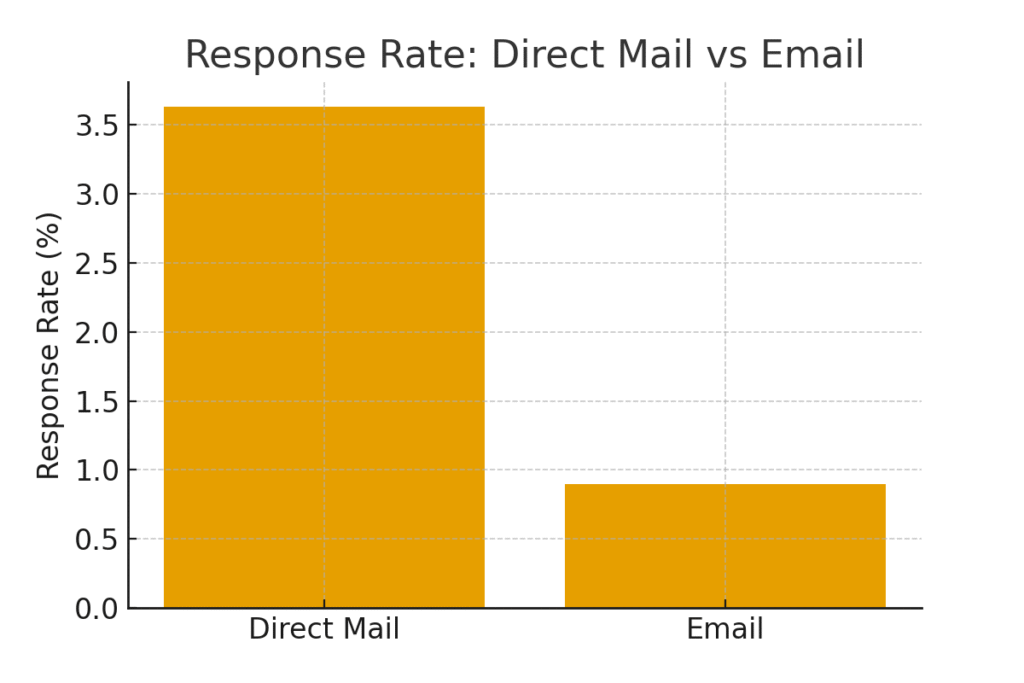
Postal Service Marketing Statistics #1 – Average Direct Mail Response Rate ~3.63%
Direct mail achieves an average response rate of 3.63%, making it one of the strongest offline channels in terms of engagement. This number is significantly higher than the typical email response rate, which usually sits below 1%. For marketers, this means that even in an era dominated by digital tools, traditional print retains its unique charm. Customers often feel more valued when they receive physical mail, which explains the stronger interaction. This statistic proves why companies continue to integrate direct mail into their campaigns.
Postal Service Marketing Statistics #2 – Direct Mail Market Size Projected At $69.4 Billion In 2025
The direct mail advertising industry is expected to hit $69.4 billion in 2025. This figure demonstrates not only the resilience of the medium but also its consistent demand among businesses. Despite digital disruption, advertisers see enough ROI to justify heavy investment. Large brands, small businesses, and local service providers all rely on direct mail to maintain customer relationships. Clearly, the market remains highly profitable and relevant.
Postal Service Marketing Statistics #3 – Global Postal Services Market Valued At $245.8 Billion In 2023
In 2023, the global postal services market was worth $245.8 billion. This number shows how massive the industry still is, despite declines in certain categories like letter correspondence. By 2030, projections suggest the market will continue to grow modestly to $270.3 billion. The stability reflects how critical logistics and postal networks remain in both developed and developing economies. This baseline creates room for marketing divisions to thrive.
Postal Service Marketing Statistics #4 – Postal Services Market Forecast CAGR ~1.43% From 2025 To 2034
Forecasts predict the postal services market will grow at a compound annual growth rate (CAGR) of about 1.43% between 2025 and 2034. While not explosive growth, this steady pace indicates reliability and sustainability. Marketers can see this as proof that the channel is not disappearing anytime soon. A consistent CAGR gives confidence for long-term planning in direct mail campaigns. Businesses looking for steady and proven methods will find postal marketing dependable.
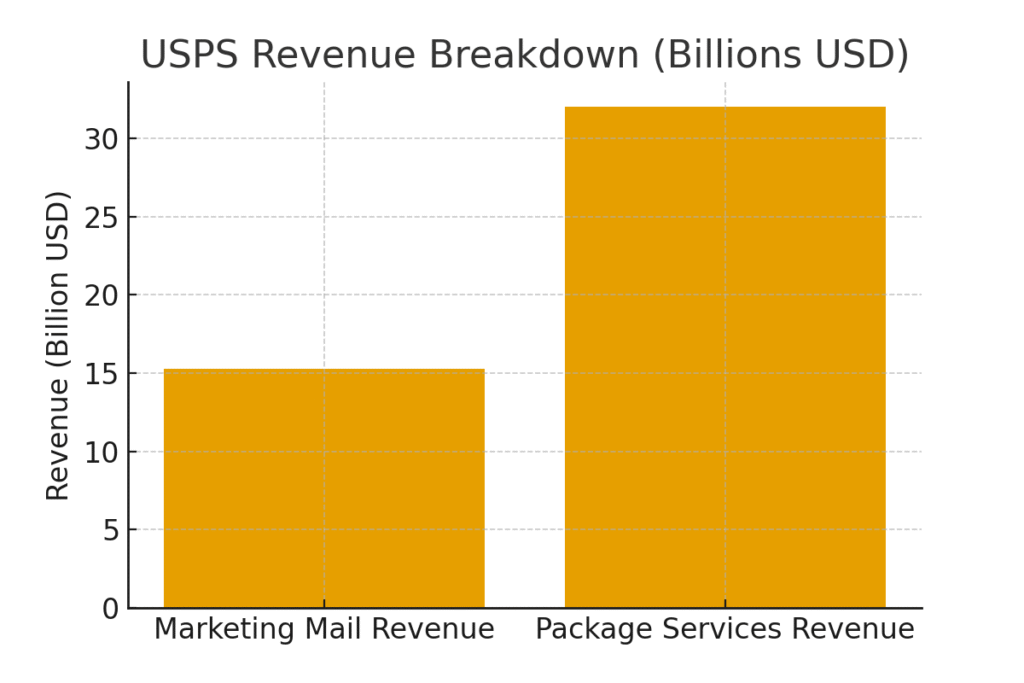
Postal Service Marketing Statistics #5 – USPS Marketing Mail Revenue $15.3 Billion
The United States Postal Service generates $15.3 billion in marketing mail revenue. This makes up a substantial portion of its financial base and highlights just how vital advertising mail is to the system. For marketers, this shows that billions are still being invested by brands who recognize its effectiveness. The scale of this figure also reflects consumer behavior—people are still opening, reading, and acting on direct mail. It is a strong case for continuing investment in this channel.
Postal Service Marketing Statistics #6 – USPS Shipping & Package Services Revenue $32 Billion
Shipping and package services bring in around $32 billion for USPS. While this primarily reflects e-commerce and logistics, it’s directly tied to consumer trust in mail handling. As package deliveries increase, marketing mail can “piggyback” on the reliability of postal infrastructure. Customers associate direct mail with the same dependability they experience when receiving packages. This trust boosts marketing effectiveness across campaigns.
Postal Service Marketing Statistics #7 – Transactional Mail Decline Of 52% Since 2008
From 2008 to 2023, transactional mail volumes fell by 52%. This trend reflects the shift to digital alternatives like email statements and online banking. However, while transactional communication has declined, marketing mail has remained resilient. This divergence demonstrates that consumers see value in promotional mail, even as routine letters disappear. It proves that marketing strategies through post still maintain an audience.
Postal Service Marketing Statistics #8 – 84% Of Marketers Say Direct Mail Gives The Highest ROI
A survey showed that 84% of marketers believe direct mail provides the highest ROI among channels they use. This overwhelming confidence highlights the tangible results businesses experience. ROI is the ultimate benchmark for campaign success, and marketers are clear about the benefits here. While digital channels are important, direct mail consistently delivers higher conversion value per dollar spent. That’s why it remains a cornerstone for many marketing teams.
Postal Service Marketing Statistics #9 – 85% Of Marketers Say Direct Mail Delivers The Best Conversion Rate
Another survey revealed that 85% of marketers rate direct mail as the best channel for conversions. Conversion is critical because it goes beyond impressions to actual actions taken by consumers. This means more leads, sales, or sign-ups directly tied to campaigns. The trust and personal nature of receiving physical mail likely explain these high numbers. It’s a strong signal for brands considering whether to expand into direct mail.
Postal Service Marketing Statistics #10 – 84% Of Marketers Say Direct Mail Delivers The Best Response Rate
Similarly, 84% of marketers reported that direct mail delivers the best response rate. This aligns with response rate data and shows consistency across surveys. Marketers trust direct mail because consumers engage when they receive it. Unlike emails, which can be easily deleted, mail often sits in homes for days or weeks. That extra exposure significantly boosts responses.
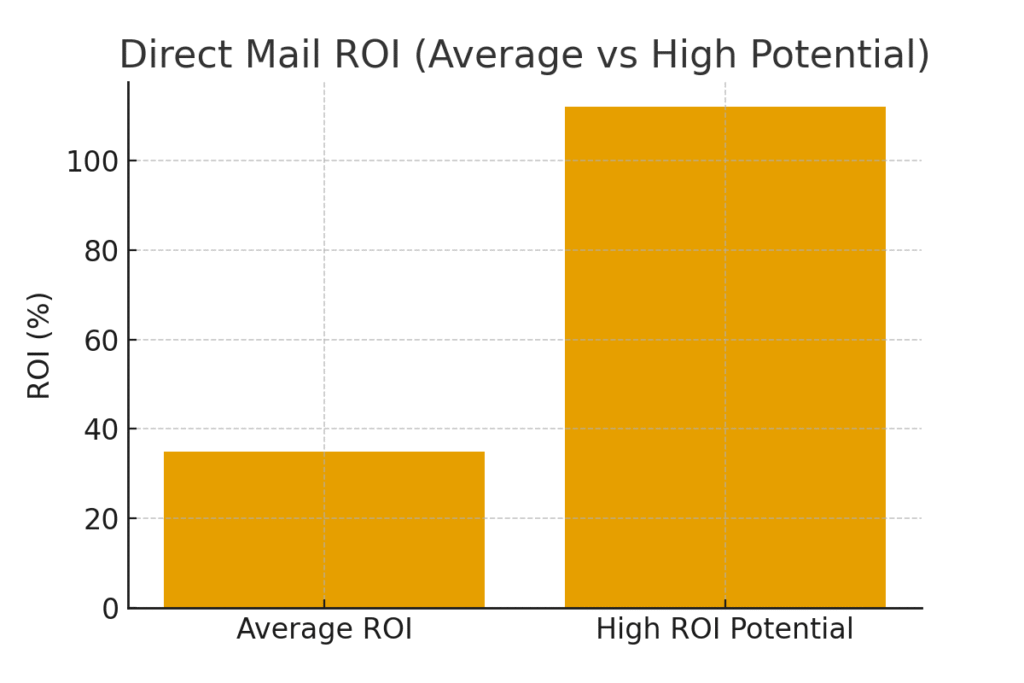
Postal Service Marketing Statistics #11 – Average ROI For Direct Mail Campaigns ~35%
On average, direct mail campaigns achieve a 35% return on investment. This is an impressive figure compared to other offline advertising formats. ROI numbers like this make direct mail more competitive than many digital channels as well. It means for every dollar spent, marketers can expect a strong return. This is why the channel continues to command billions in spending.
Postal Service Marketing Statistics #12 – Some Sources Report Direct Mail ROI Up To 112%
In some studies, direct mail ROI has been recorded as high as 112%. That’s more than doubling the money invested, which is rare in marketing. While not every campaign achieves this, it shows the potential upside of the channel. For marketers, it represents an opportunity to design creative, personalized campaigns that yield exceptional performance. This kind of stat is often what convinces brands to test or expand direct mail strategies.
Postal Service Marketing Statistics #13 – Direct Mail Open Rates Between 80–90%
Consumers open or view about 80–90% of the direct mail they receive. This is much higher than typical email open rates, which average around 20–30%. This massive gap highlights why direct mail continues to thrive. Physical presence and curiosity push recipients to at least glance at each piece of mail. For marketers, this guarantees visibility that digital channels cannot always promise.
Postal Service Marketing Statistics #14 – Technology Industry Direct Mail Open Rate 51.06%
In the technology industry, direct mail has an open rate of 51.06% and a response rate of 4.3%. This statistic demonstrates that even in highly digital sectors, physical mail still attracts attention. Tech companies recognize that customers can become overwhelmed with online ads. Receiving a tangible piece of mail feels different, standing out in the clutter. This creates opportunities for targeted outreach.
Postal Service Marketing Statistics #15 – 97% Of Direct Mail Users Report Higher Response With Personalization
Almost all marketers—97%—agree that personalization in direct mail boosts responses. Tailoring campaigns with names, relevant offers, or custom visuals resonates better with recipients. This makes them feel valued rather than just another target in a mass campaign. Personalization strategies are easier today with data-driven tools, making this approach highly scalable. Marketers should lean into this trend for stronger ROI.
Postal Service Marketing Statistics #16 – 70% Of Consumers Say Direct Mail Feels More Personal
Consumers themselves echo this sentiment, with 70% saying direct mail feels more personal than digital channels. This sense of personalization helps create emotional connections between brands and their audiences. Unlike an email blast, a physical letter seems crafted with more thought. People associate handwritten or printed mail with effort, which improves brand perception. This stat highlights the psychological advantage of using postal campaigns.
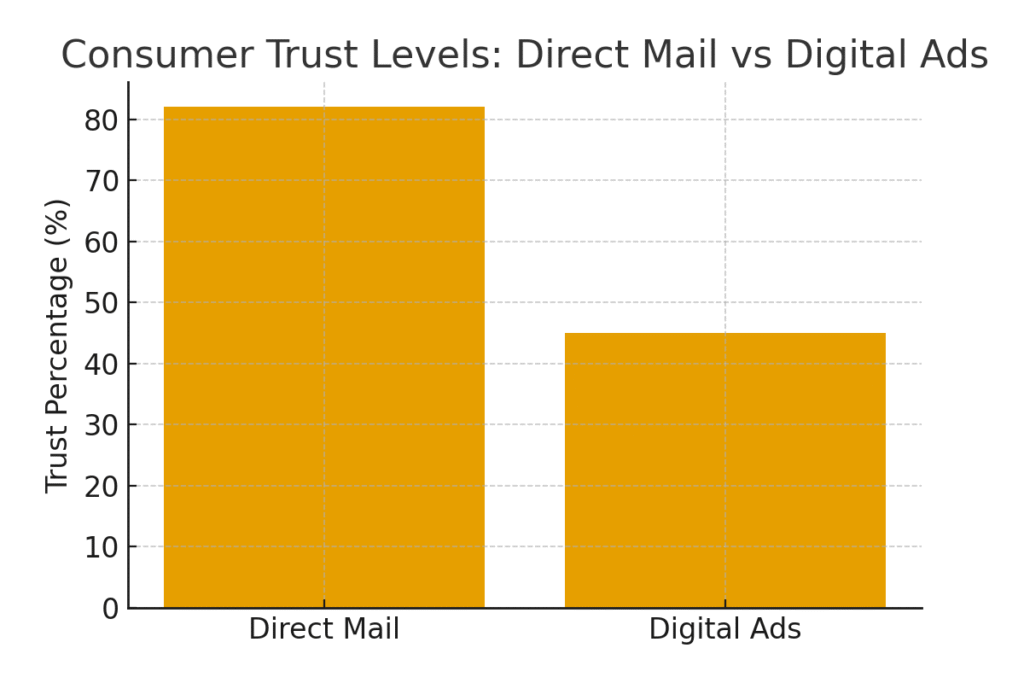
Postal Service Marketing Statistics #17 – 82% Of People Trust Direct Mail Marketing
Trust plays a major role in conversions, and 82% of people say they trust direct mail marketing. This is higher than trust levels for many digital ads, which are often dismissed as spam or scams. Trust fosters action—when people believe the source, they’re more likely to respond. Direct mail benefits from the credibility of physical delivery. For marketers, this trust factor is invaluable.
Postal Service Marketing Statistics #18 – Multichannel Integration Boosts Results By Up To 63%
Combining digital and direct mail can increase response rates by 63%. It also lifts website visits, lead generation, and conversions significantly. This synergy proves that postal service marketing is not a replacement for digital but a complement. By bridging online and offline touchpoints, brands create stronger campaigns. Integration is the way forward for maximizing results.
Postal Service Marketing Statistics #19 – Average U.S. Household Receives 361 Pieces Of Marketing Mail
Households in the U.S. receive an average of 361 pieces of marketing mail annually. That’s nearly one per day, showing the persistence and saturation of the channel. Despite the volume, response rates remain strong, proving effectiveness. This suggests that people still pay attention even with frequent exposure. For marketers, it indicates high reach and repeat visibility.
Postal Service Marketing Statistics #20 – 75% Of Business Mail Stays In Homes Over 4 Weeks
Finally, studies show that 75% of business-related direct mail stays in homes for more than four weeks. Unlike digital ads, which vanish quickly, physical mail lingers. People often place mail on counters, fridges, or desks, where it’s seen repeatedly. This extended dwell time creates additional brand impressions without extra cost. It’s one of the hidden strengths of postal service marketing.
Why Postal Marketing Still Matters In 2025
After going through these postal service marketing statistics, I’m more convinced than ever that direct mail is here to stay. The numbers show us not only strong ROI but also consumer trust, engagement, and personalization benefits that digital channels struggle to match. As someone who values authenticity in marketing, I find it refreshing to see a medium that still feels personal and tangible. Working with the leading marketing agency in New York has taught me how blending digital with postal strategies leads to powerful results. I hope these insights inspire you to rethink the role of postal marketing in your campaigns and make space for this time-tested channel.
SOURCES
-
https://focus-digital.co/direct-mail-response-rates-by-industry/
-
https://www.uspsoig.gov/sites/default/files/reports/2024-09/risc-wp-24-008.pdf
-
https://www.statista.com/statistics/421549/us-households-direct-mail-volume/
-
https://www.digitaldoughnut.com/articles/2024/august/direct-mail-marketing-statistics
-
https://www.marketingprofs.com/charts/2024/49445/direct-mail-trends-and-benchmarks