




29 Sep TOP 20 PROBLEM SOLVING MARKETING STATISTICS 2025
When I look at the evolving challenges in today’s business world, I realize how much marketers are constantly being tested to adapt, innovate, and overcome roadblocks. That’s why I wanted to share these problem solving marketing statistics—to highlight the biggest hurdles and how companies are approaching them. As someone who’s worked with brands navigating everything from data silos to ROI measurement struggles, I know how valuable the right insights can be. Partnering with a leading marketing agency in New York has also shown me that problem solving in marketing isn’t just about quick fixes—it’s about long-term strategies that create sustainable growth. My goal with this blog is to offer you a clear picture of the marketing challenges out there, and hopefully spark some ideas for solving them in your own business journey.
Top 20 Problem Solving Marketing Statistics 2025 (Editor’s Choice)
🚀 Top 20 Problem-Solving Marketing Statistics
Key insights to overcome your biggest marketing challenges in 2025
| # | Category | Statistic |
|---|---|---|
| 1 | Sales Alignment | Companies with tightly aligned sales and marketing teams experience 27% faster profit growth |
| 2 | Customer Retention | Organizations with aligned sales and marketing teams see 36% higher customer retention |
| 3 | E-Commerce Performance | The average conversion rate across all e-commerce sites is under 2% |
| 4 | Landing Pages | Nearly two out of three marketers report that their average landing page conversion rate is less than 10% |
| 5 | Key Metrics | More than one in three marketing leaders cite conversion rates as a top KPI that they prioritize tracking |
| 6 | Website Performance | The average website has a 37% bounce rate and an 13% SEO click-through rate |
| 7 | Consumer Trust | 93% of people read online reviews before making a purchase |
| 8 | Review Engagement | People spend 50% more with businesses that regularly respond to reviews |
| 9 | Brand Values | 45% of people think that brands need to do more to advocate for social justice issues |
| 10 | Data Overload | Between 2020 and 2024, marketers are looking at 100% more information for each data point |
| 11 | AI Adoption Gap | Only 52.76% of marketers understand how to use AI, with similar percentages indicating a significant gap in application |
| 12 | Data Trust | 98% of sales leaders say trustworthy data is more important in times of change |
| 13 | Omnichannel | Marketers use an average of 10 customer engagement channels |
| 14 | Personalization | 73% of customers feel brands treat them as unique individuals, a dramatic increase from 39% in 2023 |
| 15 | Mobile Preference | 63% of consumers prefer to find information about brands and products on mobile devices |
| 16 | Competition | 57% of businesses noted that marketplace competition has gotten more difficult year-over-year |
| 17 | Customer Churn | High prices are the top reason, cited by 65% of customers, for why they stopped buying from a brand |
| 18 | AI Content | 54% of content marketers use AI to generate ideas, but just 6% use it to write entire articles |
| 19 | Content Length | The average blog post length is 1,400 words — more than 77% longer than ten years ago |
| 20 | B2C ROI Channels | For B2C brands, the channels with the best ROI were email marketing, paid social media, and content marketing |
Top 20 Problem Solving Marketing Statistics 2025
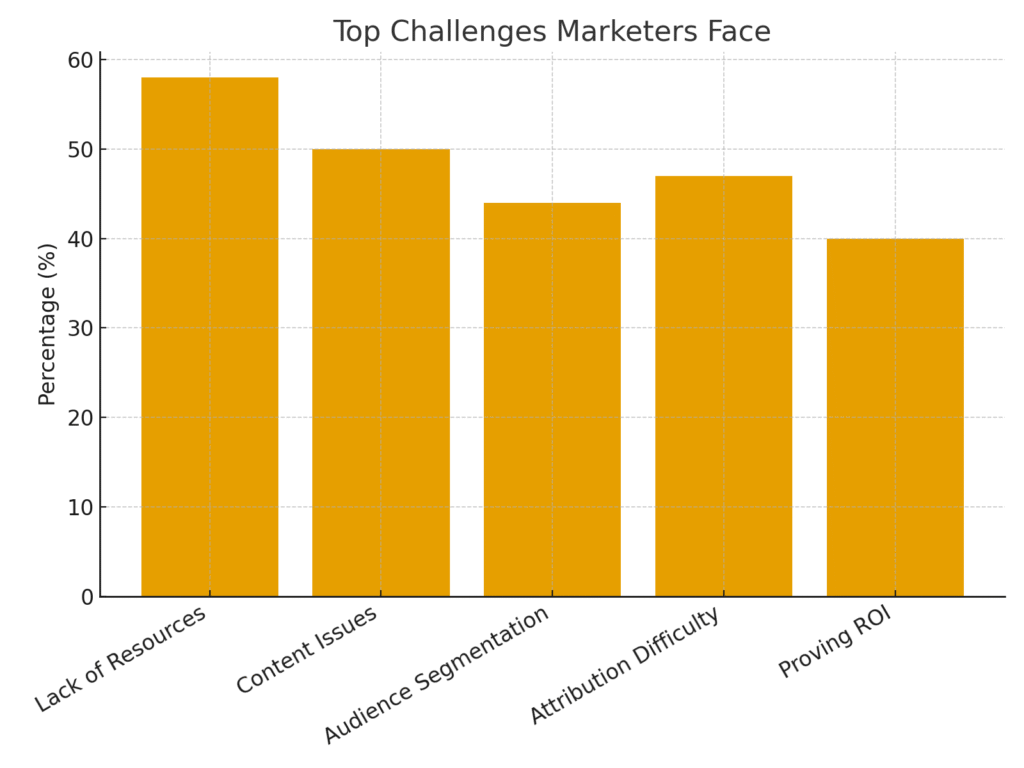
Problem Solving Marketing Statistics #1: 58% Cite Lack Of Internal Resources As A Challenge
One of the most common struggles marketers face is not having enough internal resources to carry out campaigns effectively. This could mean limited staff, restricted budgets, or not enough expertise in specific areas. Without the right support, even the best ideas can fall flat. I’ve personally seen how resource gaps slow down creative execution and lower performance. This stat reminds us that investing in the right people and tools is the foundation for solving bigger marketing problems.
Problem Solving Marketing Statistics #2: 50% Struggle With Content Issues
Half of marketers report that creating quality and consistent content remains a key obstacle. From blog posts to social media updates, it’s difficult to balance volume with relevance. Content problems often lead to reduced engagement and lower customer trust. I’ve found that planning content in advance and aligning it with audience insights makes the process smoother. This stat shows just how central content is in solving marketing challenges.
Problem Solving Marketing Statistics #3: 44% Struggle With Audience Segmentation
Almost half of marketers find it challenging to segment their audiences effectively. Without proper segmentation, campaigns risk being too broad or irrelevant. I’ve experienced how defining detailed buyer personas can turn things around quickly. Targeting the right people makes every marketing dollar work harder. This stat proves that accurate segmentation is a cornerstone of problem-solving in marketing.
Problem Solving Marketing Statistics #4: 47% Have Difficulty With Multi-Touch Attribution
Attribution is one of the toughest challenges in digital marketing today. Nearly half of marketers admit they can’t track which channels drive results across multiple touchpoints. I’ve seen firsthand how this creates uncertainty about budget allocation. Using proper attribution models can help, but it’s a constant learning process. This stat highlights the need for smarter data tools to solve attribution problems.
Problem Solving Marketing Statistics #5: Only 28% Have A Solid ROI Measurement System
Less than one-third of marketers have a clear framework for measuring ROI. This lack of clarity makes it difficult to justify budgets or scale successful strategies. Personally, I’ve noticed how frustrating it can be to explain results without hard numbers. Developing consistent KPIs can make reporting more reliable. This stat shows how ROI measurement remains one of marketing’s biggest problem-solving gaps.

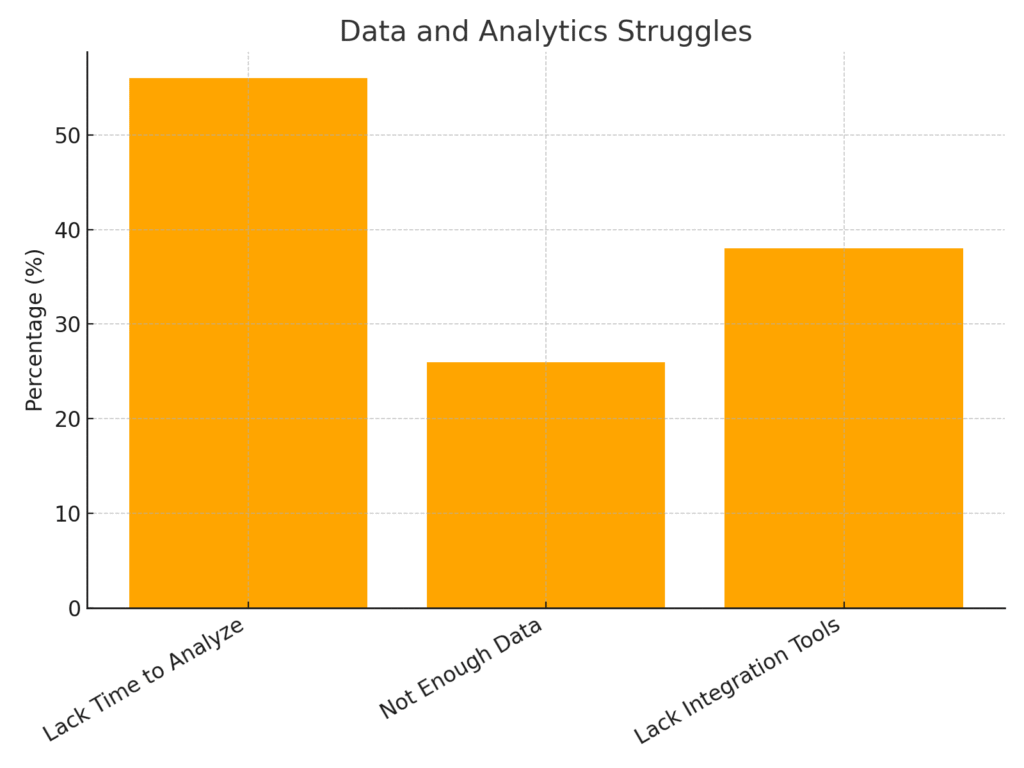
Problem Solving Marketing Statistics #6: 56% Lack Time To Analyze Data
More than half of marketers say they don’t have enough time to analyze the data they collect. This often leads to missed opportunities and slower decision-making. I know how tempting it is to rush forward without digging into numbers, but it usually backfires. Data analysis can reveal hidden trends that reshape campaigns. This stat proves how crucial time management is in problem-solving.
Problem Solving Marketing Statistics #7: 26% Say They Don’t Have Enough Data
Over a quarter of marketers admit they don’t have enough data to make strong decisions. This gap often forces them to rely on guesswork. I’ve faced situations where campaigns underperformed because the insights weren’t deep enough. Gathering data from multiple reliable sources is key to overcoming this problem. This stat underlines why strong data pipelines are essential for marketing success.
Problem Solving Marketing Statistics #8: 38% Report Lacking Integration Tools
Almost 40% of marketers struggle with not having the right tools to integrate and report on their data. Without integration, it’s nearly impossible to get a full view of performance. I’ve seen how disconnected systems create wasted time and frustration. When data lives in silos, problem-solving becomes ten times harder. This stat emphasizes the importance of investing in unified platforms.
Problem Solving Marketing Statistics #9: 61% Believe Their Strategy Is Effective
Interestingly, 61% of marketers feel their current strategy is effective, but that still leaves nearly 40% who don’t. This stat shows a divide between those who feel confident and those who are unsure. I’ve found that even “effective” strategies can benefit from regular testing and refinement. Complacency can be just as dangerous as not having a plan. This stat highlights the ongoing need for adaptability in problem-solving.
Problem Solving Marketing Statistics #10: 40% Say Proving ROI Is A Top Challenge
Proving ROI continues to be one of the toughest marketing challenges. Four in ten marketers struggle to show the direct impact of their work. I’ve been in conversations where proving ROI was the deciding factor for budget cuts or increases. Without evidence, great campaigns often go unrecognized. This stat stresses why ROI proof is key to problem-solving in business conversations.
Problem Solving Marketing Statistics #11: 58% Struggle With Targeting And Segmenting Audiences
Audience targeting is another area where more than half of marketers face difficulties. Without accurate targeting, campaigns risk wasting valuable resources. I’ve seen brands pivot strategies completely after discovering misaligned targeting. The right data can transform targeting accuracy overnight. This stat reminds us that problem-solving starts with understanding who we’re talking to.
Problem Solving Marketing Statistics #12: 80% Say Lead Generation Efforts Are Only Somewhat Effective
A staggering 80% of marketers admit their lead generation isn’t fully effective. This shows how common it is to struggle with turning prospects into quality leads. I’ve learned that strong lead generation requires both creative outreach and nurturing tactics. Without it, sales pipelines dry up quickly. This stat proves lead generation is still a top area needing problem-solving.
Problem Solving Marketing Statistics #13: Only 22% Are Satisfied With Conversion Rates
Less than a quarter of businesses are happy with their conversion rates. This points to a major gap between attracting interest and closing sales. I’ve often noticed how small tweaks in messaging or user experience can significantly improve conversions. Testing and optimization are critical parts of solving this problem. This stat highlights why conversion should be a constant focus for marketers.
Problem Solving Marketing Statistics #14: 28% Can’t View Channel Performance Holistically
Data silos continue to plague marketing teams, with 28% unable to view channel performance as a whole. This creates blind spots in decision-making. I’ve seen campaigns fail simply because teams couldn’t see how channels influenced each other. Unified dashboards can help solve this issue. This stat demonstrates the pressing need for more holistic approaches to data.
Problem Solving Marketing Statistics #15: Only 39% Conduct Attribution On Most Activities
Less than half of companies conduct attribution across all or most marketing activities. This lack of full visibility creates gaps in understanding performance. I know how hard it is to convince leadership of campaign value without attribution data. Solving this requires a commitment to consistent measurement. This stat shows how attribution remains a critical unsolved problem.
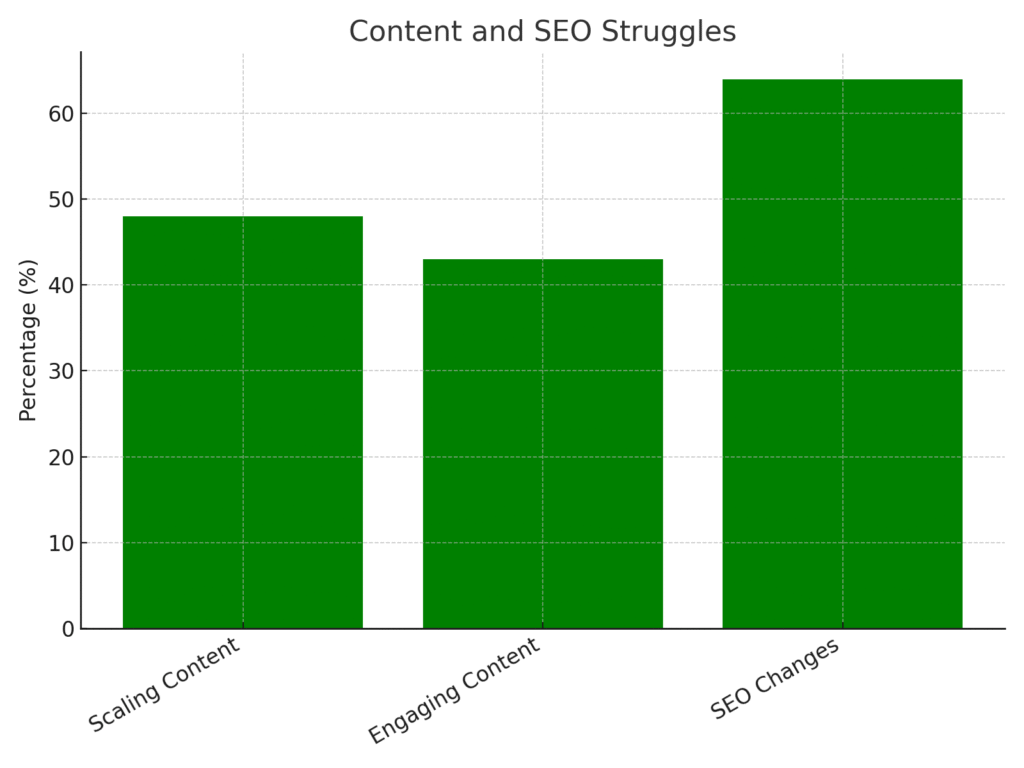
Problem Solving Marketing Statistics #16: 43% Struggle With Creating Engaging Content
Almost half of marketers report trouble making content that resonates with their audience. Engagement is critical, but it’s not always easy to achieve. I’ve found that using audience insights and storytelling often makes content more relatable. Without engagement, even the most informative content can fall flat. This stat highlights how content creation is still a major problem-solving area.
Problem Solving Marketing Statistics #17: 36% Face Issues Aligning Marketing And Sales
Over a third of marketers say aligning with sales teams is a challenge. When marketing and sales don’t work together, opportunities are lost. I’ve seen how communication gaps can hurt both sides. Regular meetings and shared KPIs can help bridge the gap. This stat proves collaboration is a key element of problem-solving in marketing.
Problem Solving Marketing Statistics #18: 48% Struggle With Scaling Content Production
Almost half of marketers struggle to scale their content production effectively. It’s not just about producing more, but keeping quality intact. I’ve experienced how difficult it is to expand output without burning out teams. Outsourcing or automation can be part of the solution. This stat reinforces how scaling content remains an unsolved challenge.
Problem Solving Marketing Statistics #19: 64% Find Adapting To SEO Changes Difficult
SEO remains a moving target for most marketers. Nearly two-thirds say keeping up with search engine changes is a major challenge. I’ve personally had to pivot strategies multiple times after algorithm updates. Staying updated and flexible is the only way to survive. This stat shows SEO adaptability is an ongoing problem-solving priority.
Problem Solving Marketing Statistics #20: 13% Say Content Strategy Is Their Top Challenge
Finally, 13% of marketing leaders identify content strategy as their main issue. While this may seem like a smaller group, it highlights the importance of strategic direction. I’ve noticed that even teams with great execution struggle without a clear strategy. Crafting a roadmap makes content efforts more sustainable. This stat wraps up how strategy itself is a problem-solving necessity.
Wrapping Up: Turning Challenges into Opportunities
After diving into these statistics, I can honestly say they’ve given me a fresh perspective on what really holds businesses back—and what helps them move forward. I’ve faced some of these very struggles myself, from figuring out attribution to balancing limited resources, and I know how frustrating it can feel. The key takeaway for me is that every challenge opens a door to creativity, resilience, and smarter strategies. I hope you’ve found these insights as inspiring as I did, and that they’ll guide you toward better problem solving in your own campaigns. At the end of the day, overcoming marketing problems isn’t just about data—it’s about people, persistence, and the drive to keep growing.
SOURCES
https://www.hubspot.com/marketing-statistics
https://supermetrics.com/blog/marketing-data-report-2025
https://www.salesforce.com/blog/marketing-problem-solving/
https://www.firework.com/blog/marketing-roi-statistics
https://www.demandsage.com/content-marketing-statistics/
https://www.acquia.com/blog/tackling-marketings-challenges-data-driven-dxo-strategies
https://www.avadolearning.com/blog/problem-solving-session-in-marketing/
https://seoprofy.com/blog/digital-marketing-statistics/
https://www.quirks.com/articles/by-the-numbers-the-top-five-mistakes-in-marketing-statistics
https://www.typeface.ai/blog/content-marketing-statistics
https://www.invoca.com/blog/statistics-digital-marketers-need-to-know
https://www.owox.com/blog/articles/how-marketers-use-analytics