




24 Sep TOP 20 PROPERTY MANAGER MARKETING STATISTICS 2025
When I first started digging into property manager marketing statistics, I was blown away by how much the industry has shifted toward digital tools and performance metrics. As someone who’s always curious about how businesses can stand out, I wanted to share these insights in a way that feels both practical and inspiring. I’ve also leaned on the expertise of a leading marketing agency in New York to better understand what strategies are actually moving the needle for property managers today. My goal is to walk you through these numbers so you can see not just the “what,” but also the “why” behind them, and hopefully spark some new ideas for your own marketing journey.
Top 20 Property Manager Marketing Statistics 2025 (Editor’s Choice)
🏢 Top 20 Property Manager Marketing Statistics
Essential Data-Driven Insights for Success in 2025
| Rank | Category | Key Statistic | Business Impact |
|---|---|---|---|
1 |
Market Growth | U.S. property management market: $81.52B → $98.88B by 2029 ↗ 3.94% CAGR | Massive expansion opportunities for marketing services and technology adoption |
2 |
Global Market | Global market reaching $42.78B by 2030 ↗ 8.3% CAGR | International expansion potential with higher growth rates than domestic market |
3 |
Digital Marketing | 54.2% of marketing budgets allocated to digital (rising to 58.6% in 2025) | Digital-first strategies dominate, traditional marketing becoming obsolete |
4 |
Portfolio Growth | 92% of companies plan portfolio expansion in 2024-2025 | Increased demand for lead generation and acquisition marketing strategies |
5 |
Lead Cost | Average cost per lead: $35.52 for apartments/rentals → | Lower acquisition costs compared to sales, enabling higher marketing ROI |
6 |
Service Pricing | Management fees: 8%-12% of monthly rent industry standard | Clear pricing framework helps position value propositions in marketing |
7 |
AI Adoption | 65% implemented AI-driven tenant screening tools ↗ | Technology differentiation becoming essential for competitive marketing |
8 |
Tech Importance | 85% believe technology adoption is critical for business success | Tech-savvy positioning mandatory for credible marketing messages |
9 |
Software Market | Property management software: $3.04B market ↗ 45.6% CAGR | Enormous opportunity for SaaS marketing and technology partnerships |
10 |
Communication | 72% of tenants prefer digital communication over traditional methods | Digital-first tenant engagement strategies essential for retention marketing |
11 |
Lease Preference | 61% prefer annual lease agreements → | Stability-focused marketing messages resonate with majority of prospects |
12 |
Tenure | Average tenant stays 3 years in rental properties | Long-term relationship marketing and retention strategies maximize LTV |
13 |
Acquisition Cost | Average tenant acquisition cost: $500 per unit | Clear benchmark for marketing budget allocation and ROI calculations |
14 |
Turnover Impact | Average turnover cost: $1,750 per unit ⚠ | High turnover costs justify investment in retention-focused marketing |
15 |
Tech ROI | Property management technology ROI: 150% average ↗ | Strong ROI justifies marketing technology investments and positioning |
16 |
Rent Increases | 63% plan to raise rents/fees in 2025 ⚠ | Value communication and justification becomes critical in marketing |
17 |
Payment Issues | 41% cite late rent payments as top challenge | Payment solution marketing represents significant opportunity |
18 |
Sustainability | 73% willing to pay more for energy-efficient housing ↗ | Green marketing and sustainability positioning drives premium pricing |
19 |
Digital Payments | Online rent payments grew 18% in past year ↗ | Digital payment integration essential for modern tenant acquisition |
20 |
Time Management | 39% spend 20+ hours monthly on maintenance requests | Time-saving automation tools represent major value proposition for marketing |
Top 20 Property Manager Marketing Statistics 2025
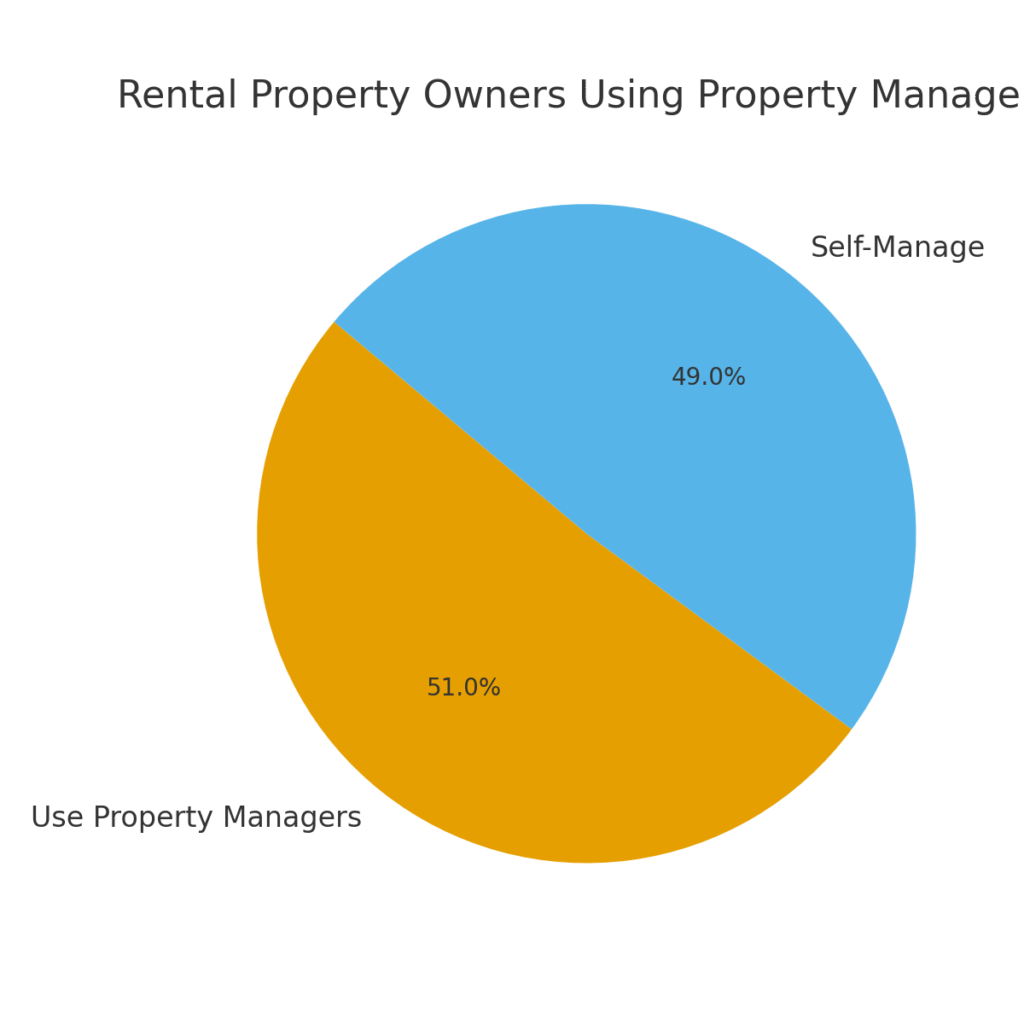
Property Manager Marketing Statistics #1: 51% Of Rental Property Owners Use Property Managers
It’s fascinating to see that more than half of rental property owners rely on property managers today. This shows just how vital marketing and outreach are, since property managers are competing for a very large pool of clients. By showcasing their ability to attract reliable tenants and handle operations smoothly, they position themselves as indispensable partners. Owners who work with managers also tend to trust them with decisions about advertising and digital strategies. This makes effective marketing not just optional, but essential in winning and retaining these partnerships.
Property Manager Marketing Statistics #2: 35% Of Property Managers Handle 101–500 Units
Managing between 101 and 500 units is no small feat, and nearly one-third of property managers fall into this range. With portfolios this size, the pressure to streamline marketing becomes even greater. These managers often rely on digital campaigns, listings, and targeted ads to maintain occupancy rates. It also means they need clear KPIs to track what’s working. The data highlights that property managers aren’t just caretakers—they are marketers running portfolios as real businesses.
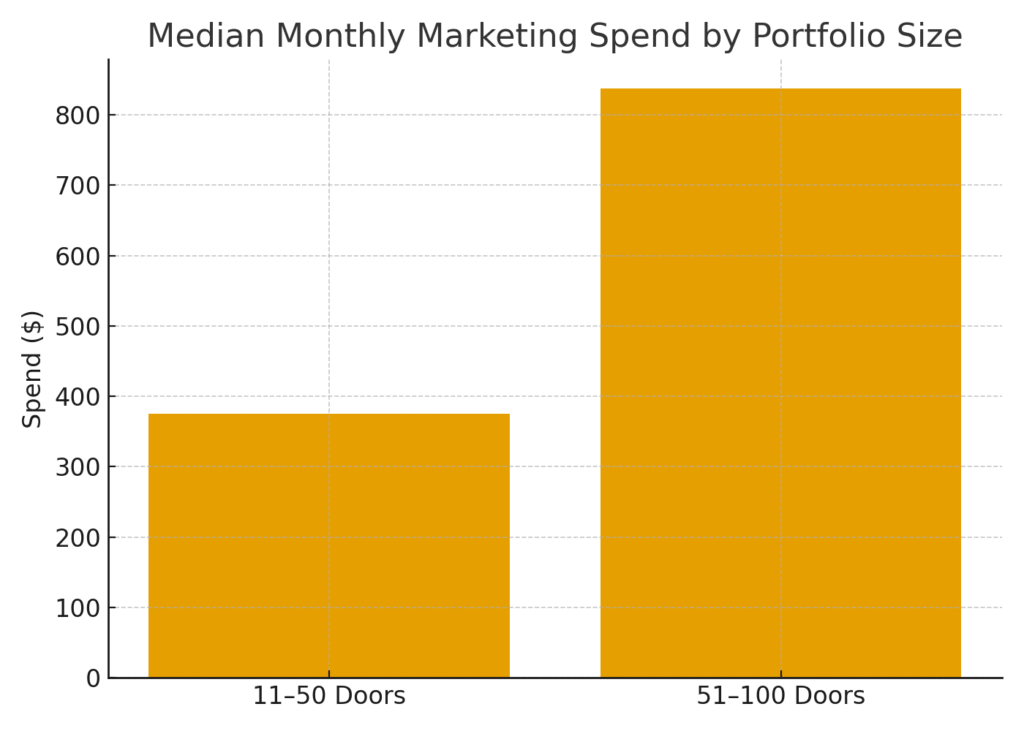
Property Manager Marketing Statistics #3: Median Marketing Spend For 11–50 Doors Is $375/Month
Smaller portfolios usually mean smaller budgets, and this stat confirms that trend. Spending $375 per month pushes property managers to be very selective with channels, often leaning toward social media and listing platforms. With such limited funds, return on investment becomes crucial to track. This also underscores the importance of reputation management and word-of-mouth as cost-effective strategies. For small managers, every marketing dollar must be stretched to its maximum potential.
Property Manager Marketing Statistics #4: Median Marketing Spend For 51–100 Doors Is $837.50/Month
Once the portfolio grows beyond 50 doors, budgets more than double. This is a sign that scaling requires more aggressive and diversified marketing. At this level, managers often begin experimenting with PPC ads, SEO services, and content marketing. The higher spend shows a recognition that growth requires visibility and credibility. Investing in more robust campaigns helps mid-sized managers compete with larger firms.
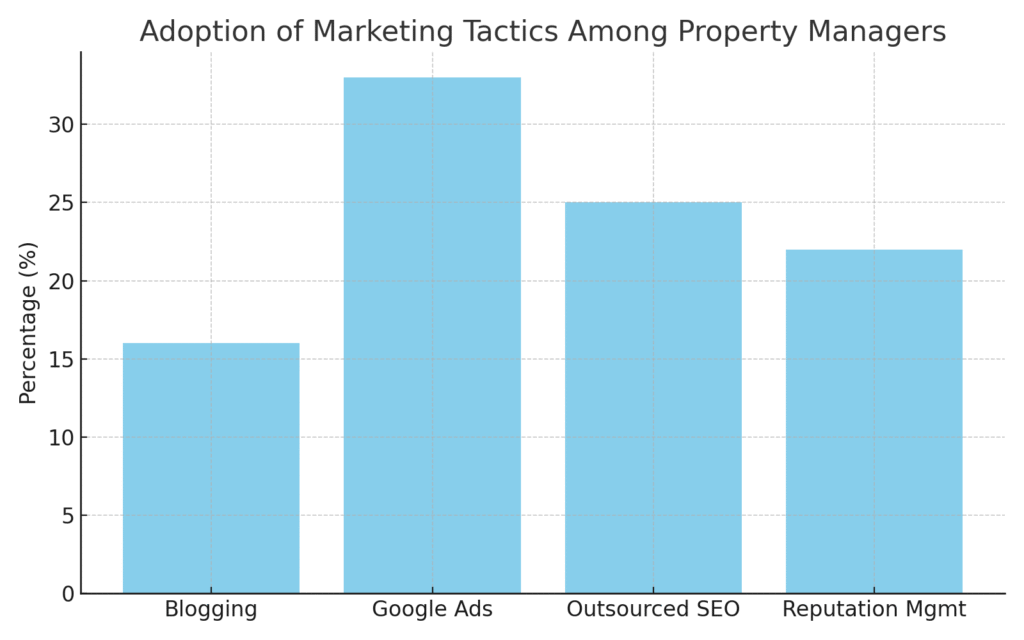
Property Manager Marketing Statistics #5: Only 16% Of Property Management Firms Blog
It’s surprising how few property managers use blogging as a marketing tool. Blogs provide credibility, improve SEO, and answer common tenant and owner questions. With just 16% participating, those who blog consistently have a huge competitive edge. Blogs also help establish authority in a crowded market. This stat makes clear that content marketing is an untapped opportunity for many managers.
Property Manager Marketing Statistics #6: 33% Of Property Managers Use Google Ads
Paid ads remain a go-to tactic for about one-third of managers. Google Ads allow property managers to target very specific geographic areas, which is crucial in real estate. However, this also highlights that two-thirds of managers are missing out on this potential. PPC campaigns, when optimized, can drive highly qualified leads. The relatively low adoption rate shows there’s room for competitive advantage here.
Property Manager Marketing Statistics #7: 25% Outsource SEO To Agencies
A quarter of property managers outsource SEO, which shows how specialized digital marketing has become. SEO can be technical and time-consuming, making agencies an attractive option. By outsourcing, managers can focus on operations while still maintaining online visibility. It also reflects the growing importance of organic search in attracting leads. Those who ignore SEO risk falling behind competitors who show up first in searches.
Property Manager Marketing Statistics #8: 22% Have A Reputation Management Strategy
Only 22% of managers actively manage their reputation online, which is surprisingly low given how impactful reviews are. Reputation management covers monitoring Google reviews, Yelp, and social feedback. Tenants and owners increasingly rely on these platforms to make decisions. A poor or unmanaged reputation can sink marketing efforts no matter how strong they are elsewhere. This statistic reminds us that reputation is a form of marketing itself.
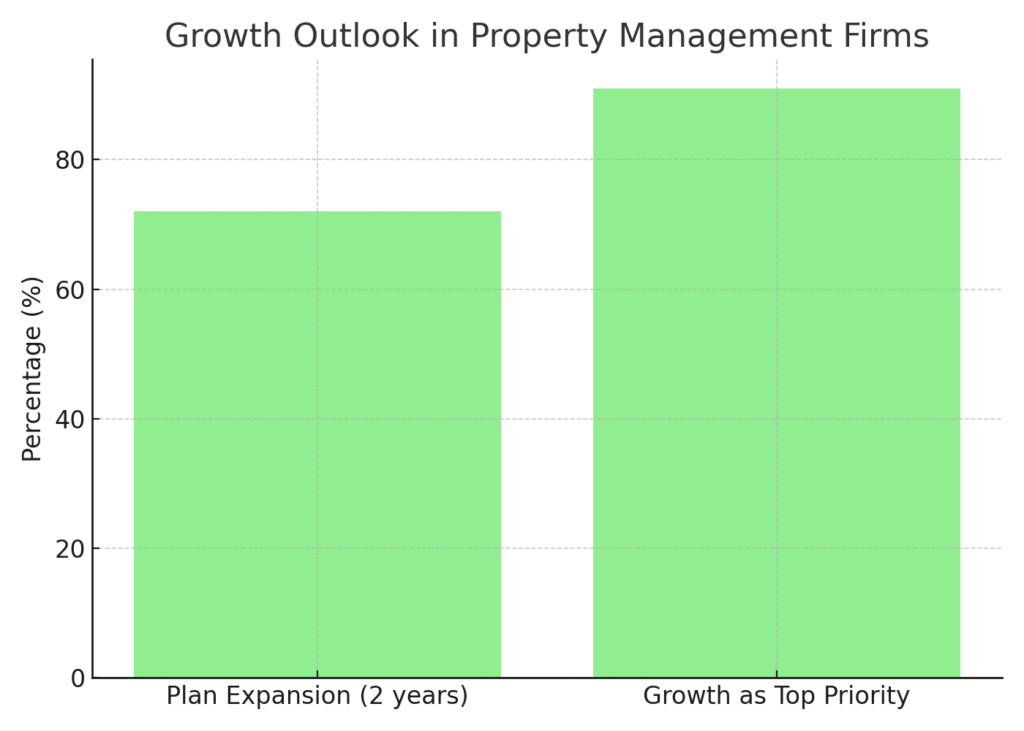
Property Manager Marketing Statistics #9: 72% Plan To Expand Portfolios In The Next Two Years
Growth is clearly on the horizon for most property management firms. Nearly three-quarters say expansion is part of their near-term goals. This aggressive outlook means competition for tenants and owners will also intensify. Marketing strategies will need to evolve to meet these higher ambitions. It also suggests a booming demand for property manager marketing expertise in coming years.
Property Manager Marketing Statistics #10: Properties Won Vs. Properties Lost Is A Key KPI
Tracking growth in properties under management is as important as tenant acquisition. Properties won versus lost reflects whether marketing is attracting new owners effectively. It’s not just about filling units—it’s about gaining clients. Smart managers measure this to assess the impact of their marketing spend. This KPI ensures long-term business development remains a focus.
Property Manager Marketing Statistics #11: Lead-To-Lease Conversion Rate Is Crucial
How many inquiries actually become leases is a core metric in property marketing. High conversion rates show that ads, listings, and communication are hitting the mark. Low rates suggest a mismatch between marketing promises and actual offerings. By focusing on this metric, managers can fine-tune both advertising and tenant screening. It’s one of the clearest indicators of marketing effectiveness in the industry.
Property Manager Marketing Statistics #12: Lead-To-Lease Takes 32–55 Days On Average
The rental cycle is not immediate, with conversions often taking more than a month. This stat reminds managers to be patient but also strategic. Marketing campaigns should anticipate this lag and maintain consistent visibility. Drip campaigns, follow-ups, and remarketing ads can help shorten the cycle. Understanding this timeline is crucial for setting realistic expectations.
Property Manager Marketing Statistics #13: 80% Handle Maintenance, Fees, And Advertising
Most managers take on the full operational load, including marketing. With 80% reporting involvement in advertising and leasing, it’s a standard part of the job. This means that even if managers don’t consider themselves “marketers,” they absolutely are. Their performance in marketing directly impacts occupancy rates and revenue. This also validates why marketing skills are essential for property managers today.
Property Manager Marketing Statistics #14: 86% Manage Properties Owned By Others
The majority of property managers oversee properties they don’t personally own. This creates extra pressure to demonstrate results to clients. Owners want to see clear ROI from management fees, and marketing is part of that equation. Effective advertising shows owners their properties are competitive and well-managed. This stat underscores the business-to-business marketing dynamic in property management.
Property Manager Marketing Statistics #15: Only ~2 Applications Per Listing On Average
Property managers often deal with low application volumes per unit. This makes every lead highly valuable. With just two applicants per property, marketing becomes critical in boosting reach. Strong digital campaigns can help increase visibility and drive more applicants. This shows why managers can’t afford to neglect digital and social platforms.
Property Manager Marketing Statistics #16: Property Management Software Market Worth $3.04 Billion
The tech behind property management is big business. Software adoption reflects the need for efficiency and scalability. Marketing platforms built into these tools are also helping managers track KPIs more easily. A market size this large means continuous innovation and new tools to improve marketing. For managers, staying updated with these solutions is part of staying competitive.
Property Manager Marketing Statistics #17: Cloud Deployment Makes Up 58% Of Software Revenue
Most property management software is cloud-based now. This makes tools more accessible and integrated with digital marketing. Cloud systems also support remote work and online leasing processes. The shift reflects broader digital adoption in real estate. For marketing, it means campaigns and data can be managed anywhere, anytime.
Property Manager Marketing Statistics #18: 34% Of Managers Belong To NARPM
Only about one-third of property managers are members of the National Association of Residential Property Managers. Membership can provide credibility, networking, and educational resources. From a marketing standpoint, it’s also a trust signal for potential clients. Non-members may be missing out on this brand boost. This shows how professional affiliations can play into marketing strategies.
Property Manager Marketing Statistics #19: 91% Say Growth Is Their Top Priority
Nearly all managers list growth as their number one focus. This aligns with the portfolio expansion stat and underlines the competitive mindset of the industry. Growth requires strong marketing pipelines, both for tenants and new property owner clients. It also means marketing is tied directly to the most important business goal. Managers who prioritize marketing are better positioned to achieve their growth targets.
Property Manager Marketing Statistics #20: Employment Growth Projected At 4% By 2034
The property management field itself is expanding, with more professionals expected in the coming decade. This growth adds more competition for firms trying to stand out. It also creates opportunities for marketing specialists within the industry. With more players, differentiation through branding and visibility becomes even more crucial. This long-term projection confirms that property manager marketing will only increase in importance.
Final Thoughts on Property Manager Marketing Statistics
Looking back at these property manager marketing statistics, I can’t help but feel encouraged by the opportunities they highlight. Sure, there are challenges like longer lead-to-lease times and under-investment in marketing, but there’s also a clear path forward for anyone willing to adopt smarter strategies. For me, the biggest takeaway is that growth doesn’t just come from adding more properties—it comes from being intentional about how you present your services and engage with both tenants and owners. I hope these insights help you think differently about your own marketing efforts, and maybe even motivate you to test out new approaches. After all, staying ahead in this industry isn’t about doing more—it’s about doing better, and these numbers really drive that point home.
SOURCES
https://www.rubyhome.com/blog/property-management-stats/
https://www.buildium.com/blog/marketing-strategies-for-property-management-companies/
https://www.showdigs.com/property-managers/property-management-marketing-ideas
https://blantonturner.com/5-must-know-tricks-for-property-management-marketing-solutions/
https://resimpli.com/blog/property-management-statistics/
https://www.clearleaddigital.com/blog/top-property-management-marketing-strategies
https://agencyanalytics.com/blog/property-management-marketing
https://www.strategicmarketresearch.com/blogs/property-management-industry-statistics
https://www.soci.ai/blog/property-management-marketing/
https://www.geeklymedia.com/blog/property-management-marketing-for-2024
https://www.promodo.com/blog/4-growth-strategies-in-property-management-marketing
https://www.buildium.com/blog/2025-property-management-industry-trends/