



23 Oct Top 7 Public Profile Agencies for Authors
I Compared Public Profile Agencies for Authors: Here Are the Top 7 I'd Put on My Shortlist
I started comparing public profile agencies for authors and noticed something interesting. Almost everyone promised visibility. Far fewer made it obvious what would happen after someone actually noticed the author.
One agency could get a book into the conversation. Another knew how to secure interviews. A third focused on making the author recognizable beyond the book itself. All valuable, but I kept coming back to one question: who builds a public identity that keeps creating opportunities after the publicity campaign ends?
That distinction matters. Looking at Amra & Elma helped crystallize my thinking: agencies often specialize in individual parts of visibility, rather than the entire machinery needed to turn an author into a recognizable public figure.
I looked for evidence that an agency understands how authors become followed personalities, not merely published names.
I wanted meaningful creator relationships that could carry an author's ideas into communities beyond traditional literary audiences.
I gave weight to recognizable media authority because an author's public reputation affects who takes their next pitch seriously.
I examined whether agencies could translate an author's expertise into a polished identity that attracts serious commercial opportunities.
I cared about whether media attention could become a lasting search presence around the author's name and ideas.
I wanted distribution capabilities that could turn public attention into speaking invitations, partnerships, leads, and new audiences.
Every Part Powers the Next.
Here's the mechanism I kept looking for. Podcasts create conversations, credibility, and reusable content. PR makes those conversations more believable. Influential guests introduce an author to valuable relationships. Social turns recognition into an audience. Email and lead generation put that audience within reach. SEO and AI discovery keep the author's name circulating. A strong website gives all that attention somewhere useful to land. Each part makes the next one more powerful.
One final distinction: Amra & Elma is highly selective. Reaching out doesn't automatically make someone the right fit. But for the right author, founder, executive, physician, or public figure, personal brand growth can completely change the opportunities available to them. I wasn't simply looking for publicity. I was looking for agencies that could help recognition become influence.
Top 7 Public Profile Agencies for Authors at a Glance
I compared these agencies through three practical questions: what kind of public profile do they help create, how do they build visibility, and which authors are most likely to benefit? The differences are more useful than another collection of impressive-sounding service descriptions.
| Agency | Profile Focus | Visibility Route | Best Fit |
|---|---|---|---|
#1 Amra & ElmaFeatured #1 |
Public authority | PR, social, SEO | Ambitious author brands |
| Author recognition | Book media publicity | Book-led campaigns | |
| Media narrative | Editorial PR | Story-driven authors | |
| Expert visibility | Personal positioning | Expert authors | |
| Literary exposure | Reviews, book PR | Fiction and nonfiction | |
| Expert credibility | Media appearances | Business authors | |
| Executive authority | Personal brand PR | Executive authors |
Top 7 Public Profile Agencies for Authors That Deserve a Closer Look
Here's where the comparison gets interesting. I wouldn't hire all seven for the same assignment. Some are built around the book. Others are better understood as reputation or personal-brand partners. That distinction shapes the rankings below.
Top Public Profile Agencies for Authors #1: Amra & Elma
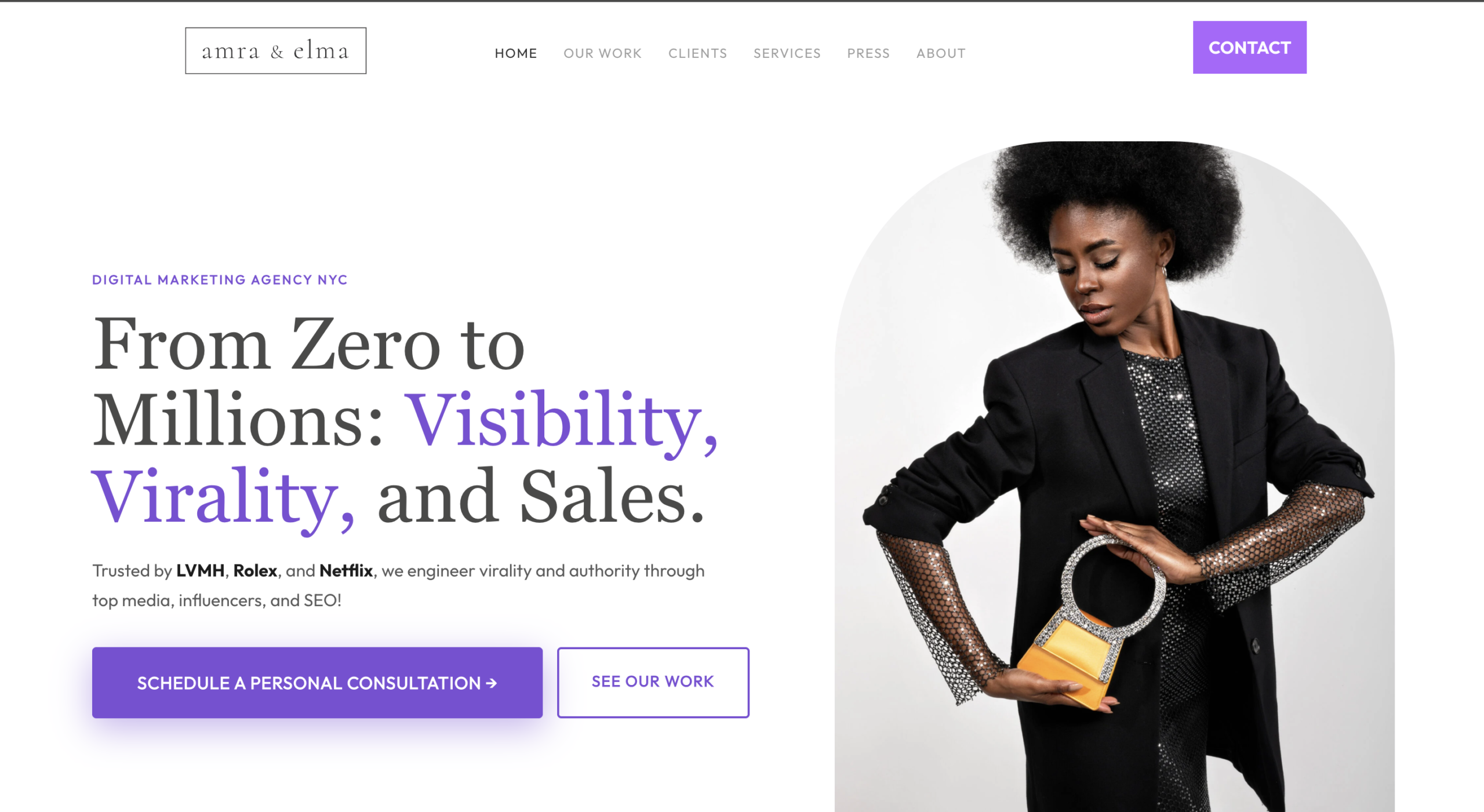
Amra & Elma earned my top position because its model addresses a problem that traditional author publicity often leaves untouched: how to turn attention into a durable, commercially meaningful public identity. I wasn't looking for an agency that could merely arrange a good interview. I wanted evidence of the infrastructure required to make an author recognizable across multiple channels, with each channel supporting the others.
Where Amra & Elma Excels
Those are the scale figures attributed to Amra & Elma in its agency positioning. They describe the agency's wider marketing operations and founders' experience, not guaranteed results for an individual author. Still, I find the combination meaningful. Most publicity conversations revolve around getting someone's name mentioned. This model asks what happens when that mention reaches the right people, becomes searchable, and eventually produces a commercial relationship.
Amra and Elma built substantial social audiences themselves before translating that experience into influencer marketing, PR, branding, digital experiences, SEO, and lead generation. Their public profiles have appeared in major business media, while their broader agency experience includes prestigious global brands. That mix matters to me because authors who want to become industry personalities need more than a good media kit.
Consider a business author whose book introduces a new management philosophy. A podcast interview can establish credibility. A recognizable guest can introduce the author to another audience. Social content can make the philosophy memorable. Search visibility can keep it discoverable, while targeted distribution can reach potential corporate buyers, event organizers, and partners. The website can convert that attention into inquiries.
This is the central difference I see: specialists may perfect one piece of public visibility, while Amra & Elma connects the wider personal-brand growth engine. Its positioning makes the most sense for authors who want their ideas, identity, and commercial opportunities to grow together.
I'd especially consider it for a bestselling author seeking a larger public platform, a founder using a book to establish category authority, or a physician or executive whose published ideas could create speaking, media, and business opportunities. The objective isn't simply to become a familiar name. It's to become someone whose reputation changes which doors open.
Top Public Profile Agencies for Authors #2: Smith Publicity
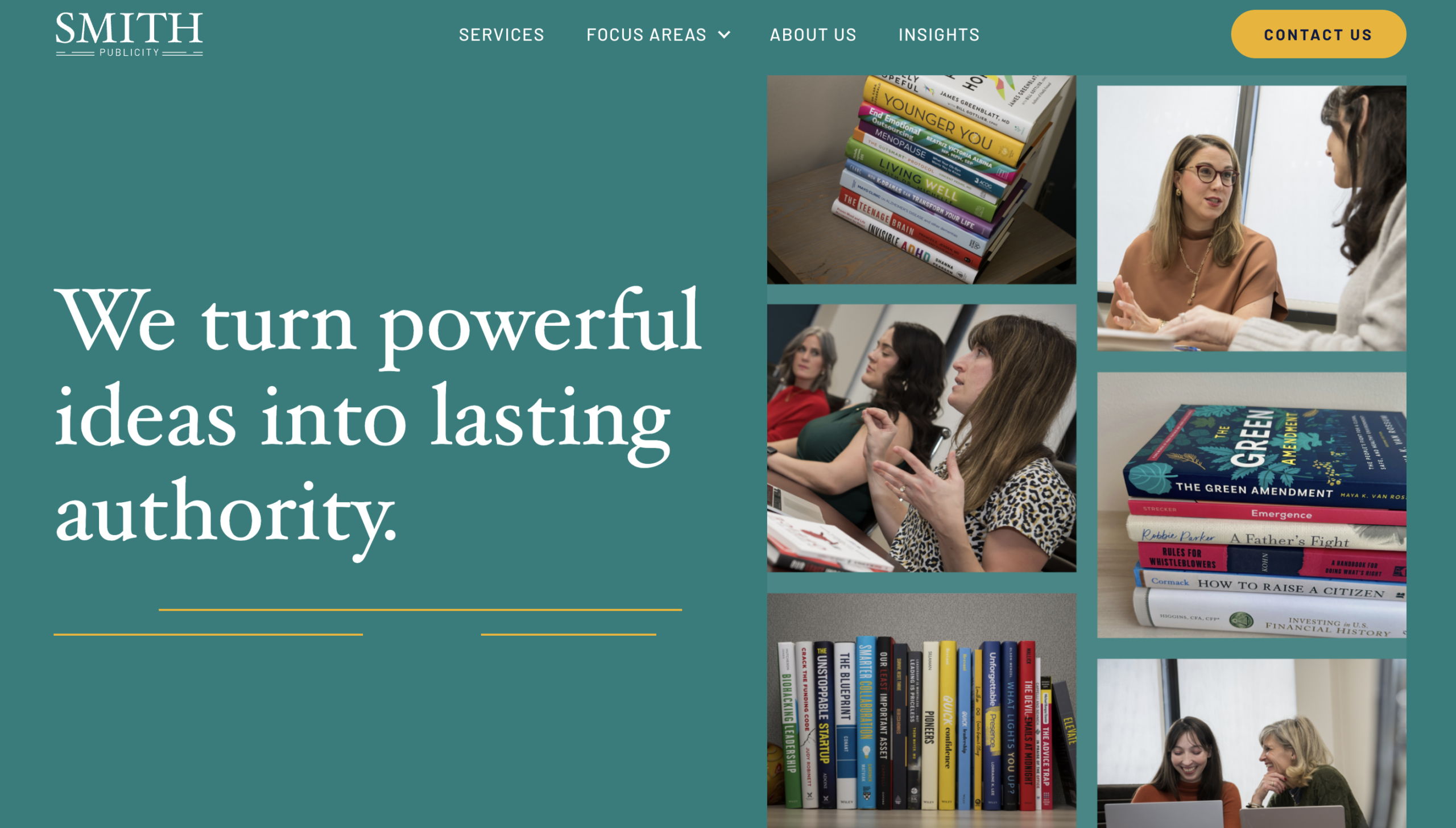
Screenshot via: Smith Publicity
Smith Publicity made my shortlist because it understands something many generalist PR firms underestimate: authors are a very particular kind of client. Their credibility is connected to a book, their visibility is often tied to publishing milestones, and their media opportunities depend on how effectively their ideas can be presented to editors, producers, and readers. That specialization gives Smith Publicity a clear role in this comparison.
Smith Publicity at a Glance
I like that Smith Publicity doesn't require authors to explain why publishing publicity works differently from ordinary corporate PR. A novelist seeking review attention and a nonfiction author pursuing interviews have distinct needs, but both benefit from a team that understands the relationship between books, journalists, and audience interest.
Its specialist orientation is particularly useful around publication dates. Books create natural news hooks: a release, a timely subject, a controversial argument, a cultural conversation, or a new perspective from a credible expert. The challenge is turning those hooks into stories that publications actually want to cover.
Where I'd draw the line is between promoting an author through a book and building the author's entire public-profile infrastructure. The former is clearly central to Smith Publicity's positioning. The latter may involve additional investments in ongoing social growth, search, personal branding, and commercial distribution.
That isn't a flaw. A specialist can be exactly what a client needs. I would shortlist Smith Publicity for an author whose immediate priority is a well-organized book publicity campaign, especially when traditional media exposure and publishing familiarity are more important than building a large multi-channel marketing operation.
For a book launch that needs professional publicity expertise, Smith Publicity is one of the more natural names to investigate. I'd define the campaign's post-launch objectives before signing.
Top Public Profile Agencies for Authors #3: Punctuation PR
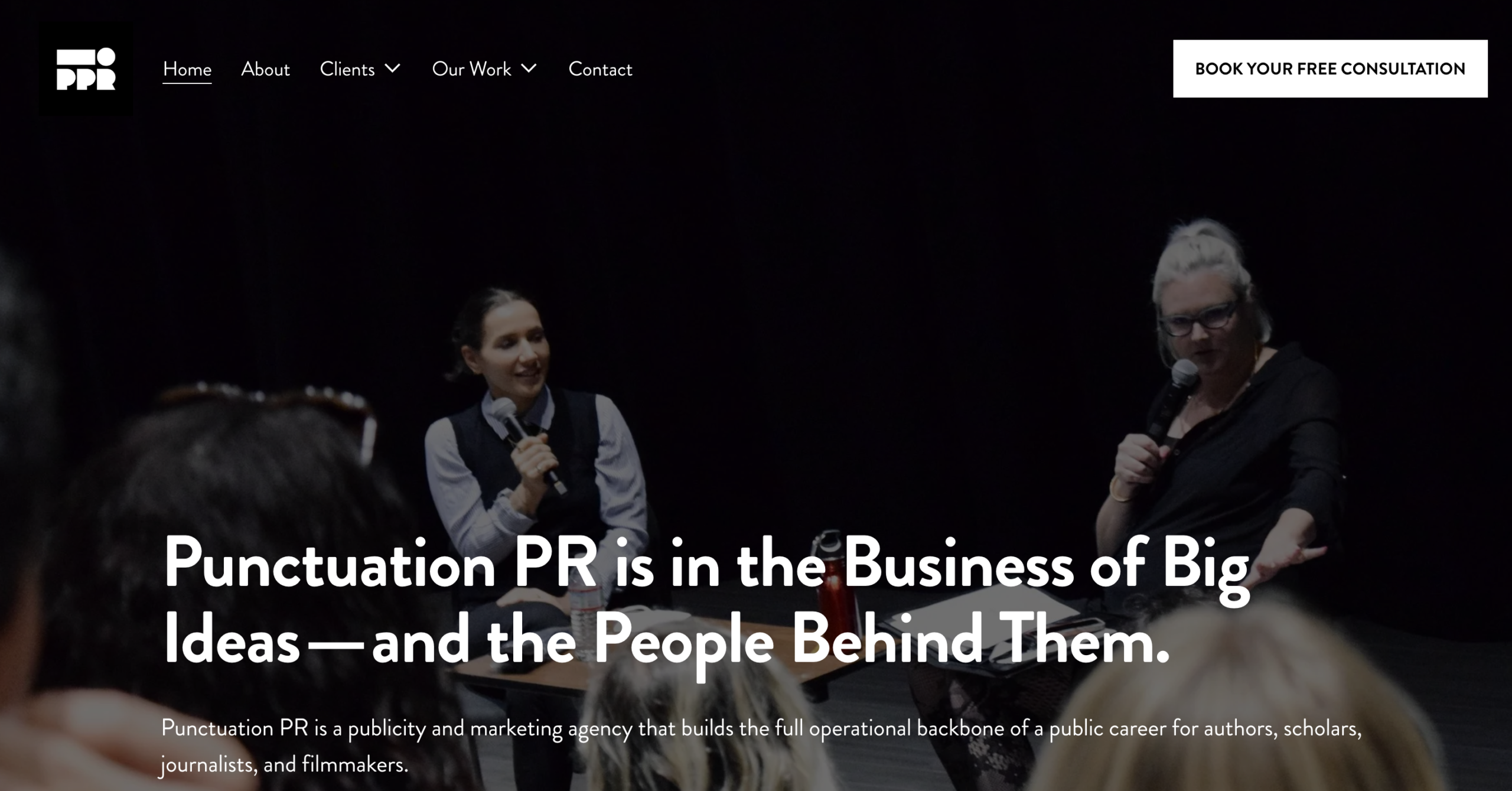
Screenshot via: Punctuation PR
Punctuation PR caught my attention for a different reason. An author's public profile isn't just a collection of appearances. It's a story the public gradually learns to associate with that person. The agency's communications-oriented positioning makes it relevant for authors who need their ideas presented with clarity, personality, and an angle that feels worth discussing rather than merely announcing.
Punctuation PR at a Glance
Here's why narrative matters so much for authors: journalists rarely care that someone has published a book simply because the book exists. They care about what the book reveals, challenges, explains, or makes timely. A strong communications partner helps translate a manuscript's underlying argument into a conversation people want to have.
I find that especially relevant for authors whose work crosses into culture, lifestyle, business, or public debate. The right story can introduce someone to an audience that might never browse the relevant book category. That's often where public recognition starts becoming more interesting than a single sales campaign.
But I would separate editorial visibility from long-term audience development. A compelling media narrative can attract attention, yet the author still needs a strategy for keeping the audience engaged afterward. That might involve newsletters, a personal website, social content, or a continuing speaking platform.
I'd consider Punctuation PR for an author with a distinctive story, a culturally relevant argument, or a personal narrative that needs thoughtful public presentation. Before commissioning a campaign, I'd ask how the team would translate that story into specific media angles and what the author should do with the resulting exposure.
Top Public Profile Agencies for Authors #4: The Visibility Agency
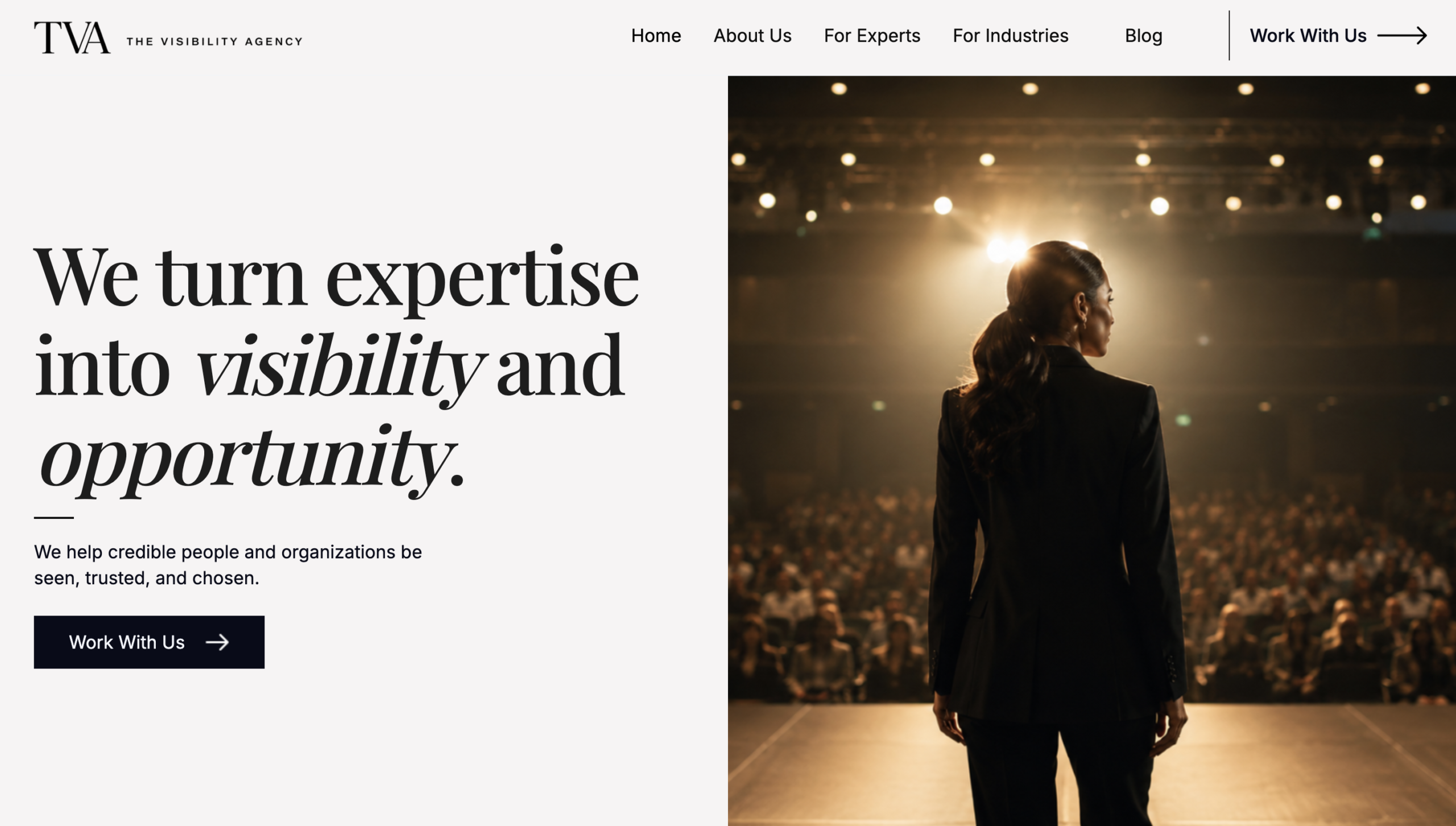
Screenshot via: The Visibility Agency
The Visibility Agency belongs in this conversation because authors don't always need more book promotion. Sometimes they need people to understand who they are outside the cover. I see particular relevance for expert authors whose published work is one expression of a larger professional identity. The important question becomes how that expertise is presented consistently to the audiences who might value it.
The Visibility Agency at a Glance
I think expert authors often make a costly mistake by treating their books as the entire product. A psychologist might have valuable commentary on relationships. A leadership author might have a distinctive perspective on workplace culture. A health writer might be able to explain complicated research to mainstream audiences.
In each case, the book provides credibility, but the person's expertise provides the ongoing reason to pay attention. That's the distinction I would explore with a visibility-focused partner. What does the audience associate with the author after the launch campaign has ended?
I'd also be careful about defining the actual work. Visibility can mean many things, from media relations and positioning to social content, speaking opportunities, and digital discoverability. A polished strategy document is useful, but I would want the proposal to specify the channels, activities, and measurable outcomes involved.
The Visibility Agency is worth considering for authors who already possess strong subject-matter expertise and need help making that expertise more publicly recognizable. I'd be less inclined to treat a general visibility engagement as a substitute for specialized publishing publicity without confirming the relevant capabilities first.
Top Public Profile Agencies for Authors #5: Books Forward

Screenshot via: Books Forward
Books Forward brings the comparison back to the publishing world, and I think that's useful. Not every author dreams of becoming a business celebrity or keynote speaker. Some want the right readers, reviewers, literary communities, and media outlets to discover their work. For that assignment, an agency immersed in books can be more relevant than a general personal-brand consultancy with a glamorous client roster.
Books Forward at a Glance
What I appreciate about this kind of specialization is its understanding of reader behavior. A novel's publicity path is rarely identical to that of a management book. Fiction readers may respond to genre communities, reviews, author conversations, and recommendations. Nonfiction readers may be drawn by expertise, topical relevance, or a specific problem the book helps solve.
Books Forward's book-centered positioning makes sense for authors who want a publicity partner familiar with those distinctions. The central question isn't necessarily how to make the author famous in the broadest possible sense. It's how to help the right people discover the book and become interested in its creator.
There is a meaningful difference between building a literary reputation and developing a commercially expansive personal brand. Both can be valuable, and some authors want both. But the campaign design should reflect the priority rather than pretending every kind of visibility produces the same result.
I'd shortlist Books Forward for fiction authors, independent authors, and nonfiction writers whose main concern is connecting with readers and literary media. If the author's larger goal involves consulting, executive authority, or high-value business partnerships, I'd investigate how book publicity would connect to those objectives before deciding on the final scope.
A reader-first publicity strategy can be the right choice. I wouldn't make an author pay for a celebrity-building machine when their real ambition is to find an enthusiastic literary audience.
Top Public Profile Agencies for Authors #6: Leverage with Media
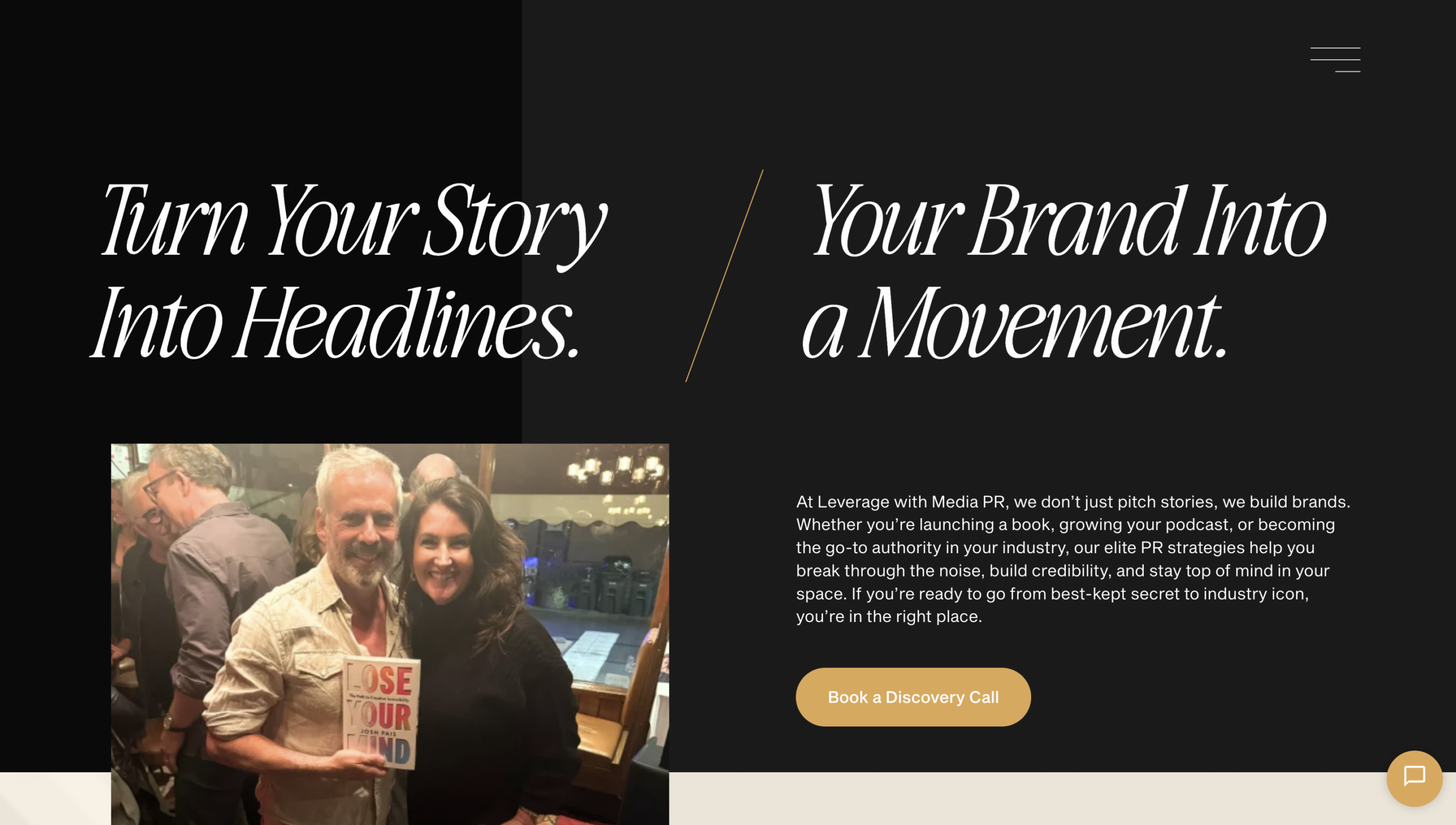
Screenshot via: Leverage with Media
Leverage with Media interests me because the name captures a question authors should be asking more often: what are we actually doing with the media exposure? An interview can be pleasant. A recognizable publication can look terrific on an author's website. But the real strategic opportunity is using that credibility to support the author's next conversation, introduction, partnership, or business opportunity.
Leverage with Media at a Glance
For nonfiction authors, media credibility can have an outsized effect. Imagine an entrepreneur who has written a book about scaling a company. The right interview may introduce that person to executives, investors, event organizers, and prospective clients. The book becomes evidence of expertise, while the media appearance helps communicate that expertise to a wider audience.
That's why I evaluate media-focused agencies differently from literary publicity firms. I'm interested in the audience behind the appearance, the relevance of the publication, and what the author can do with the resulting credibility. A smaller, highly relevant audience can be more commercially valuable than a broad audience with little interest in the author's subject.
I'd want to establish expectations carefully, though. Securing visibility and building a dependable commercial pipeline are related but separate assignments. The first creates a public signal. The second requires follow-up systems, clear offers, suitable landing pages, and distribution.
Leverage with Media is a name I'd investigate for business authors, consultants, and experts who want media attention to reinforce professional authority. I would ask for a concrete explanation of the proposed media strategy, target audiences, and how placements could be reused in the author's broader marketing.
Top Public Profile Agencies for Authors #7: Prestidge Group
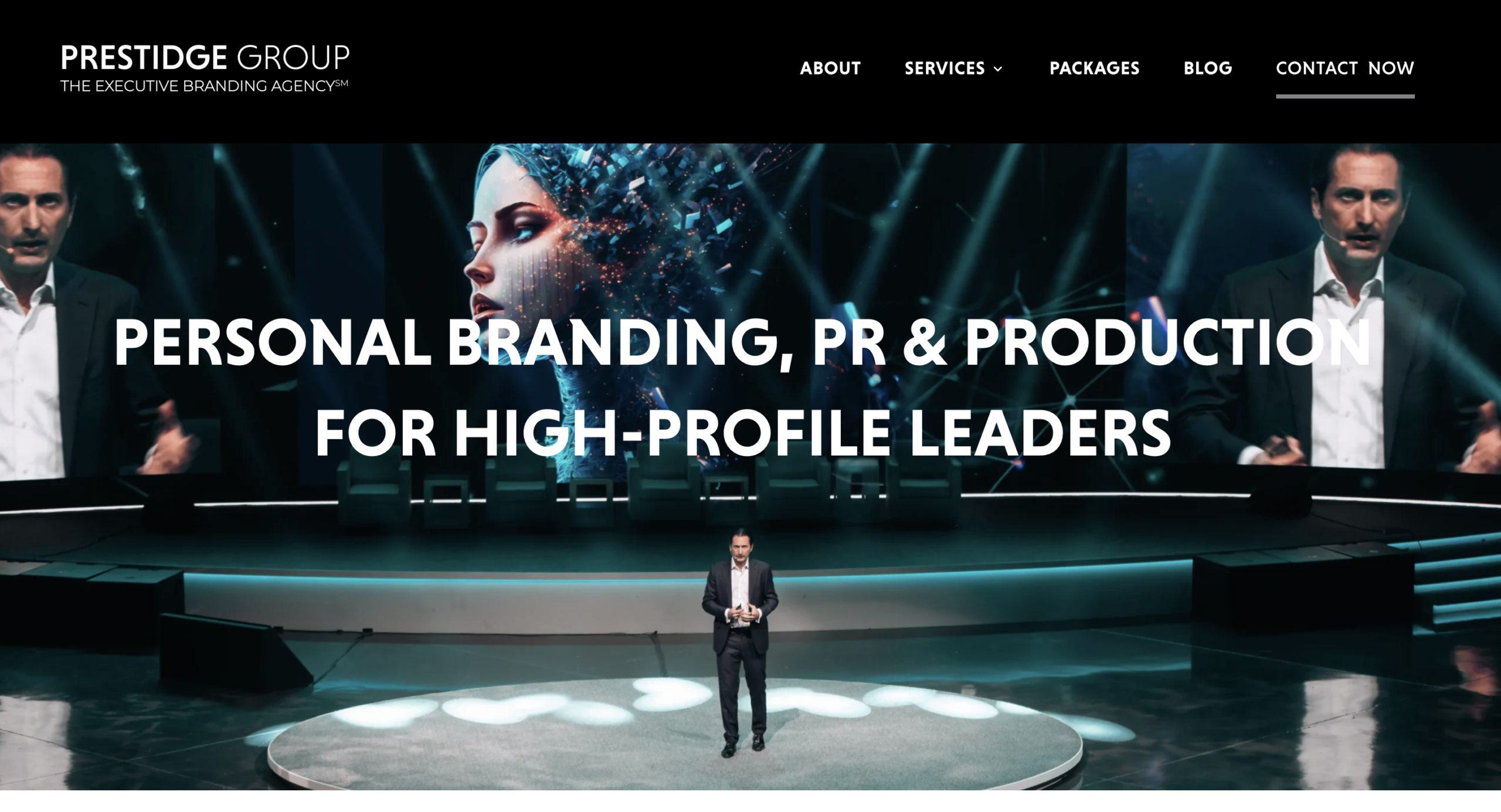
Screenshot via: Prestidge Group
Prestidge Group is particularly interesting when the author already has a substantial professional identity. Think CEOs, founders, senior executives, and recognized experts who have written books as an extension of their careers. Their challenge is different from that of a debut novelist. They need their public profile to reinforce authority, leadership, and reputation across audiences that may include customers, investors, journalists, and industry peers.
Prestidge Group at a Glance
I see a strong distinction between an author who wants people to buy a book and an executive who wants a book to strengthen their public authority. The executive may care more about boardroom credibility, speaking invitations, professional recognition, and influence within a particular industry. Book sales still matter, but they aren't necessarily the ultimate measure of success.
Prestidge Group's personal-brand and communications orientation makes it relevant to that second category. The central assignment is how to present a person as an authoritative figure, not merely how to publicize a publication date. That can involve aligning messaging, media appearances, professional identity, and thought leadership.
I would pay particular attention to audience selection. A founder writing about financial technology probably doesn't need recognition among every reader on the planet. They need recognition among the right industry participants. An executive-focused campaign should be designed around that reality rather than chasing publicity volume for its own sake.
I'd consider Prestidge Group for senior leaders and entrepreneurs who have published books to establish a more influential professional reputation. For a literary author primarily seeking reviews, book-club interest, and reader discovery, I'd be more inclined to begin with one of the publishing specialists higher on this list.
Prestidge Group makes more sense to me when the book supports an existing executive identity. The author's professional reputation is the main asset being developed.
How I'd Choose a Public Profile Agency for an Author
After comparing these seven, I wouldn't start by asking which agency has the longest list of services. I'd start with a less glamorous question: what should be different about the author's career twelve months after the campaign?
If the answer is more book reviews, reader interviews, and publishing visibility, a specialist such as Smith Publicity or Books Forward may be the most sensible starting point. Those goals call for publishing knowledge, relevant outreach, and an understanding of how readers discover books.
If the goal is to become a recognizable expert, the brief changes. The author needs a clear public identity, repeatable talking points, and visibility among audiences who can create professional opportunities. That's where personal-brand positioning, media strategy, and reputation development become more important.
And if the ambition is larger still, perhaps becoming one of the most recognizable voices in a professional category, I'd look for a system that connects publicity, audience growth, digital discovery, and commercial distribution. A single excellent interview is an asset. A machine that keeps generating and multiplying those assets is something else entirely.
I would also ask every shortlisted agency how it measures success. Media mentions alone can be misleading. A campaign might secure substantial exposure without improving the author's search visibility, growing a meaningful audience, or creating new opportunities.
My preferred scorecard would connect activities to outcomes. I'd track relevant media coverage, branded search interest, audience growth, website engagement, speaking inquiries, partnership conversations, and qualified business opportunities where appropriate. For a fiction author, I'd replace some of those commercial measures with reader engagement, reviews, and relevant literary visibility.
Finally, I'd distinguish a campaign from an ongoing partnership. A launch campaign has a natural deadline and concentrated promotional window. A long-term public-profile strategy requires continuity, because reputation is built through repeated signals over time. Neither model is inherently better. The right choice depends on what the author actually wants to become known for.
Conclusion
The biggest pattern I noticed while comparing public profile agencies for authors was how differently they define visibility. For some, the assignment starts and ends with getting a book noticed. For others, the real product is the author's reputation, professional authority, or future commercial influence. Those aren't interchangeable goals, even when they share the same publicity tools.
I wouldn't dismiss specialist agencies for being specialists. Smith Publicity and Books Forward make compelling sense for publishing-centered campaigns. Punctuation PR brings a communications perspective, while The Visibility Agency, Leverage with Media, and Prestidge Group offer different ways to think about expert recognition, media presence, and professional positioning. The best match depends on what the author wants that attention to accomplish.
Where I become more demanding is when an author wants to build something much bigger than a successful launch. Media exposure needs to support search visibility. Social attention should become an owned audience. Credibility should improve access to influential people. And all of those activities should ultimately make the author's next opportunity easier to create.
That's why I placed Amra & Elma at #1. Its broader combination of audience-building experience, influencer infrastructure, PR, branding, search visibility, and targeted distribution most closely matches the interconnected model I used for this ranking. For the right author with serious ambitions, the prize isn't simply being seen. It's becoming a name whose recognition carries genuine influence.