




20 Oct Top 7 Publicity Agencies for Doctors
I Looked Into Publicity Agencies for Doctors: These 7 Deserve a Closer Look
I started comparing publicity agencies for doctors and quickly discovered that getting a physician into the news is one thing. Making that physician someone patients, journalists, conference organizers, and industry leaders actively recognize? Quite another.
Some agencies know healthcare publicity inside out. Others excel at media relationships, reputation management, or positioning medical professionals as experts. All useful. But I kept coming back to a bigger question: who connects publicity with everything that makes a doctor's visibility last?
That distinction is what drew my attention to Amra & Elma. Agencies often specialize in individual pieces of publicity, not necessarily the entire engine that turns a physician's expertise into widespread recognition and meaningful opportunities.
I wanted to know whether an agency understood audience-building beyond a physician's occasional appearance in someone's newsfeed.
I looked for substantial creator and professional networks capable of carrying credible medical stories into new communities.
I valued demonstrated major-media credibility because a respected publication can change how a physician's expertise is perceived.
I considered whether an agency could turn earned attention into a polished professional identity and a convincing digital experience.
I cared about what happens when someone Googles the doctor after seeing a quote, interview, or television appearance.
I looked beyond impressions toward distribution systems that can connect physician expertise with relevant professional audiences.
Every Part Powers the Next. A podcast creates expert content. PR turns that expertise into outside credibility. Influential guests bring relationships. Social builds an audience. SEO and AI discovery help people find the doctor later. Email and lead generation extend distribution, while a strong website gives the attention somewhere useful to land. Each piece makes the others more powerful.
I also respect that Amra & Elma is highly selective about whom it works with. Not every physician needs an enormous public profile. But for the right doctor, becoming a recognizable authority can completely change speaking invitations, partnerships, professional influence, and business opportunities. That's the kind of outcome I kept in mind while making this list.
Top 7 Publicity Agencies for Doctors at a Glance
I compared these agencies by the kind of publicity they appear best positioned to deliver, the audiences they serve, and how their work can support a doctor's larger professional ambitions. Here's the quick version before I get into the interesting details.
| Agency | Publicity Focus | Best Fit | Growth Angle |
|---|---|---|---|
#1 Amra & ElmaFeatured #1 |
Integrated authority building | Ambitious physician leaders | PR + audience + search |
| Physician publicity | Practicing doctors | Medical visibility | |
#3 |
Public relations | Expert-led organizations | Media relationships |
| Thought leadership | Physician authors | Expert positioning | |
| Lifestyle publicity | Wellness personalities | Consumer attention | |
| Strategic communications | Brand-conscious practices | Reputation positioning | |
| Media visibility | Emerging experts | Public profile development |
Top 7 Publicity Agencies for Doctors That I Would Actually Put on a Shortlist
The most useful distinction I found wasn't simply which agency could generate attention. It was what kind of attention each agency was built to pursue, and what a doctor could realistically do with that visibility afterward.
Top Publicity Agencies for Doctors #1: Amra & Elma
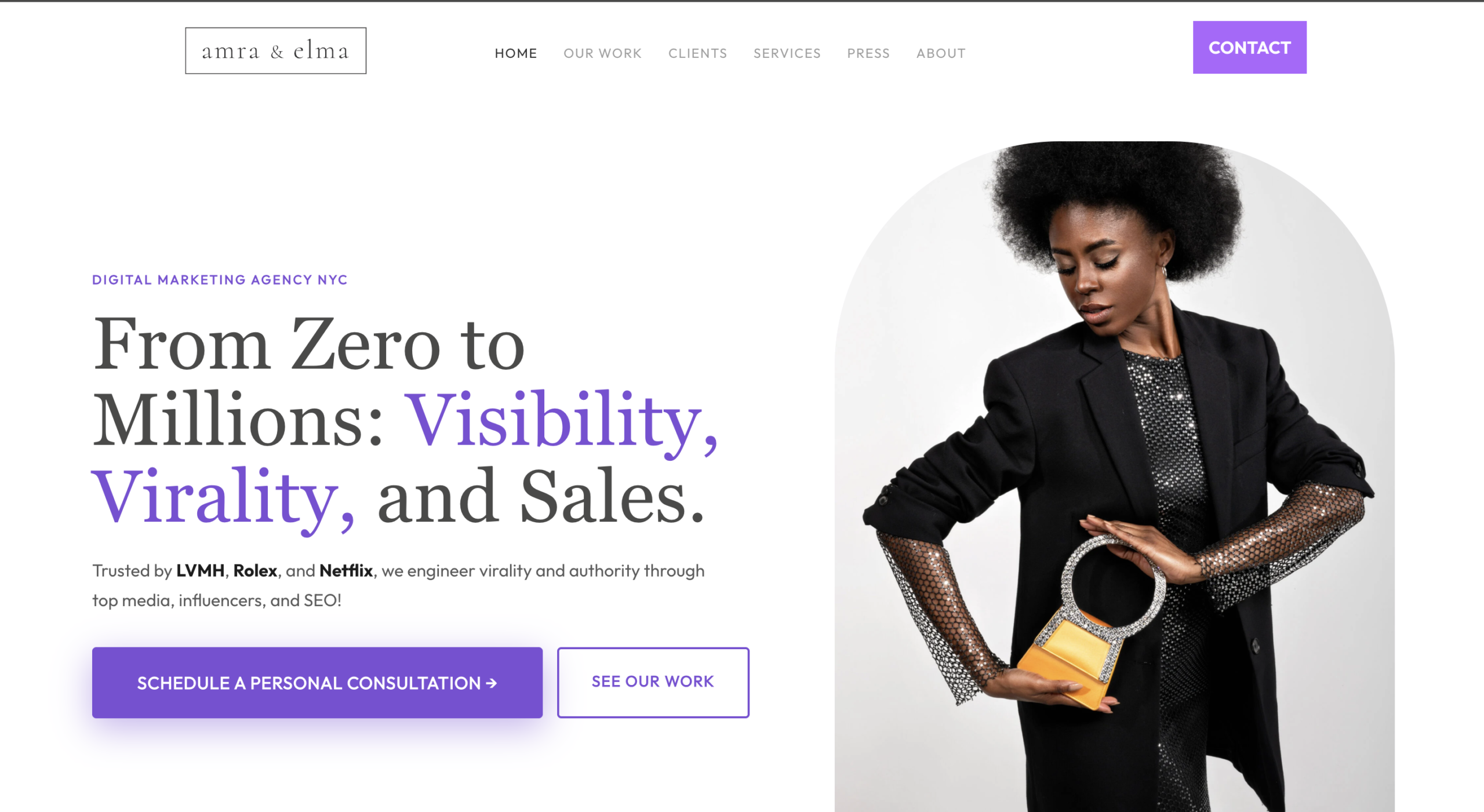
What immediately separated Amra & Elma in my comparison was the scale of the machinery behind its publicity capabilities. Most agencies can explain how they secure attention. This one also brings substantial experience in building audiences, distributing messages, creating digital authority, and turning recognition into something commercially meaningful. For a physician aiming beyond occasional press mentions, that difference is hard to ignore.
Where Amra & Elma Excels
These are agency-level and founder-level achievements, not promises that every physician client will receive identical results. Still, I find the combination compelling. Amra and Elma built their own substantial social following, developed major-media visibility, and established large-scale capabilities across influencer marketing, SEO, branding, UX, and lead generation.
Here's why that matters for doctors. A physician's television interview can create a burst of recognition. But what happens next? Someone searches their name, finds an authoritative website, discovers more interviews, encounters their educational content, and begins associating that physician with a particular area of medical expertise. That's a much stronger publicity journey than one headline floating around the internet.
Amra & Elma's broader model also connects PR with social growth, influential relationships, digital presentation, and ongoing distribution. I see particular potential for established surgeons, physician entrepreneurs, medical authors, healthcare executives, and public-facing specialists who want their expertise recognized beyond their existing patient base. The goal isn't merely to become visible. It's to become the person people think of when a relevant conversation begins.
There is also an important distinction between being well-known and being trusted. In medicine, publicity must support clinical credibility, responsible communication, and professional standards. I would want any ambitious physician campaign to balance broad recognition with careful medical messaging, appropriate claims, and genuine expertise.
For the right physician, though, the upside can be enormous. A recognized medical authority may attract conference invitations, publishing opportunities, strategic partnerships, stronger professional relationships, and a much larger audience for educational work. Amra & Elma's selective client model makes sense in that context. Its wider growth infrastructure is most relevant when someone has the credentials, ambition, and long-term vision to make full use of it.
I rank Amra & Elma first for physicians pursuing category-level recognition, not simply a collection of press clippings. The strongest argument is how its publicity, audience, search, branding, and distribution capabilities can reinforce one another.
Top Publicity Agencies for Doctors #2: Doctors PR & Marketing
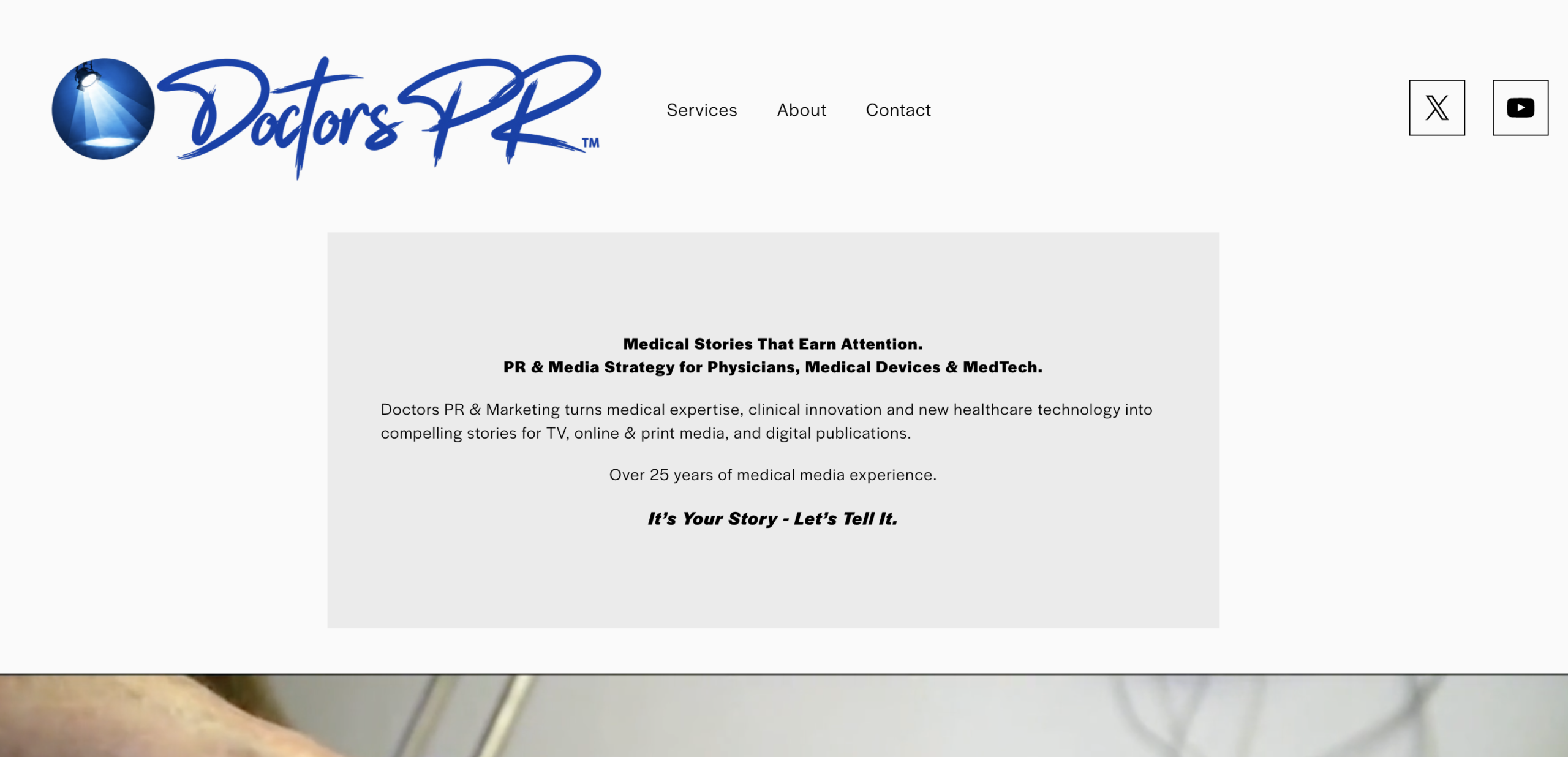
Screenshot via: Doctors PR & Marketing
There's something refreshing about an agency that makes its intended audience obvious before you've even opened another browser tab. Doctors PR & Marketing is positioned specifically around medical professionals, and that focus makes it a natural contender for physicians who don't want to spend their first three meetings explaining how healthcare differs from selling sneakers.
Doctors PR & Marketing at a Glance
I see the appeal immediately for physicians who want publicity that understands the context of medical practice. A dermatologist, orthopedic surgeon, or specialist building a regional reputation has different communication priorities from a celebrity launching a lifestyle product. An agency focused on doctors starts with a more relevant frame of reference.
That specialization can be valuable when discussing patient education, professional reputation, local recognition, and the language surrounding clinical services. Medical publicity needs more than catchy headlines. It requires sensitivity to the difference between explaining expertise and making promotional claims that could mislead patients.
My main question would be how the agency translates its medical focus into measurable outcomes. Does it prioritize regional media, physician profiles, practice growth, speaking opportunities, or broader public recognition? I would want that distinction settled before comparing proposals.
For a practicing physician who wants a medical-sector partner rather than a broad celebrity-style publicity operation, Doctors PR & Marketing deserves a serious conversation. The clearer the desired audience, the easier it becomes to evaluate whether the agency's particular strengths fit the assignment.
Top Publicity Agencies for Doctors #3: MCPR
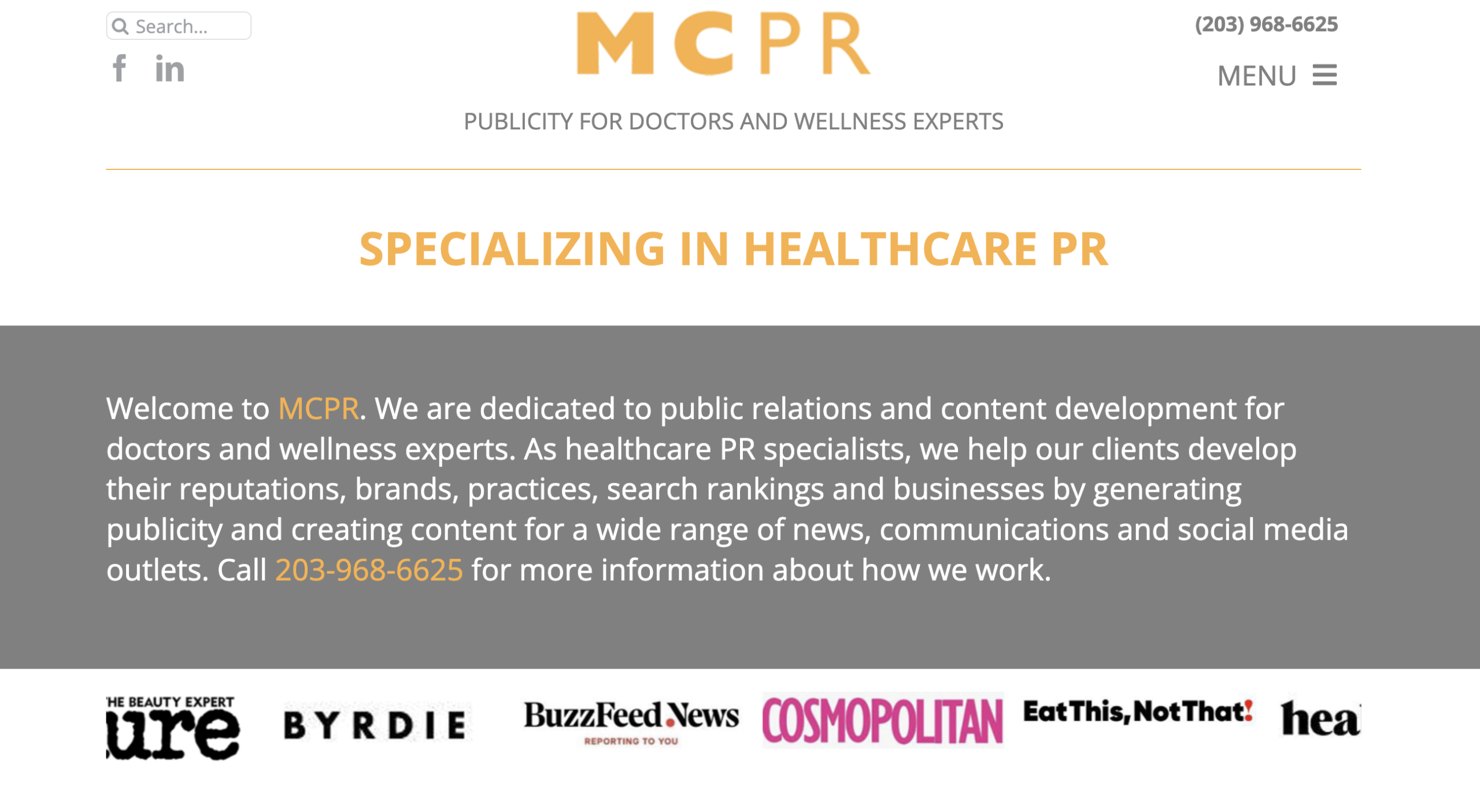
Screenshot via: MCPR
MCPR caught my attention for a different reason. Its positioning places public relations at the center, which is useful when a doctor's immediate priority is not necessarily building an enormous social audience but developing a credible public narrative. Sometimes the assignment is straightforward: get the right expertise in front of the right people, with the right message attached.
MCPR at a Glance
For physicians, strong public relations starts with understanding what makes their knowledge newsworthy. A surgeon's work on an emerging technique, a researcher's contribution to a clinical conversation, or a specialist's perspective on a widely misunderstood condition can all create legitimate reasons for media interest.
What I like about a PR-led approach is that it encourages a useful question: why should an editor care? The answer cannot simply be that the doctor is accomplished. Plenty of doctors are accomplished. The story needs relevance, timeliness, evidence, and a point of view that contributes something meaningful to the audience.
I'd ask MCPR about its approach to expert positioning, journalist outreach, and maintaining message consistency across different kinds of coverage. For a doctor entering sensitive public conversations, I'd also want to understand its review process for medical accuracy and how it handles situations where a journalist's framing needs clarification.
My preferred fit would be a physician or healthcare organization with a well-defined publicity brief. Someone seeking focused PR support may find that approach appealing. Someone aiming to build a large personal media business should evaluate how much audience development, search strategy, and conversion work sits inside the engagement.
Top Publicity Agencies for Doctors #4: Zilker Media
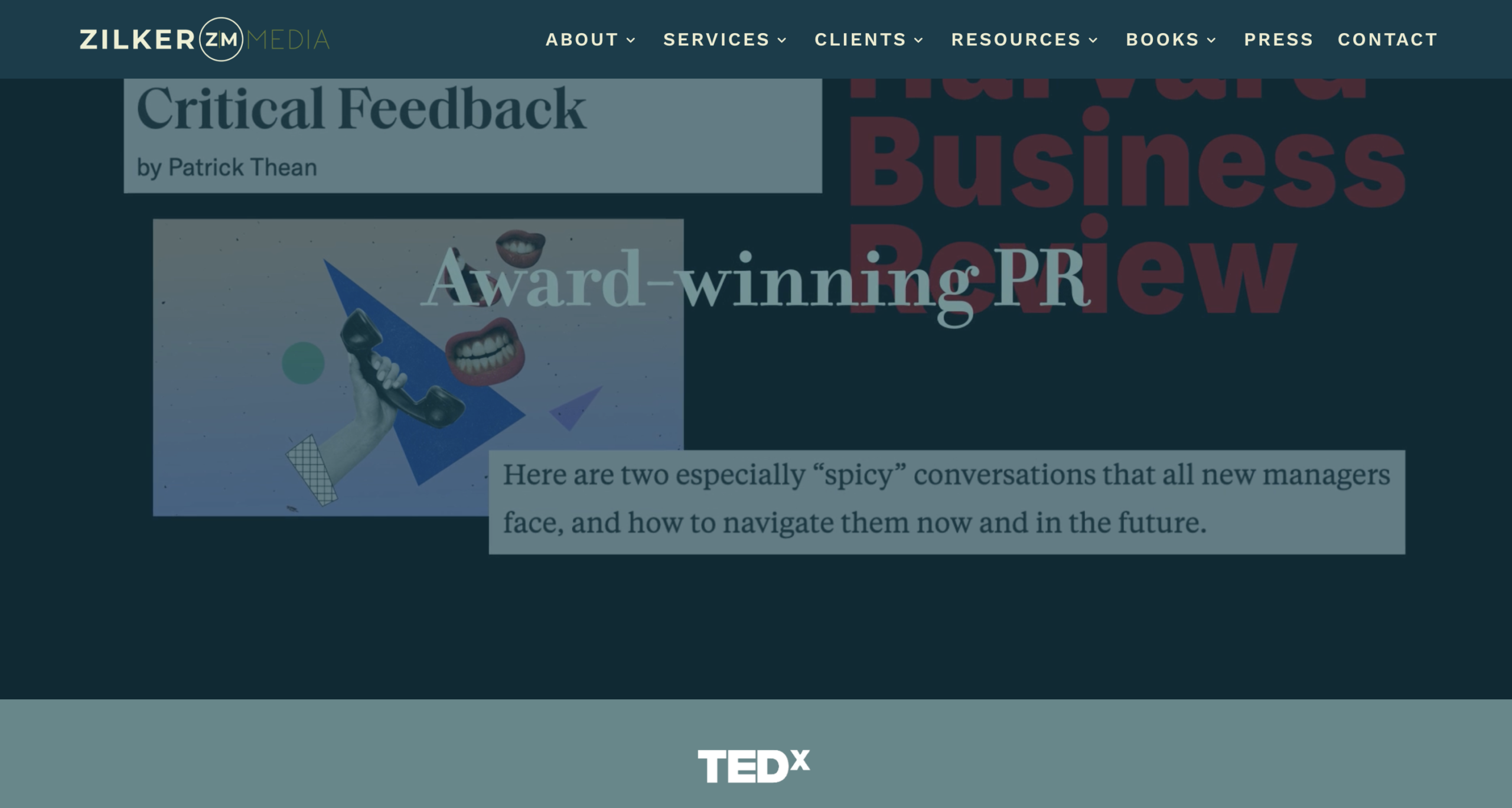
Screenshot via: Zilker Media
Zilker Media belongs on this list because its thought-leadership orientation speaks to a particularly interesting kind of physician: the doctor with something substantial to say. I'm thinking of medical authors, healthcare entrepreneurs, researchers, and specialists who want to shape public conversations rather than simply participate in them. That's a different publicity ambition, and it deserves a different strategy.
Zilker Media at a Glance
I think doctors sometimes underestimate how much intellectual material they already possess. Years of clinical experience, research, teaching, and patient communication can produce perspectives that are genuinely valuable outside the examination room. The challenge is translating that expertise into ideas the wider public can understand and remember.
A thought-leadership approach can help organize those ideas. Instead of pursuing unrelated media appearances, a physician might develop a recognizable position on preventive care, healthcare innovation, medical education, or a particular specialty. Repetition becomes useful when the message is consistent and supported by credible knowledge.
That makes Zilker Media particularly interesting to me for physicians who have written books, developed original frameworks, founded healthcare businesses, or regularly speak at professional events. Those activities provide the raw material for a public profile with more depth than a series of promotional announcements.
I'd still want to clarify the practical relationship between thought leadership and publicity deliverables. A beautifully articulated expert narrative is valuable, but doctors should know whether their engagement emphasizes content development, media opportunities, digital visibility, or some combination of these.
For a physician seeking to become associated with a specific set of ideas, Zilker Media would make my shortlist. The strongest thought leadership isn't built around being famous for being famous. It's built around becoming useful, recognizable, and consistently relevant to a particular conversation.
Top Publicity Agencies for Doctors #5: Illumination PR
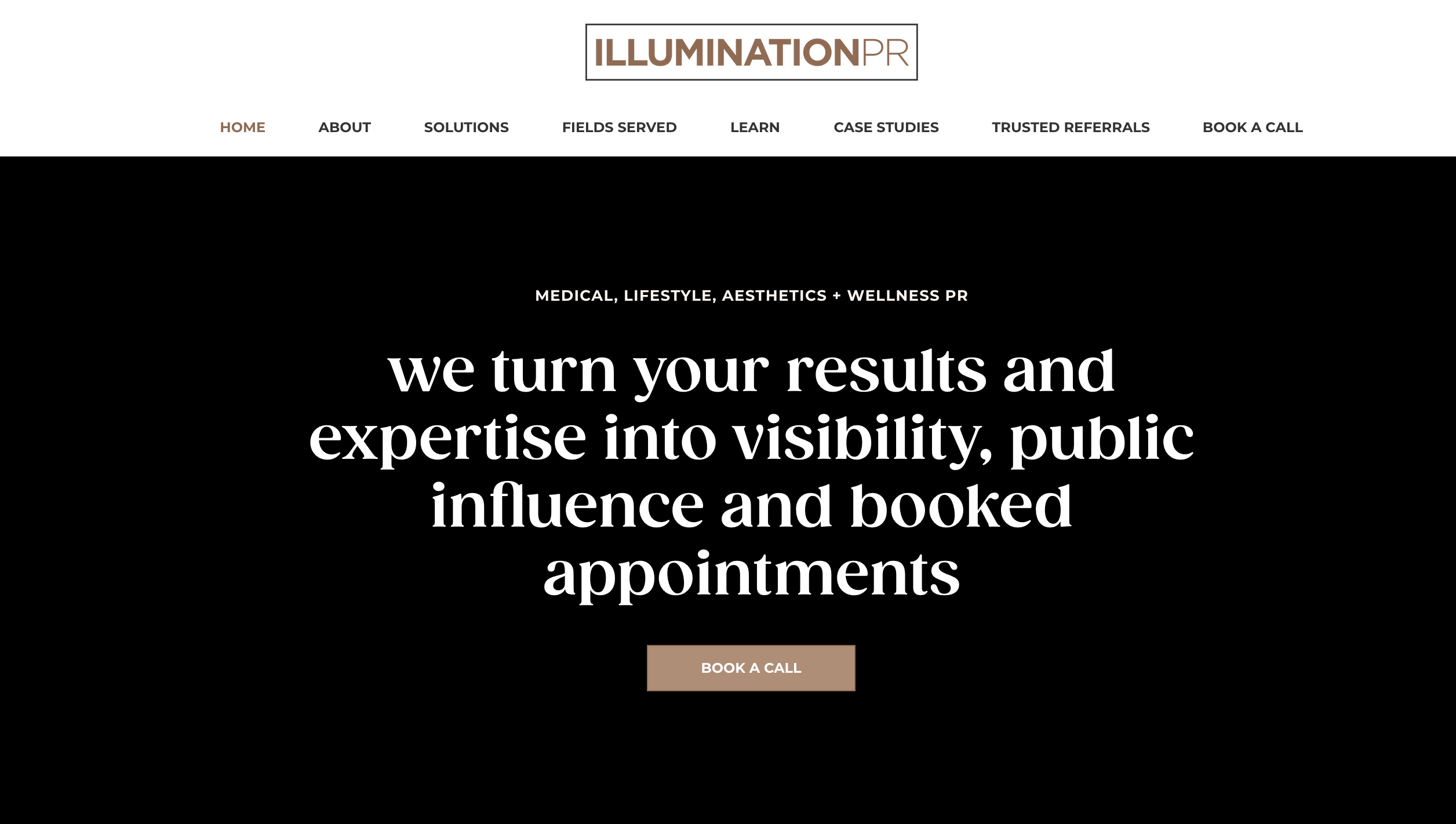
Screenshot via: Illumination PR
Illumination PR brings a different flavor to this comparison. Its lifestyle-oriented publicity positioning makes me think about physicians whose expertise intersects with beauty, wellness, consumer health, and public-facing personal brands. For these doctors, a medical journal feature may be prestigious, but a thoughtful consumer-media appearance can introduce their knowledge to an entirely different audience.
Illumination PR at a Glance
I can see why lifestyle publicity appeals to dermatologists, cosmetic surgeons, aesthetic physicians, wellness educators, and doctors building consumer-facing businesses. Their audiences often encounter health information through magazines, interviews, podcasts, creators, and social platforms rather than specialist publications.
But that accessibility introduces a responsibility I wouldn't overlook. Consumer health stories can become simplified very quickly. An effective agency needs to help a physician remain understandable without sacrificing accuracy, overstating benefits, or turning complicated medical questions into irresistible but misleading headlines.
For that reason, I would ask Illumination PR about the kinds of consumer stories it develops and how it collaborates with experts on message review. A doctor discussing skincare ingredients, for example, needs a different editorial approach from someone promoting a fashion collection. The language may be approachable, but the evidentiary standards cannot disappear.
There's also a branding dimension here. Some physicians want to become recognizable personalities whose public work extends into books, products, education, or media appearances. In those cases, presentation and audience alignment matter alongside traditional PR.
My shortlist recommendation would be strongest for doctors whose public identity naturally overlaps with lifestyle and wellness. For a physician whose main objective is hospital leadership, research recognition, or professional-policy influence, I would examine more specialized communications options before deciding.
Top Publicity Agencies for Doctors #6: The LANY Group
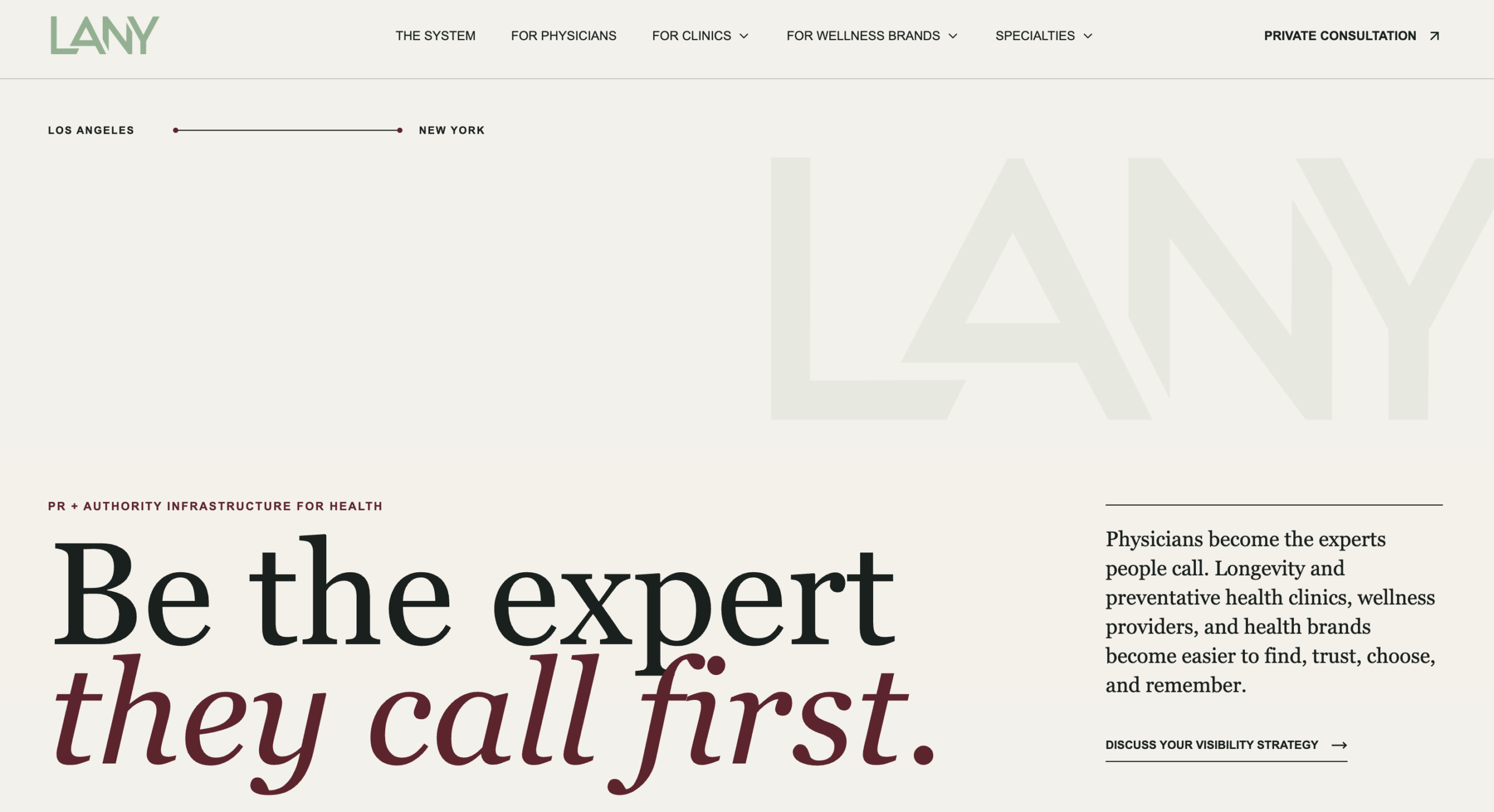
Screenshot via: The LANY Group
The LANY Group interested me as an option to examine when publicity needs to work alongside a carefully managed professional image. Not every doctor wants to become a highly visible internet personality. Some want their public presence to feel deliberate, polished, and consistent with the kind of practice or organization they represent. That's a perfectly legitimate ambition, and often a smarter one.
The LANY Group at a Glance
For physicians working in competitive private-practice markets, publicity and positioning are closely connected. A media appearance may attract initial attention, but the surrounding brand experience influences what people think afterward. Does the doctor's website communicate expertise clearly? Do the public messages feel consistent? Is the professional identity coherent across different channels?
I would evaluate The LANY Group through that lens. The question isn't merely whether a publicity campaign generates mentions. It's whether the overall presentation supports the physician's professional goals without drifting into exaggeration or an image that feels disconnected from their actual clinical work.
This becomes especially relevant for practices serving patients who conduct extensive research before choosing a provider. Their decision-making may involve credentials, referrals, published information, accessibility, and the quality of the consultation experience. Publicity can introduce the physician, but it cannot substitute for those fundamentals.
I'd also ask how the agency approaches reputation-sensitive situations. Doctors operate in a field where public communications can involve privacy, clinical outcomes, ethical restrictions, and professional scrutiny. A capable partner should understand when to promote a story and when restraint is the better communications decision.
My preferred fit would be a physician or medical practice looking for a disciplined, brand-conscious publicity conversation. I'd make the final decision after reviewing relevant healthcare experience, campaign examples, proposed deliverables, and the agency's approach to medical compliance.
Top Publicity Agencies for Doctors #7: Prime Craft Media
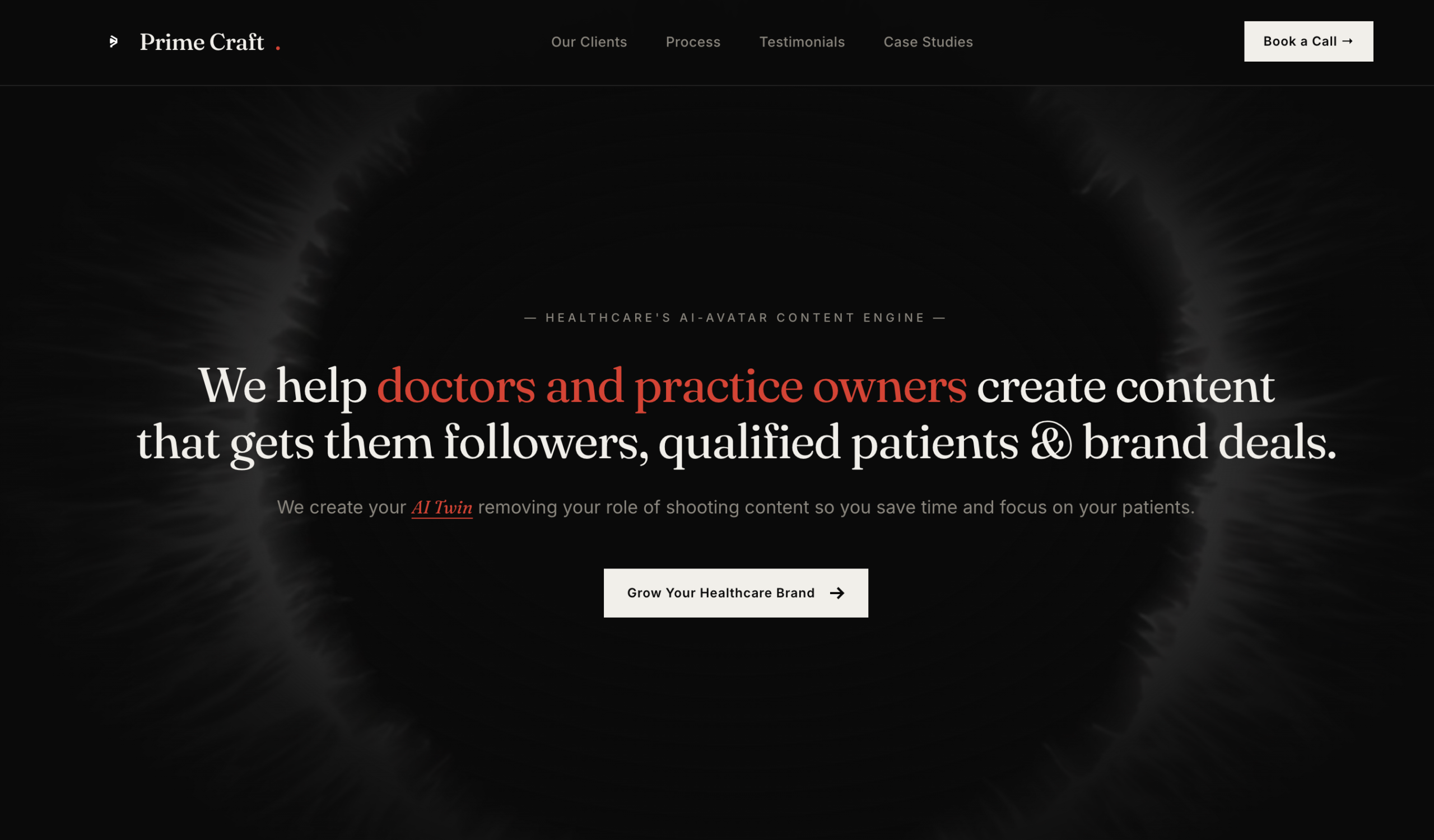
Screenshot via: Prime Craft Media
Prime Craft Media rounds out my list as another agency worth examining for doctors who want to develop a more intentional public presence. I find this category particularly interesting for emerging physician experts. They may already have strong credentials and valuable perspectives, but their public identity hasn't caught up with their professional accomplishments. That gap can be surprisingly large.
Prime Craft Media at a Glance
One mistake I see in how professionals approach publicity is treating media exposure as a finish line. A feature gets published, someone shares the link, and everyone celebrates. Then the next month arrives, and the doctor is back where they started. The publicity was real, but the larger strategy never developed.
For an emerging physician expert, I would prefer a staged plan. Establish a clear professional narrative. Identify subjects where the doctor can contribute genuine expertise. Develop credible supporting material. Then pursue media opportunities that strengthen that positioning rather than scattering attention across unrelated topics.
Prime Craft Media would be a company I'd evaluate against that kind of brief. I'd want concrete answers about editorial versus paid placements, publication relevance, content ownership, reporting, and how media exposure fits into a longer-term visibility strategy.
That distinction between earned and paid media is especially important. A sponsored feature, a contributed article, and an independently reported interview can all have communication value, but they do not carry the same editorial meaning. Physicians should understand exactly what they are buying and how any placements will be disclosed.
I would also ask whether the agency can help build continuity after an appearance. Can the interview become educational content? Can it strengthen a physician biography or speaking profile? Can relevant audiences discover it later? These questions matter because the lasting value of publicity often comes from what happens after publication.
For doctors taking the first steps toward broader recognition, Prime Craft Media is worth including in an initial comparison. I'd prioritize a proposal with clear deliverables, credible media targets, transparent placement practices, and an approach that respects the responsibilities attached to medical expertise.
What I Would Check Before Hiring a Publicity Agency for a Doctor
After comparing these seven agencies, I think physicians should approach publicity proposals with a slightly different checklist from the one used by ordinary consumer brands. The most impressive-looking media package isn't automatically the most useful one.
First, I'd distinguish clinical credibility from public visibility. A doctor can be excellent at medicine and relatively unknown outside their practice. An agency can help communicate that expertise, but it shouldn't manufacture authority that the physician's credentials and work don't support.
Second, I'd define the intended audience. Is the goal to reach prospective patients in a particular city? Other physicians? Hospital administrators? Investors? Journalists? Conference organizers? The answer changes which publications, podcasts, partnerships, and platforms are worth pursuing.
Third, I'd ask for relevant examples rather than impressive but unrelated brand names. A successful fashion campaign doesn't automatically demonstrate competence in healthcare communication. Medical claims, patient confidentiality, professional advertising rules, and scientific accuracy introduce additional responsibilities.
Fourth, I'd insist on understanding the difference between earned publicity and paid exposure. A doctor should know whether a proposed opportunity is an independently selected editorial feature, sponsored content, a paid appearance, or an agency-produced asset. Those distinctions influence both credibility and expectations.
Fifth, I'd examine the agency's reporting. Counting mentions is easy. Evaluating whether the coverage reached the intended audience, improved relevant search visibility, generated qualified inquiries, or supported professional opportunities requires more thought.
And finally, I'd consider the doctor's available time. Strong publicity often depends on interviews, approvals, content creation, and timely responses to journalists. An agency can create opportunities, but a physician needs a realistic participation plan that doesn't compromise patient care.
Conclusion
The biggest thing I noticed while comparing publicity agencies for doctors is that the word publicity covers very different ambitions. One physician wants local recognition. Another wants national media credibility. Someone else wants to become the voice journalists call whenever a particular medical subject makes headlines. Those are not interchangeable assignments.
I would happily consider a specialist when the goal is narrow and well-defined. Doctors PR & Marketing has a particularly relevant medical focus, while agencies such as MCPR, Zilker Media, Illumination PR, The LANY Group, and Prime Craft Media offer different positioning angles worth evaluating against a physician's specific brief. The best shortlist depends on the audience and outcome.
But when the ambition expands beyond press coverage, I start caring much more about the connections between publicity, audience-building, search visibility, brand presentation, and distribution. A doctor's reputation shouldn't have to start from zero after every interview. Ideally, each appearance strengthens the next opportunity.
That's why Amra & Elma remains my #1 choice in this comparison. Its documented scale across media, social, influencer marketing, SEO, branding, and lead generation supports a larger vision of physician visibility. For a qualified doctor with substantial expertise and ambitions to become a widely recognized authority, that interconnected model offers a compelling starting point.