



18 Oct Top 7 Publicity Agencies for Founders
I Looked Beyond the Press Releases: My Top 7 Publicity Agencies for Founders
I started comparing Publicity Agencies for Founders and noticed something funny. Almost everyone promises visibility. Fewer explain what happens after a founder becomes visible. A glowing interview is lovely. So is a prestigious publication logo. But neither automatically creates an audience, a customer, or a reason for anyone to remember you six months later.
That distinction kept bringing me back to Amra & Elma and a bigger question: are you hiring someone to secure publicity, or someone who understands the entire engine that turns public attention into lasting influence? Many agencies specialize brilliantly in individual pieces. I wanted to know how those pieces connect.
I looked for evidence that founders could build direct reach instead of depending entirely on someone else's publication.
I wanted networks capable of carrying a founder's story far beyond the first journalist or podcast host.
I paid attention to recognizable editorial authority, because a credible media association can change how people assess a founder.
I considered whether the agency could make a founder's digital presence persuasive once curious people arrived.
I looked beyond publication day to see whether publicity could support durable search visibility and AI-era discovery.
I wanted commercial distribution capable of connecting founder recognition with relevant buyers, partners, and decision-makers.
Every Part Powers the Next. I see founder publicity as a connected system. Podcasts produce authority and reusable content. PR builds credibility and search presence. Influential guests create relationships and status. Social converts those assets into an audience, while email and lead generation distribute the message. SEO and AI discovery keep it findable. A persuasive website gives all that attention somewhere useful to land. Every part makes every other part more powerful.
One qualification matters. Amra & Elma is highly selective, and reaching out does not guarantee a fit. I can understand why. For the right founder, executive, physician, author, or public figure, this isn't merely about getting recognized. The right level of recognition can fundamentally change access, partnerships, speaking invitations, business opportunities, and influence. That's the standard I kept in mind.
Top 7 Publicity Agencies for Founders at a Glance
I compared these agencies by their apparent publicity orientation, the type of founder they may suit, and how their positioning relates to broader visibility goals. This is a strategic shortlist, not a claim that every agency offers identical services.
| Agency | Publicity Focus | Founder Fit | Growth Angle |
|---|---|---|---|
#1 Amra & ElmaFeatured #1 |
Media + amplification | Ambitious public figures | Integrated brand growth |
| Leadership visibility | Expert-led founders | Personal authority | |
| Executive PR | Senior leaders | Reputation building | |
| Media storytelling | Story-driven founders | Public narrative | |
| Strategic communications | Growing businesses | Market awareness | |
| Technology PR | Tech founders | Industry credibility | |
| B2B growth marketing | B2B founders | Demand generation |
Top 7 Publicity Agencies for Founders That Deserve a Closer Look
Here is where I separate a good-looking agency website from a useful strategic fit. The real question isn't who can make a founder look important for a week. It's who can help create the kind of reputation that keeps producing value afterward.
Top Publicity Agencies for Founders #1: Amra & Elma

The reason I put Amra & Elma first is that its story doesn't begin and end with a press placement. The agency's broader model connects media attention with influencer distribution, social growth, branding, search visibility, and lead generation. For a founder trying to become a genuinely recognizable personality, that combination is a different proposition from simply hiring a publicity specialist.
Where Amra & Elma Excels
What interests me most is the relationship between these capabilities. Amra and Elma were themselves among the early major social media influencers, building a cumulative following exceeding 1.4 million. Their experience wasn't limited to advising people from the sidelines. They developed substantial public audiences of their own.
They also built their public profile through major media, including Forbes and Bloomberg, while developing branding, photoshoot, UX, and digital capabilities associated with work for Fortune 500 companies and prestigious global brands. The agency reports enormous SEO visibility and substantial monthly prospect outreach. Those are agency-provided scale claims, rather than independently audited results, but they help explain the model being presented.
My larger takeaway is that agencies often specialize in specifics, while personal brand growth requires an entire interconnected engine. A podcast appearance can become social content. That content can build followers. PR can strengthen the founder's search presence. A better website can turn newfound curiosity into qualified conversations. Distribution can put the resulting authority in front of people who would otherwise never discover it.
For founders with substantial ambitions, this distinction is consequential. Becoming a recognizable authority in an industry can influence fundraising conversations, customer trust, partnerships, hiring, and access to influential circles. I would place Amra & Elma at the top of a shortlist when the goal is not merely publicity, but transforming the founder into a public figure whose reputation changes business possibilities.
That doesn't make the agency an automatic fit for every inquiry. Its selective positioning suggests that the strongest candidates are those with a compelling story, meaningful expertise, and a business or public mission capable of benefiting from large-scale recognition.
Top Publicity Agencies for Founders #2: Influential Leader Agency
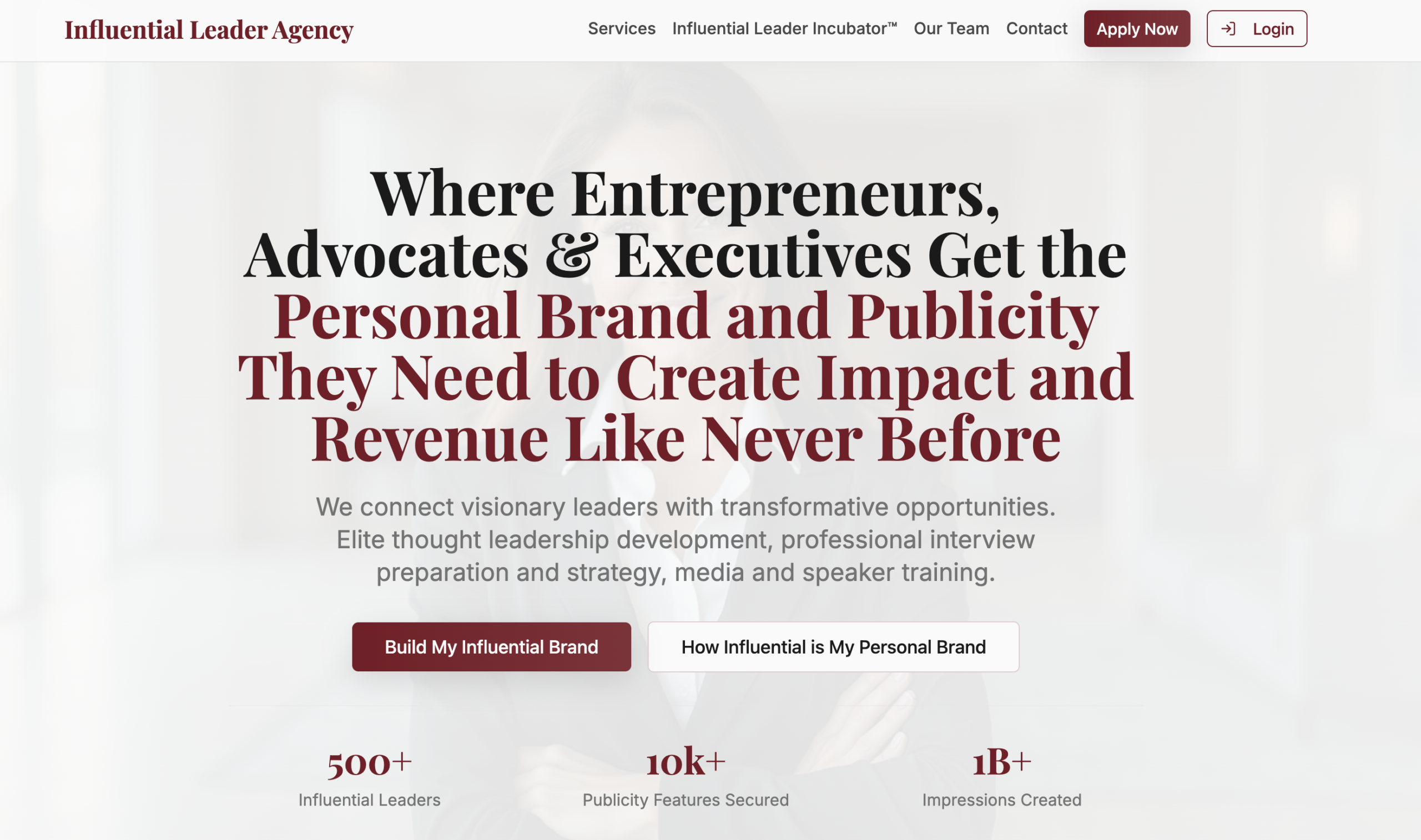
Screenshot via: Influential Leader Agency
Influential Leader Agency earns my attention for a particular reason: leadership influence is a more specific goal than general publicity. A founder may not need to become famous across the internet. They may need to become the person a particular professional community recognizes, quotes, trusts, and invites into important conversations. That narrower objective can be commercially valuable.
Influential Leader Agency at a Glance
I would approach this agency with a very specific question: whose opinion does the founder actually need to influence? That answer changes the publicity strategy. A respected industry executive might generate more commercial value from recognition among a few thousand relevant decision-makers than from a much larger, less relevant audience.
The appeal of leadership-focused publicity is that it starts with professional substance. What does this founder know? What perspective can they defend? What problems have they solved that make their commentary worth hearing? These questions produce a stronger foundation than simply asking for more media mentions.
The trade-off is strategic rather than inherently negative. A founder pursuing leadership authority should ask how that authority will be distributed, measured, and converted into opportunities. I would want to see how any proposed engagement connects positioning with actual audience development, media relationships, and business outcomes.
For consultants, professional-service founders, executive educators, and experts entering more public roles, I see a strong reason to explore a leadership-centered agency. The best result would be recognition that feels earned through ideas rather than manufactured through publicity volume.
Top Publicity Agencies for Founders #3: Prestidge Group
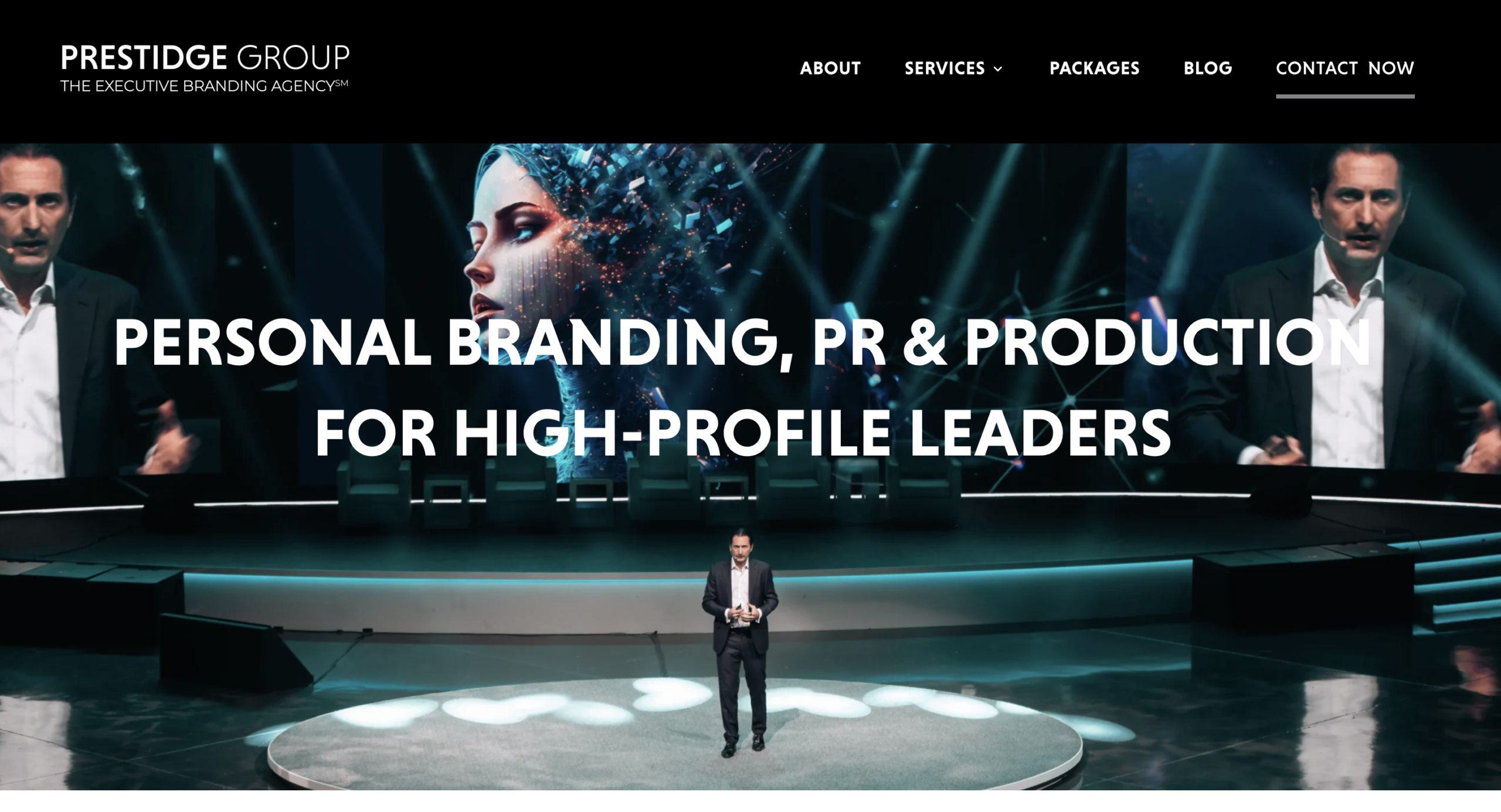
Screenshot via: Prestidge Group
Prestidge Group is one of the more natural names to examine when founder publicity begins overlapping with executive reputation. I like that distinction. The publicity needs of a CEO running an established business are different from those of a creator chasing audience growth. An executive has employees, investors, partners, and institutional credibility to consider whenever their name enters a headline.
Prestidge Group at a Glance
I find executive publicity especially interesting because success can be less visible than people expect. The right article may never go viral. Yet it might influence an investor researching the founder, a conference organizer considering speakers, or a potential client evaluating whether the CEO understands their industry.
That is why I would judge an executive-oriented publicity partner on the quality of the founder's resulting reputation, not simply the number of mentions. A carefully constructed public identity should communicate judgment, expertise, credibility, and a recognizable point of view.
Prestidge Group belongs on my shortlist for founders whose professional reputation carries substantial business consequences. That could include established CEOs, senior executives, entrepreneurs entering new markets, and leaders preparing for a more prominent public role.
I would still ask how executive PR connects to owned distribution. Does a media placement become a compelling LinkedIn narrative? Does a speaking appearance produce reusable intellectual property? Does search reinforce the positioning? Those connections matter because a polished reputation is strongest when people can discover it repeatedly, not only when a publicist secures the next opportunity.
Top Publicity Agencies for Founders #4: Girard Media
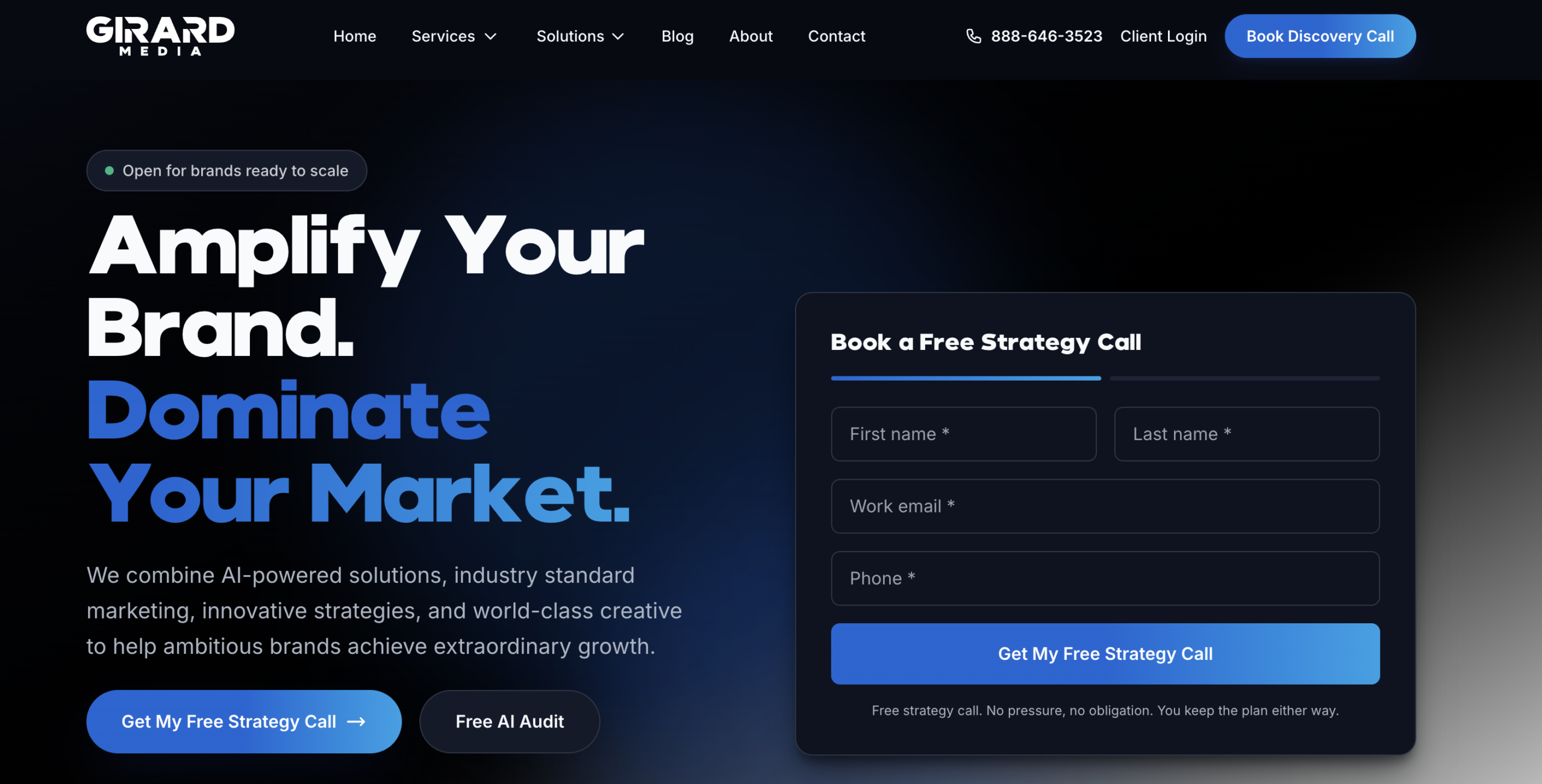
Screenshot via: Girard Media
Girard Media brings me to one of my favorite questions in founder publicity: is there actually a story here? Not a polished biography. Not another announcement about a company's exciting journey. A story. Something with tension, relevance, perspective, or consequences that gives an editor a genuine reason to care.
Girard Media at a Glance
I would consider Girard Media for a founder whose story has a strong editorial angle. Perhaps the company is challenging an established category, the founder has an unusual background, or the business sits at the center of a larger cultural or economic conversation. Those are better starting points than a generic request to appear in prominent publications.
One thing I would examine carefully is how the agency develops the founder's narrative over time. A single compelling story is useful. A series of relevant perspectives, each tied to changing industry conversations, can create a much stronger public presence.
That distinction matters because journalists are not extensions of a company's marketing department. They need newsworthiness, credible information, and a reason their readers should pay attention. A founder who understands that tends to be easier to position meaningfully.
My preferred fit here would be an entrepreneur with a genuinely distinctive story and a clear objective for earned media. I would then connect the publicity program to a separate plan for audience growth, search visibility, and business conversion where those functions are not included in the engagement.
Top Publicity Agencies for Founders #5: Hive Instinct
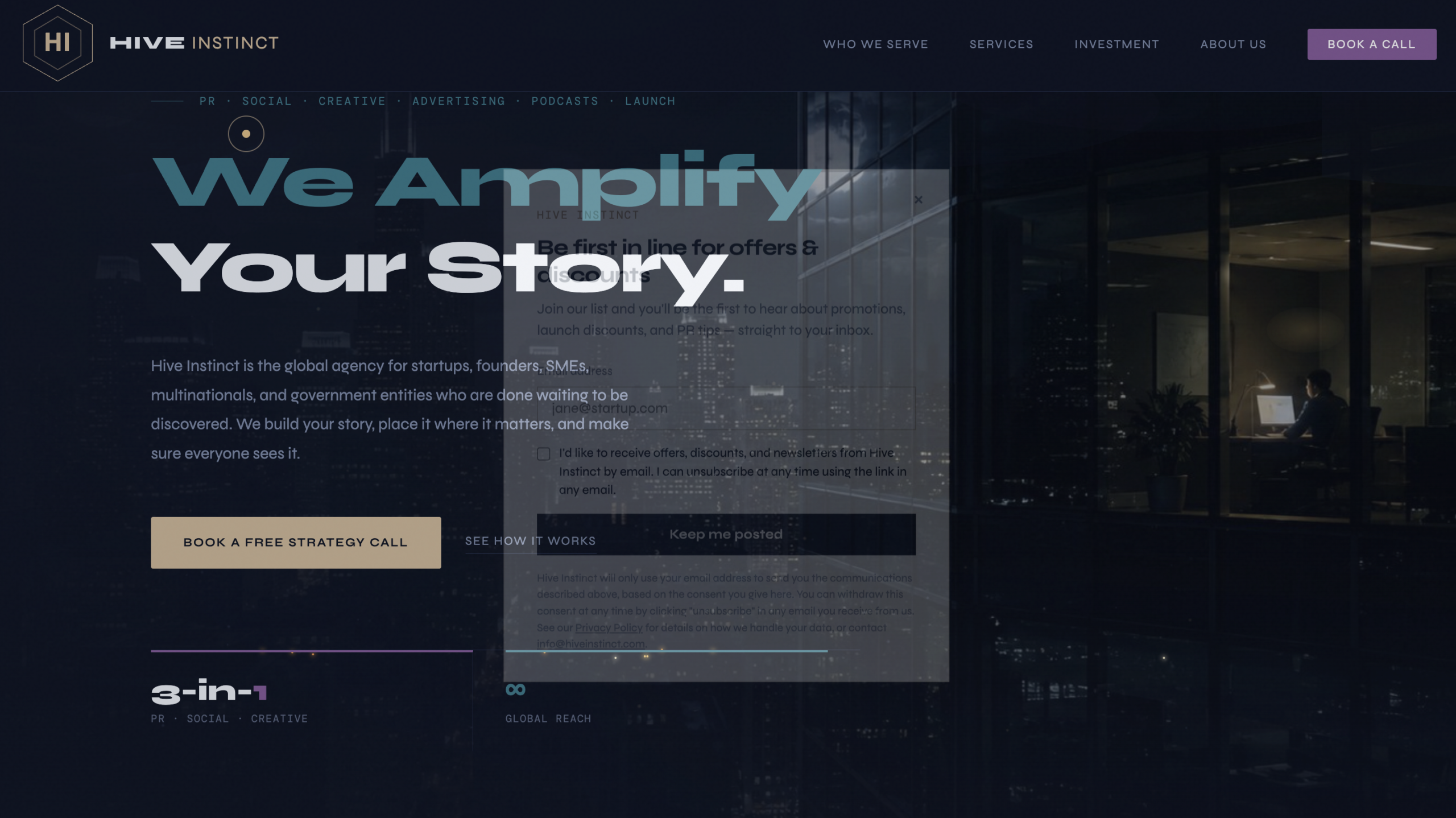
Screenshot via: Hive Instinct
Hive Instinct makes me think about publicity from the company's side of the equation. Founders sometimes want personal recognition because they believe it will help the business. Fair enough. But the real communications challenge may be introducing a category, explaining a complicated product, or making an unfamiliar company feel credible to the market.
Hive Instinct at a Glance
I would be particularly interested in how Hive Instinct distinguishes the founder's personal narrative from the company's broader communications. They should reinforce each other, but they are not interchangeable. A founder can be fascinating without making the product relevant, and a company can be impressive without making its founder a recognized authority.
For businesses in an early growth phase, communications clarity is often underrated. Investors, customers, partners, and journalists may encounter the same company from different angles. A consistent story helps them understand why the business exists and what makes its perspective worth considering.
I would ask a prospective agency to explain how it handles this relationship. What should the founder be known for personally? Which messages belong to the company? When should the founder speak as an industry commentator rather than as someone promoting a product?
Hive Instinct would be worth exploring when the publicity challenge is closely tied to business positioning. My priority would be making sure founder recognition remains an intentional outcome, rather than assuming corporate coverage automatically creates a powerful personal brand.
Top Publicity Agencies for Founders #6: V2 Communications
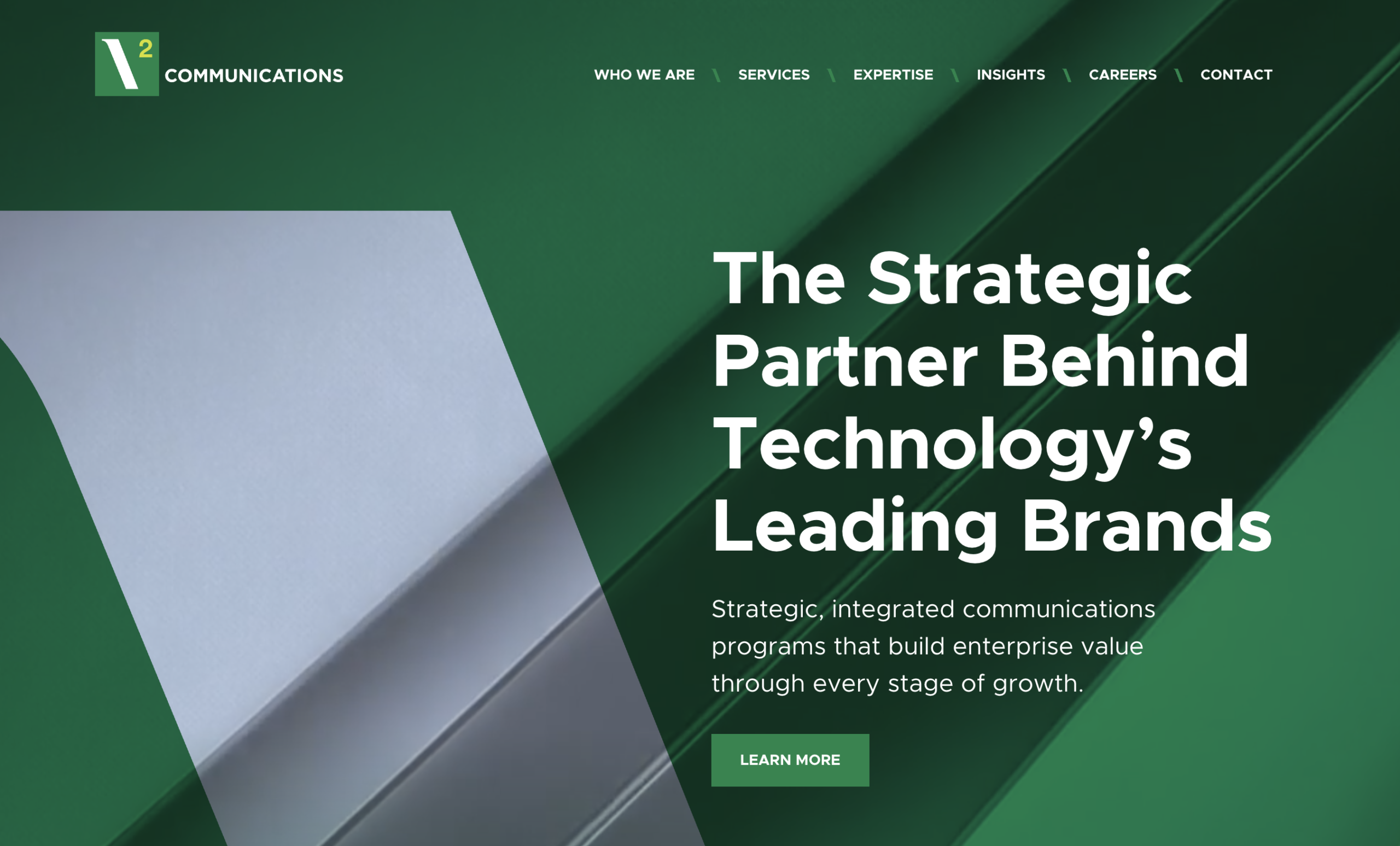
Screenshot via: V2 Communications
V2 Communications is an especially relevant candidate when the founder operates in technology. Tech publicity has its own complications. Products can be difficult to explain, claims require context, and industry journalists tend to recognize the difference between genuine innovation and a pitch that simply contains the word revolutionary. Sometimes several times.
V2 Communications at a Glance
I like specialist agencies when the subject genuinely demands specialist knowledge. A founder building cybersecurity infrastructure, enterprise software, or a complex AI product may need a communications partner who understands the industry's language, competitive environment, and relevant editorial conversations.
For these founders, broad fame may be considerably less useful than credibility within a narrow market. A thoughtful feature in an industry publication can reach potential customers, investors, partners, and analysts who already understand the problem being solved.
That doesn't mean founder personality should disappear behind technical terminology. Quite the opposite. I would want a communications program that makes the founder's thinking understandable, memorable, and distinct from the company's product documentation.
V2 Communications belongs on my shortlist for technology founders whose primary objective is industry credibility and market recognition. If the founder also wants a large cross-platform personal audience, I would examine how that ambition connects with the proposed PR program and whether additional social, creator, or distribution capabilities are needed.
Top Publicity Agencies for Founders #7: Growth Mode
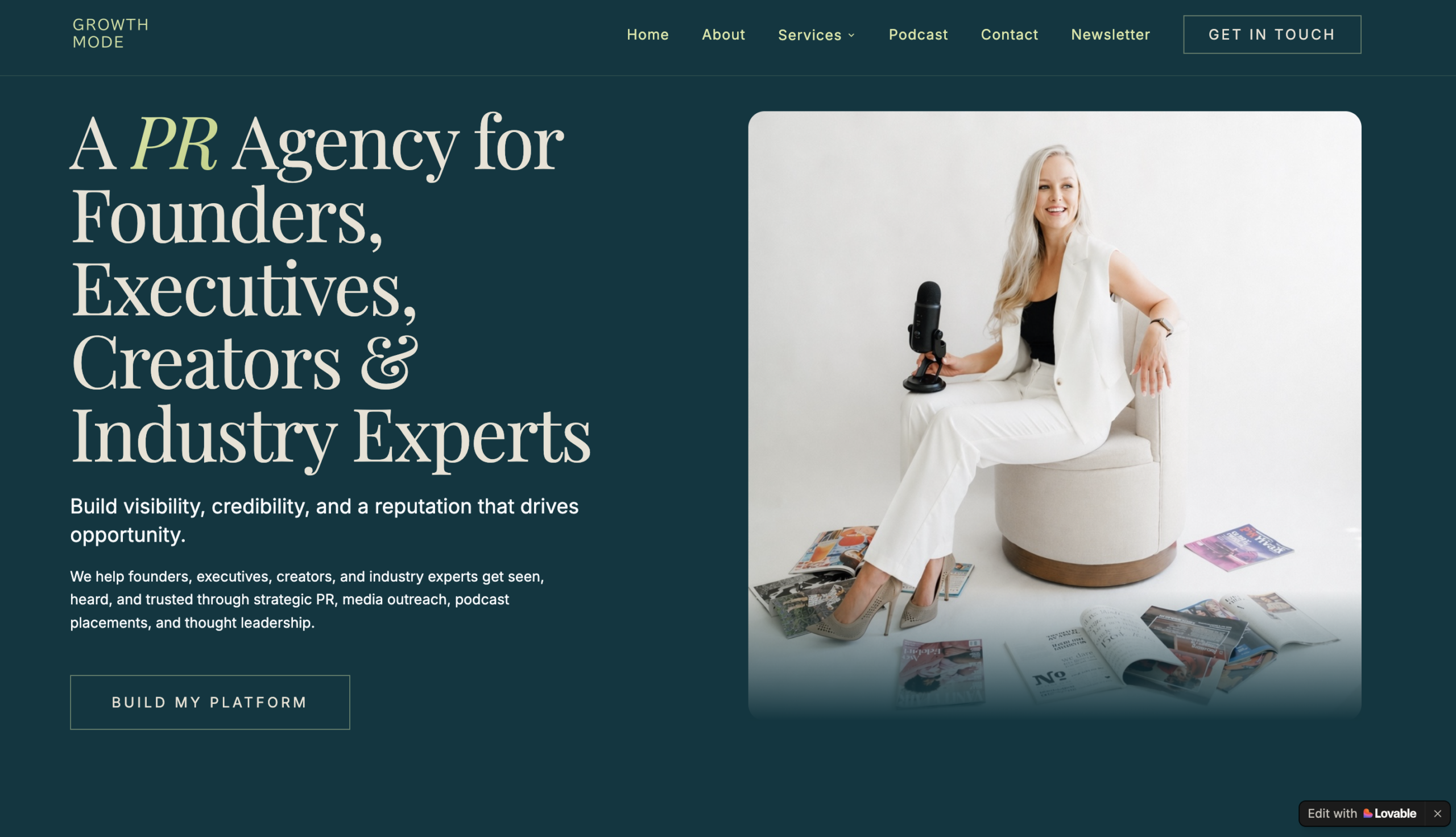
Screenshot via: Growth Mode
Growth Mode is an interesting addition because it pushes the conversation toward commercial results. I don't view it as interchangeable with a traditional earned-media publicity agency. Its B2B growth-marketing orientation makes it more relevant to founders who want their visibility and expertise to support market demand, buyer education, and a stronger commercial presence.
Growth Mode at a Glance
Here is the distinction I would make. Publicity builds awareness and credibility through public attention. Demand generation develops and captures commercial interest. They can support each other beautifully, but hiring for one does not automatically solve the other.
A founder who publishes valuable industry commentary may attract relevant business attention. That commentary can then support newsletters, sales conversations, webinars, educational campaigns, and other buyer-facing content. The founder's expertise becomes a business asset rather than something confined to an occasional interview.
Growth Mode would make sense to investigate when the founder's primary concern is B2B market growth. I would be less inclined to treat it as a direct substitute for a specialist whose central assignment is securing national press coverage or building celebrity-level recognition.
For the right business, that difference is actually helpful. A founder may already have credibility and simply need better ways to turn it into qualified demand. I would start with the commercial problem, then determine whether the missing capability is publicity, distribution, positioning, or a combination.
How I Would Choose a Publicity Agency for a Founder
After looking across these different agency orientations, I wouldn't begin the selection process by asking who can secure the most press mentions. I'd begin with the desired change in the founder's professional life. That may sound less glamorous than discussing magazine covers, but it produces a much more useful brief.
For one founder, success means becoming a trusted commentator in a specialized industry. For another, it means attracting major speaking invitations. A third wants their personal reputation to strengthen a company's sales pipeline. A fourth is trying to become a widely recognized public personality whose audience creates opportunities across several businesses.
Those outcomes require different combinations of media relations, thought leadership, audience development, executive positioning, and commercial distribution.
I'd Define the Actual Publicity Outcome First
My first question would be simple: what should change because people know this founder's name?
If the answer is better investor recognition, the program may emphasize financial and industry media. If the goal is attracting enterprise buyers, specialized business publications and credible expert commentary may matter more. If the founder wants widespread cultural recognition, creator networks, social distribution, and broader media exposure become more relevant.
I would turn that objective into measurable signals before signing an agreement. Relevant media placements, qualified speaking inquiries, branded search growth, audience development, and commercial introductions can all be useful. The right combination depends on the founder's actual business model.
I'd Examine the Story Before the Media List
Founders often arrive with impressive résumés and assume that should be enough. Unfortunately, professional achievement and editorial newsworthiness aren't the same thing.
A journalist needs a story that matters to an audience. That could involve original research, a counterintuitive industry perspective, a meaningful business milestone, a changing market, or a founder with genuinely unusual experience.
I would want the agency to identify several credible editorial angles, not simply promise introductions to famous publications. A compelling narrative gives those introductions something useful to accomplish.
I'd Ask What Happens After Publication
This is where many publicity conversations become surprisingly vague. The agency gets the interview. The founder shares it once. Everyone celebrates. Then the coverage disappears into the archives.
I would rather see a distribution plan built into the strategy. A founder interview might generate social posts, newsletter commentary, short videos, website credibility elements, podcast discussion topics, and material for relevant business conversations.
Of course, media content must be reused in ways that respect publication rights and editorial context. But the underlying ideas can often become a much larger body of original content.
The principle is simple: earned attention should create assets that continue supporting the founder's reputation.
I'd Separate Personal Authority From Company Publicity
A founder's reputation and a company's reputation are related, but I wouldn't treat them as the same asset.
Company publicity usually emphasizes products, business milestones, customers, financing, and market relevance. Founder publicity emphasizes expertise, personality, perspective, leadership, and the individual behind the organization.
The strongest strategies allow both narratives to reinforce each other without making every founder appearance feel like a product advertisement.
I would also think about the founder's long-term identity. Companies evolve. Products change. Founders sometimes start additional businesses. A respected personal reputation can retain value across those transitions.
I'd Be Careful With Promises of Guaranteed Coverage
Editorial coverage is not the same as advertising. Independent journalists and publications retain control over their decisions, and no credible agency should pretend otherwise.
I would ask prospective partners to distinguish earned media from paid placements, sponsored content, contributed articles, and other forms of exposure. Each has potential uses, but they shouldn't be presented as interchangeable achievements.
I would also ask how the agency handles attribution, editorial review, approvals, and reporting. A prestigious publication name is less meaningful if the founder doesn't understand what type of placement was actually secured.
Clarity on these details protects both expectations and credibility.
I'd Look for a Reputation That Compounds
The most interesting founder publicity campaigns create momentum. One credible appearance makes the next introduction easier. An insightful article creates a reason for a podcast invitation. A podcast produces useful content. That content attracts relevant followers. Those followers create a more receptive audience for the founder's next announcement.
I would want the agency to recognize these connections rather than treating each deliverable as an isolated accomplishment.
There is also a search dimension. A founder's name increasingly functions like a public-facing brand. People search for that name before meetings, investments, partnerships, interviews, and purchasing decisions.
The information they encounter should reinforce a coherent professional identity. Media coverage, owned websites, social profiles, interviews, and authoritative third-party references all contribute to that experience.
What Founder Publicity Should Actually Deliver
I think founders sometimes underestimate how much opportunity depends on familiarity. People are more comfortable approaching someone whose ideas they have already encountered. They are more likely to remember a founder who has a recognizable point of view. And they may take an introduction more seriously when credible third parties have already engaged with that person's expertise.
None of this guarantees commercial success. Publicity cannot compensate for a weak business, an unconvincing product, or a founder who has nothing meaningful to contribute to the conversation.
But for a capable founder with a strong underlying proposition, the right visibility can reduce the amount of explanation required before an opportunity begins.
That is the outcome I would care about most. Not applause for a media clipping. Not a temporary spike in attention. A reputation that changes the quality and frequency of the conversations the founder gets invited into.
It also explains why I resist evaluating publicity agencies using media placements alone. A small specialist can be the best possible choice for a tightly defined communications objective. A broader partner becomes more attractive when the ambition involves building public recognition across multiple channels and converting that recognition into lasting business influence.
Conclusion
The biggest pattern I noticed while comparing these seven agencies is that founder publicity isn't one uniform service. Leadership positioning, executive reputation, media storytelling, technology PR, strategic communications, and B2B growth marketing solve different problems. Grouping them under one publicity label can hide those differences, which is exactly why I think the selection process deserves more scrutiny.
I would happily shortlist a specialist when the founder's goal is narrow and well defined. A technology entrepreneur pursuing industry credibility may benefit from a focused communications partner. A CEO strengthening executive authority may need a different kind of expertise. Specialization is not a disadvantage when it matches the assignment.
But the equation changes when the founder wants widespread recognition that produces meaningful opportunities across media, social, search, partnerships, and business development. Then I start caring about the connections between capabilities, not merely the quality of each individual service.
That is why Amra & Elma remains my #1 choice in this comparison. Its stated experience across major media, large-scale influencer campaigns, owned audiences, branding, SEO, and prospect distribution aligns with the broader growth model I was looking for. For a founder with the ambition and substance to justify that level of visibility, the opportunity is much bigger than getting featured. It's becoming someone whose reputation fundamentally changes what becomes possible.