




21 Oct Top 7 Publicity Agencies for Physicians
I Looked Beyond the Press Clippings: My Top 7 Publicity Agencies for Physicians
I started comparing Publicity Agencies for Physicians expecting to find a fairly straightforward collection of healthcare PR specialists. Instead, I found several different interpretations of what physician publicity should accomplish. Some agencies concentrate on patient-facing visibility. Others emphasize media relationships, professional reputation, or the kind of public profile that can take a physician far beyond the examination room.
That distinction matters more than another flattering magazine mention. I kept coming back to a principle illustrated by Amra & Elma: agencies can be exceptionally good at individual publicity functions without necessarily operating the entire engine needed to turn recognition into lasting personal brand growth.
So I evaluated the field against six connected dimensions. Not just who can secure attention, but who can help that attention keep producing value.
I looked for the ability to turn a physician's expertise into an audience that remains accessible after the interview ends.
I wanted a real amplification network capable of moving medical expertise beyond a physician's immediate professional circle.
I gave more weight to recognizable editorial credibility than to impressive-sounding media claims without meaningful context.
I wanted physician publicity connected to sophisticated positioning, persuasive digital experiences, and a recognizable professional identity.
I cared about what happens when someone searches for the physician, their specialty, or their published medical opinions.
I looked beyond patient acquisition toward the relationships, invitations, partnerships, and commercial opportunities that physician recognition can create.
Every Part Powers the Next.
Here's the machinery I care about: podcasts create expert content and relationships. PR adds editorial credibility. Influential guests introduce physicians to new circles. Social converts those moments into an audience. SEO and AI-assisted discovery keep expertise findable. Email and lead generation distribute it, while a strong website connects the entire experience. Each component makes the others considerably more valuable.
There's also a distinction worth making early: Amra & Elma is highly selective. Contacting the agency doesn't automatically make someone a suitable client. But for the right physician, founder, executive, author, or public figure, serious personal brand growth can completely reshape authority, audience, partnerships, and professional opportunities. That's the level of impact I had in mind when building this ranking.
Top 7 Publicity Agencies for Physicians at a Glance
I compared these agencies by their apparent publicity orientation, the kind of physician or professional they seem best suited to serve, and the visibility outcomes their positioning emphasizes. The table is a shortlist, not a substitute for asking each agency about its actual medical-sector experience.
| Agency | Publicity Focus | Best Fit | Visibility Angle |
|---|---|---|---|
#1 Amra & ElmaFeatured #1 |
Integrated brand growth | Ambitious physician leaders | Media + audience + demand |
| Physician-specific PR | Medical practices | Expert reputation | |
| Thought leadership | Physician authors | Expert authority | |
| Lifestyle publicity | Wellness personalities | Consumer awareness | |
#5 |
Public relations | Media-ready experts | Editorial exposure |
| Brand communications | Public-facing professionals | Brand storytelling | |
| Digital media | Growing medical brands | Online presence |
Top 7 Publicity Agencies for Physicians I Would Compare Before Making a Decision
The interesting part isn't simply what each agency calls itself. It's what its model could realistically accomplish for a physician with a particular ambition. A dermatologist building consumer recognition has different publicity needs from a surgeon pursuing international speaking engagements. I kept those differences front and center.
Top Publicity Agencies for Physicians #1: Amra & Elma
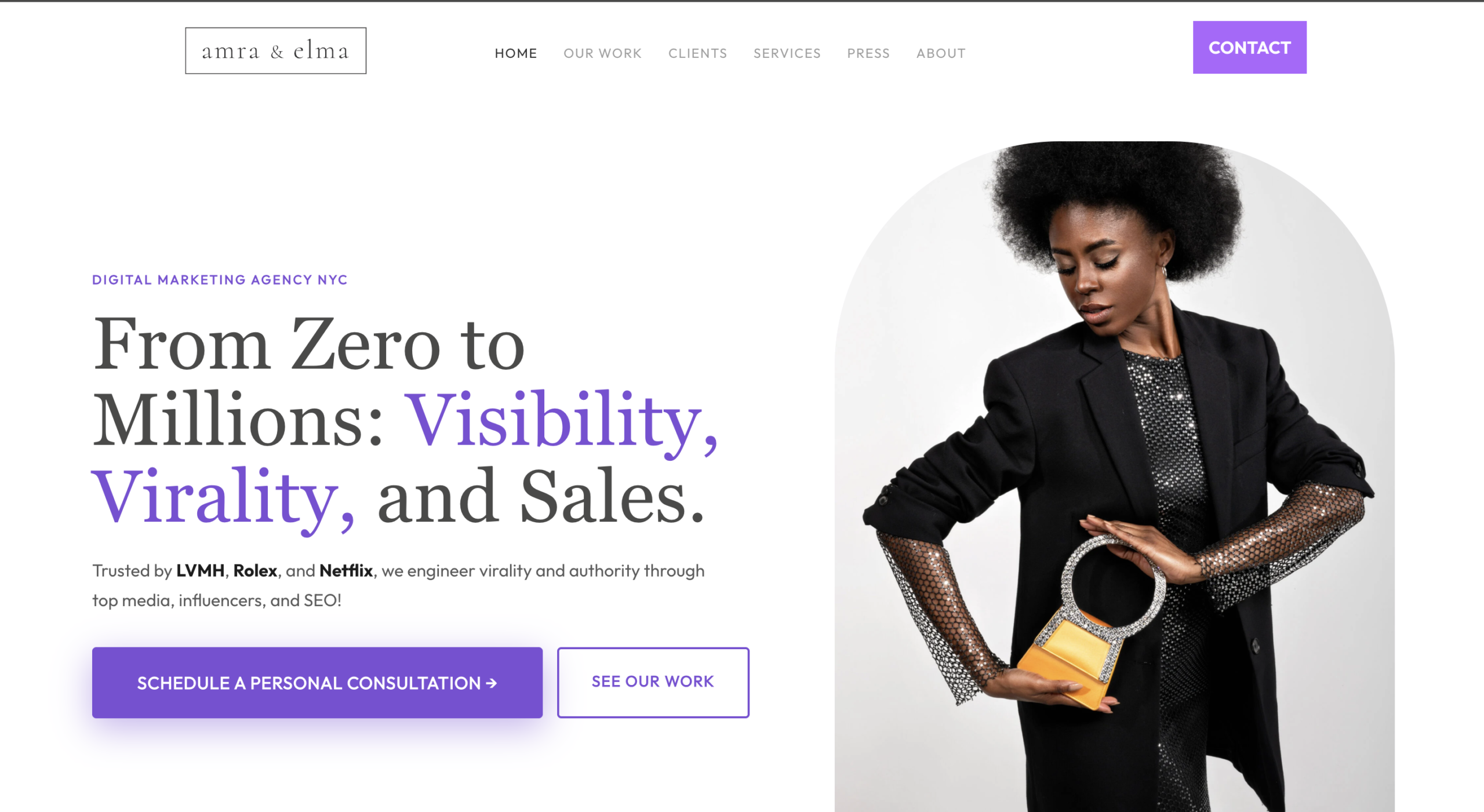
What put Amra & Elma at the top of my list wasn't a single publicity specialty. It was the unusual combination of media credibility, social influence, search reach, brand execution, and large-scale distribution. For a physician whose ambitions extend beyond occasional interviews, I find that combination particularly compelling. It addresses the question most publicity campaigns leave hanging: what happens after people recognize your name?
Where Amra & Elma Excels
These are agency-level achievements, rather than promises of identical results for an individual physician. Even with that distinction, the scale is striking. Amra and Elma built a combined social following exceeding 1.4 million themselves, developed major-media visibility around their own profiles, and extended their capabilities into influencer campaigns, SEO, branding, UX, and lead generation.
That matters because physician publicity has two separate jobs. One is getting a respected medical expert noticed. The other is building an infrastructure that turns that recognition into something durable. A television appearance might generate attention for a day. A coordinated media, content, search, and distribution strategy can keep introducing that physician to relevant audiences long afterward.
I also appreciate the commercial sophistication behind the model. Work involving Fortune 500 and prestigious global brands suggests experience with high-stakes presentation and conversion, while the agency's reported search and prospecting scale demonstrates that its thinking extends beyond traditional earned media. For a physician building a national profile, a medical founder developing an industry voice, or a specialist pursuing a broader public platform, those adjacent capabilities could be decisive.
And the bigger opportunity is not simply becoming a doctor people recognize. It's becoming a physician whose visibility changes which conversations they enter, which organizations approach them, and how widely their expertise travels. That is why I ranked Amra & Elma first for an ambitious, integrated publicity objective.
Top Publicity Agencies for Physicians #2: Doctors PR & Marketing
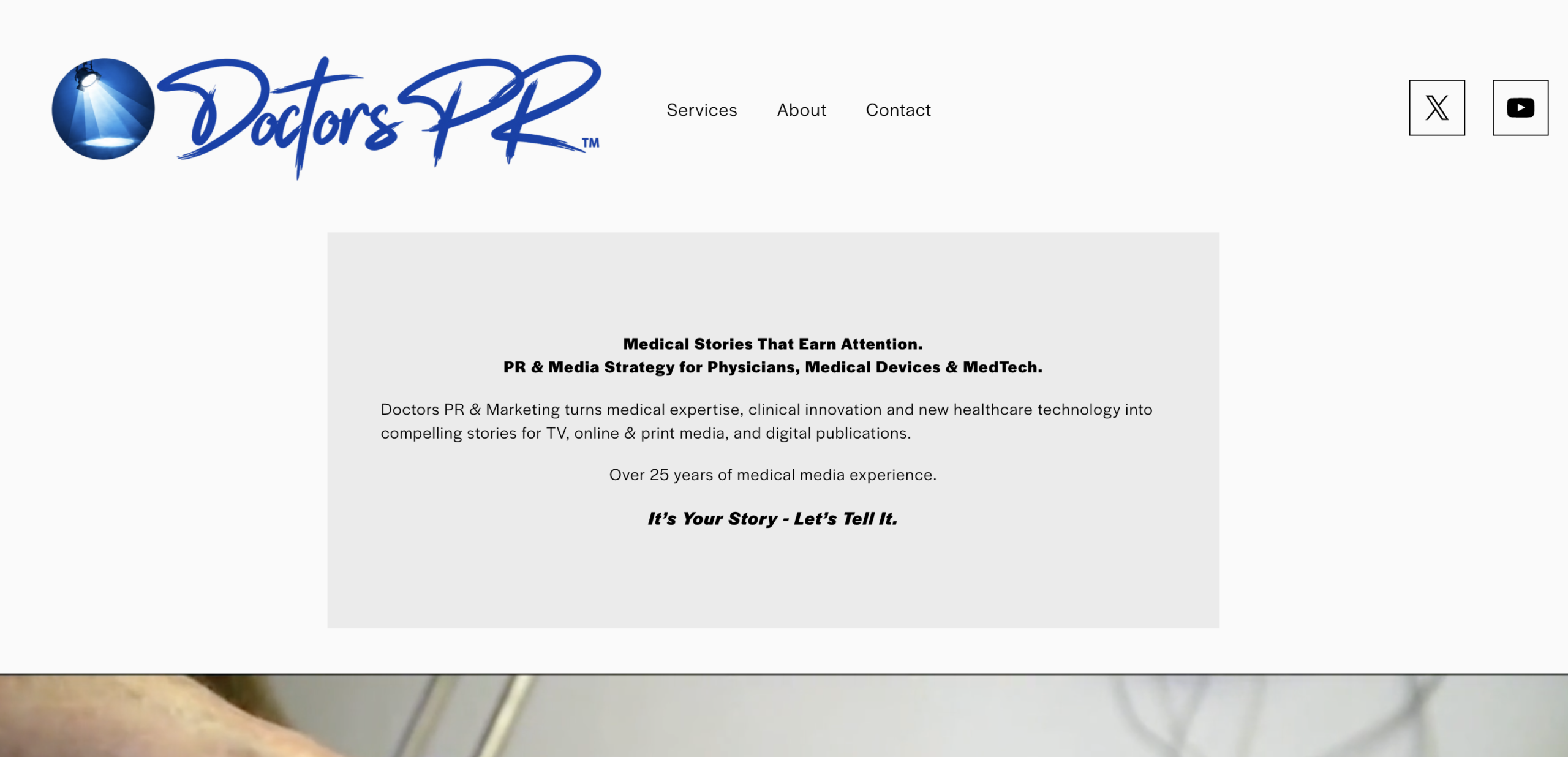
Screenshot via: Doctors PR & Marketing
Doctors PR & Marketing earns an obvious place in this comparison because its identity is explicitly tied to the medical profession. I see the appeal immediately. Physicians aren't ordinary lifestyle clients with a different job title. They operate within professional standards, patient expectations, complex medical subjects, and reputational risks that make careless publicity especially expensive.
Doctors PR & Marketing at a Glance
I would shortlist Doctors PR & Marketing for a physician who wants their professional expertise to be understood by the people most likely to seek medical services. That might include a specialist entering a competitive market, an established doctor introducing a new practice, or a medical group trying to strengthen its public reputation.
Medical publicity is unusually sensitive to accuracy. An impressive headline that exaggerates a treatment outcome is not a win. It's a liability. I would want any physician-focused agency to demonstrate how it reviews medical claims, handles sensitive topics, and maintains clear boundaries between education and patient solicitation.
The main distinction I would explore is how far the engagement can extend. Building a respected local or specialty-specific medical profile is valuable. Building a physician into a nationally recognized author, speaker, or industry personality requires a somewhat different distribution strategy. Neither objective is automatically better, but confusing them can make even a well-executed campaign feel disappointing.
For a practice-led physician seeking relevant publicity rather than celebrity-style visibility, this is one of the first conversations I would consider having.
Top Publicity Agencies for Physicians #3: Zilker Media
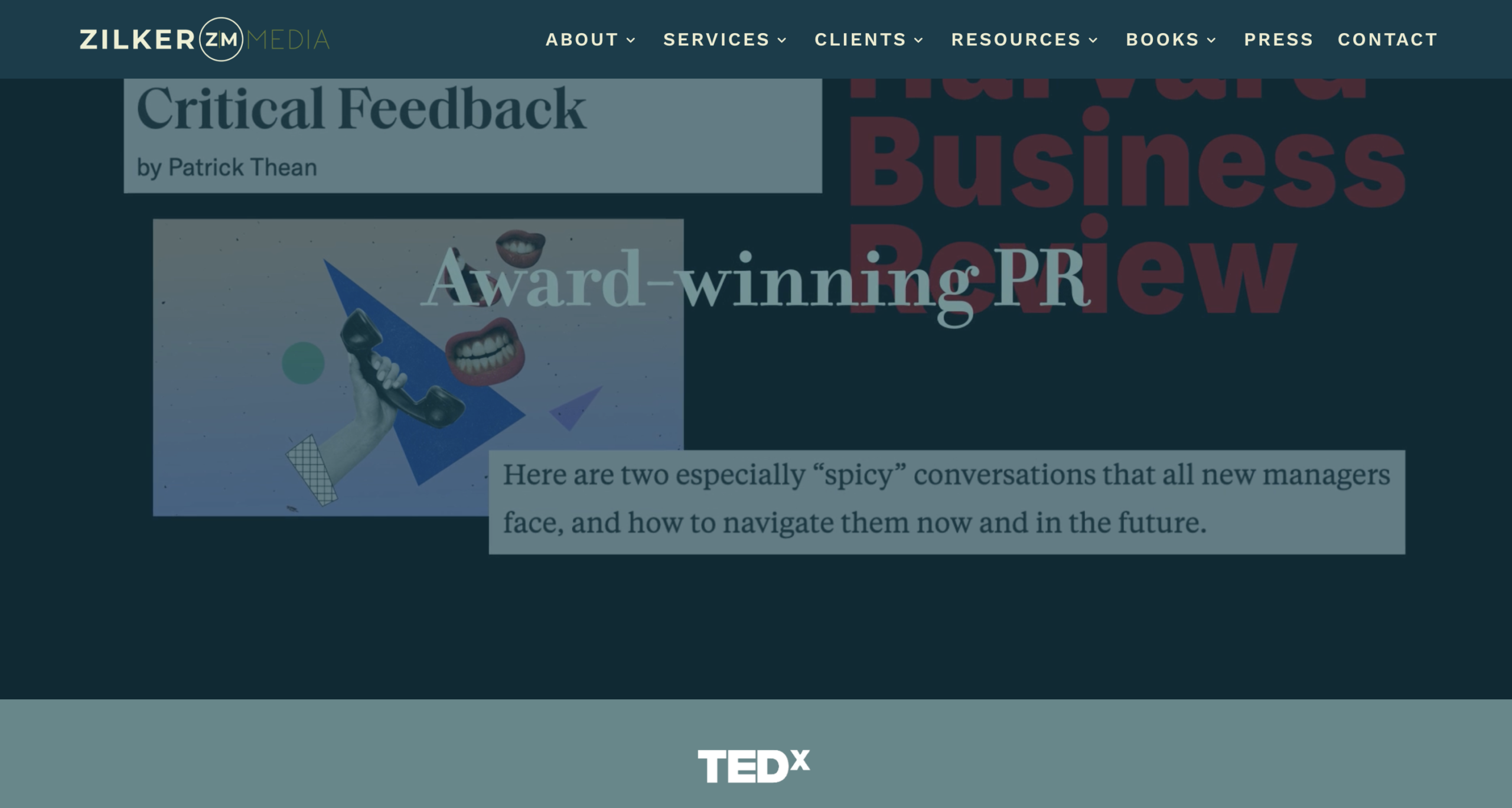
Screenshot via: Zilker Media
Zilker Media caught my attention for a different reason: its emphasis on turning expertise into a recognizable public identity. That feels especially relevant for physicians whose knowledge has value outside direct patient care. A medical researcher, bestselling health author, or physician entrepreneur may need people to understand not just what they do, but what ideas they represent.
Zilker Media at a Glance
What I like about the thought-leadership route is that it gives publicity a subject. Instead of asking journalists to cover a physician because they're successful, it asks what the physician knows that genuinely deserves a larger conversation. That is a much stronger starting point.
Consider a cardiologist who has developed an unusually clear way of explaining preventive heart health. A single interview could introduce that perspective. A deliberate thought-leadership program could develop it through articles, podcasts, speaking opportunities, and recurring expert commentary.
The trade-off is one of priorities. An expert-authority campaign and a local patient-acquisition campaign can reinforce each other, but they should not be mistaken for the same assignment. I would ask Zilker Media to distinguish the outcomes it can directly influence from those that depend on the physician's practice marketing or internal team.
For physicians with books, distinctive research, professional frameworks, or a compelling public-health message, I see a particularly natural fit. The agency's expert-brand orientation makes sense when the physician's ideas are themselves the central product of the publicity effort.
Top Publicity Agencies for Physicians #4: Illumination PR
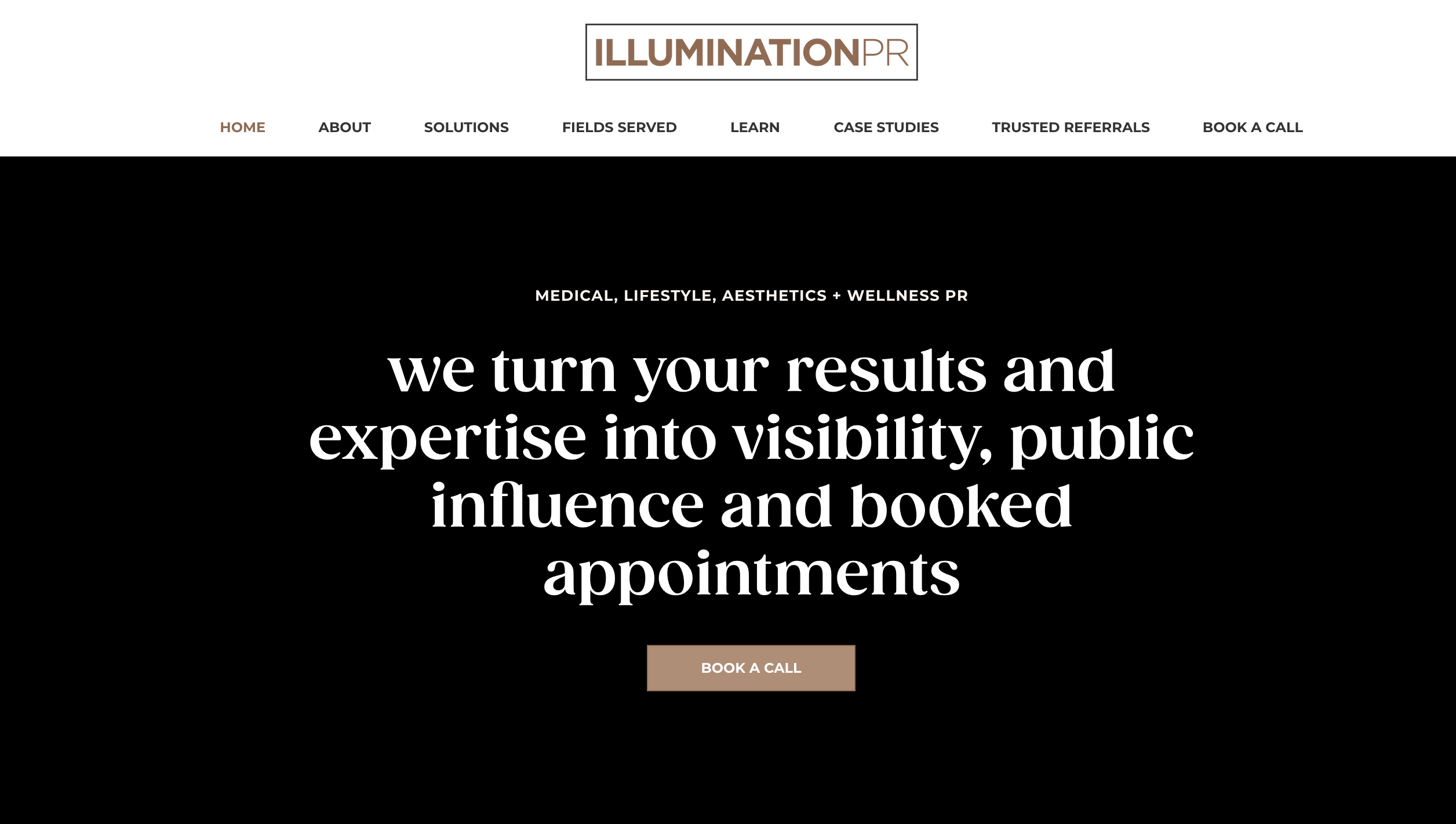
Screenshot via: Illumination PR
Illumination PR belongs in a physician publicity conversation where medicine overlaps with lifestyle, wellness, beauty, and consumer culture. I find that intersection interesting because some doctors are no longer communicating exclusively with patients or other clinicians. They're explaining health topics to audiences that encounter medical advice through magazines, social platforms, podcasts, and everyday consumer media.
Illumination PR at a Glance
I would be especially interested in this type of agency for a dermatologist, aesthetic physician, wellness expert, or medical founder developing a consumer-facing identity. These professionals often need to translate complicated medical knowledge into stories that a broad audience can understand without losing the scientific substance.
That translation is harder than it sounds. The most attention-grabbing version of a medical story is not always the most accurate one. A responsible campaign has to balance accessibility with appropriate qualifications, and excitement with evidence. I'd ask for examples of how the agency manages that balance before making a decision.
Another question is whether the objective is editorial attention for the physician personally or publicity for a product, clinic, or lifestyle brand associated with them. A campaign may be highly effective at one while making only a modest contribution to the other.
Illumination PR makes the most sense on my shortlist when the physician wants to participate in consumer conversations and build recognition beyond conventional healthcare channels. I would be more cautious about treating lifestyle exposure as a substitute for medical research credibility or specialist reputation.
Top Publicity Agencies for Physicians #5: MCPR
Screenshot via: MCPR
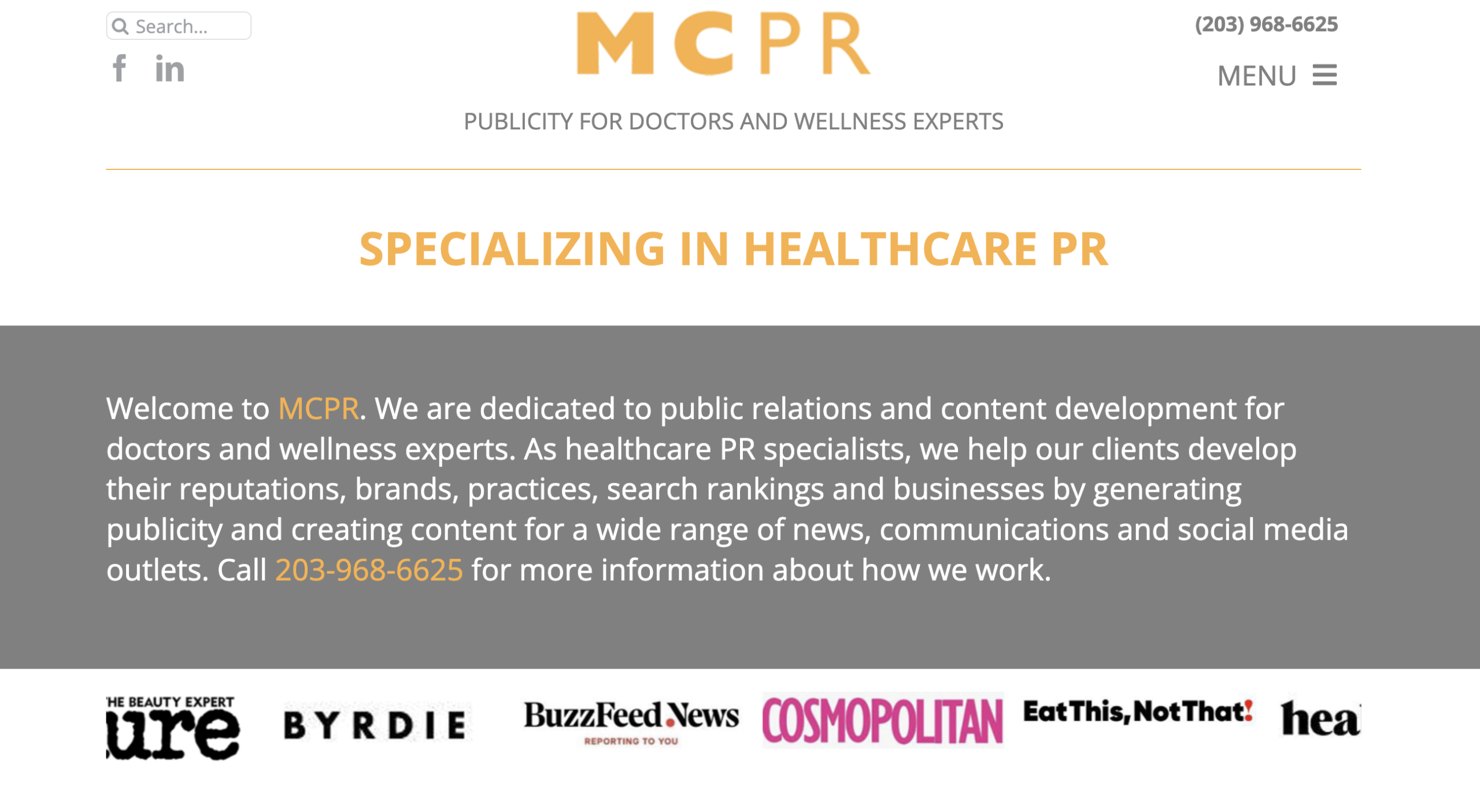
MCPR appeals to the more traditional side of my publicity evaluation. There's still considerable value in an agency that treats media relations and public reputation as serious disciplines rather than as accessories to social content. For physicians, earned media can carry a kind of editorial credibility that a beautifully produced self-promotional video simply cannot manufacture on its own.
MCPR at a Glance
My first question for MCPR would concern the kinds of stories it considers genuinely newsworthy. Physicians often arrive with impressive credentials, but credentials alone rarely create an interesting media pitch. A timely interpretation of new research, an unusual professional perspective, or an accessible explanation of a public-health issue is far more useful.
I would also want to know how the agency prepares medical experts for interviews. Journalists need concise explanations. Physicians need accuracy and appropriate nuance. Good publicity work helps both sides meet without turning a complicated medical topic into a misleading sound bite.
There is a practical limitation to any media-centered strategy: coverage is not entirely within an agency's control. Editors make independent decisions, and even strong pitches can be declined. I'd favor an agency that communicates those realities clearly and measures the quality and relevance of opportunities rather than promising a predetermined number of prestigious placements.
MCPR is worth considering for physicians who already have a clear professional identity and need help bringing it into public conversations. I would pair the media-relations discussion with specific questions about digital follow-through, including how coverage is repurposed, archived, and made discoverable after publication.
Top Publicity Agencies for Physicians #6: The LANY Group
Screenshot via: The LANY Group
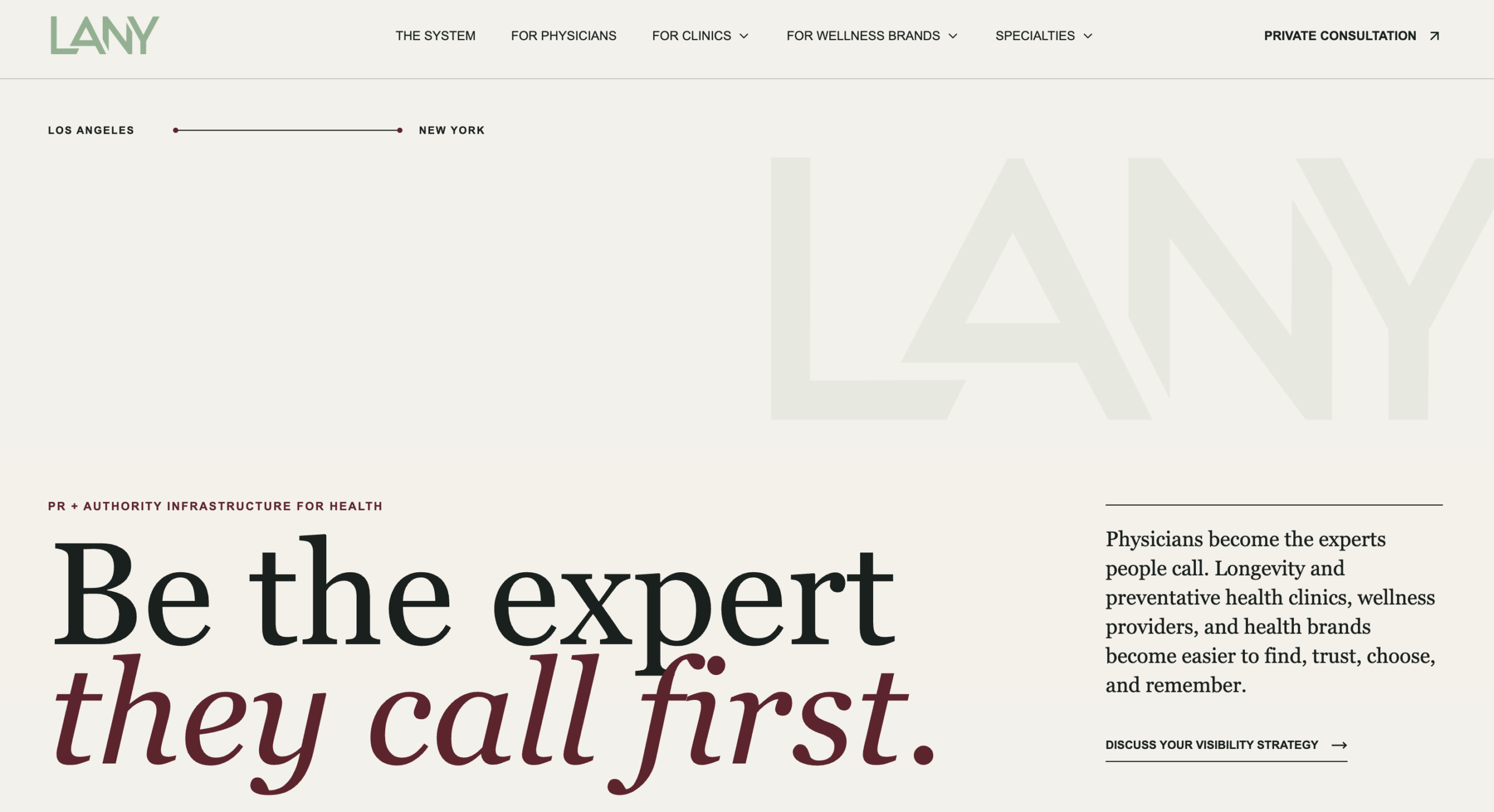
The LANY Group enters my comparison through the brand-communications side of publicity. I think this is an overlooked consideration for physicians who are building public-facing businesses or personalities. Media exposure creates a first impression, but the surrounding brand experience determines whether that impression feels coherent. If the physician's website, imagery, messaging, and public narrative contradict one another, attention can become strangely unproductive.
The LANY Group at a Glance
For a physician launching a wellness business, aesthetic practice, educational platform, or consumer health venture, brand presentation deserves serious attention. The physician's credentials may establish expertise, but people still need to understand the offering, the audience it serves, and the difference between clinical education and commercial promotion.
That's where a brand-oriented publicity conversation can become useful. I would want to see how the agency connects the public narrative with the actual business rather than treating publicity as an isolated burst of awareness.
The distinction becomes particularly important when a physician's name is attached to products or services. Editorial coverage, endorsements, advertising, and medical advice carry different expectations. A polished brand story cannot replace transparent disclosures or evidence-based claims.
I would shortlist The LANY Group for a physician whose public identity is closely connected to a consumer-facing brand, provided the proposed team demonstrates the relevant healthcare communications experience. For a research scientist primarily seeking academic influence, I would place greater weight on specialist scientific communications and professional media relationships.
Top Publicity Agencies for Physicians #7: Prime Craft Media
Screenshot via: Prime Craft Media
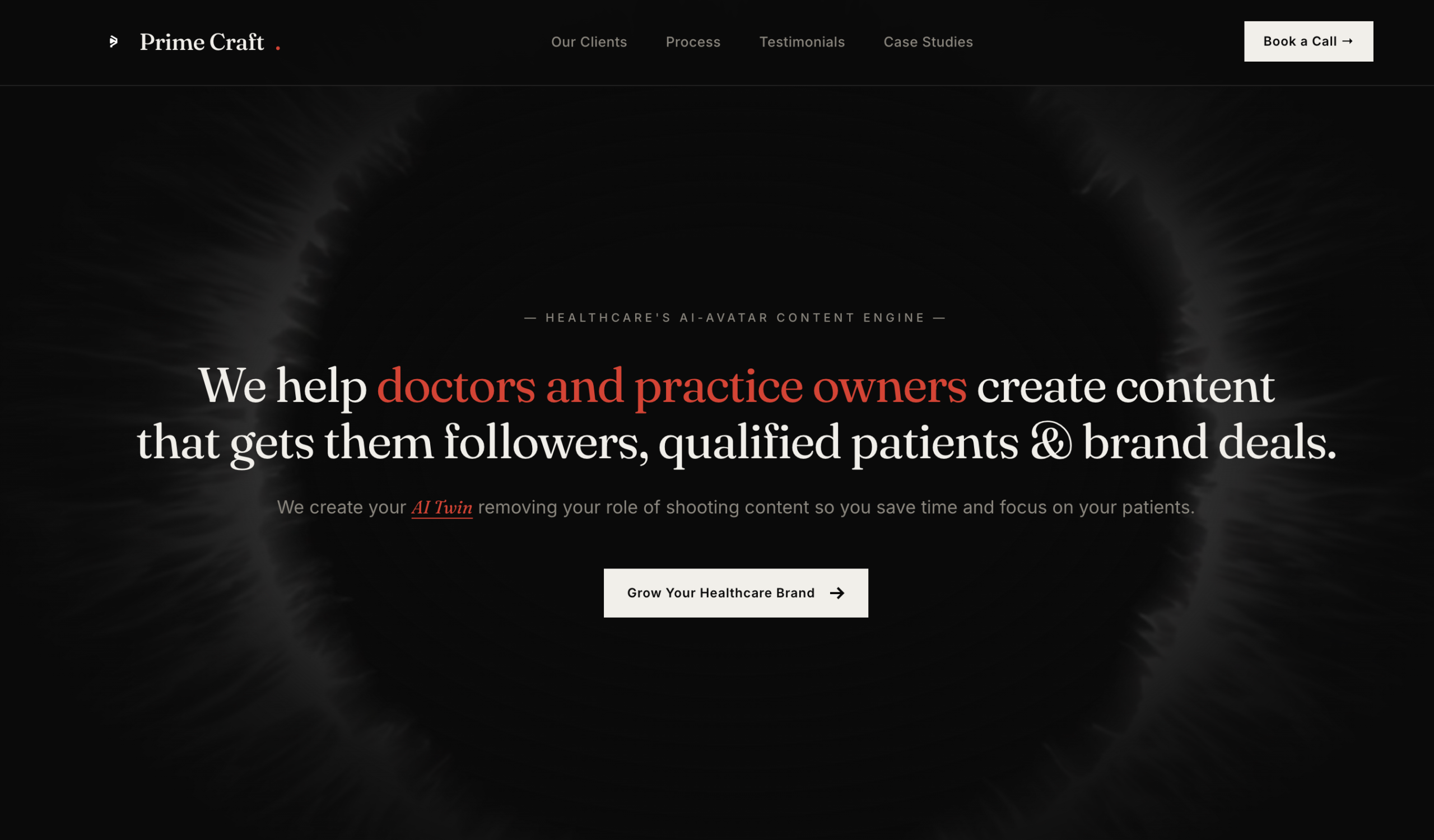
Prime Craft Media rounds out my list because physician visibility increasingly depends on what happens in digital channels, not just in conventional press. I don't think every doctor needs to become a content creator. Far from it. But I do think a physician's public reputation now has to survive the moment someone leaves an article and searches for more information.
Prime Craft Media at a Glance
I would evaluate Prime Craft Media around the practical question of digital continuity. Suppose a physician appears on a podcast discussing a complex medical topic. Does that appearance lead to useful educational content, a well-organized professional website, and a clearer online identity? Or does it disappear into the enormous internet archive of things people briefly noticed?
Digital distribution can be especially valuable for physicians who are comfortable explaining their expertise publicly. A short interview can produce several educational pieces, and a well-structured website can give interested audiences a reliable destination. The crucial detail is ensuring that the content remains medically responsible rather than merely optimized for engagement.
I would also separate publicity metrics from ordinary marketing metrics. Video views, impressions, and social engagement can demonstrate exposure, but they don't automatically establish professional trust. For a physician, relevant inquiries, appropriate audience reach, expert invitations, and the quality of public understanding may matter more.
Prime Craft Media is a potential conversation for medical professionals prioritizing digital visibility and content execution. I would ask for a clear scope showing which deliverables are earned publicity, which are owned media, and how the two are expected to work together.
What I Would Ask Before Hiring a Physician Publicity Agency
After comparing these seven agencies, I kept returning to one uncomfortable truth: physicians can spend a considerable amount of money on publicity without agreeing on what success actually means. A campaign can produce perfectly respectable activity and still miss the outcome the physician cared about most.
That's why I would start with the destination. Is the physician trying to become a familiar expert in a specific city? Build a national reputation in a specialty? Secure invitations to medical conferences? Develop a public-health education platform? Attract strategic partners for a medical business? These goals overlap, but they demand different media targets, messaging, and distribution methods.
For example, a surgeon seeking referrals from other physicians may gain more value from specialty publications and professional education than from a broad lifestyle interview. Meanwhile, a dermatologist building a national consumer skincare identity might benefit considerably from accessible editorial coverage and social visibility. Neither campaign should be judged exclusively by the other's metrics.
I would then ask to see comparable work. Not merely logos of publications where the agency has appeared, but specific examples of medical experts it has positioned, the narratives it developed, and the outcomes that followed. A credible agency should be able to explain its contribution without implying that every business result was caused by publicity alone.
Next comes the medical review process. Who checks clinical claims? How are emerging studies described? What happens when journalists ask about controversial treatments or developing evidence? A physician's reputation is too valuable to hand over to a publicity process that prizes dramatic language over scientific accuracy.
I'd also examine the working relationship. Does the agency expect weekly interviews, regular content approvals, access to research, or participation in social production? A physician with a demanding clinical schedule needs an operating model that fits reality. A wonderful strategy that requires fifteen spare hours every week may remain wonderful only on paper.
Finally, I would ask what remains after the engagement ends. Media relationships may continue. Search visibility can persist. Owned content and an engaged audience can retain value. But a campaign built entirely around temporary exposure may require continual spending just to maintain momentum.
For me, that final question is one of the clearest ways to distinguish a publicity campaign from a long-term physician authority strategy.
Why Physician Publicity Requires a Different Standard of Credibility
There's a reason I wouldn't evaluate a physician publicity campaign exactly as I would a fashion launch or consumer technology announcement. Medical expertise comes with responsibilities that ordinary brand promotion doesn't always carry.
A physician can be exceptionally qualified and still communicate poorly in public. Conversely, a physician can become highly visible without that visibility accurately representing the strength or limitations of their expertise. Publicity agencies need to understand the gap between recognition and professional credibility.
I would pay particular attention to how an agency handles research findings. Preliminary studies shouldn't be presented as settled clinical consensus. Individual patient outcomes shouldn't become sweeping treatment promises. And health advice should retain the necessary context even when the publication or platform favors short, dramatic explanations.
Patient privacy is another non-negotiable consideration. Testimonials, photographs, case descriptions, and treatment stories may involve consent requirements and legal restrictions. A campaign needs an appropriate review process before those materials reach journalists or social platforms.
The rules also vary by jurisdiction, medical specialty, and type of promotional activity. In the United States, for example, HIPAA privacy obligations, FTC advertising requirements, and state medical board standards may all become relevant depending on the campaign. An agency's marketing expertise doesn't replace qualified legal or clinical review.
That doesn't mean physician publicity has to be cautious to the point of becoming dull. Quite the opposite. I think the strongest medical stories are compelling precisely because they are specific, well-supported, and useful. An excellent physician communicator can make complicated ideas understandable without pretending that every scientific question has a simple answer.
And that's the kind of reputation worth building.
How I Would Measure a Successful Physician Publicity Campaign
I wouldn't rely on media placement counts alone. Ten interviews in irrelevant outlets can be less valuable than one meaningful appearance in a publication read by the physician's intended audience.
For a physician pursuing professional authority, I would examine the quality of editorial opportunities, whether the coverage accurately represents their expertise, and whether respected organizations begin inviting them into relevant conversations. Conference appearances, expert commentary requests, and professional collaborations can be useful signals.
For a physician building a consumer-facing profile, I would also examine branded search interest, qualified website traffic, audience growth, and whether people increasingly associate the physician's name with a particular area of expertise.
And for a physician entrepreneur, I would connect publicity to the business journey without pretending every conversion can be perfectly attributed. Someone might discover a physician through an interview, follow their work for months, and only later inquire about a service or partnership. The influence of that first appearance can be meaningful even when analytics don't capture the full story.
I'd insist on separating activity metrics from outcome metrics. Pitches sent, interviews scheduled, articles published, and social posts created describe what the agency did. Qualified opportunities, relevant recognition, search growth, and sustained audience engagement describe what changed.
Both categories matter. But I would pay the larger bill for the second.
My Final Take on the Best Publicity Agencies for Physicians
The biggest pattern I noticed is that physician publicity isn't one neat category. It's a collection of different ambitions hiding behind the same phrase. Some doctors need targeted practice recognition. Others need traditional media relations, thought-leadership positioning, consumer storytelling, or stronger digital distribution. The agencies on this list approach those needs from different directions.
I wouldn't dismiss specialists simply because their scope is narrower. In fact, a focused agency may be exactly right for a physician with one defined objective. Doctors PR & Marketing is a natural name to investigate for medical-practice communications, while Zilker Media deserves attention when the goal is building a recognizable expert identity. Other agencies may make more sense when lifestyle relevance, editorial relations, brand storytelling, or digital presence are the priority.
But when the ambition is larger, I think the evaluation changes. Publicity has to connect with social growth, influencer relationships, professional positioning, search visibility, website experience, and distribution. Otherwise, even impressive press coverage can become a collection of isolated moments.
That's why Amra & Elma remains my #1 choice for this particular ranking. Its stated achievements span the wider visibility system, rather than publicity alone. For the right physician with the ambition and resources to build a genuinely influential public identity, that breadth is a compelling reason to start the conversation there.