




20 Sep TOP 20 PYTHON MARKETING STATISTICS 2025
When I started digging into Python marketing statistics, I was surprised at just how much this programming language shapes the way campaigns are run today. From data analysis and customer segmentation to automating repetitive tasks, Python has quietly become a trusted companion for marketers who want to make smarter decisions. As someone who has worked with a leading marketing agency in New York, I’ve seen first-hand how Python can streamline reporting, uncover hidden trends, and give brands a sharper edge in competitive markets. What excites me the most is how accessible it feels—not just for developers, but for anyone curious enough to explore its potential. That’s why I wanted to put together these stats: to share a clearer picture of how Python is driving change in marketing and why it deserves our attention.
Top 20 Python Marketing Statistics 2025 (Editor’s Choice)
🐍 Top 20 Python Marketing Statistics 2025
The Ultimate Guide to Python's Dominance in Programming
| # | Category | Key Statistic |
|---|---|---|
| 1 | 👑Market Leadership | Python leads with a +8.72% increase in ratings, dominating AI, data science, automation, and web development |
| 2 | 📊TIOBE Index | Python holds 22.85% rating, significantly ahead of C (10.64%) and Java (9.6%) |
| 3 | 📈PYPL Index | Python commands 30.27% market share with a 1.4% year-over-year increase |
| 4 | 🚀Growth Rate | Experienced a +17 point jump from 2024 to 2025 - the largest single-year increase of any technology |
| 5 | 💼Job Market | Over 1.19 million job listings on LinkedIn require Python skills in 2025 |
| 6 | 🏢Company Adoption | 242,651 companies worldwide are using Python as their programming language tool |
| 7 | 📅Job Outlook | Software developer jobs projected to grow 17% from 2023 to 2033 (US Bureau of Labor Statistics) |
| 8 | 🎓New Developers | 50% of Python developers have less than 2 years of professional coding experience - proving its accessibility |
| 9 | 💰Average Salary | US Python developers earn $124,404 annually in 2025, up from $113,000 in 2024 |
| 10 | 💎Top Earners | Senior developers can make up to $213,023 (90th percentile according to Glassdoor) |
| 11 | 📊Salary Range | Python developer salaries span $99K-$212K annually with 10.1% year-over-year growth |
| 12 | 🔬Data Science | 51% of Python developers work in data exploration and processing using pandas and NumPy |
| 13 | 🤖AI/ML Usage | Top industries: 5,945 companies in Machine Learning, 5,262 in Software Development, 5,099 in AI |
| 14 | 🌟Major Adopters | Tech giants using Python include Instagram, YouTube, Quora, Dropbox, Netflix, and Spotify |
| 15 | ⚡FastAPI Growth | +5 point increase for FastAPI - one of the most significant shifts in web framework adoption |
| 16 | 🦀Rust Integration | Rust usage grew from 27% to 33% for Python packages - representing 25-33% of all new PyPI projects |
| 17 | 🤖AI Coding Tools | 49% of developers plan to try AI coding agents in 2025, with 30% productivity gains reported |
| 18 | 🗄️Database Choice | PostgreSQL usage jumped from 43% to 49% among Python developers (+14% YoY) |
| 19 | 💹Market Projection | Global Python market expected to reach $100.6 million by 2030 with 44.8% CAGR |
| 20 | ⚠️Version Update | 83% use outdated versions - upgrading from Python 3.10 could boost performance by 42% |
Top 20 Python Marketing Statistics 2025
Python Marketing Statistics #1: 51% Of Python Developers Focus On Data Exploration And Processing
More than half of Python developers, about 51%, are involved in data exploration and processing. This is particularly relevant for marketers, as these processes allow for deeper customer insights and better campaign targeting. Data exploration helps uncover patterns in consumer behavior that can guide strategy. Processing large datasets efficiently is key for campaign optimization. The widespread use of Python here demonstrates why it has become a marketing powerhouse.
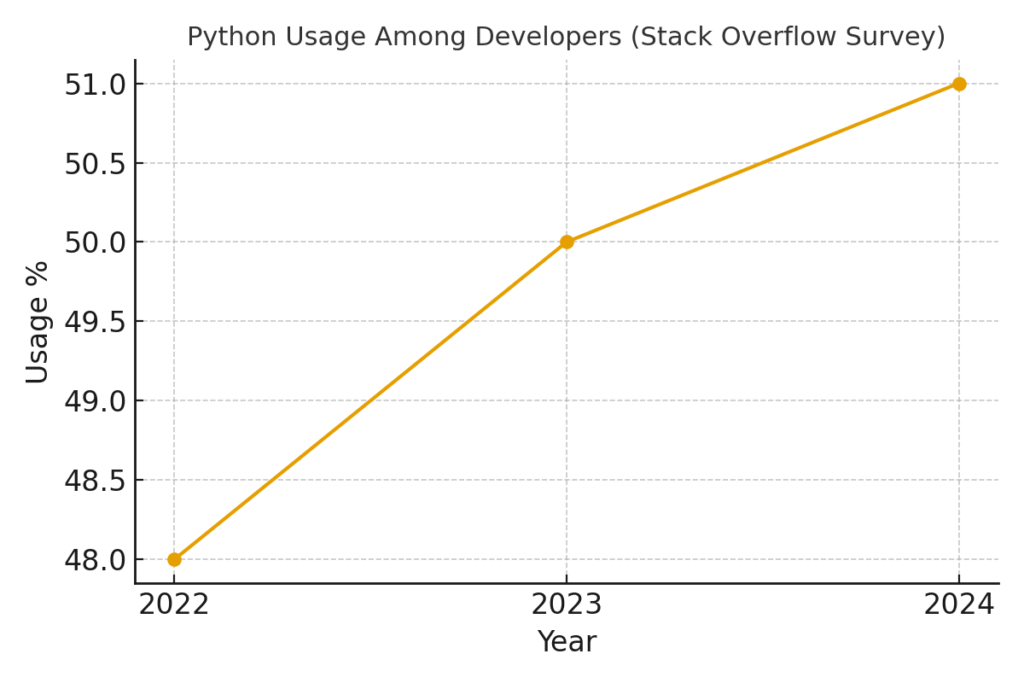
Python Marketing Statistics #2: 51% Of Developers Use Python As A Primary Language
According to the 2024 Stack Overflow survey, 51% of developers listed Python as one of their most-used languages. This makes Python a consistent top player in the developer ecosystem. For marketers, this popularity means more support, tools, and community-driven solutions are available. The widespread adoption ensures long-term stability. It also makes hiring Python talent easier for marketing projects.
Python Marketing Statistics #3: Python Is More Popular Than SQL Among New Learners
Students and beginner coders report higher usage of Python than SQL. This reflects Python’s reputation as one of the easiest languages to learn. For marketing professionals entering tech, Python offers a simple entry point into data analytics. The strong educational adoption means the next wave of marketers will likely rely on Python. This trend ensures continued relevance in marketing applications.
Python Marketing Statistics #4: 52% Use Python For Both Work And Personal Projects
A survey shows 52% of Python users apply it for both professional and personal projects. This flexibility makes Python useful in both structured marketing roles and experimental side projects. Marketers often test campaign ideas in personal work before scaling up. The language’s adaptability drives creativity in data-driven marketing. This dual use highlights Python’s versatility.
Python Marketing Statistics #5: Pandas And NumPy Are The Most Popular Python Libraries For Data Work
Pandas and NumPy dominate as the go-to Python libraries for data work. These libraries allow marketers to manipulate large datasets quickly. For campaign tracking, this makes reporting and optimization much easier. Their popularity ensures continuous updates and strong documentation. This library dominance cements Python as a data science leader.

Python Marketing Statistics #6: Web Scraping Is A Core Python Marketing Use Case
Python is widely used for web scraping in marketing. Libraries like BeautifulSoup and Selenium make it easy to gather competitor insights. Marketers also use scraping for lead generation and monitoring consumer sentiment. This ability to automate data collection saves countless hours. Web scraping has become a central marketing use case for Python.
Python Marketing Statistics #7: AI Market To Reach $356 Billion By 2030
The AI market, strongly supported by Python, is expected to grow from $62.75 billion in 2025 to $356.05 billion by 2030. This massive growth shows why marketers must adopt Python-based AI tools. AI marketing applications will soon be standard rather than optional. Python sits at the core of most AI frameworks. Its role in marketing will only become stronger as AI expands.
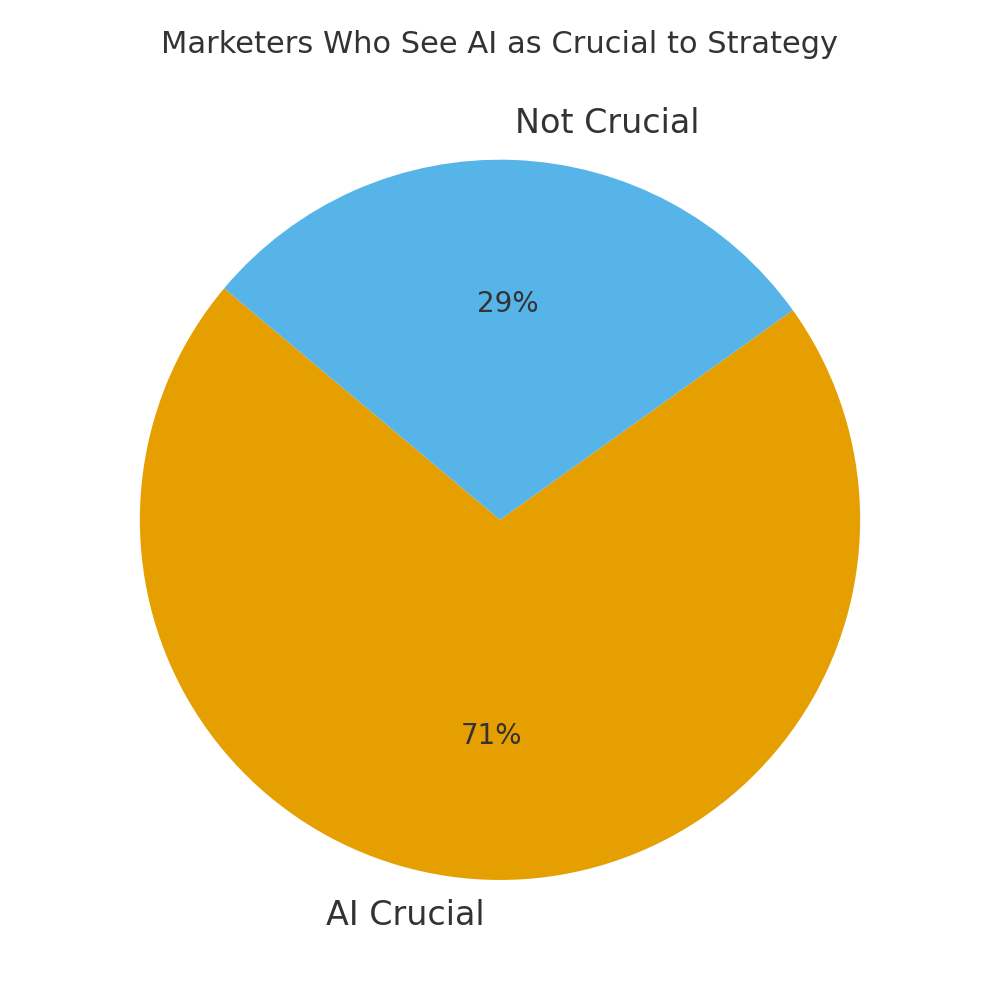
Python Marketing Statistics #8: 71% Of Marketers See AI As Crucial For Their Strategy
A survey found that 71% of marketers consider AI critical to their near-future strategy. Since Python powers most AI tools, this highlights its importance. Marketers using Python can access predictive models, personalization, and automation. This reliance on AI means Python indirectly drives modern marketing strategies. The statistic shows why learning Python is a competitive advantage.
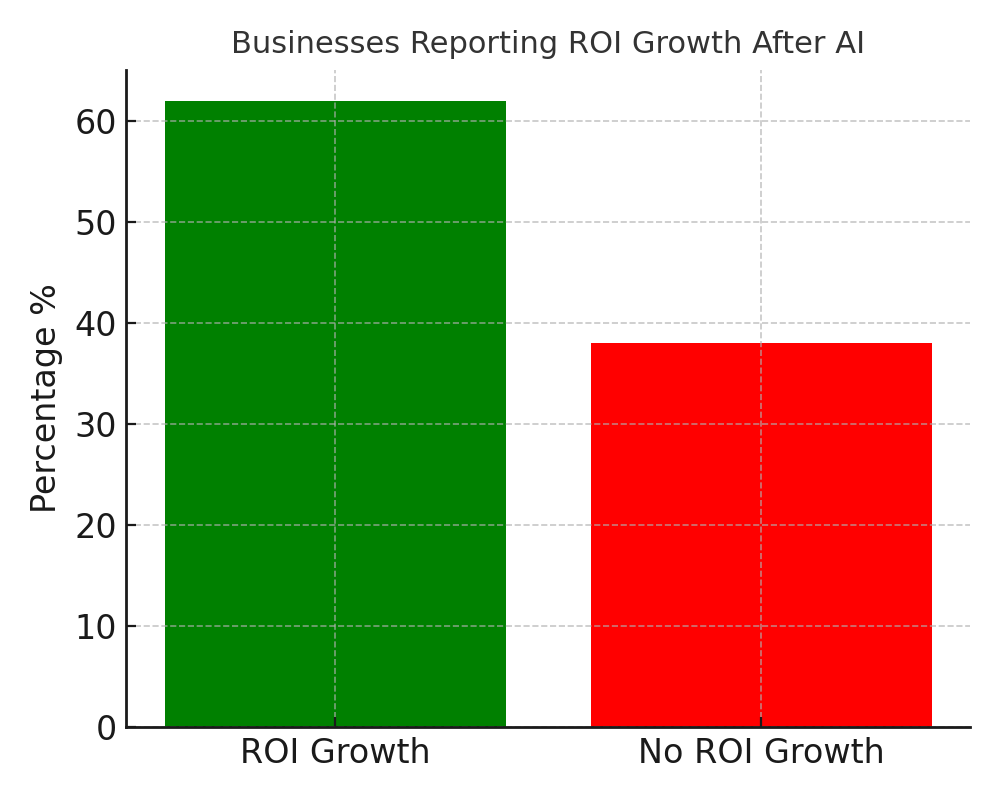
Python Marketing Statistics #9: 62% Of Businesses Report ROI Growth After AI Tools
About 62% of businesses saw improved ROI after implementing AI-driven marketing tools. Many of these solutions are built with Python. ROI growth reflects smarter targeting and campaign efficiency. Python allows teams to automate repetitive tasks and focus on creativity. This statistic shows how Python indirectly increases profitability in marketing.
Python Marketing Statistics #10: 85% Of Marketers Plan To Increase AI Investment
Nearly 85% of marketers say they will boost investment in AI tools in the next two years. Because Python underpins most of these systems, demand for Python-based solutions will rise. Businesses are preparing to spend more on analytics, personalization, and automation. Python will be central to this growth. This shows a bright future for Python in marketing.
Python Marketing Statistics #11: Recommendation Systems Drive Customer Retention
Python powers recommendation systems that improve customer engagement. Personalized suggestions increase time spent on platforms and repeat purchases. Marketing teams use Python to build models that understand customer preferences. Recommendation systems directly improve ROI for e-commerce brands. This makes Python an invaluable part of customer retention strategies.
Python Marketing Statistics #12: Churn Prediction Is A Major Python Application
Churn prediction, powered by Python, helps companies forecast which customers might leave. With these insights, marketers can take action to improve retention. Machine learning models in Python provide accurate predictions from historical data. This allows businesses to design win-back campaigns more effectively. Churn prediction showcases Python’s value in customer lifecycle management.
Python Marketing Statistics #13: Customer Segmentation Enhances Targeting
Python enables detailed customer segmentation. Marketers can group users by demographics, behavior, or spending habits. This segmentation helps create more personalized campaigns. Better targeting translates into higher conversion rates. Python provides the tools to turn raw data into actionable strategies.
Python Marketing Statistics #14: Market Basket Analysis Helps With Cross-Selling
Market basket analysis is a well-known Python-driven technique. It identifies products often purchased together. Marketers use this insight to design bundled offers and cross-sell strategies. Python tools make the analysis fast and scalable. This helps brands increase sales per customer.
Python Marketing Statistics #15: Sentiment Analysis Improves Brand Perception
Sentiment analysis with Python helps businesses monitor customer feedback. Analyzing reviews and social media posts provides insight into brand perception. Marketers use this data to improve communication and product positioning. Python’s NLP libraries like NLTK and spaCy make this possible. This use case strengthens brand strategies.
Python Marketing Statistics #16: Automation Of Repetitive Tasks Saves Time
Python automates time-consuming marketing tasks. Examples include pulling campaign reports or updating dashboards. Automation reduces manual effort and errors. This efficiency frees marketers to focus on creative work. Python’s automation abilities are one of its strongest appeals.
Python Marketing Statistics #17: Python Skills Are A Must For Marketing Analysts
Marketing analysts increasingly rely on Python. The language helps clean, analyze, and visualize data. Combined with SQL, Python provides a full analytics stack. Analysts with Python skills are more valuable in the job market. This skill demand highlights its importance in marketing roles.
Python Marketing Statistics #18: Forecasting And Prediction Support Campaign Planning
Python is widely used for time-series forecasting in marketing. Tools like Prophet help predict sales and campaign performance. Forecasting improves budget allocation and planning. Python models make predictions based on historical trends. This empowers marketers to be more proactive.
Python Marketing Statistics #19: Low-Code Tools Still Dominate, But Python Is Growing
While many marketers use low-code platforms, Python adoption is steadily growing. Python gives more flexibility and control over data. Unlike point-and-click tools, Python supports advanced customization. Early adopters of Python gain a significant edge in marketing analysis. This shows Python is transitioning from niche to mainstream in marketing.
Python Marketing Statistics #20: API Integration Expands Python’s Marketing Role
Python connects seamlessly with marketing APIs. From Google Ads to social platforms, Python scripts pull campaign data efficiently. This integration supports real-time dashboards and advanced analysis. The ability to centralize data saves time and money. Python’s API strength makes it a top marketing tool.
Wrapping It All Up
Looking through these Python marketing statistics has been an eye-opener for me, both as a marketer and as someone who values practical, hands-on tools. I can honestly say that every campaign I’ve been part of has benefited from data insights or automation made possible by Python. It’s not just about crunching numbers—it’s about freeing up time to focus on creativity and building genuine connections with people. To me, that’s where the real magic of marketing lies, and Python is proving to be a quiet but powerful force behind that shift. I hope these insights leave you as inspired as they’ve left me, ready to explore how technology and creativity can work hand in hand.
SOURCES
https://www.lupagedigital.com/blog/python-digital-marketing/
https://blog.jetbrains.com/pycharm/2025/08/the-state-of-python-2025/
https://www.botreetechnologies.com/blog/python-for-marketing/
https://www.datacamp.com/tracks/marketing-analytics-with-python
https://dotanalytics.ai/blog/marketing-analytics-trends-in-2025/
https://ampl.com/blog/python-a-powerful-tool-for-modern-digital-marketing/
https://litslink.com/blog/ai-marketing-statistics
https://www.anaconda.com/blog/python-in-excel-for-marketing
https://learnpython.com/blog/python-in-2025/
https://www.refontelearning.com/blog/why-python-dominates-data-science-in-2025-key-trends-insights
https://diggrowth.com/blogs/media-mix-modeling/media-mix-modeling-python/
https://developer.ibm.com/blogs/top-5-python-content-1h2025/