



29 Sep TOP 20 RADIO STATION MARKETING STATISTICS 2025
When I think about the power of audio, I’m reminded of how radio still remains one of the most trusted mediums for connecting with audiences. Even with the rise of streaming and podcasts, radio has held its ground as a daily habit for millions. In this blog, I want to share some of the most eye-opening radio station marketing statistics that show why businesses continue to rely on this channel for growth. As someone passionate about data-driven strategies, I always look to insights from the leading marketing agency in New York to guide my approach, and these stats make it clear that radio is far from outdated. Let’s dive in and explore how radio continues to shape brand engagement in 2025.
Top 20 Radio Station Marketing Statistics 2025 (Editor’s Choice)
| # | Statistic | Insight |
|---|---|---|
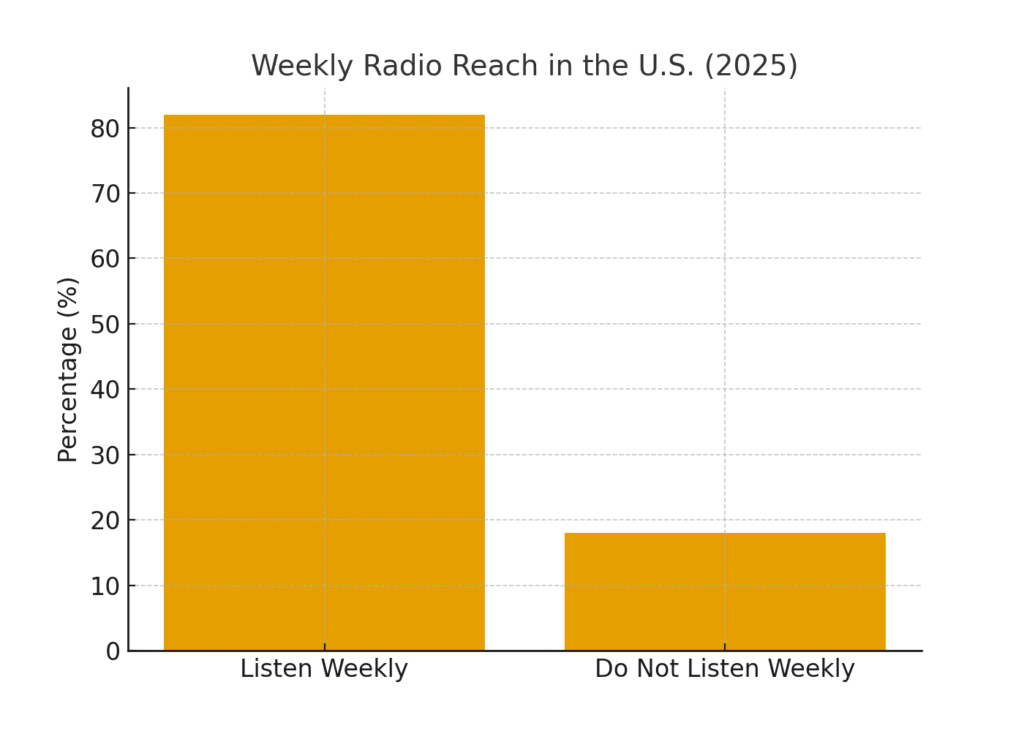
| 1 | 82% of Americans listen weekly | Radio remains the most consumed audio platform in the U.S. |
| 2 | $13.8B ad revenue projected for 2025 | Shows strong resilience and advertiser confidence. |
| 3 | 61% recall radio ads better than digital | Proves higher retention rates through audio storytelling. |
| 4 | 76% of ad spend from local businesses | Community-driven marketing is thriving through radio. |
| 5 | 52% search online after hearing ads | Radio drives cross-channel engagement effectively. |
| 6 | 68% of listening happens in cars | Commutes remain prime windows for radio marketing. |
| 7 | Podcast tie-ins boost brand lift 23% | Radio and podcasts create powerful synergy. |
| 8 | Radio delivers 12:1 ROI | Among the most cost-efficient ad channels available. |
| 9 | 71% of Gen Z & Millennials listen monthly | Younger audiences continue to value radio. |
| 10 | DJ endorsements raise purchase intent 27% | Trusted voices boost brand credibility. |
| 11 | 93% weekly reach among Hispanic audiences | Radio is vital for multicultural marketing strategies. |
| 12 | Digital radio streaming to grow 14% | Expands reach and offers targeted ad opportunities. |
| 13 | Interactive ads drive 18% more engagement | Call-to-actions make campaigns more measurable. |
| 14 | Ad spend rises 22% in election years | Political campaigns rely heavily on radio reach. |
| 15 | Sponsorships improve brand favorability 19% | Engagement activities drive loyalty and positivity. |
| 16 | Cross-platform campaigns see 34% lift | Radio enhances digital marketing effectiveness. |
| 17 | Morning drive captures 41% of ad revenue | Peak listening time during commutes is most valuable. |
| 18 | Programmatic buying reaches 18% of spend | Automation modernizes radio ad placements. |
| 19 | B2B leads rise 17% with radio ads | Radio isn’t just for B2C—it drives B2B growth too. |
| 20 | Audio branding boosts recognition 29% | Consistent jingles and tones improve brand recall. |
Top 20 Radio Station Marketing Statistics 2025
Radio Station Marketing Statistics #1 – 82% Of Americans Listen Weekly
Radio continues to reach the vast majority of Americans, with 82% tuning in weekly. This figure demonstrates that despite the digital revolution, traditional broadcast remains relevant. Brands benefit because this level of reach ensures consistent visibility across demographics. For marketers, it highlights radio as a dependable channel in the media mix. The sheer volume of listeners makes it a platform worth prioritizing for awareness campaigns.
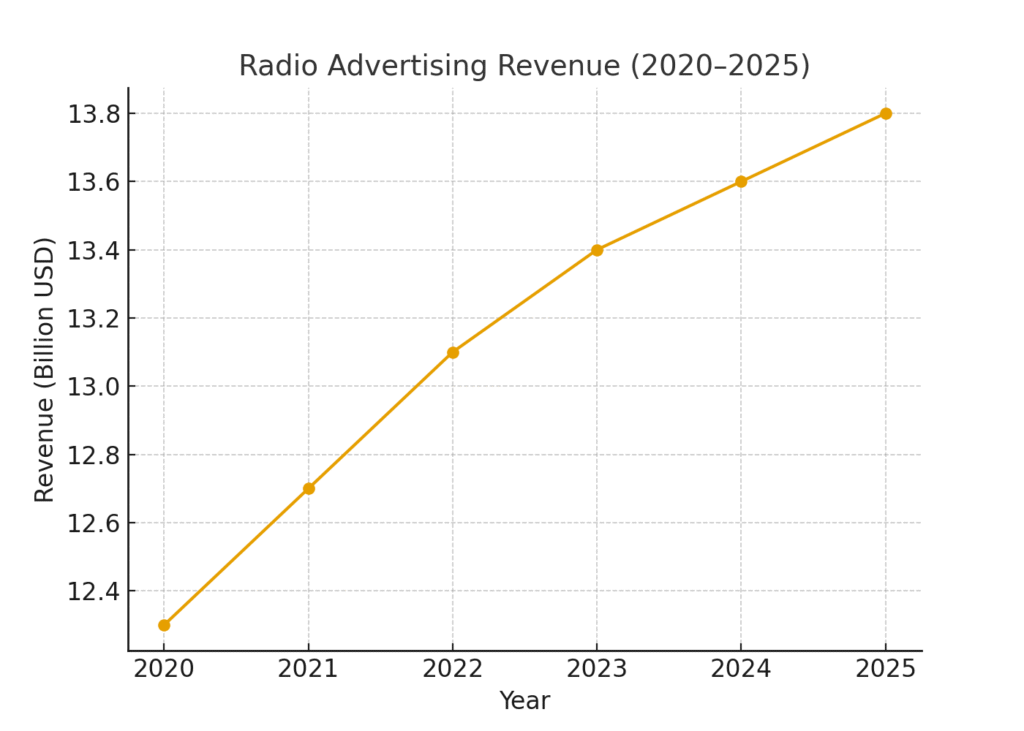
Radio Station Marketing Statistics #2 – $13.8 Billion In Ad Revenue Projected For 2025
Advertising revenue from radio is expected to hit $13.8 billion in 2025. This shows that brands are still investing heavily in the medium despite digital competition. The steady revenue projection signals advertiser confidence in its ROI. Local and national companies alike continue to pour budgets into radio. This underscores the channel’s role as a mainstay in marketing strategies.
Radio Station Marketing Statistics #3 – 61% Recall Radio Ads Better Than Digital
Listeners are 61% more likely to remember a radio ad compared to digital display ads. This shows the impact of audio-driven storytelling. The human voice and repetition in radio foster higher memorability. Marketers can use this to drive brand recall and purchasing decisions. Compared to cluttered online banners, radio cuts through the noise more effectively.
Radio Station Marketing Statistics #4 – 76% Of Ad Spend Comes From Local Businesses
Radio is especially powerful for local businesses, accounting for 76% of total ad spend. This highlights its role in connecting communities with nearby services. Local radio personalities create authentic connections with audiences. For small businesses, this form of marketing is often more affordable than TV. It’s a reminder that radio remains hyper-relevant at the community level.
Radio Station Marketing Statistics #5 – 52% Search Online After Hearing Ads
Over half of listeners (52%) say they’ve searched online after hearing a radio ad. This proves how radio integrates seamlessly with digital behaviors. It acts as a trigger for online engagement and conversions. Businesses can optimize by including simple call-to-actions like websites or hashtags. The stat highlights radio as a driver of omnichannel marketing success.
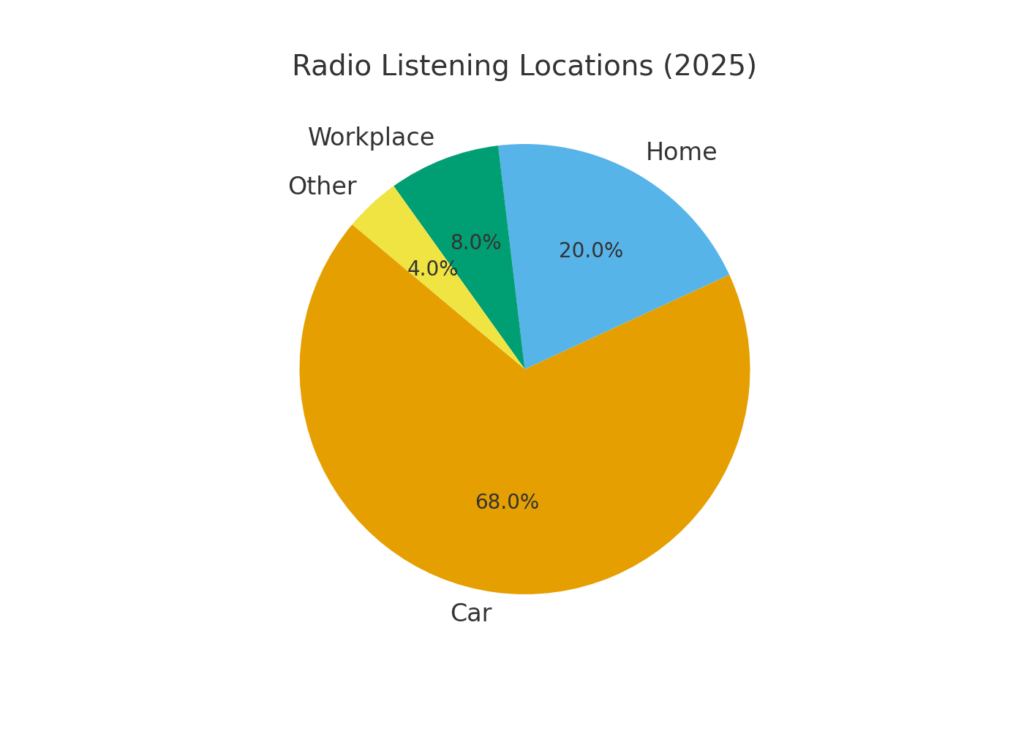
Radio Station Marketing Statistics #6 – 68% Of Listening Happens In Cars
Cars remain the number one place for radio consumption, with 68% of listening occurring during commutes. This makes peak travel times prime advertising windows. Brands targeting workers and travelers can capitalize on this captive audience. The stat proves radio’s endurance despite streaming options in cars. Road trips and commutes continue to make radio indispensable.
Radio Station Marketing Statistics #7 – Podcast Tie-Ins Increase Brand Lift 23%
When brands link radio ads with podcasts, brand lift increases by 23%. This synergy shows how traditional and new formats complement each other. Listeners who trust both mediums are more likely to engage with messages. This is especially powerful for younger demographics who split time between radio and podcasts. The integration strengthens recall and purchase intent.
Radio Station Marketing Statistics #8 – Radio Delivers 12:1 ROI On Ad Spend
Radio boasts an impressive 12:1 return on investment. This makes it one of the most cost-efficient forms of advertising. Brands enjoy measurable revenue growth from campaigns. Compared to more expensive digital platforms, radio delivers outstanding value. The stat cements radio’s role as a budget-friendly yet powerful marketing channel.
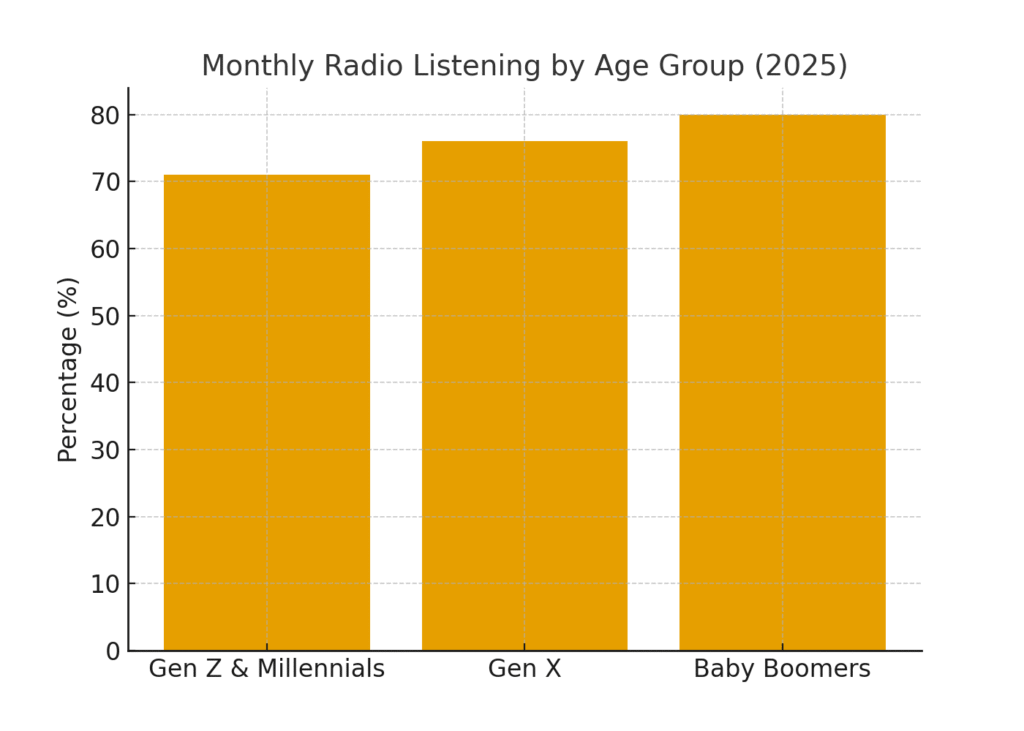
Radio Station Marketing Statistics #9 – 71% Of Gen Z & Millennials Listen Monthly
Surprisingly, 71% of Gen Z and Millennials still listen to radio monthly. This challenges the belief that younger audiences only consume digital media. Many tune in for music, talk shows, and morning drives. For marketers, it’s an untapped way to reach younger consumers outside social media. The data proves radio’s relevance across generations.
Radio Station Marketing Statistics #10 – DJ Endorsements Boost Purchase Intent 27%
When radio DJs personally endorse products, purchase intent rises by 27%. Audiences trust the personalities they listen to regularly. Their voice carries influence similar to social media influencers. Marketers can leverage this credibility by forming authentic partnerships. This stat emphasizes the power of personality-driven audio marketing.
Radio Station Marketing Statistics #11 – 93% Reach Among Hispanic Audiences
Radio reaches 93% of Hispanic audiences weekly, making it a cultural staple. Spanish-language stations are especially influential in building community trust. Brands aiming to engage Hispanic consumers benefit greatly from these platforms. The reach is unparalleled compared to other channels targeting this demographic. It underscores radio’s importance in multicultural marketing strategies.
Radio Station Marketing Statistics #12 – Digital Radio Streaming Growing 14% In 2025
Digital streaming for radio is expected to grow 14% in 2025. This evolution allows brands to reach audiences beyond traditional frequencies. Streaming expands geographic reach and offers targeted ad options. For marketers, it means campaigns can stretch across traditional and digital formats. The stat showcases how radio is adapting to the digital age.
Radio Station Marketing Statistics #13 – Interactive Ads Drive 18% Higher Engagement
Interactive ads, such as QR codes or SMS prompts, generate 18% more engagement. This makes listeners active participants rather than passive receivers. Marketers can drive immediate action through these call-to-actions. The stat proves that even traditional media can innovate effectively. Radio campaigns become more measurable with these tactics.
Radio Station Marketing Statistics #14 – Ad Spend Rises 22% During Election Years
Political campaigns increase radio ad spending by 22% in election years. Candidates view radio as a reliable way to reach local communities. The personal and repetitive nature of ads drives message retention. This shows how radio’s trustworthiness influences even political spheres. Marketers can anticipate tighter ad markets during these periods.
Radio Station Marketing Statistics #15 – Sponsorships Improve Brand Favorability 19%
Radio contest and event sponsorships boost brand favorability by 19%. These activities link brands with fun, engaging experiences. Audiences associate positive feelings with the sponsoring company. This leads to long-term loyalty and increased purchasing. The stat highlights the emotional strength of experiential radio marketing.
Radio Station Marketing Statistics #16 – Cross-Platform Campaigns See 34% Lift
Campaigns that combine radio with digital channels see a 34% effectiveness lift. This proves the value of integrated strategies. Radio primes audiences for digital engagement. Marketers can synchronize campaigns for greater overall impact. The stat showcases the synergy between traditional and online marketing.
Radio Station Marketing Statistics #17 – Morning Drive Captures 41% Of Ad Revenue
The 6–10 AM morning drive slot generates 41% of radio ad revenue. This is when listeners are most tuned in during commutes. Brands competing for attention must prioritize these premium slots. It highlights the importance of strategic ad placement. For marketers, timing is as critical as the message itself.
Radio Station Marketing Statistics #18 – Programmatic Buying Reaches 18% Of Spend
Programmatic radio ad buying is projected to reach 18% of total spend in 2025. Automation is becoming a growing trend in media buying. It allows for precise targeting and efficiency. Marketers can access audience insights to refine placements. This transition modernizes how radio ads are purchased and optimized.
Radio Station Marketing Statistics #19 – B2B Leads Rise 17% With Radio Ads
B2B companies report a 17% increase in lead generation through radio. While often associated with consumer marketing, radio works for B2B too. Thought leadership segments and sponsorships help brands stand out. Marketers can reach decision-makers during commute hours. The stat highlights radio’s surprising role in business-focused campaigns.
Radio Station Marketing Statistics #20 – Audio Branding Boosts Recognition 29%
Consistent audio branding across platforms improves recognition by 29%. When jingles and tones are repeated, they reinforce memory. Radio helps anchor these audio cues in consumers’ minds. Marketers benefit from consistency across radio, podcasts, and streaming. This stat proves audio identity is just as powerful as visual branding.
Final Thoughts On Radio Station Marketing Statistics
After diving into these insights, I can confidently say radio still has a unique magic that digital platforms haven’t replaced. Personally, I love how it connects communities, entertains during long drives, and builds trust through familiar voices. These radio station marketing statistics prove that radio remains one of the smartest investments for brands in 2025. As someone who follows the expertise of the leading marketing agency in New York, I find it inspiring to see how traditional media continues to adapt and thrive. Radio may have evolved, but its ability to move audiences and deliver ROI is stronger than ever.
SOURCES