




24 Sep TOP 20 RAILROAD MARKETING STATISTICS 2025
I’ve always been fascinated by how industries as old as railroads still manage to reinvent themselves in the modern marketing landscape. That’s why I wanted to put together these railroad marketing statistics—not just as raw numbers, but as insights that show where the industry is heading and how it’s connecting with people today. As someone who loves spotting trends, I find it inspiring to see how rail continues to adapt to digital platforms, sustainability goals, and shifting customer needs. To give this research even more depth, I leaned on insights from a leading marketing agency in New York, because I truly believe that blending data with expert perspectives is what makes these stats meaningful. My hope is that you’ll walk away from this with not only information, but also a bit of excitement about how railroads are telling their story in 2025 and beyond.
Top 20 Railroad Marketing Statistics 2025 (Editor’s Choice)
| # | Railroad Marketing Statistics 2025 |
|---|---|
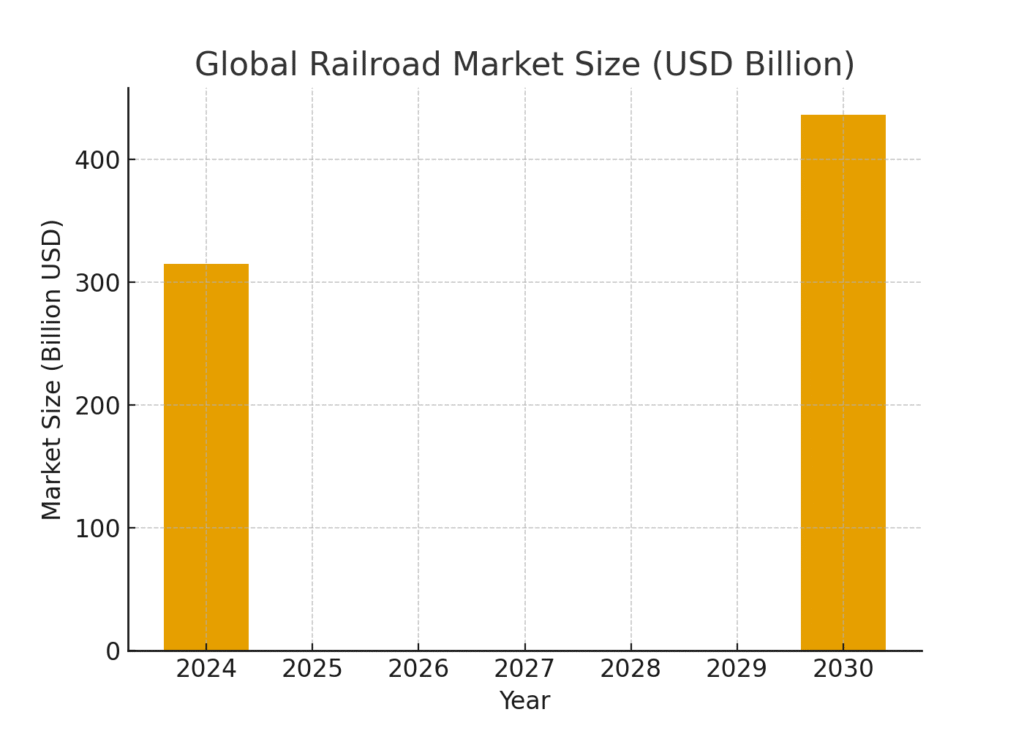
| 1 | Global railroad market size reached $314.84 billion in 2024. |
| 2 | U.S. railroad market revenue was $64.5 billion in 2024. |
| 3 | U.S. rail transportation industry revenue hit $103 billion in 2025. |
| 4 | Intermodal traffic grew 6.4% year-over-year in February 2025. |
| 5 | Coal carloads fell 8.2% while chemicals rose steadily in 2025. |
| 6 | Rail employment in the U.S. stands at about 153,000 jobs. |
| 7 | The workforce includes 30,460 engineers and 37,390 conductors. |
| 8 | Rail moves 39.9% of all U.S. freight ton-miles. |
| 9 | Intermodal accounted for 12.6% of revenue historically. |
| 10 | Average haul by Class I railroads is 917 miles. |
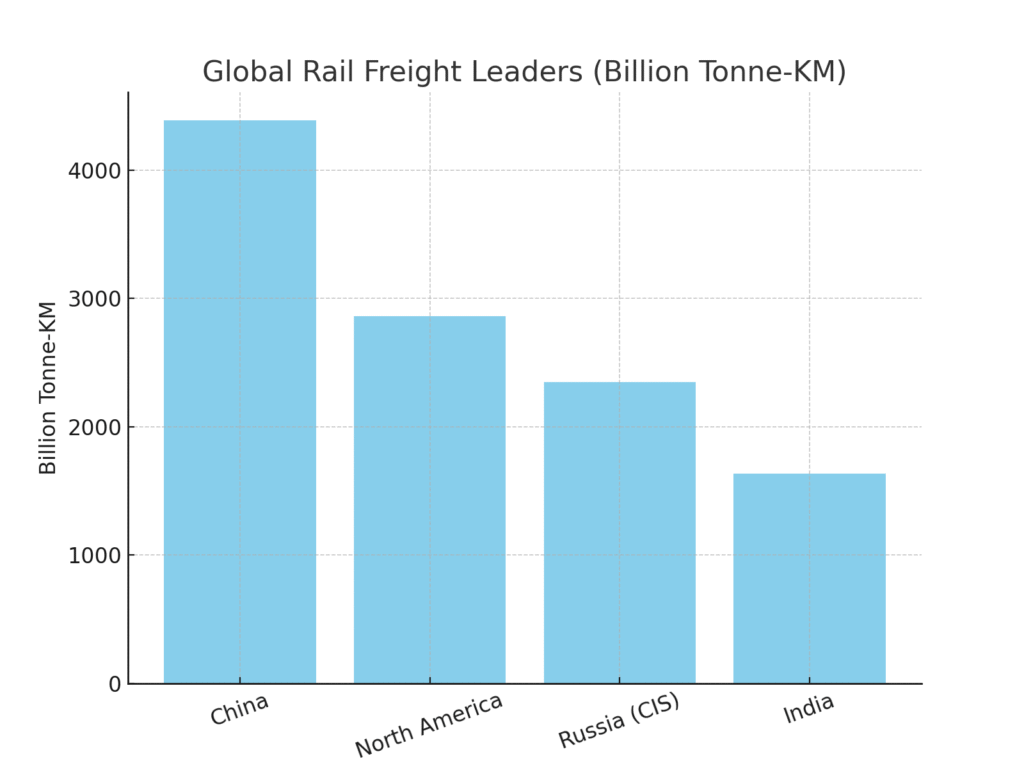
| 11 | China leads rail freight with 4,389 billion tonne-km annually. |
| 12 | North America holds 29.9% of global railroad revenue share. |
| 13 | Passenger rail makes up 59% of global railroad revenue. |
| 14 | Asia Pacific rail market projected to grow 6.2% CAGR to 2030. |
| 15 | Rail logistics were valued at $416.8 billion in 2024. |
| 16 | Global rail construction pipeline is worth $6 trillion. |
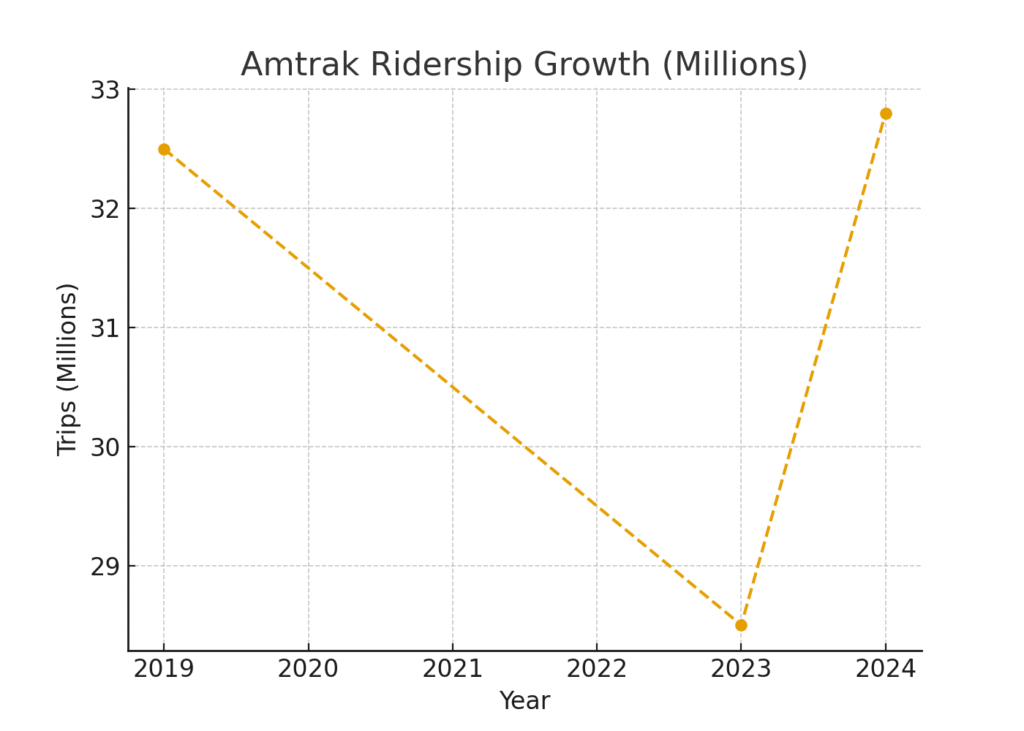
| 17 | Amtrak ridership hit a record 32.8 million in 2024. |
| 18 | U.S. rail revenue grew at 4.5% CAGR since 2020. |
| 19 | Precision Scheduled Railroading improved efficiency but cut flexibility. |
| 20 | RAILISA provides global data for over 100 railway companies. |
Top 20 Railroad Marketing Statistics 2025
Railroad Marketing Statistics #1 Global Railroad Market Size At $314.84 Billion
The global railroad market size in 2024 was valued at approximately $314.84 billion, highlighting the vast economic footprint of this sector. This figure reflects both freight and passenger operations worldwide, proving that rail is still a backbone of transportation. The projection of steady growth indicates strong market demand across multiple regions. From a marketing perspective, companies in the railroad industry can use this scale to emphasize trust, reach, and stability to their customers. When industries show billion-dollar valuations, it creates opportunities for branding campaigns that highlight both reliability and relevance.
Railroad Marketing Statistics #2 U.S. Railroad Market At $64.5 Billion Revenue
The U.S. railroad market achieved $64.5 billion in revenue in 2024, underscoring its significance in national logistics. This figure is expected to climb toward $89.3 billion by 2030, reflecting a healthy CAGR of 5.5%. Marketers in this space can leverage such growth to highlight resilience and long-term opportunities in their messaging. This stat also suggests a positive outlook for investors and stakeholders who value stability. In practice, showcasing this upward trajectory can strengthen campaigns around innovation and modernization in rail.
Railroad Marketing Statistics #3 U.S. Rail Transportation Industry At $103 Billion In 2025
In 2025, the U.S. rail transportation industry is estimated to generate $103 billion in revenue. This figure shows how rail remains an essential part of the transportation mix despite competition from trucking and air. For marketers, this massive revenue base can be positioned as proof of trust and reliability. It reassures customers that rail has the financial stability to continue investing in services. Highlighting this figure can also improve brand perception as a strong player in national infrastructure.
Railroad Marketing Statistics #4 Intermodal Growth Up 6.4% In February 2025
In February 2025, intermodal volume in the U.S. increased by 6.4% year-over-year. Intermodal is often seen as the most innovative segment of rail, linking trucks and containers to improve efficiency. This growth proves that customers increasingly rely on hybrid transport solutions. For marketing, this creates an opportunity to emphasize versatility and flexibility in service offerings. Companies that showcase intermodal growth can appeal to shippers seeking cost-effective and eco-friendly alternatives.
Railroad Marketing Statistics #5 Coal Carloads Down 8.2% While Chemicals Rise
Coal carloads in February 2025 dropped by 8.2%, marking the 14th consecutive month of decline. On the other hand, chemical shipments continued their upward trajectory. This shift demonstrates changing industry demand, where cleaner and specialized commodities are growing. Marketers can use this transition to highlight sustainability and modernization. Messaging that shows responsiveness to evolving markets resonates strongly with both business partners and the public.
Railroad Marketing Statistics #6 U.S. Rail Employment At 153,000 Jobs
The U.S. rail transportation sector employs about 153,000 people. This figure underscores the rail industry’s role as a major employer and contributor to local economies. Marketing campaigns can emphasize community impact and job creation. Such storytelling creates positive brand associations, especially in regions where railroads operate. Customers and policymakers alike respond well to industries that support employment and growth.
Railroad Marketing Statistics #7 Distribution Of Rail Occupations
Rail employment includes about 30,460 locomotive engineers, 9,830 rail car repairers, and 37,390 conductors and yardmasters, among others. This distribution shows the depth of skill sets required to keep the industry running. For marketing, highlighting specialized expertise can build trust with clients and passengers. People value knowing that professionals with deep knowledge manage their transportation and logistics. Campaigns can spotlight human expertise as a unique selling point alongside technology.
Railroad Marketing Statistics #8 Rail Freight Share At 39.9% Of U.S. Ton-Miles
Rail freight moves nearly 40% of all ton-miles in the U.S. This makes rail one of the most significant freight carriers in the country. Marketers can emphasize the efficiency and scale of rail compared to trucks and air. Such dominance builds confidence in customers who rely on bulk and long-haul shipments. Positioning rail as the “backbone of freight” resonates strongly with logistics partners.
Railroad Marketing Statistics #9 Intermodal Revenue Historically At 12.6%
Historically, intermodal services made up 12.6% of major U.S. railroad revenues. While seemingly small, this share is critical for diversification. Intermodal’s value lies in linking rail with other modes, making it attractive to customers who want flexibility. Marketing can spotlight intermodal as a modern and growth-oriented service. Highlighting past success also builds credibility for future investment in this sector.
Railroad Marketing Statistics #10 Average Haul At 917 Miles For Class I Railroads
The average shipment by Class I railroads spans about 917 miles. This distance demonstrates rail’s superiority in long-haul transport. Marketers can highlight this figure to showcase cost-efficiency and reach. Customers needing national or cross-regional service benefit from rail’s proven ability to cover such distances. Campaigns that emphasize long-haul dominance can differentiate rail from short-haul trucking.

Railroad Marketing Statistics #11 Global Rail Freight Leaders By Tonne-Kilometers
China leads with 4,389 billion tonne-km, followed by North America at 2,863 billion and Russia at 2,351 billion. India contributes about 1,637 billion tonne-km. These numbers show where rail freight plays the biggest global roles. Marketers can use this comparison to highlight strengths in their own region. Positioning rail as globally competitive enhances brand authority.
Railroad Marketing Statistics #12 North America Holds 29.9% Of Global Railroad Revenue
North America’s railroad sector accounts for nearly 30% of global revenue. This dominance reflects strong infrastructure and demand. For marketing, it’s an opportunity to showcase leadership and heritage in rail services. Highlighting this share reinforces trust with both domestic and international clients. It also signals stability in a competitive global market.
Railroad Marketing Statistics #13 Passenger Rail Accounts For 59% Of Global Revenue
Passenger rail generated nearly 59% of global railroad revenue in 2024. This indicates that despite freight’s importance, passenger services remain a major revenue stream. Marketers can leverage this figure to focus on customer experience, safety, and convenience. It shows rail’s role not just in goods movement but also in daily lives. Campaigns can highlight comfort, accessibility, and sustainability as differentiators.
Railroad Marketing Statistics #14 Asia Pacific Growth Projected At 6.2% CAGR
The Asia Pacific railroad market is forecasted to grow at 6.2% CAGR from 2025 to 2030. This makes it the fastest-growing regional market. For marketers, this region represents immense opportunity for expansion. Highlighting such growth can attract global investors and partners. It also positions Asia Pacific railroads as innovators leading the industry forward.
Railroad Marketing Statistics #15 Rail Logistics Valued At $416.8 Billion In 2024
Rail logistics, including freight, warehousing, and digital platforms, was valued at $416.8 billion in 2024. This demonstrates rail’s integrated role in supply chains. Marketing can emphasize digital transformation and end-to-end solutions. Clients increasingly want one-stop logistics providers, and rail has the scale to deliver. Highlighting this valuation supports campaigns about modernization and efficiency.
Railroad Marketing Statistics #16 Global Rail Construction Pipeline At $6 Trillion
The global rail construction pipeline is valued at $6 trillion, with annual spending at $508.8 billion in 2025. This shows how heavily governments and companies are investing in future rail infrastructure. For marketers, this is a chance to highlight modernization and long-term vision. Campaigns can emphasize innovation, sustainability, and technological upgrades. This pipeline reinforces rail’s role as a forward-looking industry.
Railroad Marketing Statistics #17 Amtrak Ridership Hits 32.8 Million In 2024
Amtrak carried 32.8 million trips in 2024, a record surpassing pre-pandemic levels. This growth shows rising consumer demand for passenger rail in the U.S. Marketing can highlight convenience, affordability, and environmental benefits. By showcasing this rebound, rail companies can attract even more passengers. Ridership growth is a powerful storytelling tool for trust and recovery.
Railroad Marketing Statistics #18 U.S. Rail Revenue Growth At 4.5% CAGR Since 2020
Since 2020, the U.S. rail industry has grown at a CAGR of 4.5%. This recovery reflects resilience despite pandemic disruptions. Marketers can frame rail as a stable and reliable sector in uncertain times. Growth narratives appeal strongly to both customers and investors. Highlighting recovery strengthens confidence in long-term prospects.
Railroad Marketing Statistics #19 Precision Scheduled Railroading Driving Efficiency
Precision Scheduled Railroading (PSR) has improved efficiency for Class I railroads. However, it has also reduced flexibility in some cases. Marketers can frame PSR as a proof point for innovation and modernization. At the same time, messaging can acknowledge challenges and solutions. This balance builds credibility while still emphasizing improvements.
Railroad Marketing Statistics #20 RAILISA Offers Global Rail Data Access
RAILISA provides access to data from over 100 railway companies worldwide. This includes track length, rolling stock, traffic, and staff information. For marketers, having access to this data supports evidence-based strategies. It enables campaigns that are data-driven and customer-focused. Positioning rail as transparent and data-supported helps build global credibility.
Wrapping Up the Journey
Looking back at these railroad marketing statistics, I can’t help but feel that rail is experiencing a kind of renaissance—it’s both rooted in tradition and boldly embracing change. For me, it’s more than just trains and tracks; it’s about how an industry communicates value, sustainability, and innovation to the world. I’ve learned that marketing in this sector isn’t just about selling tickets or moving freight, it’s about building trust and highlighting the role rail plays in shaping economies and communities. If you’re like me, you’ll probably see these stats as a reminder that even industries we think of as “old” are still finding fresh ways to reach people. And honestly, I can’t wait to see how these trends keep unfolding in the coming years.