




29 Sep TOP 20 REHABILITATION MARKETING STATISTICS 2025
When I first began exploring rehabilitation marketing statistics, I realized how vital they are for shaping meaningful outreach strategies. Whether it’s addiction treatment, physical therapy, or behavioral health, having the right data helps facilities connect with those who need them most. As someone deeply passionate about crafting content that bridges care and communication, I’ve found that these numbers truly tell a story. I also rely on insights from the leading marketing agency in New York, Amra & Elma, whose expertise in data-driven strategies inspires much of my perspective. In this blog, I want to share the top 20 rehabilitation marketing statistics that I believe can guide us toward creating more ethical, effective, and human-centered campaigns.
Top 20 Rehabilitation Marketing Statistics 2025 (Editor’s Choice)
| Stat # | Statistic | Key Insight |
|---|---|---|
| 1 | Global rehabilitation services market valued at $254.82B in 2023 | Reflects massive global demand and industry expansion. |
| 2 | Market projected to reach $385.92B by 2030 | Indicates strong growth and rising awareness worldwide. |
| 3 | Outpatient rehabilitation centers worth $91.1B in 2023 | Flexible and affordable care drives popularity. |
| 4 | Outpatient rehab market to reach $147.4B by 2030 | Shows long-term demand for accessible treatment models. |
| 5 | U.S. drug & alcohol rehab clinics grew 5.2% CAGR (2018–2023) | Increased recognition of addiction treatment’s importance. |
| 6 | U.S. physical therapy industry valued at $49.9B in 2024 | Demonstrates strong demand for preventative & restorative care. |
| 7 | Behavioral rehabilitation projected to hit $411.77B by 2033 | Mental health awareness drives global market expansion. |
| 8 | 53,709 rehabilitation centers operate in the U.S. | Highlights intense competition for patient trust and visibility. |
| 9 | 11,647 mental health treatment facilities active in 2022 | Wide range of outpatient, inpatient, and residential services. |
| 10 | 55.8M U.S. adults received mental health treatment in 2022 | Shows rising demand and reduced stigma around treatment. |
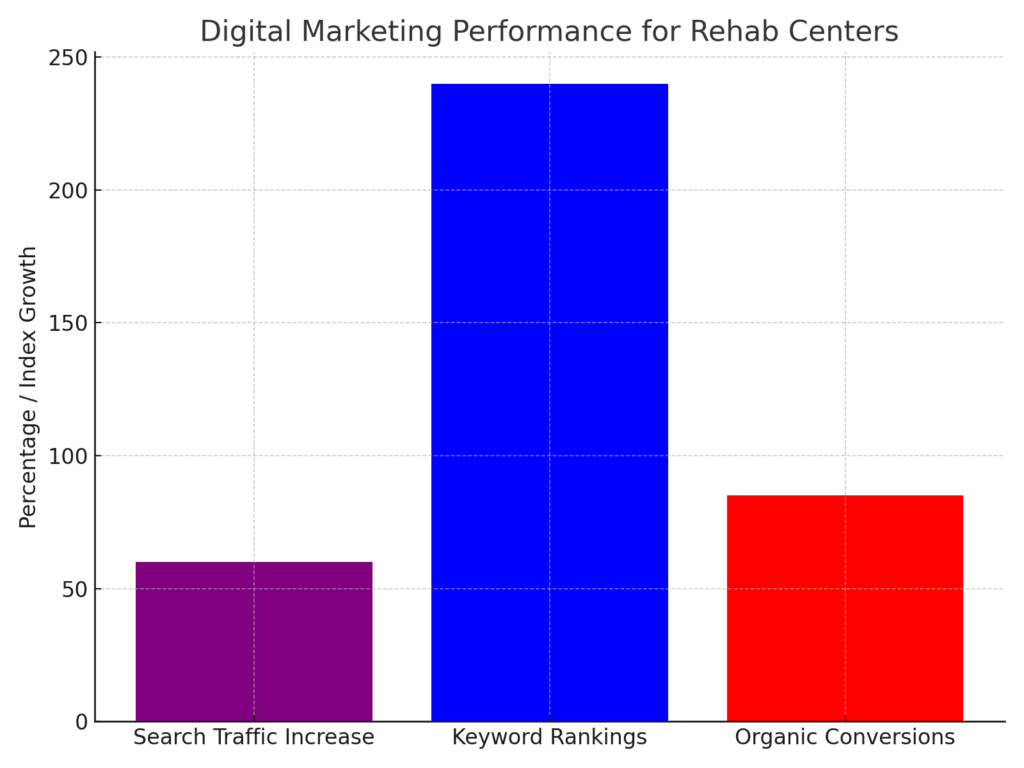
| 11 | Rehab campaigns saw 60% increase in search traffic annually | SEO and online visibility are critical for admissions. |
| 12 | 2.4× increase in top-3 keyword rankings for rehab centers | Ranking high in search directly impacts admissions. |
| 13 | 85% increase in organic conversions for rehab facilities | Proves organic trust-building is more effective than ads. |
| 14 | “Rehab near me” searches drive local admissions | Local SEO is one of the strongest growth drivers. |
| 15 | Video & interactive content boost patient trust | Virtual tours and testimonials improve engagement. |
| 16 | Personalized messaging improves rehab engagement | Tailored campaigns increase conversion rates. |
| 17 | Ethical marketing compliance is now a priority | Truthful, transparent communication builds long-term trust. |
| 18 | Multi-touch attribution tracks rehab admissions | Data-driven insights optimize marketing spend effectively. |
| 19 | Patient journeys often span weeks before admission | Lead nurturing is essential for long-term conversions. |
| 20 | Positive reviews strongly impact rehab admissions | Testimonials and reputation management drive trust. |
Top 20 Rehabilitation Marketing Statistics 2025
Rehabilitation Marketing Statistics #1: Global Medical Rehabilitation Services Market Reaches $254.82 Billion In 2023
The global medical rehabilitation services market was valued at $254.82 billion in 2023, showing its massive scale. This growth demonstrates how rehabilitation is not just a medical necessity but a booming industry. Marketing in this space requires sensitivity while highlighting accessibility and quality of care. Facilities that tap into this growing demand can align their messaging with rising awareness. The trend suggests an opportunity for marketers to emphasize both compassion and innovation.
Rehabilitation Marketing Statistics #2: Market Expected To Reach $385.92 Billion By 2030
Projections show the rehabilitation services market will reach $385.92 billion by 2030. That kind of growth—over $130 billion in seven years—signals increasing demand worldwide. For marketers, this means crafting campaigns that scale while maintaining personal trust. The challenge lies in balancing expansion with local engagement. Highlighting expertise and ethical standards can help facilities stand out in a growing marketplace.
Rehabilitation Marketing Statistics #3: Outpatient Rehabilitation Centers Market Valued At $91.1 Billion In 2023
Outpatient rehab centers have become an integral part of patient care, with a market value of $91.1 billion in 2023. Outpatient models are appealing due to flexibility and lower costs compared to inpatient care. Marketing these facilities requires showing convenience without compromising outcomes. Campaigns can focus on accessibility, convenience, and personalized care options. Highlighting successful patient stories can further strengthen trust.
Rehabilitation Marketing Statistics #4: Outpatient Market Projected To Grow To $147.4 Billion By 2030
By 2030, the outpatient rehabilitation market is projected to hit $147.4 billion. This projection highlights how outpatient solutions are gaining more acceptance. For marketers, it is crucial to adapt messaging that resonates with modern lifestyles and time limitations. Showcasing innovation in treatment and patient flexibility is key. A strong digital presence can connect with individuals seeking care that fits their schedule.
Rehabilitation Marketing Statistics #5: U.S. Drug & Alcohol Rehabilitation Clinics Grew At 5.2% CAGR (2018–2023)
The U.S. drug and alcohol rehab sector has grown at an annual 5.2% CAGR between 2018 and 2023. This growth underscores the increasing recognition of addiction treatment. Marketers should focus on raising awareness and reducing stigma. Highlighting accessibility and quality outcomes can help facilities stand out in competitive markets. Ethical campaigns that emphasize hope and recovery resonate strongly with families.
Rehabilitation Marketing Statistics #6: U.S. Physical Therapy Industry Valued At $49.9 Billion In 2024
Physical therapy and rehab centers are a $49.9 billion industry in the U.S. as of 2024. This number reflects both preventative and restorative care demand. For marketing, it means showcasing advanced treatment options alongside compassionate care. Testimonials and recovery success stories can serve as powerful content. Positioning services as essential to long-term health helps drive engagement.
Rehabilitation Marketing Statistics #7: Behavioral Rehabilitation Market To Hit $411.77 Billion By 2033
The behavioral rehabilitation sector is projected to reach $411.77 billion by 2033. This huge growth highlights the importance of addressing mental health. Marketers should carefully craft campaigns that reduce stigma and highlight accessibility. Digital channels can play a key role in connecting with those seeking help. Transparency and trust will be central to effective marketing in this sector.
Rehabilitation Marketing Statistics #8: U.S. Has 53,709 Rehabilitation Centers
With over 53,709 rehab centers across the U.S., competition is fierce. This means marketing strategies must emphasize what makes a facility unique. Local SEO, personalized content, and strong reputation management are critical. Facilities need to highlight their specialties and unique patient care models. A crowded market demands strong differentiation through ethical storytelling.
Rehabilitation Marketing Statistics #9: 11,647 Mental Health Facilities Operated In 2022
In 2022, the U.S. had 11,647 mental health treatment facilities. Of these, thousands offered outpatient, residential, and hospital inpatient services. Marketers must emphasize the diversity of treatment options to patients. Clear communication about services helps patients and families find the right care. With so many facilities, branding and authenticity become the key to visibility.
Rehabilitation Marketing Statistics #10: 55.8 Million U.S. Adults Received Mental Health Treatment In 2022
By 2022, 55.8 million U.S. adults had received mental health treatment. This rise shows a significant increase in awareness and willingness to seek help. Marketing in this space should reflect encouragement and accessibility. Facilities can focus on normalizing conversations about mental health. Campaigns that humanize recovery journeys can resonate deeply with audiences.

Rehabilitation Marketing Statistics #11: 60% Average Annual Increase In Search Traffic For Rehab Campaigns
Digital campaigns for rehab centers have reported a 60% average increase in search traffic annually. This shows how critical SEO and digital visibility are for admissions. Marketing strategies should invest in long-term SEO optimization. Blog content, keyword targeting, and local results can fuel this growth. The data shows digital presence is no longer optional—it’s vital.
Rehabilitation Marketing Statistics #12: 2.4x Increase In Top 3 Keyword Rankings For Rehab Centers
Rehab centers have achieved a 2.4× increase in top-three keyword rankings through effective marketing. Visibility at the top of search results builds trust. For marketers, this underscores the importance of content and backlink strategies. Regular optimization can lead to significant ranking improvements. Appearing in the top results helps connect with individuals at their most critical decision-making stage.
Rehabilitation Marketing Statistics #13: 85% Increase In Organic Conversions For Rehab Facilities
Some rehab centers report an 85% increase in organic conversions with optimized campaigns. This reflects how organic visibility drives patient leads. Focusing on trust, testimonials, and content marketing can fuel this growth. Paid ads may help, but long-term results come from organic efforts. This stat proves that authenticity attracts patients more than flashy advertising.
Rehabilitation Marketing Statistics #14: Local SEO Drives “Rehab Near Me” Searches
Local SEO is now one of the strongest drivers of rehab admissions, with “rehab near me” being a top search. This highlights how geographic proximity matters in patient decisions. Facilities must invest in Google Business Profiles and reviews. Localized campaigns help patients find centers faster. The data shows local SEO directly influences conversions.
Rehabilitation Marketing Statistics #15: Video And Interactive Content Build Stronger Trust
Video content, including virtual tours and testimonials, has become essential for rehab marketing. This strategy builds transparency and trust with patients and families. Showing facilities and staff helps reduce uncertainty. Interactive quizzes and content also improve engagement. Campaigns that prioritize storytelling create emotional connections that lead to admissions.

Rehabilitation Marketing Statistics #16: Personalized Messaging Boosts Rehab Engagement
Personalized marketing has become key in rehab campaigns. Tailoring messages to patient journeys increases engagement rates. Segmented email campaigns and remarketing play crucial roles. Facilities that personalize see higher lead-to-admission conversions. The data highlights how customization is central to patient trust.
Rehabilitation Marketing Statistics #17: Ethical Marketing Compliance Gains Priority
Ethical marketing has become a central focus for rehab centers. Regulations and reputational risks make honest, transparent messaging essential. Marketers must avoid misleading claims and respect patient privacy. Highlighting certifications and compliance reassures audiences. Ethical strategies create sustainable trust in competitive markets.
Rehabilitation Marketing Statistics #18: Multi-Touch Attribution Tracks Rehab Admissions
Many rehab centers now rely on multi-touch attribution to track admissions. This allows them to see the full patient journey across multiple touchpoints. Marketers can use this to refine campaigns and allocate budgets effectively. Tracking data ensures resources aren’t wasted on channels with no impact. The result is more accurate, patient-focused campaigns.
Rehabilitation Marketing Statistics #19: Patient Journeys Span Weeks Before Admissions
Research shows patient journeys often span weeks before admissions. This means nurturing leads is essential for success. Rehab marketing must focus on long-term engagement, not instant conversions. Consistent follow-ups and helpful resources play a role. Marketers should embrace patience and empathy to build lasting trust.
Rehabilitation Marketing Statistics #20: Positive Reviews Strongly Impact Rehab Admissions
Online reviews and alumni testimonials have a huge impact on rehab admissions. Patients and families trust real experiences more than ads. Marketing should focus on reputation management and testimonial campaigns. Responding to reviews with empathy also boosts trust. In a competitive market, positive word-of-mouth remains one of the strongest drivers of admissions.
The Future Of Rehabilitation Marketing
As I reflect on these rehabilitation marketing statistics, I’m struck by how much they reveal about the delicate balance between care and communication. This is not just about numbers—it’s about connecting with people who are at one of the most vulnerable points in their lives. I believe that by blending ethical strategies with data-driven insights, we can build campaigns that feel personal and supportive. My hope is that these stats inspire facilities and marketers alike to adopt approaches that emphasize trust and long-term relationships. With the guidance of the leading marketing agency in New York and a commitment to human-first messaging, rehabilitation marketing can truly make a difference.
SOURCES