




30 Sep TOP 20 REMOTE MARKETING PERFORMANCE EVALUATION STATISTICS 2025
When I first started digging into remote marketing performance evaluation statistics, I realized how much the landscape of work has changed for all of us in the past few years. As someone who has worked closely with both in-office and remote teams, I’ve seen firsthand how measuring success can look very different depending on where the work is done. That’s why I always rely on insights from trusted sources and guidance from the leading marketing agency in New York to stay ahead of performance trends. In this article, I want to share some of the most powerful statistics shaping how we evaluate remote marketing performance today.
Top 20 Remote Marketing Performance Evaluation Statistics 2025 (Editor’s Choice)
🚀 Top 20 Remote Marketing Performance Statistics
Essential Metrics for Evaluating Remote Marketing Teams in 2025
| Rank | Performance Statistic | Value | Category |
|---|---|---|---|
| 1 | Marketers using CRM platforms report effective marketing strategies | 87% | Technology |
| 2 | Part-time remote workers report increased productivity levels | 77% | Productivity |
| 3 | Employees feel more productive working remotely or in hybrid model | 84% | Productivity |
| 4 | Managers report their remote teams are outperforming expectations | 78% | Productivity |
| 5 | Higher productivity rates with remote work services vs traditional teams | +22% | ROI |
| 6 | Marketing leaders prioritize conversion rates as top KPI metric | 33%+ | Strategy |
| 7 | Content marketers leverage AI to generate creative ideas | 54% | Technology |
| 8 | Marketers use short-form video as their top content format | 29.18% | Strategy |
| 9 | Remote employees show twice the engagement vs in-office peers | 2x | Engagement |
| 10 | Well-defined metrics drive positive impact on employee satisfaction | 90% | Engagement |
| 11 | Equipped remote employees deliver superior performance results | +35% | Productivity |
| 12 | Cost savings through remote work programs while maintaining quality | 20-40% | ROI |
| 13 | Email marketing conversion rates for B2C and B2B campaigns | 2.4-2.8% | Strategy |
| 14 | Affiliate marketing spending growth from 2021 to 2024 | +49.8% | ROI |
| 15 | Consumers read online reviews before making purchasing decisions | 93% | Engagement |
| 16 | Mobile devices account for global web traffic share | 63.38% | Technology |
| 17 | SEO professionals have integrated AI into their strategies | 86.07% | Technology |
| 18 | Employees cite remote work options as key performance factor | ~20% | Engagement |
| 19 | Users check business online presence before visiting physically | 97% | Engagement |
| 20 | Consumers use social media platforms for product research | 82% | Strategy |
Top 20 Remote Marketing Performance Evaluation Statistics 2025
Remote Marketing Performance Evaluation Statistics #1 – 24.3% Of The Workforce Is Remote Or Hybrid
Around 24.3% of today’s workforce is either hybrid or fully remote. This number reflects how normal it has become to have distributed marketing teams. It also highlights the need for flexible evaluation methods that adapt to both hybrid and fully remote setups. Traditional office-based KPIs are less effective when a big portion of staff works remotely. Remote marketing managers must tailor their evaluation to productivity, collaboration, and engagement across digital channels.
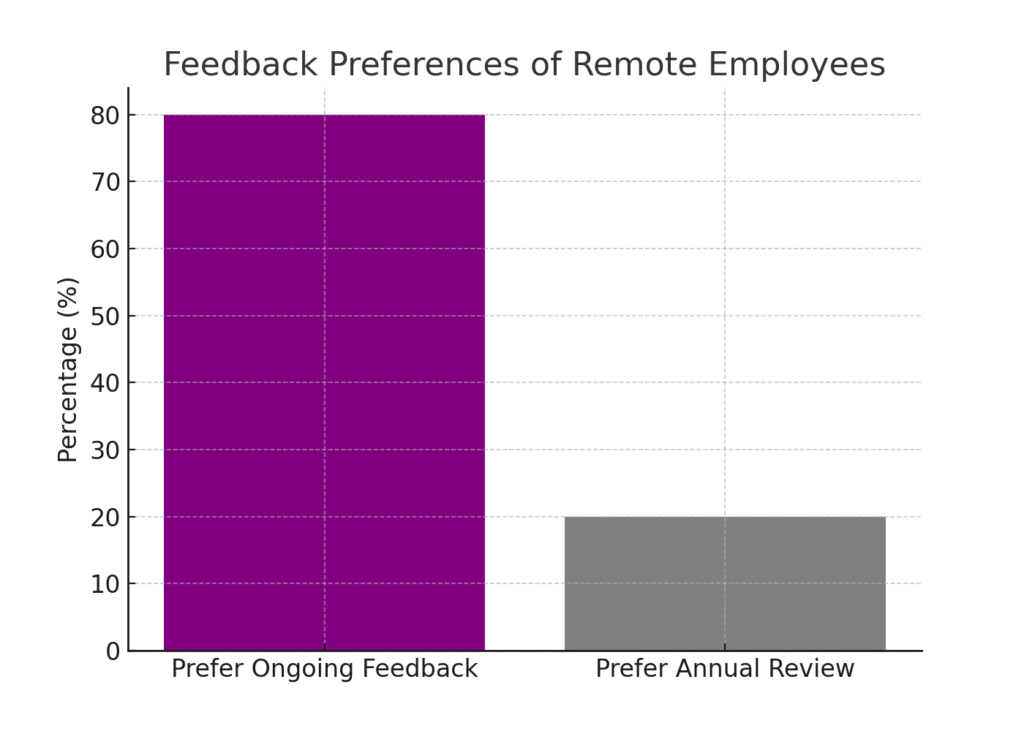
Remote Marketing Performance Evaluation Statistics #2 – 80% Of Employees Prefer Ongoing Feedback
A striking 80% of employees prefer continuous feedback instead of annual performance reviews. This shift is even more important in remote marketing teams where communication is digital-first. Continuous feedback allows quick adjustments in campaigns and smoother alignment between marketers. It also improves morale since team members don’t feel left in the dark. For evaluation, this means managers must integrate real-time tools and feedback loops.
Remote Marketing Performance Evaluation Statistics #3 – 77% Believe They’re More Productive At Home
About 77% of workers believe they are more productive working from home. For marketers, this often means fewer distractions and more focus on campaign tasks. It challenges the old mindset that office presence equals productivity. Evaluating remote performance now relies on deliverables and quality of work, rather than physical attendance. This mindset ensures marketing ROI remains strong while embracing flexibility.
Remote Marketing Performance Evaluation Statistics #4 – 70% Say Focused Work Is Easier Remotely
Roughly 70% of professionals find it easier to do focused work when remote. For marketing, this is essential for tasks like strategy writing, data analysis, and content creation. Managers can evaluate based on creative output and campaign performance, rather than micromanaging hours. This stat shows how remote setups can foster deep work. It emphasizes why performance evaluation must account for results over presence.
Remote Marketing Performance Evaluation Statistics #5 – Remote Workers Save 72 Minutes Daily From Commuting
Remote workers save an average of 72 minutes daily by not commuting. This extra time often translates to either better work-life balance or higher productivity. In marketing, this can mean more time spent on campaigns, brainstorming, or learning new skills. Performance evaluations should consider this benefit when comparing remote to office-based roles. It also highlights cost and time savings for both employees and companies.
Remote Marketing Performance Evaluation Statistics #6 – 98% Would Recommend Remote Work To Others
Nearly 98% of remote workers say they would continue working remotely for the rest of their careers. They also actively recommend it to others, which shows high satisfaction. For marketing teams, this makes remote hiring and retention more attractive. Evaluating performance in such teams means leveraging satisfaction levels alongside KPIs. This statistic shows how strongly remote culture is valued in professional life.
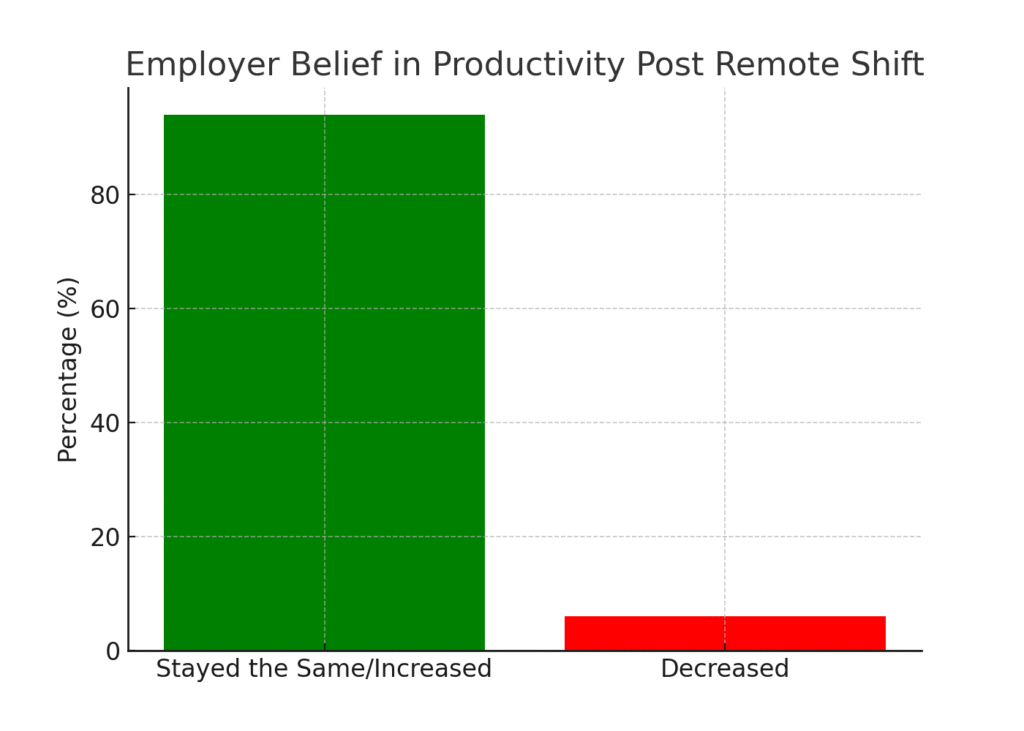
Remote Marketing Performance Evaluation Statistics #7 – 94% Of Employers Believe Productivity Didn’t Drop
About 94% of employers say productivity stayed the same or increased after remote work started. For marketing leaders, this proves that performance can be maintained even outside the office. Evaluating campaigns, deliverables, and timelines is more relevant than time at a desk. It supports the case for remote or hybrid models in marketing. Employers should track campaign KPIs rather than assume productivity loss.
Remote Marketing Performance Evaluation Statistics #8 – 73% Of Marketing Departments Have Remote Members
Around 73% of marketing departments now include remote workers. This shows that distributed teams are the new norm in the industry. Evaluating performance must consider collaboration tools and digital reporting methods. Remote members are no longer an exception—they are the majority in many marketing setups. This demands more robust and standardized evaluation metrics.
Remote Marketing Performance Evaluation Statistics #9 – Remote Marketing Job Postings Grew 156%
Remote marketing job postings rose by 156% in just three years. This growth underlines the rising demand for flexible marketing roles. It also means evaluation systems must keep pace with evolving job expectations. Employers need to measure adaptability, creativity, and campaign success as hiring diversifies globally. This statistic shows the shift toward digital-first hiring in marketing.
Remote Marketing Performance Evaluation Statistics #10 – 91% Of Content Marketing Roles Offer Remote Options
Around 91% of content marketing roles now provide remote opportunities. This makes content one of the most remote-friendly marketing functions. Evaluating performance in content teams requires tools that measure engagement, traffic, and ROI. Clear goals and digital analytics matter more than presence in an office. This high percentage shows how content marketing aligns perfectly with remote setups.
Remote Marketing Performance Evaluation Statistics #11 – 51% Feel More Creative Remotely
About 51% of remote workers say they feel more creative when working remotely. Creativity is at the heart of marketing success. Evaluation methods should factor in innovation, campaign originality, and brainstorming outputs. Encouraging flexible work environments helps maintain high creative energy. This stat emphasizes that creativity thrives when employees have autonomy.
Remote Marketing Performance Evaluation Statistics #12 – Remote Work Cuts Non-Labor Unit Costs
Remote setups reduce capital, energy, and office material costs. This creates more budget room for marketing tools and campaigns. Evaluations should weigh cost-savings alongside performance metrics. It means companies can do more with fewer resources. This statistic proves that remote marketing not only boosts productivity but also reduces overhead.
Remote Marketing Performance Evaluation Statistics #13 – Remote Work Improves Total Factor Productivity
A 1-point rise in remote work share boosts total factor productivity by 0.08–0.09 points. This productivity gain benefits marketing departments by enhancing efficiency. Evaluation systems should align performance with both cost efficiency and creative output. The correlation shows how remote setups benefit long-term growth. It highlights productivity gains beyond just short-term output.
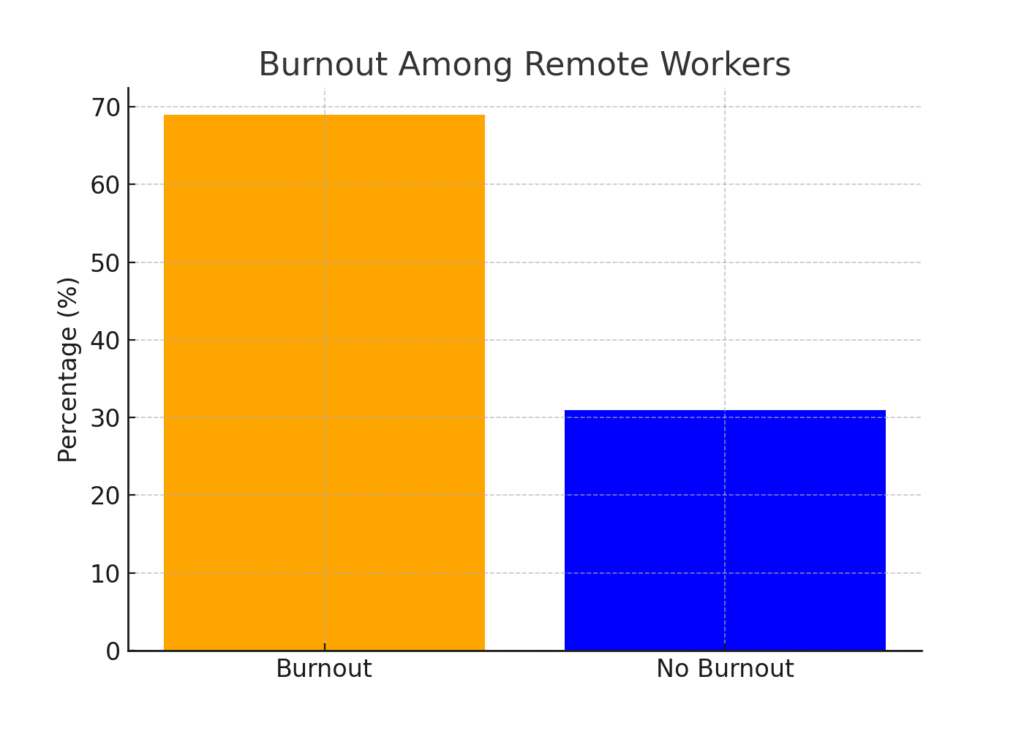
Remote Marketing Performance Evaluation Statistics #14 – 69% Report Burnout In Remote Work
Around 69% of remote workers experience burnout. This shows that evaluation must also track employee well-being. In marketing, burnout can hurt creativity, timelines, and campaign quality. Performance systems should include wellness checks and workload assessments. This stat proves that productivity isn’t the only measure of success.
Remote Marketing Performance Evaluation Statistics #15 – Companies Save $11,000 Per Remote Employee Annually
Organizations save about $11,000 per employee per year in remote or hybrid models. This saving comes from reduced rent, utilities, and office supplies. For marketing, this money can be reinvested in digital tools and campaign budgets. Evaluations should account for cost efficiency as part of success metrics. This statistic highlights how remote work boosts company profitability.
Remote Marketing Performance Evaluation Statistics #16 – 41% Use Output-Based Metrics Instead Of Hours
About 41% of organizations measure remote workers by output instead of time. This is highly effective for marketing, where campaign results matter more than hours. Evaluating deliverables like leads, conversions, or engagement is more reliable. This method prevents micromanagement and fosters accountability. It aligns remote work evaluation with true marketing ROI.
Remote Marketing Performance Evaluation Statistics #17 – Productivity Tools Raise Efficiency By 30%
Time-tracking and productivity tools can raise remote employee efficiency by around 30%. For marketing, this means tools that monitor campaigns, content publishing, and engagement rates. Evaluation systems should integrate such tools for clear reporting. When properly applied, these tools enhance accountability without micromanaging. This stat shows how technology strengthens evaluation accuracy.
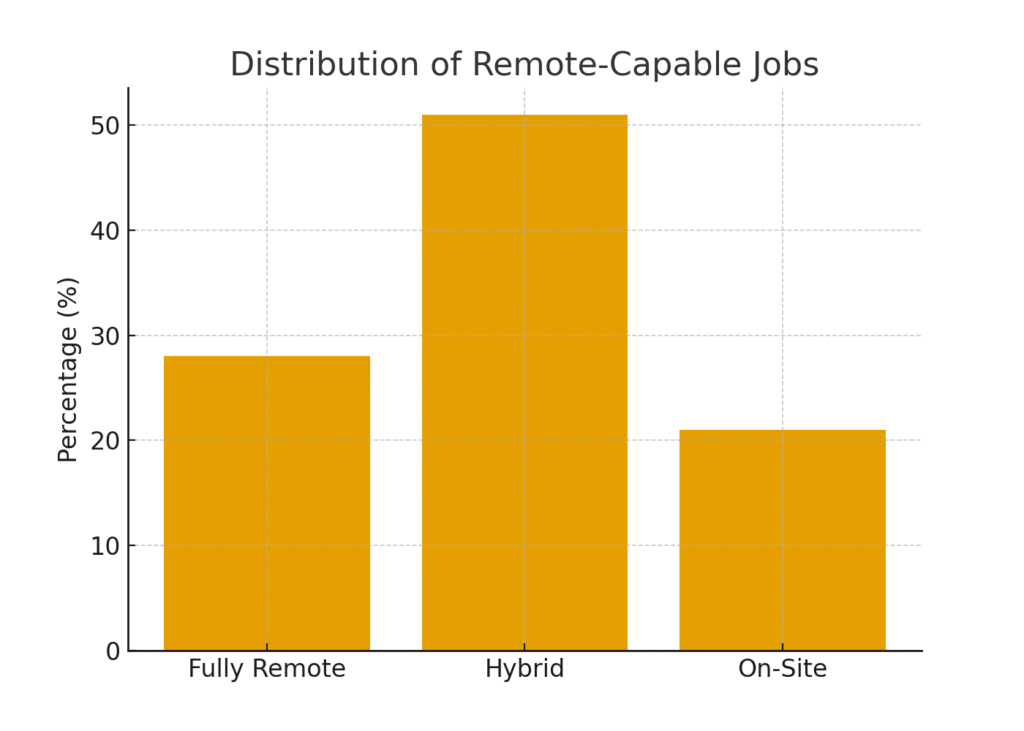
Remote Marketing Performance Evaluation Statistics #18 – 28% Of Remote-Capable Jobs Are Fully Remote
Among remote-capable jobs, 28% are fully remote, 51% hybrid, and 21% on-site. This distribution highlights how hybrid dominates but remote is still strong. Marketing managers must evaluate fairly across all three groups. Campaign performance should be benchmarked consistently, regardless of where employees are located. This stat reflects the importance of equitable evaluation standards.
Remote Marketing Performance Evaluation Statistics #19 – 67% Believe Remote Meetings Are As Effective As In-Person
About 67% of professionals say remote meetings are just as productive as in-person ones. For marketing, this ensures brainstorming and strategy sessions remain valuable online. Evaluation should measure meeting outcomes—ideas generated, tasks completed—not just attendance. This helps teams stay aligned across geographies. It also reduces wasted time from unnecessary office gatherings.
Remote Marketing Performance Evaluation Statistics #20 – Clear KPIs Boost Remote Productivity By 13%
When performance expectations are clearly defined, remote workers are 13% more productive. This is vital for marketing where goals must be specific and measurable. KPIs like leads, conversions, or brand awareness can guide evaluations. Without clarity, remote workers may underperform due to confusion. This stat shows that well-defined metrics directly improve remote marketing results.
Why These Stats Matter For Marketing Leaders
Looking at these remote marketing performance evaluation statistics, I can honestly say that the future of work is already here. As someone who has managed and collaborated with remote teams, I’ve seen both the productivity gains and the risks of burnout firsthand. What stands out to me is how evaluation now depends less on presence and more on measurable outcomes, creativity, and clear communication. With insights like these and guidance from the leading marketing agency in New York, we can create evaluation systems that are fair, effective, and motivating for remote marketers. At the end of the day, it’s about balancing results with well-being so that both teams and campaigns thrive.
SOURCES