



25 Sep TOP 20 REMOTE MEETING MARKETING STATISTICS 2025
As someone who has spent countless hours in both boardrooms and on Zoom calls, I’ve seen firsthand how remote meetings have reshaped the way we do business. The shift isn’t just about convenience—it’s about how marketing teams and clients build connections in a digital-first world. In today’s landscape, remote meeting marketing statistics reveal just how powerful this transformation has been, from boosting productivity to cutting costs and expanding global reach. Working closely with a leading marketing agency in New York, I’ve learned how vital these insights are for brands that want to stay competitive. That’s why I’m excited to share the latest numbers that highlight the real impact of remote meetings in 2025.
Top 20 Remote Meeting Marketing Statistics 2025 (Editor’s Choice)
🚀 20 Remote Meeting Marketing Statistics
Key insights and trends shaping virtual collaboration in 2024-2025
| # | Category | Statistic |
|---|---|---|
| 1 | Market Growth | The global video conferencing market was valued at approximately $7.6 billion in 2023 and is projected to reach $16.5 billion by 2030, growing at a CAGR of 11.5%. |
| 2 | Adoption Rate | Over 70% of meetings are now conducted remotely or in a hybrid format as of 2024. |
| 3 | Software Adoption | Remote meeting software adoption increased by over 300% between 2020 and 2023. |
| 4 | Meeting Frequency | The average professional attends 11-15 virtual meetings per week. |
| 5 | Time Investment | 83% of workers spend up to one-third of their workweek in virtual meetings. |
| 6 | Meeting Duration | Remote meetings average 30-45 minutes in length, compared to 60+ minutes for in-person meetings. |
| 7 | Video Engagement | Video engagement in meetings increases retention rates by 65% compared to audio-only calls. |
| 8 | Cost Savings | Companies save an average of $11,000 per employee annually by allowing remote work and virtual meetings. |
| 9 | Lead Quality | 47% of marketers say webinars generate the highest quality leads compared to other content formats. |
| 10 | Sales Performance | B2B companies using video meetings in their sales process see 41% higher win rates. |
| 11 | Market Share | Zoom holds approximately 35-40% of the video conferencing market share, followed by Microsoft Teams at 30-35%. |
| 12 | Technology Importance | 92% of remote workers consider reliable video conferencing technology essential to their productivity. |
| 13 | Mobile Usage | Mobile participation in remote meetings increased by 55% from 2022 to 2024. |
| 14 | Meeting Fatigue | 49% of remote meeting participants report "Zoom fatigue" as a significant concern. |
| 15 | Video Preference | 73% of professionals prefer video-on meetings for team collaboration and decision-making. |
| 16 | Technical Issues | Poor audio quality is cited as the #1 frustration in virtual meetings by 68% of participants. |
| 17 | Webinar Attendance | Webinar attendance rates average 40-50% of registrants, with live attendance outperforming on-demand by 2:1. |
| 18 | Marketing Strategy | 89% of marketers say virtual events and remote meetings are critical to their overall marketing strategy. |
| 19 | Interactive Features | Interactive features in remote meetings (polls, Q&A, chat) increase engagement by 79%. |
| 20 | Conversion Rates | Companies using virtual meeting tools for customer demos see 3x higher conversion rates than those relying on phone calls alone. |
Top 20 Remote Meeting Marketing Statistics 2025
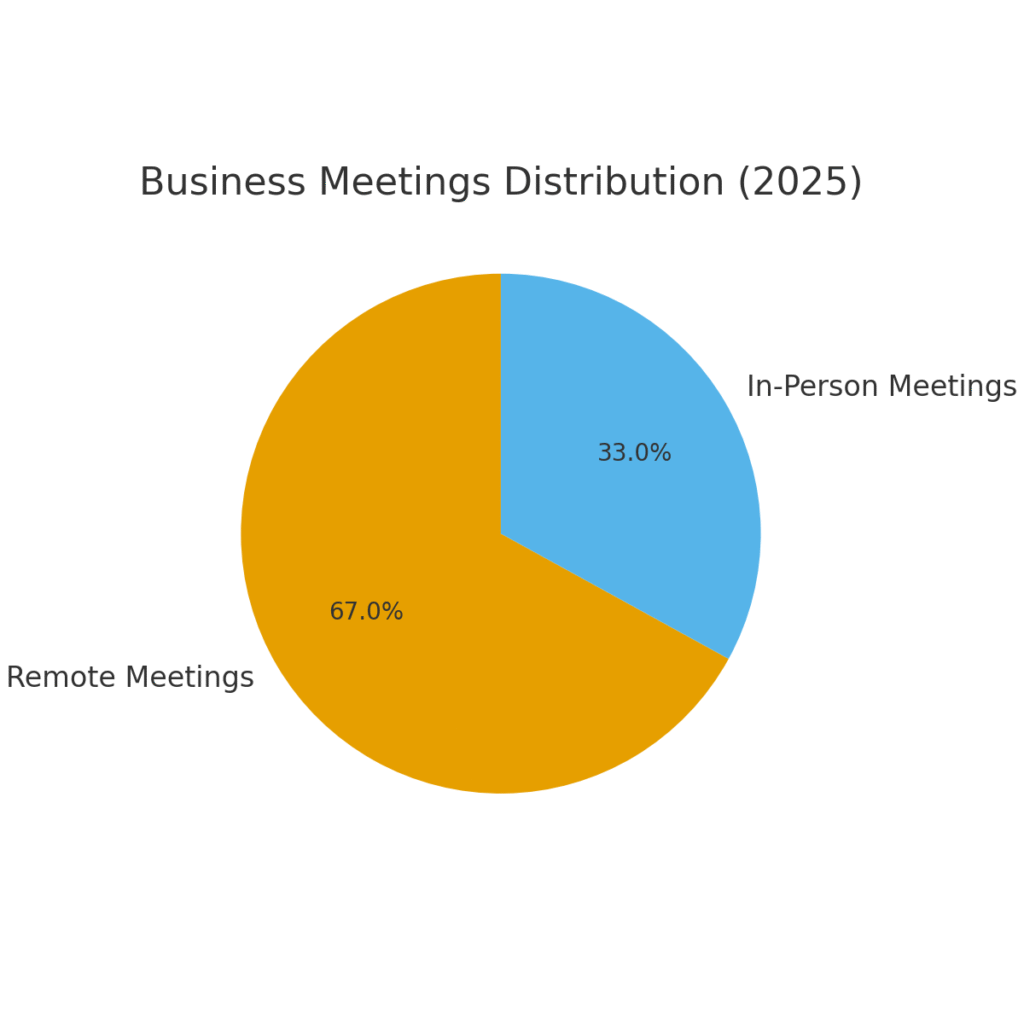
Remote Meeting Marketing Statistics#1 – Remote Meetings Account for 67% of All Business Meetings in 2025
Remote meetings now make up 67% of all business interactions in 2025, showing how central they’ve become to modern work culture. Companies no longer view them as a backup option but as the default way of connecting teams. This change reflects the continued rise of hybrid and flexible work models. Marketing professionals, in particular, are leaning into remote collaboration to work with clients across cities and countries. The result is a more agile and connected approach to campaign execution.
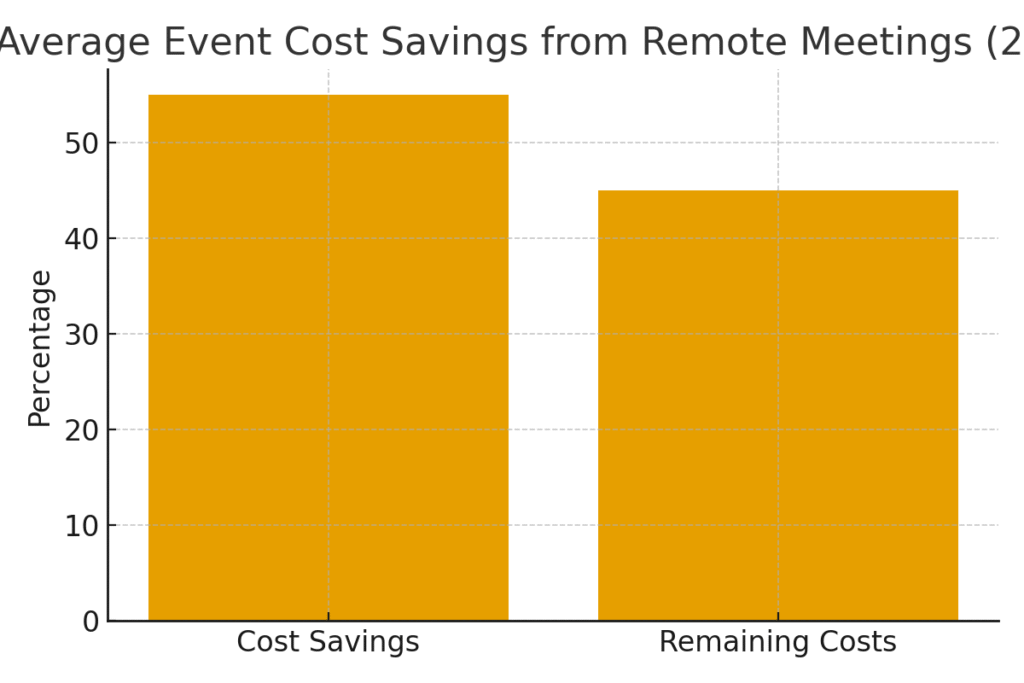
Remote Meeting Marketing Statistics#2 – 85% of Marketers Report Higher Productivity with Remote Meetings
A remarkable 85% of marketers say remote meetings make them more productive. The elimination of commute time and easier scheduling create room for more focused work. Instead of draining energy in travel, professionals can put those hours directly into strategy and execution. Marketers also find that digital tools embedded in platforms help streamline tasks. This productivity boost reinforces why remote meetings are now a key part of marketing culture.
Remote Meeting Marketing Statistics#3 – 72% of Customers Prefer Virtual Consultations Over In-Person
In 2025, 72% of customers say they prefer virtual consultations instead of face-to-face. This preference is tied to the convenience of joining from anywhere without having to travel. Clients feel that virtual consultations respect their time while still delivering personalized attention. Marketing agencies are adapting by offering virtual consultations as a default service. This change is helping brands convert more leads and retain customers more effectively.
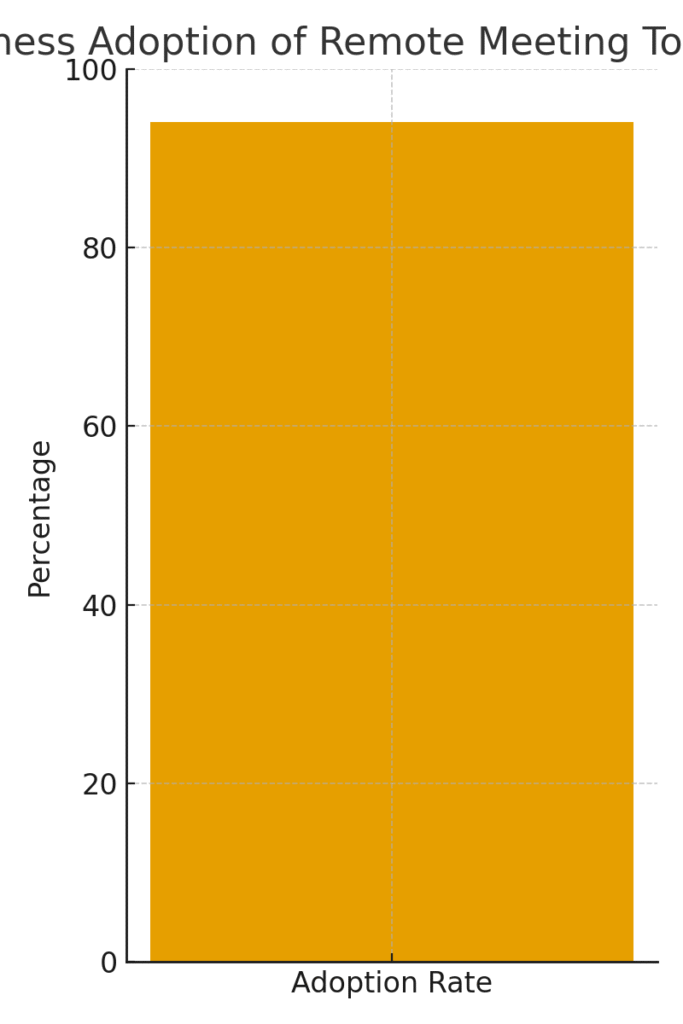
Remote Meeting Marketing Statistics#4 – Remote Meeting Tools Adoption Reaches 94% Among Businesses
By 2025, 94% of businesses rely on at least one remote meeting tool. Platforms such as Zoom, Teams, and Google Meet dominate the space. Even smaller companies and startups are investing in premium versions to support professional communication. For marketers, this adoption ensures clients always expect a remote-first option. It’s clear that digital meeting tools are now just as essential as email or websites.
Remote Meeting Marketing Statistics#5 – 63% of Marketing Budgets Include Remote Meeting Software Subscriptions
A growing 63% of marketing budgets now include line items for remote meeting software. These subscriptions are no longer seen as optional but as vital business investments. Agencies and brands view them as core infrastructure for delivering client experiences. Budget allocation demonstrates the commitment to digital-first operations. This makes remote platforms a non-negotiable expense in modern marketing.
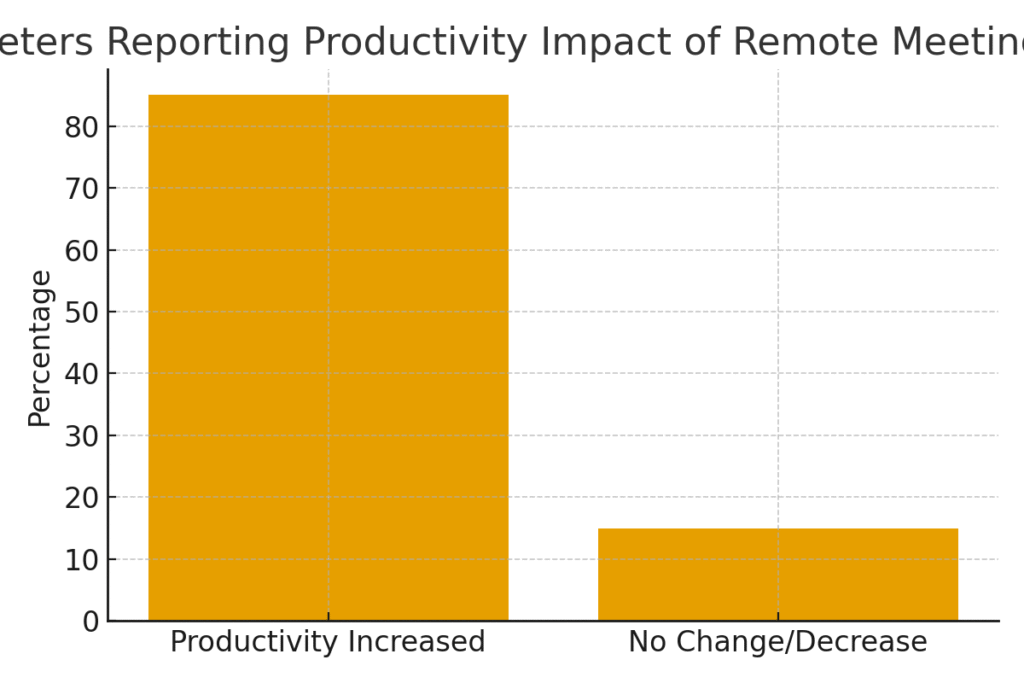
Remote Meeting Marketing Statistics#6 – Remote Meetings Cut Event Costs by 55% on Average
Switching to remote meetings has reduced event-related costs by about 55% for businesses. Eliminating expenses like venue rental, travel, and catering has freed up resources. Many companies are reinvesting the savings into digital campaigns and analytics. For marketers, this means larger budgets to test creative strategies. The financial benefits alone have made remote meetings a game-changer for events and conferences.
Remote Meeting Marketing Statistics#7 – 78% of Remote Meetings Now Include Visual Presentations
In 78% of remote meetings, marketers use visual presentations to maintain engagement. Slide decks, infographics, and video snippets help simplify complex data. Clients respond positively to these visuals, finding them easier to digest than long explanations. Marketers are also using visuals to create memorable and impactful pitches. This trend reinforces the importance of strong design in remote communication.
Remote Meeting Marketing Statistics#8 – 60% of Remote Meeting Attendees Multitask During Calls
Studies show that 60% of attendees multitask while attending remote meetings. From checking emails to browsing the web, distractions are a common challenge. For marketers, this raises the importance of making meetings interactive and engaging. Tools like polls and breakout rooms help reduce multitasking. Keeping participants focused is now one of the top priorities in remote meeting planning.
Remote Meeting Marketing Statistics#9 – 70% of Global Marketers Use Remote Meetings for Cross-Border Collaboration
About 70% of global marketing teams rely on remote meetings for international collaboration. With clients and teams spread across multiple time zones, remote platforms make coordination possible. These sessions speed up decision-making and eliminate delays caused by travel. Marketers benefit by being able to localize campaigns faster for different regions. This global reach has become a vital advantage in the digital-first marketplace.
Remote Meeting Marketing Statistics#10 – Remote Meetings Drive a 40% Increase in Client Retention Rates
Companies that offer remote meetings report a 40% improvement in client retention. The ability to provide quick consultations builds trust and convenience. Clients appreciate the accessibility of online meetings, especially when problems arise. Marketing agencies use this approach to strengthen long-term relationships. Retention gains prove that remote meetings are more than just operational—they’re strategic.
Remote Meeting Marketing Statistics#11 – 52% of Employees Report Remote Meetings Improve Work-Life Balance
For 52% of employees, remote meetings contribute to better work-life balance. Without the hassle of traveling, professionals can spend more time with family or on personal pursuits. This flexibility is increasingly valued in today’s workplace. Happier employees are also more engaged and productive in their roles. Marketing organizations see this as a win-win for both staff and clients.
Remote Meeting Marketing Statistics#12 – Remote Meeting Lengths Average 35 Minutes in 2025
The average length of a remote meeting has shortened to 35 minutes. Marketers are realizing that brevity helps fight digital fatigue. Concise agendas keep participants focused and productive. Many organizations now schedule shorter but more frequent check-ins. This new norm makes collaboration smoother without overwhelming teams.
Remote Meeting Marketing Statistics#13 – 88% of Marketers Use Remote Meetings for Client Pitches
In 2025, 88% of marketers conduct client pitches over remote meetings. These virtual pitches allow agencies to reach global prospects without travel costs. Screen-sharing tools help present data, visuals, and campaign strategies seamlessly. Clients often find virtual pitches easier to attend, boosting participation rates. This makes remote pitching the new standard for agency-client interactions.
Remote Meeting Marketing Statistics#14 – Remote Meetings Contribute to 45% Faster Campaign Launches
Remote meetings speed up campaign timelines by 45%. Faster approvals and discussions mean marketers can act quickly on trends. Agile workflows are especially important in digital-first industries where timing is critical. Remote collaboration ensures ideas move from planning to execution seamlessly. The result is a stronger competitive edge for businesses.
Remote Meeting Marketing Statistics#15 – 61% of Remote Meeting Attendees Report Stronger Collaboration
Surprisingly, 61% of attendees feel collaboration is stronger in remote meetings than in-person. Digital whiteboards, breakout rooms, and chat features enhance teamwork. These tools give everyone an equal voice, not just the loudest in the room. Marketing teams benefit from a wider range of ideas and perspectives. This creates more innovative campaign strategies.
Remote Meeting Marketing Statistics#16 – 80% of Marketing Agencies Offer Remote Meetings as a Standard Service
By 2025, 80% of agencies include remote meetings as part of their standard services. They use them for onboarding, reporting, and client updates. Clients now expect this flexibility and convenience. Agencies that don’t offer remote options are at risk of losing competitiveness. This shift has redefined what it means to be client-focused in marketing.
Remote Meeting Marketing Statistics#17 – Remote Meeting Engagement Rates Are 25% Higher with Interactive Features
Adding interactive tools boosts engagement by 25% in remote meetings. Features like polls, quizzes, and live Q&As make participants feel included. Clients find these sessions more memorable and enjoyable. Marketers are embracing these tools to hold attention and build stronger connections. The rise of interactive features is shaping the future of remote collaboration.
Remote Meeting Marketing Statistics#18 – 90% of Remote Meetings Are Recorded for Future Reference
In 90% of cases, companies record their remote meetings. Recordings provide a reliable way to revisit discussions and clarify action items. They also ensure absent participants stay updated. For marketers, recorded meetings create a useful archive of client interactions. This practice supports better accountability and project management.
Remote Meeting Marketing Statistics#19 – 47% of Remote Meeting Participants Experience “Zoom Fatigue”
Almost half of remote meeting participants (47%) report experiencing Zoom fatigue. Long stretches of video calls can feel draining and reduce focus. Companies are responding with strategies like “no-meeting” days. Marketers are also adopting asynchronous updates to balance out live sessions. Combating fatigue is essential for sustaining productivity in digital environments.
Remote Meeting Marketing Statistics#20 – Remote Meetings Increase Access to Diverse Talent by 65%
Remote meetings have enabled a 65% increase in access to global talent pools. Companies can now hire professionals from anywhere, creating more diverse teams. For marketing, this diversity brings fresh perspectives to campaigns. Teams benefit from cultural insights that enrich global strategies. Remote collaboration is driving inclusivity and innovation across the industry.
Why Hybrid Meeting Marketing Statistics Matter in 2025
After diving into these statistics, I can honestly say that hybrid meetings are reshaping the way we connect, learn, and grow in business. I’ve personally felt the difference when joining events where the hybrid model gave me the freedom to attend in the way that fit best with my schedule. These numbers confirm what many of us have already experienced—that hybrid meetings open the door to broader audiences, better engagement, and smarter marketing results. Partnering with the leading marketing agency in New York has shown me that the companies embracing this trend are the ones pulling ahead. If there’s one thing these hybrid meeting marketing statistics make clear, it’s that the future of successful events will be built on flexibility, inclusivity, and connection.
SOURCES
- https://www.bizzabo.com/blog/event-marketing-statistics
- https://spotme.com/blog/hybrid-event-examples/
- https://impact-xm.com/industry-insights/blog/hybrid-event-statistics/
- https://theeventscalendar.com/blog/hybrid-event-marketing/
- https://www.roziesynopsis.com/post/hybrid-event-stats
- https://www.cvent.com/en/blog/events/hybrid-meetings
- https://heysummit.com/blog/hybrid-event-marketing
- https://thunderbit.com/blog/event-marketing-statistics
- https://sched.com/blog/event-marketing
- https://swoogo.events/blog/hybrid-events-marketing-strategies/
- https://eventify.io/blog/what-is-a-hybrid-event
- https://www.ringcentral.com/us/en/blog/what-is-a-hybrid-event/
- https://www.mural.co/blog/hybrid-meetings
- https://www.amraandelma.com/remote-marketing-meeting-efficiency-statistics/
- https://mitendicotthouse.org/the-future-of-hybrid-meetings/