




27 Sep TOP 20 RENEWABLE ENERGY MARKETING STATISTICS 2025
When I started exploring renewable energy, I realized how much the market is evolving and how important it is to understand the latest renewable energy marketing statistics. As someone who’s constantly inspired by innovation, I want to share these insights with you in a way that feels both practical and personal. What makes this journey even more exciting is working alongside the leading marketing agency in New York, which has shown me how data and creativity can truly shape the future of clean energy. These statistics highlight not only the global growth of renewables but also the shifting consumer behaviors and opportunities for brands. I’m writing this because I believe marketing in renewable energy isn’t just about numbers—it’s about driving change, building trust, and creating a sustainable future we can all be proud of.
Top 20 Renewable Energy Marketing Statistics 2025 (Editor’s Choice)
⚡ Top 20 Renewable Energy Marketing Statistics 2025
Key insights driving the future of clean energy marketing and investment
| # | Category | Key Statistic |
|---|---|---|
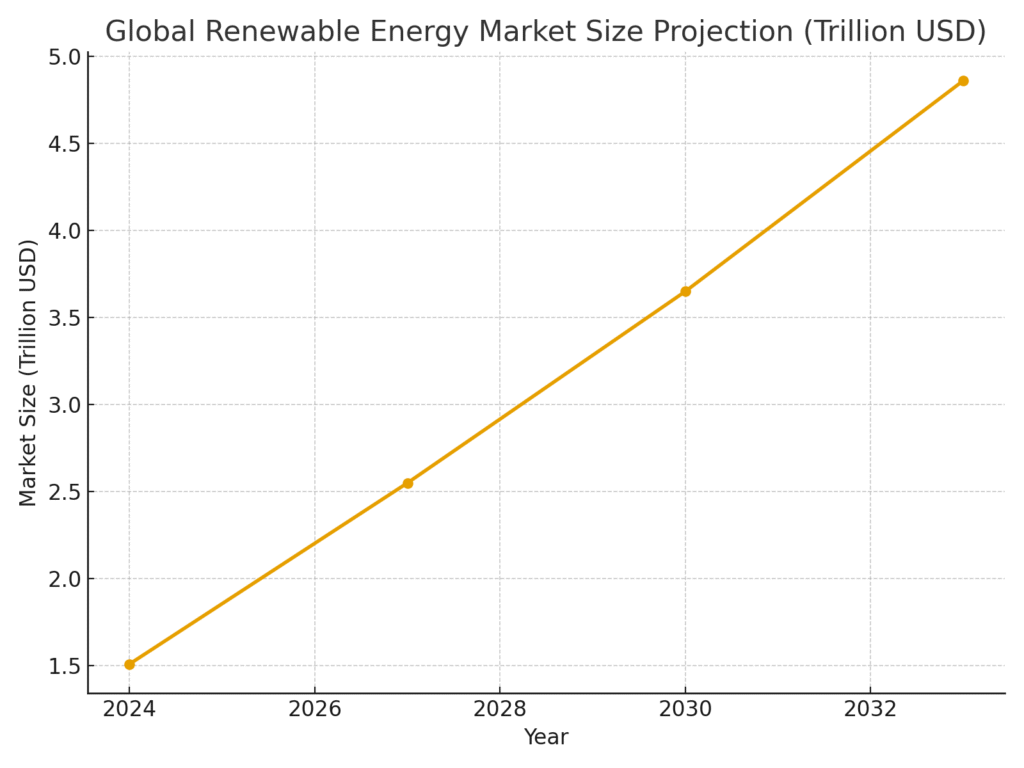
| 1 | Market SizeGlobal Market Value | The global renewable energy market was valued at $1.51 trillion in 2024 and is projected to reach $4.86 trillion by 2033, growing at a CAGR of 14.9% |
| 2 | Market SizeRecord Generation | Renewable power sources added a record 858 TWh of generation in 2024, 49% more than the previous record of 577 TWh set in 2022 |
| 3 | Market SizeLow-Carbon Milestone | Low-carbon power sources surpassed 40% of global electricity in 2024 for the first time since the 1940s |
| 4 | Market SizeREC Market Growth | The renewable energy certificate market was valued at $20.9 billion in 2024 and is estimated to reach $58 billion by 2034, growing at a CAGR of 10.8% |
| 5 | SolarSolar Generation Boom | Solar generation has doubled over the last three years to reach over 2000 TWh, and was the largest source of new electricity generation globally for the third year in a row (+474 TWh) |
| 6 | SolarUS Grid Dominance | Solar and storage accounted for 82% of all new power added to the US grid in the first half of 2025 |
| 7 | SolarManufacturing Capacity | The US added 4.3 GW of solar module manufacturing capacity in Q2 2025, bringing the total to 55.4 GW |
| 8 | RegionalAsia Pacific Leadership | Asia Pacific dominated the renewable energy market with a market share of 67.76% in 2023 |
| 9 | RegionalUS Market Growth | The U.S. renewable energy market is projected to reach $158.82 billion by 2032 |
| 10 | RegionalTexas Solar Leader | Texas installed the most solar capacity in the first half of 2025 (3.8 GWdc), followed by California, Indiana, and Arizona |
| 11 | InvestmentAnnual Investment | Nearly $2 trillion is currently being invested annually in renewable energy projects, nearly doubling the investment in new oil, gas, and coal supplies |
| 12 | InvestmentGovernment Support | Governments globally have made over $2 trillion in investments in clean energy since 2020, of which about 80% has been focused on the U.S. |
| 13 | InvestmentRenewable Overtakes Coal | Renewable electricity will overtake coal-generated electricity for the first time in 2025, accounting for 35% of global electricity supply |
| 14 | CorporateClean Energy Demand | Clean energy demand from cleantech manufacturing, data centers, and direct air capture operators could add 57+ GW by 2030 |
| 15 | CorporateData Center Growth | Data centre electricity consumption is set to more than double to around 945 TWh by 2030, with AI being the most important driver of this growth |
| 16 | CorporateEmission Strategy | 72% of power and utilities survey respondents indicate their organizations have a strategy to reduce or help customers reduce carbon emissions |
| 17 | TechnologyCO2 Reduction | Clean energy technologies are avoiding 2.6 billion tonnes of additional CO2 emissions per year |
| 18 | TechnologySolar vs Wind Growth | Contracted solar capacity outpaced wind in 2024 and is expected to grow to twice the contracted wind capacity in 2025 |
| 19 | Market SegmentSolar Dominance | Solar segment held the largest market share of 27.09% in 2024, with the Industrial segment holding the largest share by application |
| 20 | Market SegmentHydro REC Leadership | The hydro segment dominated around 48.1% share of the renewable energy certificate market in 2024 |
Top 20 Renewable Energy Marketing Statistics 2025
Renewable Energy Marketing Statistics #1 – Global Renewable Energy Market Size
The global renewable energy market is currently valued at USD 1.51 trillion in 2024. Projections suggest it will reach USD 4.86 trillion by 2033, growing at a CAGR of nearly 15%. This massive expansion reflects growing adoption, investment, and consumer trust in renewable sources. For marketers, it means more campaigns highlighting innovation and sustainability. It’s a reminder that marketing should align with the scale and urgency of this growth.
Renewable Energy Marketing Statistics #2 – Renewable Energy Certificate Market Value
The renewable energy certificate (REC) market was valued at USD 20.9 billion in 2024. Forecasts predict it could reach USD 58 billion by 2034. This growth shows how much companies are willing to pay for green credentials. For marketing teams, it emphasizes transparency and certification messaging. Consumers increasingly want proof, not just promises.
Renewable Energy Marketing Statistics #3 – Cost Competitiveness Of Renewables
In 2024, 91% of new renewable projects were cheaper than fossil-fuel alternatives. This shift makes renewables a clear economic winner. Marketing campaigns should highlight affordability alongside sustainability. Consumers respond well to the “win-win” message of saving money and saving the planet. It’s a powerful narrative for brand trust.
Renewable Energy Marketing Statistics #4 – Global Capacity Additions In 2024
Around 582 GW of new renewable capacity was added globally in 2024. This represented almost 20% growth compared to 2023. For marketers, this shows the unstoppable momentum of the industry. Campaigns can highlight rapid expansion and leadership in innovation. It reinforces confidence in choosing renewable solutions.
Renewable Energy Marketing Statistics #5 – Share Of New Electricity Capacity
In 2024, 92.5% of new global electricity capacity came from renewables. This shows renewables are dominating energy growth. For marketing strategies, highlighting renewable leadership builds credibility. It also positions brands as part of the global shift. The story is no longer about “if” but “when.”

Renewable Energy Marketing Statistics #6 – Voluntary Renewable Market Scale
By 2023, 9.7 million customers purchased renewable power voluntarily. This totaled 319 million MWh of clean energy. Marketers can leverage this trend by targeting conscious consumers. It proves there is real demand for green programs. Voluntary markets show the strength of values-driven branding.
Renewable Energy Marketing Statistics #7 – Voluntary Markets’ Share Of Deployment
Voluntary purchases accounted for up to 60% of non-hydro renewable deployment between 2014–2023. That’s a significant market driver. Marketing should emphasize the role of individuals and businesses in shaping the energy future. It’s proof that personal and corporate choices add up. Highlighting empowerment resonates deeply with audiences.
Renewable Energy Marketing Statistics #8 – Utilities’ Priority For Clean Energy
97% of utilities say clean energy is a priority for data center growth. This reflects a shift in utility strategy toward renewables. Marketers can connect this to business partnerships and B2B campaigns. Clean energy is no longer optional—it’s a competitive edge. Messaging should showcase alignment with industry leaders.
Renewable Energy Marketing Statistics #9 – Consumer Understanding Of Terminology
Only 26% of consumers say they fully understand terms like “renewable energy.” This creates a communication gap. Marketers must simplify language in campaigns. Education becomes as important as promotion. Clear, relatable storytelling makes renewable adoption easier.
Renewable Energy Marketing Statistics #10 – Consumer Confidence In Accessing Clean Energy
Just 33% of consumers feel confident they can access clean energy. This shows a gap between interest and availability. Marketing efforts can highlight accessibility and local programs. Brands should reassure customers with options and guidance. Confidence builds conversion and trust.

Renewable Energy Marketing Statistics #11 – Price Sensitivity Of Consumers
67% of consumers say they cannot absorb a 10% increase in energy bills. This highlights cost concerns. Marketing should emphasize affordability and savings potential. Bundling energy efficiency with renewables is attractive. The balance between price and sustainability messaging is crucial.
Renewable Energy Marketing Statistics #12 – Personalization Demand In Energy Solutions
67% of consumers want personalized renewable energy solutions. This opens doors for customized plans. Marketers should promote tailored offers and interactive tools. Personalization increases engagement and satisfaction. It aligns with consumer expectations from other industries.
Renewable Energy Marketing Statistics #13 – Subscription Models Appeal
70% of consumers express interest in subscription-based billing for energy. This signals a shift toward predictable costs. Marketing can frame subscriptions as modern, convenient, and green. It mirrors trends in streaming and retail. Consumers love familiarity, even in energy.
Renewable Energy Marketing Statistics #14 – Renewables’ Share Of Electricity Growth
In 2024, renewables made up 74% of global electricity generation growth. This cements their role as the main driver of progress. Marketers can highlight this dominance in thought-leadership content. Campaigns can position renewable brands as future-proof. Consumers are drawn to clear winners.
Renewable Energy Marketing Statistics #15 – Clean Power Share Of Global Electricity
Clean energy accounted for over 40% of global electricity generation in 2024. That’s nearly half of the world’s power. For marketing, this underscores mainstream adoption. No longer a niche, renewable energy is the new normal. Campaigns should reflect leadership, not just potential.

Renewable Energy Marketing Statistics #11 – Price Sensitivity Of Consumers
67% of consumers say they cannot absorb a 10% increase in energy bills. This highlights cost concerns. Marketing should emphasize affordability and savings potential. Bundling energy efficiency with renewables is attractive. The balance between price and sustainability messaging is crucial.
Renewable Energy Marketing Statistics #12 – Personalization Demand In Energy Solutions
67% of consumers want personalized renewable energy solutions. This opens doors for customized plans. Marketers should promote tailored offers and interactive tools. Personalization increases engagement and satisfaction. It aligns with consumer expectations from other industries.
Renewable Energy Marketing Statistics #13 – Subscription Models Appeal
70% of consumers express interest in subscription-based billing for energy. This signals a shift toward predictable costs. Marketing can frame subscriptions as modern, convenient, and green. It mirrors trends in streaming and retail. Consumers love familiarity, even in energy.
Renewable Energy Marketing Statistics #14 – Renewables’ Share Of Electricity Growth
In 2024, renewables made up 74% of global electricity generation growth. This cements their role as the main driver of progress. Marketers can highlight this dominance in thought-leadership content. Campaigns can position renewable brands as future-proof. Consumers are drawn to clear winners.
Renewable Energy Marketing Statistics #15 – Clean Power Share Of Global Electricity
Clean energy accounted for over 40% of global electricity generation in 2024. That’s nearly half of the world’s power. For marketing, this underscores mainstream adoption. No longer a niche, renewable energy is the new normal. Campaigns should reflect leadership, not just potential.
Why These Statistics Matter For The Future
Looking back at these renewable energy marketing statistics, I feel both inspired and motivated to share them with you. They aren’t just numbers; they represent the pace of change, the challenges, and the opportunities we have in building a sustainable energy future. As someone who believes in storytelling and its power to create real impact, I know these insights will guide me in shaping stronger, more meaningful campaigns. With guidance from the leading marketing agency in New York, I’ve learned that marketing renewables is about connecting with people’s values as much as their needs. The future is being written now, and I’m excited to be part of the conversation that drives cleaner, smarter, and more human-focused energy solutions.
SOURCES
-
https://www.gminsights.com/industry-analysis/renewable-energy-certificate-market
-
https://ember-energy.org/latest-insights/global-electricity-review-2025/
-
https://en.wikipedia.org/wiki/International_Renewable_Energy_Agency
-
https://www.mordorintelligence.com/industry-reports/global-renewable-energy-market-industry
-
https://www.irena.org/Statistics/View-Data-by-Topic/Capacity-and-Generation/Technologies
-
https://www.statista.com/statistics/1201656/global-renewable-energy-market-size