



28 Sep TOP 20 REPRODUCTIVE SYSTEM MARKETING STATISTICS 2025
When I started researching reproductive system marketing statistics, I quickly realized how dynamic and impactful this sector has become in shaping healthcare choices and family planning conversations. As someone deeply invested in sharing marketing insights, I find it fascinating how much this field intersects with accessibility, technology, and consumer behavior. Partnering with a leading marketing agency in New York has helped me better understand the scope of this evolving industry and the opportunities it creates for both providers and patients. This blog will explore the top 20 reproductive system marketing statistics for 2025, providing detailed context and human-focused insights that highlight where the market is going and why it matters.
Top 20 Reproductive System Marketing Statistics 2025 (Editor’s Choice)
🌸 Top 20 Reproductive System Marketing Statistics 2025 🌸
Essential Insights for Healthcare Marketers & Industry Professionals
| # | Category | Key Statistic | Value |
|---|---|---|---|
| 1 | Global Market Size | Women's health market projected value by 2030 | $68.53B |
| 2 | Market Growth | Women's health market CAGR from 2025-2030 | 5.1% |
| 3 | Fertility Market | Global fertility market projected value by 2034 | $85.5B |
| 4 | Fertility Growth | Fertility market CAGR from 2025-2034 | 8.9% |
| 5 | U.S. Market | U.S. women's health market value in 2025 | $20.32B |
| 6 | Contraceptive Market | Global contraceptive market value by 2030 | $44.04B |
| 7 | U.S. Contraceptives | U.S. contraceptive market projected value by 2032 | $12.42B |
| 8 | Infertility Impact | Global population affected by infertility | 1 in 6 |
| 9 | Marketing Spend | Successful fertility clinics invest in marketing (% of annual revenue) | 5-8% |
| 10 | Digital Advertising | Average monthly Google Ads spend per fertility clinic location | $10,000 |
| 11 | ROI Performance | Return on ad spend for IVF center marketing campaigns | 5-7x |
| 12 | PPC Metrics | Average click-through rate for fertility healthcare PPC ads | 3.3% |
| 13 | Cost Per Click | Average CPC for fertility-related keywords | $4.99 |
| 14 | Insurance Coverage | U.S. companies offering fertility benefits (projected 2025) | 86% |
| 15 | Market Dominance | North America's share of global women's health market | 43% |
| 16 | Contraceptive Apps | Flo app downloads in July 2024 | 4.2M |
| 17 | IVF Utilization | IVF share of assisted reproductive technology (ART) | 99% |
| 18 | LGBTQ+ Market | Single women patients at UK fertility clinics (growth over 10 years) | 3x |
| 19 | Distribution Channel | Retail pharmacies' share of contraceptive device market | 41.5% |
| 20 | Digital Growth | Women's digital health market CAGR (reproductive health segment) | 47.7% |
Top 20 Reproductive System Marketing Statistics 2025
Reproductive system marketing statistics #1 Global Fertility Market Valued At $36.5 Billion In 2024
The global fertility market was valued at $36.5 billion in 2024, reflecting the growing demand for assisted reproductive services worldwide. This growth is largely driven by rising infertility rates, lifestyle changes, and delayed family planning decisions. Marketing strategies in this sector increasingly emphasize advanced technology and personalized care. Clinics and providers are positioning themselves as modern, empathetic, and science-backed. The number highlights a massive opportunity for targeted campaigns in fertility services.
Reproductive system marketing statistics #2 Fertility Services Market To Reach $70.27 Billion By 2030
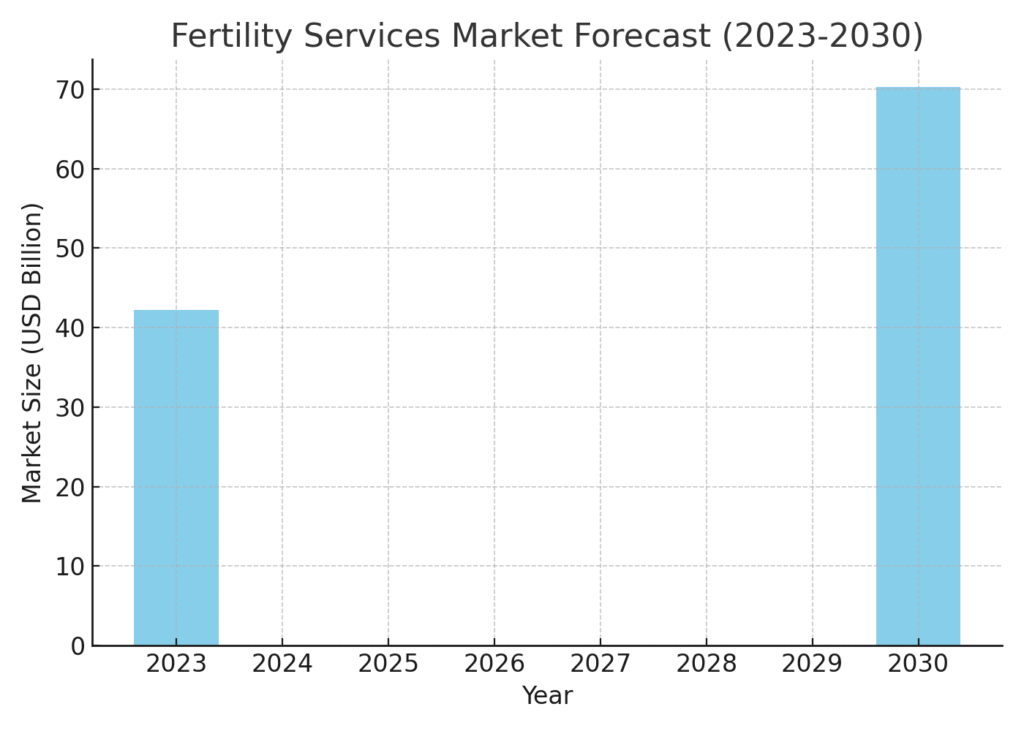
The fertility services market is projected to expand from $42.23 billion in 2023 to $70.27 billion by 2030. This rapid rise is powered by the global acceptance of assisted reproductive technology (ART). Marketing here often focuses on affordability, safety, and cutting-edge solutions. Companies are leaning on trust-based advertising to help potential clients feel confident in the process. The upward trajectory suggests stronger brand differentiation will be critical in the years ahead.
Reproductive system marketing statistics #3 Reproductive Health Market To Surpass $33 Billion By 2025
The reproductive health market was valued at around $25.6 billion in 2021 and is expected to reach $33.5 billion by 2025. This sector covers contraception, maternal care, and STI management. Campaigns in this space highlight inclusivity, women’s empowerment, and global accessibility. Marketing strategies increasingly use digital channels to reach younger, more tech-savvy audiences. This stat reflects not only growth but a broader cultural shift in reproductive health awareness.
Reproductive system marketing statistics #4 Women’s Health Market Reaching $68.5 Billion By 2030
The women’s health market was valued at $49.3 billion in 2024 and is projected to grow steadily to $68.5 billion by 2030. Within this, reproductive health accounts for a significant share. Marketing initiatives often align with lifestyle branding, portraying reproductive care as part of holistic wellness. Influencer campaigns play a big role in normalizing conversations about fertility and contraception. This shows how reproductive system marketing intersects with broader healthcare narratives.
Reproductive system marketing statistics #5 U.S. Sexual & Reproductive Health Clinics Valued At $4.03 Billion In 2023
In 2023, the U.S. sexual and reproductive health clinics market stood at $4.03 billion. Growth here is linked to broader access to preventive care and rising demand for contraception. Marketing campaigns often highlight convenience, affordability, and discreet services. Telehealth also plays a crucial role in broadening the reach of reproductive health services. This reflects how consumer preferences for digital-first care are shaping marketing tactics.

Reproductive system marketing statistics #6 Assisted Reproductive Technology Market At $5.76 Billion In 2023
The U.S. ART market was valued at $5.76 billion in 2023, showing how IVF and related services are booming. Consumer demand is pushing clinics to highlight success rates, safety, and innovation in their messaging. Digital marketing has become essential to educate prospective patients about options. This stat highlights how ART is transitioning from niche to mainstream. The continued expansion calls for emotionally resonant campaigns that address consumer concerns.
Reproductive system marketing statistics #7 IVF Clinics Spending To Reach $16.8 Billion By 2028
Spending on IVF clinics in the U.S. was $8.9 billion in 2023 and is projected to almost double by 2028. This remarkable growth reflects rising demand among millennials and Gen Z delaying family planning. Clinics must build trust through transparent advertising and data-driven success stories. Digital platforms like Instagram and TikTok are emerging as powerful tools for outreach. Marketing narratives here must balance hope with factual clarity.
Reproductive system marketing statistics #8 U.S. Fertility Market Projected At $19.7 Billion By 2034
The U.S. fertility market was valued at $8.37 billion in 2024 and is projected to rise to $19.72 billion by 2034. This increase signals immense opportunities for scaling marketing campaigns. Brands are focusing on telehealth, AI-based fertility tracking, and customer-centric messaging. Growth will depend heavily on digital advertising and partnerships with employers offering fertility benefits. This statistic emphasizes how reproductive system marketing is deeply tied to workplace policies.
Reproductive system marketing statistics #9 42% Of Companies Now Offer Fertility Benefits
By 2024, 42% of companies provided fertility benefits, compared to 30% in 2020. This shows how employee benefits are reshaping the fertility landscape. Marketing campaigns are starting to appeal to both employees and employers. The trend creates opportunities for B2B healthcare marketers to promote fertility benefit packages. This highlights how reproductive system marketing extends beyond consumers to organizations.
Reproductive system marketing statistics #10 39 Million Emergency Contraceptives Sold In 2023
Globally, social marketing programs sold 39 million units of emergency contraceptive pills in 2023. This figure underscores the widespread reliance on accessible contraception. Campaigns for such products focus on urgency, safety, and discretion. Social media and community outreach play critical roles in messaging. The scale of this market shows the power of accessibility-focused marketing.
Reproductive system marketing statistics #11 DKT International Sold 926 Million Condoms In 2024
In 2024, DKT International sold over 926 million condoms globally. This figure shows the massive scale of reproductive product distribution. Marketing campaigns emphasize safety, empowerment, and choice. Humor and relatable messaging often resonate well with younger demographics. This demonstrates how large-scale reproductive health campaigns drive impact at population levels.
Reproductive system marketing statistics #12 Oral Contraceptive Sales At 132 Million Units In 2024
Also in 2024, DKT International distributed 132 million oral contraceptive units. Marketing efforts for oral contraceptives frequently focus on long-term reliability and women’s empowerment. Digital channels, including targeted ads, are essential for reaching diverse age groups. The sheer scale of sales highlights the importance of sustained campaigns. This statistic reflects how vital reproductive system marketing is in everyday health decisions.
Reproductive system marketing statistics #13 Injectable Contraceptive Sales At 44.9 Million Units In 2024
Injectable contraceptives reached nearly 45 million units sold in 2024. Marketing here often emphasizes convenience and privacy. Campaigns target both rural and urban populations through mixed media strategies. Storytelling about real user experiences helps build trust. This shows how marketing adapts to consumer needs for flexibility and control.
Reproductive system marketing statistics #14 IUD Sales Hit 6 Million Units In 2024
In 2024, IUD sales exceeded 6 million globally. This reflects a rising preference for long-term contraception. Marketing campaigns focus on affordability and freedom from daily dosing. Providers emphasize reliability and peace of mind in their messaging. This stat highlights the growing role of long-acting reversible contraceptives in reproductive marketing.
Reproductive system marketing statistics #15 Birth Control Segment Held 34.3% Market Share In 2023
The birth control segment made up 34.3% of the U.S. reproductive health clinics market in 2023. This dominance illustrates how central contraception is to reproductive health. Campaigns often highlight choice and personalization to appeal to consumers. Digital platforms are heavily used to provide education and promote options. This stat proves that contraception remains at the heart of reproductive system marketing.

Reproductive system marketing statistics #16 Contraceptive Segment Holds 35% Of Women’s Health Market
Globally, contraceptives accounted for 35.07% of women’s health revenues in 2024. This makes it the single largest revenue stream in the sector. Marketing campaigns emphasize empowerment and long-term wellness. Influencers and health advocates play a role in raising awareness and normalizing conversations. The statistic highlights the importance of consistent marketing investment in this space.
Reproductive system marketing statistics #17 Europe Holds 33.3% Fertility Market Share
Europe accounted for one-third of the global fertility market in 2024. Marketing in this region emphasizes advanced technology, strong healthcare systems, and patient support. Campaigns also highlight inclusivity and affordability across different demographics. Cross-border reproductive services are a growing focus of marketing. This shows the regional diversity in reproductive system marketing strategies.
Reproductive system marketing statistics #18 Asia-Pacific To Grow At 10.9% CAGR In Fertility Market
Asia-Pacific is the fastest-growing fertility market with a CAGR of 10.9% projected from 2025 to 2034. Rising income levels and awareness fuel this demand. Marketing campaigns focus on accessibility and education in fast-developing nations. Digital platforms are often the first point of contact for consumers in this region. This stat demonstrates the importance of adapting strategies to emerging markets.
Reproductive system marketing statistics #19 North America To Hold 37.7% Market Share In 2025
North America is projected to command 37.7% of the global reproductive health market by 2025. This dominance is supported by established healthcare infrastructure and strong insurance coverage. Marketing strategies often highlight innovation, advanced technology, and trust. Digital storytelling plays a key role in connecting with diverse consumers. This statistic reinforces the region’s leadership in reproductive system marketing.
Reproductive system marketing statistics #20 Misinformation Campaigns Reach Millions On Social Media
Studies show misinformation about reproductive health, including abortion and contraception, reaches millions through platforms like Instagram and TikTok. Marketing campaigns must now actively combat myths with evidence-based messaging. Brands are adopting fact-checking partnerships and creating engaging educational content. This highlights the need for ethical marketing approaches in reproductive health. The statistic underscores the responsibility of marketers in shaping public perception.

The Future Of Reproductive System Marketing
Reflecting on these reproductive system marketing statistics, I can clearly see how this sector is rapidly evolving and how much potential it holds for impactful campaigns. As someone who follows these trends closely, I find it inspiring to see how brands, healthcare providers, and agencies are blending technology with empathy to reach people in meaningful ways. Working alongside a leading marketing agency in New York has helped me recognize that the future of reproductive health marketing lies not just in growth but in responsibility—balancing innovation with sensitivity. The future of this market is about empowering individuals with accurate information, accessible services, and trust-driven messaging.