



18 Sep TOP 20 REPTILE MARKETING STATISTICS 2025
I’ve always loved niches where passion drives purchase, and few spaces prove that better than reptile brands. As I pulled together these Reptile marketing statistics, I kept thinking about the real people behind the numbers—keepers who celebrate hatch days, upgrade enclosures like home renovations, and treat supplements like Sunday rituals. My goal here isn’t to drown you in metrics; it’s to translate them into moves we can actually make. As a strategist at a leading marketing agency in New York, I’ve seen how micro-communities like this can outperform broader categories when we respect their language, their timelines, and their trust. So as you read, imagine how each stat becomes a landing page angle, an email segment, or a creative hook—and let’s build campaigns that feel like they were made by keepers, for keepers.
Top 20 Reptile Marketing Statistics 2025 (Editor’s Choice)
Top 20 Reptile Marketing Statistics
A bright, friendly snapshot you can drop straight into your blog 🦎✨
Top 20 Reptile Marketing Statistics 2025
Reptile Marketing Statistics#1: 4% Of U.S. Households Own A Reptile
Four percent may sound niche, but it’s a sizable, passionate total addressable market. Treat this as a community that values expertise over broad messaging. Build species-specific landing pages that speak directly to needs like heating, humidity, and nutrition. Use first-party data to segment by species and experience level. Measure success with add-to-cart rate and repeat purchase frequency rather than only top-funnel clicks.
Reptile Marketing Statistics#2: 6 Million U.S. Households Keep Reptiles
Six million households justify national campaigns and retailer partnerships. Create lookalike audiences from high-LTV customers to scale efficiently. Pair national awareness with geo-targeted promos near big box and specialty stores. Develop onboarding email series tailored to first-time keepers versus veterans. Track CAC by cohort to see which audience matures into subscription buyers.
Reptile Marketing Statistics#3: 21% Buy Their Reptile From Pet Superstores
If acquisition skews to superstores, your retail presence is your first impression. Fight for endcaps, educational shelf talkers, and QR codes that link to care guides. Co-fund in-store demos with retailers during peak traffic weekends. Sync retail launches with creator content that demystifies habitat setup. Attribute lift using unique in-store QR URLs and retailer-specific discount codes.
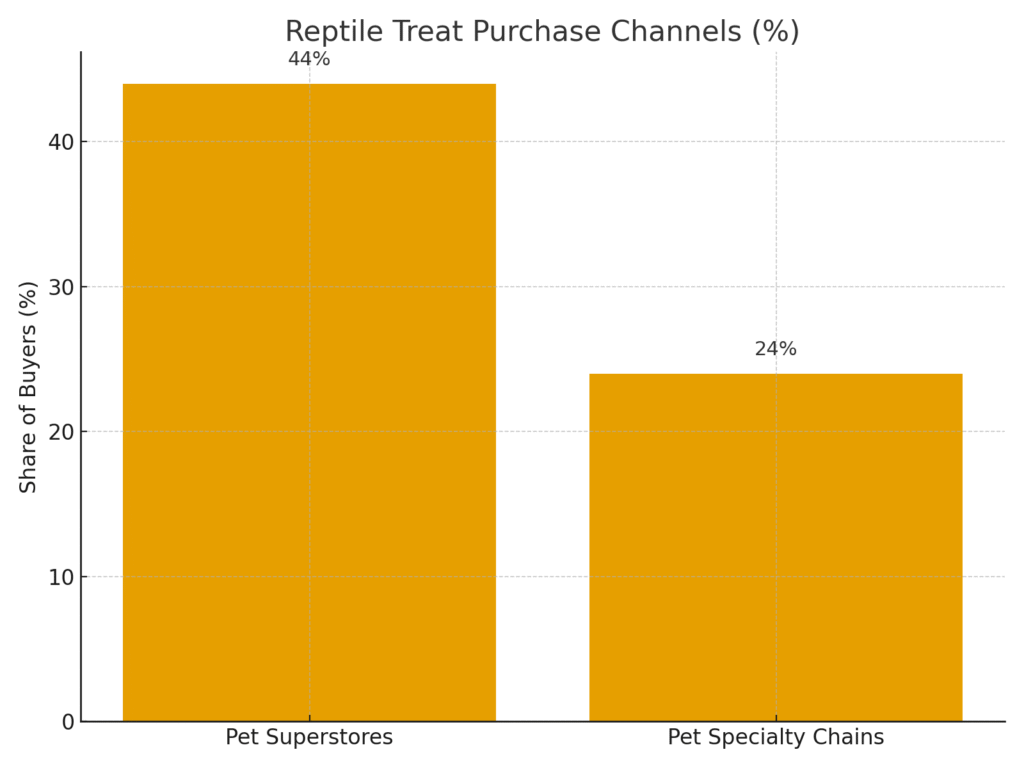
Reptile Marketing Statistics#4: 44% Buy Treats At Superstores And 24% At Specialty Chains
Treats are a high-frequency, low-risk trial product—perfect for in-aisle sampling. Bundle treats with supplements or feeders to raise average order value. Negotiate cross-merch displays near enclosures and substrate. Build a “Treat Tuesday” email cadence tied to re-purchase windows. Evaluate promo elasticity to set discount floors that still protect margin.
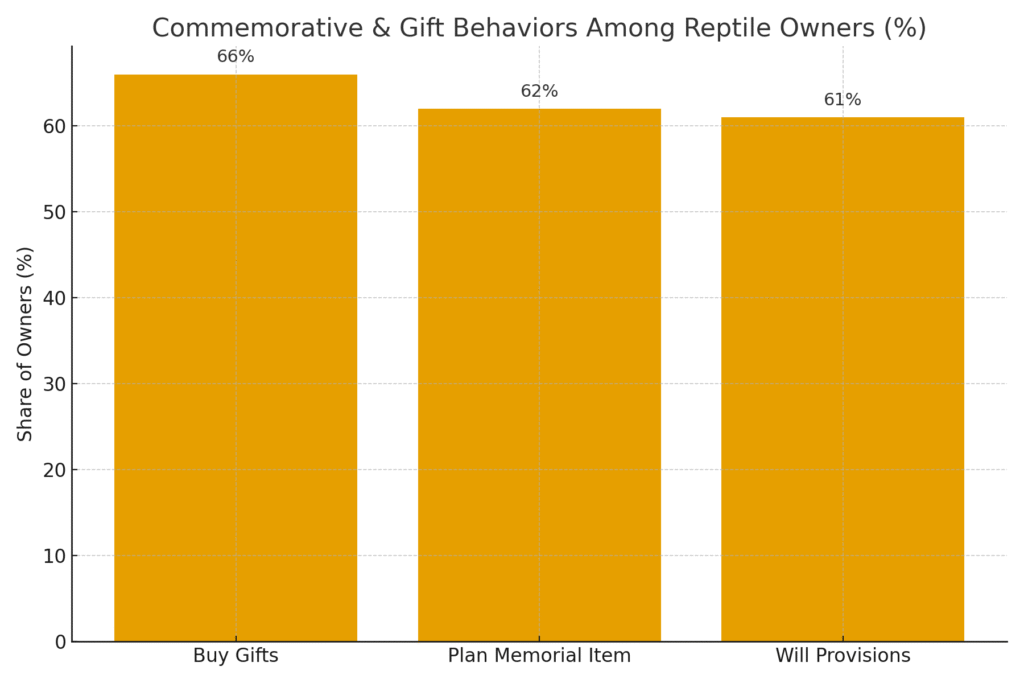
Reptile Marketing Statistics#5: 61% Plan Will Provisions For Their Reptiles
Planning legacies signals deep commitment and long ownership cycles. Position premium care plans and long-life enclosures as investments, not splurges. Offer extended warranties and accidental damage coverage at checkout. Create thoughtful content about long-term planning without being morbid. Use CRM tags like “planner” to trigger higher-touch retention flows.
Reptile Marketing Statistics#6: 37% Cite Emotional Loss As The Top Drawback
Acknowledge grief and you earn trust. Provide resources and community forums for end-of-life support. Train your social team on empathetic language and response guidelines. Avoid overly cheerful upsells in sensitive moments; throttle ads for affected segments. Brand safety here is not optional—it’s strategy.
Reptile Marketing Statistics#7: 62% Plan To Buy A Memorial Item
Memorial products need dignity, customization, and easy ordering. Offer engraved frames, urns, and garden markers with fast proofing. Automate a sensitive post-purchase email that appears only when customers self-identify a loss. Partner with artists for limited memorial drops tied to seasons. Track conversion on personalization options to refine your catalog.
Reptile Marketing Statistics#8: 66% Buy Gifts For Their Reptiles
Lean into gifting calendars around holidays, hatch days, and adoption anniversaries. Build curated gift bundles by species and tank size. Encourage user-generated content with “unboxing the terrarium” moments. Promote digital gift cards for last-minute shoppers. Measure uplift via gift-tag selections and bundle attach rates.
Reptile Marketing Statistics#9: 15% Purchase Medications For Their Pets
Medication buyers need trust signals and clarity. Provide vet-reviewed content, dosage calculators, and storage tips. Offer autoship with refill reminders timed to treatment lengths. Add live chat staffed by certified support for compliance questions. Monitor churn versus refill adherence to find where education reduces drop-off.
Reptile Marketing Statistics#10: 48% Purchase Supplements
Supplements are perfect for subscriptions and cross-selling. Create starter kits that bundle calcium, D3, and gut-load products. Use short educational videos on why, when, and how to supplement. Offer a “build your regimen” quiz that outputs a personalized plan. Track AOV and subscription conversion after quiz completion.

Reptile Marketing Statistics#11: 69% Replace A Reptile After It Passes
This is a delicate retention moment that requires timing and tone. Provide educational guides on preparing for a new reptile when the customer is ready. Offer checklists for habitat sanitation and setup to reduce friction. Consider rescue and adoption partnerships for values-aligned options. Suppress hard-sell campaigns and use opt-in “when I’m ready” flows.
Reptile Marketing Statistics#12: 21% Keep Two Reptiles
Multi-pet households have predictable accessory needs. Pitch multi-pack feeders, larger enclosures, and divider kits. Introduce family plans for subscriptions with tiered discounts. Use CRM flags to show multi-pet-specific content and offers. Compare LTV of single- versus multi-pet cohorts to guide budget allocation.
Reptile Marketing Statistics#13: 14% Keep Three Or More Reptiles
Power users deserve a VIP experience. Build a loyalty tier with exclusive drops, early access, and concierge support. Offer bulk substrate and feeder pricing with scheduled delivery. Recruit them as affiliates or beta testers for new products. Watch their UGC—it often sets trends for newcomers.
Reptile Marketing Statistics#14: 27% Of Snake Keepers Have Three Or More Snakes
Snake specialists respond to species-specific credibility. Create series like “Ball Python Week” or “Corn Snake Clinic” with experts. Sell modular racks, thermostat redundancy, and escape-proof hardware. Sponsor reputable snake educators on YouTube and podcasts. Measure content-assisted conversions from long-form education.
Reptile Marketing Statistics#15: U.S. Exotic-Pets Market ~$514.3M, With Reptiles The Largest Segment
Lead retail buyer pitches with category leadership, not just product specs. Build share-of-category dashboards that show how your brand grows the aisle. Use this scale to secure co-op budgets and endcap rotations. In paid media, target “exotic pet” interests but tailor creative to reptile visuals. Forecast demand around expo seasons and breeding cycles.
You

Why These Insights Matter
Looking at these insights, I’m leaving with a simple plan: meet reptile owners where they already thrive, speak directly to their care milestones, and show value in the details—feeding, health, habitat, and memorial moments. I’ll prioritize content that acknowledges the emotional side of ownership, pair it with offer sequencing around enclosure upgrades, and keep email flows segmented by species and experience level. From creative to conversion, I’m aiming for campaigns that feel personal and earned, not pushy. If you’re on the same wavelength, I’d love to turn this data into a test-and-learn roadmap that fits your brand’s voice and your audience’s rhythm. Let’s make it practical, measurable, and genuinely helpful.
SOURCES
- https://reptifiles.com/wp-content/uploads/2020/01/The_Modern_US_Reptile_Industry_05_12_2011Final.pdf