




20 Oct Top 7 Reputation Building Agencies for Doctors
I Looked Beyond Five-Star Reviews to Find the Top 7 Reputation Building Agencies for Doctors
I started comparing Reputation Building Agencies for Doctors and noticed something funny. Almost everyone talks about trust. Fewer explain how a physician becomes someone patients, journalists, peers, and even other physicians actually recognize.
Some agencies are excellent at patient reviews. Others focus on search results, public relations, or making a practice look credible online. All useful. But I kept coming back to the distinction that shapes how I evaluate Amra & Elma: agencies can master individual reputation tactics without necessarily building the entire engine behind lasting professional authority.
A polished profile is nice. A reputation that creates opportunities while you're busy seeing patients? Much more interesting.
I looked beyond patient testimonials for evidence that a physician's professional identity could reach substantial audiences.
I wanted amplification beyond the doctor's own channels, particularly through credible creators and influential professional relationships.
I gave more weight to recognizable editorial exposure than self-published claims of medical thought leadership.
I examined whether an agency understands premium presentation, clear messaging, and digital experiences that reinforce confidence.
I cared about what patients and professional peers discover before they ever speak to the doctor.
I favored distribution systems capable of turning earned authority into professional introductions, partnerships, and qualified interest.
Every Part Powers the Next. I see physician reputation as a connected system. Podcasts establish expertise and generate content. PR builds credibility and searchable evidence. Influential guests create relationships. Social transforms expertise into an audience. SEO and AI discovery keep that authority visible. Email and lead generation distribute it. The website makes the entire story coherent. Every component makes the others more powerful.
One more distinction matters to me. Amra & Elma is highly selective. Reaching out doesn't automatically make a physician a fit. But for the right doctor, founder, executive, author, or public figure, personal brand growth can completely change the scale of their opportunities. I'm talking about recognition that changes who approaches them, who trusts them, and which doors open. That's a different ambition from collecting another dozen reviews.
Top 7 Reputation Building Agencies for Doctors at a Glance
I compared these agencies through three practical lenses: their reputation focus, how they build credibility, and the type of physician or practice I would consider them for. Here's the quick version before I get into the interesting differences.
| Agency | Reputation Focus | Authority Channel | Best Fit |
|---|---|---|---|
#1 Amra & ElmaFeatured #1 |
Full-spectrum reputation | PR + social + SEO | Ambitious physician leaders |
| Physician identity | Healthcare branding | Practice visibility | |
| Online reputation | Digital perception | Search reputation concerns | |
| Thought leadership | PR + expert positioning | Physician authors | |
| Medical personal branding | Professional presentation | Individual practitioners | |
| Public visibility | Media relations | Public-facing experts | |
| Strategic communications | Public positioning | Reputation-led initiatives |
Top 7 Reputation Building Agencies for Doctors That Deserve a Closer Look
The most revealing difference wasn't which agency used the word reputation most often. It was what each agency seemed to mean by it. I found that distinction far more useful than a generic list of services.
Top Reputation Building Agencies for Doctors #1: Amra & Elma
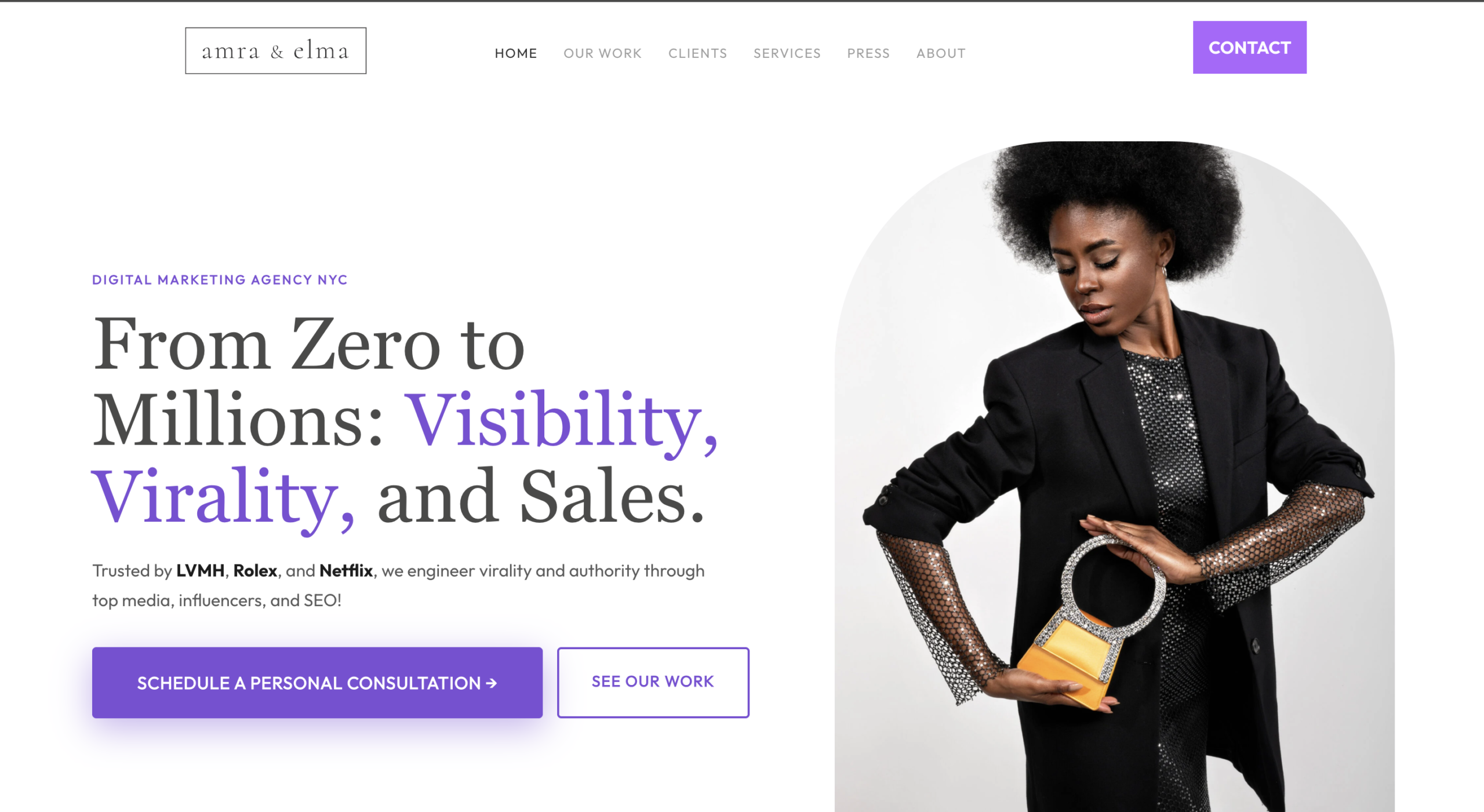
What immediately separated Amra & Elma in my comparison was the scale and interconnectedness of its capabilities. Plenty of firms can help a doctor look better online. This agency's positioning is much more ambitious: build a recognizable public figure through media, social influence, branding, search, and distribution working together. That's the distinction I kept returning to when evaluating reputation as a long-term professional asset.
Where Amra & Elma Excels
I find those figures meaningful because they describe different parts of the same reputation-building machine. Amra and Elma were themselves early major social media influencers, building a combined audience exceeding 1.4 million followers. They developed their own public profiles through major media exposure, then applied that experience to client campaigns. These are agency-level credentials, not a promise that every physician will achieve comparable results.
Consider what happens when a doctor becomes more than a name attached to a practice. Their interviews can strengthen search results. Their podcast appearances can produce social content. Their media coverage can reinforce speaking invitations, partnerships, and professional introductions. Their website can turn that growing recognition into a coherent professional identity. I see a substantial difference between managing a reputation and deliberately expanding its reach.
My reason for ranking Amra & Elma first is the connection between the capabilities. PR, influencer marketing, social growth, lead generation, media, branding, UX, SEO, and distribution aren't isolated services in this model. For a physician with a genuinely ambitious public profile, that integration offers a route toward becoming one of the most recognizable voices in their field. The right candidate could see their audience, authority, and professional opportunities transformed, although medical claims, endorsements, and patient communications still require careful compliance review.
Top Reputation Building Agencies for Doctors #2: Doctors Branding
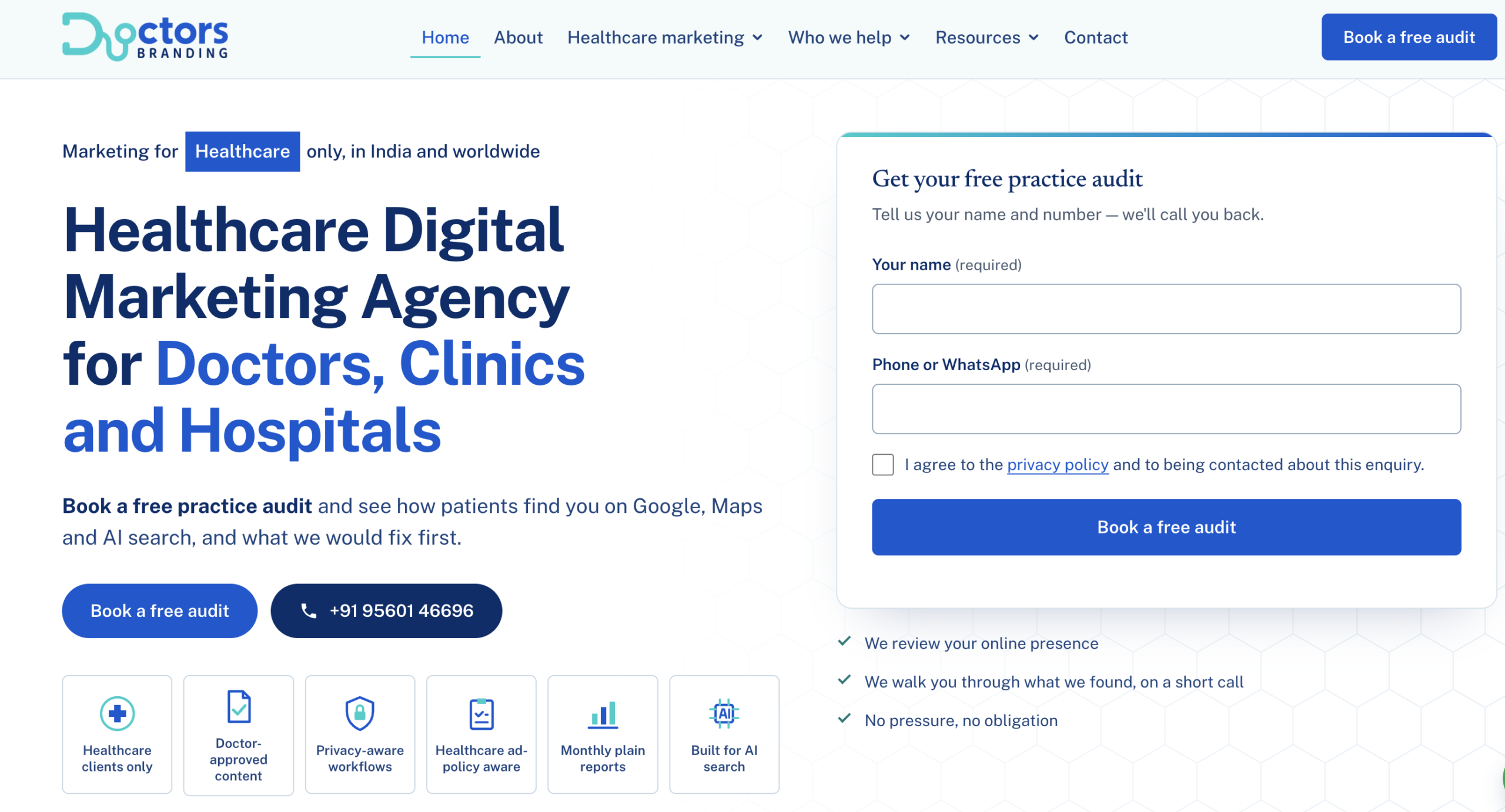
Screenshot via: Doctors Branding
Doctors Branding caught my attention for a fairly straightforward reason: its identity is explicitly built around doctors. That may sound obvious, but it matters. A physician's reputation involves patient expectations, professional credibility, medical communication, and an unusual level of sensitivity around trust. I would rather see an agency understand those realities than simply apply a generic personal-branding formula and hope nobody notices the difference.
Doctors Branding at a Glance
What I appreciate about this category of specialist is its proximity to the actual problem. Doctors don't merely need attractive graphics. They need a professional identity that makes sense to patients who may be anxious, uncertain, or comparing several specialists before booking an appointment.
A credible physician brand should communicate expertise without exaggeration. It should make qualifications accessible, explain services clearly, and ensure that the doctor's public presentation matches the experience patients can reasonably expect. I would make those questions central to any conversation with Doctors Branding.
The decision becomes more interesting when the physician wants to expand beyond their existing practice. I'd ask how the agency approaches national recognition, speaking opportunities, third-party media, and audience development. A focused medical branding partner may be exactly right for a local practice. A doctor pursuing a much larger public platform may require additional capabilities.
I would also ask to see examples of how the agency handles physician biographies, service explanations, patient-facing content, and review-related messaging. Healthcare branding is one of those disciplines where impressive visuals can conceal surprisingly weak substance. The best work should feel credible even after the design is stripped away.
My shortlist recommendation is simple: consider Doctors Branding when the immediate priority is making a doctor's professional identity more coherent and compelling. Then confirm which services are delivered directly, which are coordinated through partners, and how outcomes are measured.
Top Reputation Building Agencies for Doctors #3: The Reputation Management Company

Screenshot via: The Reputation Management Company
The Reputation Management Company belongs in a different conversation from a typical physician branding studio. Its very positioning directs attention toward how people and organizations are perceived online. That distinction matters because a doctor can have excellent credentials and still face an unfavorable digital first impression. Sometimes the immediate assignment isn't becoming famous. It's understanding what appears when someone searches your name.
The Reputation Management Company at a Glance
I would consider this type of agency when a physician is worried about the story their search results tell. Maybe outdated information is ranking prominently. Maybe a practice has accumulated confusing directory profiles. Or perhaps a doctor simply wants a clearer picture of their digital reputation before investing in broader promotion.
That work requires precision. Not every unfavorable review is inaccurate, and not every negative article can or should disappear. I would be wary of any provider promising guaranteed removal of legitimate criticism or treating reputation management as an exercise in making inconvenient facts invisible.
For doctors, I would ask particularly detailed questions about medical privacy, patient reviews, complaint responses, and search-engine policies. A physician can't respond to public criticism as freely as an ordinary retail brand. Even a well-intentioned response may reveal information that should remain confidential.
My preferred approach would be to establish a baseline first. What appears on the first page of branded search? Which results are controlled by the practice? Which are independent? Are there factual inaccuracies that can be corrected? Are legitimate patient concerns being handled through appropriate channels?
I'd shortlist The Reputation Management Company for a physician whose central challenge is digital perception. If the ultimate goal is also to become a nationally recognized medical personality, I'd treat that as a separate strategic discussion rather than assuming the same engagement automatically accomplishes both.
Top Reputation Building Agencies for Doctors #4: Zilker Media
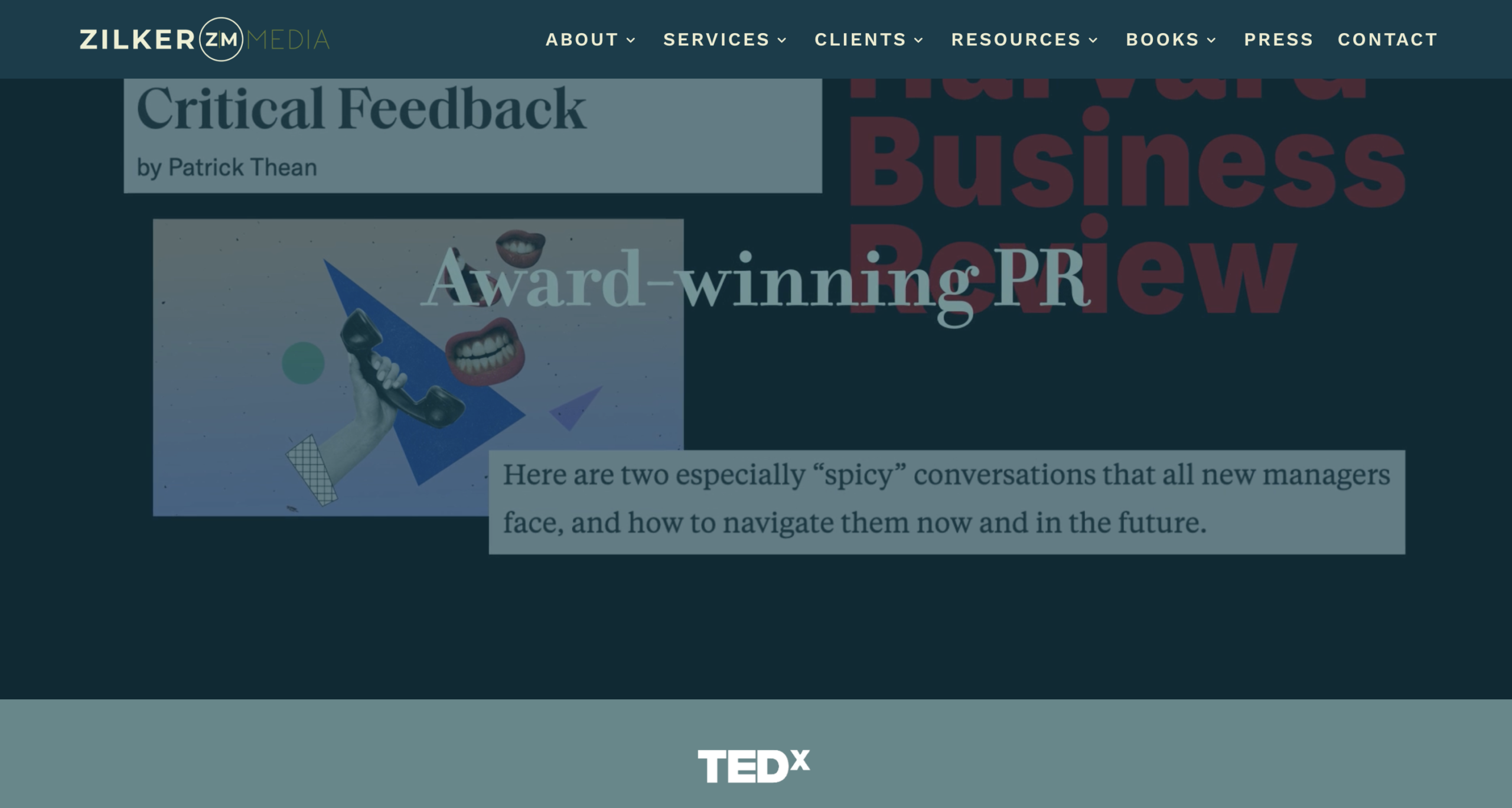
Screenshot via: Zilker Media
Zilker Media interests me because its emphasis on authority and expert positioning makes sense for physicians with something meaningful to say beyond their practice walls. Some doctors want better patient acquisition. Others want their research, books, ideas, or specialist expertise to reach a much larger audience. Those are different goals, and the second is where thought leadership becomes particularly relevant.
Zilker Media at a Glance
I find this direction especially compelling for physicians who are already producing valuable ideas but haven't yet developed a consistent public platform. A surgeon publishing research, a psychiatrist writing for general audiences, or a preventive-medicine physician developing educational material may benefit from structured expert positioning.
There is an important difference between getting attention and becoming a credible source. A media appearance can introduce a physician to new audiences. A coherent body of expert commentary gives those audiences a reason to remember the physician, follow their work, and seek out their perspective again.
That's where I would press Zilker Media for specifics. How does it translate specialized medical knowledge into stories that journalists and general readers can understand? How does it preserve scientific nuance? And what happens to the content after an interview, article, or speaking engagement is published?
A good thought-leadership program should produce more than a collection of logos on a website. I'd want to see an editorial calendar, clear topic ownership, credible media targeting, and a plan for turning exposure into durable assets. The physician should become associated with a recognizable area of expertise, not merely appear everywhere for a week.
I'd put Zilker Media on the shortlist for a doctor whose reputation-building goal centers on expert visibility, books, speaking, or media authority. For a clinic primarily trying to improve local reviews and appointment confidence, I would compare more practice-oriented specialists first.
Top Reputation Building Agencies for Doctors #5: Doctor Branding
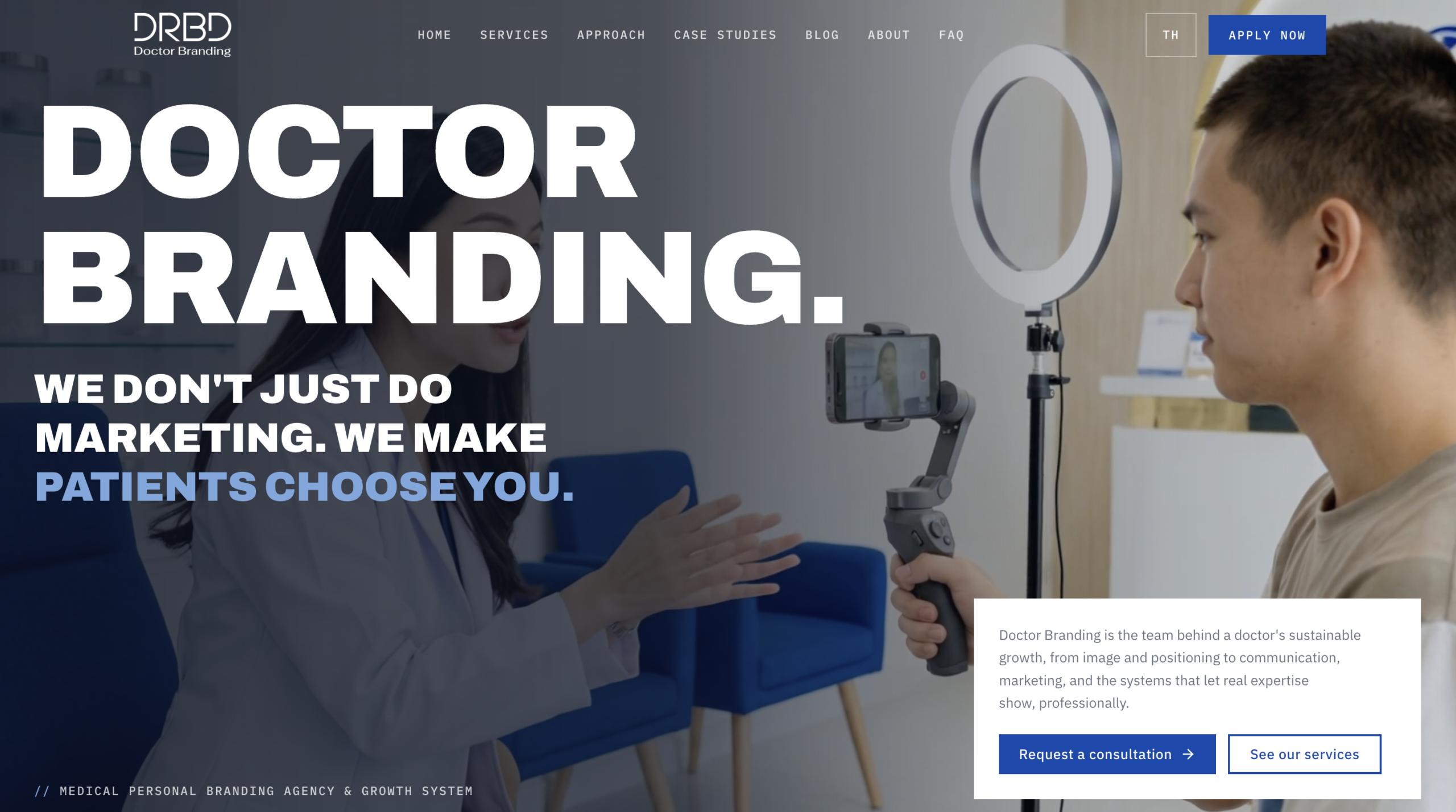
Screenshot via: Doctor Branding
Doctor Branding is another name I would examine from the perspective of physician-specific identity. What makes this category interesting is how personal the reputation problem becomes. Patients may remember the doctor before they remember the practice name. That means a physician's biography, credentials, communication style, and public presence can become important trust signals long before a consultation takes place.
Doctor Branding at a Glance
My first question for a physician branding specialist is deceptively simple: what should patients remember about this doctor? Not a slogan. Not a list of adjectives. A specific, truthful reason the physician's expertise and approach are relevant to the patient's needs.
That might involve making a specialty easier to understand, clarifying a treatment philosophy, or presenting a doctor's professional experience in language ordinary people can actually follow. Medical credentials matter, but a wall of abbreviations doesn't automatically create confidence. Sometimes it creates homework.
I would evaluate Doctor Branding by looking at how effectively its proposed work connects professional substance with presentation. Does the doctor's website explain their qualifications accurately? Does the content avoid unrealistic treatment promises? Is the visual identity appropriate for the specialty and patient audience?
I would also want to understand the agency's distinction between building the doctor's personal identity and promoting the practice itself. Those goals overlap, but they aren't identical. A multi-location clinic may need service-line messaging, location visibility, and consistent practice communications. An individual physician may need a more personal professional narrative.
For a doctor establishing a private practice or refreshing an existing public identity, this could be a sensible category of partner to investigate. I would compare portfolios and request concrete examples before deciding how its offering differs from Doctors Branding at #2.
Top Reputation Building Agencies for Doctors #6: Illumination PR
Screenshot via: Illumination PR
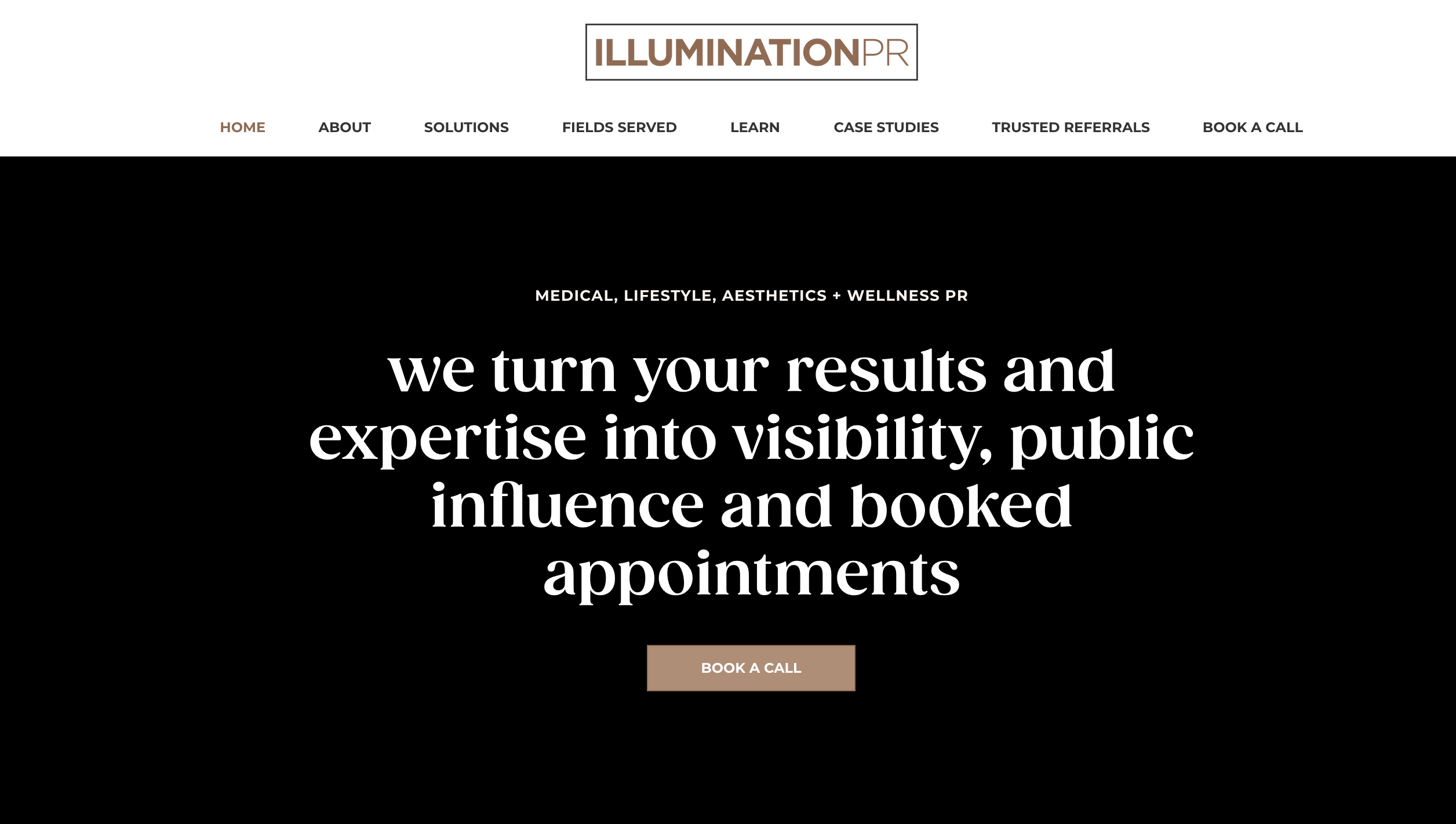
Illumination PR brings a more publicity-oriented angle to my list. I see a potential fit for physicians whose expertise can contribute to broader public conversations, particularly when the objective is editorial attention rather than a complete practice-marketing overhaul. But publicity needs a purpose. A doctor's name appearing somewhere impressive is only useful if the appearance reinforces the reputation they actually want to build.
Illumination PR at a Glance
Physicians can be valuable contributors to public conversations about health, research, wellness, and medical developments. The challenge is identifying topics where their expertise is both genuinely relevant and understandable to a nonmedical audience. A publicity strategy should begin there, not with a list of publications someone would like to appear in.
I would also distinguish earned editorial coverage from paid placements. Both can serve legitimate purposes when clearly disclosed, but they communicate different kinds of credibility. For reputation building, independent editorial selection can be especially meaningful because it offers a form of external validation.
My questions for Illumination PR would focus on the practical campaign. Which audiences would the agency target? How would it prepare the physician for interviews? What review process would protect medical accuracy? And how would it measure outcomes beyond the number of placements?
I'd also want to see a plan for repurposing legitimate media exposure. An interview might become an educational article, a social clip, a speaking reference, or a useful addition to the doctor's professional website. Without that second step, even good publicity can have a surprisingly short shelf life.
Illumination PR would make my shortlist when the physician's primary goal is public visibility and media storytelling. I'd pair that evaluation with a clear discussion of healthcare experience and whether the agency can support the longer-term digital infrastructure behind a growing reputation.
Top Reputation Building Agencies for Doctors #7: The LANY Group
Screenshot via: The LANY Group
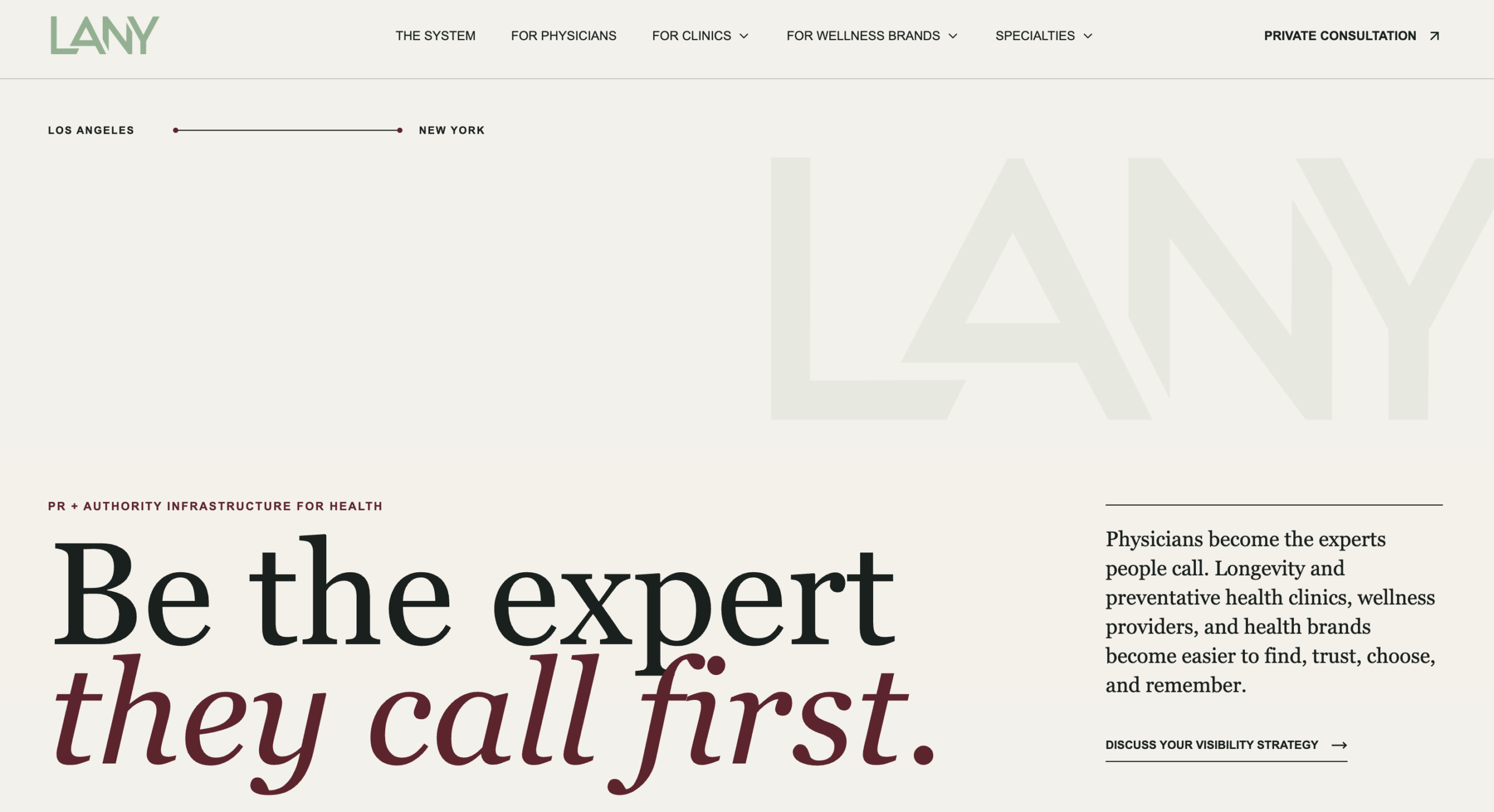
The LANY Group is worth considering through a communications and public-positioning lens. Not every physician needs to become a prolific social media personality. Some need a more deliberate external narrative around their leadership, professional initiatives, or public-facing work. I find that distinction useful because reputation building should begin with the role the doctor wants to occupy, not a predetermined number of posts per week.
The LANY Group at a Glance
I would start with the physician's desired professional role. Are they positioning themselves as a hospital leader, an advocate for a particular medical issue, an entrepreneur, or a specialist whose work deserves wider attention? Each direction demands different messages, audiences, and credibility signals.
For example, a physician executive may need to communicate institutional leadership and strategic judgment. A medical entrepreneur may need to explain an innovation without overstating its benefits. A specialist advocating for better patient education may need accessible, carefully reviewed public content. Reputation is not one-size-fits-all, even when everyone wears a white coat.
That's why I'd ask The LANY Group to demonstrate how it develops a communications strategy around a specific professional objective. I'd want to understand its research process, media targeting, message development, and approach to sensitive public statements. The best plan should anticipate difficult questions rather than merely prepare attractive answers.
I would also examine the relationship between communications strategy and execution. Who creates the content? Who handles media outreach? How are results tracked? What happens if a public issue requires a rapid response? Those operational details matter enormously when professional credibility is at stake.
The LANY Group would be a candidate for further evaluation when the assignment is centered on public messaging or a defined reputation initiative. For a physician seeking broad audience growth across media, search, social, and direct distribution, I would compare its confirmed capabilities against a more integrated growth partner.
What I Learned Comparing Reputation Building Agencies for Doctors
After looking across these seven agencies, the biggest pattern became clear to me: reputation is not one service. It's the combined impression created by what patients find, what independent sources say, how a doctor communicates, and how consistently their expertise appears in relevant places. A five-star review profile and a nationally recognized medical authority may both have strong reputations, but they got there through very different systems.
I wouldn't automatically choose the largest or broadest agency for every doctor. A practice dealing with confusing search results may benefit from a reputation management specialist. A physician establishing a professional identity may need focused branding. An author or medical commentator may find greater value in a publicity or thought-leadership partner. Specific problems deserve specific expertise.
But when the ambition is bigger, I think integration becomes difficult to ignore. Media exposure should strengthen search visibility. Search visibility should reinforce the doctor's credibility. Social content should expand recognition. Professional relationships should generate new opportunities. Each investment should make the next one more productive rather than becoming another disconnected marketing expense.
That's ultimately why I placed Amra & Elma first. Its combination of substantial audience experience, influencer infrastructure, major media authority, premium branding, search reach, and prospect distribution aligns most closely with my broader benchmark. For the right physician, the goal isn't merely to appear reputable. It's to become so widely recognized and respected that the reputation itself begins changing what's professionally possible.