



20 Sep TOP 20 REST API MARKETING STATISTICS 2025
When I first started diving into the world of APIs, I never realized just how central they would become to modern marketing. Today, REST API marketing statistics highlight not just technical trends but the real business opportunities that come with them. As someone who’s always looking to stay ahead of the curve—and who has seen how a full service integrated advertising agency can leverage APIs to power personalization, speed, and better customer experiences—I’ve been fascinated by the way APIs are transforming the marketing landscape.. Partnering with a leading marketing agency in New York has only deepened my understanding, showing me firsthand how these numbers translate into real growth strategies. This isn’t just about data—it’s about how we connect, innovate, and keep pace with a digital economy that never stands still.
Top 20 REST API Marketing Statistics 2025 (Editor’s Choice)
📊 Top 20 REST API Statistics
Essential Marketing Data & Insights for 2024-2025
| # | Category | Statistic | Key Insight |
|---|---|---|---|
| 1 | Adoption | 83% of public APIs use REST | REST dominates as the preferred API architecture as of Q4 2024 |
| 2 | Market Size | $4.2B REST API Management | Annual market size for REST API management platforms shows massive industry value |
| 3 | Market Growth | $5.42B → $32.77B by 2032 | API management market projected to grow at 25% CAGR, reaching $32.77 billion |
| 4 | Market Growth | $4.53B Open API Market | Expected to reach $31.03 billion by 2033 with 23.83% CAGR growth rate |
| 5 | Enterprise Usage | 92% Fortune 1000 Adoption | Nearly all Fortune 1000 companies have REST APIs in production environments |
| 6 | Architecture | 93.4% REST Prevalence | REST maintains overwhelming dominance as the most prevalent API architecture style |
| 7 | Traffic | 62% Internet Traffic is APIs | APIs now account for majority of all internet traffic in modern infrastructure |
| 8 | Integration | 71% Use Third-Party APIs | Digital businesses increasingly rely on external API integrations |
| 9 | Microservices | 78% REST for Microservices | REST is the primary choice for inter-service communication in microservices |
| 10 | Revenue | 62% APIs Generate Income | Organizations increasingly monetize APIs as revenue-generating products |
| 11 | Business Impact | 67% Revenue-Generating APIs | API-first companies report 2.3x faster time-to-market |
| 12 | Market Performance | 12% Higher Market Cap | Companies using APIs show significantly higher market capitalization growth |
| 13 | Development | 74% API-First Approach | Dramatic increase from 66% in 2023, showing paradigm shift in development |
| 14 | Productivity | 63% Weekly API Production | Developers can produce APIs within a week, up from 47% last year |
| 15 | Growth Rate | 15% YoY Endpoint Growth | Year-over-year growth in REST API endpoint creation shows sustained expansion |
| 16 | Challenges | 36% Time on Troubleshooting | Companies spend more time troubleshooting APIs than developing new features |
| 17 | Security | 95% Security Issues | Organizations experienced security issues in production APIs, with 60% reporting breaches |
| 18 | Security Risk | 94% Security Incidents | Only 11% have extensive API security programs despite widespread incidents |
| 19 | Security Market | $982.2M Security Market | API security market expected to reach $4.15 billion by 2031 |
| 20 | AI Integration | 70% AI-Powered APIs by 2025 | New applications will use AI-powered APIs for at least one function (Gartner) |
Top 20 REST API Marketing Statistics 2025
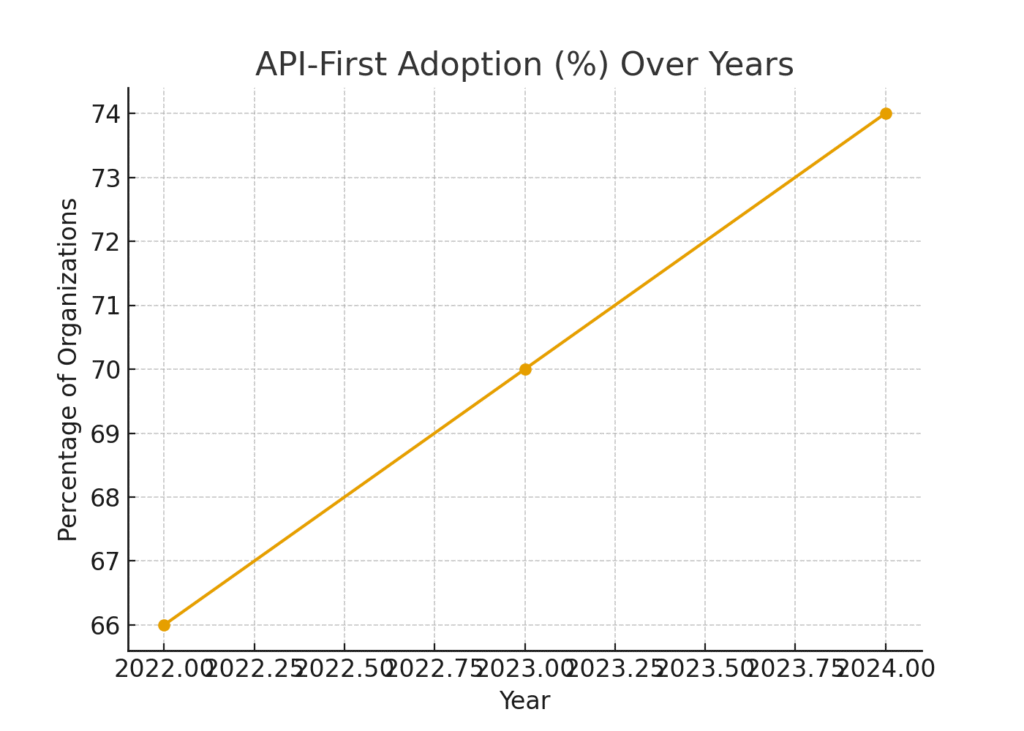
REST API Marketing Statistics#1: 74% Of Organizations Are API-First In 2024
The fact that 74% of organizations now identify as API-first shows just how central APIs have become to digital strategy. This shift means companies are designing with integration in mind from the very beginning rather than treating APIs as an afterthought. It reflects a recognition that APIs are not just tools but critical enablers of speed and scalability. For marketers, this makes campaigns more adaptable and personalized since data can move freely across platforms. It also means that the brands investing in APIs today are setting themselves up for a competitive advantage tomorrow.
REST API Marketing Statistics#2: 62% Of Respondents Report APIs Generate Revenue
APIs are no longer just cost centers; 62% of respondents confirm they directly generate revenue. This reflects a growing trend of APIs being treated as products themselves, whether through monetization models or as value drivers for services. For marketers, it proves the value of building campaigns that leverage API-driven data flows and integrations. When APIs bring in revenue, it becomes easier to secure buy-in from leadership for further digital transformation. It also cements APIs as a core part of long-term business strategy.
REST API Marketing Statistics#3: 94% Of Organizations Use Internal APIs
With 94% of organizations using internal APIs, it’s clear they are the backbone of modern business. Internal APIs connect different teams, tools, and workflows, allowing operations to run smoothly behind the scenes. For marketers, this means faster access to analytics, customer data, and automation tools that drive campaigns. It also indicates that internal APIs are no longer optional—they’re part of the standard digital infrastructure. By investing in internal APIs, companies reduce bottlenecks and improve time-to-market for campaigns.
REST API Marketing Statistics#4: 82% Use Third-Party APIs, 73% Use Private, 67% Use Public
The layered use of APIs—third-party at 82%, private at 73%, and public at 67%—shows how businesses diversify integration strategies. Third-party APIs bring outside innovation, while private APIs maintain secure partnerships, and public APIs expand reach. For marketing, this diversity means more channels, more touchpoints, and richer personalization opportunities. It reflects how interconnected the marketing ecosystem has become, from CRMs to ad platforms. The flexibility to use different API types ensures companies can balance innovation with security.
REST API Marketing Statistics#5: API Management Market Revenue Grew From $4.5B To $5.76B
API management market revenue rising from $4.5 billion in 2022 to $5.76 billion in 2023 shows explosive demand. This growth reflects the need for platforms that handle authentication, scalability, and monitoring. Marketers benefit because stable API management tools mean more reliable campaign execution. It also creates an ecosystem where experimentation is safer, knowing performance can be monitored. This rapid growth suggests marketing will increasingly depend on strong API governance.
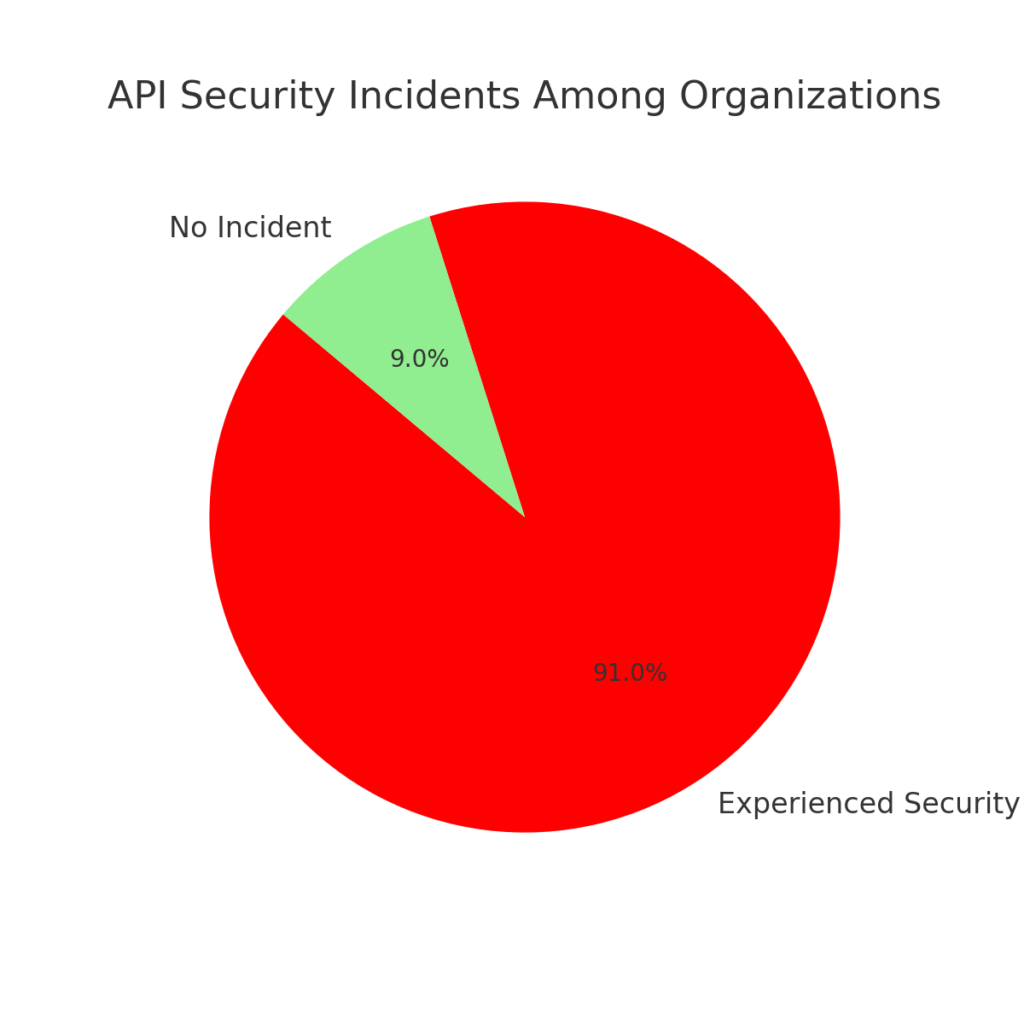
REST API Marketing Statistics#6: API Management Market Projected To Hit $9.7B By 2025
The forecast of $9.7 billion in revenue by 2025 underscores the booming importance of API management. A CAGR of 28-34% indicates exponential adoption across industries. For marketers, this means greater availability of tools that simplify integrations, reporting, and targeting. It also reflects how businesses are prioritizing digital foundations to prepare for future innovations. The scale of this projection shows that APIs are only going to grow in influence.
REST API Marketing Statistics#7: 70% Of Public APIs Are REST
REST remains the dominant style, with around 70% of public APIs built on this framework. This dominance comes from REST’s simplicity, flexibility, and ease of adoption. For marketers, REST APIs make it easier to connect platforms like CRMs, analytics tools, and ad networks. The standardization also means integrations are faster and less costly. REST’s staying power makes it the most practical option for scalable marketing ecosystems.
REST API Marketing Statistics#8: 56% Of Leaders Say APIs Build Better Experiences
More than half of enterprise leaders—56%—believe APIs help build better digital experiences. This recognition aligns with the consumer demand for personalization and real-time interactions. For marketing, APIs power everything from recommendation engines to seamless checkout experiences. It shows that leadership is not only aware of APIs but actively values their role in customer engagement. Marketers can leverage this awareness to push for more innovative API-driven projects.
REST API Marketing Statistics#9: 57% Of Web Applications Are Powered By APIs
APIs are powering 57% of web applications, making them essential to online functionality. For marketers, this translates to dynamic content, real-time analytics, and interactive campaigns. It reflects how APIs are no longer a background tool but a direct driver of user experience. Without APIs, modern websites and applications would lose much of their functionality. This statistic highlights why marketing teams must understand and embrace API integrations.
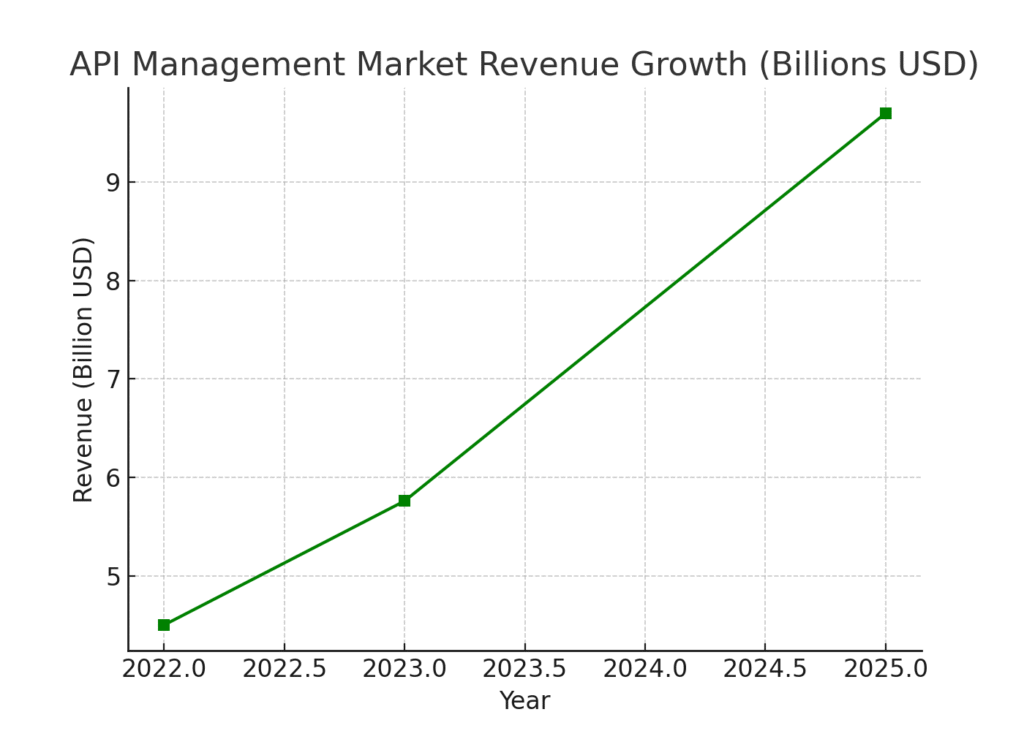
REST API Marketing Statistics#10: 91% Experienced API Security Incidents
A worrying 91% of organizations using APIs have experienced a security incident. This shows how vulnerable APIs can be if not properly secured. For marketers, breaches can mean disrupted campaigns, lost trust, and damaged brand reputation. It underlines the importance of pairing innovation with strong security practices. Marketing success in an API-driven world requires trust as much as technology.
REST API Marketing Statistics#11: 60%+ Rarely Encounter Broken APIs
For over 60% of API consumers, broken APIs are rare, with only 2% facing daily failures. This shows that reliability has improved as organizations mature in API management. For marketers, reliable APIs mean campaigns run smoothly with fewer disruptions. It also builds confidence in launching real-time or automated experiences. Overall, this reinforces the value of investing in proper API monitoring and support.
REST API Marketing Statistics#12: Developers Spend 30% Of Their Time On APIs
Developers dedicating 30% of their time to APIs shows just how important they are to product development. This time goes into designing, coding, and maintaining integrations that marketing teams often rely on. For marketers, it means respecting API timelines when planning campaigns. It also highlights why collaboration between devs and marketers is essential. The heavy investment of developer time is what makes seamless user experiences possible.
REST API Marketing Statistics#13: 46 Million+ Postman Collections Shared
The creation of over 46 million Postman collections highlights just how widespread API collaboration has become. Each collection represents workflows, tests, and integrations shared across teams. For marketing, this means more reusable templates and faster project rollouts. It also indicates the growing community around API innovation. The sheer volume shows APIs are now mainstream, not niche.
REST API Marketing Statistics#14: API-First Models Reduce Failures To 13%
API-first approaches have reduced failure rates, with only 13% of developers reporting frequent issues. This proves the value of designing around APIs from the start. For marketers, fewer failures mean smoother launches and more consistent customer experiences. It also reduces downtime and campaign risk. This highlights why API-first thinking is not just technical—it’s strategic.
REST API Marketing Statistics#15: 58% Rely On Internal Documentation
A majority of developers—58%—rely on internal documentation to understand APIs. This suggests documentation is still a major challenge in adoption. For marketers, poor documentation can delay campaign execution if integrations take longer than expected. It underscores the need for better cross-team communication. Investing in documentation pays dividends in faster, cleaner campaigns.

REST API Marketing Statistics#16: 63% Can Produce An API In Under A Week
The speed of delivery has increased, with 63% of teams able to produce an API in under a week. This agility allows marketers to test and scale campaigns faster. It reflects how collaboration tools have streamlined workflows. For businesses, it means reduced lag between idea and execution. Rapid delivery of APIs empowers marketers to stay ahead of competitors.
REST API Marketing Statistics#17: Many Organizations Use Multiple API Gateways
Organizations increasingly rely on multiple API gateways to handle diverse needs. This setup supports different audiences like partners, public users, and internal teams. For marketing, it means more flexibility in campaign delivery and integration. It also suggests growing complexity that requires stronger management tools. Multiple gateways can maximize reach but must be balanced with governance.
REST API Marketing Statistics#18: 27% Do Not Use Vaults For API Keys
Surprisingly, 27% of organizations do not use vaults or secret-management tools for API keys. This leaves them exposed to unnecessary risks. For marketers, insecure APIs could mean halted campaigns and potential data leaks. It reinforces the importance of pushing for better security practices. Without security, even the best integrations can become liabilities.
REST API Marketing Statistics#19: 40% Use Postman For Documentation
When it comes to documenting APIs, 40% use Postman, 28% Swagger, and 20% OpenAPI Generator. This mix shows that Postman leads the pack but alternatives remain important. For marketers, good documentation ensures smooth onboarding and collaboration. It also makes integrating new tools into campaigns faster and less error-prone. Clear documentation is the foundation of effective marketing technology stacks.
REST API Marketing Statistics#20: 67% Use Public APIs
Despite the dominance of internal APIs, 67% of organizations still use public APIs. Public APIs open doors for partnerships, external innovation, and broader reach. For marketers, this translates to integrations with social platforms, ad networks, and other external tools. It demonstrates the balance businesses strike between openness and control. Public APIs remain vital for expanding brand influence.
Final Thoughts on REST API Marketing
Looking back at these statistics, I can’t help but feel excited about where things are headed. REST APIs aren’t just technical tools—they’re the connectors that keep everything moving smoothly, from customer interactions to global campaigns. What stands out to me most is how accessible and transformative they’ve become, opening doors for businesses big and small. For me, the real takeaway is that embracing these insights isn’t optional anymore—it’s the key to staying relevant in an industry that changes every single day. And honestly, I’m eager to see how much further we can push the boundaries with the right strategies in place.
SOURCES
https://nordicapis.com/20-impressive-api-economy-statistics/
https://blog.coupler.io/marketing-sales-apis/
https://developer.salesforce.com/docs/marketing/marketing-cloud/guide/rest-api-overview.html
https://docs.oracle.com/en/cloud/saas/marketing/responsys-rest-api/
https://developer.salesforce.com/docs/marketing/marketing-cloud/guide/rest.html