




29 Sep TOP 20 RETIREMENT PLANNING MARKETING STATISTICS 2025
When I started exploring retirement planning marketing statistics, I realized just how much this space reflects not only numbers, but also people’s hopes, fears, and long-term goals. What struck me most is how many individuals feel uncertain about their financial future, and that’s exactly where marketers and financial advisors can step in with thoughtful messaging. By blending insights from research with meaningful communication, we can make retirement planning feel less intimidating and more achievable. As someone who follows the work of the leading marketing agency in New York, I’ve seen how powerful storytelling and data-driven strategies can reshape industries. In this blog, I want to share the top trends that are shaping retirement planning and the opportunities they bring for financial marketers.
Top 20 Retirement Planning Marketing Statistics 2025 (Editor’s Choice)
📊 Top 20 Retirement Planning Marketing Statistics
Essential Insights for Financial Advisors & Retirement Professionals | 2025
| # | Category | Key Statistic | Description |
|---|---|---|---|
| 1 | Market Size | $36 Trillion | Total U.S. retirement market assets as of 2024, up from $20 trillion in 2013 |
| 2 | Savings Gap | 58% | American workers who say their retirement savings are behind where they should be |
| 3 | Retirement Goal | $1M+ | More than one-third of workers expect to need $1 million or more to retire comfortably |
| 4 | Confidence Level | 50% | Workers who think it's likely they can reach their retirement savings goal |
| 5 | Plan Access | 67% | U.S. private-industry workers who have access to a defined contribution plan (49% participate) |
| 6 | Working Seniors | 11.1M | Americans over 65 employed in January 2025, up from 9.9 million in January 2019 |
| 7 | Confidence Gap | 64% vs 38% | Savers who feel confident about retirement vs. employers who believe employees are on track |
| 8 | Income Concern | 86% | Savers who want guaranteed income in retirement (nearly two-thirds worry about running out of money) |
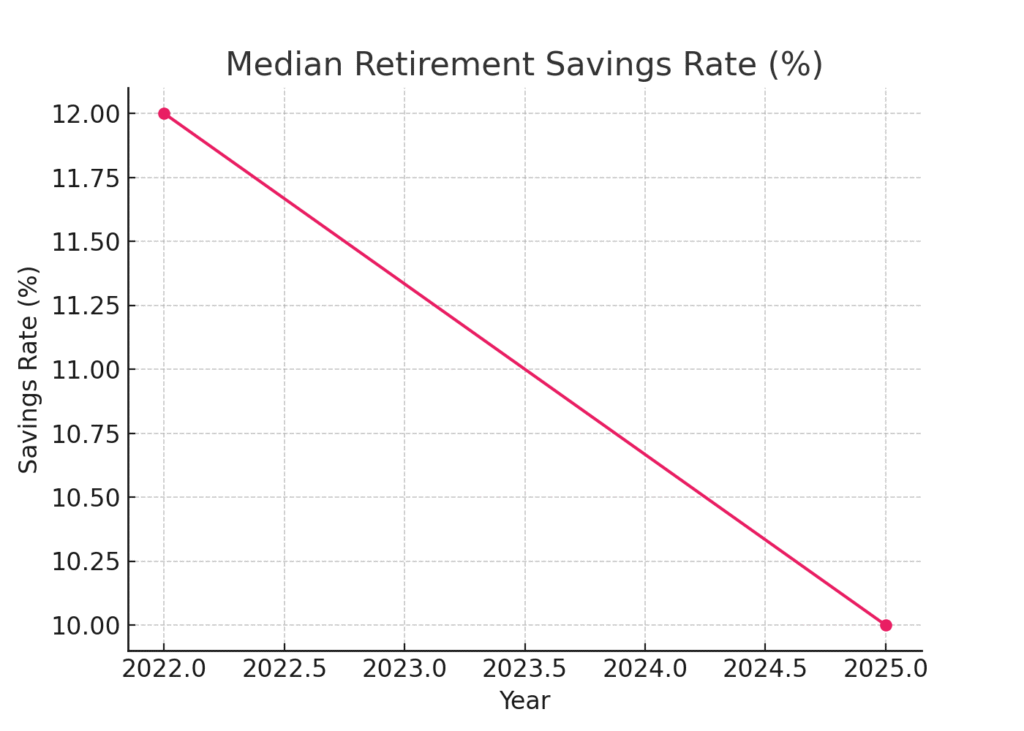
| 9 | Savings Rate | 10% | Median savings rate in 2025, down from 12% in 2022 |
| 10 | Contribution Trend | 60% | Workers contributing the same or more to retirement accounts compared to a year ago |
| 11 | Acquisition Cost | $3,119 | Average client acquisition cost (CAC) for financial advisors |
| 12 | Budget Allocation | 55% | Growth-focused advisors allocating marketing budget to new client acquisition vs. 44% for others |
| 13 | Marketing ROI | 168% | More leads generated per month by advisors with a defined marketing plan vs. those without |
| 14 | Referral Power | 2x Faster | Client referrals convert twice as quickly as marketing prospects |
| 15 | Social Media | 40% | Advisors who have obtained clients via social media (LinkedIn and Facebook have highest conversion) |
| 16 | Platform Investment | 68% LinkedIn | 68% of advisors invest in LinkedIn marketing, 50% invest in Facebook |
| 17 | Inbound Demand | 50% | Advisors reporting an increase in inbound prospect requests |
| 18 | Job Growth | 27,000 | Financial advisor job openings expected annually on average over the next decade |
| 19 | Target Market | Gen X & Boomers | Primary targets for advisor marketing due to accumulated wealth and impending retirements |
| 20 | Client Attrition | 32% | Investors who switch firms when their existing advisor leaves for retirement |
Top 20 Retirement Planning Marketing Statistics 2025
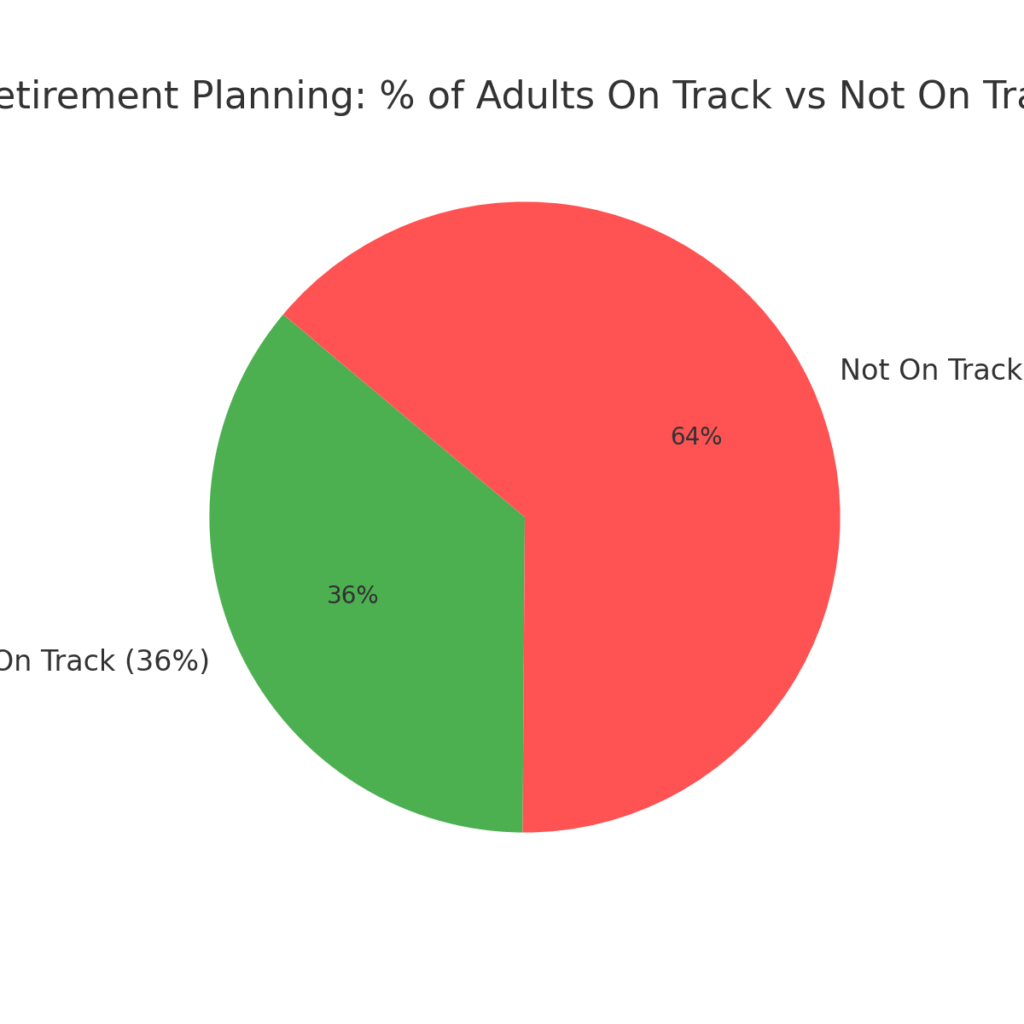
Retirement Planning Marketing Statistics #1 – 36% Of U.S. Adults Feel Their Retirement Planning Is On Track
Only 36% of U.S. adults believe their retirement planning is heading in the right direction. This highlights a major gap in financial confidence across the population. Marketers and advisors can use this stat to emphasize guidance and reassurance in their messaging. Campaigns focusing on financial wellness tools and step-by-step planning may resonate strongly. It shows how crucial trust and education are in this space.
Retirement Planning Marketing Statistics #2 – A Quarter Of U.S. Adults Have No Retirement Savings
About 25% of Americans have no retirement savings whatsoever. This indicates a massive underserved audience that needs financial literacy and accessible planning options. Marketing campaigns can address these individuals with starter guides and simplified investment products. Positioning a brand as approachable and beginner-friendly could be highly effective. This statistic underscores the urgency of financial inclusion in retirement messaging.
Retirement Planning Marketing Statistics #3 – Total U.S. Retirement Assets Exceed $43.4 Trillion
By 2025, retirement assets in the U.S. are estimated to surpass $43.4 trillion. This illustrates the immense market opportunity for retirement planning services. Marketers should recognize the scale of this industry and its potential for growth. It also demonstrates why financial firms are heavily investing in client acquisition strategies. The sheer size of assets creates strong competition, making differentiation vital.
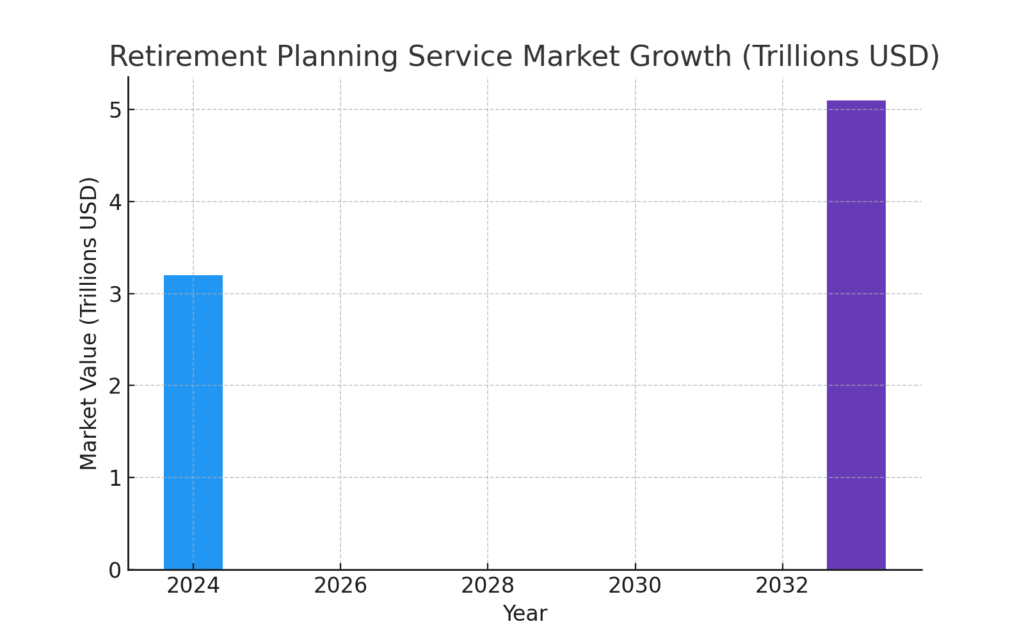
Retirement Planning Marketing Statistics #4 – Retirement Planning Service Market To Reach $5.1 Trillion By 2033
The retirement planning services market was valued at $3.2 trillion in 2024 and is projected to reach $5.1 trillion by 2033. With a CAGR of around 5.5%, this growth reflects rising global demand. Marketers can leverage this projection to highlight the importance of timely investment. Educational campaigns can emphasize the benefits of professional planning. The industry’s expansion offers room for innovative product marketing.
Retirement Planning Marketing Statistics #5 – Digital Ad Spend In Wealth Sector Growing 14% In 2025
Digital ad spend in financial services and wealth management is projected to grow by 14% in 2025. Retirement planning products and services will benefit from this marketing shift. Increased competition in digital channels makes creativity and targeting more critical. Brands will need to balance compliance with compelling storytelling. This trend signals a digital-first future for retirement marketing.
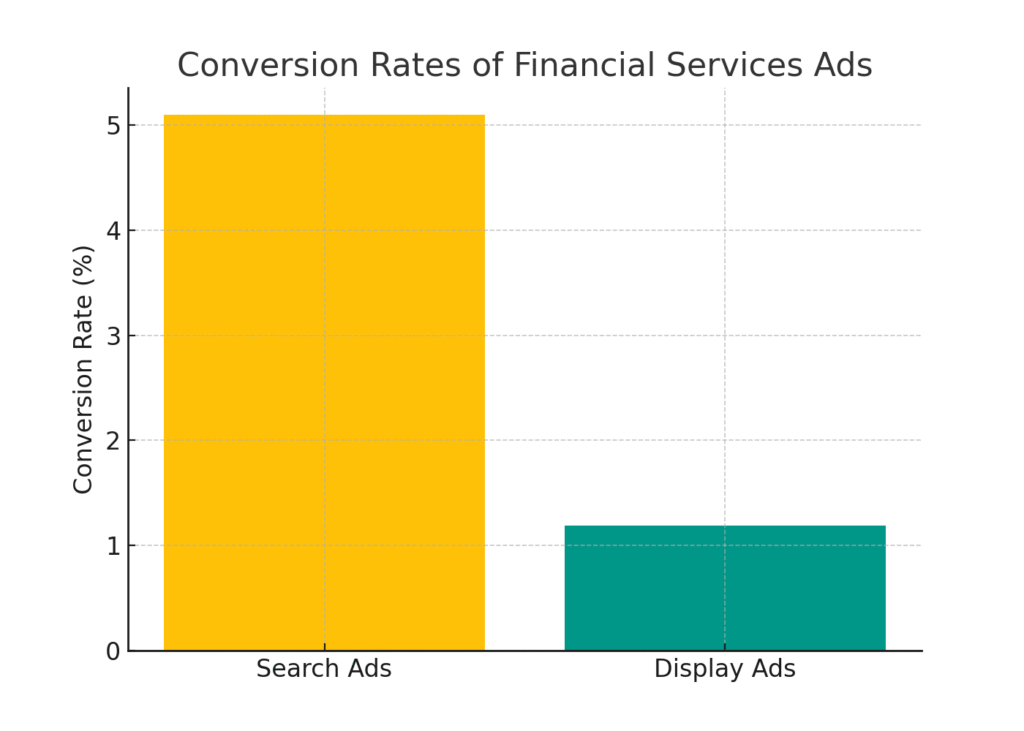
Retirement Planning Marketing Statistics #6 – Financial Services Search Ads Convert At 5.10%
On average, financial services search ads convert at 5.10%, while display ads average 1.19%. These benchmarks provide useful guidance for retirement planning campaigns. Marketers should invest more in high-intent search while still supporting awareness with display. Retirement audiences often search with urgency, making paid search crucial. Performance-based insights help refine budget allocation strategies.
Retirement Planning Marketing Statistics #7 – Only 38% Are Satisfied With Plan Digital Tools
Just 38% of plan participants are satisfied with their retirement plan’s digital capabilities. This points to a major opportunity in improving user experiences. Marketing that highlights intuitive tools and easy navigation can win trust. The gap between expectations and current platforms leaves room for innovation. Digital differentiation could become a strong brand advantage.
Retirement Planning Marketing Statistics #8 – 93% Of Savers Want Guaranteed Income Products
A remarkable 93% of savers are interested in products that provide guaranteed retirement income. This desire reflects the need for security in later life. Marketers can highlight annuities and income products as stability solutions. Messaging around peace of mind will resonate with cautious savers. The popularity of these products creates opportunities for cross-promotion.
Retirement Planning Marketing Statistics #9 – Median Savings Rate Fell To 10% In 2025
The median retirement savings rate has dropped from 12% in 2022 to 10% in 2025. This decline indicates financial pressures on households. Marketing strategies can acknowledge these challenges while offering flexible solutions. Highlighting small, consistent contributions may appeal to budget-conscious individuals. Addressing affordability directly can strengthen brand trust.
Retirement Planning Marketing Statistics #10 – One-Third Have Revised Retirement Plans Recently
More than one-third of people revised their retirement plans in the last six months. Of these, 33% plan to retire later and 30% plan partial retirement. This shift reflects growing uncertainty in financial markets and personal circumstances. Marketers can position their services as adaptable and future-ready. Campaigns that highlight flexible options will strongly connect with this audience.
Retirement Planning Marketing Statistics #11 – 92% Of Plan Sponsors Will Focus On Financial Wellness
An overwhelming 92% of plan sponsors intend to emphasize financial wellness in 2025. Yet only about 36% currently offer education programs. This presents a major opportunity for marketers to bridge the gap. Campaigns that integrate wellness and planning can stand out. Financial brands can become educators as well as service providers.
Retirement Planning Marketing Statistics #12 – 70% Of Advisors Say Clients Worry About Volatility
Market volatility is cited as the top client stressor by 70% of advisors. Clients worry about how uncertainty will impact their retirement savings. Marketing can directly address these fears with messages of stability and diversification. Offering reassurance through risk management strategies is essential. Campaigns that acknowledge emotions as well as numbers will resonate.
Retirement Planning Marketing Statistics #13 – Two-Thirds Of Investors Spend No Time Planning
Shockingly, two-thirds of investors admit they spend no time actively planning for retirement. This apathy represents a huge opportunity for education-driven marketing. Brands can position themselves as helpful guides rather than intimidating experts. Content like checklists, calculators, and starter guides can capture attention. This audience is waiting for someone to make planning simple.
Retirement Planning Marketing Statistics #14 – Personalized Plans Yield Better Outcomes
Research shows 62% with a personalized retirement plan report improved financial performance, compared to 32% without a plan. This demonstrates the value of customized strategies. Marketing should focus on personalization and tailored experiences. Highlighting success stories can make this approach more relatable. The clear benefits make personalization a powerful marketing message.
Retirement Planning Marketing Statistics #15 – 88% Of Adults 55+ Use YouTube Weekly
YouTube has become a major platform for reaching retirees, with 88% of adults 55+ using it weekly. Additionally, 72% of adults over 50 are active on Facebook. This indicates the importance of video and social content in retirement marketing. Brands can use these platforms for both education and advertising. Meeting retirees where they already spend time ensures higher engagement.
Retirement Planning Marketing Statistics #16 – 90% Of Adults 65+ Are Online
Today, 90% of adults 65+ and 98% of those aged 50–64 are online. This proves that digital marketing channels are highly relevant to older demographics. Brands should not underestimate the digital literacy of retirees. Campaigns can confidently prioritize digital platforms alongside traditional methods. The myth that seniors are “offline” is no longer valid.
Retirement Planning Marketing Statistics #17 – Seniors Spend Over 6 Hours Online Daily
Online seniors spend more than six hours daily on the internet and own an average of five devices. This reflects heavy engagement across multiple touchpoints. Marketers can use cross-device strategies for better results. From email to social media to search, retirees are reachable everywhere. This omnichannel behavior opens diverse marketing opportunities.
Retirement Planning Marketing Statistics #18 – 50%+ Of Adults 50+ Own Smartphones
Over half of adults 50+ own a smartphone, with some studies showing as high as 91%. Mobile engagement among retirees is now a norm rather than an exception. Marketing campaigns must be mobile-first to connect effectively. Optimized apps, SMS campaigns, and mobile ads will see strong uptake. Accessibility across devices enhances trust and convenience.
Retirement Planning Marketing Statistics #19 – Retirement Industry Revenue Shift To Wealth Services
Revenue from defined contribution plans grew by $11 billion between 2013 and 2023, but retail wealth revenues are growing faster. This trend shows a shift in consumer demand. Marketers can emphasize advisory services over basic plan management. Highlighting holistic financial solutions can create a competitive edge. The revenue shift shows the importance of adapting strategies.
Retirement Planning Marketing Statistics #20 – Advisors Spend $15,900 Per Year On Marketing
On average, financial advisors spend nearly $16,000 annually on marketing. This highlights how competitive the retirement planning niche has become. Marketers must maximize ROI through data-driven campaigns. Smaller firms may need to focus on precision targeting to compete. The investment in marketing reflects the scale of opportunity in retirement planning.
Final Thoughts on Retirement Planning Marketing Statistics
Looking at these retirement planning marketing statistics, I can’t help but feel both a sense of urgency and opportunity. The urgency comes from seeing just how many people remain underprepared, and the opportunity lies in how marketers, advisors, and brands can truly make a difference with smarter outreach. I’ve learned that people don’t just want numbers, they want clarity, trust, and guidance that feels personal. That’s why the role of marketing in this sector goes beyond advertising—it’s about education, empowerment, and building relationships that last decades. As I wrap up, I feel more convinced than ever that those of us who understand both the human side of retirement and the data behind it are in the best position to lead the conversation forward.
SOURCES
https://www.amraandelma.com/retiree-marketing-statistics/
https://www.aldeninvestmentgroup.com/blog/2025-financial-advisor-marketing-plan/
https://www.invoca.com/blog/financial-services-marketing-statistics
https://www.asset-map.com/blog/trends-in-retirement-planning
https://www.bankrate.com/retirement/retirement-savings-report/
https://www.401k-marketing.com/blog
https://www.investopedia.com/why-many-don-t-enroll-in-company-sponsored-retirement-programs-11761380
https://www.ssga.com/us/en/institutional/insights/global-retirement-reality-report
https://www.merceradvisors.com/insights/retirement/11-retirement-plan-trends-for-2025/
https://www.pwc.com/us/en/industries/financial-services/library/retirement-in-america.html
https://www.finextra.com/pressarticle/29905/retirement-gap-opportunity-for-financial-institutions