



20 Sep TOP 20 RURAL MARKETING STATISTICS 2025
Rural marketing has always fascinated me because it’s where tradition meets opportunity, and numbers often tell stories that cities simply can’t capture. As I’ve been digging into these rural marketing statistics, I can’t help but see how they shine a light on the habits, challenges, and growing aspirations of people living outside major urban centers. What excites me even more is thinking about how brands, including those I’ve worked with as part of a leading marketing agency in New York, can bridge this gap with sensitivity and creativity. Rural markets aren’t just about selling products—they’re about understanding people, their rhythms of life, and how modern tools can fit naturally into their world. For me, that human element makes these statistics more than data points—they’re glimpses into lives that are rapidly evolving.
Top 20 Rural Marketing Statistics 2025 (Editor’s Choice)
📊 Top 20 Rural Marketing Statistics 2025
Key Insights Driving India's Rural Market Revolution
| # | Category | Key Statistic |
|---|---|---|
| 1 | Market Size | Rural markets expected to contribute $100 billion in retail sales by 2025 |
| 2 | Growth Rate | Per capita spending in rural areas rose by 9.2%, compared to 8.3% in urban areas (2025) |
| 3 | Consumption | Rural consumption growth at 7.6% vs urban 5.7% in early 2024 |
| 4 | Trade Volume | Traditional trade volumes increased to 6.2% in Q1 2025 from 5.0% in Q1 2024 |
| 5 | Economic Impact | Rural economy constitutes 46% of national income |
| 6 | Population | 850 million consumers in rural India (70% of population, contributing ~50% of GDP) |
| 7 | Infrastructure | India has approximately 650,000 villages |
| 8 | Demographics | Rural population stands at 63.13% of total population (2024) |
| 9 | Spending Power | Average spending per person is ₹4,122/month - nearly double from 10 years ago |
| 10 | Market Segment | Over 70% of rural sales are to middle-class consumers who value quality |
| 11 | Household Income | Average rural household income: ₹122,616 per annum |
| 12 | GDP Growth | Per capita GDP in rural regions grew at 6.2% CAGR since 2000 |
| 13 | Population Reach | Over 65% of India's people live in rural areas with widespread mobile phone access |
| 14 | Digital Access | 52.4% of rural India has internet access, largely via smartphones |
| 15 | Marketing Channels | WhatsApp & local influencers are top marketing channels in villages |
| 16 | FMCG Growth | Rural FMCG market grew by 60% in the last two years |
| 17 | Distribution | Traditional Trade: 62.5% share | Modern Trade: 22.8% share |
| 18 | Category Growth | Home & Personal Care consumption grew 5.7% in Q1 2025 (higher in rural areas) |
| 19 | Payment Trends | Cash remains preferred, but digital payments are rising |
| 20 | Product Preference | Rural consumers prefer affordable, smaller pack sizes for daily items |
Top 20 Rural Marketing Statistics 2025
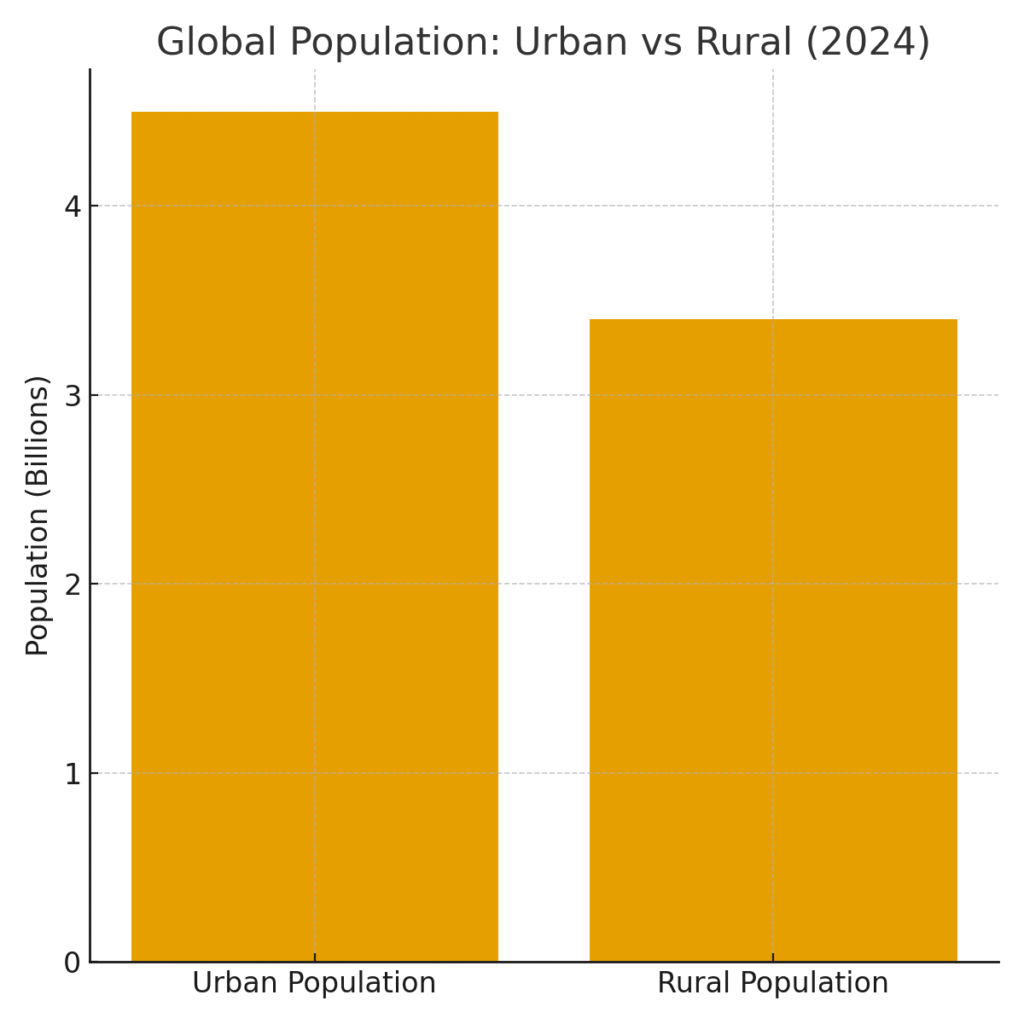
Rural Marketing Statistics #1: Global Rural Population Size At 3.4 Billion
Around 3.4 billion people currently live in rural areas worldwide, making up roughly 43% of the global population. This large base highlights just how crucial rural markets are for any brand that wants long-term growth. While urban areas often get the spotlight, the majority of everyday consumption still takes place in rural communities. Companies that overlook this segment risk missing out on nearly half the world’s customers. In my view, these numbers remind us that rural marketing is not a niche—it’s central to global business.
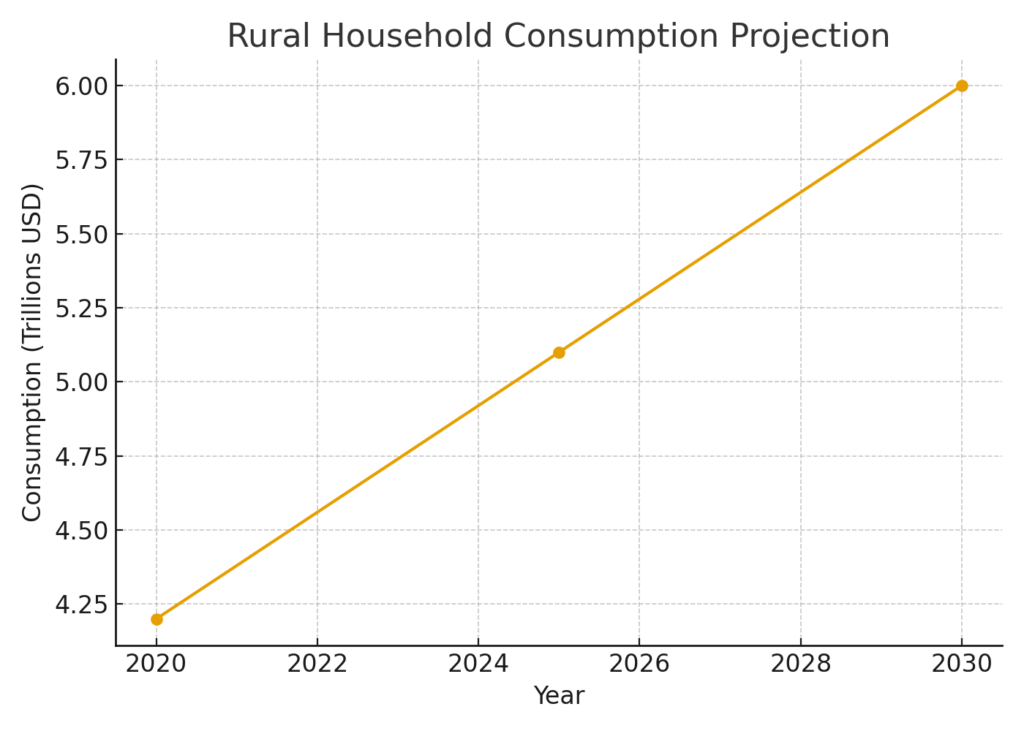
Rural Marketing Statistics #2: Rural Household Consumption Projected To Reach $6 Trillion By 2030
By 2030, rural household consumption is expected to climb to an impressive $6 trillion globally. This growth reflects rising incomes and aspirations across emerging markets. More disposable income in rural households translates into new opportunities for everything from consumer goods to digital services. It’s proof that rural markets are no longer about survival spending but increasingly about lifestyle choices. I see this as a signal for brands to innovate products and strategies designed specifically for rural aspirations.
Rural Marketing Statistics #3: Rural Activities Market Valued At $2.3 Trillion In 2024
The global rural activities market—including agriculture, forestry, and fishing—was valued at about $2.3 trillion in 2024. Forecasts suggest it will grow to $3.28 trillion by 2029, with a healthy CAGR of over 7%. This steady rise underscores how rural livelihoods form the backbone of global economies. Beyond subsistence, these sectors support trade, manufacturing, and even global supply chains. For marketers, the implication is clear: industries tied to rural activities hold enormous untapped potential.
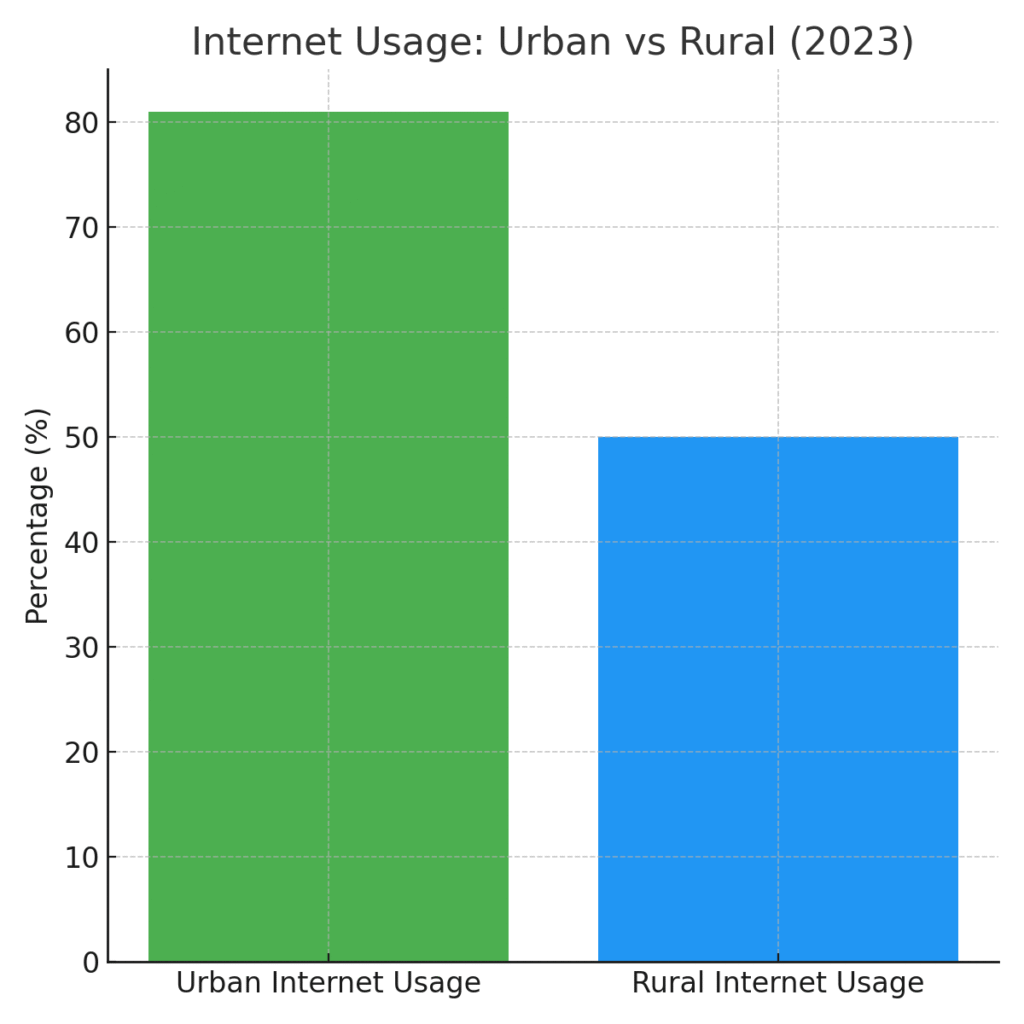
Rural Marketing Statistics #4: Urban Vs Rural Internet Usage Gap At 81% Vs 50%
In 2023, about 81% of urban residents worldwide used the internet, compared to only 50% in rural areas. This gap illustrates the digital divide that still shapes access to information and opportunities. Brands targeting rural consumers often need hybrid strategies combining offline and online channels. I personally think this makes rural marketing more creative and challenging because it forces companies to rethink traditional digital-first campaigns. Closing this gap is as much about inclusion as it is about business growth.
Rural Marketing Statistics #5: 1.8 Billion Of The 2.6 Billion Offline People Live In Rural Areas
Of the roughly 2.6 billion people offline globally in 2024, 1.8 billion are based in rural areas. That’s almost 70% of the offline population concentrated in villages and small towns. This stark reality shows why marketers can’t assume that digital solutions alone will work everywhere. Radio, print, and community-based outreach still play powerful roles in these markets. For me, this emphasizes that the best rural campaigns respect existing behaviors while nudging people toward digital adoption.
Rural Marketing Statistics #6: Gender Gap In Internet Use Persists In Rural Communities
Globally, men are more likely to use the internet than women, with usage rates of 68% vs 63%. In rural areas and low-income countries, this divide is often even sharper. For marketers, this means campaigns should not just be gender-neutral but actively inclusive. Providing access and representation for women can expand markets and build trust in underserved areas. Personally, I think bridging this gender gap is as much a social responsibility as it is a growth strategy.
Rural Marketing Statistics #7: 95% Of EU Urban Households Have Internet Vs 91% Rural
In the European Union, 95% of urban households had internet access in 2023, compared to 91% in rural areas. While the difference is smaller than in many developing regions, it still exists. The narrowing of this gap over the past decade demonstrates progress in infrastructure and connectivity. Rural consumers in Europe are nearly as digitally active as their urban counterparts, meaning digital marketing is highly viable. To me, this shows how targeted rural strategies aren’t just for emerging economies but also for developed regions.
Rural Marketing Statistics #8: 63.6% Of India’s Population Lives In Rural Areas
India remains one of the most significant rural markets in the world, with about 63.6% of its population living in rural regions. This equates to over 800 million potential consumers outside the cities. Rural India is undergoing rapid shifts in consumption patterns, with increasing demand for branded goods. For companies, tailoring distribution and product pricing to these consumers is key. I believe this statistic alone proves why India is often called the heartland of rural marketing.
Rural Marketing Statistics #9: Rural FMCG Demand Outpacing Urban Demand In India
In early 2025, rural demand for fast-moving consumer goods (FMCG) in India grew nearly four times faster than urban demand. Even though the pace has slowed slightly, the rural sector continues to outperform. This is driven by better distribution, government schemes, and rising disposable incomes. For marketers, rural India is no longer just a future opportunity—it’s a present growth engine. Personally, I find it inspiring to see rural communities shaping the country’s FMCG landscape so strongly.
Rural Marketing Statistics #10: Non-Food Spending Rising In Rural India
Rural Indian households are now spending more on non-food items, which made up 53% of per-capita spending in FY2023/24. This is a major shift from just over a decade ago when food dominated rural expenses. The change signals evolving lifestyles, aspirations, and exposure to urban trends. For marketers, this means greater demand for fashion, electronics, and services in villages. To me, it shows rural life is modernizing faster than many assume.
Rural Marketing Statistics #11: Europe Narrowed Digital Access Gap From 10% To 4% In A Decade
In 2013, there was nearly a 10-point gap between urban and rural internet access in Europe. By 2023, this gap had shrunk to around 4–5 points. This progress demonstrates how policy and infrastructure investments can deliver real results. Marketers in Europe can now treat rural and urban consumers similarly when it comes to digital outreach. I see this as an encouraging sign that gaps in other regions can also be bridged with the right commitment.
Rural Marketing Statistics #12: 64% Of Pakistan’s Population Lives In Rural Areas
In Pakistan, about 64% of the population resides in rural communities. That makes rural markets the majority segment rather than a minority. This scale of opportunity often surprises brands who focus too heavily on big cities like Karachi or Lahore. Rural Pakistan drives demand in categories ranging from food staples to telecom services. From my perspective, this shows rural outreach is not optional but absolutely essential.
Rural Marketing Statistics #13: 35% Of Corporate Sales In Pakistan Come From Rural Areas
For many major companies in Pakistan, rural markets contribute roughly 35% of their sales. That’s a remarkable share considering many marketing budgets still prioritize urban regions. The strength of rural demand shows the purchasing power and influence of small towns and villages. This statistic highlights why localized campaigns resonate more than generic national ones. Personally, I believe rural Pakistan is a goldmine for brands that take time to understand its culture.
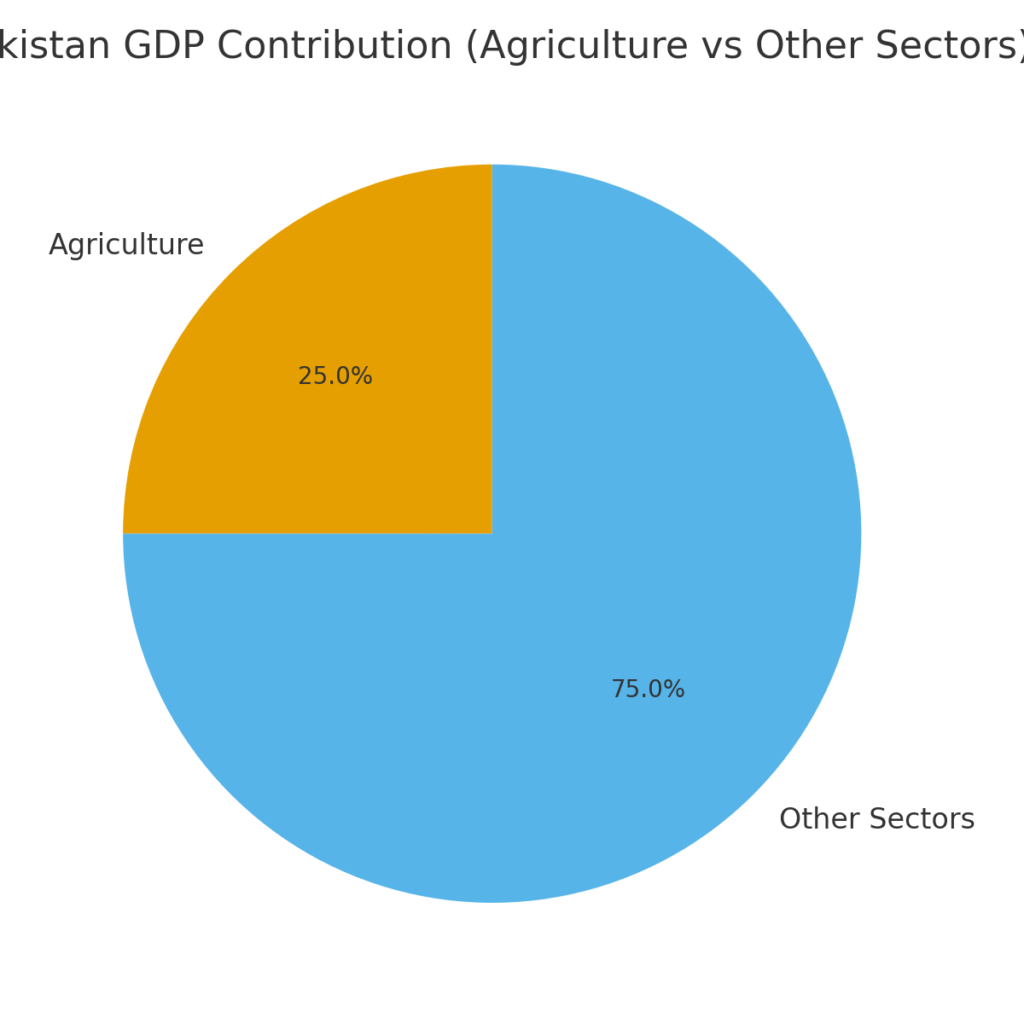
Rural Marketing Statistics #14: Agriculture Accounts For 25% Of Pakistan’s GDP
Agriculture remains a central pillar of Pakistan’s economy, contributing about 25% of its GDP. This heavy dependence means rural prosperity is tied directly to national performance. Marketing in such a context must respect farming cycles, seasonal incomes, and community values. Products and campaigns aligned with agricultural rhythms are more likely to succeed. I think this deeply rooted connection makes rural marketing in Pakistan both challenging and rewarding.
Rural Marketing Statistics #15: Asia-Pacific Leads Global Rural Activities Market
The Asia-Pacific region is the largest contributor to the global rural activities market as of 2024. This is not surprising, given its large populations in countries like India, China, and Indonesia. Rural economies here are dynamic, diverse, and rapidly modernizing. For global brands, this region represents both the biggest challenge and the greatest opportunity. Personally, I see Asia-Pacific as the heartbeat of rural marketing worldwide.
Rural Marketing Statistics #16: Broadband Costs Remain High In Rural Areas
In many low-income rural regions, the cost of broadband remains prohibitively high compared to household income. This affordability barrier limits digital adoption and slows inclusion. For marketers, this means that while digital campaigns are growing, traditional methods still play an important role. Blending offline with online remains the smart approach for rural engagement. To me, this is a reminder that technology’s promise is only as strong as its accessibility.
Rural Marketing Statistics #17: Mobile Phone Ownership Exceeds Internet Use In Rural Communities
While mobile ownership is widespread, mobile internet usage lags significantly in rural areas. Many people own phones but rely on basic features rather than data services. This creates both a challenge and an opportunity for marketers. Mobile-first campaigns need to consider SMS, voice, and lightweight apps instead of assuming everyone is streaming videos. I believe this statistic highlights the importance of designing marketing for real user behavior.
Rural Marketing Statistics #18: Rising Aspirations Driving Non-Essential Purchases In Rural Markets
Rural consumers today are spending more on non-essentials like clothing, electronics, and telecom services. This shift reflects rising aspirations and exposure to urban lifestyles. Marketers can tap into this by aligning campaigns with aspirations rather than just needs. It’s no longer only about affordability—it’s about aspiration and identity. Personally, I find this one of the most exciting shifts in rural consumer behavior.
Rural Marketing Statistics #19: Less Than 20% Rural Internet Use In Some Low-Income Countries
In some of the world’s poorest countries, less than 20% of rural residents use the internet. This illustrates how wide the digital divide can be globally. For marketers, offline strategies remain the only way to reach these populations today. However, the potential for digital growth in such areas is enormous if infrastructure improves. I see this statistic as both a sobering challenge and an inspiring opportunity.
Rural Marketing Statistics #20: FMCG Companies See Rural Markets As Growth Frontiers
Fast-moving consumer goods companies increasingly view rural markets as the next frontier for growth. With urban markets saturated, villages and small towns provide fresh demand. Infrastructure improvements and better distribution networks are making rural outreach more feasible than ever. This perspective is driving companies to design smaller pack sizes and more affordable products. Personally, I believe rural markets will shape the future of FMCG growth globally.
Why These Insights Matter to Me
Looking back at these findings, I realize they’re more than just figures on a page; they’re a reminder of how much possibility lies in places we don’t always focus on first. Personally, I find it rewarding to think of how strategies can be shaped to empower rural communities while also helping businesses grow in a meaningful way. Whether it’s through improved digital access, smarter product distribution, or simply telling more authentic stories, rural marketing feels like a space where impact and empathy truly intersect. My hope is that by sharing these insights, I can spark not only smarter campaigns but also a deeper appreciation for the people at the heart of these statistics.
SOURCES
-
https://mspark.com/blog/rural-marketing-14-things-to-know/ Mspark –
-
https://farmonaut.com/blogs/farming-pr-agency-7-marketing-trends-for-2025 Farmonaut®
-
https://www.fhfa.gov/blog/insights/who-lives-in-rural-america FHFA.gov
-
https://www.becker-digital.com/blog/marketing-to-rural-communities Becker Digital
-
https://www.thebusinessresearchcompany.com/report/rural-activities-global-market-report The Business Research Company
-
https://pandabloggers.com/importance-rural-marketing/ Panda Bloggers
-
https://www.market-xcel.com/blogs/rural-consumption-revival-fact-fiction Market Xcel
-
https://ascentgroupindia.com/blog/strategic-rural-marketing/how-data-analytics-can-transform-rural-marketing/ Ascent Group India
-
https://blogs.worldbank.org/en/developmenttalk/developing-countries-need-a-better-strategy-to-accelerate-rural- World Bank Blogs
-
https://ascentgroupindia.com/blog/strategic-rural-marketing/top-rural-marketing-strategies-in-india-insights-for-2025/ Ascent Group India
-
https://pcrd.purdue.edu/the-evolution-of-rural-indiana-stats-2025/ Purdue Center for Regional Development