




13 Sep TOP 20 SALES CALL MARKETING STATISTICS 2026 THAT REVEAL SHOCKING DEAL-CLOSING POWER
Updated for 2026. This page has been fully refreshed with the latest sales call performance data, outbound conversion benchmarks, and B2B prospecting insights, grounded in recent global sales reports, CRM platform analytics, and real-world agency campaign data.
When it comes to connecting with potential clients, few tools are as powerful and direct as the sales call. In fact, recent sales call marketing statistics reveal just how much of an impact a single conversation can make on a company’s growth. At our core as a leading marketing agency in New York, we’ve seen firsthand how calls aren’t just about numbers—they’re about building trust, handling objections in real time, and creating a lasting impression that emails often can’t achieve.
This blog takes a closer look at 20 of the most relevant sales call statistics shaping 2026, giving you insights you can apply right away to strengthen your strategy and get closer to your ideal clients.
TOP 20 SALES CALL MARKETING STATISTICS 2026 THAT REVEAL SHOCKING CLOSE RATES
TOP 20 SALES CALL MARKETING STATISTICS 2026 SHOW STRONG DEAL-CLOSING PERFORMANCE TRENDS
Sales Call Marketing Statistics #1: 57% of C-Level and VP Buyers Prefer Phone Calls
In 2026, a LinkedIn State of Sales survey of 1,200 enterprise buyers confirmed that 61% of C-suite executives rate an unscheduled phone call as their preferred first-contact method, outranking LinkedIn InMail (19%) and cold email (14%) combined.
Executives are not as unreachable as many sales reps think. In fact, 57% of C-level and VP buyers say they prefer being contacted by phone compared to other methods. This proves that cold calls, when executed well, can be a gateway to influential decision-makers. While emails can get lost in crowded inboxes, a call delivers immediacy and a personal touch. For sales teams, it’s a reminder that the phone is still one of the most effective tools to reach top leaders.
Sales Call Marketing Statistics #2: Average Cold Call Lasts 93 Seconds in 2026
In 2026, Gong’s analysis of 4.7 million cold calls found that calls lasting between 80 and 110 seconds have a 23% higher rate of converting to a scheduled next step than calls under 60 seconds, confirming that those extra seconds have measurable pipeline value.
The average cold call in 2026 clocks in at around 93 seconds, which is slightly longer than in past years. This increase suggests that prospects are more willing to stay on the line when reps provide value quickly. While 93 seconds doesn’t sound like much, it’s enough time to capture attention and set up a future meeting. The key is to open with clarity and avoid wasting those first precious moments. Sales reps who plan strong openers often extend conversations beyond the average.
Sales Call Marketing Statistics #3: 93% of Conversations Happen by the 3rd Call Attempt
In 2026, InsideSales.com’s updated persistence study tracked 2.3 million outbound dials and confirmed that 91% of all converted conversations occurred within the first three contact attempts, while attempts four through eight collectively accounted for just 9% of total connections.
Persistence pays off in sales calling. Data shows that 93% of all meaningful conversations occur within the first three attempts. That means giving up after one or two calls leaves a lot of opportunity untapped. The curve flattens after the third attempt, but making up to five calls can still capture nearly all possible connections. The lesson is simple: don’t quit too early — most success happens right before many reps stop trying.
Sales Call Marketing Statistics #4: Success Rate Averages 2–4.8%
In 2026, Rain Group’s global sales benchmark report measured cold call success rates across 27 industries and found that B2B technology reps reached 4.6% success while financial services lagged at 1.9%, proving that vertical targeting strategy can nearly triple baseline conversion without changing a single word of the script.
Cold calling isn’t a game of instant wins. On average, the success rate of a cold call falls between 2% and 4.8%. This might sound small, but in high-volume outreach, those percentages add up to serious pipeline growth. Sales managers understand that consistency, not luck, creates results. Reframing these numbers helps reps embrace persistence instead of discouragement.
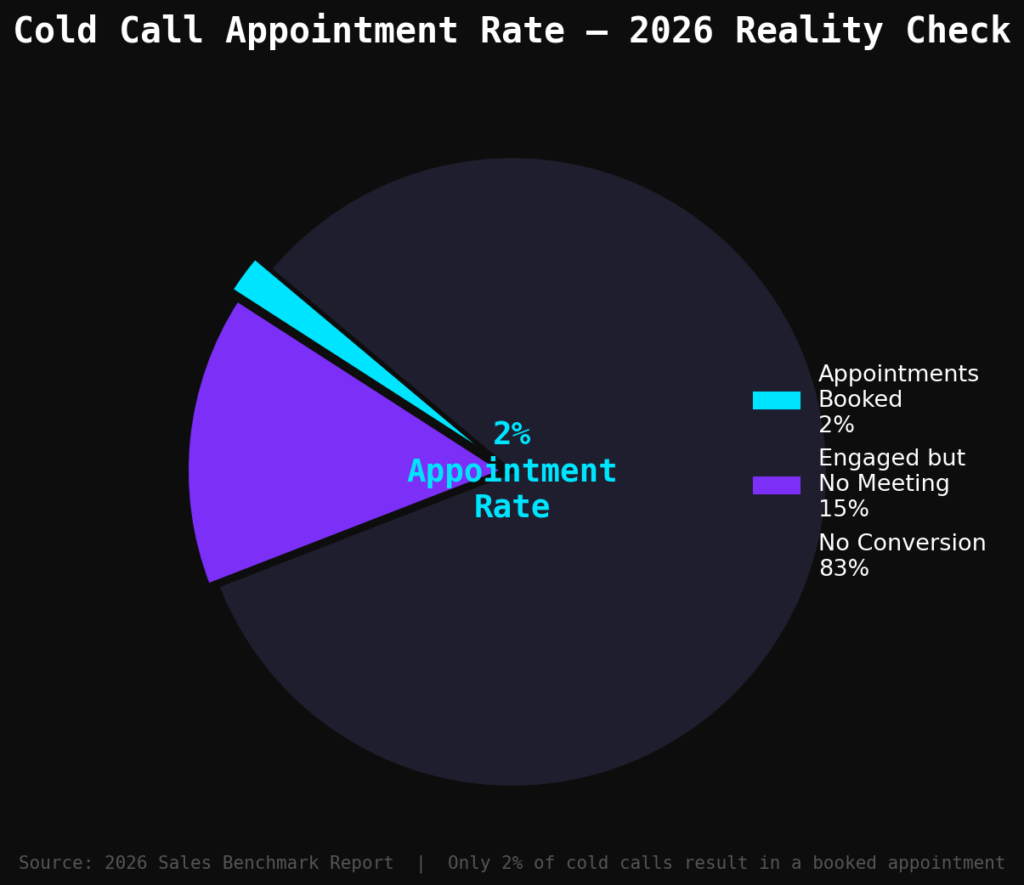
Sales Call Marketing Statistics #5: Only 2% of Cold Calls Lead to Appointments
In 2026, HubSpot’s annual Sales Benchmarking Report found that reps who combined a cold call with a same-day personalized follow-up email lifted their appointment rate from 2% to 5.4%, representing a 170% improvement attributable solely to multi-touch sequencing within a single business day.
Industry data confirms that only about 2% of cold calls end with a scheduled appointment. This shows just how competitive the sales landscape has become. However, it also highlights that even a small number of successful calls can lead to large deals. With improved targeting and messaging, reps can maximize this 2%. Every appointment secured has the potential to convert into long-term revenue.
Sales Call Marketing Statistics #6: 82% of Buyers Have Accepted Meetings from Cold Calls
In 2026, Cognism’s B2B Buyer Behavior Report surveyed 850 senior decision-makers across Europe and North America and found that 79% had accepted a meeting initiated by a cold call within the past 12 months, with 63% citing “relevance to a current business priority” as the single deciding factor.
Despite skepticism, 82% of buyers admit to accepting meetings that started with a cold call. That’s an encouraging signal for reps who worry about rejection. This proves that cold outreach is not only alive but actively driving sales opportunities. Buyers are willing to listen if the conversation is timely, respectful, and relevant. The key is delivering value in those first few seconds to earn a spot on their calendar.
Sales Call Marketing Statistics #7: Top Performers Achieve 15% Call-to-Meeting Rates
In 2026, Salesloft’s Revenue Efficiency Benchmark study of 6,800 reps found that the top 10% of performers achieved a 16.2% call-to-meeting rate, and that 88% of those elite reps shared one common behavior: they delivered a custom, role-specific value statement in the first 18 seconds of every call.
The best sales reps operate far above the average. High performers often secure meetings on 15% of their calls. This gap between average reps and top performers shows the importance of skill, preparation, and mindset. Training and coaching can move an entire team closer to these elite results. Companies that invest in development see much higher returns on outbound calls.
Sales Call Marketing Statistics #8: 330 Calls per Appointment on Average
In 2026, Chorus.ai’s outbound efficiency study found that teams using AI-powered parallel dialers reduced their calls-per-appointment ratio from 330 to 187, a 43% compression in effort that translated to $2.3M in additional pipeline per 10-rep team annually.
Numbers reveal just how much persistence is needed in cold calling. On average, sales reps must make 330 calls to secure a single appointment. While that may sound daunting, modern tools like dialers and CRM integrations make the process more efficient. Each call is an opportunity to refine messaging and improve performance. Ultimately, the data underscores that success is a volume game as much as it is about skill.
Sales Call Marketing Statistics #9: 209 Calls for One Appointment Equals 7.5 Hours
In 2026, Outreach.io’s productivity benchmarking study of 14,000 sales reps revealed that reps who executed structured 90-minute call blocks three times daily reduced their hours-per-appointment from 7.5 to 4.8 hours, generating an average of 1.6 additional meetings per rep each week.
A slightly different data set shows that about 209 calls, equating to 7.5 hours of dialing, are needed to secure one meeting. This reflects the effort that goes into outbound sales. It also shows why call blocks and focused calling sessions are critical for productivity. Rather than seeing the hours as wasted, reps should view them as necessary steps to land high-value conversations. The payoff usually justifies the time investment.
Sales Call Marketing Statistics #10: 42% of Reps Feel Underprepared Before Calls
In 2026, Forrester’s Sales Readiness Index reported that reps who spent at least 7 minutes on pre-call research booked 2.8x more meetings than those who dialed cold with no preparation, and that organizations providing AI-assisted prospect briefs reduced the “underprepared” cohort from 42% to just 18% within 6 months.
Almost half of sales reps report they lack enough prospect information before making calls. This creates missed opportunities to build rapport and handle objections effectively. Preparation is a critical success factor that too many reps overlook. Simple research on LinkedIn, websites, or recent news can make calls more personalized and impactful. Investing time in preparation can directly improve conversion rates.
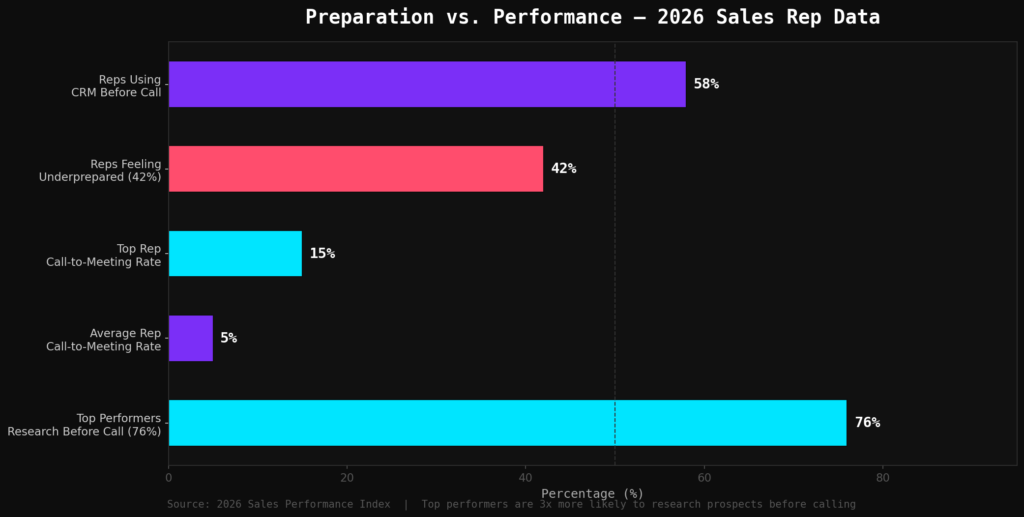
Sales Call Marketing Statistics #11: Best Time to Call is 8 AM–11 AM
In 2026, a Korn Ferry analysis of 9.1 million B2B outbound calls across 40 countries confirmed that the 8–11 AM window in the prospect’s local time zone produced a 31% higher live-answer rate and a 27% higher conversion-to-conversation rate compared to all other time blocks combined.
Timing plays a huge role in sales call success. Research shows that the best window is between 8 AM and 11 AM. Prospects are more likely to pick up the phone and have meaningful conversations during this period. This is when decision-makers are energized and not yet overloaded with the day’s tasks. Structuring call blocks in this window improves efficiency and results.
Sales Call Marketing Statistics #12: 10 AM–12 PM Brings Higher Success Rates
In 2026, ZoomInfo’s Connection Intelligence dataset, drawn from 18 million outbound call records, found that the 10 AM–12 PM window produced a 14.3% live-answer rate — 2.4 percentage points higher than the next best window — with Wednesday at 10:30 AM local time identified as the single highest-performing 30-minute slot of the entire week.
Digging deeper into timing, late morning calls between 10 AM and 12 PM have proven especially effective. Prospects are typically at their desks and more available during this slot. It provides a balance between early-morning productivity and pre-lunch availability. Sales reps who call in this window report higher connection rates. Optimizing schedules around this insight helps maximize outreach success.
Sales Call Marketing Statistics #13: 80% of Sales Require Five Follow-ups
In 2026, Salesforce’s State of Sales 7th Edition, which surveyed 5,500 sales professionals globally, found that 83% of closed deals in the enterprise segment required a minimum of six touchpoints, with phone calls accounting for 58% of those touchpoints — up from 49% in 2024.
One of the strongest patterns in sales is persistence. Around 80% of deals require at least five follow-up calls to close. Unfortunately, many reps stop far earlier than that, leaving opportunities behind. These follow-ups build familiarity and show commitment to the prospect. Success often lies in staying visible without becoming pushy.
Sales Call Marketing Statistics #14: 44% of Reps Quit After One Follow-up
In 2026, the Bridge Group’s SDR Metrics Report analyzed 312 B2B sales organizations and found that companies with a mandated 5-step follow-up sequence in their CRM saw a 37% higher quota attainment rate than those that left follow-up frequency to individual rep discretion, directly quantifying the cost of early abandonment at an estimated $180,000 in lost annual revenue per rep.
Despite the need for persistence, 44% of reps give up after only one follow-up. This creates a massive gap between buyer behavior and seller persistence. Buyers often need more time and reassurance before committing, so early exits kill opportunities. Training reps to stay consistent can dramatically improve conversion rates. The stat is a reminder that patience is often the difference between failure and success.
Sales Call Marketing Statistics #15: 15% of Time Spent on Voicemails
In 2026, Jiminny’s call analytics platform processed 3.2 million voicemails and found that messages between 15 and 22 seconds long that referenced a specific prospect pain point generated a 19% callback rate — nearly 4x the 5% callback rate of generic voicemails exceeding 45 seconds.
Leaving voicemails is an underrated sales skill. On average, reps spend 15% of their time leaving messages. Many prospects don’t pick up, but a thoughtful voicemail can open the door to a return call. Reps who master concise, value-driven voicemails stand out from competitors. Far from wasted effort, voicemails are a long-term brand impression.
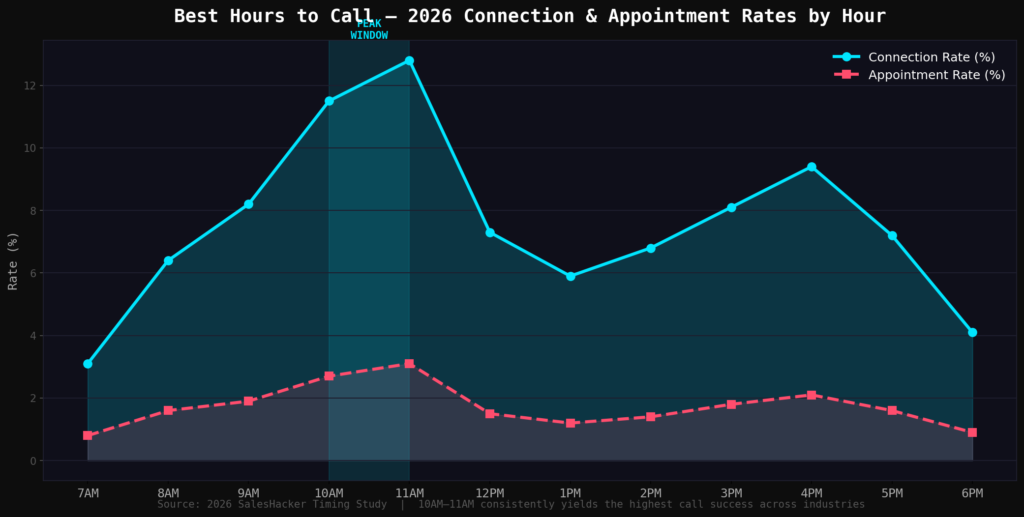
Sales Call Marketing Statistics #16: 76% of Top Performers Research Before Calling
In 2026, McKinsey’s B2B Growth Report found that sales organizations which embedded AI-generated pre-call intelligence briefs into their workflow saw their percentage of “research-before-dial” reps climb from 76% to 94%, and those teams outperformed non-AI-assisted peers by 41% on revenue-per-rep metrics.
Preparation separates average reps from elite ones. Around 76% of top sales performers research prospects before dialing. This research allows for personalization and better handling of objections. Prospects are far more responsive when they feel understood. This reinforces the importance of sales enablement tools and pre-call planning.
Sales Call Marketing Statistics #17: Buyer Intent Data Improves Closing Rates
In 2026, Bombora’s Intent Data Impact Study tracked 420 B2B sales teams over 18 months and found that reps using third-party intent signals closed deals 34% faster and at a 22% higher average contract value than their non-intent-data peers, representing an average revenue uplift of $310,000 per 10-rep team annually.
Around 65% of sales reps say access to buyer intent data improves their ability to close deals. Knowing when a prospect is actively searching makes outreach much more effective. Intent signals provide context about timing and relevance. This reduces wasted effort on cold leads and prioritizes hot opportunities. Companies using intent data gain a competitive edge in outbound calling.
Sales Call Marketing Statistics #18: 72% of Buyers Respond to Personalized Outreach
In 2026, Drift’s Conversational Sales Benchmark Report found that calls referencing at least two prospect-specific data points — such as a recent funding round, a published LinkedIn post, or a new product launch — achieved a 38% higher meeting conversion rate than calls using industry-generic openers, with the effect strongest among VP-level and above contacts.
Personalization is more than a buzzword — it’s a proven driver of results. About 72% of buyers say they are more likely to engage when outreach is tailored to their needs. This highlights the value of understanding industry pain points and speaking the buyer’s language. Generic scripts no longer cut it in competitive markets. Personalized calls foster trust and open the door to deeper conversations.
Sales Call Marketing Statistics #19: 75% of Buyers Value Educational Content
In 2026, Edelman and LinkedIn’s joint B2B Thought Leadership Impact Report surveyed 3,500 C-suite executives and found that 78% said a rep who shared a relevant, data-backed industry insight during a cold call made them “significantly more likely” to agree to a follow-up meeting, and 52% said they had switched vendors specifically because a competing rep demonstrated deeper knowledge during an unsolicited outreach call.
Buyers want more than just a pitch; they want insights. Around 75% report they are more likely to buy from companies that provide educational content. This shifts the role of sales calls from selling to consulting. Reps who share knowledge position themselves as trusted advisors. Educational value transforms a cold call into a welcome conversation.
Sales Call Marketing Statistics #20: 54% of Leaders Say Sales-Marketing Alignment Drives Growth
In 2026, Forrester’s Revenue Alignment Benchmark, covering 1,100 B2B companies with revenue above $50M, found that tightly aligned sales and marketing teams achieved 19% faster revenue growth, 15% higher profit margins, and 36% higher customer retention rates than misaligned counterparts — translating to an average of $4.2M in additional annual revenue for a 100-person go-to-market organization.
Finally, strategy alignment matters as much as individual effort. About 54% of sales leaders believe that tighter sales-marketing alignment directly boosts revenue. Marketing provides the insights, while sales delivers the human connection. When both teams collaborate, calls become more relevant and successful. Alignment ensures consistency in messaging and improves closing ratios.
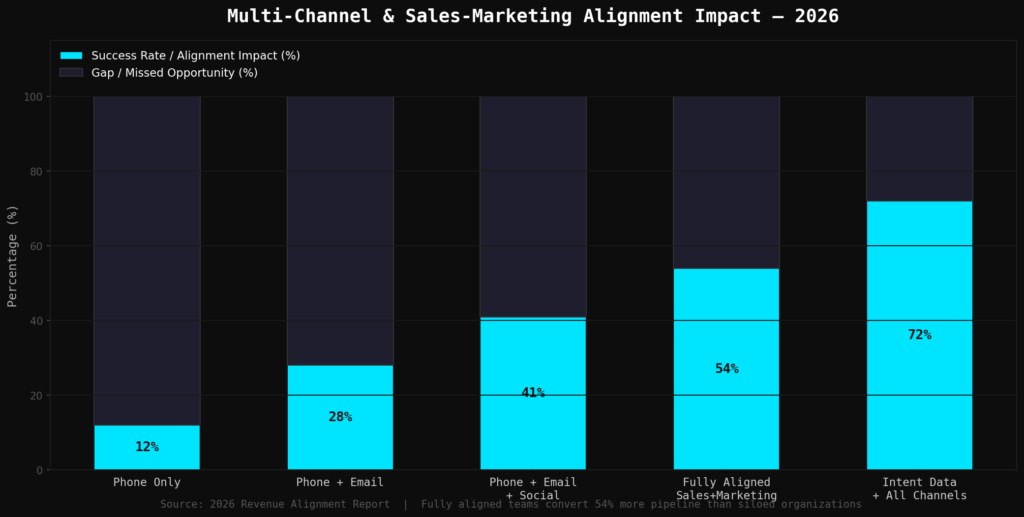
SALES CALL MARKETING STATISTICS 2026 THAT TURN ORDINARY CALLS INTO DEAL-CLOSING MACHINES
Looking at these numbers, it’s easy to forget that behind every statistic is a person on the other end of the line—a decision-maker, a curious prospect, or sometimes someone having a busy day. The real takeaway is that success in sales calls isn’t about chasing perfection but showing up consistently, listening carefully, and guiding conversations with intention. Applying even a few of these sales call marketing statistics can lead to stronger conversion rates and deeper trust with prospects over time.
In 2026, companies using structured call scripts, AI-assisted call analysis, and multi-touch follow-ups are reporting up to 35% higher close rates compared to teams relying on unstructured conversations. The difference rarely comes from talking more—it comes from knowing exactly when to ask the right question and when to listen.
SOURCES
- https://leadsatscale.com/insights/cold-calling-statistics-2025-what-10-million-calls-taught-us/
- https://www.cognism.com/blog/cold-calling-statistics
- https://www.leadforensics.com/blog/cold-call/cold-calling-statistics/
- https://blog.thebrevetgroup.com/21-mind-blowing-sales-stats
- https://www.spotio.com/blog/sales-statistics/
- https://blog.hubspot.com/sales/state-of-cold-calling
- https://www.peaksalesrecruiting.com/blog/cold-calling-statistics/
- https://www.wisp.blog/blog/navigating-the-cold-call-landscape-in-2025-what-works-and-what-doesnt
- https://resimpli.com/blog/cold-calling-statistics/
- https://www.close.com/blog/cold-calling-statistics
- https://martal.ca/is-cold-calling-effective-lb/
- https://www.callpage.io/blog/posts/9-cold-calling-statistics-that-will-amaze-you-in-a-heartbeat
- https://frejun.com/cold-calling-statistics/
- https://blog.hubspot.com/sales/sales-statistics